
What Is Business Class? Seats, Service & What to Expect
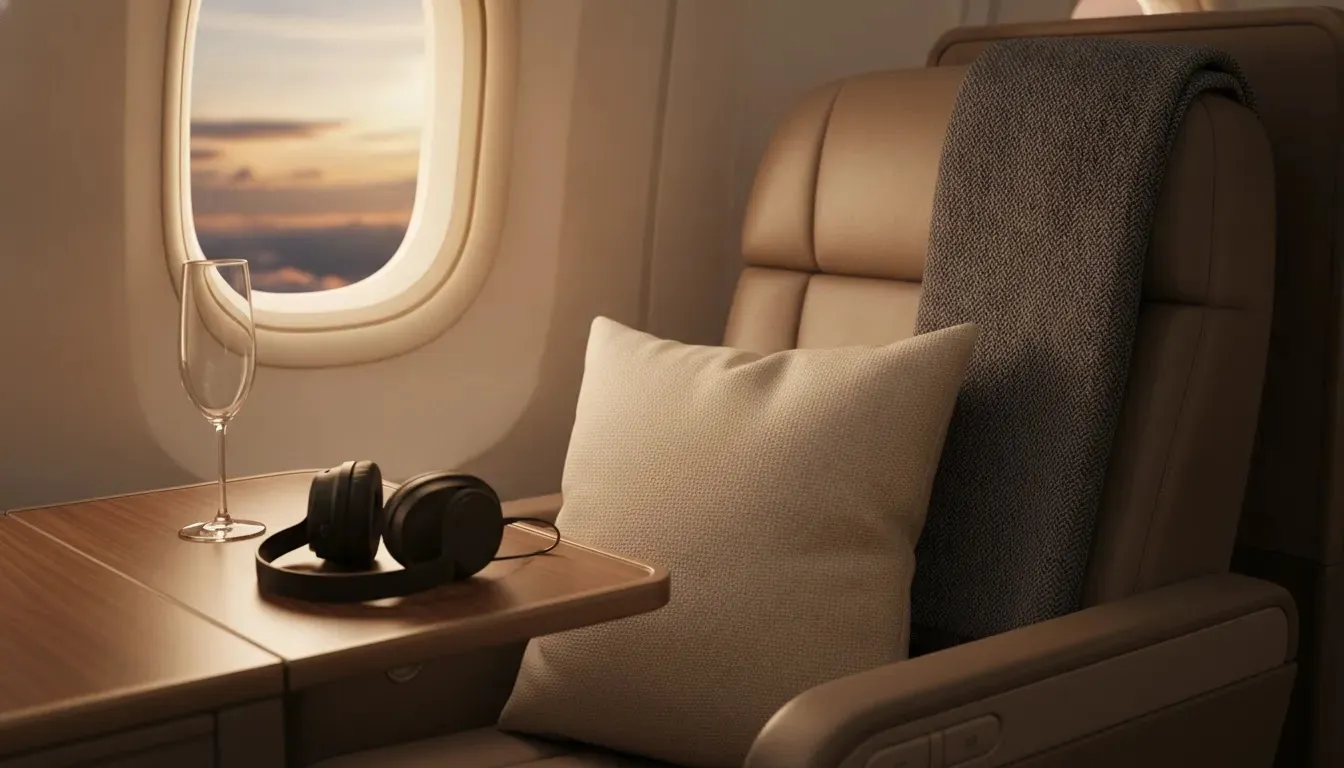
You might see the words “business class” on two itineraries and expect the same comfort level. In practice, they may differ a great deal. A short daytime flight may offer a spacious recliner and priority boarding. By contrast, an overnight long-haul journey could include a fully lie-flat bed, direct aisle access, lounge privileges, and a far calmer arrival.
That gap matters. It matters on a demanding work trip, a milestone journey, or any trip where the flight shapes the rest of the experience.
This guide explains what is business class on a plane across airlines and routes. It also shows what you can expect, where travelers get confused, and how to judge whether a specific flight fits your needs.
What is business class on a plane, defined more fully
To answer what is business class on a plane, start with its purpose. Airlines created this premium cabin for travelers who want more comfort, privacy, flexibility, and service than the main cabin offers.
Historically, it sat between economy and first class. Today, many airlines use long-haul business class as their flagship premium product. True first class now appears on relatively few routes.
That shift explains the confusion. The name stays the same, but the product does not. On one route, it may mean a generous regional seat with upgraded meals. On another, it may mean a suite-style space built for dining, sleeping, and working in comfort. If you want a seat-focused breakdown, a separate guide to business class seats can help you see how much variation exists even within the same cabin label.
- It is a premium cabin, not a single uniform product.
- It usually includes both onboard and airport advantages.
- Its quality depends heavily on route length, aircraft type, and airline strategy.
- Long-haul business class and short-haul business class often feel like different categories.
How business class works in practice
When you book business class, you do not only buy a better seat. You usually buy a different travel flow from check-in onward. That may include priority counters, faster baggage handling, earlier boarding, and, in many cases, lounge access before departure. As a result, the trip often feels smoother and more controlled.
Seat design is the foundation
The seat decides whether business class feels simply pleasant or truly restorative. On domestic and regional routes, many airlines offer wider recliner seats with more pitch and a quieter cabin. On international long-haul routes, travelers usually look for a fully flat bed and direct aisle access for every passenger.
If sleep is a priority, seat design matters more than branding. Travelers comparing premium cabins often also review first class seats to understand how privacy, width, and bed design differ at the top end of the market.
More personalized service
Business class service typically feels more deliberate. Crew members look after fewer passengers. They pace meals more carefully. In addition, they can respond to preferences with more attention.
That does not mean every flight feels ceremonial. It means the cabin supports a calmer and more attentive style of hospitality than the main cabin usually allows.
Airport treatment is part of the product
For many travelers, business class starts to justify itself before takeoff. Lounge access, priority lanes, and better disruption handling can make a meaningful difference on busy international itineraries. You can explore those details more closely in this look at business class amenities, because inclusions may differ by carrier and airport.
For broader airport access rules, you can also review business class lounge access. In addition, the TSA security screening guidance and the IATA passenger travel resources help explain the wider airport process travelers move through before departure.
What business class gets you beyond the seat

The seat is usually the headline feature. However, experienced travelers know the wider package often determines whether the journey feels merely comfortable or truly well managed. Business class may begin with priority check-in and lounge access, continue with earlier boarding and attentive inflight service, and end with priority baggage delivery after landing.
Airport and ground benefits
That broader flow matters for different reasons on different trips. On an overnight itinerary, travelers may value a proper meal, enough privacy to sleep, bedding that supports real rest, and a less taxing arrival. On a work-focused journey, reliable power, onboard Wi-Fi where available, a practical workspace, and a quieter cabin may matter more than decorative touches.
For a honeymoon, anniversary, or other milestone trip, travelers often care more about the overall sense of ease. They may also value polished service and a ground experience that feels more private from the start.
Route-specific extras and what to verify
Some tickets include route-specific or airline-specific extras. These may include upgraded amenity kits, premium loungewear on select overnight services, access to higher-quality alliance lounges, or private transfers on certain carriers and routes. Still, those additions are not universal.
A professional advisor will usually verify those details by itinerary. Airport infrastructure, the operating carrier, the aircraft assignment, and fare rules can all affect what you actually receive.
For discerning travelers, this is often where two similar itineraries start to separate. One flight may offer the right departure time but weak lounge quality and limited onboard connectivity. Another may deliver a more complete premium experience that better supports rest, work, or a celebratory occasion.
In short, what is business class on a plane if you look beyond the seat? It is a travel environment. Often, the most valuable benefits are the ones that reduce friction before and after you are airborne.
What you usually get in business class
Although no two products are identical, most tickets include a familiar set of benefits. Importantly, you should confirm these inclusions on the exact flight you are considering rather than assume them from the cabin name alone.
Common business class components:
- Larger seating area, often with increased privacy
- Enhanced meal and beverage service
- Priority check-in, boarding, and baggage handling
- Lounge access on many itineraries
- Improved bedding or amenity kits on long-haul routes
- Greater fare flexibility on some ticket types
Business class may also include small touches that matter more in real use than in marketing photos. For example, better storage, easier power access, lower cabin noise, a more practical tray table, or service pacing that lets you work and rest on your own schedule can all improve the flight.
For discerning travelers, these details often shape the memory of the trip more than the headline feature list. A polished cabin that helps you arrive rested for a meeting in Tokyo or begin a honeymoon without exhaustion is doing exactly what business class should do.
| Route type | Seat style often described in the article | Typical focus | Common extras mentioned |
|---|---|---|---|
| Short-haul and domestic | Spacious recliner or wider seat | Space, convenience, and efficiency | Priority boarding, better catering, quieter front cabin |
| Long-haul and international | Fully lie-flat bed with direct aisle access | Sleep, privacy, dining, and arrival condition | Lounge access, upgraded bedding, amenity kit |
Why the route changes everything

The phrase “what is business class flight” only becomes useful when you add one more question: on which route? Airlines build business class around flight duration, competition, aircraft range, and passenger expectations.
Short-haul and domestic business class
On shorter routes, business class usually focuses on space, convenience, and efficiency rather than sleep. You may receive a wider seat, better catering, and a quieter front cabin, but not a lie-flat bed or a suite door. Even so, this version of business class can still help travelers who need to work on arrival or want a calmer airport experience.
Long-haul and international business class
On overnight or ultra-long-haul routes, the standard rises. Travelers usually expect a bed, meaningful privacy, strong dining, and service built around rest. That is why business class international often feels like a separate category in premium travel planning.
It is less about status and more about whether the flight supports your schedule, well-being, and productivity. If you want a deeper route-specific breakdown, see this guide to business class international flight options.
At Flight Experts, this is often where expert guidance becomes useful. The agency’s Business Class Flight Booking service covers major long-haul markets such as Europe, Asia, the Middle East, Australia, and domestic U.S. routes, with consultant-led support that may include seat selection and itinerary guidance. For complex journeys, the Complex Itinerary Planning service reflects the same concierge-style approach many premium travelers prefer when route quality matters as much as the destination.
Business class compared with other cabins
Travelers rarely ask what business class is in isolation. More often, they want to know how it compares with another cabin they already understand.
Business class vs premium economy
Premium economy may offer more room and a quieter experience than the main cabin. However, it usually does not match long-haul business class for sleep capability, privacy, or airport privileges. If you are comparing categories rather than individual airlines, reviewing the best premium economy airlines can help clarify where that middle ground performs especially well.
You can also compare the two cabins directly in this guide to premium economy vs business class.
Business class vs first class
First class, where it exists, usually goes further on privacy, personal space, dining, and exclusivity. Still, many travelers are surprised by how refined top-tier business class has become. For a fuller distinction, see business class vs first class and this overview of what is first class flight. Those comparisons are especially useful when an airline offers both cabins on the same long-haul route.
Glossary of terms you may see
- Lie-flat seat: A seat that converts into a fully horizontal bed.
- Direct aisle access: Each passenger can reach the aisle without climbing over another seat.
- Flagship route: A high-profile long-haul route where airlines often deploy their best premium products.
- Regional business class: A shorter-route product that may emphasize service and space rather than a bed.
Choosing between business class and first class on international routes
One common point of confusion is whether business class is effectively the same as first class on an international flight. Sometimes the gap is smaller than travelers expect. At other times, it is substantial.
The answer depends on the aircraft and route you are considering. Many long-haul flights now operate with business class as the top cabin. If the airline does not offer first class on that aircraft, the decision is already settled.
Business class is often more than sufficient for travelers whose main priorities are a lie-flat bed, strong dining, direct aisle access, lounge privileges, and a polished onboard experience. On many leading carriers, that combination already delivers the core elements most premium travelers want, especially on overnight flights where sleep quality and schedule fit matter more than ceremony.
First class may deserve attention when privacy, exclusivity, and ground handling are central to the trip. On routes where it exists, first class could offer a larger personal suite, more individualized dining, quieter cabin density, enhanced bedding, and, in some cases, more private check-in or lounge arrangements.
For milestone leisure travel, that elevated sense of occasion may justify the step up. For a straightforward overnight journey where arriving rested is the priority, business class may provide nearly everything you need.
That is why a route-specific comparison works better than a theoretical one. If both cabins are available, the better choice depends on how much value you place on added privacy, ground experience, and exclusivity beyond the already substantial comfort of a strong business class product.
Who business class tends to suit best

Business class is not defined by who flies it. Instead, it is defined by the purpose it serves. In practice, it often appeals to travelers for whom time, rest, consistency, and ease matter most.
That may include an executive flying overnight before a major presentation, a couple starting a celebratory trip, or a family managing a complex long-haul itinerary where smoother airport handling makes the day easier. Many travelers who ask who flies business class are really asking whether the experience is practical or indulgent. The answer is often both.
Flight Experts positions its service around exactly this kind of traveler: someone who values personal guidance, nuanced product knowledge, and a single point of contact rather than a self-service search process. That perspective becomes especially useful when several airlines all sell “business class” but deliver very different experiences.
Where you encounter business class in real travel planning
You will usually ask the business class question at moments when the flight itself could shape the success of the trip. A red-eye before a board meeting is one example. A multi-stop anniversary journey with overnight sectors is another. So is a long route to Asia or the Middle East where arrival condition matters almost as much as departure timing.
This is also where category pages such as Premium Cabin Experience & Amenities and Premium Flight Booking & Tips become useful, because they help you evaluate the flight as part of a broader premium travel strategy rather than as an isolated seat purchase.
If your next step is airline selection, seat comparison, or deciding whether a route-specific product is strong enough for an overnight journey, business class becomes less a definition and more a planning tool. Ultimately, cabin design, route length, departure time, and your own priorities should all be weighed together.
Frequently Asked Questions
What does business class mean on a flight?
Business class means a premium cabin positioned above the main cabin and usually below first class. It typically includes a more spacious seat, better food and beverage service, and airport advantages such as priority check-in or lounge access on many routes. The key nuance is that business class is not standardized across airlines. A short regional flight and an overnight intercontinental flight may both be called business class while delivering very different levels of comfort and privacy.
What is business class on international flights?
On international flights, especially long-haul routes, business class often becomes a far more substantial product. Many airlines offer a fully lie-flat seat, direct aisle access, upgraded bedding, premium dining, and a more private cabin environment. These features are designed to help you rest, work, or arrive in better condition after many hours in the air. Still, international business class varies by airline and aircraft, so reviewing the exact cabin remains essential before booking.
Where is business class on a plane?
When travelers ask where is business class on a plane, the answer is usually simple. Business class is typically near the front of the aircraft, behind first class if first class exists, or at the front if it does not. On wide-body aircraft used for long-haul travel, the cabin may spread across one or more forward sections. On narrow-body domestic aircraft, it is usually the first few rows.
That location supports quicker boarding and deplaning. However, layout still varies by airline and aircraft.
What does business class look like?
That depends on the route and aircraft. On a short flight, business class may look like a spacious recliner seat with extra room, enhanced meals, and a calmer cabin. On a long-haul flight, it may resemble a private pod or suite-style seat with a large entertainment screen, storage compartments, and a bed that lies fully flat. Photographs can be helpful, but cabin maps and route details often reveal more about how the seat performs in actual travel.
Is business class always lie-flat?
No. One of the most common misunderstandings is assuming every business class ticket includes a bed. Many domestic, regional, and medium-haul routes still use recliner-style business class seats. Fully lie-flat products are more common on long-haul international services, where sleep and privacy are central to the travel experience. If overnight rest matters to you, confirm the aircraft type and seat configuration rather than relying on the cabin name alone.
Who usually flies business class?
Business class attracts a broad mix of travelers. Corporate travelers often use it on demanding schedules, but many leisure travelers choose it for milestone trips, overnight flights, and complex itineraries where comfort and arrival condition matter. Couples celebrating an anniversary, families managing a long intercontinental journey, and travelers with tight business agendas may all find that business class better matches the importance of the trip. It is less about job title and more about travel priorities.
Does business class include lounge access?
Often yes, but not always in the same way. Many long-haul business class tickets include departure lounge access, and some airlines extend access through alliance partners. Short-haul routes, contracted lounges, and certain fare structures may create exceptions. Access can also vary by airport. That is why lounge entitlement should be confirmed as part of the specific itinerary, especially if the ground experience matters to your schedule or your sense of privacy before departure.
Is business class the same on every airline?
No, and this is one of the most important points in premium travel planning. Some carriers place heavy emphasis on seat privacy and sleep quality, while others focus more on service, catering, or ground handling. Even within one airline, business class may differ by aircraft type and route. A traveler flying one flagship long-haul product could have a dramatically different experience from someone booked on an older regional configuration under the same cabin label.
What is a business class flight best for?
Business class is best suited to situations where the quality of the flight materially affects the rest of the trip. Overnight routes, demanding work schedules, milestone journeys, and multi-stop international itineraries are common examples. The cabin can help you protect sleep, reduce airport friction, and arrive more composed. On a shorter daytime flight, the value may come more from convenience and personal space than from sleep, which is why route context matters so much.
How should you evaluate a business class ticket before booking?
Start with the route, then the aircraft, then the actual seat. After that, review lounge access, baggage rules, departure times, connection quality, and whether the service style matches your priorities. Travelers often focus on brand reputation first, but a strong airline can still offer different business class experiences across its network. Many discerning travelers prefer working with a specialist for this stage because subtle product differences can affect comfort more than the cabin label suggests.
Is business class the same as first class?
No. Business class and first class are separate cabin categories, although the difference between them varies significantly by airline and route. On many international flights, business class now delivers the premium features most travelers care about, such as lie-flat seating, strong dining, and lounge access. First class, where it is offered, usually adds more privacy, more individualized service, and a more exclusive ground experience. Many routes do not offer first class at all, which makes business class the highest available cabin.
What does business class get you on a plane?
On the plane, business class typically gets you a larger and more private seat, improved meal and beverage service, more personal storage, easier power access, and a quieter cabin environment. On long-haul flights, it may also include a fully lie-flat bed, bedding, and an amenity kit. Beyond the seat itself, the ticket often brings priority handling on the ground, though the exact bundle should always be checked on the specific itinerary.
Why avoid seat 11A on a plane?
There is no universal reason to avoid 11A across all airlines, because seat numbering and cabin layouts vary widely by aircraft. On one airline, 11A may be an excellent window seat in business class. On another, it could be close to a galley, lavatory, bassinets, or a misaligned window position that reduces privacy or comfort. The better approach is to review the exact seat map for your flight and assess proximity to crew areas, aisle traffic, and cabin architecture rather than relying on a seat number alone.
What is the 45 minute rule?
The phrase “45 minute rule” can refer to different airline or airport procedures, so it does not have one universal meaning in business class travel. In some contexts, travelers use it informally to describe minimum check-in or boarding timing before departure. In others, it may relate to baggage acceptance cutoffs or connection planning. Because these rules vary by airline, airport, and itinerary, the most reliable step is to confirm the current requirement attached to your specific ticket rather than assume a general rule applies.
Key Takeaways
- Business class is a premium cabin category, but it is not a uniform product across airlines or routes.
- The most meaningful differences usually involve seat design, sleep quality, service pacing, and airport treatment.
- Long-haul international business class often bears little resemblance to short-haul domestic business class.
- Cabin labels alone are not enough, aircraft type and exact route matter just as much.
- Expert guidance can be valuable when several airlines offer business class but deliver very different premium experiences.
Conclusion
So, what is business class on a plane in practical terms? It can mean far more than a wider seat and a better meal, but only when you judge it in context. The real question is not only what business class is. It is what kind of business class you are getting, on which aircraft, over what distance, and for what purpose.
For some travelers, the right flight preserves sleep before an important arrival. For others, it reduces airport friction and gives a demanding itinerary more breathing room. If you are comparing premium options for an upcoming journey, speaking with a luxury travel specialist may help you narrow the field quickly and confidently. Flight Experts is one resource travelers may consider when they want a more tailored view of premium cabin choices and a concierge-style planning experience.



