
Business Class Amenities: What’s Included?

Business class is not a single, uniform product. One airline may offer an exceptional ground experience with private check-in and a refined lounge. Another may focus more heavily on the seat and onboard privacy. The label alone does not tell you how the trip will feel from curb to arrival. That is why clarity matters. If you are comparing premium cabins, understanding business class perks helps you judge whether the fare matches your expectations, your route, and your preferred style of travel.
What business class usually includes
The clearest way to understand business class perks is to view them across 3 phases of travel: before the flight, during the flight, and upon arrival. In practice, that means priority handling on the ground, a more private cabin, and service touches that reduce friction throughout the journey.
If you want a broader foundation first, our article on what is business class explains how the cabin is defined across the industry. This article focuses on the amenities themselves and the features travelers actually use and remember.
Most business class benefits fall into these categories:
- Priority check-in, baggage handling, and boarding
- Airport lounge access, though terms may vary
- A larger seat, often with lie-flat capability on long-haul flights
- Enhanced dining and beverage service
- Amenity kits, bedding, and upgraded lavatory products on many routes
- More attentive cabin service and greater schedule support if disruptions arise
That sounds simple, yet the real value lies in consistency. A shorter regional flight may include priority services and better meals, but not a lie-flat seat. By contrast, a long-haul flagship route may add direct aisle access, pajamas, premium wines, and lounge dining. The phrase business class perks covers both ends of that spectrum.
| Phase of travel | Typical business class perks mentioned in this guide | What may vary |
|---|---|---|
| Before the flight | Priority check-in, baggage handling, boarding, lounge access, and sometimes fast-track security | Lounge quality, access rules, and whether premium security is available |
| During the flight | Larger seat, often lie-flat on long-haul routes, enhanced dining, premium drinks, amenity kits, bedding, and more attentive service | Seat type, privacy, Wi-Fi, dining style, and the soft product by airline and route |
| Upon arrival | Priority baggage handling and, in some cases, more direct premium support | How quickly bags arrive and whether arrival support exists at that airport |
Airport benefits before you board
Priority check-in and a calmer start
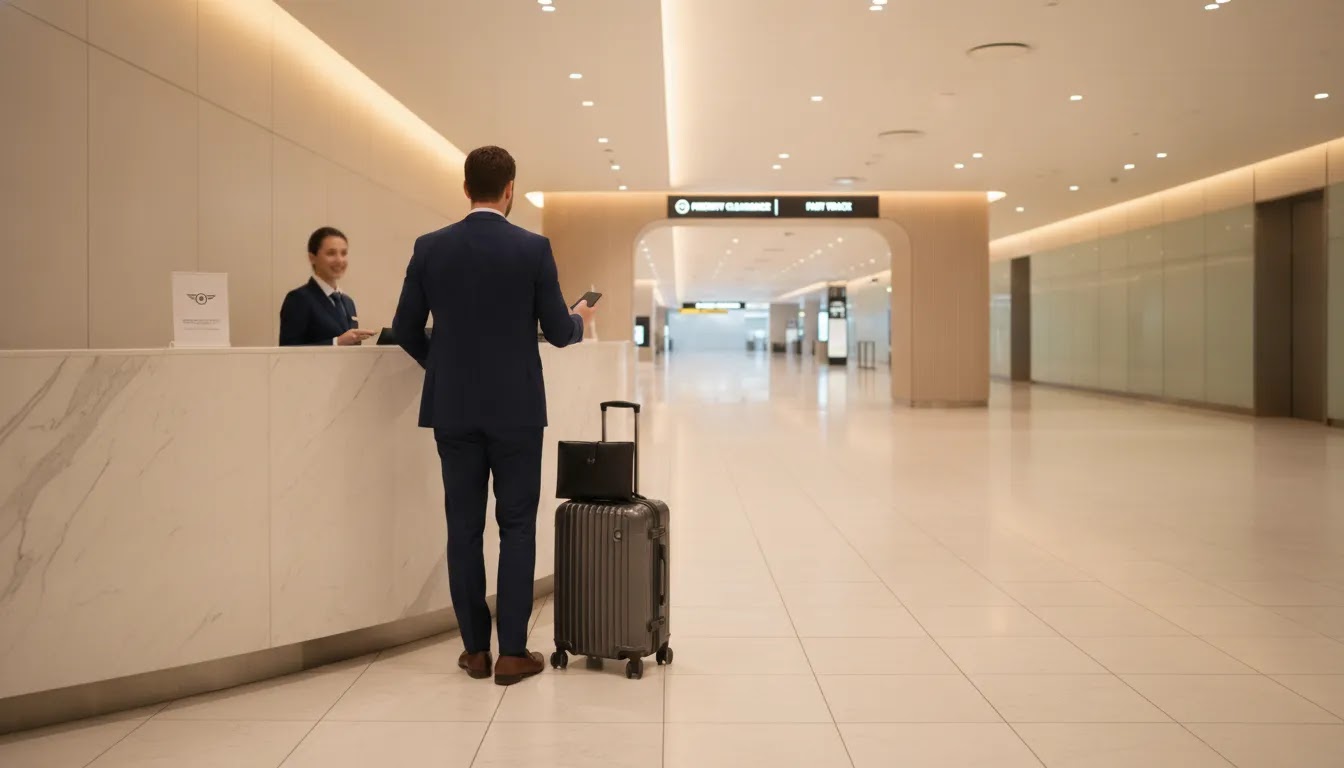
For many premium travelers, the first real benefit appears before security. Separate business class check-in counters can shorten wait times. In some airports, dedicated premium areas create an even calmer start. This matters most when your schedule is tight or your onward plans are demanding.
Priority baggage tagging is often included as well. It does not guarantee your bags will be first on the belt. However, it can improve the odds of faster delivery on arrival.
Lounge access, often valuable but not universal in the same way
One of the most searched business class benefits is lounge access, and for good reason. A strong lounge can turn the airport experience from transactional to restorative. You may find full meals, showers, quiet work areas, premium drinks, nap rooms, family zones, and dedicated service desks.
Still, travelers should avoid broad assumptions. Do business class tickets include lounge access? Often yes on long-haul itineraries, but not always in the same form across airlines, alliances, fare rules, and domestic versus international routes. Some carriers provide access to their own flagship spaces. Others rely on partner lounges that feel more modest. For a deeper look, see our guide to business class lounge access.
For readers comparing airport access more closely, the broader question of whether is it worth it often depends as much on the ground experience as the seat itself.
Priority security and boarding
Fast-track security is one of the quieter business class amenities, but seasoned travelers often value it more than flashier perks. It may save time. Just as importantly, it can preserve energy. Boarding priority also gives you earlier access to overhead space, a calmer cabin entry, and time to settle in without pressure.
You can explore related premium travel topics in Premium Flight Booking & Tips, where airport flow and cabin choices are discussed in a broader planning context.
Lounge access, connections, and airport experience nuances
How connection rules can change access
The airport experience often depends on details that are easy to miss at booking. A business class ticket may include lounge access at departure, yet connection access can follow different rules. This is especially true on mixed-carrier itineraries or when one segment is operated by a partner airline.
In some cases, the long-haul ticketed cabin determines your entitlement. In others, access depends on the operating carrier, the airport, or the same-day international segment. Domestic connections may also be less generous than international ones, even within the same alliance.
Why the lounge itself may differ
The lounge itself may vary just as much. An airline-operated flagship lounge may offer restaurant-style dining, shower suites, quiet rooms, premium wines, and dedicated rebooking support. By contrast, a partner or contract lounge may offer a comfortable seat and a light buffet, but not the same privacy or service.
Sophisticated travelers often find that this difference shapes the journey more than expected. That is especially true during long layovers or after an overnight arrival.
Why airport and airline combinations matter
This matters even more on itineraries that combine several airports and carriers. A beautifully designed onboard product may begin in an overcrowded third-party lounge. On the other hand, a less celebrated cabin may be paired with an excellent ground experience at a hub where the airline invests heavily.
Airport by airport, the standard can shift meaningfully. Showers, à la carte dining, family rooms, quiet zones, and service desks are not distributed evenly across networks.
What to verify before departure
Before departure, it is wise to verify the exact lounge terms attached to your ticket rather than relying on the cabin label alone. This matters most if your itinerary includes codeshares, domestic feeder segments, or a connection where the marketing airline and operating airline are not the same.
An experienced advisor can often confirm current access rules and set expectations. In addition, official airport and airline sources can help. For example, the TSA provides current security information, while the IATA publishes broader passenger travel guidance.
The onboard comforts that matter most
The seat is still the centerpiece
Among all business class in-flight amenities 2025 and beyond, the seat remains the most important physical feature. On long-haul routes, that usually means substantial recline or full lie-flat capability. On better-configured aircraft, you may also have direct aisle access, privacy dividers, larger tray tables, multiple storage areas, and generous charging options.
Not every business class seat is equally refined. The gap between a forward-facing suite, a staggered seat with limited foot space, and an angled older product can be substantial. That is why a dedicated seats guide is often useful before you commit to a specific flight.
Space, privacy, and the feeling of control
Luxury travelers often describe the best business class cabins as controlled environments. You can work, dine, rest, or disconnect on your own terms. Wider seats, more storage, better lighting, and more separation from neighboring passengers all support that feeling.
On overnight flights, these features become more than simple conveniences. They shape sleep quality, arrival energy, and your ability to move directly into meetings or leisure plans without losing the first day of the trip.
Entertainment and connectivity
Business class perks often include larger screens, noise-reducing headphones, a broader content library, and more reliable power outlets. Wi-Fi may be available for purchase or included on some airlines, though policies differ widely. In practice, the best setups let you move smoothly between work and rest. That flexibility is especially valuable on ultra-long-haul journeys.
Dining, drinks, and cabin service
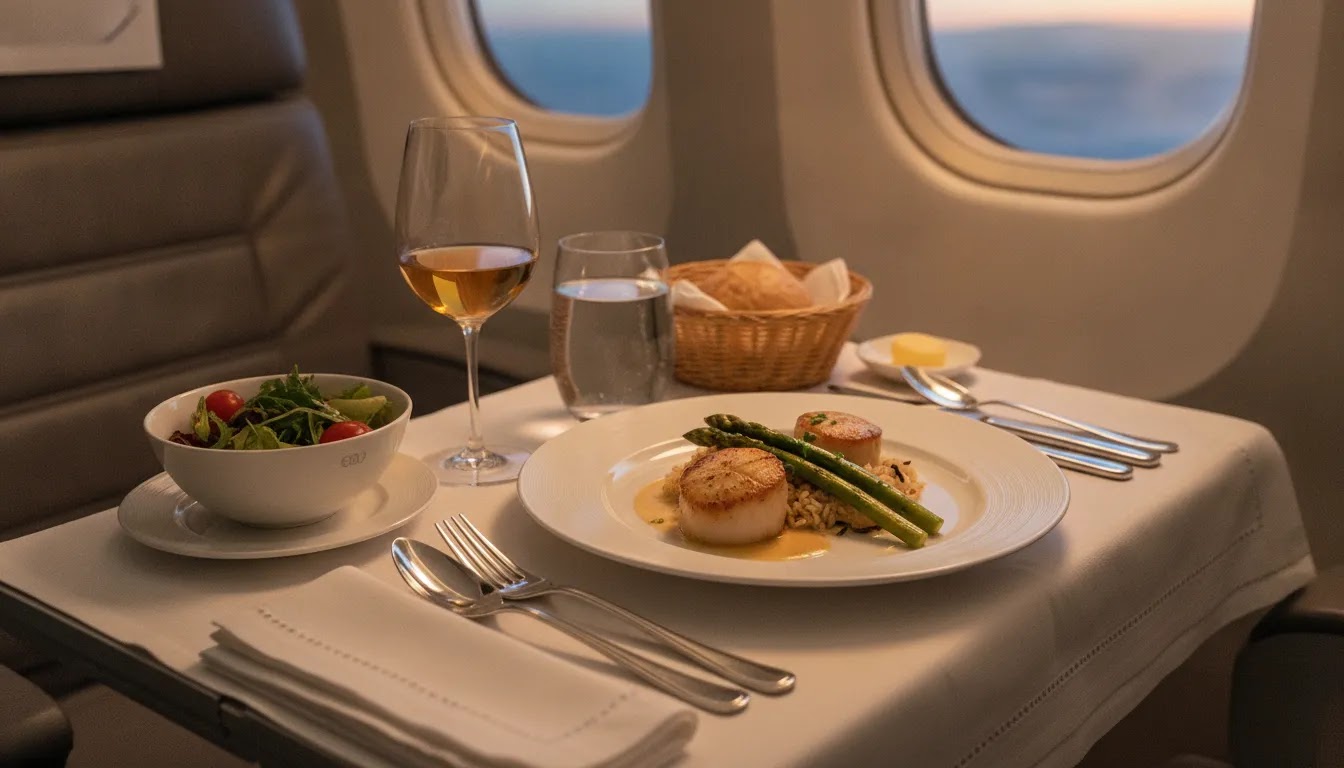
Enhanced dining is one of the most visible business class amenities, but presentation is only part of the story. A premium cabin meal is not just about more courses. It is also about timing, flexibility, table space, drink quality, and whether the service feels attentive rather than rushed.
On many long-haul flights, you may find a multicourse meal served with proper glassware, linen, and a menu with several mains. Better carriers also allow a more individualized pace. That matters if you want to eat quickly and sleep, or skip a formal service in favor of a lighter meal later in the flight.
What dining may include
- Pre-departure beverages, depending on airport procedures and turnaround time
- Printed or digital menus with several meal choices
- Premium wine, spirits, Champagne, or signature cocktails on some airlines
- Mid-flight snacks or on-demand dining on selected long-haul services
- Improved breakfast service before landing
The strongest business class benefits are often subtle. Crews may remember your preferences. They may adjust the service pace to your sleep plan and offer alternatives if a meal choice is unavailable. On premium carriers, the service style tends to feel measured and composed rather than scripted.
Flight Experts approaches cabin selection with this nuance in mind. Through its Business Class Flight Booking service, the agency helps clients compare not just airlines, but also seat types, meal style, and route-specific product differences that can affect the entire experience.
Less visible business class perks that matter in practice
Some of the most useful business class benefits receive less attention because they are operational rather than theatrical. On selected airlines and routes, premium travelers may have access to chauffeur-style airport transfers, dedicated premium service desks, or more attentive disruption support when a delay or cancellation affects the itinerary. These features are not universal. However, they can materially improve the journey when timing matters.
Experienced travelers often value this support as highly as the meal or amenity kit. During irregular operations, a business class ticket may place you in a better position for rebooking help, lounge-based service support, or faster contact with airline staff who can assess onward options. That does not guarantee a preferred outcome, especially during widespread disruptions. Still, it can make a difficult travel day feel more controlled.
Even simpler benefits deserve more credit. Early boarding helps secure overhead bin space and reduces the rushed feeling at the door. It also gives you time to settle work items, sleep essentials, and valuables before the aisle fills. As a result, the transition from terminal to seat often feels calmer. The same can be true on arrival, where priority baggage handling and more direct support at premium desks may shorten the time between the aircraft door and your onward transfer.
These quieter advantages tend to matter most for travelers who fly often, connect internationally, or begin an important trip the same day they land. They are airline-specific and route-specific, not built into every fare. Still, in the right context, they are among the business class perks that most clearly separate a polished premium journey from one that is simply more spacious in the air.
Amenity kits, bedding, and thoughtful extras
Amenity kits are sometimes treated as a minor flourish, yet they reveal a great deal about how seriously an airline takes premium hospitality. A well-considered kit usually includes skincare essentials, socks, an eye mask, dental items, and other long-haul basics. These items are often presented in a case that feels durable and elegant rather than disposable.
Lavatory standards matter as well. Business class cabins often have upgraded hand soap, facial mist, or other premium products, plus more regular attention from crew during the flight. These details may seem small at booking. However, they can feel meaningful 8 or 10 hours into a journey.
Bedding and sleep support
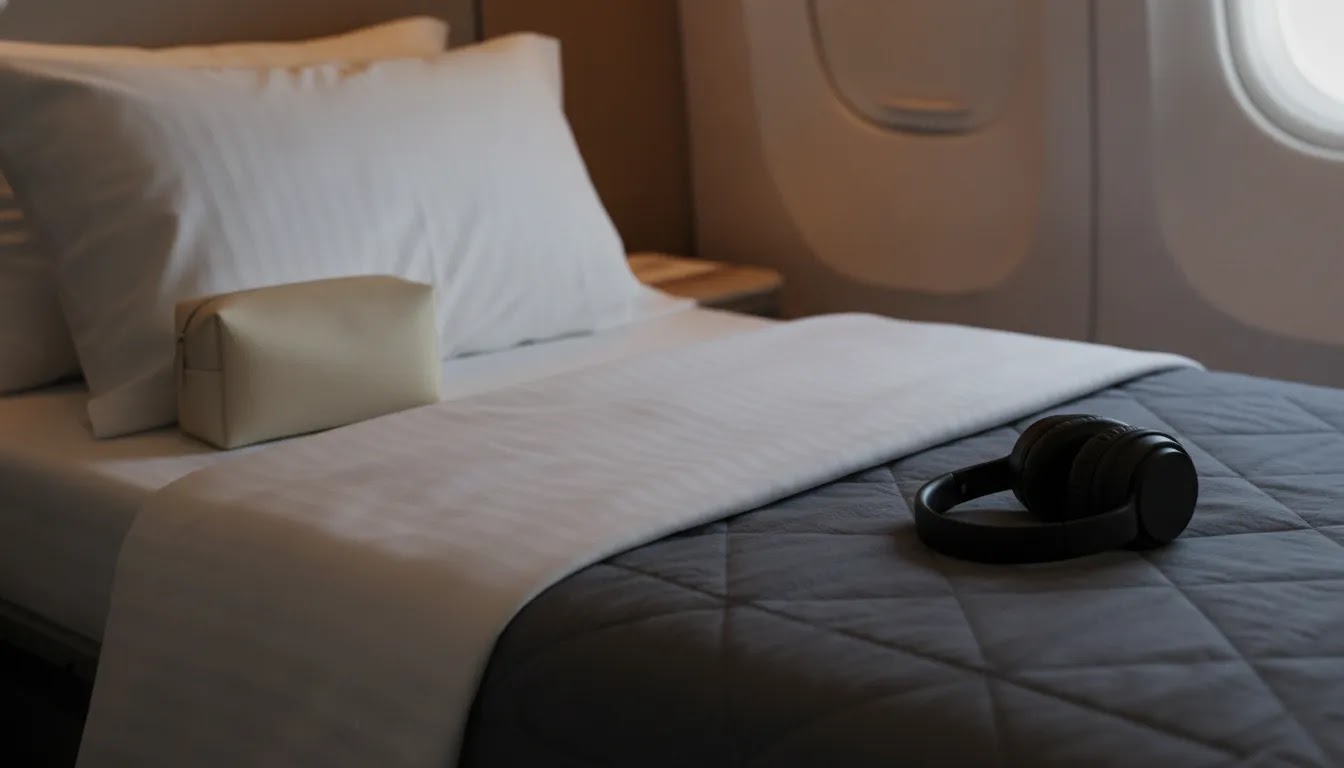
On overnight routes, bedding is one of the most practical business class perks. Depending on airline and route, you may receive a mattress pad, a substantial pillow, a duvet, slippers, and in some cases pajamas. The real test is whether these items work together with the seat to support actual sleep rather than simple recline.
The best premium amenities are the ones you notice by how much better you feel on arrival. A soft duvet means little if the footwell is cramped. Likewise, a handsome amenity kit does not compensate for inconsistent service. Evaluating the whole sleep environment is more useful than focusing on any single item.
Arrival extras
Some business class benefits continue after landing. Priority baggage delivery is common, and certain destinations or premium terminal arrangements may offer more guided arrival support. This is not universal, but on complex international itineraries it can make connections and transfers markedly easier.
What varies most between airlines and routes
The widest gap in business class amenities usually appears across route types, not just across airline brands. A domestic U.S. business class product may offer a wider recliner seat and boarding priority. By contrast, an intercontinental service could include a lie-flat bed, lounge dining, amenity kit, elevated wine list, and much greater privacy.
Aircraft type matters as well. Two flights sold under the same airline and cabin name may feel very different if one uses a newer flagship aircraft and the other uses an older configuration. Schedule also plays a part. Late-night departures may focus on speed and sleep, while daytime services often emphasize a fuller meal and a work-friendly setup.
If you are still deciding whether a premium cabin matches your travel style, the category page for Premium Cabin Experience & Amenities offers a useful starting point for broader reading. You may also find it helpful to compare premium economy vs business class when value and comfort are both priorities.
Travel advisors often see this with milestone trips. A couple flying overnight to Europe for an anniversary may care most about bedding, privacy, and lounge showers before departure. Meanwhile, a frequent executive heading to Asia may prioritize storage, Wi-Fi reliability, and a seat that supports both work and sleep. The right business class perks depend on the purpose of the journey, not merely the cabin label.
Why route type shapes the experience more than the cabin label
Route length usually tells you more about the likely experience than the words business class on their own. On a short domestic flight, you may receive a wider seat, priority handling, and improved meal or beverage service. However, you may not get the full suite of premium touches many travelers associate with international business class. Regional flights often sit somewhere in between, with better seating and service than the main cabin but limited privacy and fewer soft-product inclusions.
Long-haul routes typically deliver the more complete premium experience. That is where lie-flat seating, substantial bedding, stronger lounge access, upgraded amenity kits, and a more flexible dining schedule become more common. Ultra-long-haul services may add another layer, with pajamas, mattress pads, dine-on-demand service, larger wellness-focused kits, and a greater emphasis on preserving sleep and arrival readiness. Some airlines also invest more heavily in the ground experience on these marquee routes.
This distinction matters because a business class fare should be judged against the purpose of the trip. If the flight is too short for meaningful sleep, a fully elaborate bed setup may be less relevant than efficient boarding, a comfortable seat for working, and a smooth arrival. On an overnight or ultra-long-haul sector, the reverse is often true. Sleep products, cabin privacy, and meal pacing may matter far more than a celebratory pre-departure drink.
For that reason, experienced advisors evaluate premium cabins in context. The most appropriate choice is not always the most heavily marketed one. It is the option whose route, aircraft, departure time, and service style best support the way you actually intend to travel.
How to evaluate business class perks before booking
Rather than asking whether business class is good in general, ask which amenities matter most for your itinerary. This approach usually leads to better decisions, especially when several premium options look similar at first glance.
A practical way to assess the offering
- Check the exact aircraft and seat layout, not only the airline name
- Confirm whether lounge access applies at both departure and connection points
- Review whether the route is long-haul, regional, daytime, or overnight
- Look at dining format, especially if sleep timing matters to you
- Consider whether you value privacy, work space, bedding, or airport support most
This is where experienced guidance can be especially useful. An agency like Flight Experts, led by Mike Chirilenco and focused on concierge-style premium travel planning, can help interpret differences that are not obvious on a booking screen. For clients arranging complex or high-value itineraries, that expertise may shape the experience far more than the fare class name alone.
Flight Experts also offers Complex Itinerary Planning for multi-city and open-jaw journeys. This can be especially relevant when business class amenities need to be weighed across several carriers, lounges, and aircraft types within one trip.
Frequently Asked Questions
Do business class tickets include lounge access?
Often they do, especially on long-haul international itineraries, but access terms may differ by airline, airport, route, and fare conditions. Some airlines offer entry to their own premium lounges, while others use alliance or contract lounges. Domestic routes can be less consistent than international ones. Same-day onward connections may also affect access. If the lounge experience matters to you, it is wise to verify the exact entitlement on the specific ticket rather than assuming it comes automatically with every business class fare.
Are all business class seats lie-flat?
No. Lie-flat seating is common on long-haul international business class, but many shorter regional and domestic flights still use angled recliners or wider armchairs. Even among lie-flat products, the layout may differ substantially. Some provide direct aisle access for every passenger, while others use older cabin designs with less privacy. If sleep quality is important, review the exact aircraft and cabin configuration before booking. The term business class describes a category, not one identical seat across all routes.
What meals are usually included in business class?
Business class commonly includes enhanced meal service, premium beverages, and more choice than the main cabin. On long-haul routes, that may mean multicourse dining with appetizers, several main selections, dessert, and breakfast before arrival. Some airlines also offer dine-on-demand service or lighter express options for travelers who want to sleep sooner. The quality and presentation can vary widely, so the more useful question is how the meal service fits the timing and style of your flight rather than simply how many courses are offered.
Do business class passengers get priority security?
Sometimes, but not universally. Many airports offer fast-track or premium security lanes to business class travelers, especially on international departures. In other airports, the benefit may depend on local facilities, airline contracts, or alliance arrangements. Even when available, wait times can still vary with operational conditions. Priority security is best seen as a likely convenience rather than a certainty on every trip. If maintaining a smooth airport flow is a priority, it helps to confirm what your departure airport specifically provides.
What is usually inside a business class amenity kit?
A business class amenity kit typically includes essentials for long-haul comfort, such as socks, an eye mask, earplugs, a toothbrush and toothpaste, lip balm, and skincare items. Some airlines partner with premium wellness or fashion brands, which can elevate both the presentation and product quality. The contents often reflect route length and airline positioning. On shorter flights, you may receive a slimmer kit or none at all. The most useful kits support sleep, hydration, and freshening up before arrival.
Is Wi-Fi included in business class?
Not always. Some airlines include complimentary Wi-Fi in business class on selected routes or for a limited data allowance, while others still charge separately. Availability may also depend on aircraft type and route. Even when Wi-Fi is offered, performance can vary, particularly over remote oceanic sectors. Travelers who need reliable connectivity for work should confirm not only whether Wi-Fi is available, but also the likely quality of the connection and whether power outlets and USB charging are available at the seat.
Do business class perks matter as much on daytime flights?
Yes, though the priorities often shift. On a daytime flight, travelers may care less about a fully elaborate bedding setup and more about personal space, privacy, dining quality, connectivity, and attentive service. A good business class product on a daytime route can create a productive and calm environment for work, reading, or simply arriving refreshed. The cabin may feel less transformative than on an overnight sector, but it can still materially improve the journey, especially on medium-to-long-haul flights.
How much do business class amenities differ by airline?
The differences can be substantial. One airline may excel in lounge design and ground handling, while another may stand out for seat privacy, bedding, or dining. Even within the same airline, amenities can shift by aircraft type, route length, and departure airport. That is why experienced travelers rarely judge business class by brand name alone. They look at the exact flight, the specific seat, and the operational context. A premium cabin should always be evaluated as a route-specific product, not just a marketing category.
Are pajamas included in business class?
Sometimes, primarily on longer premium international routes. Pajamas are more common on ultra-long-haul services and with airlines that place strong emphasis on sleep comfort and premium hospitality. On shorter overnight routes, slippers and upgraded bedding may be provided without pajamas. Airlines can also adjust these inclusions seasonally or by route. If sleep-focused amenities are important to you, confirm them in advance rather than assuming all long-haul business class tickets include the same soft product package.
Who benefits most from business class perks?
Travelers who value time, rest, privacy, and consistency tend to benefit most. That includes executives flying straight into meetings, couples beginning an important leisure trip, and families seeking a more controlled airport and onboard experience. The value may be especially strong on overnight and long-haul itineraries, where sleep, lounge access, and priority handling can shape the next day as much as the flight itself. The best use of business class is not extravagance for its own sake, but support for how you want the trip to feel from start to finish.
What are the benefits of business class?
The benefits of business class usually extend across the entire journey rather than appearing in only one area. Most travelers value priority check-in, faster boarding, a more comfortable seat, better dining, and lounge access where included. On longer routes, the most meaningful advantages often become privacy, lie-flat sleep, attentive service, and a smoother arrival the next day. The exact mix of benefits may differ by airline, route, and aircraft, which is why evaluating the specific flight is more useful than relying on the cabin name alone.
Why avoid seat 11A on a plane?
There is nothing universally problematic about seat 11A. The reason travelers sometimes avoid a specific seat number is that it may sit close to a galley, lavatory, bassinet position, or a missing or misaligned window on a particular aircraft. In business class, one seat may also have a narrower footwell, less privacy, or more aisle exposure than another in the same cabin. The useful principle is not to avoid one seat number everywhere, but to review the exact aircraft layout and seat characteristics before choosing.
What is the 45 minute rule?
The phrase 45 minute rule can refer to different airline or airport procedures, so it should not be treated as a universal business class policy. In many travel contexts, it relates to check-in cutoff times, baggage acceptance deadlines, or the minimum time before departure when passengers must be at the gate. Those requirements vary by airline, airport, and whether the flight is domestic or international. For premium travelers, the most reliable approach is to confirm the operating carrier’s current cutoff rules for your exact itinerary, especially if you are checking bags or connecting.
Why do flight attendants sit on their hands when flying?
Flight attendants may place their hands under their thighs or on their hands during takeoff and landing as part of a safety brace position used by some airlines. The purpose is typically to help keep the body stable and reduce involuntary movement during critical phases of flight. Procedures can differ by airline because cabin crew training is not identical across the industry. It is a safety practice rather than a feature related specifically to business class.
Key Takeaways
- Business class perks extend far beyond the seat and often include priority airport services, lounge access, premium dining, and elevated sleep amenities.
- Lounge access is common, but the exact entitlement may vary by airline, airport, route, and fare conditions.
- The quality of business class amenities depends heavily on aircraft type, route length, and whether the service is domestic, regional, or long-haul.
- Evaluating the exact flight is more useful than relying on the business class label alone.
- Expert guidance can be valuable when your itinerary involves multiple carriers, important schedules, or high expectations for comfort and continuity.
Conclusion
Business class is best understood as a full travel experience rather than a larger seat with a better meal. The strongest business class perks create ease at each stage of the journey. They can improve the airport process, support rest or productivity in the cabin, and add service touches that make long travel days feel considered rather than draining. What matters most will depend on your route, timing, and personal priorities. That is why the same cabin name can deliver very different results from one flight to the next.
If you are planning a premium journey and want help interpreting the differences between airlines, aircraft, and route-specific amenities, speaking with a luxury travel specialist may save considerable time and uncertainty. Flight Experts serves as one such resource for travelers who prefer experienced, personalized guidance when arranging business class travel. A well-chosen itinerary does more than look good on paper. Ultimately, it helps the entire trip unfold with greater comfort, confidence, and continuity.



