
Business Class Seats Guide: Types & What to Expect
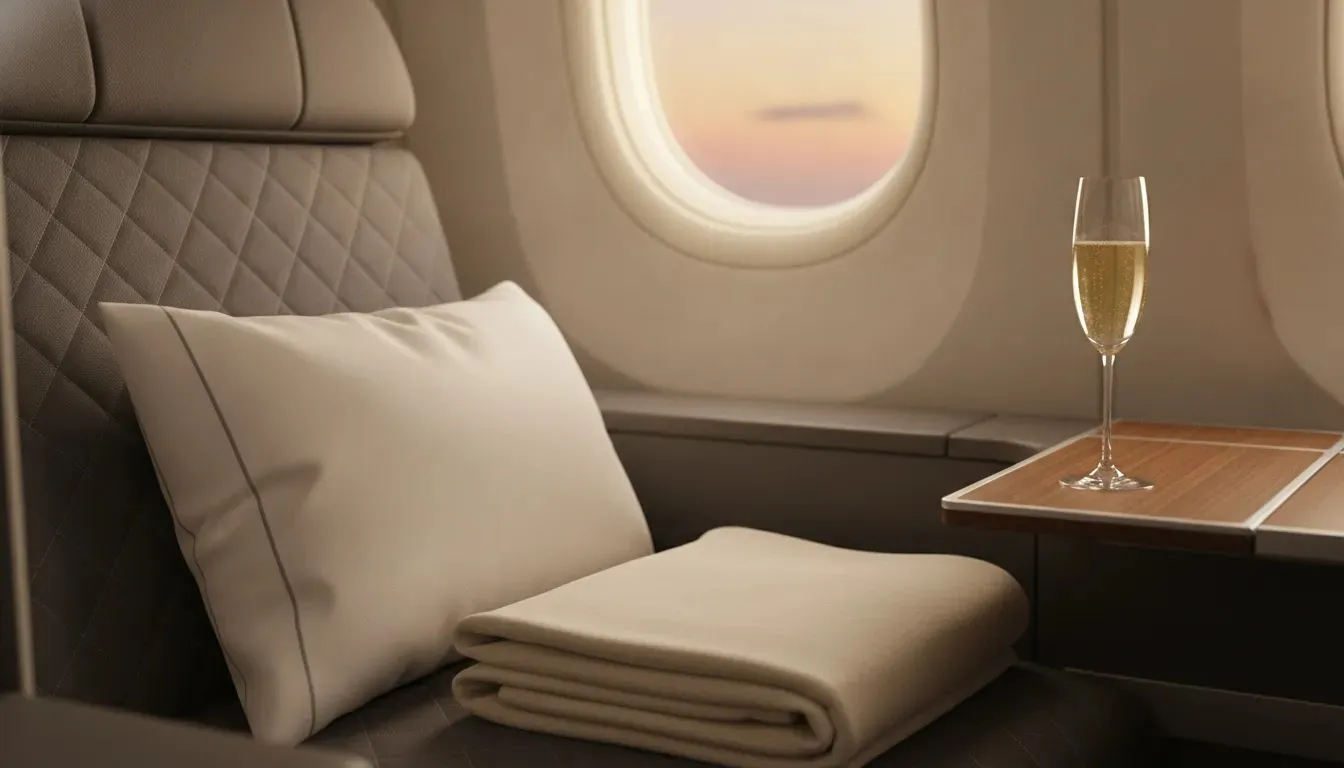
This guide explains how business class seats evolved, what each seat type offers, and where expectations should stay realistic. If you are researching what is business class, this article focuses on the seat itself. It covers older angle-flat layouts, modern lie-flat beds, and today’s most refined long-haul suites.
Who This Guide Is For
This guide serves three kinds of readers. First, it helps newer premium travelers who know the phrase business class seats but do not yet know why the experience changes so much by airline, aircraft, and route. Second, it helps intermediate travelers compare products for overnight flights, where sleep, privacy, and aisle access matter most. Third, it gives experienced premium travelers a clear way to judge whether a cabin is merely acceptable or truly sophisticated. The focus stays on seat generations and practical expectations, not loyalty strategy or fare rules.
What You Will Learn
- How business class seating evolved from recliners to enclosed suites
- What separates angle-flat, fully flat, and suite-style products in real use
- Why the same airline may offer very different business class seats across its fleet
- How Boeing 777 and narrow-body cabins shape seat design
- Which features matter most for overnight comfort and privacy
- How to assess cabin layouts, footwells, aisle access, and storage
- Where related cabin categories fit, including first class and premium economy
- Which supporting articles in this hub can deepen your research
How Business Class Seats Evolved
The modern business class seat comes from several clear design eras. Early business class focused mostly on width, pitch, and service separation from the main cabin. In many cases, the seat itself was just a domestic-style recliner adapted for longer flights. That gave travelers more space, but it did not transform overnight rest.
Next came angle-flat seats. At the time, they felt advanced because they created a sloped sleeping surface instead of leaving the passenger upright. For long-haul travelers, that was a real change. However, it was not always a comfortable one. Many passengers slid toward the footwell, and side-sleepers often found these beds restrictive.
Fully lie-flat designs marked the real turning point. Once airlines saw that direct aisle access, horizontal beds, and privacy were becoming expected, cabin architecture changed fast. Staggered layouts, herringbone designs, reverse herringbone seats, and later suite concepts all followed. Today, leading carriers often treat business class as a private personal zone, not just a larger chair. As a result, the seat generation matters as much as the cabin label.
| Seat type | How the article describes it | Best fit | Main limitation |
|---|---|---|---|
| Recliner | Broader seat, more pitch, improved service, and a quieter forward cabin rather than a bed | Short-haul, regional, and many narrow-body flights | Does not solve the problem of sleep |
| Angle-flat | Reclines into a slanted sleeping platform rather than a true horizontal bed | Older intercontinental fleets, select secondary routes, or cabins not yet refurbished | The body often shifts gradually during the night |
| Fully lie-flat | A true horizontal bed that changes comfort and the whole rhythm of the journey | Serious long-haul premium travel | Not all lie-flat seats are equal |
| Suite-style | Fully lie-flat bed with high shell walls, engineered storage, and on some airlines a sliding door | Travelers who value privacy, work in flight, or want a more insulated environment | Some designs favor privacy over companion interaction |
Recliner Business Class Seats
Recliner business class remains common on short-haul, regional, and many narrow-body aircraft. On a domestic route, especially on aircraft families such as the Boeing 737, business class may mean a broader seat, more pitch, improved meal service, and a quieter forward cabin rather than a bed. This is still business class, but it serves a very different purpose from a long-haul flagship product.
The strength of the recliner seat is its simplicity. Boarding is easy, and the seat is intuitive. For flights of two to five hours, it may be entirely appropriate. The cabin often feels efficient rather than theatrical. Travelers get more elbow room, fewer seatmates, and a calmer setting. On daytime sectors, those benefits may be enough.
The limitation becomes clear on longer trips. Recliners do not solve the problem of sleep. They also offer less privacy, less storage, and fewer cocooning qualities than modern long-haul cabins. Readers comparing categories may also want to review business class amenities, because on recliner-heavy routes the soft product can shape the experience as much as the seat itself.
Angle-Flat Business Class Seats
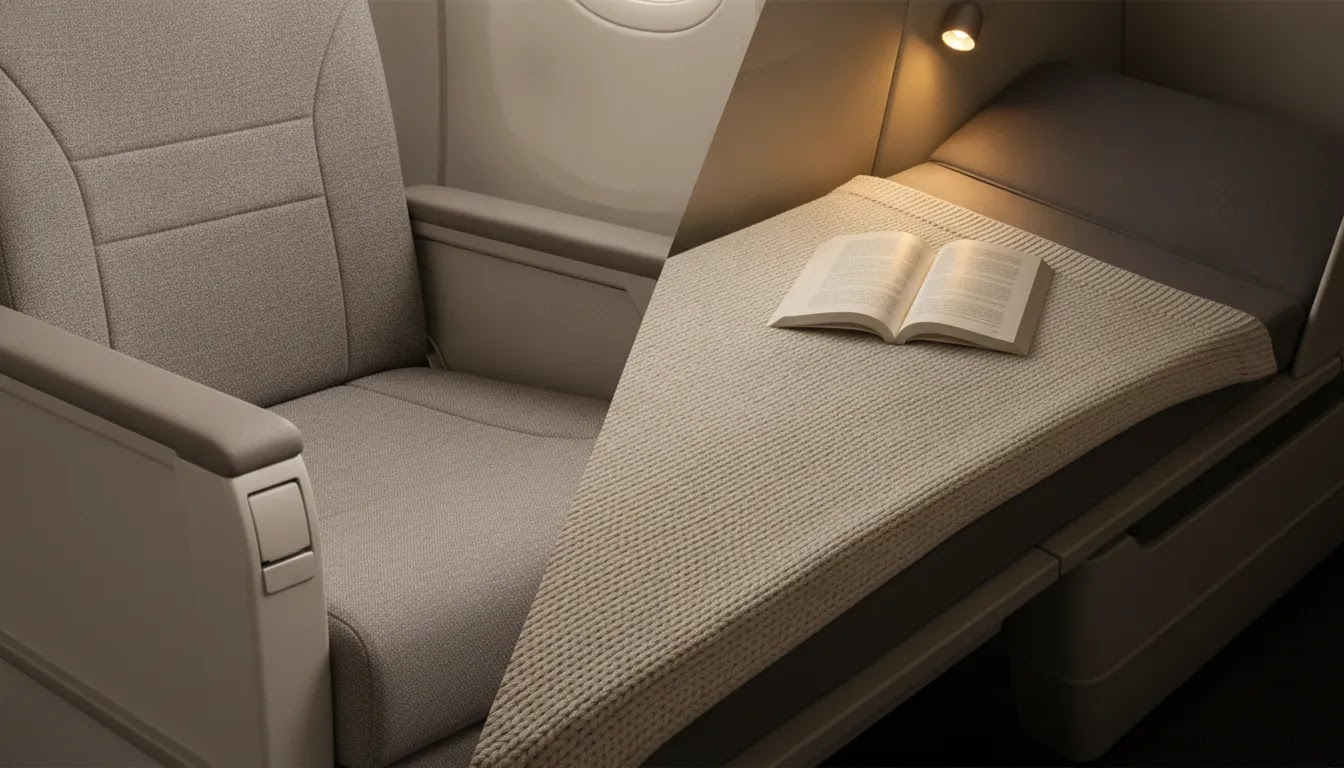
Angle-flat business class was once seen as a major advance. Historically, that was true. These seats recline into a slanted sleeping platform rather than a true horizontal bed. They appeared widely on older intercontinental fleets and may still show up on legacy aircraft, select secondary routes, or cabins that have not yet been refurbished.
For readers researching business class flight seats by photo alone, angle-flat designs can mislead. In upright mode, they may look substantial and premium. The challenge appears later, when the seat converts for sleep. Because the surface slopes downward, the body often shifts during the night. Travelers who sleep lightly or need stable lower-back support may notice that compromise right away.
Even so, angle-flat seats should not be dismissed without context. They can still feel far more civilized than a standard coach seat on a medium-haul evening service, especially if the cabin is quiet and the pitch is generous. Their value depends on flight length, departure time, and the traveler’s sensitivity to sleeping posture. On a short overnight, the difference may be acceptable. On a demanding transpacific segment, most experienced travelers would strongly prefer a true fully flat bed.
Fully Lie-Flat Business Class Seats
Fully lie-flat business class is the modern baseline for serious long-haul premium travel. A true horizontal bed changes not only comfort but also the whole rhythm of the journey. Travelers can dine, work, rest, and wake with far less physical strain than in older seat generations. This is the point where business class becomes genuinely restorative rather than merely upgraded.
Still, not all lie-flat seats are equal. Some use reverse herringbone layouts that angle the passenger slightly outward toward the window or aisle. Others use staggered designs, where alternating rows create different console positions and footwell shapes. Some feel spacious and airy. Others provide privacy but use a tighter footwell. Direct aisle access is one of the clearest quality markers because it lets every passenger move freely without disturbing a neighbor.
On aircraft such as the Boeing 777, airlines often have enough cabin width to create ambitious business class cabins with larger surfaces, wider side consoles, and more convincing personal space. Readers interested in premium benchmarks may also compare lie-flat products with first class seats, where privacy, bed dimensions, and service levels may extend the same design philosophy even further.
What Business Class Seats Are Like in Real Use
The lived experience of business class seats often differs from the category label. In upright mode, a strong seat should feel stable for dining and comfortable for extended work. It should also offer enough width for a natural shoulder position. In addition, the tray table should feel secure, and storage should keep eyeglasses, headphones, and devices within easy reach. Those details may sound minor, but they shape whether a long flight feels composed or mildly inconvenient.
Sleep reveals the biggest differences. Bed length matters, but shoulder clearance, seat taper, and footwell shape matter too. A seat may look elegant in photos and still feel restrictive in bed mode, especially if the footwell narrows sharply or the sleeping surface presses the shoulders inward. Side-sleepers often notice this first. Taller travelers may also find that two fully flat seats with similar published dimensions feel very different in practice.
Recline feel varies more than many travelers expect. Some seats move smoothly from lounging to dining to sleeping. Others work well in one posture and less well in another. Personal storage can affect comfort as much as seat width, especially on overnight routes where getting up for small items breaks the sense of rest. That is one reason experienced advisors look beyond marketing language. A seat can be technically lie-flat and still underperform if the sleeping geometry, console placement, or usable space do not match how travelers actually rest.
Suite-Style Business Class Seats
Suite-style business class represents the newest and most privacy-focused generation of the category. These products usually combine a fully lie-flat bed with high shell walls, carefully engineered storage, strong lighting design, and on some airlines a sliding door. The goal is not simply to offer more space. Instead, it is to create a personal environment that feels insulated from the rest of the cabin.
This generation appeals strongly to travelers who work in flight, value discretion, or simply sleep better with less visual interruption. A well-designed suite can create a strong sense of control over the journey. The best examples balance openness with seclusion, so the shell does not feel too tight.
There are trade-offs. Not every suite feels spacious, and some designs favor privacy over companion interaction. Center seats may work beautifully for solo travelers yet feel less natural for couples than more open designs. The line between top business class suites and entry-level first class can also become narrow, which is why some readers move next to a broader explanation of what is first class flight once they reach this level of comparison.
Aircraft and Route Differences That Matter
The aircraft type on your reservation matters because it shapes the seat architecture an airline can offer. Wide-body jets such as the Boeing 777, 787, and Airbus A330 or A350 usually support more sophisticated generations of business class. That often includes direct aisle access and long-haul bed platforms. Narrow-body aircraft such as the Boeing 737 have less cabin width, so they more often feature recliners or regional layouts rather than true suites.
Route strategy matters just as much. Airlines usually place their strongest products on flagship intercontinental routes, high-yield corporate markets, and heavily competitive city pairs. Secondary routes may still use an older product, even within the same fleet family. As a result, a traveler who assumes all business class flights seats on one airline are identical can easily book an inferior seat generation without realizing it.
For aircraft-specific context, Airbus A330 Business Class: Airlines & What to Expect is useful because the A330 family hosts everything from respectable legacy cabins to impressively modern flat-bed products. The contrast is a reminder that the aircraft name alone does not settle the quality question. For broader manufacturer context, Boeing’s official commercial aircraft pages at boeing.com and Airbus aircraft information at airbus.com help explain the cabin size differences that shape premium layouts.
How to Judge Seat Quality Before You Book
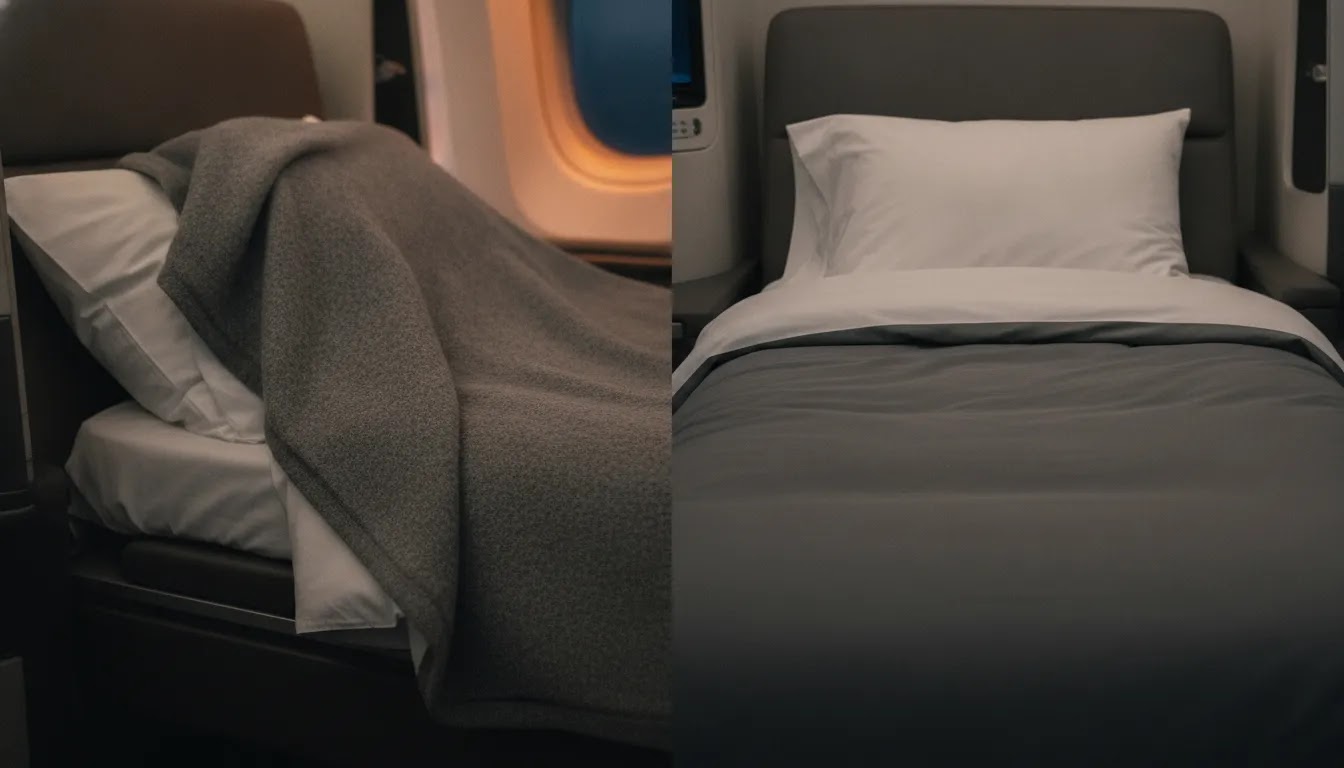
Seat quality should be judged through a sequence of practical questions. First, is the seat a recliner, angle-flat design, full lie-flat bed, or suite? Second, does every passenger have direct aisle access? Third, what happens at shoulder level and foot level once the bed is deployed? Some seats feel generous when upright yet become restrictive while sleeping because the footwell narrows sharply.
Next, study the cabin layout itself. A dense 2-2-2 configuration can still include lie-flat seats, but window passengers may need to step over a neighbor. That can be acceptable for couples and less attractive for solo travelers. Reverse herringbone products often provide a balanced mix of privacy and aisle access, while some staggered layouts create “throne” seats that are notably better than adjacent positions.
Then evaluate the cabin beyond the seat frame. Storage, tray stability, device charging, lighting placement, and service flow all affect whether the business class flight cabin interior feels polished or merely adequate. Travelers comparing cabins across categories may also want to review best premium economy airlines or a direct premium economy vs business class comparison, especially when deciding how much sleep capability and privacy they truly need for a given trip.
Seat Selection by Traveler Type and Flight Timing
The highest-rated seat in a cabin is not always the right one for every traveler. Solo travelers often prefer window positions or more enclosed seats that reduce visual traffic and create a clearer personal boundary. Couples may value center seats that allow easier conversation, even if those positions feel slightly less private. A traveler planning to work for much of the flight may prioritize a larger side console, easier aisle movement, and a tray table that supports a laptop for several hours.
Timing changes the calculation. On a daytime flight, openness, outward visibility, and a more social layout may feel entirely appropriate, especially if sleeping is not the main goal. On an overnight route, privacy, bed geometry, and reduced interruption usually matter more. Some recliner products remain perfectly suitable for a shorter daytime sector, while the same seat could feel inadequate on a red-eye where rest is central. This is why premium cabin selection should match the actual use of the flight, not only the status of the cabin.
Even within one business class cabin, standout seats may suit different priorities. A so-called throne seat with exceptional storage and separation may be ideal for a solo traveler, but less appealing for a couple who want easy interaction. Likewise, an aisle-adjacent seat may feel efficient for a traveler who gets up often, yet too exposed for someone hoping to sleep without interruption. In most cases, the strongest choice comes from matching seat position to traveler type, route length, and departure time.
Related Cabin Guides in This Hub
Aircraft Cabin Guides
Airbus A330 Business Class: Airlines & What to Expect examines one of the most variable aircraft families in premium travel. It helps readers understand why the same airframe can host very different business class generations, from older layouts to modern direct-aisle-access cabins. If your booking shows an A330, this guide adds the fleet-specific nuance that a general seat article cannot provide on its own.
Boeing 737 First Class: What to Expect Domestically is valuable because it highlights the limits of narrow-body premium travel. Although it focuses on first class, it clarifies what domestic front-cabin service can realistically deliver when compared with long-haul flat-bed expectations. For readers moving between domestic and international premium products, that distinction is especially useful.
Premium Amenities & Perks
Luxury Business Class: The World’s Best Cabins complements this article by shifting from seat generations to exceptional overall products. Once you understand the design logic behind recliners, angle-flat seats, lie-flat beds, and suites, this article shows how leading airlines combine those hardware choices with ground service, dining, and privacy to create a more complete premium experience.
Common Mistakes Travelers Make
One common mistake is assuming business class is a uniform promise. It is not. The phrase covers several generations of seat design, and the comfort gap between them can be substantial.
Another mistake is focusing only on the headline photo. Marketing images rarely show bed length, footwell taper, storage inconvenience, or whether a window passenger must climb past a seatmate.
Travelers also sometimes overvalue cabin labels and undervalue route context. A shorter daytime flight may not need the same seat quality as an overnight crossing. By contrast, a long overnight sector places much greater value on bed geometry and privacy.
Finally, some readers compare business class only to first class when the more useful question is whether the specific seat generation matches the demands of the trip. In many cases, a modern suite-style business class cabin can feel more relevant than an older first class product on another route.
Why Specific Seat Numbers Can Be Less Desirable
Travelers sometimes hear that a particular seat number should always be avoided, but the real issue is usually cabin geography rather than the number itself. A seat may underperform because it sits beside a galley, near a lavatory, across from a crew workstation, or in a row that gets more foot traffic and light during the flight. On overnight sectors, those details can matter as much as the seat model.
Other weak positions are less obvious. Some rows have reduced personal storage, narrower footwells, or consoles arranged differently from the rest of the cabin. Window seats may occasionally have misaligned windows, which affects the sense of openness. Meanwhile, bulkhead positions can attract bassinet placements and the activity that families and crew naturally require. A seat map may not reveal these distinctions unless the traveler studies the row in context.
This is why experienced premium travelers check row position, subfleet variation, and the exact cabin version before assuming every seat in the same business class cabin is interchangeable. A seat labeled 11A on one aircraft could be excellent, while the same number on another configuration may be less restful because of noise, traffic flow, or compromised bed geometry. The number is rarely the story. The surrounding cabin architecture usually is.
Next Steps and Further Reading

If you want to keep building context around premium cabins, the most logical next step is the broader Premium Cabin Experience & Amenities section, where related guides are grouped together. Readers researching planning strategy may also find Premium Flight Booking & Tips useful for understanding how aircraft changes, route patterns, and service details can influence premium travel decisions. If your focus is itinerary planning, business class international flights can add route-specific context.
For travelers who prefer expert help interpreting seat maps, aircraft swaps, and route-specific differences, Flight Experts offers a concierge-style booking approach rather than a self-service platform. The agency’s current business class flight booking service covers routes from the US to Europe, Asia, the Middle East, Australia, and domestic US markets, with personalized consultant support, seat selection assistance, meal preference coordination, check-in support, and cabin upgrade alerts. According to current service information, options are typically presented quickly after inquiry, and the agency maintains a 5.0 Trustpilot rating across 79 reviews. Mike Chirilenco leads the business with a client-centered, relationship-driven approach designed for travelers who value precision, discretion, and continuity across multiple journeys.
Frequently Asked Questions
Are all business class seats lie-flat now?
No. Many long-haul flagship routes now feature fully lie-flat seats, but regional and domestic business class often still uses recliners. Some older long-haul aircraft may also retain angle-flat designs or legacy layouts. The route, aircraft, and subfleet matter more than the cabin label alone.
Is a Boeing 777 usually better for business class than a Boeing 737?
For long-haul premium seating, usually yes. The Boeing 777 is a wide-body aircraft with the cabin width needed for more advanced layouts, including direct aisle access and larger bed platforms. A Boeing 737 is far more likely to feature a domestic-style recliner product rather than a true long-haul flat-bed experience.
What is the biggest difference between angle-flat and fully flat seats?
The sleeping surface. An angle-flat seat slopes downward, which can cause the body to shift during rest. A fully flat seat creates a horizontal bed, generally improving sleep quality, body support, and overall comfort on overnight flights. That difference is especially noticeable on longer international routes.
Do suite-style business class seats always have doors?
No. Some suite-style cabins use high walls and strong privacy architecture without adding a door. Others include a sliding door as part of the design. Privacy depends on the whole seat shell, the spacing, and cabin layout, not just whether a door is present.
How close can business class get to first class?
Modern business class can come very close in seat privacy and sleep quality, particularly on top long-haul carriers with enclosed or semi-enclosed suites. The gap often becomes more visible in ground services, dining ritual, cabin density, and highly personalized attention rather than in the bed alone.
Should couples choose the same seats as solo travelers?
Not always. Solo travelers often prioritize privacy and direct aisle access above all else. Couples may prefer center seats with easier conversation or more open layouts, even if those seats feel slightly less secluded. The best choice depends on whether the journey is meant for rest, work, or shared time.
Can a travel specialist help interpret business class seat differences?
Yes. This is one of the clearest advantages of working with an expert rather than relying only on a booking engine. A specialist can compare aircraft types, subfleet variations, seating layouts, and route-specific product differences before ticketing. That may be especially valuable on complex or high-stakes itineraries.
Does Flight Experts only handle first class travel?
No. Flight Experts also handles business class bookings, premium economy, group travel, and complex multi-city itineraries. Current service details show personalized support for major business class routes, including consultant guidance, seat selection help, and related premium travel coordination tailored to the client’s itinerary.
What are seats like in business class?
They vary widely. A short-haul business class seat may be a wider recliner with more personal space, while an international long-haul seat may convert into a fully flat bed with direct aisle access and heightened privacy. In real use, the important differences are often seat width, shoulder room, footwell shape, storage, and how comfortable the bed feels once deployed, not just how polished the seat appears in photos.
Why avoid seat 11A on a plane?
There is nothing inherently problematic about 11A as a seat number. If travelers avoid it, the reason is usually specific to that aircraft and cabin layout. A seat in that position could be near a galley or lavatory, have a misaligned window, offer less storage, or use a slightly weaker bed geometry than other rows. The row location and aircraft version matter far more than the number itself.
Are all business class seats the same on international routes?
No. International business class can range from older angle-flat designs to highly refined suite-style cabins. Even within one airline, different aircraft and subfleets may carry different seat generations on different routes. A long-haul label alone does not confirm the quality or privacy of the actual seat you will receive.
How do I know if a business class seat is good for sleeping?
Look beyond whether the seat is lie-flat. The stronger indicators are bed length, shoulder space, footwell shape, cabin privacy, and whether the row is exposed to galley or lavatory traffic. Some seats are comfortable for lounging but less convincing overnight because the bed narrows at the feet or feels restrictive through the shoulders. A detailed seat and cabin review, or guidance from a premium travel specialist, can usually clarify that before booking.
Glossary
- Angle-flat: A seat that reclines into a sloped sleeping surface rather than a horizontal bed.
- Direct aisle access: A layout in which every passenger can reach the aisle without climbing over another traveler.
- Herringbone: A seat layout angled toward or away from the aisle to improve privacy and access.
- Reverse herringbone: A layout in which seats generally angle outward, often popular for balancing privacy and openness.
- Staggered layout: A design where seats alternate positions, often creating different storage or footwell shapes by row.
- Suite-style business class: A premium business class seat with heightened privacy architecture, sometimes including a door.
Key Takeaways
- Business class seats span multiple generations, from recliners to suite-style flat-bed products.
- Seat generation matters more than the label alone, especially on overnight flights.
- Wide-body aircraft such as the Boeing 777 usually support more advanced business class cabins than narrow-body aircraft such as the Boeing 737.
- Direct aisle access, bed geometry, privacy, and footwell design are among the most important evaluation points.
- Expert guidance can be valuable when route, aircraft, and subfleet differences materially affect the premium experience.
Conclusion
The phrase business class seats covers a far wider range of experiences than many travelers expect. A well-executed recliner can work perfectly on a short daytime route, while a long overnight journey calls for a more exacting standard, often a true lie-flat bed or an advanced suite-style product. That is the central lesson: the right seat is not defined by prestige alone, but by how well its generation, layout, and privacy level fit the trip you are actually taking.
For travelers who prefer clear guidance over guesswork, Flight Experts provides a more deliberate path. Mike Chirilenco and the team focus on premium, personalized planning rather than automated booking. If you are evaluating a specific route, aircraft, or cabin and want an informed view before you commit, speaking with a luxury travel specialist may be the most efficient next step.



