Air India Business Class Review: Seats, Routes & Value

Air India Business Class at a Glance
- Rating: 3.5/5, with the specific aircraft carrying substantial weight.
- Best for: Travelers who value nonstop access to India, a broad domestic network, or a modern cabin on selected aircraft.
- Who should skip it: Travelers who require a fully uniform suite experience and highly predictable service on every long-haul departure.
- Price: Dynamically priced by route, travel date, aircraft, and availability. No single fare level represents the product accurately.
- Central finding: Air India can be a compelling choice, but the booking decision should begin with the operating aircraft rather than the airline name alone.
| Aircraft | Cabin characteristics stated in this review | Best suited to |
|---|---|---|
| Airbus A350 | 1-2-1 seating, direct aisle access, a fully flat bed, and a more contemporary cabin environment. | Overnight travel where privacy, rest, and arrival condition matter. |
| Boeing 777 | A lie-flat seat may be available, but layouts can offer less privacy, storage, and convenient aisle access. | Travelers who value a nonstop route or convenient schedule. |
| Boeing 787 | A more compact Business Class environment and seat design that merits close inspection. | Itineraries where the specific aircraft and seat map have been reviewed. |
What Is Air India Business Class?
Air India Business Class is the airline’s premium cabin on selected domestic, regional, and long-haul flights. Its long-haul offering is particularly relevant for travelers flying between India and North America, Europe, the United Kingdom, Australia, Asia, and the Middle East. Seasonal schedule changes may apply.
The airline’s experience is not uniform. A modern Airbus A350 flight can present a far more private and contemporary environment than a legacy Boeing 777 or Boeing 787 configuration. That contrast is central to any honest Air India assessment. A ticket marketed as Business Class may include similar broad privileges, such as priority services and enhanced baggage allowances. Yet the seat, cabin ambiance, and sleep quality can differ materially.
For a traveler planning onward journeys beyond Delhi or Mumbai, Air India’s network can make the carrier strategically useful. Its domestic and regional reach may reduce the need for a separate airline ticket. It may also avoid an additional international connection through another hub.
International and Domestic Air India Business Class
Air India’s international Business Class product should not be assumed to continue unchanged on a domestic connection within India. Long-haul widebody flights may provide lie-flat seating. Domestic and shorter regional services commonly use a recliner-style premium seat. The distinction matters most after an overnight arrival. A traveler may be expecting rest rather than another extended period in an upright cabin.
The domestic sector can still be useful for priority airport services, a more spacious seat, and the convenience of a coordinated journey. However, it serves a different purpose from the long-haul cabin. Cabin design, meal service, baggage treatment, and lounge access may vary by route, aircraft, and ticketed fare family. Review the operating aircraft for every segment, not only for the international departure.
For a short connection to Bengaluru, Goa, Kochi, or another Indian city, the relevant question is usually whether the transfer timing supports the purpose of the trip. A well-timed domestic connection may be preferable to an overnight stop in Delhi or Mumbai. Travelers arriving for a wedding, a family occasion, or an important meeting may prefer additional time to recover, collect belongings, and settle before continuing.
The Tata Ownership Transition Is the Story Behind the Cabin
Tata Group resumed ownership of Air India in 2022. It began a long-term effort to renew fleet, service delivery, branding, training, and network planning. The work is significant because premium airline products are built through hundreds of operational details. It is not only a new seat or redesigned menu.
Travelers may see evidence of that change in newly delivered aircraft, refurbished touchpoints, and a more deliberate premium identity. Air India has also been integrating its network planning with the broader Tata aviation portfolio following the Vistara merger. For international passengers, that may strengthen connection possibilities within India. It may also create more coherent scheduling over time.
The limitation is equally clear. Fleet renewal is a multi-year process. Older widebody cabins may remain in operation on commercially important routes, and aircraft substitutions can occur. A discerning traveler should not assume that a photographed new suite will appear on every itinerary. Review the confirmed aircraft, seat map, flight timing, and connection plan before ticketing.
Seats, Privacy, and Sleep Depend on the Aircraft
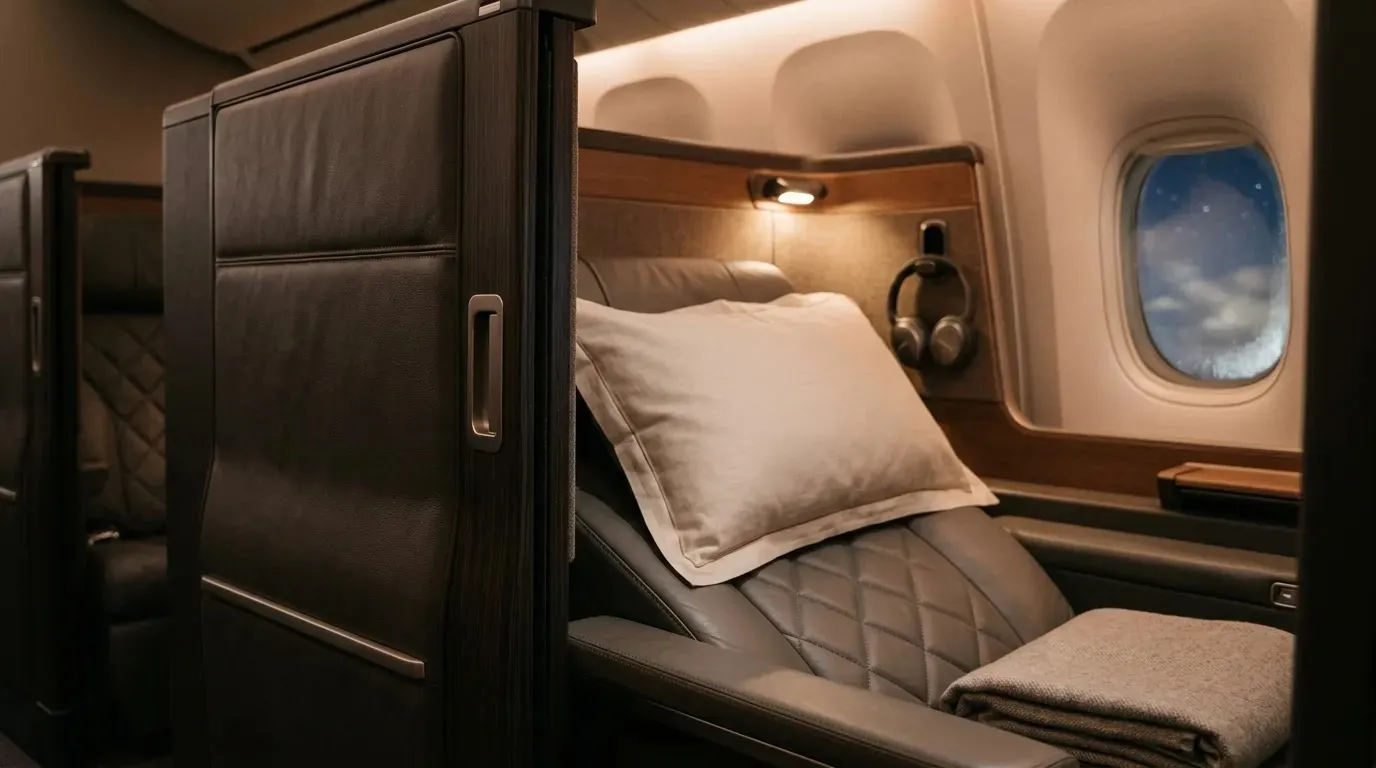
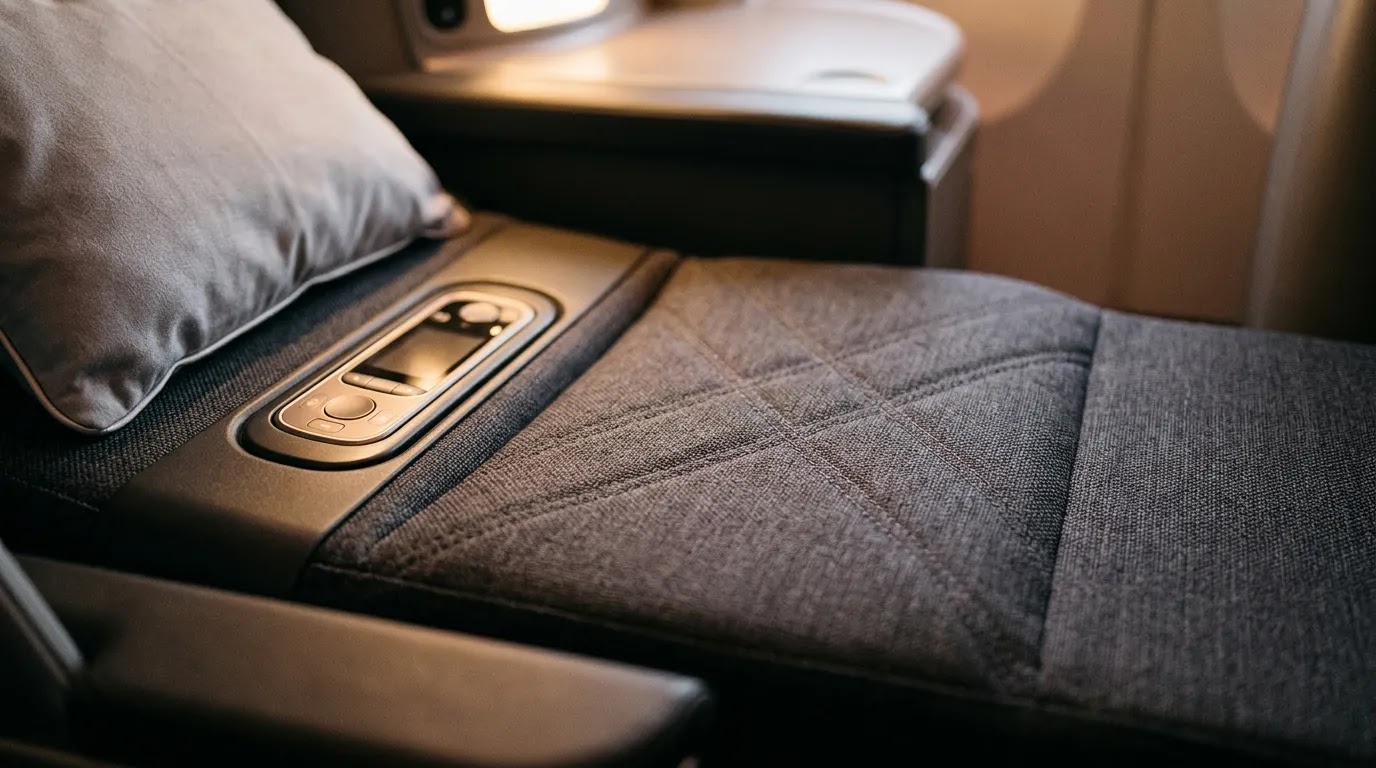
The Airbus A350 is the most reassuring place to start. Air India’s newer A350 Business Class cabin uses a 1-2-1 layout, giving each traveler direct aisle access. The product is designed around privacy, personal storage, a fully flat bed, and a more contemporary entertainment environment. For an overnight journey, those elements can change the experience from merely comfortable to properly restorative.
Center suites may suit couples who wish to converse during the flight. Window seats are generally preferable for solo travelers prioritizing privacy. Even here, travelers should inspect the seat map. Bassinet positions, galley proximity, and lavatory traffic can affect the cabin’s quietest areas.
Legacy Boeing 777 and Boeing 787 cabins may use denser arrangements. Some configurations do not give every traveler direct aisle access. A fully flat bed may still be available on certain aircraft. However, privacy, storage, screen quality, and ease of moving around the cabin can feel dated beside Air India’s newest product.
This does not automatically make the legacy cabin unsuitable. On a daytime flight, a traveler who values a nonstop route and arrives at a convenient hour may reasonably accept an older seat. For a red-eye departure before a board meeting, wedding celebration, or demanding first day in India, prioritize the newer 1-2-1 cabin.
Air India Business Class by Aircraft
The Airbus A350 generally offers the clearest Business Class proposition, with 1-2-1 seating, direct aisle access, and a more enclosed personal space. Its fully flat bed and current-generation cabin environment make it the preferred aircraft when arrival condition is important. Window suites are usually the strongest choice for privacy. Center seats can work well for companions, subject to the divider arrangement.
Boeing 777 aircraft may operate with older layouts that feel materially denser than the A350. Depending on the individual aircraft, a traveler may encounter a lie-flat seat but less personal storage and reduced privacy. Aisle access may not be equally convenient from every position. Boeing 787 cabins can also differ from the newer A350 experience. They often have a more compact Business Class environment and seat design that merits close inspection before confirmation.
Check aircraft assignment for each flight segment, particularly on an itinerary involving more than one long-haul sector. Airlines may substitute equipment for operational reasons. A flight number alone does not confirm a particular cabin. Reviewing the current seat map can reveal whether a selected seat is near a galley, lavatory, bassinet position, or cabin divider. On overnight flights, a window seat away from these areas is typically more restful. Still, the most suitable position depends on the specific configuration and a traveler’s personal preferences.
Route Network: Direct Access Is Air India’s Defining Advantage

Air India’s route map can be especially valuable because it places India at the center of the itinerary. It does not treat India as an onward destination from a distant connection hub. Direct service, where offered, may save meaningful time and reduce the uncertainty of an extra transfer. Travelers can review current routes and schedules on Air India’s official website.
Delhi is usually the most important long-haul gateway, with Mumbai also playing a meaningful role. The practical benefit arrives after landing. Travelers may be able to continue to cities such as Bengaluru, Hyderabad, Chennai, Kolkata, Ahmedabad, Goa, or Kochi under a more coordinated itinerary. Check connection times, terminal procedures, and baggage handling carefully. This is particularly important where an international arrival connects to a domestic flight.
For family visits, destination weddings, or multi-city business schedules, that network depth can outweigh a more elaborate onboard product elsewhere. A traveler flying to a smaller Indian city may prefer one airline relationship and a shorter overall journey. That may be more attractive than an exceptional premium cabin followed by an inconvenient separate connection.
For planning context beyond the cabin itself, our guide to business class to India explores the wider routing considerations that may influence a premium itinerary.
Baggage, Transfers, and Arrival Logistics in India
Business Class baggage allowances can vary by route, fare family, and ticketing conditions. This deserves particular attention for travelers carrying formalwear, wedding items, gifts, professional equipment, or luggage for an extended stay. Confirm both the checked-baggage allowance and any individual-piece limits before ticketing. Do not rely on a general cabin entitlement. Air India publishes its current baggage guidelines online.
An international arrival in Delhi or Mumbai may involve immigration, baggage reclaim, customs, terminal movement, and a further baggage drop and security screening for some domestic connections. The time required can vary considerably by arrival bank, airport procedures, and whether a traveler is continuing on the same ticket. A connection that appears adequate in a timetable may feel less comfortable after a long overnight flight or during a busy arrival period.
Through-checked baggage and protected connections are itinerary-specific matters. Confirm them before the ticket is issued, especially where an international flight and domestic sector involve different operating arrangements. A qualified travel advisor can review the transfer process, current terminal information, and the time appropriate for the journey. This is preferable to treating an onward domestic flight as a routine detail.
Dining, Service, and the Airport Experience
Air India’s service proposition draws on Indian hospitality, with menus that may include Indian and international selections. On the strongest flights, the experience can feel warm, hospitable, and distinctively tied to the destination. Meal timing may be especially relevant on overnight services. A traveler may prefer a lighter meal and an earlier transition to rest.
Consistency remains a consideration during the airline’s renewal period. Service style, menu presentation, amenity provisions, and crew rhythm may vary by route, aircraft, and operational conditions. A premium cabin is judged as much by small moments as by headline specifications. These moments include a prompt drink refill, proactive bedding setup, and careful handling of a special meal request.
Ground arrangements also vary by departure airport. Air India Business Class passengers may receive priority check-in, lounge access, and priority boarding where provided. However, lounge quality is often determined by the airport and local partner arrangements rather than the cabin alone. At Indian hubs, allow prudent time for security and transfer procedures, particularly during peak international departure banks.
Strengths and Considerations

Strengths
- Nonstop and India-centered routing may simplify a journey that would otherwise require an additional international connection.
- Newer Airbus A350 Business Class cabins offer direct aisle access and a substantially more private sleeping environment.
- Delhi and Mumbai can support onward travel to a wide range of Indian cities under a coordinated itinerary.
- Indian-inspired dining and cultural familiarity may be especially appealing for travelers visiting family, attending celebrations, or beginning a longer India itinerary.
- The Tata-led renewal program gives the airline a clearer premium direction than its older cabins alone would suggest.
Considerations
- Cabin quality can vary sharply between newer and legacy aircraft, even on comparable long-haul routes.
- Older seat layouts may offer less privacy and may not provide direct aisle access for every passenger.
- Service and lounge quality may be less predictable than on airlines with a more mature, uniform premium proposition.
- Aircraft substitutions can affect the expected seat and should be monitored close to departure.
Pricing and Value: How to Judge the Premium Investment
Air India does not have one meaningful published Business Class price. Fares move according to departure city, date, cabin inventory, route competition, flexibility, and the operating aircraft. The most useful value assessment is not a headline amount. It is the relationship between the itinerary and the experience it delivers.
A newer A350 suite on a nonstop overnight flight may represent strong value when time, rest, and arrival condition are important. The same evaluation becomes less favorable if a legacy cabin is paired with an inconvenient connection or a very long layover. It can also be less favorable with a seat that does not match the traveler’s sleep preferences.
Look beyond the flight number. Confirm the fare rules, baggage entitlement, lounge eligibility, aircraft type, seat map, onward connection protection, and arrival time. For milestone travel, it can also be prudent to ask whether a more reliable routing or a more private cabin is worth prioritizing over a modestly shorter connection.
Flight Experts approaches these decisions as itinerary questions rather than cabin-label questions. Mike Chirilenco and the team can help assess whether Air India’s direct network, newer aircraft, and connection structure suit the purpose of your journey. They can also identify the details that may affect comfort and reliability.
Alternatives to Consider
- Qatar Airways Business Class: A strong option for travelers who prioritize a more consistent premium experience and a Doha connection that works well for their schedule.
- Emirates Business Class: Worth considering for travelers who prefer Dubai as a connection point and value a large global network with established premium ground services.
- Singapore Airlines Business Class: A suitable choice for certain Asia-Pacific itineraries where Singapore offers a practical connection and a highly polished service environment.
Each alternative introduces a different connection geography and travel rhythm. The strongest option usually balances sleep, total journey time, airport experience, and the requirements of your final destination in India.
Frequently Asked Questions
Is Air India Business Class worth it?
Air India Business Class may be worth selecting when the route provides a convenient nonstop flight or a well-structured connection within India. The strongest version of the product is generally found on newer aircraft with 1-2-1 seating. On legacy widebodies, value depends more heavily on fare conditions, flight timing, seat assignment, and the convenience of avoiding another international transfer.
Which Air India Business Class seat is best?
On a newer 1-2-1 cabin, a window suite is usually the preferred choice for a solo traveler seeking privacy and uninterrupted rest. Couples may prefer paired center seats, depending on the divider design. On older cabins, choose an aisle seat where possible, especially if direct aisle access is not available for all passengers. Review the specific seat map before confirming the itinerary.
Does Air India Business Class have lie-flat seats?
Many long-haul Air India Business Class flights offer lie-flat seating, but the exact design and surrounding privacy depend on the aircraft. Newer Airbus A350 cabins provide a more contemporary suite-style arrangement with direct aisle access. Older Boeing 777 and Boeing 787 aircraft may offer a different seat layout and a less private sleeping environment. Confirm the assigned equipment before booking.
What does Air India Business Class include?
Inclusions typically may include priority airport services, lounge access where available, enhanced baggage allowances, premium meal service, and a larger seat with more recline or a lie-flat bed on eligible long-haul aircraft. Exact benefits can vary by route, airport, fare family, and operational conditions. The ticketed itinerary remains the appropriate source for confirmed entitlements.
What is the Air India Business Class baggage allowance?
Air India Business Class baggage allowances vary by route, fare family, and ticketing conditions. International journeys may carry different entitlements from domestic sectors, and individual piece limits may also apply. Travelers carrying formalwear, wedding items, or luggage for an extended stay should confirm the allowance shown on the ticketed itinerary before departure.
What is Air India Business Class like on the Boeing 777?
Air India Business Class on the Boeing 777 may offer a lie-flat seat on long-haul routes. However, the cabin can be less private and less current than the Airbus A350 product. Seat layout, direct aisle access, storage, and entertainment equipment can vary by aircraft. Reviewing the operating aircraft and seat map remains particularly important for an overnight journey.
Is Air India Business Class different on domestic flights within India?
Not necessarily. A long-haul premium cabin may promise the indulgence of a fully reclining bed. The same cannot always be guaranteed on a shorter domestic or regional hop. Here, Business Class more often takes the form of a generously proportioned recliner paired with elevated service touches. Priority handling and baggage allowances typically remain intact regardless of aircraft type. Still, we always recommend our clients view each flight segment on its own terms, as the experience can vary considerably by route and equipment.
Do airlines clean Business Class seats between flights?
Airlines typically clean and prepare Business Class cabins between flights. However, the depth of cleaning and turnaround procedures can depend on the station, aircraft schedule, and operational conditions. Bedding, amenities, and cabin presentation may also vary by route. Travelers with a particular concern should request current guidance before departure.
Is the Airbus A350 better than Air India’s older Business Class cabins?
For most discerning travelers, the Airbus A350 is likely to be the more appealing Air India Business Class experience. Its direct aisle access, updated seat design, improved privacy, and more contemporary cabin environment are significant advantages on a long overnight flight. An older aircraft may still suit a traveler who values its nonstop schedule or has a daytime departure. However, the distinction should be recognized clearly.
Can Air India be useful for multi-city trips within India?
Yes. Air India can be particularly useful for itineraries that begin internationally and continue to multiple Indian cities. A coordinated international-to-domestic connection may be more convenient than arranging separate tickets. However, connection durations and terminal processes should be reviewed carefully. This can be valuable for journeys combining Delhi, Rajasthan, Mumbai, Kerala, Goa, or southern India, depending on current schedules.
Key Takeaways
- Air India Business Class is an evolving product shaped by Tata’s fleet, service, and network renewal program.
- The aircraft type is crucial: newer A350 flights offer a materially more refined experience than many legacy cabins.
- Direct access to India and onward domestic connections are often Air India’s strongest practical advantages.
- Service, lounge access, and cabin quality may vary, so each itinerary should be assessed in detail.
- The best value usually comes from pairing a modern aircraft with a direct route and well-timed onward travel.
Verdict
Air India Business Class earns a qualified 3.5/5 because the airline’s future-facing product is more compelling than its fleet-wide consistency. The strongest reason to choose it is practical and persuasive. A modern cabin paired with direct access to India can make an international journey significantly simpler. The strongest reason to hesitate is the possibility of an older aircraft. The premium experience may not match the newest photographs or expectations.
For travelers whose plans involve major Indian cities or onward domestic travel, the right Air India flight can be a thoughtfully considered choice. Contact Mike Chirilenco and the Flight Experts team to discuss the specific aircraft, routing, and arrival experience that best support your itinerary.