
Business Class Lounge Access: How to Get In
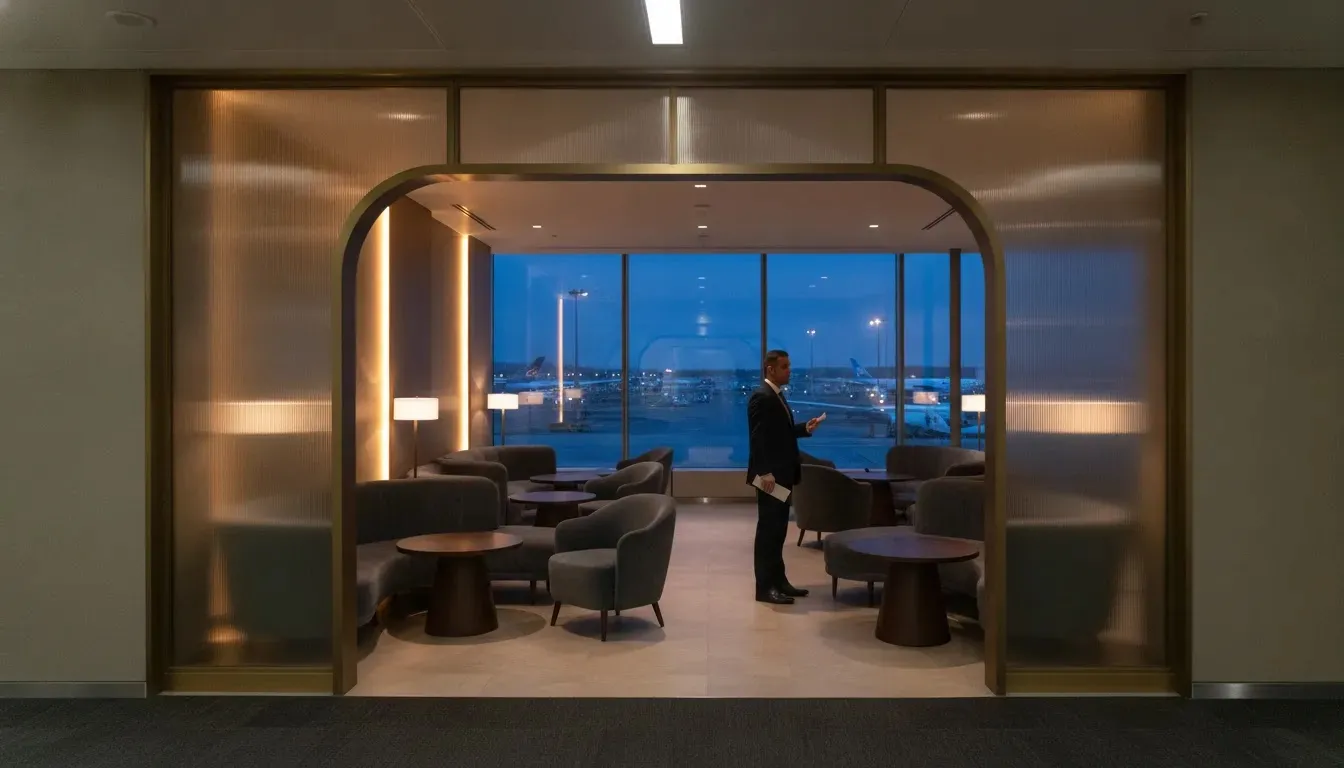
You arrive at the airport with time to spare and a long-haul flight ahead. Then one practical question matters more than many travelers expect: can you actually use the lounge? Premium travel often creates confusion here. A business class ticket may open the door, but not always in the same way across airlines, alliances, airports, and fare types. Some travelers assume any premium cabin boarding pass guarantees entry. Others lose access because the operating carrier, partner lounge arrangement, or departure airport follows different rules than expected.
Business class lounge access is less about prestige than clarity. If you know who gets in, which carriers provide lounges on certain journeys, and how you can arrange access without elite status, the airport experience feels calmer and more predictable. For many discerning travelers, that means a quiet place to work, shower, dine, or simply reset before departure.
This article focuses on the access question itself. It explains where the rules are clear, where they are not, and how to approach lounge planning with the same care you would give the seat onboard.
Why business class lounge access feels so inconsistent
The phrase business class lounge access sounds simple. In practice, fare rules, alliance reciprocity, airport infrastructure, and operating-carrier policy all shape it. As a result, two travelers with business class tickets can have very different ground experiences.
Some airlines run their own branded lounges in major hubs. Others use partner lounges or shared premium spaces. For example, a traveler departing from Frankfurt, Doha, Singapore, or Tokyo may find a polished airline-run lounge. However, the same airline at a secondary outstation may send passengers to a third-party lounge with more limited dining, seating, or shower facilities.
The cabin itself does not explain everything. If you are still clarifying what is business class, it helps to separate the onboard product from the airport experience. They relate to each other, but they are not the same. Lounge entitlement usually follows the ticketed cabin and the airline’s departure rules, not your assumptions about how premium the whole trip should feel.
That is one reason experienced travelers review the exact airport, operating airline, and route. They do not rely only on the words “business class” on a booking screen.
Who usually gets into a business class lounge
Business class lounge access for same-day departing passengers
In most cases, travelers flying same-day in international business class receive lounge access at the departure airport. This is the most common and most reliable path into an airport lounge business class travelers use.
The key phrase is same-day departure. Lounge access usually applies before your departing flight. It does not automatically continue on arrival. Some carriers and airports offer arrivals lounges, but those are separate products, so travelers should verify them in advance.
Business class lounge access on eligible connections
If you connect through a hub on a business class itinerary, you may keep access at the connecting point. This is especially common when the onward segment is also in business class and the itinerary qualifies as a same-day connection. That detail often matters on long trips to Asia, the Middle East, or Australia.
Connection rules can become more nuanced when one segment is long-haul business class and another is a shorter regional leg in a different cabin. In some cases, airlines still allow access. In others, they do not.
Status holders traveling in another cabin
Elite frequent flyer status can open the lounge door even when you are not flying in business class. That route falls outside pure cabin-based entitlement. Still, it explains why lounge reception areas often look inconsistent from the outside. One guest may enter with a business class boarding pass, another with alliance status, and a third through a premium credit card arrangement.
This article centers on access without status. Even so, status remains one of the most common alternative paths.
Business class lounge guest policies vary widely
Guest access is one of the most misunderstood details. Your own admission does not always mean you can bring a companion. Some business class lounges allow one guest only for top-tier status holders, not for all business class passengers. Others limit entry to the ticketed traveler alone.
Families should verify this before departure, especially when one adult travels in business class and others do not.
How business class lounge access changes across alliance and partner networks
Once cabin eligibility is clear, the next variable is the network behind the ticket. Alliance relationships and bilateral partner agreements often shape lounge access more than travelers expect. This is especially true on connecting itineraries, codeshares, and departures outside an airline’s home market.
An airline-operated lounge is usually the clearest scenario. The carrier controls the entry rules and the guest experience more directly. Alliance lounges sit one step further out. They still align with member-carrier access rules, but they do not always match in layout, service, or staffing. Third-party lounges form a separate category again. Airlines usually use them where neither the operating carrier nor the alliance maintains a dedicated space. As a result, a single business class ticket could lead to any of these, depending on the airport.
This is why the same itinerary may produce a different outcome in different cities. A traveler flying on one carrier’s flight number from a major hub may enter that airline’s own lounge. On the return from a secondary airport, the same ticket could direct the traveler to an alliance lounge or a contracted facility in another terminal.
Codeshare itineraries deserve special attention. The brand on the confirmation is not always the airline running the flight on the day of departure. Lounge eligibility may depend on the operating carrier, the alliance involved, and the departure terminal. At larger airports, an airline may use more than one terminal, and the lounge arrangement may differ between them. Therefore, a quick check before travel often prevents reception-desk surprises.
Business class lounge access by lounge type
| Lounge type | Who usually operates it | What the article says travelers can expect |
|---|---|---|
| Airline-operated lounge | The carrier itself | The clearest rules and a more directly controlled guest experience |
| Alliance lounge | An alliance member network | Access rules may align, but layout, service, and staffing may differ |
| Third-party or contract lounge | A shared lounge operator | Often used outside home markets, with a more limited or less brand-specific experience |
Which airlines typically offer business class lounge access
Most major long-haul carriers offer some form of lounge access for business class passengers, but the quality and ownership model differ. Broadly, you can think of them in three groups.
Airlines with flagship hub lounges
Carriers such as Emirates, Qatar Airways, Singapore Airlines, Lufthansa, ANA, JAL, Delta, United, and American Airlines often provide dedicated premium lounges at core hubs, either under their own name or under a premium sub-brand. These usually deliver the most consistent experience because the airline controls the service, design, food, and staffing more directly.
That consistency matters. A traveler departing from an airline’s home base may find dining areas, showers, business facilities, quieter seating zones, and sometimes spa-style touches. The same boarding pass at another airport may lead to a partner facility instead. If you are comparing carriers broadly, this guide on what airlines have business class adds useful context.
Airlines that rely on partner or contract lounges away from home
This is extremely common and not necessarily a negative. Many respected carriers use alliance lounges, airport-run premium spaces, or contracted third-party lounges at stations where running a dedicated lounge would not be practical. The access is still genuine, though the experience may feel less brand-specific.
For the traveler, the practical question is not simply whether the airline “has lounges.” Instead, ask whether it has a lounge at your departure point, and whether that lounge reflects the caliber of the rest of the ticket.
Carriers where route and airport matter more than airline reputation
Some airlines maintain a strong onboard business class product while their lounge experiences vary materially by geography. That is why premium travelers often review lounge arrangements route by route, especially on secondary European, North American, and regional Asian departures.
If your trip priorities extend beyond the seat, reviewing overall amenities can be more useful than focusing on cabin photos alone. Similarly, travelers comparing cabin value may also want to review business class vs economy. The quiet, shower, dining, and service flow on the ground may shape your perception of the trip as much as the seat after takeoff.
What business class lounge access includes once you are inside
For many travelers, the real question is not only whether they can enter, but what the lounge experience includes once they do. In most cases, business class lounge access covers far more than a waiting area. You may find buffet dining or light meals, bar service, coffee stations, Wi-Fi, charging points, business desks, quiet seating zones, shower suites, and private corners for calls or focused work.
However, the range can vary sharply. A flagship airline lounge at a major international hub may feel like a carefully managed extension of the premium cabin, with stronger food service, better design, and more privacy. A partner or contract lounge at an outstation may still feel comfortable and useful, but the offering could narrow to light refreshments, open seating, and basic business facilities.
Some travelers also assume that every visible amenity is automatically included. That is not always the case. Certain lounges reserve spa treatments, private rooms, à la carte dining, premium champagne bars, cabanas, or cordoned-off areas for first class passengers, invitation-only guests, or top-tier frequent flyers. Even within one airline’s network, the lounge you access with a business class boarding pass may differ meaningfully from the most exclusive space shown in promotional photography.
That is why experienced premium travelers evaluate lounge access in terms of the specific services they will actually use. For example, you may want a proper meal before an overnight flight, a shower during a long connection, or a quiet place to work between meetings. In practice, the answer depends less on the word “lounge” and more on the exact facility operating that day, subject to local conditions and airline policy.
For official airline-by-airline lounge rules, travelers can also review the current policy pages of the operating carrier or alliance. For example, Star Alliance publishes its lounge access framework at https://www.staralliance.com/en/lounge-access-policy.
How to get business class lounge access without status

Many travelers assume elite status is the only alternative if they are not frequent flyers. It is not. There are several ways to secure business class lounge access without status, though not all provide the same level of certainty or quality.
Book an eligible business class fare
The most direct route is to hold a business class ticket that includes lounge entry under the airline’s rules for that departure airport. For many international itineraries, this remains the cleanest and least stressful path. You avoid the guesswork that comes with one-off passes or card-based programs, and your access ties directly to the journey itself.
For travelers planning long-haul premium trips, an agency like Flight Experts can help evaluate not only the seat and schedule but also the expected airport flow, including lounge access patterns on specific airlines and routes. If your plans focus on overseas premium travel, this guide to a business class international flight may also help.
Purchase lounge access separately where available
Some lounges sell entry directly, either through the airline or the lounge operator. This is most common with shared lounges and selected carrier lounges, though availability may be limited by crowding, departure time, or airline policy. A paid entry option can be worthwhile on a long airport dwell, but travelers should not assume it will match a flagship business class lounge experience.
Third-party access programs may also open the door to selected lounges. These can be useful for occasional travel, though travelers should check the participating lounge list and access windows carefully. In addition, Priority Pass explains network access and lounge participation at https://www.prioritypass.com/.
Use a premium credit card benefit
Many sophisticated travelers access lounges through premium payment cards rather than airline status. This can work well, especially for domestic business travel or mixed-cabin itineraries where the ticket itself does not include entry. The crucial detail is that card-based access often applies to participating networks, not necessarily to the airline lounge you expected to use.
A terminal may have several lounges, each with different access criteria. Your card could admit you to one of them, but not the airline-branded business class lounge next to your gate.
Travel on an itinerary with included premium ground privileges
On some premium long-haul bookings, lounge access is part of a broader package of services that may include priority check-in, expedited airport handling, and support with seat selection or special requests. Flight Experts, for example, arranges business class and first class itineraries across major long-haul carriers, and that advisory role may include clarifying which ground privileges typically come with the exact booking under review.
Where business class lounge access travelers most often get caught out
Domestic versus international assumptions
One of the most common misunderstandings involves domestic business class. In many markets, especially within the United States, a domestic premium cabin does not necessarily include lounge access simply because the seat is sold as business class or first class. Policies differ sharply from international premium travel.
This often disappoints travelers who book a premium domestic segment as part of a larger day of travel and expect the same privileges they receive on long-haul international departures.
Operating carrier versus marketing carrier
Your ticket may display one airline brand while another airline actually operates the aircraft. Lounge access usually follows the operating carrier’s rules, alliance agreements, and local lounge setup. If you booked through a codeshare, verify who flies the segment and which lounge agreement applies.
Departure airport limitations
Some airports simply do not have a lounge that matches the image travelers associate with premium cabins. Others may have one, but with reduced hours, capacity controls, or temporary closures. Even excellent airlines cannot fully control every outstation environment.
That is why discerning travelers treat lounge access as an airport-specific feature, not a universal promise attached to the cabin label.
Guest and family access
A family traveling on a mixed itinerary may find that one adult has entry while another traveler, nanny, or older child does not. These situations are manageable when addressed in advance and frustrating when discovered at reception.
What are the disadvantages of business class lounge access
Lounge access remains a valuable part of premium air travel, but it is not without limits. The most common disappointment is inconsistency. A traveler may picture an elegant flagship space with calm seating and attentive dining, only to find a crowded partner lounge with limited food, little privacy, and no shower availability for that departure.
Crowding is another practical drawback. During peak long-haul departure banks, even strong lounges may feel busy, especially at major connecting hubs. Seating can become harder to find. Quieter corners may fill quickly. Dining areas may not feel especially restful if several premium departures leave within the same window.
Guest restrictions also create friction. Lounge access can feel generous in theory and quite narrow in practice if companions are not admitted or if a family is split across different eligibility categories. At secondary airports, the issue is often less about denial of entry and more about the caliber of the lounge itself. The traveler may technically receive access, but only to a contracted facility that does not reflect the airline’s strongest premium standards.
For that reason, lounge access should influence airline and routing decisions only in proportion to its importance on your specific trip. If you have a long layover, an overnight departure, or meetings immediately after arrival, a superior lounge may meaningfully improve the journey. On a short nonstop with minimal airport time, the onboard product, timing, and overall itinerary may matter more. Ultimately, the strongest booking decisions weigh lounge quality as one element of the premium experience, not the only one.
How to evaluate business class lounge access before you book

The most effective way to assess business class lounge access is to review the trip in layers, not in slogans. A polished booking decision usually includes the following checks:
- Confirm the operating airline on every segment.
- Check whether the journey is international, domestic, or mixed.
- Review the departure airport and any connection points individually.
- Verify whether the airline operates its own lounge or uses a partner lounge there.
- Ask whether guest access is included, restricted, or unavailable.
- Check lounge opening hours against your actual departure time.
This is where expert itinerary planning can save time and disappointment. Flight Experts’ concierge-style approach, led by Mike Chirilenco, centers on premium travel decisions that often look simple at first glance and turn out to be highly route-specific in practice. On complex itineraries or milestone trips, that clarity may be just as valuable as the seat itself.
If you are researching the broader premium airport experience, the Premium Cabin Experience & Amenities section offers further context. Readers comparing lounge inclusion across ticket types and booking scenarios may also find the guidance in Premium Flight Booking & Tips useful.
Frequently Asked Questions
Does every business class ticket include lounge access?
No. Many international business class tickets do include lounge access, but not every business class fare works the same way. Domestic premium cabins, short regional routes, certain partner-operated segments, and airport-specific exceptions may all change the answer. The safest approach is to verify the exact operating airline, departure airport, and fare conditions attached to your ticket.
Travelers often assume the cabin name tells the whole story. However, lounge entitlement usually follows more specific rules than the seat label alone.
Do business class tickets get lounge access on every airline?
No. Lounge inclusion varies by airline, route type, airport setup, and sometimes by the way the flight is operated. Many major international carriers provide access for same-day business class departures, yet the same is not always true on domestic sectors, short regional flights, or airports served through a partner arrangement.
A traveler may be flying business class on every segment and still see different lounge outcomes at different points in the itinerary. Therefore, verifying the operating carrier and departure airport remains the most reliable approach.
Can I use a lounge when I arrive, or only before departure?
Most business class lounge access applies before departure or during an eligible same-day connection. Arrival access is a separate matter. Some airlines and airports offer arrivals lounges with showers, breakfast, and changing areas, particularly at major business travel hubs. Others do not.
If arriving refreshed for meetings or a car transfer matters to you, check for a dedicated arrivals facility rather than assuming your departing lounge rights continue after landing.
Do business class passengers always get access to the airline’s best lounge?
Not always. Airlines often reserve their most exclusive lounges for first class passengers or for a narrower set of premium customers. Business class travelers may receive access to an excellent lounge, but not necessarily the carrier’s top-tier facility.
This distinction matters at major hubs where several lounge tiers exist under one airline brand. If a particular flagship lounge is part of your expectation, confirm access specifically rather than assuming any premium boarding pass will open every premium door.
What if my ticket is booked through one airline but operated by another?
This is one of the most important details to check. In codeshare situations, the operating carrier often determines lounge access rules, available facilities, and day-of-travel procedures. Your booking confirmation may emphasize the marketing airline, while the airport experience follows the airline actually flying the aircraft.
That can affect which lounge you may enter, whether a partner lounge is used, and how guest policies apply. A brief review before departure can prevent unnecessary confusion at reception.
How do I get into the business class lounge if I am not flying business class?
You may still be able to enter through elite frequent flyer status, a premium credit card program, a lounge membership, or direct paid entry where the lounge permits it. The crucial distinction is that these routes often grant access to participating lounges rather than to every airline-branded business class lounge in the terminal.
Entry may also be subject to capacity controls or local restrictions. If the lounge itself matters, not merely lounge access in general, confirm the exact facility you may use before heading to the desk.
Can I bring a guest into the lounge with a business class ticket?
Sometimes, but many travelers are surprised by how restrictive guest policies can be. A business class ticket may grant entry for the ticketed traveler only. Guest privileges are more commonly attached to elite status tiers, premium memberships, or selected credit card arrangements.
Families and couples should verify this in advance, especially if only one traveler is in business class or if companions are booked on separate reservations. The rule can differ not only by airline, but also by lounge operator.
Is lounge access different on domestic and international business class?
Yes, very often. International premium tickets are far more likely to include lounge access as part of the travel experience. Domestic premium cabins, especially in the United States, may not. That difference causes frequent misunderstandings because the fare may still be marketed as business class or first class.
If your itinerary includes both domestic and international sectors, access could apply at one airport and not another. Reviewing the trip segment by segment is usually the clearest approach.
Do business class passengers get free lounge access, or are there exceptions?
Most travelers experience lounge access as included with an eligible business class ticket rather than as a separate charge at the door. Even so, there are exceptions to keep in mind. Not every business class fare includes the same ground privileges, and some airports or route types may fall under different rules.
The more practical question is whether lounge access is included with your exact ticket and at your specific departure point. That detail should be confirmed in advance, especially on domestic sectors, regional flights, or partner-operated itineraries.
Can I buy lounge access if my ticket does not include it?
In some cases, yes. Certain lounges sell one-time entry directly, and some third-party programs or premium cards provide access to participating lounge networks. The tradeoff is that purchased or card-based access may lead to a different lounge than the airline-branded one you expected.
It may also be subject to capacity restrictions. If lounge time is a meaningful part of your airport routine, confirm the exact lounge name, location, hours, and entry method before relying on a separate-access plan.
How early can I enter a business class lounge?
There is no single global rule. Some lounges admit eligible travelers several hours before departure, while others follow tighter same-day windows or align entry with long-haul schedules. Independent and contract lounges may be stricter than major airline hub lounges.
Early access matters if you prefer to arrive well ahead of departure to work, dine, or reset in private. Verify both the lounge opening hours and any time-based entry limits, especially for late-night or early-morning flights.
Do connection itineraries include lounge access during layovers?
They often do, provided the connection is same-day and the itinerary remains within eligible premium travel rules. Still, there are exceptions. Mixed-cabin itineraries, separate tickets, terminal changes, and regional partner operations can affect access.
On longer layovers, the quality of the connecting lounge may matter almost as much as the onboard seat, particularly if you plan to shower, dine, or take calls between segments. Checking the connecting airport in advance is worthwhile on any premium long-haul journey.
What are the disadvantages of business class lounge access?
The main disadvantage is that the phrase sounds more consistent than the actual experience. Access may be included, yet the lounge itself could be crowded, outsourced to a partner operator, or missing the privacy and dining standards you expected. Guest policies can be restrictive, and some of the most attractive amenities inside a lounge may be reserved for first class or top-tier travelers.
Lounge access remains worthwhile in most cases, but it should be judged by the exact airport and facility involved, not by the label alone.
How do experienced travelers avoid lounge access surprises?
They verify the airport experience with the same attention they give the aircraft and cabin. That means checking the operating carrier, the specific lounge at each departure point, guest policies, and any limits tied to route or fare.
Travelers booking complex or high-value itineraries often prefer to have those details reviewed professionally rather than piecing them together from multiple airline pages. That extra diligence usually leads to a smoother, more predictable airport experience from curb to gate.
Key Takeaways
- Business class lounge access is usually tied to the exact airline, route, airport, and operating carrier, not the cabin label alone.
- International business class more commonly includes lounge access than domestic premium travel.
- Many major airlines offer strong lounge experiences at their home hubs, while partner or contract lounges are common elsewhere.
- You may still gain access without elite status through an eligible premium ticket, paid entry, or premium card-based lounge programs.
- Guest policies, connection rules, and airport-specific limitations should always be confirmed before departure.
Conclusion
A lounge can transform the rhythm of a travel day, especially before a long-haul departure or between demanding connections. Yet the value comes from certainty, not assumption. Business class lounge access depends on who is traveling, which airline operates the flight, where the journey begins, and whether the airport supports the level of premium ground service you expect.
For discerning travelers, that makes lounge planning part of the itinerary itself. A well-chosen premium ticket may bring not only a better seat but also a quieter, more composed start to the journey. On more complex trips, especially multi-carrier or multi-destination itineraries, having an expert confirm the ground experience can prevent small surprises that feel much larger on the day of travel.
If you would like a more tailored view of which premium cabins and lounge arrangements may suit your route, speak with the Flight Experts team. Their business class, first class, and complex itinerary planning services are designed for travelers who want clarity, personalization, and a more refined travel experience from airport arrival through landing.



