
What Is First Class? Suites, Service & Who Offers It
Who this guide is for: this article is for travelers who want a clear, current understanding of what is first class flight today, whether you are early in your research or refining expectations for an international premium trip. You will get a practical framework for evaluating suites, service levels, aircraft types, and airline offerings without relying on glossy marketing language.
The goal is not to persuade you that first class is always the right choice. Instead, it is to help you understand what a first class flight looks like in the modern market, where it genuinely excels, and how to recognize the versions that deliver a truly elevated experience.
What you will learn:
- How first class flight meaning has changed over time
- What separates domestic first class from long-haul international first class
- What a first class cabin usually includes on the ground and in the air
- Which airlines still invest in true first class suites
- What planes have first class, and why route matters as much as aircraft
- Where first class sits on a plane and how cabin layouts vary
- How first class compares with business class and premium economy
- What to review before booking a first class international itinerary
What is first class flight today?
What is first class flight if the product changes by route?
The phrase first class on a plane used to suggest a fairly consistent hierarchy. Today, it is far less uniform. In some markets, especially within the United States, first class may refer to a premium seat at the front of a narrow-body aircraft. That usually includes enhanced service, larger seating, and priority handling.
On intercontinental routes, first class could mean a private suite, highly personalized dining, exceptional bedding, exclusive ground services, and an experience designed to feel closer to a boutique hotel room than a conventional airline seat.
That shift is one reason travelers should ask more than whether a flight has first class in name alone. You need to know what is first class flight on that route, on that aircraft, and on that date.
Why the what is first class flight category became more selective
Many airlines have invested heavily in business class over the last decade, particularly in fully flat beds with direct aisle access. As business class improved, some carriers reduced or removed first class entirely. Others kept it, but reserved it for flagship routes and prestige aircraft. As a result, the top tier became smaller and more distinct.
That is why what is a first class flight has become a more nuanced question than many travelers expect. In practice, it now describes the most exclusive commercial cabin still offered by a limited group of airlines. It also often comes with far fewer seats and a much more deliberate service ratio than business class.
Domestic what is first class flight versus international first class
One of the most important distinctions is scale. Domestic first class usually centers on comfort, efficiency, and a smoother airport process. International first class usually centers on privacy, rest, pace, and service choreography across a long-haul journey.
A traveler booking a coast-to-coast daytime flight may be perfectly satisfied with a wider seat and attentive cabin crew. By contrast, a traveler flying overnight to Asia or the Middle East may be looking for a suite, proper sleep, and a quieter psychological experience from check-in to arrival.
If you are trying to understand the broader premium cabin hierarchy, it helps to read what is business class alongside this guide.
What is first class flight experience really like?
Ground services often set the tone before boarding
For discerning travelers, what is first class flight often begins well before the cabin door closes. Depending on airline and departure airport, you may see dedicated check-in, expedited security handling, premium lounge access, escort service, or chauffeur coordination. These elements are not decorative. They shape how protected your time feels on a travel day.
The very best first class products understand that privacy and calm are part of the luxury. Therefore, a polished airport sequence can matter as much as the seat itself, especially before a long overnight departure or after an already demanding week.
Onboard service is more personal, not just more elaborate
Travelers often assume first class is simply business class with better food. That is too narrow. In a strong first class cabin, service tends to be more intuitive and less transactional. Meals may be flexible rather than rigidly timed. Crews may adapt the pace around your rest preferences. Amenities are usually better curated, and the overall tone is quieter and more individualized.
True first class is usually defined by space, privacy, and service discretion working together. If one of those elements is missing, the experience may still be excellent. However, it may not feel meaningfully different from top-tier business class.
Dining, bedding, and atmosphere matter more than headlines
Caviar service, designer amenity kits, and prestige champagne tend to attract attention. They can be lovely, but they are not the full story. A better test is whether the cabin supports real rest, whether the meal flow respects your timing, and whether the environment remains calm even when the flight is full.
Cabin density, lighting, storage, bed preparation, and crew attentiveness often have more practical value than the most photogenic extras. For travelers considering how seat design influences that experience, our guide to first class seats explores the physical side in more detail.
For a service-focused breakdown, you can also review first class flight amenities before you book.
How what is first class flight benefits differ on the ground and in the air
What a first class ticket may include beyond the seat
A first class ticket may deliver far more than a larger personal space onboard. Depending on the airline, airport, and route, the experience could begin with dedicated check-in, priority security handling, lounge access, escort assistance through the terminal, and in selected markets even chauffeur transfers.
Once onboard, the distinction may continue through more flexible dining, more attentive turndown preparation, elevated bedding, and a crew rhythm that is better able to adjust around your preferred pace.
This is the practical answer to the question many travelers are really asking: what is first class flight worth beyond the seat itself? In most cases, it gets you a more protected travel day. The cabin is central, but the full value usually comes from the combination of airport handling, privacy, service discretion, and reduced friction from departure through arrival.
Core benefits versus prestige extras
Some benefits are relatively common across credible first class products. A premium seat at the front of the aircraft, priority boarding, increased baggage allowance, and some form of lounge access are often part of the package. On long-haul international routes, travelers may also typically expect enhanced dining, higher quality bedding, and more individualized service than business class.
Other benefits belong to a narrower prestige tier. Private lounge dining, direct tarmac transfers, highly exclusive terminal spaces, personal escort handling, or chauffeur service are not universal. They may appear only on selected flagship routes, at certain hub airports, or within an airline’s most ambitious first class offering.
This distinction matters because travelers can easily overestimate what the ticket includes if they assume every first class product is built around the same ground experience.
Why the airport portion deserves closer attention
For many experienced travelers, the difference between a good premium flight and a truly polished one begins before boarding is called. A calm check-in sequence, a first class lounge with proper dining, or direct assistance during a tight connection may shape the day as much as the suite itself.
The strongest first class products treat the airport as part of the experience rather than merely the waiting room before it. Because these elements vary by station and local infrastructure, current guidance remains important. An airline may advertise a flagship first class concept, yet the exact airport experience could differ materially from one departure city to another.
That route-specific detail is often where professional evaluation becomes far more useful than relying on the cabin label alone. For general lounge policy context, the U.S. Department of Transportation provides consumer air travel resources at https://www.transportation.gov/airconsumer.
Where is first class on a plane and what does it look like?

Where is first class on a plane?
On most aircraft, first class is positioned at the front of the plane. That placement supports faster boarding, lower foot traffic, and a quieter feel. On some large aircraft, especially certain double-deck or flagship long-haul configurations, the first class cabin may occupy a premium section that is physically separated even more distinctly from other cabins.
Still, location alone does not define quality. Two front-row cabins can feel completely different depending on seat width, shell height, privacy doors, and how many passengers the airline places in the space.
What does a first class flight look like today?
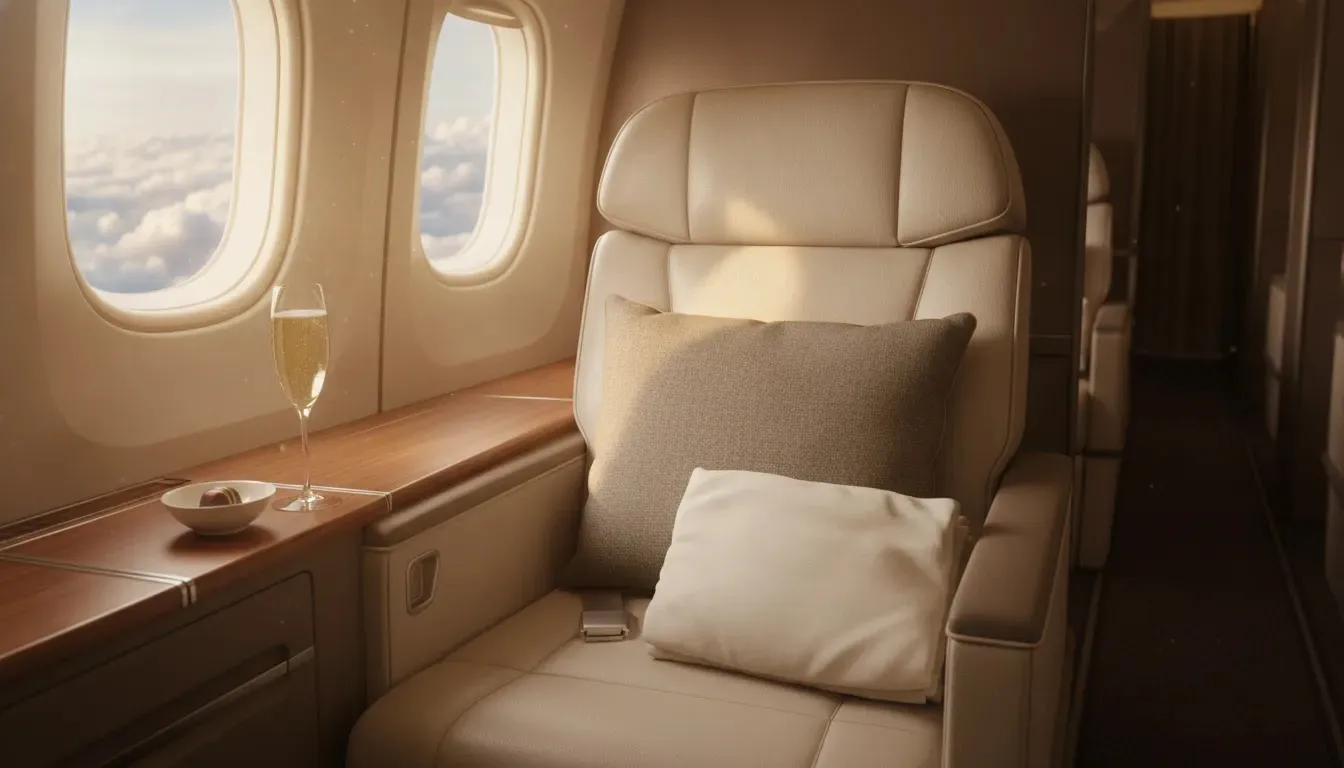
A first class cabin may take several forms. Some airlines use enclosed suites with floor-to-ceiling visual separation and doors. Others prefer open suites with impressive width, refined materials, and a more residential aesthetic. A few still offer highly spacious but more traditional seats, often on routes where service and space matter more than total enclosure.
What does first class look like in practical terms? Usually, it means a very small cabin, often four to eight seats on a long-haul aircraft, with noticeably more personal territory than business class. You may see separate surfaces for dining and work, larger screens, more generous storage, and bedding that is prepared rather than simply provided.
What planes have first class?
Not every wide-body aircraft carries first class, and not every route on a first-class-equipped aircraft sells it consistently. Airlines often reserve their most premium configurations for flagship routes between major global cities. Aircraft that may feature first class include certain Boeing 777 variants, Airbus A380 aircraft, and selected long-haul premium-configured fleets. Narrow-body aircraft may use the first class label domestically, but the product is usually very different from long-haul suites.
If seat architecture is your main focus, the dedicated business class seats guide is also useful because it highlights how far business class has evolved, and why that matters when assessing whether first class is truly distinct.
Quick comparison: domestic first class vs long-haul international first class
| Feature | Domestic first class | Long-haul international first class |
|---|---|---|
| Typical seat style | Premium recliner at the front of a narrow-body aircraft | Private suite or highly private seat |
| Main focus | Comfort, efficiency, smoother airport process | Privacy, rest, pace, service choreography |
| Cabin scale | Larger domestic premium cabin | Often four to eight seats on a long-haul aircraft |
| Ground experience | Priority handling may be included | May include lounge access, escort service, or chauffeur coordination |
| Typical aircraft context | Narrow-body aircraft | Certain Boeing 777 variants, Airbus A380 aircraft, and selected long-haul premium-configured fleets |
Why first class seat maps and numbers can mislead
The lowest seat number is not automatically the best choice
Travelers sometimes assume that the first row, the lowest seat number, or the most forward suite must be the best seat in the cabin. In reality, seat numbering tells you very little on its own. A seat that looks ideal on a map may sit close to a galley, lavatory, bassinet position, or crew work area. As a result, noise, light, and overall privacy may suffer.
That nuance matters especially in first class because expectations are higher. A seat can be technically within the most premium cabin and still feel less restful if the surrounding activity interrupts sleep or creates a steady sense of movement during service.
Layout matters as much as label
Suite width, distance from the aisle, partition height, and traffic flow through the cabin often shape the real experience more than the seat number printed on the boarding pass. On some aircraft, the center seats may feel best for couples. On others, a window suite offers a far more protected environment for solo rest.
Certain bulkhead-adjacent positions may have advantages in space, while others may feel more exposed depending on how the airline configured storage, doors, or crew access. Seat maps also tend to flatten a three-dimensional experience into a simple diagram.
They rarely show how close a suite is to galley curtains, where crew may gather during meal preparation, or how visible a seat feels once the cabin is fully active. Experienced first class travelers usually evaluate the cabin as a live environment, not just a diagram of numbered boxes.
Route-level evaluation is the wiser approach
A strong first class assessment should consider the specific route, timing, and aircraft assignment together. A seat that works beautifully on a daytime sector may feel far less appealing on an overnight flight where uninterrupted sleep is the priority.
The most effective approach is to review the exact cabin layout, likely traffic patterns, and the role that privacy or quiet plays in your trip. That is one reason premium travelers often ask for route-specific guidance rather than relying on seat number alone.
What airlines fly first class and what flights have first class?
The field is selective
What airlines fly first class on long-haul international routes? A relatively small group continues to invest meaningfully in the category. Based on current premium cabin offerings commonly associated with first class booking through Flight Experts, the list may include carriers such as Emirates, Singapore Suites, Lufthansa, ANA, JAL, Etihad, Qatar, Swiss, and Air France La Première. Availability may vary sharply by route, aircraft, and schedule.
Some of these airlines position first class as a flagship expression of the brand. Others offer it only on a limited number of aircraft or markets. That is why asking what airlines have first class is only the first step. The more useful follow-up is which specific flight on which date has the product you are actually seeking.
Route matters as much as airline
Even within the same carrier, not all first class flights international are equal. A top route with a recently refreshed suite product may feel substantially different from an older aircraft on a secondary route. Service can remain polished across both, but the hard product, meaning the seat, enclosure, storage, and bed setup, may differ enough to change the overall value proposition.
A first class cabin should always be evaluated at the route-and-aircraft level, not just the airline level. That is especially true if privacy, sleep quality, or lounge access is central to your decision.
How a specialist would approach the shortlist
A luxury travel advisor rarely starts with the broad question of who offers first class in the abstract. The real process begins with your route, travel purpose, tolerance for connections, preferred service style, and how much the ground experience matters to you.
A solo executive traveler heading to Tokyo may prioritize sleep, predictability, and a calm airport flow. Meanwhile, a couple flying for an anniversary may care more about suite privacy, onboard dining ritual, and whether the product feels memorable rather than merely efficient.
That client-specific lens is where an agency such as Flight Experts can be useful. Its First Class Flight Booking service is built around route-specific recommendations, lounge access coordination, and white-glove guidance rather than a one-size booking path. If you are comparing options yourself, a first class flight finder can also help narrow the shortlist.
How to evaluate what is first class flight like an expert

Start with the itinerary, not the cabin label
The best first class choice is not always the most famous one. It is the product that fits the trip. Overnight eastbound flights, ultra-long-haul sectors, milestone journeys, and travel involving tight schedules often reward a more careful first class selection than daytime flights or short regional segments.
For complex travel, routing can be just as important as the cabin itself. Flight Experts also offers Complex Itinerary Planning for multi-city and mixed-cabin travel. This reflects a practical truth: the most satisfying premium itinerary is often the one that balances aircraft, timing, and connection flow, not simply the one with the grandest branding.
Review five factors before you book
- Aircraft type: The same airline may have multiple first class products.
- Cabin size: A four-seat cabin often feels more private than an eight-seat one.
- Service style: Some carriers are highly ceremonial, others more understated.
- Ground experience: Lounge quality, escorts, and transfers may shape the day significantly.
- Trip purpose: Sleeping before a meeting requires a different lens than celebrating an anniversary.
Use current route intelligence, not memory
Luxury air travel changes constantly. Aircraft substitutions happen. Cabin refurbishments appear in phases. Some routes gain first class seasonally, while others lose it. Travelers who booked a superb product several years ago are sometimes surprised to find that the current version differs.
That is one reason many experienced clients prefer advisor support for premium cabin decisions. Flight Experts, led by Mike Chirilenco, operates as a concierge-style agency rather than a self-service platform. As a result, it suits travelers who want informed, current guidance on premium airline products and route realities.
Common what is first class flight mistakes travelers make
Assuming all first class is fully enclosed
Some of the most celebrated first class products are enclosed suites, but not all excellent first class cabins use doors. A beautifully proportioned open suite with very low cabin density and superb service may feel more refined than a newer enclosed product that is flashy but crowded.
Booking by airline reputation alone
An airline may be famous for first class, yet the exact product offered on your route could be older, less private, or missing key features you expected. The reverse is also true. A less publicized route may quietly deliver a superb experience because the aircraft assignment is favorable.
Overlooking the airport portion of the journey
Travelers often spend hours researching the seat while giving too little attention to lounge quality, transfer logistics, check-in flow, and arrival experience. On a long travel day, those details can shape your overall impression just as much as what happens after takeoff.
Ignoring whether business class is already excellent
Not every itinerary calls for first class. On some routes, business class is so strong that the additional premium may not materially change the journey. That is why a traveler comparing first class airplane options should always evaluate the best business alternative too.
Cabin hygiene, turnover time, and what to realistically expect
Premium presentation is usually stronger, but operational realities still apply
First class travelers may typically expect a tidier presentation than in other cabins, especially on airlines that invest seriously in premium service. Bedding is often reset carefully, surfaces are usually checked with more attention, and crew may be quicker to respond if a suite needs refreshing before or during boarding. That said, premium cabin standards do not mean every aircraft receives the same depth of cleaning between every sector.
Turn times can be short, aircraft can arrive late, and station procedures vary. Therefore, a beautifully maintained flagship first class route may still be affected by operational pressure on a given day. The most realistic expectation is a well-prepared premium environment, not a guarantee of a full deep-clean between each flight segment.
What travelers may notice in first class
In most cases, the differences are visible in presentation and crew responsiveness rather than in a publicly documented cleaning ritual. You may see fresh bedding placement, better organized storage areas, more careful lavatory monitoring, and faster attention if a surface, seat control, or dining area needs resetting.
On airlines with turndown service, bed preparation can also contribute to the impression of a fresher and more composed suite. Still, cleanliness can vary by airline, airport station, catering cycle, and the time available between flights. If a previous sector arrived on a tight turnaround, even a premium cabin may show the effects briefly during boarding before the crew finishes final preparation.
The 45 minute question and why timing matters
Travelers sometimes ask about a 45 minute rule for flights, usually in reference to check-in cutoffs, airport arrival timing, or short ground windows between an aircraft’s arrival and next departure. The phrase does not describe one universal airline rule, and it does not create a separate operational standard for first class cleaning.
What it does highlight is the importance of timing. Short intervals on the ground can affect how much time staff have for cabin reset, catering replenishment, and final inspection.
First class passengers may benefit from priority handling at the airport, but they are not insulated from every operational variable affecting the aircraft itself. If cabin readiness, route consistency, and service execution are central to your decision, current expert guidance remains valuable because the strongest outcomes usually come from selecting not only the right airline, but the right route, departure station, and aircraft pattern as well.
Next steps, where to go from here
This pillar is designed to orient you to the category. The next step depends on what question you still need answered.
If you want to see a dedicated breakdown of flagship suite products, read Luxury First Class Flights: Best Suites You Can Book. It focuses on the upper end of the market and the products most associated with modern first class prestige.
If your interest is more about seat engineering and physical layout, return to our in-depth guide to first class airplane seats. If your decision is really about cabin hierarchy, compare first class with business class directly, then review business class itself as its own category. You can also browse Premium Cabin Experience & Amenities for broader premium travel guidance or explore Airline Business & First Class Reviews for route and product-specific evaluation.
Glossary
First class
The highest commercial cabin offered by an airline, though the product may range from domestic premium recliners to highly exclusive international suites.
Business class
A premium cabin below first class, often featuring lie-flat seats on long-haul routes and increasingly strong ground benefits.
Suite
A first class or business class seat area designed with heightened privacy, often including high walls or a closing door.
Hard product
The physical elements of the travel experience, such as the seat, bed, storage, layout, and cabin structure.
Soft product
The service elements, including crew style, dining, amenity kits, bedding, and lounge experience.
Cabin density
The number of seats placed within a cabin. Lower density usually supports greater privacy and a calmer atmosphere.
Frequently Asked Questions
What is first class flight in simple terms?
First class flight is the most premium cabin an airline offers, but the meaning varies by route and aircraft. On a domestic flight, it may mean a larger seat, priority boarding, and improved service. On a long-haul international flight, it may mean a private suite, highly personalized dining, premium lounge access, and a much quieter cabin. The label matters less than the actual product, so it is wise to check the aircraft, seat type, and route before assuming what the experience includes.
What is a first class flight compared with business class?
Business class and first class can both be excellent, especially on long-haul routes. The difference usually appears in privacy, cabin size, service pace, and exclusivity. Business class often delivers a lie-flat bed and a polished airport experience. First class may add a much smaller cabin, a more individualized service rhythm, stronger ground handling, and a more distinctive sense of occasion. On some routes the gap is significant, while on others business class may already provide everything you need.
What does first class look like on an international flight?
First class international usually looks like a low-density cabin positioned at the front of a wide-body aircraft. Seats may be enclosed suites or very spacious open designs with substantial privacy. You may see large entertainment screens, dedicated storage, premium bedding, refined finishes, and meal service that feels flexible rather than rigidly scheduled. The strongest versions are designed to support rest and calm, not simply visual drama, so the overall cabin atmosphere often feels restrained, quiet, and carefully managed.
Where is first class on a plane?
First class is usually located at the front of the plane, which helps limit foot traffic and creates a more private environment. On some large long-haul aircraft, the placement may be on a premium upper deck or in a distinct front section separated from business class. That said, the location itself does not guarantee a top-tier product. What matters more is the number of seats, the degree of privacy, and the service model attached to that cabin on the specific route you are considering.
What planes have first class?
True long-haul first class is most often found on selected wide-body aircraft, such as certain Boeing 777 and Airbus A380 configurations, along with some other flagship long-range fleets. Not every aircraft in an airline’s long-haul fleet will carry first class, and some routes may switch aircraft based on season or operational needs. Domestic narrow-body aircraft may also have a first class cabin, but that product is typically much simpler. Reviewing the aircraft type is one of the most important parts of evaluating first class accurately.
What airlines have first class today?
A smaller group of global carriers continues to offer true first class in a meaningful way. Depending on route and fleet assignment, that may include airlines such as Emirates, Singapore Suites, Lufthansa, ANA, JAL, Etihad, Qatar, Swiss, and Air France La Première. Availability may change, and some airlines operate first class only on specific aircraft or flagship routes. That means the better question is often not only which airline has first class, but which exact flight offers the version of first class you actually want.
Do all first class flights include lounge access?
In many cases, yes, but the quality and style of lounge access can vary greatly. Some airlines provide access to superb first class lounges with fine dining, private resting spaces, or escort service. Others may offer a premium lounge that is comfortable but less distinctive. Access can also depend on airport infrastructure and local arrangements. If the ground experience is important to you, verify the departure airport specifics rather than assuming every first class ticket includes the same level of pre-flight service.
Is first class always worth booking?
Not always. The right answer depends on your route, travel purpose, and the difference between the first class and business class products on that exact itinerary. First class may be especially compelling for overnight travel, milestone journeys, and situations where privacy and uninterrupted rest matter deeply. On other flights, a strong business class product could be the better fit. Travelers often get the best outcome by comparing cabins at the aircraft level instead of assuming the top label automatically delivers proportionate value.
What flights have first class within the United States?
Many domestic U.S. flights sell a cabin labeled first class, typically on narrow-body or regional aircraft. This usually means a larger recliner seat, extra attention from the crew, and priority handling on the ground. It is more comfortable than the main cabin, but it is not the same experience as long-haul international first class with suites and extensive lounge infrastructure. Travelers moving between domestic and international itineraries should keep that distinction in mind so expectations remain aligned with the actual product.
How should a traveler choose the right first class product?
Start with your actual travel priorities. If sleep is the goal, focus on bed length, suite privacy, and overnight timing. If the trip marks a celebration, the service style and sense of occasion may matter more. If time protection is critical, prioritize smooth airport handling and route reliability. Experienced luxury travelers usually review the aircraft, seat type, lounge access, and route before they commit. For more complex trips, speaking with a specialist can help match the cabin to the traveler rather than simply to the airline brand.
What does a first class flight get you?
A first class flight may get you a combination of premium benefits on the ground and in the air, rather than only a superior seat. Depending on the airline and route, that could include priority check-in, lounge access, more attentive boarding support, enhanced baggage handling, a much smaller cabin, more flexible dining, better bedding, and a more private overall environment. On selected flagship products, it may also include escorts, private lounge spaces, or chauffeur transfers. The exact mix varies, so the most reliable way to assess value is to review the specific route and airport experience, not only the ticket label.
Why should travelers avoid choosing a first class seat by number alone?
Seat numbers can be misleading because they do not show how a cabin actually feels in operation. A very forward seat may look ideal on a map but could sit near a galley, lavatory, bassinet location, or crew work area, which may affect noise and privacy. In first class, layout details such as aisle exposure, partition height, and traffic flow often matter more than whether a seat is 1A or 2A. Travelers usually make better decisions by evaluating the exact aircraft layout and the priorities of that particular flight, especially on overnight routes.
Do airlines clean first class seats between flights?
Typically, yes, but the level of cleaning and reset may vary by airline, airport station, and turnaround time. First class cabins often receive more careful presentation, including bedding reset and closer crew attention before boarding. Even so, travelers should not assume every aircraft receives the same depth of cleaning between every sector. Operational conditions can affect how much time ground teams and cabin crews have to prepare the suite fully before the next departure.
What is the 45 minute rule for flights, and does it affect first class travelers?
The phrase usually refers to airline or airport timing requirements, such as check-in cutoffs or the limited ground time an aircraft may have before its next departure. It is not one universal aviation rule, and it does not create a separate cleanliness standard for first class. What it does signal is that short turnarounds can influence cabin reset, catering preparation, and final checks before boarding. First class travelers may benefit from priority handling in the terminal, but the aircraft itself is still subject to operational timing and staffing realities.
Key Takeaways
- First class is no longer a single universal standard, the product varies dramatically by route, airline, and aircraft.
- Domestic first class and long-haul international first class are fundamentally different experiences.
- True first class usually distinguishes itself through privacy, low cabin density, and more individualized service.
- Evaluating first class at the route-and-aircraft level is far more reliable than booking by airline name alone.
- For many discerning travelers, the most useful comparison is not first class versus the main cabin, but first class versus a very strong business class product.
Conclusion
First class still occupies a rare place in commercial aviation, but it no longer means one predictable thing. On some flights, it is a polished premium seat with efficient service. On others, it is a genuine suite experience defined by privacy, calm, thoughtful dining, and a far more protected travel day. If you have been asking what is first class flight, the clearest answer is this: it is the highest cabin an airline offers, yet its real value depends on how that airline, aircraft, and route bring the promise to life.
The most confident travelers approach first class with precision rather than assumption. They examine the cabin itself, the route, the airport experience, and what the trip requires emotionally and practically. If you would like help interpreting those variables for a specific itinerary, you can speak with the Flight Experts team and discuss your preferences in a more personalized way. A well-chosen first class journey may offer much more than comfort. It may give you the rare feeling that the trip has been handled with the same care as the destination itself.



