
First Class Airplane Seats: Suites, Pods & Private Cabins
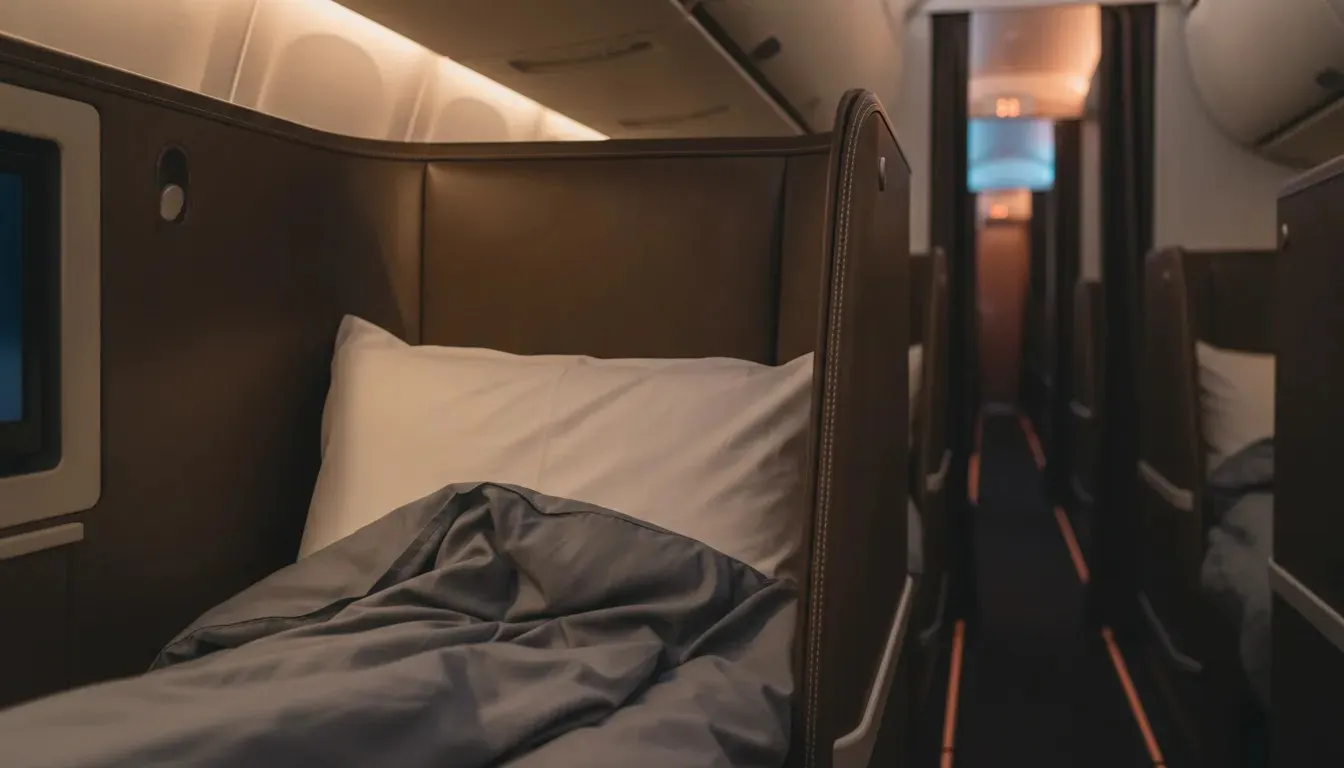
Walk through a modern long-haul First Class cabin and the real story is not only service or champagne. It is architecture. The shape of privacy, the height of the shell, the position of the aisle, the presence or absence of a door, and the way the bed is formed all change how the journey feels.
For travelers researching first class airplane seats, this hardware matters more than marketing language. This guide gives a clear, expert view of how first class airplane seats evolved from elegant open suites into enclosed private cabins, and what those differences mean in practice. If you are still defining what first class means today, this article will help you evaluate the seat itself with much greater precision.
Who This Guide Is For
This guide suits beginners who want to understand the difference between First Class seat types, intermediate travelers comparing airlines for a milestone trip, and experienced premium flyers who want a more precise framework for assessing privacy, sleep quality, and cabin layout.
Rather than treating every First Class product as interchangeable, it focuses on the seat hardware itself. As a result, it explains why two cabins carrying the same label may feel dramatically different once you board.
What You Will Learn About First Class Airplane Seats
- How First Class seating evolved from spacious open suites to enclosed private cabins
- Why shell height, aisle exposure, and door design may matter as much as seat width
- What distinguishes open suites, pods, and fully enclosed cabins in real travel conditions
- How bed design, storage, lighting, and companion dining affect the experience
- Which trade-offs come with maximum privacy
- How to evaluate a seat map without relying on marketing imagery alone
- Where First Class hardware sits relative to modern business class seats
- Which related articles in this hub go deeper into beds, extremes of luxury, and broader cabin definitions
Why First Class Airplane Seats Matter More Than the Label
“First Class” is a category, not a uniform product. In one cabin, it may mean a wide open suite with exceptional bedding and restrained design. In another, it may mean a floor-to-ceiling enclosure with a door, personal wardrobe space, and a stronger sense of separation from the aisle.
For discerning travelers, the seat hardware often determines whether the journey feels ceremonial, cocooned, social, or almost residential. Therefore, the best first class seats are not always the most dramatic ones in marketing photos.
This distinction has become sharper as top-tier Business Class has improved. Many Business Class products now offer direct aisle access, lie-flat beds, and substantial privacy. That is why the most useful comparison is often not simply “does the airline offer First Class,” but whether the seat delivers a material step above what sophisticated Business Class already provides. Our broader Business Class vs First Class comparison is helpful for that wider framing.
Seat hardware influences sleep, personal space, noise exposure, and ease of dining. It also shapes how protected you feel during a long overnight sector. Open suites usually feel airy and elegant. Transitional pods tend to emphasize cocooning and personal territory. Fully enclosed cabins push the experience toward privacy first, sometimes at the expense of openness. None is automatically best for every traveler.
The Evolution of First Class Airplane Seats
The evolution of first class airplane seats has followed a clear pattern. Early premium cabins focused on width, pitch, and service rituals rather than enclosure. As travelers began to prioritize uninterrupted rest and personal privacy, designers introduced higher sidewalls, more sculpted shells, and stronger separation from the aisle.
The most recent phase has been the move toward private cabins. In these products, the seat no longer feels like a seat in a shared room, but a room of its own within the aircraft.
This evolution reflects several forces. Airlines learned that privacy has commercial value. Aircraft interiors became more engineered around passenger segmentation. High-end travelers also began expecting elements previously associated with boutique hospitality, such as layered lighting, intuitive storage, and spaces that reduce visual traffic.
In addition, cabin designers borrowed from residential and automotive luxury. As a result, many first class seats now feel less exposed and more intentional.
Yet progress has not been linear. Some of the most admired First Class products remain open rather than enclosed because they use scale, spacing, and proportion so well. A beautifully executed open suite may feel more refined than a cramped enclosed seat with a door. That is why hardware should be evaluated as a complete system rather than by one headline feature.
First Class Airplane Seats by Route, Aircraft, and Fleet
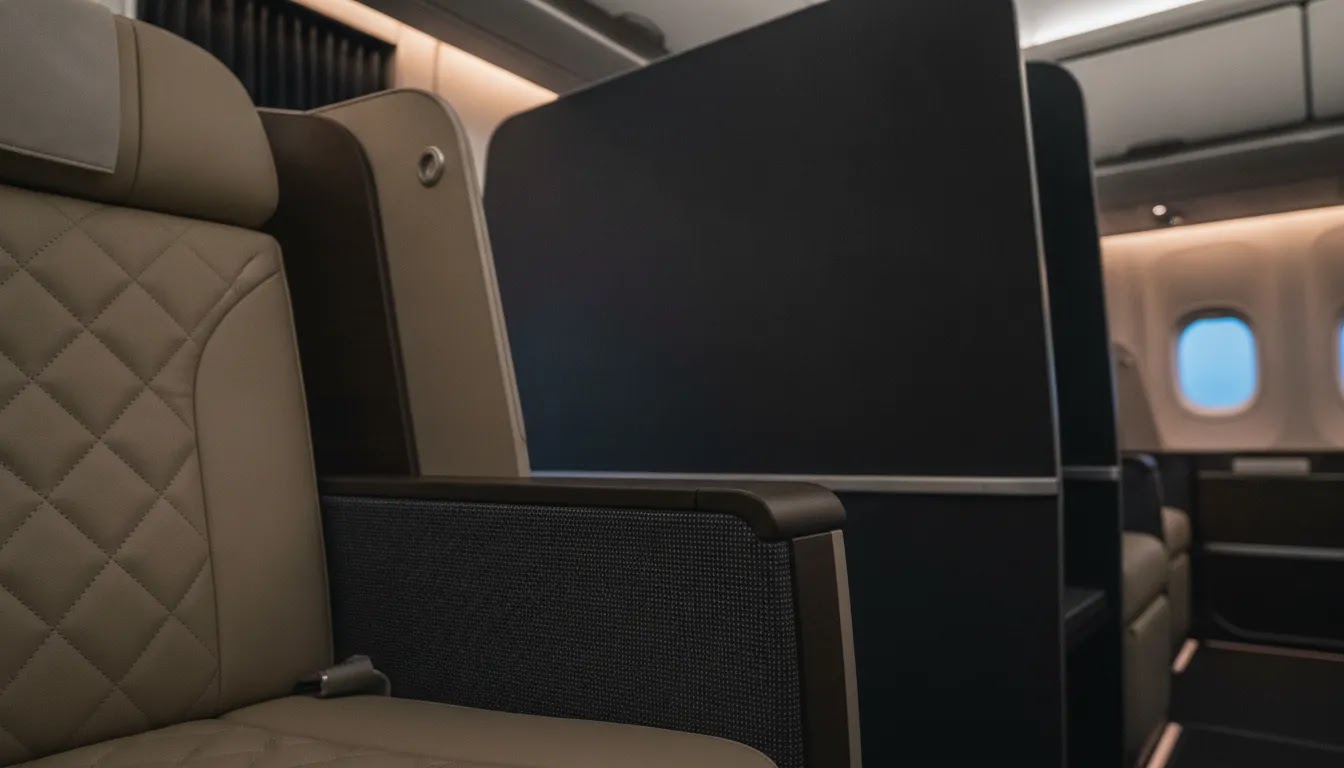
That complete-system view becomes even more important once route reality enters the picture. First class airplane seats depend heavily on aircraft type, cabin retrofit stage, and the specific route being operated. The same airline may offer a polished flagship suite on one long-haul aircraft and a much older First Class product on another, even though both are marketed under the same cabin name.
For that reason, experienced travelers usually verify more than the cabin label. Aircraft assignment, seat map, and operating carrier all deserve close attention, particularly on international itineraries involving alliances, code shares, or schedule changes. In some cases, a first class seat sold under a familiar airline brand may be operated by a partner carrier or by an older subfleet with noticeably different privacy architecture, storage, or bed execution.
This is where details such as enclosed doors, companion dining layouts, larger screens, or more residential finishing can become less predictable than expected. Airlines refresh fleets over time, and product features may change as cabins are retrofitted, retired, or reassigned across routes. A specialist review shortly before ticketing is often valuable because it confirms what is actually scheduled to fly, not only what appears in older promotional material.
Quick comparison of first class seat types
| Seat type | Privacy style | Typical strengths | Typical trade-off |
|---|---|---|---|
| Open suite | Distance, angled positioning, side partitions | Spacious feel, elegant atmosphere, easier companion interaction | More aisle exposure |
| Pod or high-shell suite | Pronounced sidewalls, wraparound shell, staggered sightlines | Balanced privacy, stronger cocooning, fluid service interaction | Privacy remains partial |
| Private cabin | Door or near-door enclosure, substantial wall height | Maximum separation, deeper rest, personal room feel | Some suites may feel narrower once enclosed |
Open First Class Suites and the Classical Experience
Open suites represent the earlier modern ideal of First Class. They generally offer very generous width, broad armrests, thoughtful storage, and an expansive visual feel without a full-height door. Privacy comes from distance between passengers, angled positioning, and elegant side partitions rather than full enclosure.
This design still appeals strongly to travelers who value spaciousness over seclusion. In many open-suite cabins, the atmosphere feels calm, understated, and social in a measured way. You can interact easily with a companion, see the architecture of the cabin, and avoid the slightly boxed-in feeling that enclosed suites may create for some passengers.
Open suites often work especially well for daytime flights and for travelers who prioritize ease of movement. They may also offer more visually impressive dining setups, since the seat area can feel broader and less compartmentalized. The trade-off is that aisle exposure is typically greater. Even in a low-density cabin, movement from crew or other passengers may be more noticeable than in enclosed products.
For readers comparing cabin types more broadly, understanding what Business Class is on a plane can sharpen the contrast, because some of the best Business Class suites now borrow heavily from this same privacy logic.
First Class Pods, High Walls, and Transitional Privacy
Between the open suite and the private cabin sits an important middle stage: the pod or high-shell suite. These designs often use pronounced sidewalls, wraparound seat structures, staggered sightlines, and deeper footwell integration to create stronger isolation without a full closing door.
This stage in the evolution of first class seats is easy to overlook, yet it explains much of today’s premium-cabin design language. Pods taught airlines that privacy could be engineered through geometry as much as through physical barriers. A well-designed shell can block lines of sight, reduce the sense of being on display, and improve sleep, all without the mechanical complexity of a door.
For solo travelers, this format may strike an excellent balance. It feels more protective than an open suite but less inward-facing than an enclosed private room. Service can also feel slightly more fluid, since crew interaction is less interrupted by physical barriers. The compromise is that privacy remains partial. You may still notice aisle lighting, nearby movement, or oblique views into the suite depending on the layout and your seat position.
This transitional category also highlights how far the market has moved. Many travelers now find that high-end Business Class pods satisfy their needs completely, especially on shorter long-haul flights. That is part of the reason our overview of the best Premium Economy airlines and related premium cabins can be useful in the broader context of cabin selection. Not every journey requires the highest category if the seat objective is clear.
Private Cabins and Fully Enclosed First Class Seats
Private cabins mark the current pinnacle of first class seating design. Here, the seat area becomes a defined personal room with a door or near-door enclosure, substantial wall height, and a stronger visual break from the rest of the aircraft. For many travelers, this is the decisive difference between top-tier First Class and premium Business Class.
The appeal is obvious. Enclosed cabins can reduce interruption, support deeper rest, and create a much more personal environment for working, changing, dining, or simply withdrawing from the shared rhythms of the flight. On overnight routes, that privacy may matter as much as mattress quality. On milestone trips, it can make the journey feel singular rather than merely comfortable.
Private cabins are not flawless. Some enclosed suites may feel narrower than expected once the door is shut. Others prioritize spectacle over practical storage or bed geometry. The strongest versions combine enclosure with genuine livability: easy reach to controls, sensible tray placement, unobtrusive lighting, proper changing space, and a bed surface that feels coherent rather than segmented.
If your focus is specifically on sleep engineering rather than privacy architecture, our related article First Class Flights With Beds: Best Lie-Flat Seats takes that part of the experience further.
Choosing First Class Airplane Seats by Traveler Type
The most suitable First Class seat is often determined less by abstract prestige than by how you travel. Solo travelers frequently prioritize quiet, low visual traffic, and a stronger sense of territory. That may make a high-shell suite or enclosed cabin especially appealing on long overnight sectors.
Travelers planning to work in flight may also prefer a seat with better surface organization, more contained lighting, and fewer ambient interruptions from the aisle. Similarly, travelers comparing premium cabins for corporate travel may also benefit from guidance on flying business class for work when First Class is not necessary for every route.
Couples often evaluate the cabin differently. Some private suites deliver excellent seclusion but create a more separated experience once both passengers are settled into their own enclosed spaces. An open suite or a more accessible First Class layout may feel more satisfying for honeymoon or anniversary travel if conversation, shared dining, and visual connection are part of the occasion. The most refined option is not always the most enclosed one.
Route timing matters just as much. On a daytime flight, openness may feel luxurious in its own right, especially if the cabin has generous spacing and a strong sense of calm. On an overnight route, privacy-first products usually gain ground because sleep, reduced light exposure, and a more protected atmosphere become more valuable. Ultimately, the right decision comes from matching the seat to the purpose of the trip.
How to Read First Class Airplane Seats Before You Book
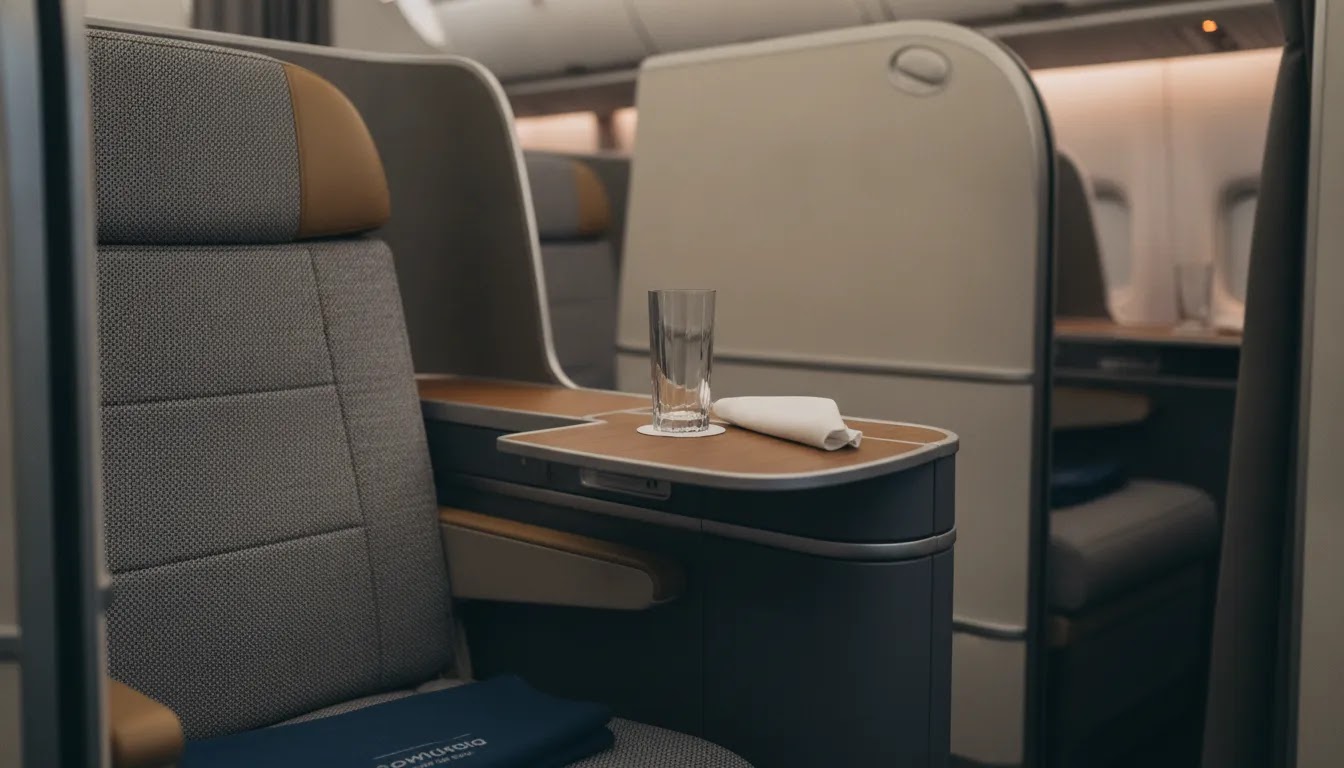
Look beyond the hero image
Promotional photos are usually taken wide, empty, and perfectly lit. A more reliable evaluation starts with the actual seat map, bed length, aisle placement, and whether the suite has direct exposure to galley or lavatory traffic. Even a highly regarded product may feel less serene in a poorly chosen position.
Study first class seat privacy architecture
Ask whether privacy comes from a door, a high shell, seat angle, distance from the aisle, or all four. These are not interchangeable. A door may impress visually, but if the suite remains shallow or exposed above shoulder level, the effect may be less complete than expected.
Evaluate the bed as a separate system
Some First Class seats convert into excellent beds. Others look impressive upright but become less convincing once flattened. Surface continuity, footwell shape, mattress padding, and shoulder room are all worth examining. The seat and the bed are related, but they should not be assumed to perform equally well.
Match the seat to the route and occasion
For a daytime flight, a visually open suite may feel more pleasurable than a highly enclosed cabin. For a long overnight crossing, privacy and bed quality often take priority. Honeymooners may value double-dining arrangements or easier interaction, while solo business travelers may prefer maximum separation.
Compare against adjacent premium cabins
Some airlines have narrowed the gap between their best Business Class products and their older First Class offerings. In those cases, a careful look at the seat, not the label, is essential. That comparison may be especially useful if you are weighing purpose, route length, and cabin atmosphere rather than status alone.
Practical First Class Features Beyond the Seat
Seat quality is central, but the most polished First Class journeys are shaped by more than the seat shell, bed, or door. Lounge access, private or quieter check-in areas, priority ground handling, and chauffeur services on selected carriers may materially influence how the trip feels before boarding even begins. For many discerning travelers, those surrounding elements help determine whether the experience feels merely premium in the air or convincingly elevated from curb to cabin.
Those benefits are rarely uniform. Access conditions may vary by airline, route, airport, alliance policy, fare basis, and local operating arrangements. A superb First Class seat does not automatically mean an equally refined lounge, a private terminal environment, or chauffeur service at both ends of the journey. Some carriers excel in the air but are more limited on the ground, while others build a much stronger end-to-end premium flow.
This is one reason a specialist evaluates the whole journey rather than the seat in isolation. A First Class booking may be most rewarding when the cabin, ground experience, airport logistics, and connection strategy support one another coherently. For clients investing in premium long-haul travel, that wider assessment often provides the clearest picture of what the journey is likely to feel like in practice, subject to current airline policies and airport-specific arrangements.
For official airport security and traveler guidance, refer to the TSA travel page. For aircraft seat planning and cabin reference material, many travelers also consult the IATA passenger standards resources.
Common Mistakes Travelers Make
- Assuming every First Class seat is enclosed and fully private
- Judging the cabin by branding alone rather than by aircraft and configuration
- Focusing on the door while ignoring bed shape, storage, and aisle noise
- Choosing the product without considering whether the route is daytime or overnight
- Comparing First Class only to older Business Class rather than to current-generation products
- Expecting identical hardware across an airline’s fleet, which may vary by aircraft and retrofit status
Flight Experts Perspective
At Flight Experts, the goal is rarely to recommend the most theatrical seat on paper. It is to match the traveler to the right hardware, route, and overall journey design. Mike Chirilenco and the Flight Experts team work with clients booking premium cabins across major international carriers, including First Class itineraries that may range from roughly $5,000 to $20,000+ depending on route, airline, and season.
The agency also assists with complex routing, seat selection, lounge coordination, and the practical details that shape the experience beyond the cabin itself. If you are evaluating whether a particular First Class suite is truly worth it for your trip, or whether a top-tier Business Class alternative would better suit your priorities, you can explore the premium booking services available at Flight Experts.
For personalized guidance on premium cabin selection, routing, and seat strategy, a dedicated specialist may help you assess the trade-offs with far more clarity than airline marketing alone.
Pros and Cons of First Class Airplane Seats
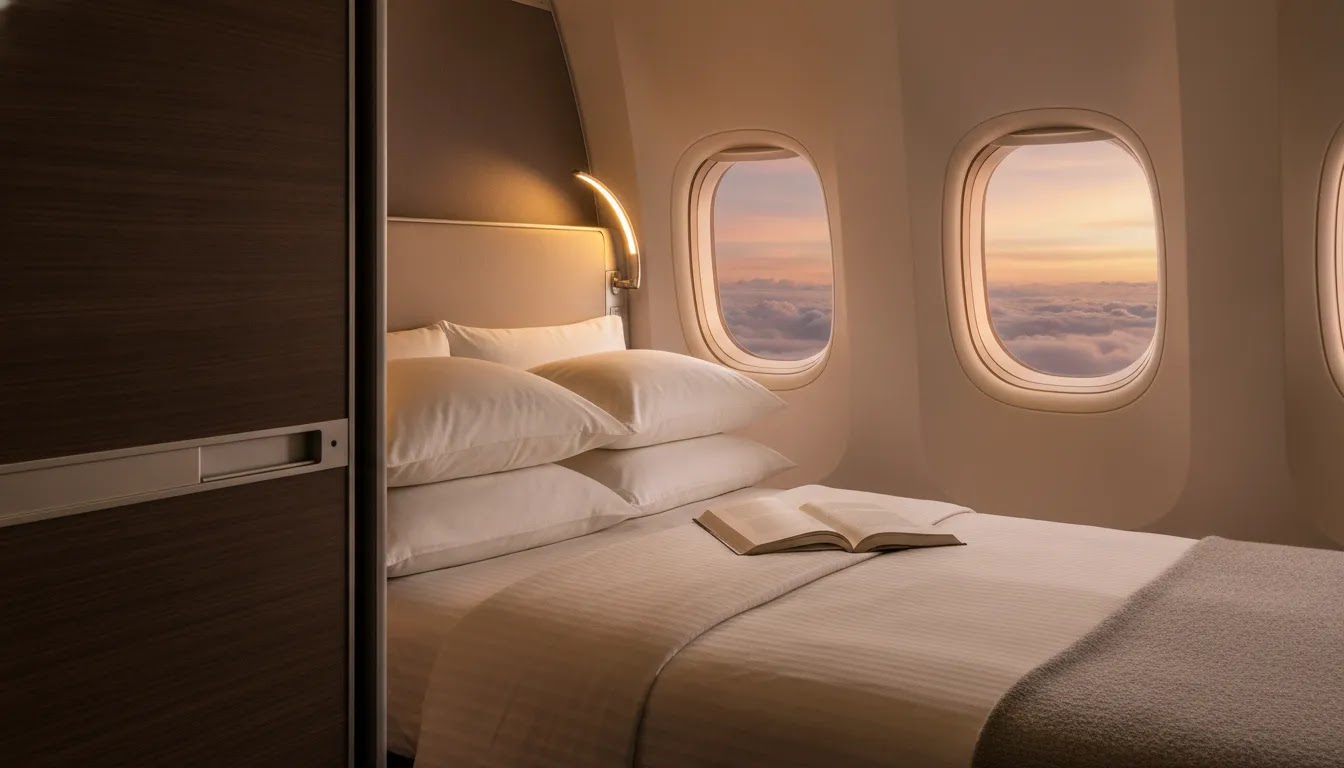
Strengths
- Modern First Class seat design offers more meaningful privacy than earlier premium cabins, especially in enclosed suites.
- Open suites still provide a refined, spacious atmosphere that many travelers find more elegant than heavily enclosed products.
- The evolution from suites to private cabins has improved sleep potential, personal space management, and visual calm.
- Seat hardware now gives travelers more choice by travel style, whether they prefer openness, cocooning, or near-total seclusion.
- Careful seat evaluation can reveal when First Class delivers a genuine step above other premium cabins.
Considerations
- Not every private cabin is automatically more comfortable than an open suite.
- Aircraft type and configuration may change the experience significantly, even within the same airline.
- Maximum enclosure may feel restrictive to travelers who prefer airy, more social cabin design.
- The gap between First Class and premium Business Class may be narrower on some routes than travelers expect.
Frequently Asked Questions
What are first class airplane seats?
First class airplane seats are the highest-category commercial airline seats offered on selected airlines and routes. They typically provide more space, stronger privacy, and more elaborate bed and storage design than lower cabins. Depending on the airline, they may appear as open suites, pod-style seats, or fully enclosed private cabins.
What is the difference between a first class suite and a private cabin?
A suite may refer broadly to a premium First Class seat with defined personal space. A private cabin usually suggests a stronger degree of enclosure, often with a door or near-room-like boundaries. In practice, naming varies by airline, so the better question is how much privacy, storage, and sleeping comfort the seat actually provides.
Are first class pods the same as suites?
Not always. “Pod” often describes a high-shell design that wraps around the passenger and creates a cocooning effect. A suite may be more spacious and may or may not include a door. The terms overlap in marketing, which is why cabin photos, seat maps, and aircraft details should be reviewed carefully.
Do the best first class seats always have doors?
No. Doors can improve privacy, especially on overnight flights, but they are not the only marker of excellence. Some open-suite First Class products remain highly regarded because they offer exceptional width, elegant proportions, low cabin density, and outstanding bed comfort. The best seat is usually the one whose total design works most coherently.
How do first class seats compare with Business Class?
The answer depends on the airline and aircraft. On some carriers, First Class remains materially more private and exclusive. On others, the gap has narrowed because Business Class has improved so much. Comparing cabin architecture, bed design, and service flow is usually more revealing than comparing labels alone.
Is First Class always better than Premium Economy for long-haul travel?
In comfort and privacy terms, yes, though the practical value depends on your objectives. First Class typically offers a far more elevated experience than Premium Economy, especially for sleep and personal space. Readers exploring the broader premium-cabin spectrum may also want to review the best Premium Economy airlines for context.
What should couples look for in first class seating?
Couples may want to examine how easily seats allow conversation, shared dining, and visual connection. Some enclosed cabins are wonderfully private but less naturally social. Open suites or layouts with more accessible companion interaction may feel better suited to honeymoons or anniversary travel, depending on the route and flight length.
Why do seat maps matter so much in First Class?
Seat maps can reveal cabin density, aisle exposure, proximity to service areas, and whether a particular position may feel calmer or more exposed. Marketing images rarely show these practical realities. In First Class, where subtle differences shape a premium experience, seat placement may have a disproportionate effect on satisfaction.
How can a travel specialist help with First Class seat selection?
A specialist can help interpret aircraft differences, route-specific products, seat map nuances, and the trade-offs between privacy, comfort, and value. For high-value itineraries, that guidance may be especially useful, since cabin quality can vary meaningfully across fleets, schedules, and operating carriers.
How much does a first class seat usually cost?
Pricing varies widely by airline, route length, season, and booking conditions. On long-haul international itineraries, First Class may range from several thousand dollars to substantially more for flagship routes and peak periods. At Flight Experts, client itineraries may range from roughly $5,000 to $20,000+ depending on route, airline, and season. The most reliable way to assess value is to compare the actual aircraft, seat product, and surrounding premium experience rather than assuming every fare labeled First Class delivers the same standard.
Are first class airplane seats always available on international routes?
No. First class airplane seats are not always available on international routes. Many routes do not offer First Class at all, and some airlines have removed it from large parts of their long-haul network. Even among carriers that still operate First Class, availability may depend on aircraft assignment, season, and route strategy, so verification at the time of booking is important.
Do all first class seats turn into fully flat beds?
No. Many long-haul First Class products do offer lie-flat or near-fully-flat beds, but this should not be assumed across every route or aircraft. Older products, shorter routes, and some regionally configured cabins may differ, which is why bed design should be reviewed separately from the seat’s upright appearance.
How can you tell if a first class seat is on a newer or older aircraft?
The best indicators are the aircraft type, cabin photos tied to that specific aircraft, current seat maps, and whether the airline has publicly identified the product as retrofitted or next generation. In practice, a travel specialist can often confirm whether the scheduled aircraft typically carries the newer suite, an earlier configuration, or a route-specific variation subject to operational change.
Glossary
- Open suite: A First Class seat with generous personal space and partial partitions, but no full enclosure.
- Pod: A high-shell seat design that increases privacy through shape and sidewalls.
- Private cabin: A more fully enclosed First Class suite, often with a door.
- Direct aisle access: The ability to reach the aisle without stepping over another passenger.
- Seat shell: The structural outer frame that defines privacy and shape around the seat.
- Lie-flat bed: A seat that reclines into a fully horizontal sleeping surface.
Key Takeaways
- First class airplane seats have evolved from elegant open suites to highly enclosed private cabins.
- Privacy architecture, not branding alone, usually determines how exclusive the cabin feels.
- A door may improve privacy, but it does not guarantee the best overall seat design.
- Route timing, sleep priorities, and travel purpose should shape your ideal First Class choice.
- Expert evaluation is especially valuable because airline labels may obscure major differences in hardware.
Conclusion
The story of first class airplane seats is really a story about how airlines have redefined privacy in the sky. Open suites, transitional pods, and private cabins each offer a distinct interpretation of luxury. The right choice depends on how you travel, what kind of rest you want, and how much separation you prefer from the shared cabin environment.
For discerning travelers planning a milestone journey or a carefully curated long-haul itinerary, those distinctions deserve close attention. If you would like help assessing First Class options, aircraft differences, or premium routing strategies, speak with Mike Chirilenco or connect with the Flight Experts team for personalized guidance shaped around your travel preferences.



