
First Class Flights With Beds: Best Lie-Flat Seats
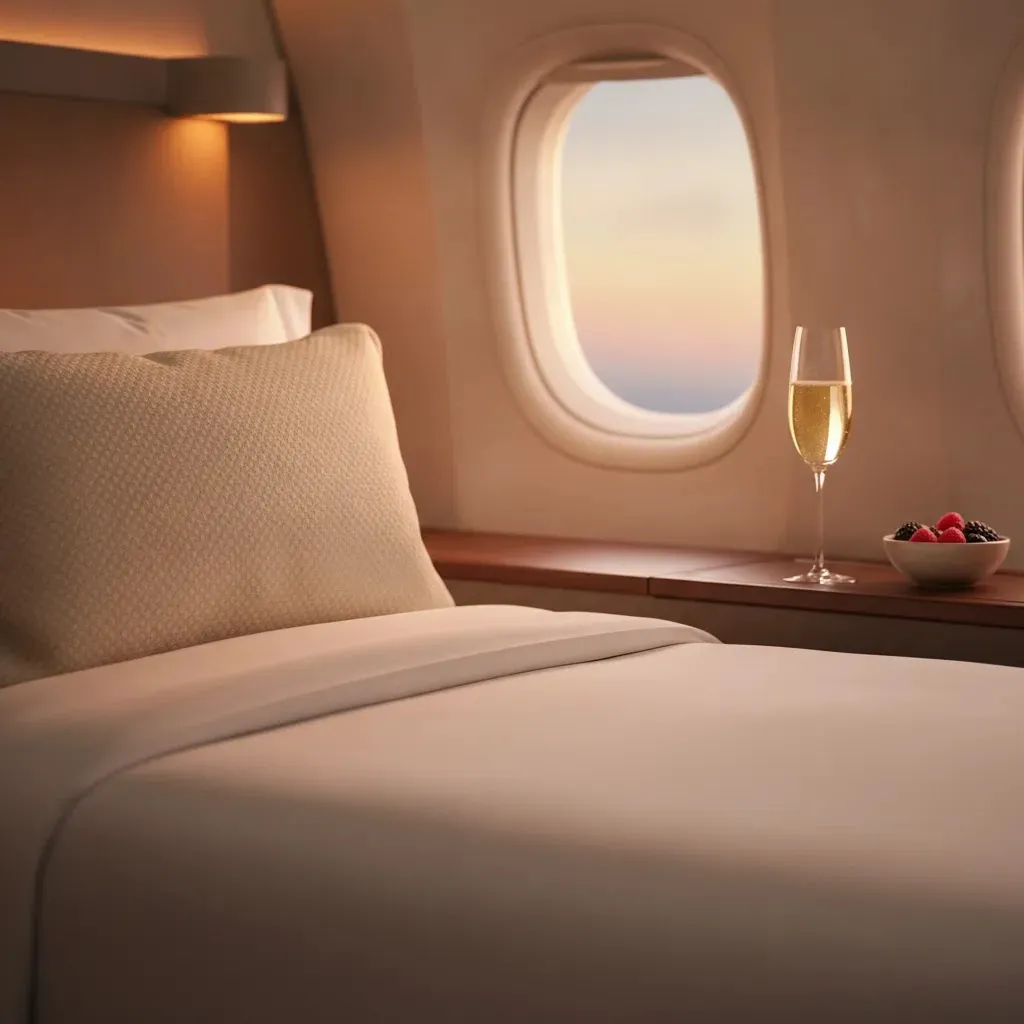
This article focuses on airlines and routes where a genuine bed-style experience is the point of the purchase. If you are comparing the broader world of first class seats, the details below will help you narrow your attention to the long-haul products that matter most for sleep, privacy, and route value.
First Class Flights With Beds Price Snapshot
When shopping for premium overnight accommodations in the sky, understanding the typical investment required is essential. Flight Experts data indicates that First Class Flight Booking generally commands fares between $5,000 and $20,000+, with considerable fluctuation based on your chosen airline and specific route. The actual cost you’ll encounter depends on multiple variables including your travel date, the aircraft model operating your flight, your departure city, and seat inventory at the time of booking. For those seeking the ultimate in sleep comfort on long-haul journeys where fully flat-bed suites are standard, this price corridor reflects what sophisticated travelers typically encounter in the premium cabin marketplace.
| Tier | Typical Price Range | What Is Usually Included |
|---|---|---|
| Entry long-haul First Class | $5,000 to $8,000 | Lie-flat seat or suite on selected long-haul routes, premium dining, priority airport services, lounge access in most cases |
| Established flagship First Class | $8,000 to $15,000 | More private suites, stronger ground services, upgraded bedding, premium wine and dining programs, higher consistency across major trunk routes |
| Ultra-premium marquee routes | $15,000 to $20,000+ | Best suite-style cabins, top-tier lounges, possible chauffeur coordination depending on airline and airport, highly sought-after schedules and aircraft |
What First Class Flights With Beds Price Usually Looks Like by Route
The route matters at least as much as the airline. A flight from the U.S. to Europe may price very differently from one to Asia or the Middle East, even if both are sold as First Class. Flight Experts’ current service data shows first class bookings commonly centered on the U.S. to Europe, U.S. to Asia, U.S. to Middle East, transatlantic, and transpacific markets.
U.S. to Europe first class flight with bed pricing
On many Europe routes, first class flights with beds may appear from about $5,000 upward. The strongest products are often concentrated on major gateway pairs. Overnight eastbound departures usually attract more sleep-focused travelers. By comparison, daytime westbound returns may feel less compelling unless the ground experience is a major priority. You can browse relevant regional options through First Class Flights to Europe.
U.S. to Asia first class flights with beds
This is where a first class flight with bed often becomes easiest to justify. Longer block times create more meaningful sleep value. In addition, several Asian carriers are known for polished service and refined bedding programs. Fares commonly sit in the middle to upper part of the $5,000 to $20,000+ band, particularly on nonstop or flagship routes. For route inspiration, see First Class Flights to Asia.
U.S. to Middle East first class overnight flight pricing
These itineraries often combine long overnight segments with strong premium ground services. Depending on airline and airport, your experience may include exceptional lounges, quieter boarding flow, and more elaborate suite designs. As a result, prices may land anywhere in the broad Flight Experts first class range, with marquee departures frequently falling in the upper tiers.
Transpacific and longer multi-segment journeys
Once itinerary complexity increases, the apparent fare stops telling the whole story. Routing, connection quality, lounge transfer times, and aircraft consistency all begin to matter. A lower fare may not be the stronger choice if one segment loses the true bed product you expected. That is one reason travelers often compare first class flight seats in detail before committing to a specific fare.
Best Airlines for First Class Flights With Beds

Flight Experts currently books First Class on carriers including Emirates, Singapore Suites, Lufthansa, ANA, JAL, Etihad, Qatar, Swiss, and Air France La Première. Not all of these products are priced or positioned identically. Likewise, not all are available on every route or aircraft. The notes below focus on where each option tends to stand out for travelers prioritizing a bed rather than simply a larger seat.
Emirates first class flight bed experience
Emirates is often chosen by travelers who want a theatrical First Class experience paired with a genuinely substantial overnight setup. On suitable aircraft and routes, privacy, bedding quality, and premium airport treatment may be especially appealing for milestone travel. Prices often sit in the upper half of the market, particularly on high-demand long-haul sectors.
Singapore Suites
Singapore Suites is one of the clearest examples of a product built around sleeping space and personal privacy. It is best evaluated not as a generic premium ticket but as a flagship long-haul suite. The product may command a significant premium. However, for some travelers the extra room, calm service rhythm, and sense of separation justify the outlay on longer journeys.
Lufthansa
Lufthansa First Class remains the preferred choice for travelers seeking refined European hospitality combined with attentive airport services on select routes. Though some aircraft cabins emphasize timeless elegance over contemporary visual spectacle, the overall journey delivers a thoroughly sophisticated and rewarding experience. The airline’s most comprehensive First Class offerings concentrate primarily at major European hubs and on certain long-haul services, requiring thoughtful itinerary planning to maximize this premium tier’s availability.
ANA and JAL
These Japanese carriers are often favored by travelers who value restraint, service precision, and comfort that feels thoughtfully engineered rather than overstated. Their First Class products tend to appeal on transpacific sectors where sleep quality, cabin quiet, and dining timing are central to the journey. Pricing may be strong during peak Japan travel periods.
Etihad, Qatar, Swiss, and Air France La Première
Each of these names can be highly attractive, though the best fit depends on route logic, aircraft type, and what you value most. Some travelers prioritize private space and visual design. Others care more about meal pacing, lounge quality, or airport handling. Ultimately, the strongest booking decision comes from matching the bed product to the specific overnight route, not from choosing a famous brand in the abstract.
For independent cabin verification, travelers may also review seat maps and aircraft data through SeatGuru or compare official lounge access rules through the International Air Transport Association resources and airline policy pages.
How First Class Flights With Beds Differ by Aircraft and Cabin Type
The airline name alone does not tell you exactly how well you will sleep. First Class beds vary materially by aircraft, cabin generation, and route assignment. A flagship suite on one fleet type may feel private, quiet, and genuinely bed-led. Another aircraft in the same airline family may offer an older open design that still goes fully flat but delivers a different sense of rest.
Suite design and privacy levels
At the top of the market, enclosed suites usually provide the strongest overnight environment. These products tend to offer higher walls or closing doors. They also create more visual separation and a clearer distinction between sitting space and sleeping space. Open-suite layouts may still be highly refined. However, they often rely more on seat shell design and cabin spacing than full enclosure. Older lie-flat First Class seats can remain comfortable, but they may feel closer to an excellent flat seat than a truly residential sleep product.
Bedding, mattress pads, and sleep comfort
For that reason, travelers should assess bed length, shoulder room, footwell design, and how the surface is prepared for sleep. Some airlines add a mattress pad, dedicated bedding layers, or turn-down service that materially improves comfort. Others provide a flatter seat with premium linens but less structure underneath. On paper both are sold as First Class with a bed. In practice, one may support several uninterrupted hours of sleep far better than the other.
Route assignment and aircraft swaps
The same carrier may also rotate different First Class products across major routes. A route to Asia on one aircraft type could deliver a more spacious bed than a Europe route on an older frame, even though the branding looks nearly identical during booking. Cabin refurbishment cycles, seasonal aircraft substitutions, and schedule changes can all affect what appears on a given date. Therefore, experienced premium travelers verify the operating aircraft and seat map rather than relying on carrier reputation alone.
A useful test is to ask whether the product is a true bed-led experience or simply a flat seat in a prestigious cabin. If privacy, mattress quality, bedding depth, and sleeping posture are central to your decision, aircraft-level evaluation is essential. Flight Experts reviews these distinctions closely because a traveler paying First Class fares usually expects more than the technical ability to recline fully.
Why Prices Change So Much
Route length and overnight timing
A genuine bed matters more on a 10 to 14 hour overnight journey than on a shorter daytime sector. Airlines know this, and fares often reflect it. Eastbound overnight departures, transpacific services, and flights that arrive early in the morning may carry a stronger premium because sleep utility is higher.
Aircraft type and cabin generation
Not every First Class cabin across a fleet is equal. One aircraft may offer an enclosed suite with stronger privacy and better bedding, while another presents an older but still lie-flat seat. This variation can materially affect value, even when the fare difference appears modest.
Nonstop versus connecting itineraries
Nonstops often command more, especially in First Class. For some travelers, that premium is worthwhile because it protects sleep continuity. On the other hand, a connection through a carrier hub may improve the lounge and dining experience, provided both segments maintain the expected cabin quality.
Seasonality and peak demand
Holiday periods, summer transatlantic peaks, and major event windows may move fares sharply upward. Routes to Asia may also fluctuate around cherry blossom season, year-end holidays, and school travel periods. Luxury travelers planning around milestones often benefit from earlier search windows because the most attractive schedules may tighten first.
Fare conditions and bundled service
Two First Class fares can look similar at first glance yet differ in flexibility, change rules, chauffeur eligibility where applicable, and lounge access details at outstations. For travelers investing at this level, the fine print may matter as much as the mattress pad.
Nonstop, One-Stop, and Mixed-Cabin Risk on Bed-Focused Itineraries
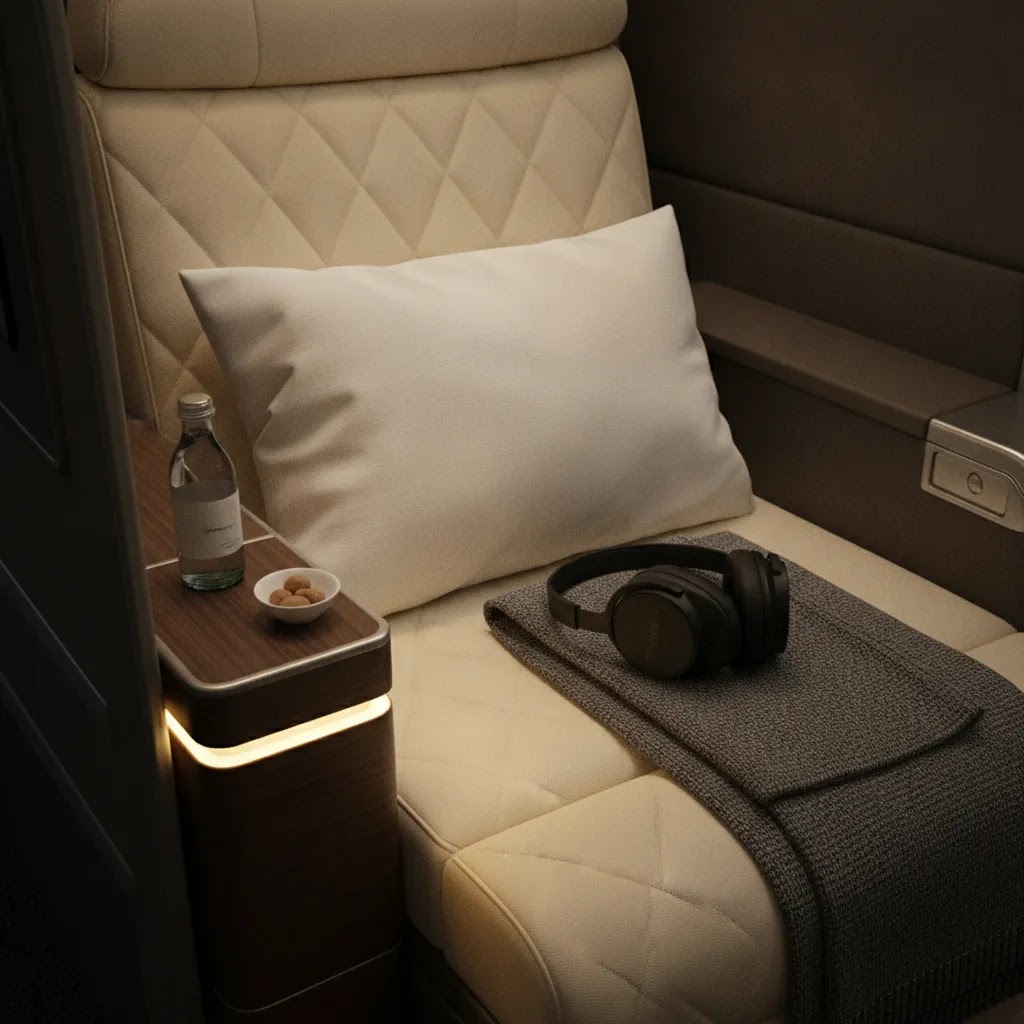
A bed-focused itinerary should be judged by the quality of sleep across the full journey, not only by the headline long-haul segment. On routes to India, Southeast Asia, or other destinations that often involve one stop, the break in travel may materially change how rested you feel on arrival. A nonstop typically offers the clearest sleep window. Once the cabin settles, you can eat lightly, convert the seat, and remain undisturbed until descent. A one-stop itinerary may still be worthwhile, but it introduces interruptions in timing, lighting, and rest rhythm.
Mixed-cabin segments and itinerary consistency
The connection itself may also disguise meaningful product differences. Some itineraries marketed around First Class include a premium long-haul segment paired with a shorter feeder leg in Business Class or another cabin type. For some travelers this is perfectly acceptable. For others, especially those departing late in the evening from a smaller city, the downgraded segment weakens the journey from the outset. The issue is not prestige. It is whether the itinerary truly protects privacy, ease, and rest from origin to destination.
Hub quality and transfer experience
Hub quality deserves close attention as well. A strong premium hub may offer private or quieter check-in areas, efficient security handling, excellent lounges, and a transfer pattern that leaves time to refresh without creating unnecessary dead time. By contrast, a weaker connection point may require long walks, bus gates, repeated screening, or a rushed lounge visit that does little to restore energy. On an overnight trip, those details can shape the value of the fare as much as the cabin itself.
Connection timing and sleep continuity
Connection timing matters for sleep continuity. A beautifully designed First Class bed is less useful if the first segment departs too early to sleep, the layover is too long to remain comfortable, or the second sector leaves at an awkward hour that breaks your rest cycle. In other cases, a carefully timed stop through the right hub may work well, especially if it secures the superior aircraft and a more consistent premium experience. The strongest evaluation balances fare, schedule, aircraft quality, and the practical logistics between segments.
Pros and Cons
Strengths
- A true lie-flat First Class bed may transform an overnight flight from endurance into meaningful rest.
- The best products combine sleep comfort with privacy, strong bedding, and attentive meal pacing rather than simply offering a larger chair.
- Premium ground services, including lounge access and priority handling in most cases, can reduce airport friction substantially.
- Longer routes to Asia or the Middle East often deliver stronger value from the bed itself because there is enough time to sleep properly.
- Top First Class cabins may be particularly well suited to milestone trips where the journey is part of the occasion.
Considerations
- First Class pricing is broad, and the gap between a merely good product and a truly exceptional one may be several thousand dollars.
- Aircraft swaps can occur, so a specific suite or bed style is never wise to assume without checking the operating aircraft close to departure.
- Some routes marketed under premium labels may not offer the flagship bed product travelers expect, especially on shorter sectors.
- For certain travelers, a leading Business Class product could provide enough sleep comfort at a lower investment, depending on the route.
Who Should Pay for First Class With a Bed

This type of ticket usually suits travelers who attach real value to arriving rested, protected from disruption, and well cared for at each stage of the journey. Honeymoon couples, anniversary travelers, executives heading into same-day meetings, and families planning a once-in-a-lifetime long-haul trip may all find the investment justified. It tends to be less about prestige alone and more about what proper sleep, privacy, and airport ease contribute to the trip as a whole.
If your priority is simply more room than the main cabin, another premium cabin may suffice. If your priority is a bed-led overnight experience, First Class deserves careful evaluation. Travelers who are still comparing value may also want to review is flying first class worth it before making a final decision.
Flight Experts View on First Class Flights With Beds Price
When booking premium air travel, the carrier’s name carries less weight than you might expect. What truly influences your journey are tangible factors: the specific aircraft operating your flight, where you’re departing from, the sophistication of airport lounges available to you, how your connections align with your schedule, and ultimately what resonates with your individual travel philosophy. Flight Experts specializes in First Class Flight Booking, with fares generally ranging from $5,000 to $20,000 and higher, collaborating with prestigious airlines such as Emirates, Singapore Suites, Lufthansa, ANA, JAL, Etihad, Qatar, Swiss, and Air France La Première. We deliver the experience through a dedicated concierge service, orchestration of world-class lounge access, bespoke curation of luxury amenities reflecting your preferences, and thorough analysis of alternatives tailored to your unique circumstances.
Flight Experts offers Business Class fares that generally range between $2,000 and $8,000+ when traveling with major carriers on established intercontinental routes, though pricing remains fluid based on your chosen airline, specific destination, travel timing, and seat inventory levels. Rather than representing guaranteed rates, these figures function as indicative benchmarks for planning purposes. If you prioritize comfort and rest during extended international flights, our premium business suites may serve your travel needs exceptionally well. To craft a customized journey reflecting your individual preferences and requirements, we encourage you to explore our Premium Cabin Experience & Amenities offerings, review the detailed first class flight amenities available, or connect with our specialists who can address your particular route considerations, airline preferences, and privacy needs.
How to Evaluate a Lie-Flat First Class Booking

1. Verify that the route truly offers a bed-led First Class experience
The cabin name alone is not enough. You want confirmation that the specific flight is operated by an aircraft with a fully lie-flat First Class product, not a regional-style recliner or a dated seat that underdelivers for overnight rest.
2. Judge the product by sleep architecture, not just glamour
Discerning travelers often focus first on privacy doors, large screens, or caviar service. Those matter, but the overnight fundamentals matter more: bed length, shoulder space, mattress provision, bedding quality, cabin noise, and whether meal service can be adjusted so you actually have time to sleep.
3. Compare route logic against fare level
A famous First Class product on a less practical routing may be poorer value than a quieter, more direct itinerary on another airline. If the journey includes a connection, ask whether the transfer improves or weakens the overall experience. The right hub can add an excellent lounge and smoother connection rhythm. The wrong one can interrupt sleep and extend travel time unnecessarily.
4. Review the ground experience as part of the purchase
For many premium travelers, the airport experience is not secondary. Chauffeur arrangements, priority check-in, lounge quality, escort services where applicable, and arrival handling may all influence whether the higher fare feels worthwhile. These inclusions vary by carrier and station, so they should always be verified. For U.S. aviation consumer guidance, travelers can also review official resources from the U.S. Department of Transportation.
5. Decide whether First Class is the right answer for this specific trip
There are trips where First Class is clearly the right choice, especially a first class overseas flight tied to an important celebration or an overnight schedule where sleep is central. There are other trips where a top Business Class cabin may be the more rational premium choice. A professional review of your route options may save you from paying for symbolism when what you actually need is sleep quality and operational reliability.
Frequently Asked Questions
How much do first class flights with beds usually cost?
When booking premium cabin accommodations through Flight Experts, travelers should anticipate investment levels spanning $5,000 through $20,000 or beyond. The final cost structure reflects numerous variables including route popularity, seasonal demand, specific aircraft configuration, departure point, and carrier selection. Shorter intercontinental flights and routes with lighter passenger demand typically occupy the lower pricing tier, whereas flagship overnight services connecting to Asia, the Middle East, or premier transcontinental corridors frequently command substantially elevated fares contingent upon both the airline’s positioning and time of year.
How much does first class airfare cost to India?
First Class airfare to India may fall anywhere within the broader long-haul range discussed in this guide. It often trends toward the middle or upper end when the itinerary includes a strong overnight product and favorable connection structure. Much depends on whether you are flying nonstop or via a premium hub, whether the route includes any mixed-cabin segments, and which aircraft operates the longest sector. One-way and round-trip pricing may also differ materially, so route-by-route evaluation is usually the most reliable approach.
How much does first class airfare cost to Amsterdam?
Amsterdam pricing may sit closer to the lower or middle part of the First Class range compared with longer Asia-bound journeys, though that depends heavily on season, departure city, and whether the ticket is built around a true long-haul First Class bed. Overnight eastbound flights often hold more sleep value than daytime sectors, which can affect how worthwhile the fare feels. For some travelers, the strongest Amsterdam option may be a leading transatlantic First Class product. For others, an excellent Business Class bed may be the more proportionate choice.
Are all first class flight beds fully lie-flat?
No. A true first class flight bed should be verified by aircraft and route. Some flights marketed as First Class, especially outside long-haul international service, may offer wide recliners rather than a fully flat bed. That distinction is why aircraft type matters so much when evaluating overnight comfort.
Are international flights with beds always sold as First Class?
No. Many international flights with excellent beds are sold in Business Class rather than First Class. A fully lie-flat bed is a product characteristic, not a cabin label by itself. Some of the most effective sleep-focused products in the market are premium Business Class suites, while certain First Class products emphasize service and exclusivity more than a dramatically different sleeping surface. The operating aircraft and cabin design matter more than the name alone.
Which routes make a lie-flat First Class ticket most worthwhile?
Long overnight journeys usually offer the clearest case for paying more. U.S. to Asia, U.S. to Middle East, and selected overnight transatlantic departures often deliver the most practical value because there is enough time for real sleep, not merely a more comfortable seated experience.
Is First Class always better than Business Class for sleeping?
First Class cabins consistently deliver elevated comfort and privacy, yet they remain far from universally ideal for all travelers on every itinerary. Depending on your route, you may encounter Business Class products with sophisticated design, convenient aisle positioning, premium bedding options, and stable internet service that outperform dated or basic First Class configurations. Your decision should reflect multiple considerations, including flight duration, the particular aircraft type deployed on your service, the cost disparity between cabins, and which amenities matter most to your travel experience.
What is the difference between a first class bed and a lie-flat business class seat?
The difference is usually found in privacy, space, bedding quality, and overall cabin atmosphere rather than in flatness alone. A First Class bed may offer a wider sleep surface, more shoulder room, better separation from the aisle, and a more elaborate turn-down setup. A lie-flat Business Class seat may still provide excellent rest, especially on newer aircraft with strong suite design. The right comparison should be made product against product, because the gap varies meaningfully by airline and aircraft type.
Do American Airlines lie-flat seats count as First Class beds?
They may, depending on the route and aircraft. Travelers searching for american airlines lie flat seats should verify whether the product is sold as Flagship First, Business, or another premium configuration, because labeling and service standards can differ. The existence of a lie-flat seat does not automatically mean a top-tier First Class experience.
What about delta lie flat seats?
Delta lie flat seats are typically associated with Delta One rather than a traditional international First Class product. For sleep, that may still be highly effective. For travelers specifically seeking first class flights with beds, it is useful to separate the goal of sleeping well from the broader ceremonial features that distinguish First Class.
Are lounge access and chauffeur service always included?
The provisions surrounding lounge entry and driver services remain contingent upon various factors including your carrier, destination airport, specific routing, and the ticket class purchased. While many first class offerings do extend premium ground amenities to passengers, such inclusions are far from standardized across the industry. Our travel consultants can provide precise details regarding which services apply to your particular journey.
Is it worth paying more for a nonstop flight with a bed?
Often, yes. A nonstop may preserve sleep continuity and simplify the airport experience, particularly on overnight sectors. That said, some connecting itineraries through major premium hubs could still be attractive if they improve lounge quality, aircraft consistency, or overall schedule logic. The right answer depends on the full journey, not one feature alone.
How quickly can Flight Experts present options?
Upon contacting Flight Experts to arrange your First Class flights and other premium aviation solutions, our dedicated team of specialists generally furnishes you with carefully selected options within roughly half an hour from the moment your request arrives. Should your travel itinerary encompass multiple stops or demand comprehensive analysis spanning various luxury airlines and aircraft configurations, we may need additional time to guarantee the sophisticated recommendations befitting your journey’s requirements.
Key Takeaways
- First class flights with beds typically fall in a broad range of $5,000 to $20,000+, depending on route, aircraft, and season.
- The best value usually comes from long overnight routes where a true bed materially improves rest and arrival readiness.
- Aircraft type matters as much as airline brand because not every First Class cabin offers the same bed quality or privacy.
- Ground experience, lounge quality, and connection logic can materially affect whether a premium fare feels worthwhile.
- Professional guidance is especially useful when comparing flagship First Class against high-end Business Class on the same route.
Conclusion
A first class bed is one of the few air travel upgrades that can change not just how you fly, but how you arrive. The real question is not simply what First Class costs, but which route and cabin make that investment sensible for your trip. Some travelers need the privacy and sleep quality of a flagship suite. Others may prefer to direct their premium spend differently.
If you want a clear recommendation tailored to your itinerary, speak with Mike Chirilenco or the Flight Experts team. Their personalized First Class and premium cabin booking support can help you compare aircraft, routes, and service details with the level of precision a high-value journey deserves.



