
First Class Seats: Suites, Pods & What to Expect
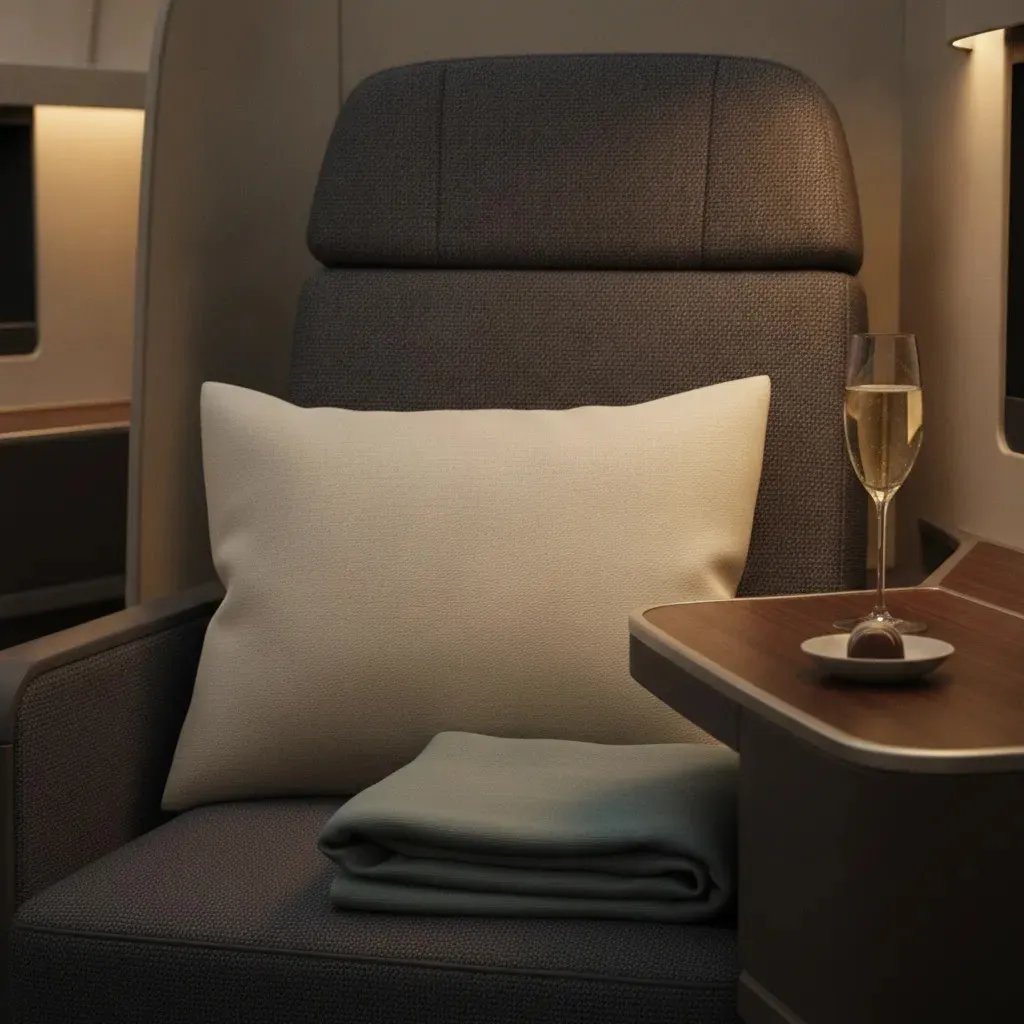
This article focuses on the part that matters most once you step onboard: first class flight seats and how suites, pods, beds, and cabin configurations differ in practice. If you are researching first class seats more broadly, this guide goes deeper into the lived experience of the seat itself.
In particular, it is designed to help you understand what you are actually reserving before you commit to a premium long-haul itinerary. That matters most on routes where sleep, privacy, and personal space are not abstract luxuries. They are the whole point of the journey.
What First Class Flight Seats Actually Mean
A true first class seat is rarely just a larger chair at the front of the aircraft. In most international markets, it is a private or semi-private space built around rest, discretion, and control. The seat may convert into a full flat bed, offer multiple lounging positions, include expansive storage, and create enough separation that you are not always aware of the cabin around you.
The distinction matters because many travelers assume every first class flight with bed offers the same privacy and space. That is not the case. Some products focus on visual privacy. Others focus on width, softness, and a calmer atmosphere. A few feel almost like miniature hotel rooms, with doors, wardrobes, or a separate sleep surface.
This is also where first class and business class seats begin to diverge more clearly. Business class may offer excellent comfort and a lie-flat bed. However, first class usually adds more enclosure, more personal space, and a more individualized cabin rhythm.
Flight Experts approaches this choice as an itinerary question, not a label question. For some travelers, the difference between refined business class and true first class flight seats is meaningful on an overnight transpacific route. On a shorter daytime sector, it may matter far less.
First Class Flight Seats: Suites, Pods, and Open Designs
Enclosed first class flight seat suites
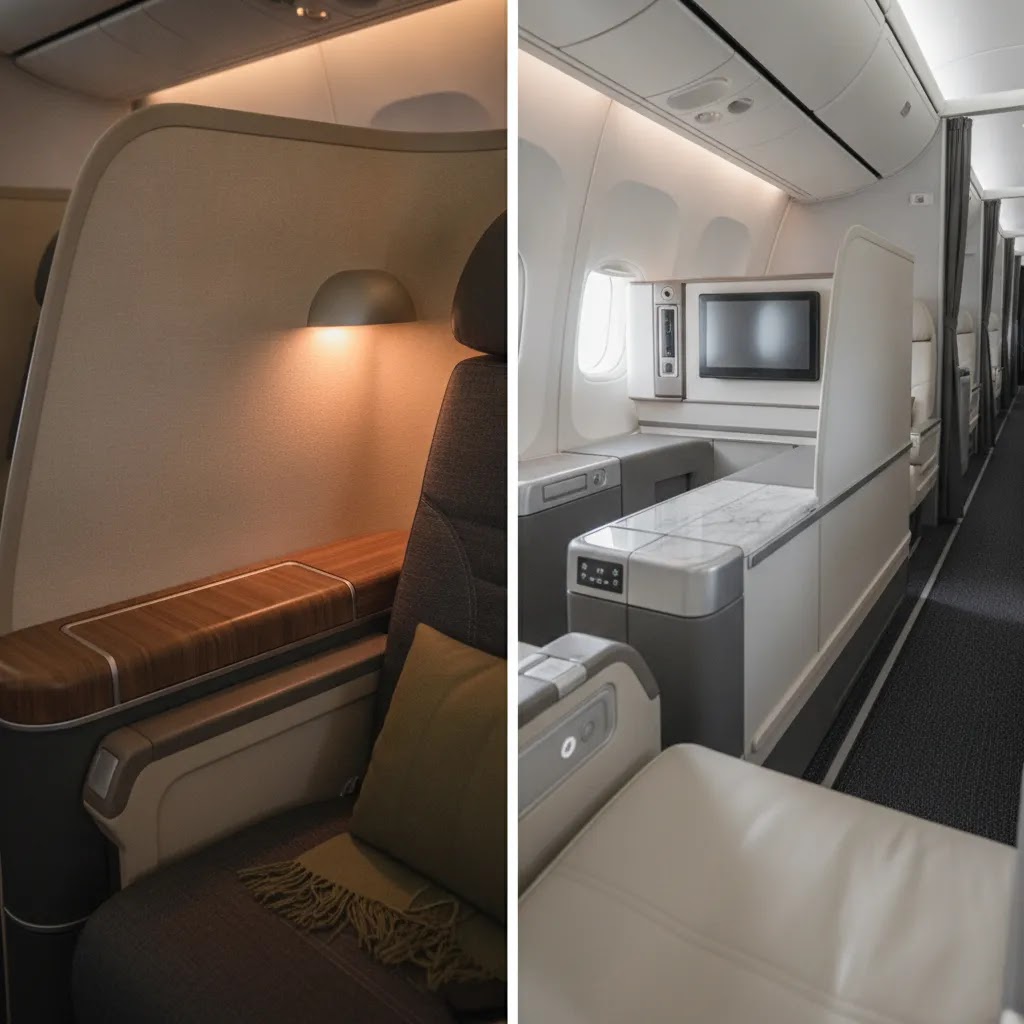
The most private end of the market is the enclosed suite. These are the first class flight seats that tend to capture attention in photographs. They feature high walls, sliding doors, layered lighting, and a strong sense of personal territory. A well-executed suite lets you work, dine, lounge, and sleep without feeling exposed to the aisle.
That said, not every suite creates the same isolation. Some doors feel more symbolic than transformative. Others create a noticeably calmer environment. In practice, the quality of the enclosure depends on wall height, seat orientation, aisle exposure, and whether crew interactions feel discreet rather than constant.
First class flight seats in pod designs
A pod is usually less enclosed than a suite, but it still wraps the passenger in a defined personal space. In first class, pods often feel sculpted rather than boxed in. You may have privacy wings near the headrest, a large side console, and a shell that blocks direct sightlines from the aisle.
For some travelers, a pod is actually preferable to a fully enclosed suite. It can feel more open and less theatrical. It can also be easier to move around in. If you value calm over novelty, this style can be deeply satisfying.
Open first class flight cabin designs
Open first class is not automatically inferior. Some of the most elegant first class cabin flight designs rely on low-density layouts, wide spacing, and restrained architecture instead of doors. As a result, the cabin may feel airy, understated, and very comfortable, especially for travelers who do not want to feel shut away in a small compartment.
The tradeoff is straightforward. More openness usually means less acoustic and visual separation. If you are highly sensitive to aisle movement, nearby passengers, or cabin light, an open design may feel less cocooning on an overnight flight.
How First Class Flight Beds Work
Many readers researching planes with beds are really asking a more precise question: do you sleep on the seat itself, or does the airline create a distinct bed experience? The answer varies.
Seat-converted beds
On many aircraft, the seat transforms into a lie-flat sleeping surface. In the best versions, the padding is even, the footwell is generous, and the transition from upright seat to bed feels smooth. This setup can be excellent, especially when the seat width is substantial and the bedding is thoughtfully designed.
Its limitation is structural. You are still sleeping on a converted seat. Therefore, hinge points, armrest geometry, or narrowing around the feet may affect comfort.
Separate bed concepts
Some of the most elevated first class flight bed products separate sitting and sleeping more clearly. In these cabins, the seat remains a seat, while the bed is made independently or unfolds in a way that feels more like a dedicated sleeping platform.
This arrangement is especially appealing for couples and for travelers who want to dine, then retire to a bed without giving up their lounge position. Separate bed concepts are rare, but they often define the highest tier of first class. In addition, they may support better movement within the suite.
What makes a bed feel genuinely restful
Length alone is not enough. A first class flight with bed feels restful when several details align: mattress padding, shoulder room, bed width through the knees and feet, bedding quality, cabin temperature, and the crew’s timing around service. A visually dramatic seat can still underperform if the sleeping surface tapers too sharply or if storage puts essentials out of reach.
For travelers planning a major journey, this is often where a specialist’s judgment matters. A concierge-style agency such as Flight Experts may help distinguish between products that photograph beautifully and products that usually perform well for actual sleep on long overnight routes. You can also compare dedicated examples in First Class Flights With Beds: Best Lie-Flat Seats.
First Class Flight Seats by Cabin Layout and Configuration
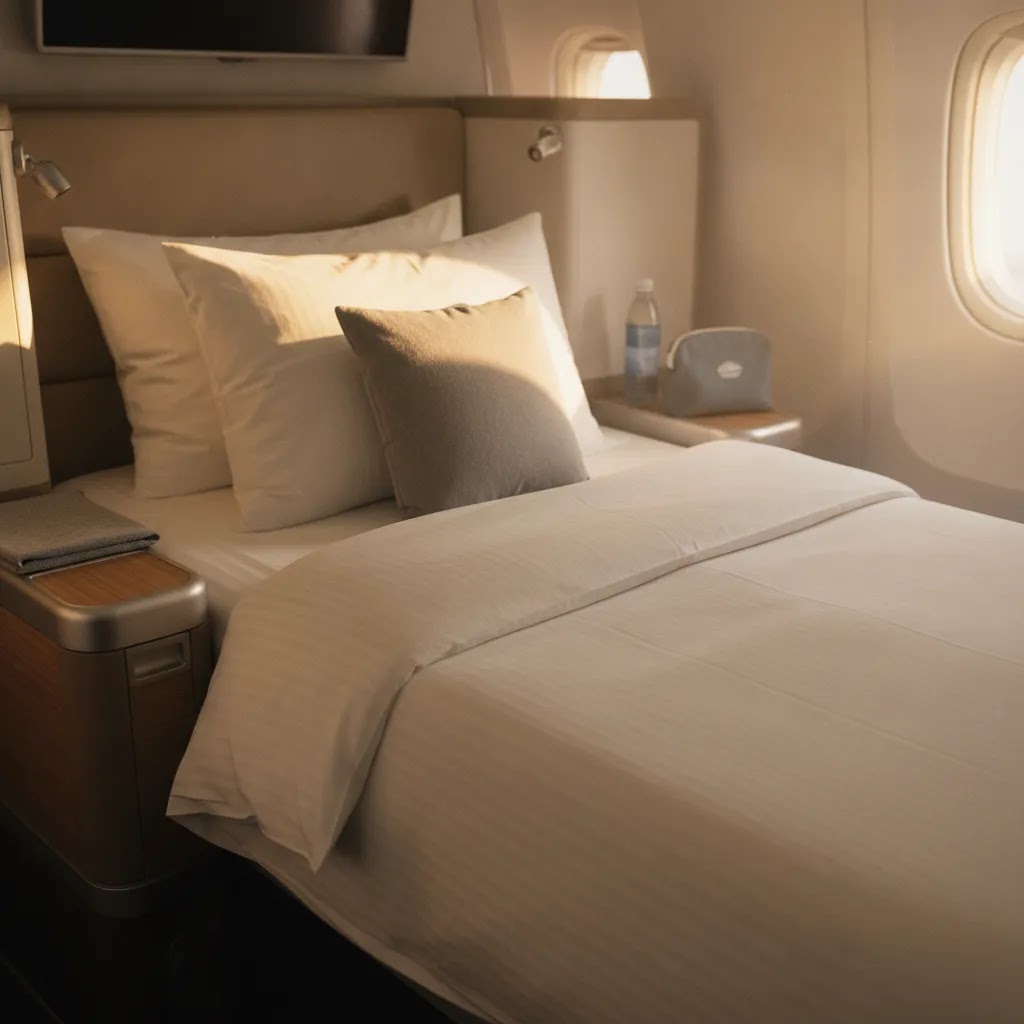
The same airline name does not guarantee the same onboard experience. First class flight seats vary significantly by aircraft type and even by subfleet. A carrier may offer one flagship suite on its newest long-haul aircraft and a noticeably older first class cabin on another.
Why configuration changes the experience
A small cabin of four seats usually feels very different from a cabin of eight or more, even if the seat dimensions are similar. Fewer seats often mean quieter service, less aisle traffic, and a stronger sense of exclusivity. Couples may prefer center suites on certain aircraft. Meanwhile, solo travelers often prioritize window positions that angle away from the aisle.
Configuration also affects how exposed your feet are when the bed is made, where your storage sits, and whether you can look out the window comfortably while seated or lying down. These details may sound minor. However, they matter when you are ten hours into a flight.
Common layout patterns you may see
- Single-aisle facing suites with direct aisle access for every passenger
- Window suites angled for privacy, often ideal for solo travelers
- Paired center suites designed for couples, sometimes with adjustable dividers
- Very low-density cabins where openness, rather than a door, creates exclusivity
| Cabin feature already stated in this guide | What it usually changes in practice |
|---|---|
| Cabin of four seats | Often feels quieter, with less aisle traffic and a greater sense of exclusivity |
| Cabin of eight or more seats | Usually feels busier even when seat dimensions are similar |
| Center suites | May suit couples when divider controls and table layout support shared travel |
| Window seats angled away from the aisle | Often appeal to solo travelers seeking privacy |
| Open low-density cabin | Can create exclusivity through spacing rather than doors |
If you are comparing options by route, category pages such as Premium Cabin Experience & Amenities and Airline Business & First Class Reviews can help you narrow the field before focusing on a specific aircraft and seat map.
Airline and Route Differences in First Class Flight Seats
Aircraft type is only part of the story. Route matters just as much. An airline may promote a highly regarded first class suite, yet operate that flagship product on only a select group of long-haul flights. Another carrier may still sell first class on paper while using an older seat, a less private cabin, or a regional configuration that feels materially different from the version shown in promotional images.
This is one of the most common sources of disappointment in premium air travel. Travelers often assume they are buying an airline’s most polished first class experience. In reality, they are reserving a particular aircraft on a particular city pair, with all the operational variation that may come with it. Some major long-haul routes still support true international first class in a very deliberate way. Others offer only business class at the premium end, even between globally important cities.
Why flagship first class is often route-specific
Airlines typically concentrate their most refined first class products where demand supports them. That often means prestige routes, high-yield business markets, or destinations with strong premium leisure traffic. As a result, one long-haul route may feature a carrier’s newest enclosed suite, while another route of similar distance may have no international first class at all.
In other cases, the airline may operate more than one first class subfleet, and the difference can be substantial once you are onboard. For travelers planning a milestone journey or a rest-sensitive overnight flight, this route-specific variation deserves close attention. A first class label alone does not tell you whether you are getting the airline’s current top-tier product, a previous-generation seat, or a cabin being phased out over time.
How to judge whether a route is likely to deliver the experience you expect
Start with aircraft consistency. If a route is known to alternate between different long-haul aircraft types, the seat experience may shift meaningfully from one departure to the next. Even within the same aircraft family, subfleet differences can affect door design, bed width, storage placement, and overall privacy.
Seat maps, recent schedule patterns, and cabin reviews can help, though these details may still change with operational needs. It is also wise to look at how central first class appears to the airline’s identity on that route. A carrier that treats first class as a flagship showcase may deliver a more coherent experience, from cabin finish to service rhythm, than one that offers it only on a limited number of flights.
This does not mean the more limited product will be poor. It means the route should be assessed on its own merits rather than on brand reputation alone. Flight Experts often evaluates premium cabins through exactly this lens: not whether an airline has a famous first class seat somewhere in its network, but whether your specific route is likely to deliver the version you actually want.
For travelers with fixed dates, connecting itineraries, or mixed long-haul sectors, that level of precision may make the difference between a memorable flagship experience and a product that feels merely adequate. If you are still weighing the value, Is Flying First Class Worth It? Honest Analysis offers a broader framework.
What First Class Flight Seats Feel Like in Practice
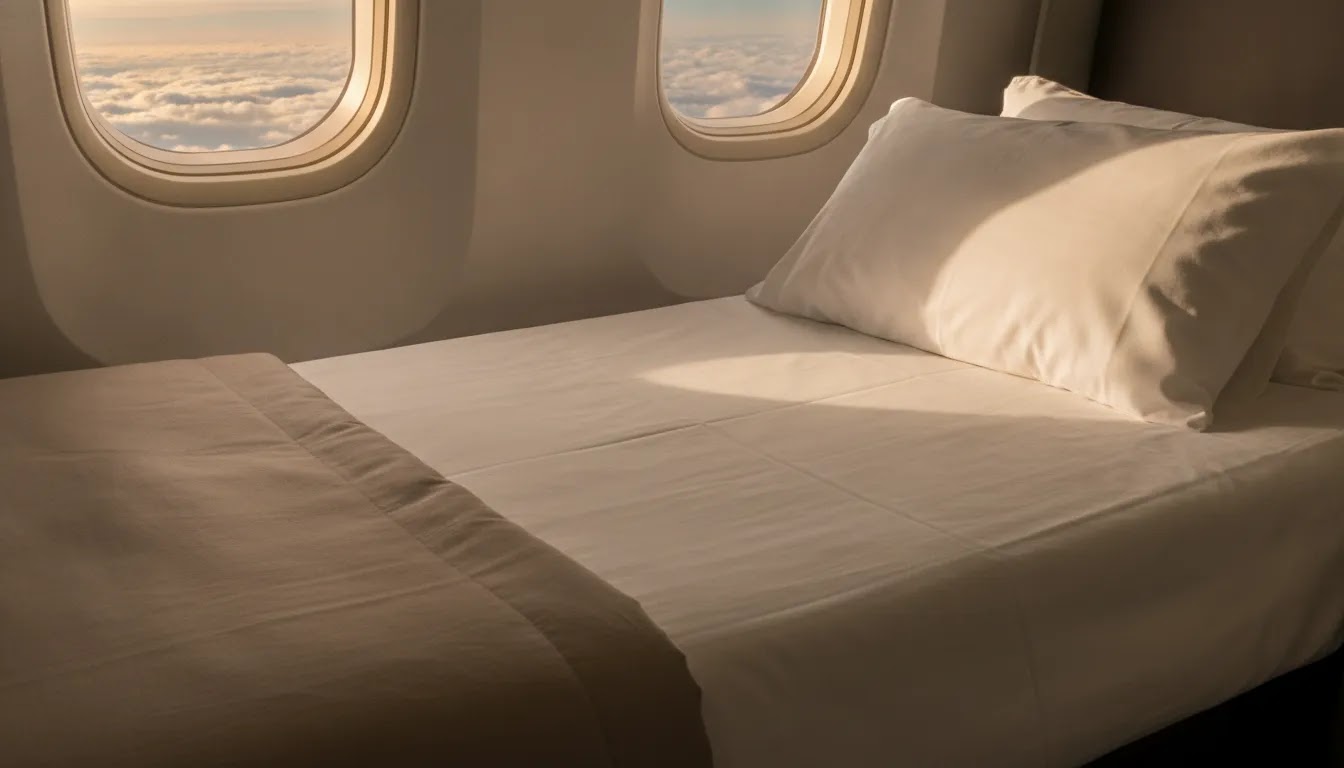
Comfort in a first class flight cabin is not only about square footage. It is about how naturally the space supports the way you actually travel. A strong product lets you move from working to dining to sleeping without constant rearrangement.
Dining posture and lounge comfort
Some first class flight seats are outstanding beds but mediocre lounge chairs. Others excel as relaxed armchairs with abundant personal space. Those seats suit travelers who enjoy a long meal, a glass of wine, and several hours of reading or watching films before sleeping. The ottoman position, table height, and side-console placement all shape whether the suite feels elegant or awkward during waking hours.
Storage and reach
A beautifully designed suite can become frustrating if your essentials disappear into inconvenient compartments. The best first class flight seats let you keep a phone, laptop, reading glasses, and personal items within easy reach while seated and while lying flat. In practice, easy access matters far more than many travelers expect.
Light, sound, and human traffic
The sensation of privacy often comes as much from cabin choreography as from physical walls. If the aisle stays active, galley light spills into the suite, or service arrives in a rushed rhythm, even a premium seat may feel less restful. By contrast, a quieter open seat in a small cabin can feel wonderfully serene.
That is why affluent travelers planning honeymoons, anniversary trips, or important business arrivals often evaluate the seat as part of the entire onboard environment, not as an isolated object.
How to Choose the Right First Class Flight Seats for Solo Travelers and Couples
Once you confirm the right aircraft and product, seat location becomes the next meaningful decision. In first class, the difference between an excellent seat and the right seat is often personal. Privacy sensitivity, sleep habits, trip purpose, and whether you are traveling alone or together all shape what will feel most satisfying in practice.
Best seat considerations for solo travelers
Solo travelers who value discretion typically gravitate toward window seats, especially those angled away from the aisle or positioned with a strong privacy wall on the cabin side. These seats often reduce visual traffic and may feel calmer during overnight flights. Aisle-adjacent positions can still be very good, particularly in enclosed suites. However, they may feel more exposed if the walls are lower or if crew movement is frequent.
The best choice also depends on how you intend to use the flight. If uninterrupted sleep matters most, a more protected window suite usually has the edge. If you expect to work, dine at length, and interact readily with crew, a seat with easier aisle access may feel more natural. Some travelers also prefer to be farther from lavatories or galleys. Others place more value on being in the quietest corner of a very small cabin.
What couples should assess before selecting center seats
Center first class seats are not automatically the best option for two people. On some aircraft, paired center suites are genuinely designed for shared travel, with divider controls that lower enough for easy conversation, coordinated dining, and a more connected feel throughout the flight. On others, the center layout is paired in theory but separated in practice by wide consoles, fixed structures, or privacy elements.
Couples should look beyond the simple fact that two seats sit beside one another. The key questions are whether the divider functionality is meaningful, whether the table arrangement supports dining together, and whether the suite still feels elegant when privacy is partially opened. On celebration trips, that distinction matters. A highly private product that isolates each passenger too completely may not feel as convivial as a well-designed center suite with thoughtful flexibility.
Match the seat position to the purpose of the trip
Trip purpose often clarifies the decision quickly. For overnight sectors, the priority may be a quiet window suite with minimal aisle exposure and strong bed geometry. For a daytime departure, you may prefer a seat that feels open enough for reading, lounging, or extended dining. Couples traveling for an anniversary or honeymoon may place more emphasis on paired seating and shared service flow. A traveler arriving for a board meeting may care more about privacy, reachable storage, and the ability to work without interruption.
This is where expert guidance may prove useful even for experienced premium travelers. The best first class seat is rarely universal. Instead, it is the seat that aligns with your route, your schedule, and the reason you are taking the trip in the first place.
How to Read Beyond Marketing Photos of First Class Flight Seats
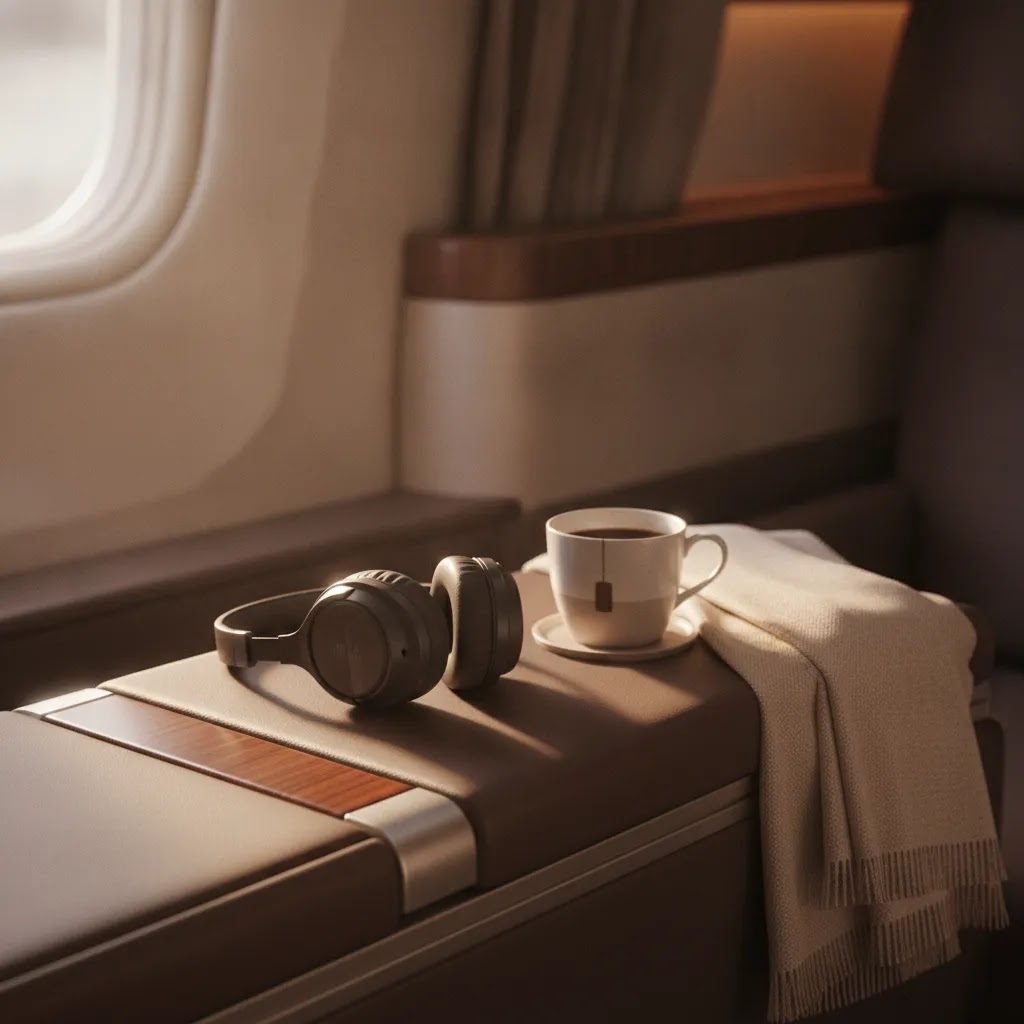
Airline imagery tends to emphasize drama: doors closed, lights dimmed, champagne poured, bed perfectly arranged. Useful, but incomplete. To understand what you may actually receive, look at the following factors before booking:
- Aircraft type: the same route may rotate between different aircraft with different first class products
- Cabin size: four-seat cabins often feel markedly calmer than larger ones
- Seat orientation: aisle-facing seats may feel more exposed than window-angled suites
- Bed design: confirm whether the bed is seat-converted or more distinct in setup
- Travel timing: a daytime flight may favor lounge comfort, while an overnight sector puts greater weight on sleep quality
One practical approach is to decide what you care about most before you shop. If privacy leads, look for enclosed suites. If sleep leads, prioritize bed geometry and bedding reputation. If you are traveling as a couple, center-seat compatibility may matter more than the door itself.
For travelers booking a high-value long-haul itinerary, personalized advice can help avoid disappointment. Flight Experts, led by Mike Chirilenco, focuses on premium air travel planning with first class and complex itinerary support. This can be especially useful when a route includes multiple aircraft types or mixed-cabin decisions.
For independent research, seat maps and aircraft details from SeatGuru and aircraft data from the FAA can provide useful context alongside airline materials.
Ground Experience That Often Accompanies First Class
The seat is the centerpiece of the onboard experience, but first class often begins well before boarding. On certain airlines and at certain airports, the ground component may materially shape how elevated the journey feels. Lounge access, private check-in areas, fast-tracked formalities, escort services, and chauffeur arrangements can all contribute to the overall value of flying first, especially on demanding long-haul itineraries.
These benefits vary considerably. Some carriers are known for flagship lounge environments with restaurant-style dining, private resting areas, and a very controlled atmosphere before departure. Others may offer a more modest premium lounge despite an excellent onboard suite. In a few cases, the most distinctive first class experience on the ground may involve a private terminal, a dedicated security path, or personalized escorting from curbside to aircraft, though these services are highly airport-specific and subject to change.
Why the airport experience matters more on some trips
For a short daytime sector, the difference between a pleasant lounge and an exceptional one may not change the trip in a meaningful way. On an overnight departure, a long connection, or a milestone itinerary, the ground experience often matters much more. A calm preflight meal, a private place to reset, and an orderly boarding process may influence how rested and composed you feel once the aircraft is airborne.
That is especially true on complex itineraries with multiple long-haul sectors. A superb seat on one segment does not entirely define the journey if the transfer experience is chaotic or the lounge offering is underwhelming at a key transit point. Sophisticated travelers often evaluate first class as a door-to-door premium process rather than a single piece of furniture onboard. If you want a broader overview, First Class Flight Amenities & Perks: Everything You Get expands on the wider experience.
Evaluate the seat and the ground service together
Some first class products justify their reputation largely through the suite itself. Others feel especially compelling because the airline has paired the seat with polished ground handling and a more private airport rhythm. Neither model is inherently superior, but the distinction matters if you are booking first class for a honeymoon, anniversary, major family trip, or business arrival where calm and continuity are part of the objective.
Flight Experts may help assess these differences route by route, particularly where lounge quality, airport procedures, and aircraft product do not align evenly across the itinerary. Ultimately, that perspective can be valuable when the goal is not simply to sit in first class, but to experience the whole journey at the level you expect.
Frequently Asked Questions
Are all first class flight seats fully enclosed suites?
No. Some are fully enclosed, while others are open suites or highly private pods without doors. The term “first class” signals a premium tier, not a universal design standard. The best way to evaluate a product is to check the exact aircraft and cabin layout on your route. Enclosure is only one part of the experience. Some open first class cabins still feel exceptionally private because the cabin is small, the seats are widely spaced, and the service flow is very discreet.
Do all first class international flight seats turn into beds?
Most modern long-haul first class products do offer a lie-flat bed or bed-like sleeping arrangement, but the form varies. In some cabins, the seat converts into a flat surface. In others, the airline may create a more distinct sleeping setup. Shorter routes marketed as first class may not deliver the same type of bed experience as flagship intercontinental services. If overnight rest is central to your trip, verify the aircraft-specific seat rather than relying on the cabin label alone.
What is the difference between a pod and a suite in first class?
A pod usually refers to a sculpted personal space with high sides or privacy features, but not necessarily a full door. A suite generally implies a more enclosed environment and may include a closing door, taller walls, or a more room-like layout. In practice, the difference is about degree rather than category. Some pods feel more comfortable and better proportioned than suites. A suite may look more dramatic, but comfort still depends on seat width, bed shape, and how the cabin functions during the flight.
Is a first class flight bed always better than business class?
Not automatically. Many business class beds are excellent, especially on airlines with strong long-haul premium products. First class typically adds more personal space, finer bedding, greater privacy, and a calmer cabin atmosphere, but a particular business class seat may outperform an older first class product. Route, aircraft, and configuration matter. If your priority is pure sleep quality, compare the actual bed dimensions, footwell design, and cabin density rather than assuming the higher cabin label will always deliver the best night onboard.
How much privacy should you expect in a first class cabin flight?
You should expect more privacy than in business class, though the form may differ. Some cabins provide it through doors and enclosed walls. Others rely on spacing, seat angle, and a very small number of passengers. Privacy also depends on how visible you are from the aisle and how much galley activity reaches your seat. Travelers who are especially sensitive to movement, light, or noise often prefer enclosed suites, especially on overnight flights.
Are center first class seats good for couples?
They can be excellent, but only when the cabin is designed with paired travel in mind. Some center suites allow easy conversation and feel ideal for couples sharing a celebratory trip. Others are separated by thick consoles or dividers and are better suited to solo travelers seated near one another. Privacy controls also vary. On certain aircraft, the divider can be lowered for dining or conversation. On others, the layout remains more formal. Reviewing the specific configuration is essential before choosing center seats together.
Do first class seats feel noticeably different on daytime versus overnight flights?
Yes, often quite noticeably. On a daytime flight, you may care more about lounge posture, table setup, natural light, and how pleasant the suite feels for reading, dining, or working. On an overnight sector, the quality of the bed, the quiet of the cabin, and the ease of transitioning to sleep become far more important. The same seat can feel outstanding in one context and merely good in another. The route timing should always shape how you evaluate the product.
What should you check before reserving planes with beds?
Check the exact aircraft, the seat model used on that subfleet, the cabin size, and whether operational aircraft changes are common on the route. Look at bed setup, storage access, seat orientation, and whether the product is known for a tight footwell or exposed aisle position. If the trip is important, such as a honeymoon or major business arrival, it is wise to confirm these details with a premium travel specialist. Small configuration differences can change the experience more than most booking pages suggest.
Does first class always include the most exclusive airport experience too?
Often, but not universally. Many first class itineraries include access to flagship lounges and enhanced ground handling, and some airlines may offer private terminal or chauffeur elements on certain routes. These services are highly airline- and airport-specific. The onboard seat and the ground experience should be evaluated together, but they are not identical promises. A remarkable seat may be paired with a modest departure experience at one airport, while another route may feel exceptional from curbside to cabin.
Who benefits most from understanding seat configuration before booking?
Anyone investing in a premium long-haul journey benefits, but it matters especially for travelers with specific goals: sleeping on arrival day, protecting privacy, celebrating a special occasion, or maintaining a productive schedule during transit. A traveler flying solo may want a secluded window suite, while a couple may prefer a center configuration that supports shared dining and conversation. Knowing the configuration in advance helps you choose a seat that fits the purpose of the trip, not just the prestige of the fare.
Which airlines still offer true international first class seats on long-haul routes?
A limited group of airlines still maintains true international first class on select long-haul routes, though coverage is far from universal and may change over time. Some carriers position first class as a flagship part of their brand, while others have reduced it or removed it entirely from much of their network. The key point is that airline reputation alone is not enough. Travelers should verify whether first class is actually offered on their specific route, on their specific aircraft, and in the form they expect.
Are first class seats always wider than business class seats?
No. First class seats are often wider, but not always to a degree that transforms comfort in every case. Some modern business class products offer substantial width and excellent sleeping surfaces, while certain older first class seats may feel less impressive than the label suggests. Width also tells only part of the story. Shoulder space, bed taper, footwell design, and how much usable room surrounds the seat often matter just as much as the measurement itself.
What is the best first class seat location for a solo traveler?
In most cases, a window seat with limited aisle exposure is the preferred choice for a solo traveler who values privacy and rest. That said, the ideal location depends on the cabin design. Some enclosed aisle seats feel extremely private, while some window positions may sit closer to galley activity than expected. The right answer usually comes from matching the seat map to your priorities, whether that is sleep, productivity, window access, or the quietest part of the cabin.
Do first class seats always have direct aisle access?
No. Many modern first class products do provide direct aisle access for every passenger, particularly in suites and low-density layouts, but that is not universal across all aircraft and generations of seat design. Older configurations or highly customized flagship cabins may handle movement differently. If easy access matters to you, especially on an overnight flight, it is wise to confirm the exact cabin arrangement rather than assuming all first class seats are configured the same way.
Key Takeaways
- First class flight seats vary widely, and the label alone does not tell you how private, spacious, or sleep-friendly the product will be.
- Suites, pods, and open first class designs each serve different traveler preferences, especially around privacy, openness, and cabin calm.
- A first class flight bed should be judged by bed shape, width, foot space, and bedding quality, not by marketing imagery alone.
- Aircraft type and cabin configuration may matter as much as airline brand when choosing a first class international flight seat.
- Expert guidance can be especially valuable when a route includes multiple aircraft variants or when the trip itself carries high personal importance.
Conclusion
The best first class seat is rarely the one with the most dramatic photograph. It is the one that aligns with how you intend to travel: deeply rested after an overnight crossing, comfortably settled during a long daytime journey, or able to share the cabin gracefully with a partner on a milestone trip. Suites, pods, and open designs all have their place, but they create meaningfully different experiences once the aircraft door closes.
If you are evaluating first class flight seats for an important journey, a careful review of aircraft, configuration, and seat design is well worth your attention. Travelers who want a more tailored perspective may prefer to speak with a luxury travel specialist who understands how premium cabins differ in practice, not just in marketing. Flight Experts offers first class flight booking support and complex itinerary planning for travelers who value that level of precision. You can reach out to the team to discuss your preferences and identify the type of first class experience that best suits your route, schedule, and expectations.



