
Boeing 737 First Class: What to Expect Domestically
That distinction matters. A traveler flying from New York to Dallas may value a wide recliner, dedicated overhead bin space, and a calm cabin. By contrast, a traveler booking a transcontinental itinerary may expect something closer to an international premium experience. Without the right context, that traveler may feel underwhelmed. The Boeing 737 is one of the workhorses of domestic premium travel, and airlines use it in many different ways.
This article explains what domestic 737 first class actually looks like across major U.S. airlines. It also shows how seat design and service can vary. Finally, it highlights what you should verify before you choose a flight.
Why the Boeing 737 matters in domestic first class
The Boeing 737 is a narrow-body aircraft, and that fact shapes nearly everything about the premium experience. You are not stepping into a long-haul flagship cabin. Instead, you enter a compact front cabin built for shorter and medium-length routes within the United States, with occasional service to nearby international markets.
That does not make the experience unimportant. It simply changes what excellence looks like. On a 737, airlines usually offer first class as a larger recliner seat, fewer passengers in the cabin, earlier boarding, more attentive service, and a calmer environment than the main cabin. If you want a broader understanding of premium seating categories, this overview of first class seats provides useful context.
The domestic 737 also appears on routes where affluent travelers often care most about consistency. Corporate trips, second-home travel, family holiday departures, and quick milestone getaways often happen on these aircraft. In those cases, reliability, comfort for two to five hours, and ease on arrival may matter more than theatrical luxury.
What the seat really is on a domestic 737
Expect a recliner, not a lie-flat suite
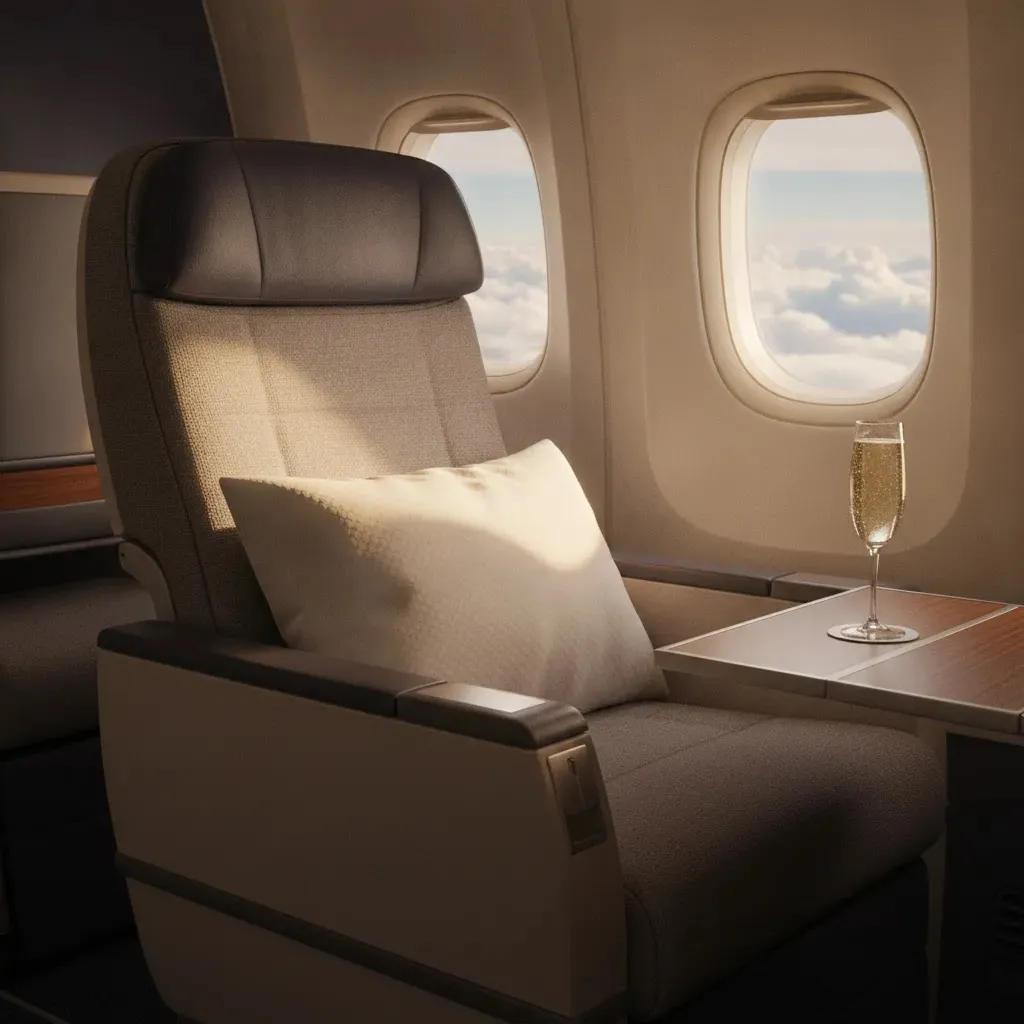
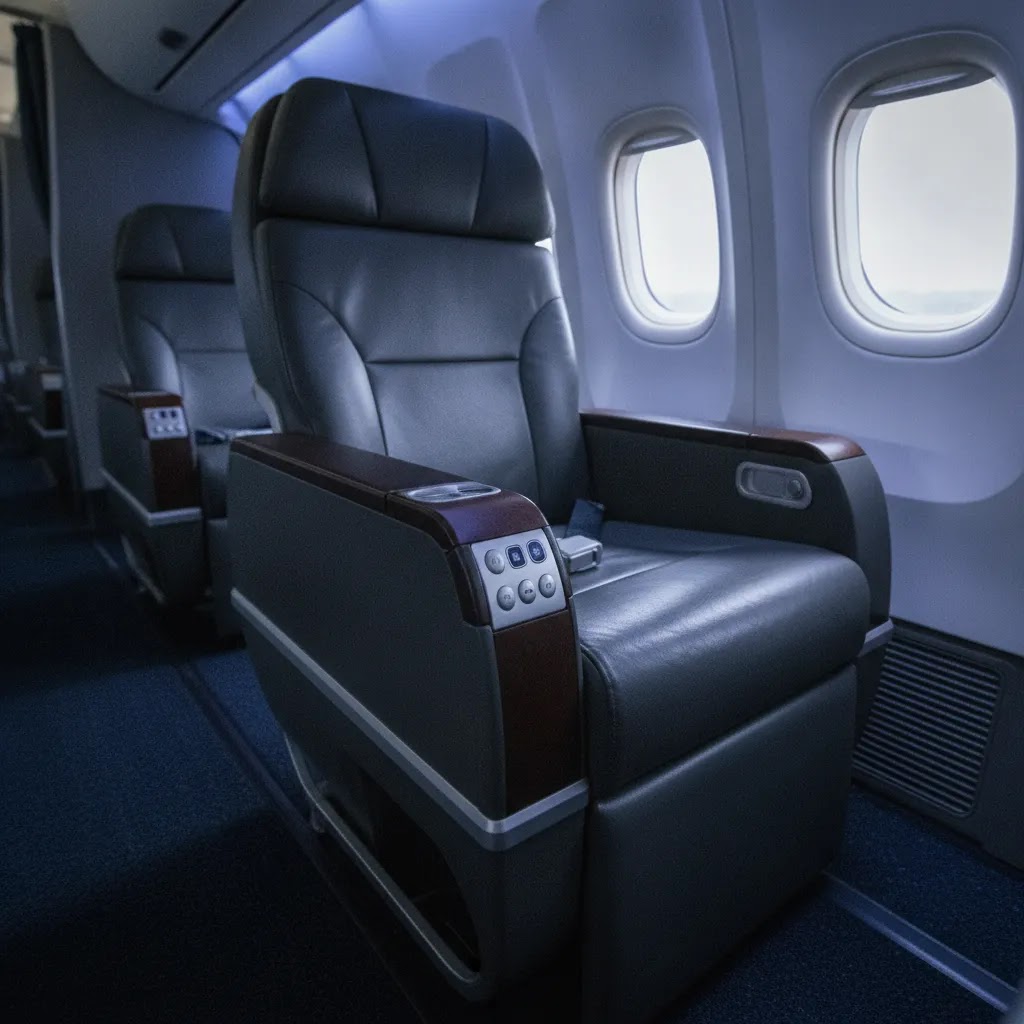
On most domestic Boeing 737 flights, first class means a recliner seat in a 2-2 layout. There is usually more width than in the main cabin, more pitch, and a noticeably quieter feel because the cabin is small and boarding finishes quickly.
For many travelers, the key benefit is not simply legroom. It is personal space. You are less likely to negotiate armrest boundaries, overhead bin crowding, or the compressed feeling that can make even a short domestic flight feel draining.
737 first class seats vary more than many travelers assume
The phrase 737 first class seats sounds precise, but it is not. Airlines operate different 737 generations, including older 737-800 aircraft and newer Boeing 737 MAX variants. Cabin refreshes also happen at different speeds. Two flights on the same airline may appear in first class and still offer different storage solutions, seat shells, power access, tray table design, or screen size.
Seat width and pitch typically improve over the main cabin, but the details that shape comfort often sit elsewhere. A firm seat cushion may feel excellent for a 90-minute sector and less appealing on a four-hour route. Limited under-seat storage in the bulkhead may bother one traveler and not another. If you are comparing categories rather than just aircraft, this explanation of what is first class helps clarify what the label may and may not include.
Cabin size affects the atmosphere
A domestic 737 first class cabin often has between 12 and 20 seats, depending on airline and configuration. Smaller cabins generally feel more private and easier for the crew to manage. Larger cabins can still be pleasant. However, service timing may feel less personalized, especially on busy business routes.
Cabin atmosphere gets less attention than it deserves in domestic premium travel. A front cabin with twelve passengers, fast beverage service, and quiet boarding may feel materially more refined than a fuller cabin with more movement and a longer service sequence, even if the seat measurements look similar on paper.
Does the Boeing 737 have lie-flat seats in first class?

In most cases, no. Domestic boeing 737 first class is typically a premium recliner product, not a lie-flat bed. If you are selecting a flight specifically to rest, the aircraft family name alone is not a reliable signal that a lie-flat option exists.
Here is the thing. Airlines do make occasional exceptions. However, those exceptions depend on a specific route and fleet. Travelers should not assume they will see one simply because a flight is marketed as First Class. Certain premium transcontinental concepts, specialized subfleets, or seasonal network decisions may place a more advanced seat on particular routes. In addition, occasional aircraft swaps can produce surprises in either direction.
The seat map and the aircraft configuration matter more than the “737” label. A carrier could operate multiple interior layouts within the same 737 variant, and two flights on the same day may have different cabin outcomes. The most dependable approach is to verify the actual seat type rather than the marketing cabin name.
How to verify what you are actually booking
Start with the seat map and look for cues that typically accompany a lie-flat product. A lie-flat layout will usually show a very different geometry than a simple 2-2 recliner cabin, with larger footprints per seat and spacing that suggests a bed-length recline. If the map shows a conventional 2-2 pattern with multiple rows tightly aligned, you are almost certainly looking at a domestic recliner.
The label “First” versus “Business” can create confusion, so be careful. On certain routes, an airline may market a forward cabin as Business rather than First, or use premium branding that changes the name without changing the underlying seat. The cabin label may reflect route category or sales strategy, not necessarily a different physical product. When the goal is sleep or a specific style of seat, use the configuration as your source of truth.
Finally, keep expectations calibrated for last-minute changes. Equipment substitutions can happen for operational reasons, and that can alter the cabin you experience even after you have confirmed the seat map. In most cases, you can manage that risk. Still, it is one reason seasoned premium travelers often choose itineraries with a margin for comfort rather than relying on a single feature to carry the experience.
How major U.S. airlines differ on the 737
United and the Boeing 737 MAX 9
The search phrase boeing 737 max 9 united first class comes up often because United uses the aircraft on many domestic and near-international routes. In broad terms, United’s newer 737 MAX 9 first class experience may feel more contemporary than some older narrow-body interiors, particularly where refreshed finishes, seat power, and updated cabin styling are present.
Still, route length, catering standards, and subfleet updates shape the experience in a major way. United’s domestic first class on a MAX 9 is generally about efficiency and consistency rather than visual drama. Travelers who want a composed work environment with a larger seat and front-cabin priority may find it well suited to that purpose.
Delta and the 737-800
Delta 737-800 first class is another common comparison point. Delta’s 737-800 fleet has long been part of its domestic network, and many travelers associate Delta with polished service flow and a disciplined onboard presentation. On the 737-800, the front cabin usually delivers what seasoned premium domestic travelers want most: an orderly airport-to-seat experience, reliable seat-back or personal device entertainment options depending on subfleet, and a restrained, professional tone.
The deciding factor is often whether the individual aircraft has a refreshed interior. On older examples, the seat may feel perfectly acceptable. Even so, the design language may feel less current than what you may find on some newer narrow-body cabins elsewhere.
American Airlines and legacy variability
American’s domestic 737 first class offering often reflects the complexity of a large mixed fleet. Some aircraft feel current enough for a premium domestic journey, while others may feel more functional than memorable. That does not automatically mean poor service. Instead, it means the airline’s consistency can depend on aircraft assignment and route.
For travelers who prioritize seat comfort over cabin aesthetics, American may still serve the purpose well on the right itinerary. If cabin freshness matters to you, aircraft-specific checking becomes more important before ticketing.
Alaska Airlines and front-cabin comfort
Alaska operates Boeing 737 aircraft extensively, and many premium travelers choose the airline for West Coast routes where schedule convenience and service tone are central. Alaska’s first class tends to appeal to travelers who value a calm, understated onboard style rather than spectacle. The seats are still domestic recliners, but the airline often earns attention for a pleasant inflight rhythm and a generally composed cabin environment.
On medium-length sectors, that combination can feel very well judged. The flight may not be lavish, but it can feel thoughtfully managed.
What you may receive beyond the seat
Priority handling shapes the day more than many realize
Domestic first class on a 737 usually includes priority check-in access where available, earlier boarding, and faster settling into the aircraft. On arrival, being among the first off a narrow-body aircraft may save meaningful time, especially if you are connecting or heading straight to a meeting, driver, or resort transfer.
This is where premium domestic travel often earns its value. The seat is only part of it. The reduced friction before departure and after landing can materially improve the quality of the day.
Meals and beverages depend on route and timing
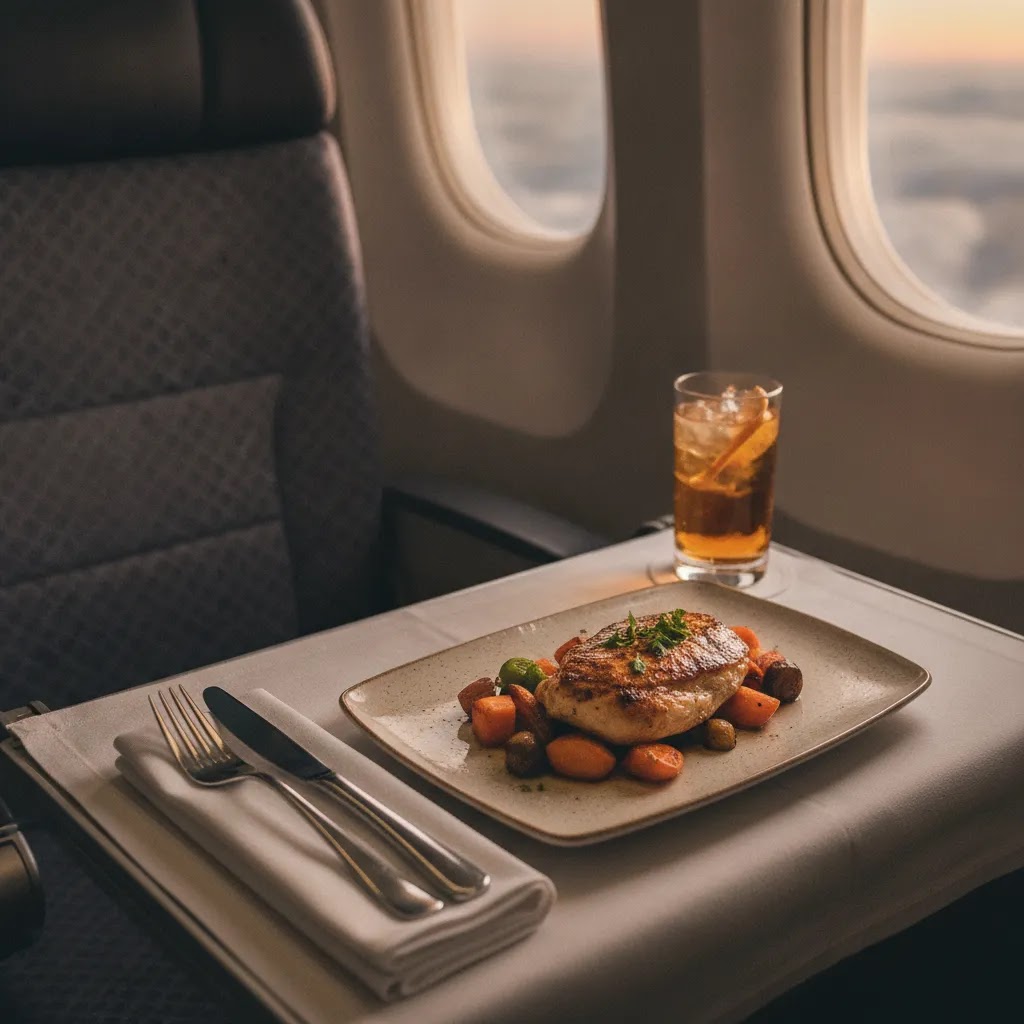
Travelers often overestimate the culinary side of domestic 737 first class. Meal offerings may be thoughtful on longer routes, but airlines typically design them around practicality and service speed, not the elaborate dining associated with international first class. Morning departures, midday sectors, and shorter flights can all produce different service patterns.
Alcoholic beverages, premium snacks, and a more attentive pace of service are common expectations. However, the exact offering may vary by airline, departure time, and operational conditions.
Lounge access is not automatic
One of the most common misunderstandings is lounge access. A domestic first class ticket on a Boeing 737 does not automatically grant access to a lounge in many cases. Access rules depend on airline policies, route type, elite status, membership, and whether the itinerary is marketed as a premium transcontinental or qualifying international segment.
Ground rules and edge-case policies premium travelers ask about
What many travelers overlook is how much the domestic first class experience can be shaped by ground-side rules rather than the seat itself. On a Boeing 737 route, tight schedules, fast turns, and full flights can make airline policies around same-day changes, standby, check-in windows, and baggage cutoffs feel more consequential than they would on a long-haul itinerary with larger buffers.
Policies vary by airline, fare type, and airport, and they can change over time. A premium cabin ticket may give you more flexibility in some programs, but it does not eliminate operational constraints. For travelers who keep their day tightly structured, it is worth treating these rules as part of the product.
Time-based thresholds can affect your options
Airlines often apply time thresholds that determine what can be changed, reissued, or processed at the airport, and when. In practical terms, there may be cutoffs for checking bags, being accepted for standby, confirming a same-day change, or completing ticketing steps that must occur before a flight is within a certain window of departure.
Search behavior frequently references a “45 minute rule,” and that phrase typically points to a time threshold that may influence what an airline can or will do close to departure. It often ties to airport processing or standby and reaccommodation handling. The exact meaning can differ by carrier and fare rules, and it may also differ at smaller airports versus major hubs. If this matters to your itinerary, confirm the current policy for your specific airline, flight, and ticket type rather than relying on a general rule of thumb.
Why this matters more on domestic 737 routes
The reality is that domestic 737 operations can be less forgiving. Flights often depart from busy terminals, gate holds can cascade, and schedules are frequently built around onward aircraft utilization. If you are connecting to a long-haul premium segment, a missed cutoff can create a mismatch between your intended experience and what is actually possible that day.
Consider this when planning transfers and pickups. If you are landing and heading directly to a driver or a time-sensitive reservation, deplaning first is helpful, but it does not replace planning margin around baggage delivery, terminal congestion, and short-notice operational changes. Many premium travelers find that the smoothest days are built on a slightly earlier departure, a more comfortable connection window, and clear expectations about what the airline can accommodate close to departure.
Where expectations often go wrong
The biggest disappointment usually comes from importing long-haul first class expectations into a domestic narrow-body flight. A Boeing 737 first class ticket on a two-hour route is not trying to compete with an enclosed suite, onboard shower, or caviar service. It is a different product for a different mission.
The second issue is assuming aircraft name equals product quality. A Boeing 737 MAX 9 may sound newer and therefore better, and sometimes it is. Yet route, subfleet condition, catering consistency, and crew execution can matter just as much as aircraft generation.
A third problem is focusing too narrowly on seat pitch. Comfort is more layered than a single measurement. Cushion support, armrest design, storage placement, screen position, power reliability, and the behavior of the cabin around you all influence whether the flight feels genuinely premium.
An agency like Flight Experts often helps clients avoid these mismatches by evaluating not just the fare category but the specific aircraft, route pattern, and service tradeoffs. That concierge perspective is particularly useful for travelers who book premium cabins regularly and want fewer unpleasant surprises.
How to evaluate a 737 first class flight before booking
Check the exact aircraft, then check again
Aircraft assignments may change, but the listed aircraft type is still your starting point. Look for whether your flight is operated by a 737-800, 737-900, or Boeing 737 MAX variant. Then review the seat map and cabin size. A 12-seat cabin may feel quite different from a 20-seat one, even before service begins.
Match the route to your expectations
A short hop from Los Angeles to San Francisco and a longer domestic sector from Seattle to Miami may both be sold as first class on a 737. Your expectations should not be the same. Longer sectors tend to make seat ergonomics, tray table usability, and meal quality more relevant.
Pay attention to your personal travel style
If you work in flight, power outlets, tray stability, and shoulder room may matter most. If you travel as a couple, a 2-2 front cabin can feel companionable and easy. If you are traveling before an important event, a quiet front cabin and priority deplaning may be worth more than any onboard meal.
Use expert help for premium itineraries with tight margins
Not every domestic first class booking needs hands-on advisory support. Some do. Complex connections, milestone travel, mixed airline itineraries, and premium journeys that connect into international long-haul cabins benefit from closer review. Flight Experts, led by Mike Chirilenco, is one example of a luxury travel specialist that works this way, pairing clients with a personal consultant for premium flight planning and more tailored itinerary decisions.
Boeing 737 first class seat maps and configurations, what to look for before you book
If you travel frequently in domestic first class, seat maps become a practical decision tool rather than a curiosity. They help you anticipate cabin rhythm, storage constraints, and whether you will be sitting where service and noise patterns work for your preferences.
Common 737 first class layouts and what they signal
Most Boeing 737 first class cabins in the United States are arranged in a 2-2 layout, typically with a relatively small number of rows. From an experience standpoint, the row count can hint at how quickly the cabin settles after boarding and how personalized service may feel. A smaller cabin often means fewer service interruptions and a quieter front section. A larger cabin can still be very comfortable, but it may feel more active, particularly during meal or beverage service.
Bulkhead placement matters because it can change how you use the space. The bulkhead row may offer a sense of openness in front, but it often comes with stricter stowage requirements for takeoff and landing. If you prefer having a bag within reach, or you use a tablet or documents throughout the flight, a non-bulkhead row may feel more natural.
Proximity to the galley and lavatory can also shape your experience. Seats closest to the galley may experience more light and movement, especially during service setup. Seats closest to the lavatory may see more foot traffic. None of this makes a seat unacceptable, but it does allow you to choose deliberately based on your tolerance for activity.
737-800 vs 737-8 vs 737 max 8 vs 737-9, why the name can mislead
The naming can be confusing, and it is a common source of mistaken expectations. A “737-800” is a widely used earlier generation variant. A “737-8” and “737 max 8” often refer to the same MAX variant described in different ways, depending on how the airline or booking channel formats the aircraft type. “737-9” and “737 max 9” follow the same pattern. What sets this apart is that the label does not reliably tell you how recently the interior was refreshed or which seat model is installed.
Think of it this way. Aircraft type is the starting point, but configuration is the decision point. Two aircraft with the same external type label could have different first class seat features, different entertainment setups, and different power availability. The seat map, and in some cases the detailed aircraft configuration notes associated with the flight, is where you get closer to the reality of the onboard product.
A practical checklist for premium priorities
Before you commit, confirm the elements that tend to matter most for a composed domestic premium experience. Power availability is one of the most important, particularly if you work in flight or rely on devices for entertainment. Entertainment matters as well, but it is not always seat-back based, and the “presence of screens” can vary by subfleet and airline. Storage and surface usability often separate a merely larger seat from one that feels truly workable, particularly if you plan to use a laptop, keep a handbag organized, or avoid frequent trips to the overhead bin.
Finally, consider how cabin size influences the service rhythm. A smaller forward cabin often results in faster initial beverage service and a calmer flow overall, while a larger cabin can extend the service sequence. Neither is inherently better, but for travelers who value quiet, efficiency, and minimal interruption, cabin size is worth treating as a meaningful part of the selection process.
Frequently Asked Questions
Is boeing 737 first class considered true first class?
In the domestic U.S. market, airlines generally market the forward cabin on a 737 as First Class, but it differs substantially from international long-haul first class. You should expect a larger recliner seat, priority handling, and more attentive service, not a suite or lie-flat bed in most cases. The label is accurate within the domestic airline framework, though the experience is narrower in scope than travelers may imagine if they are used to flagship global premium cabins.
Are 737 first class seats wide enough to feel meaningfully different?
For most travelers, yes. The improvement is usually noticeable the moment you sit down. Greater width, a more generous armrest area, and added seat pitch can make the cabin feel materially calmer. The difference becomes more valuable on full flights, during work-heavy travel days, or when you simply want more personal space. That said, individual seat design still matters, so not every 737 first class seat will feel equally refined.
Does boeing 737 max 9 united first class feel better than older United 737 cabins?
It often may, especially if you are on a more recently updated aircraft with a fresher interior and well-maintained cabin finishes. Newer Boeing 737 MAX 9 interiors can present a more current visual impression and sometimes better in-seat functionality. Even so, route catering, crew service, and operational consistency remain major parts of the experience. A newer aircraft may improve the baseline, but it does not automatically transform domestic first class into a flagship-style product.
What is the real difference between delta 737-800 first class and United’s 737 first class?
The difference is usually not dramatic in concept, since both provide larger domestic recliner seats and front-cabin priority. Where travelers notice separation is in cabin refresh level, service style, entertainment setup, and overall polish. Delta often appeals to travelers who value a particularly orderly flow and consistent onboard presentation. United may appeal on schedule, route, or aircraft assignment. The better choice often depends on the specific flight rather than the airline name alone.
Do domestic 737 first class tickets include lounge access?
Not automatically in many cases. Domestic first class lounge access can depend on airline policy, elite status, membership, route type, or whether your itinerary qualifies under a premium transcontinental or international rule set. Many travelers are surprised by this, especially if they associate first class with a complete airport luxury experience. If lounge access matters to your day of travel, verify it before booking rather than assuming it is attached to the ticket.
Is a bulkhead seat best in 737 first class?
It depends on your priorities. Bulkhead seats may feel more private and can reduce foot traffic in front of you, but they often require all personal items to be stowed for takeoff and landing. Some travelers dislike losing immediate access to a bag, tablet, or handbag. Non-bulkhead seats may offer more convenient under-seat access. For travelers focused on uninterrupted workspace or easy personal storage, a non-bulkhead row may actually be the better fit.
How much does service vary on domestic 737 first class routes?
Service may vary quite a bit based on route length, departure time, weather conditions, crew style, and catering uplift. A morning flight on a shorter sector may feel efficient but minimal, while a longer midday route may include a more complete meal service. Airlines also adjust service routines when turbulence is expected. Premium travelers usually have the best experience when they view domestic first class as a comfort and convenience product first, with dining as a secondary benefit.
Is domestic 737 first class worth it for a short flight?
For some travelers, absolutely. If your priority is not onboard time but reduced friction, first-off-the-plane convenience, and a more composed airport experience, even a short 737 flight may justify the choice. This is especially true for same-day business trips, event travel, or itineraries with tight schedules. On very short sectors, the seat itself may matter less than boarding ease, cabin calm, and time saved on both ends of the journey.
Should couples prefer a 737 first class cabin over a single-aisle business class product elsewhere?
A 2-2 domestic first class layout can work very well for couples because both travelers sit together without one person being isolated across an aisle. That companionable setup is one of the understated strengths of domestic 737 premium cabins. The tradeoff is that privacy is limited compared with more advanced international business class products. For a domestic trip taken together, though, many couples find the arrangement practical and pleasant.
When should you consult a travel advisor for a domestic first class booking?
If the flight is part of a larger premium itinerary, the value of advice rises quickly. A standalone one-hour segment may be simple. A domestic 737 first class flight connecting to a transatlantic or transpacific premium cabin is different, particularly when schedule protection, airport transitions, and product consistency matter. A travel specialist may help align the domestic leg with your wider travel priorities so the journey feels coherent rather than pieced together.
Does a boeing 737 have first class?
Yes, most major U.S. airlines operate a forward premium cabin on many Boeing 737 flights, and it is typically sold as First Class on domestic routes. The product is generally a larger recliner seat with front-cabin priority and a quieter environment, with the exact seat and service details varying by airline, aircraft configuration, and route.
Does the boeing 737 have lie-flat seats?
Typically, no. Most Boeing 737 first class cabins in the domestic U.S. market use recliner seats rather than lie-flat beds. There may be rare route-specific or configuration-specific exceptions, and aircraft substitutions can occur, so travelers who need a lie-flat seat should verify the seat type on the specific flight they intend to book.
What is considered the nicest airline in the us?
There is not a single universally “nicest” airline, because premium travelers define “nice” differently. Some prioritize the newest interiors and consistent onboard presentation, others value service tone and operational reliability, and others care most about network strength and lounge ecosystems. For a Boeing 737 first class flight, the best choice is often the specific route and aircraft configuration that matches your priorities rather than a general ranking.
What is the 45 minute rule for american airlines?
The phrase is commonly used to describe a time threshold close to departure that may affect what can be changed or processed at the airport, such as standby, same-day changes, or certain ticketing actions. The exact interpretation can depend on the fare type, airport, and current airline policy, and it may change over time. If you are planning around a tight schedule, confirm the current rules directly with the airline for your exact itinerary, and consider building margin into the day so that a time cutoff does not create unnecessary pressure.
Key Takeaways
- Boeing 737 first class on domestic U.S. airlines usually means a larger recliner seat, priority handling, and a calmer front cabin, not long-haul style luxury.
- 737 first class seats vary by airline, aircraft generation, and cabin refresh cycle, so the exact plane still matters.
- United’s Boeing 737 MAX 9 and Delta’s 737-800 are both common premium domestic products, but route, service execution, and cabin condition can shape the experience as much as the airline brand.
- Lounge access is not automatic on domestic first class tickets, so airport benefits should always be confirmed separately.
- For complex or high-value itineraries, expert guidance may help you choose the domestic premium segment that best supports the rest of your journey.
Conclusion
Boeing 737 first class is best understood on its own terms. It is a domestic premium product built around comfort, efficiency, and a smoother travel day, not around long-haul spectacle. Once you view it that way, the right questions become clearer: How current is the aircraft interior, how large is the front cabin, what service is typical on the route, and does the itinerary actually support the kind of experience you want?
That level of clarity matters most for travelers who place a premium on time, calm, and consistency. A well-chosen domestic first class segment may set the tone for a much larger trip or simply make a demanding travel day feel more composed. If you would like guidance on aligning domestic premium flights with a broader first class or business class itinerary, you may wish to speak with the Flight Experts team about your travel preferences and routing priorities.



