
First Class Amenities: What You Get for the Price
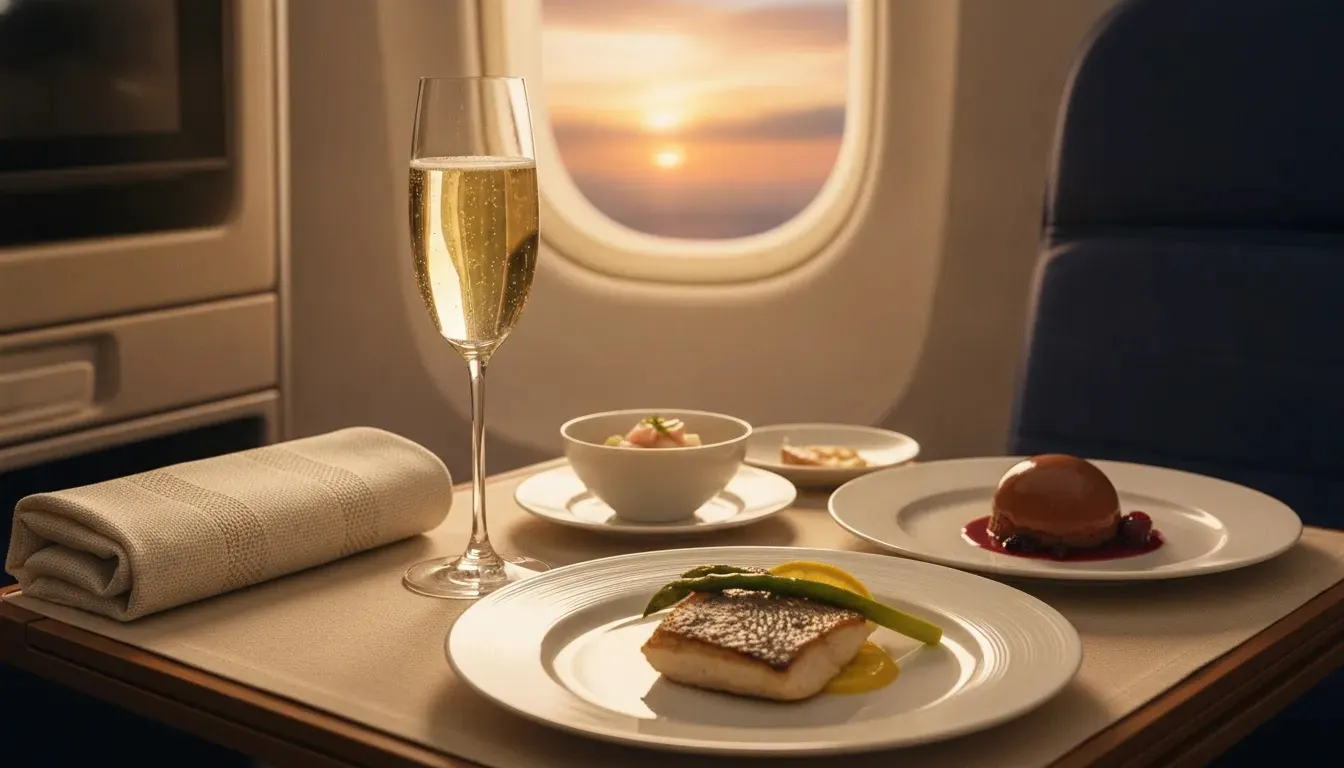
Paying for first class is rarely about a wider seat alone. The full value often appears before boarding and after landing. For milestone trips or demanding business travel, those details matter. This article explains what the fare may include and where the experience can differ.
First Class Amenities and Typical Cost
For long-haul itineraries booked through Flight Experts, first class flight pricing typically starts around $5,000 and can exceed $20,000. The final fare depends on route, carrier, season, and cabin rarity. Importantly, that range reflects more than the seat. On airlines that still invest seriously in international first class, the fare may include premium lounge access, elevated dining and wine service, dedicated airport handling, chauffeur arrangements on select carriers, and refined amenities such as luxury bedding or designer gifting.
This article does not treat first class as a simple label. Instead, it focuses on the extras around the flight that often justify the premium. If you want a broader foundation first, see what business class on a plane means before comparing the top end of the market.
First Class Amenities Pricing Summary Table
| Tier | Typical Price Range | What Is Usually Included |
|---|---|---|
| Entry long-haul first class | $5,000 to $8,000 | Large seat or suite, premium dining, lounge access, enhanced bedding, amenity kit, priority ground handling |
| Established flagship first class | $8,000 to $14,000 | Stronger lounge product, more personalized service, premium beverages, greater privacy, possible chauffeur or escort elements depending on carrier |
| Ultra-premium flagship routes | $14,000 to $20,000+ | Top-tier suite, highly curated dining, premium gifting, exclusive lounge spaces, private transfer or spa-style extras where offered |
Flight Experts lists its First Class Flight Booking service at $5,000 to $20,000+ for major premium routes including the U.S. to Europe, Asia, the Middle East, transatlantic, and transpacific markets. In addition, the agency’s service includes white-glove personal support, lounge access coordination, chauffeur service arrangements, and luxury amenity guidance.
What First Class Amenities Include Beyond the Seat

First class amenities on the ground
The most meaningful first class amenities often appear before the cabin door closes. A traveler may start with dedicated check-in and a calmer security process where the airport supports it. Then the journey often continues in a lounge that feels closer to a private club than a waiting area.
On stronger products, lounge dining is a real part of the experience. It is not just a token buffet. That matters on late departures, because many travelers prefer to board ready to rest. For a broader comparison, travelers can also review business class lounge access to see where first class may pull ahead.
First class perks in the air
Dining onboard is where many airlines try to stand apart. In serious first class, meals are often better than business class, and timing is usually more flexible. Travelers may see dine-on-demand service, caviar on select carriers, premium Champagne, and more careful table setting.
Just as important, the pace feels more personal. Service often feels tailored rather than rushed. That does not mean every first class meal is equally memorable. However, the better products deliver both quality and control.
Select first class benefits after boarding and in transit
Spa and wellness elements are more selective. A few first class ecosystems are known for lounge treatments, shower suites, or premium rest facilities. These are not universal benefits. Still, where offered, they can change the rhythm of long-haul travel, especially on connection-heavy itineraries.
A pre-flight shower, short treatment, or quiet private lounge room can do more for traveler well-being than another inch of seat width. For example, the International Air Transport Association highlights the value of smoother passenger processes, and premium ground services often support that goal.
Chauffeur service remains one of the most misunderstood first class perks. Some airlines or premium programs may offer complimentary or arranged ground transfers on select routes, fare types, or markets. Others have reduced or removed them. Therefore, chauffeur service is a product-specific benefit, not a guaranteed feature of every first class ticket.
Gifting is the final layer, and it often reveals the character of the airline. A thoughtfully assembled amenity kit, elevated pajamas, quality skincare, or limited-edition items can signal care and refinement. These extras are not the reason to book first class. Yet they shape how complete the experience feels. Travelers comparing business class amenities with first class usually notice that the difference is less about one spectacular item and more about how many small comforts are handled well.
Which First Class Amenities Are Standard and Which Are Selective
One of the easiest ways to evaluate first class accurately is to separate expected inclusions from flagship-level extras. Across serious long-haul first class products, travelers can typically expect priority check-in, some form of premium lounge access, a materially stronger food and beverage program, amenity kits, and better bedding than business class. Those elements vary in quality, but they remain part of the core offering on airlines that still maintain a genuine international first class cabin.
The confusion begins when travelers assume every widely discussed perk is universal. It is not. Chauffeur service, private terminal access, escort handling from curb to gate, spa treatments, shower suites, and generous companion lounge privileges are selective benefits. They may depend on the departure airport, the operating carrier, whether the route is considered flagship, and in some cases the exact fare conditions attached to the ticket.
This distinction matters because many premium travelers are not buying first class for one headline feature. They are buying a calmer, more complete journey. If your priority is lounge dining before a late departure, a shower during a long connection, or private ground handling on arrival, verify that specific element first. In most cases, the strongest value comes from matching the route to the amenities you will actually use.
What Changes the Price of First Class Amenities
Route length and market
A transpacific or Middle East route with a true international first class cabin will typically command more than a shorter transatlantic sector. Some markets simply have stronger premium demand and fewer first class seats. As a result, fares stay elevated.
Airline and cabin rarity
Not all airlines still operate long-haul first class. Among those that do, the product may range from a refined open suite to an exceptionally exclusive enclosed suite. Scarcer cabins usually carry higher pricing because supply is limited by design.
Airport and ground product quality
The fare often rises when the experience includes premium lounge infrastructure, escorted ground handling, chauffeur coordination, or branded extras beyond the aircraft. In practice, a strong ground product can materially change value perception.
Season and booking window
Holiday periods, major business travel windows, and last-minute premium demand can all push fares higher. Because first class inventory is limited, timing matters more than many travelers assume.
Whether you are buying the seat or the full experience
Some travelers only want cabin comfort. Others are paying for privacy, scheduling control, premium ground services, and a more ceremonial journey. The second traveler is often better served by choosing the airline and route carefully rather than focusing only on fare.
Domestic First Class vs International First Class Amenities
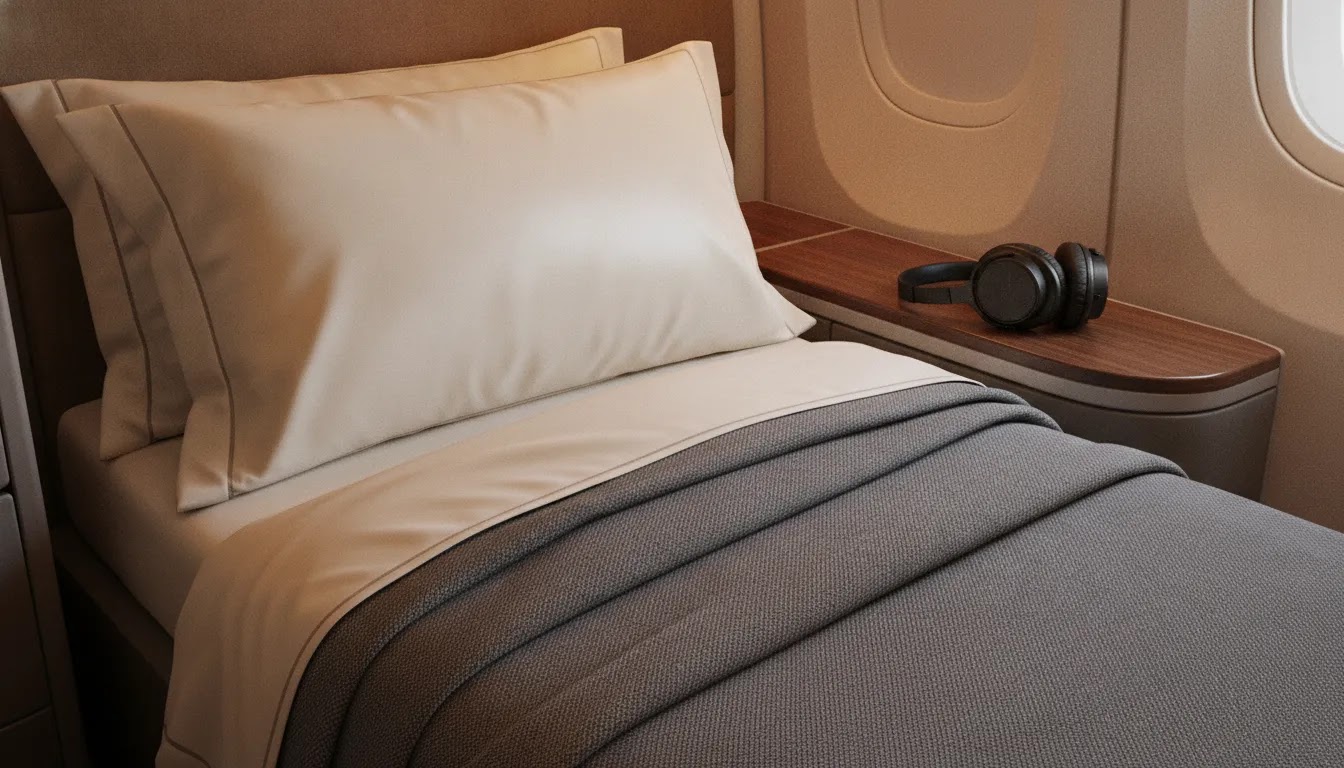
The phrase first class can describe very different products. On many short-haul U.S. routes, domestic first class usually means a larger reclining seat, earlier boarding, and more attentive cabin service than the main cabin. It may include an upgraded meal on longer sectors. However, it often does not include dedicated lounge access, elaborate ground handling, or highly curated dining.
International first class is a different category altogether, especially on airlines that preserve it as a flagship product. The experience may include a suite or highly private seat, premium lounge access before departure, elevated bedding, dine-on-demand service, and selective extras such as private transfers or wellness facilities where the airport and airline support them. That is why a traveler who has flown domestic first class within the United States may still be surprised by how much more complete an intercontinental first class journey can feel.
For practical planning, it helps to treat domestic first class and international first class as separate experiences that share a name. On domestic itineraries, lounge access may be absent, dining may be simpler, and the airport process may be only modestly improved. On long-haul international routes, the ground product often becomes central to the value of the fare. Setting expectations correctly avoids disappointment and leads to better route and cabin decisions.
First Class Amenities by Route and Experience Level
On U.S. to Europe routes, first class may begin near the lower end of the published Flight Experts range, especially where competition is stronger or the route is shorter overnight. Even so, the best value often comes from products with superior lounges and bedding rather than simply the lowest published first class fare.
On U.S. to Asia, prices often move higher because flight times are longer and the opportunity to use the full suite of amenities becomes more meaningful. Travelers are more likely to value extended sleep, multi-course dining flexibility, premium pajamas, stronger lounge facilities, and more attentive onboard pacing.
On U.S. to Middle East or flagship long-haul routes, the upper band of the range is easier to reach. This is where chauffeur arrangements, lavish lounge experiences, shower access in certain premium spaces, and more elaborate gifting traditions may appear. The fare can reflect a full luxury travel environment rather than an upgraded seat alone.
For broader route context, Flight Experts maintains category pages for First Class Flights to Asia and the wider Premium Cabin Experience & Amenities hub. Travelers weighing category value rather than prestige alone should also read business class vs first class. Similarly, readers new to the category may want what is first class flight for a broader product overview.
How to Evaluate First Class Amenities by Route
A strong airline name is not enough to predict the actual first class experience on your itinerary. The same carrier may offer a flagship lounge with private dining at one departure airport and a far more limited partner or business class facility at another. Aircraft type matters as well. An airline may operate one first class cabin with enclosed suites and another with an older, more open configuration.
The route itself also shapes which amenities are genuinely available. A traveler connecting through a major hub may have access to shower suites, rest areas, or a more substantial lounge dining program, while a nonstop from an outstation may not. Transfer policies can be just as important. If a premium ground transfer, escort service, or private terminal process is central to your expectations, check it against the exact airport pair and fare conditions rather than assuming it from brand reputation alone.
That is also why seat maps can mislead. A favorable seat number does not tell you whether the lounge is worth arriving early for, whether dine-on-demand is offered on that route, whether bedding is the carrier’s best version, or whether your connection leaves enough time to use wellness facilities. Travelers who care about specific first class amenities usually benefit from route-level guidance, because the quality of the journey is shaped by the full chain of airports, aircraft, and service policies.
What People Forget to Budget For

- Positioning flights to reach the airport or gateway where the best first class product is available.
- Private ground transportation beyond what an airline may include, especially if chauffeur benefits are not offered in that market.
- Premium lounge access for a companion when the guest policy is restrictive.
- Route changes or added stopovers that improve the experience but increase total trip cost.
- Cancellation flexibility, which may differ sharply by fare basis even within first class.
- Hotels during long layovers if the connection is chosen specifically to access a stronger lounge or spa product.
These are not flaws in first class. Instead, they are part of building the right premium journey, especially for travelers treating the flight as part of a larger milestone trip.
When Paying More for First Class Benefits Is Worth It
Paying more generally makes sense when the extras will be used. A traveler departing after a demanding week may benefit more from lounge dining, shower facilities, and immediate sleep on board than from any headline amenity. Likewise, a couple celebrating an anniversary may place greater value on privacy, coordinated service, and a more elegant atmosphere from airport arrival onward.
The premium can also be justified when time protection matters. First class may offer a materially smoother airport path, more personalized handling during irregular operations, and better-rested arrival on long sectors. For some travelers, that has more value than the cabin itself. By comparison, shorter routes may not deliver the same return.
There are times when it is not worth stretching for first class. If the route is short, the airline’s ground product is weak, or the business class seat is already excellent, the experiential gap may narrow. That is why category-level review pages such as Airline Business & First Class Reviews are more useful than prestige alone. Readers considering value over status may also like is flying first class worth it.
How to Approach First Class Amenities With a Specialist
First class is one of the areas where professional guidance can be genuinely practical, because inclusions vary so much by carrier, fare type, and airport. Flight Experts offers a dedicated First Class Flight Booking service covering major routes to Europe, Asia, and the Middle East, as well as transatlantic and transpacific travel. The service is built around white-glove personal support rather than self-service search.
According to the current service details, clients submit a request, an expert is assigned without charge, options are presented, and booking can usually move quickly once preferences are clear. The published support elements include lounge access coordination, chauffeur service arrangements, and luxury amenity guidance, which aligns closely with the realities discussed above. For travelers managing more than one stop or blending premium cabins across regions, the agency also offers complex itinerary planning.
Flight Experts is led by Mike Chirilenco and positions itself as a concierge-style luxury travel agency for discerning travelers who want a single trusted advisor rather than an automated booking environment. For readers who want route-specific guidance on the actual experience, not only the fare, that model is particularly relevant. For general consumer information on air passenger planning, travelers can also review the U.S. Department of Transportation Air Consumer page.
Frequently Asked Questions
Are first class amenities the same on every airline?
No. First class is one of the least standardized premium travel products. One airline may emphasize chauffeur transfers and extravagant lounges, while another focuses on privacy, bedding, and a quieter onboard environment. Even within the same airline, inclusions may vary by route, airport, aircraft, and fare conditions.
Does first class always include chauffeur service?
No. Chauffeur service is a selective benefit, not a universal entitlement. Some carriers offer it only in certain cities, on qualifying fares, or for specific route structures. Others have reduced the benefit over time. It should always be verified directly before assuming it is part of the ticket.
Is lounge access always better in first class than in business class?
Usually, but not always. First class travelers may receive access to more exclusive spaces, quieter dining rooms, or higher-touch service. In some airports, though, the difference is modest, especially if the carrier has invested heavily in business class lounges. Product quality should be evaluated at the route and airport level.
What is the biggest non-seat advantage of first class?
For many experienced travelers, it is the combined ground experience: calmer check-in, better lounge dining, more personalized service, and a smoother transition into the flight. Those elements can reduce travel fatigue significantly, especially on long-haul or connection-heavy itineraries where airport friction matters.
Are amenity kits and pajamas really worth paying extra for?
On their own, no. They are pleasant signals of quality, not a sound reason to book first class by themselves. Their value is cumulative. When paired with real privacy, excellent bedding, flexible dining, and strong ground handling, they help create a more coherent luxury experience.
How does Flight Experts help with first class amenities specifically?
Flight Experts’ first class booking service includes white-glove personal support, lounge access coordination, chauffeur service arrangements, and guidance around premium onboard amenities. That is useful because first class perks are highly variable, and travelers often need help identifying which routes and carriers deliver the extras they actually care about.
What amenities come with first class?
On a true long-haul international first class product, travelers can typically expect priority airport handling, premium dining, lounge access, enhanced bedding, and a more refined amenity kit. Selective extras such as chauffeur service, spa treatments, shower suites, or private terminal access depend on the airline, airport, route, and fare conditions.
Is domestic first class the same as international first class?
No. Domestic first class in the United States is often a much simpler product, usually centered on a larger seat and upgraded onboard service. International first class may include a far more developed ground experience, greater privacy, more flexible dining, and premium lounge access, subject to the airline and route.
Why do some first class tickets not include lounge access?
The first class label does not always refer to the same level of service. Domestic first class, regional routes, and certain fare structures may not include lounge access. In other cases, lounge access may depend on the operating carrier, airport facilities, or whether the airline offers a genuine long-haul first class program on that route.
Why should you avoid choosing first class by seat number or cabin map alone?
A seat map shows only part of the experience. It does not tell you whether the route includes a meaningful lounge, whether the aircraft offers the carrier’s strongest first class configuration, or whether airport services such as showers, private dining, or escort handling are available. For travelers focused on first class amenities, the full route matters more than the seat number by itself.
Key Takeaways
- First class amenities often justify their value through dining, lounge quality, ground handling, wellness extras, and service personalization rather than seat dimensions alone.
- Typical first class pricing through Flight Experts ranges from $5,000 to $20,000+, depending on route, carrier, and product rarity.
- Chauffeur service, spa access, and premium gifting are selective benefits, not universal inclusions.
- The strongest value appears on long-haul routes where travelers can use the full ecosystem before, during, and after the flight.
- Specialist guidance matters because first class benefits vary sharply by airline, airport, and fare conditions.
Conclusion
First class earns its reputation when the entire journey feels considered, not merely upgraded. Dining, lounge access, transfer arrangements, wellness touches, and premium gifting often separate a true flagship product from a large seat sold at a high fare. That difference is meaningful on long-haul travel, milestone trips, and schedules where rest and discretion matter.
However, the value is not identical on every route. Travelers who want clarity on which carriers still deliver a complete first class experience may benefit from speaking with a specialist who understands the details at route level. Flight Experts and Mike Chirilenco provide that advisory approach, with personalized support designed for travelers who expect precision as much as comfort.



