
Is Flying First Class Worth It? Honest Analysis

You may have already had this moment. You are planning a long journey, perhaps an anniversary trip to Tokyo, a high-stakes business departure to Europe, or a once-in-a-lifetime family vacation. Then the first class option appears on the screen with a number large enough to make even seasoned travelers pause.
The question is not whether first class is luxurious. It usually is. The real question is whether that added comfort changes the outcome of the trip in a way that matters to you. Sometimes it absolutely does. However, a well-chosen business class seat or even one of the best premium economy airlines may deliver everything you actually need. This article focuses on the cost-versus-experience equation, so you can assess whether flying first class is worth it with clarity rather than marketing haze.
Is flying first class worth it? The short answer
First class is worth it when the flight is long enough, the carrier is strong enough, and your personal priorities are high enough that privacy, sleep quality, individualized service, and airport ease materially improve the trip. It is less compelling on shorter flights, weaker regional products, or trips where you will not use the added space, service, and ground privileges.
In other words, first class is not automatically “worth it” because it is the highest cabin. Instead, it is worth it when the experience protects your energy, your time, or the emotional importance of the journey.
Why is flying first class worth the higher fare for some travelers?
The simplest answer to why first class flights are so expensive is that airlines are selling far more than transportation. They are selling space, scarcity, and service intensity. A first class seat may occupy the footprint of several seats in another cabin, and on some aircraft the number of first class suites is deliberately tiny. Scarcity is part of the product.
That scarcity changes staffing, catering, lounge access, and ground handling. On select carriers, you may receive private check-in assistance, elevated dining, premium wines or spirits, higher-touch cabin service, and access to flagship lounges or even private terminal experiences. Those elements require more labor, more square footage, and more operational attention than a standard premium cabin seat.
The onboard hard product is another reason. In true international first class, you may find enclosed suites, exceptionally wide beds, refined bedding, premium amenity kits, and a cabin atmosphere designed for quiet rather than density. If you are curious about the broader decision framework, is first class worth it remains a useful related question. You can also compare first class flight amenities to see where the premium often shows up most clearly. The price difference becomes easier to understand once you see how few travelers the cabin is built to serve.
Where is flying first class worth it most?

Is flying first class worth it for better sleep?
The strongest case for first class is not prestige. It is sleep. If you land in Singapore, Paris, or Sydney and need to function immediately, the ability to rest well in flight may justify a great deal. A truly spacious suite, high-quality bedding, lower cabin noise, and attentive but unobtrusive service can make the difference between arriving depleted and arriving composed.
This matters most on overnight long-haul sectors. For example, a traveler heading straight into meetings, a honeymoon couple beginning a tightly planned itinerary, or a family trying to avoid two lost days to jet lag may feel the value immediately. Travelers comparing cabin layouts may also want to review first class flights with beds before deciding.
Privacy that lowers travel friction
Many affluent travelers are not buying first class because they want attention. They are buying it because they want less interruption. A private suite or very low-density cabin reduces ambient stress, noise, foot traffic, and the constant small compromises of commercial flying. That calm can be more valuable than the menu.
For public-facing executives, well-known individuals, or anyone who simply values discretion, privacy is often the decisive benefit. As a result, the cabin becomes a protected environment rather than a performative luxury setting.
What to expect flying first class on the ground
What to expect flying first class often begins long before boarding. Depending on airline and airport, first class may include expedited check-in, superior lounge access, more personalized assistance, and smoother boarding. On top-tier carriers, the airport experience can feel far more controlled and far less draining than a conventional terminal journey.
That is one reason a luxury travel specialist may focus on the full itinerary rather than the seat alone. An agency such as Flight Experts, which offers First Class Flight Booking and concierge-style planning, would typically evaluate the ground product, routing, and connection quality together, because the true value of first class often comes from the entire travel day. For broader passenger rights and travel basics, travelers can also consult the U.S. Department of Transportation Air Consumer resources.
Is flying first class worth it versus business class?
The comparison becomes more useful once you stop evaluating cabins as abstract categories and start evaluating the exact product on the exact route. First class may offer a genuinely superior suite, a better bed, greater privacy, stronger dining, more attentive pacing of service, and far more exclusive ground handling. On another itinerary, the practical difference may be narrower than the labels suggest.
Compare the seat and sleep quality first
A disciplined comparison usually starts with the seat itself. Suite design, bed width, bedding quality, storage, and direct aisle access matter more than branding language. A leading business class product may already provide the lie-flat comfort many travelers need, particularly on daytime or moderately long sectors. By contrast, a top first class suite may justify itself most clearly on overnight flights where uninterrupted rest and privacy become decisive.
Look closely at the airport experience
The ground experience also deserves closer scrutiny. Some first class tickets may include superior lounges, private check-in areas, escort services, or more protected connection handling at major hubs. In other cases, business class and first class passengers share much of the same airport experience, which narrows the practical distinction.
Review every segment, not just the headline fare
Mixed itineraries complicate the picture further. Many long journeys involve more than one airline, more than one aircraft type, or a combination of flagship and less distinguished segments. A first class fare may cover one exceptional long-haul sector and a less impressive regional leg, or the return may operate on a different aircraft with a materially different cabin.
That is why experienced advisors assess each segment individually rather than assuming the highest fare produces the highest-value experience throughout. On some carriers, first class remains a truly separate category with meaningful advantages over business class. On others, an excellent business class seat may deliver almost the same practical outcome, especially if your priority is simply sleeping well, arriving rested, and enjoying a polished airport process. Ultimately, the better question is not whether first class is theoretically better. It is whether this specific first class product changes your journey enough to matter.
| Factor | Business Class | First Class | When First Class Adds Clear Value |
|---|---|---|---|
| Seat and bed | A leading business class product may already provide the lie-flat comfort many travelers need. | First class may offer a genuinely superior suite and a better bed. | Overnight flights where uninterrupted rest matters most. |
| Privacy | The practical difference may be narrower on some itineraries. | First class may offer greater privacy. | When discretion and a calmer cabin are priorities. |
| Dining and service | Business class may already deliver strong dining. | First class may offer stronger dining and more attentive pacing of service. | When a more individualized onboard experience matters. |
| Ground handling | Business class and first class passengers may share much of the same airport experience. | First class may include more exclusive ground handling. | At major hubs with superior lounges, private check-in areas, or escort services. |
Who flies first class and gets the most value?
Not everyone who can buy first class benefits from it equally. The travelers who usually receive the clearest return from the experience tend to fall into a few recognizable groups.
- Time-sensitive business travelers, especially those heading straight into important meetings or media appearances after landing.
- Couples on milestone trips, where the flight is part of the celebration rather than a hurdle to endure.
- Travelers with demanding long-haul routings, especially ultra-long sectors where sleep quality and privacy matter far more than on a six-hour daytime flight.
- Passengers who value discretion, including public figures and senior executives who prefer a quieter environment.
- Older travelers or those with comfort sensitivities, who may find that added space and individualized service make flying significantly easier.
Who flies first class, then, is not a single type of person. It includes people protecting performance, preserving energy, marking an important life event, or choosing a travel style that reduces friction. In practice, the value is often practical before it is aspirational.
When is flying first class not worth it?
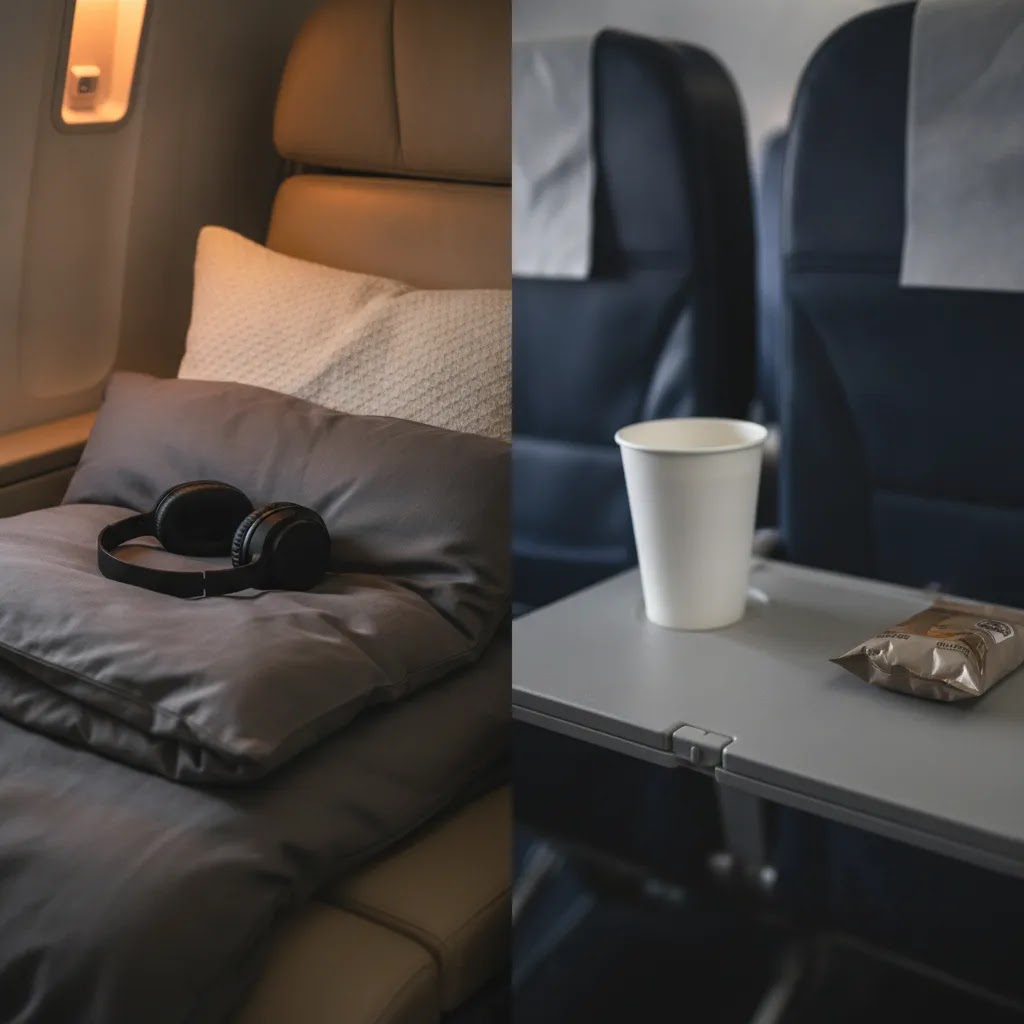
First class is least convincing when the difference between cabins is not substantial enough to support the gap in fare. That may happen on shorter routes, older aircraft, or airlines where business class has become so strong that first class feels only incrementally better.
A modern business class suite on a leading long-haul carrier can already provide direct aisle access, a fully flat bed, strong dining, lounge access, and a polished ground experience. In those cases, the jump to first class may buy a more elegant version of something you already have, not a fundamentally different journey.
This is where looking at first class cost in context matters. A fare in the Flight Experts first class booking range may run from $5,000 to $20,000+ depending on route and airline, while business class on many major carriers may fall into a lower range. The question is not whether first class is better. It usually is. The question is whether it is better enough for your specific route, aircraft, and reason for travel.
Is flying first class worth it based on route length?
Short flights: comfort rises, but impact is limited
Route length changes the answer more than many travelers expect. On a short domestic flight of around two hours, first class may improve comfort, privacy, boarding flow, and personal space, but it often does not deliver the kind of transformative experience associated with flagship international first class. There is simply less time to enjoy the cabin, less need for sleep, and often less differentiation in service.
Medium-haul flights: the answer becomes more nuanced
At roughly four to five hours, the calculation becomes more nuanced. A daytime medium-haul segment may still not justify first class if business class is already strong and the ground experience is similar. Yet on these flights, some travelers do value the extra room, quieter cabin, and lower travel friction, especially if they are working in flight, protecting energy for an important arrival, or connecting onward on a demanding itinerary.
Long-haul and overnight flights: value usually rises
The value tends to rise sharply on long-haul and overnight international flights. Once sleep becomes part of the equation, cabin design matters much more. A better bed, more privacy, refined meal timing, and attentive service may materially improve how you feel the next day. This is where first class often moves from indulgence to a rational performance and comfort choice.
Arrival demands matter as much as flight time. A five-hour overnight segment before an immediate meeting could justify more than a longer daytime leisure flight before a relaxed resort check-in. The label on the ticket does not determine value by itself. Sleep opportunity, arrival pressure, and how distinct the cabin really is usually matter more.
Shorter flights may still justify first class for certain travelers. Privacy, schedule protection through priority airport handling where available, physical comfort, or the importance of the occasion can all matter. Still, many short flights do not provide the full set of benefits travelers imagine when they picture international first class. Judging the experience by route length helps keep expectations realistic and decisions disciplined.
What about the downsides?
An honest analysis has to acknowledge that first class has limitations, even for travelers who appreciate luxury.
- The product varies dramatically. “First class” is not a universal standard. One airline’s flagship suite may be another carrier’s dated premium seat with little distinction.
- The fare can exceed the practical benefit. If you sleep easily in business class or do not care about privacy, the premium may not change much.
- Availability may be limited. The most admired first class products often have very few seats, selective routes, and inconsistent schedule coverage.
- The experience is route-dependent. Some of the most impressive ground services and onboard touches appear only at certain hubs.
- Expectations can become unrealistically high. Even in excellent cabins, delays, aircraft swaps, and service inconsistency may still occur.
That is why discerning travelers rarely judge first class by marketing photos alone. Instead, they evaluate the aircraft, route length, departure time, airport infrastructure, and what the trip actually requires from them on arrival.
Common expectations that lead travelers to overvalue first class
One of the most common mistakes is assuming first class always means a fully enclosed private suite. Sometimes it does. Sometimes it means an excellent open seat in a very small cabin. On some domestic and regional routes, the first class label may indicate more width and service, not a fundamentally different onboard environment.
Travelers also tend to assume that every first class ticket includes the airline’s very best lounge access and a dramatically elevated airport experience. That may be true at certain hubs and on certain long-haul departures, but it is not universal. Airport facilities, terminal arrangements, and local operating partnerships can all affect what is actually provided on the day of travel.
Another source of overvaluation is the belief that first class remains consistent across the itinerary. Aircraft swaps may occur. A route may operate with a different seat on one departure than another. A carrier may offer a flagship product on one long-haul segment and a much less distinctive premium cabin on a shorter connection.
Travelers who evaluate only the headline fare or the marketing images may miss these differences until the trip is already ticketed. A more reliable evaluation lens is simple: verify the aircraft, the cabin configuration, the lounge arrangement, the timing of the flight, and the practical demands of arrival. That is how experienced premium travel advisors assess first class on behalf of clients. The goal is not to diminish the category. It is to judge it accurately, based on the exact experience you will likely receive rather than the idealized image attached to the name. For airport security basics and checkpoint planning, the Transportation Security Administration is another useful official reference.
When does this not apply?
The reasoning behind first class value breaks down in a few common scenarios. A daytime transatlantic flight may not require a full suite if you are not trying to sleep. A short domestic segment may carry the first class label without delivering a true long-haul premium experience. A leisure trip with an easy first day may not demand arrival-ready rest.
It also may not apply if you mainly want a wider seat and a gentler airport experience. In that case, business class, or on some routes premium economy, may offer a more proportionate answer. Readers comparing the broader premium-cabin spectrum may also find value in the Premium Cabin Experience & Amenities section and the editorial resources under Premium Flight Booking & Tips.
For complex itineraries, the answer can shift again. A single long flagship segment in first class may be worthwhile, while the rest of the journey works better in business class. That kind of mixed-cabin strategy is often more intelligent than treating every flight as an all-or-nothing decision.
Practical implications for your next booking
If you are deciding whether to book first class, evaluate the trip in this order:
- How important is sleep on this specific route?
- How different is the airline’s first class from its business class on this aircraft?
- Will you meaningfully use the privacy, lounge, and ground-service advantages?
- Do you need to arrive ready for something important within hours of landing?
- Is this a milestone trip where the flight itself is part of the occasion?
If the answer to several of those is yes, first class may be entirely rational. If most answers are no, the premium could be more emotional than practical. That is not wrong, but it should be acknowledged honestly.
Flight Experts also offers Complex Itinerary Planning and premium cabin booking support across major routes, which reflects a useful principle for travelers: the best answer is often itinerary-specific. A strong advisor does not begin with “always book first class.” Instead, the better starting point is “what outcome do you need from this journey?”
Frequently Asked Questions

Is flying first class worth it for long-haul international flights?
It often can be, especially on overnight or ultra-long-haul routes where rest, privacy, and calm materially affect how you feel on arrival. The value tends to rise when the airline offers a true international first class product with suites, elevated dining, strong lounge access, and highly attentive service. On a shorter daytime route, or on a carrier where business class is already excellent, the incremental value may be much smaller. The route, aircraft, and your arrival needs matter more than the cabin label alone.
Why are first class flights so expensive compared with business class?
Airlines price first class around scarcity and service intensity. The cabin usually has very few seats, each one occupying a large amount of space that could otherwise hold several passengers in another cabin. Staffing levels, catering, lounge provisions, and ground handling are also more elaborate. The result is a product built for a very small number of travelers, with higher operating costs and more exclusivity. You are paying for reduced density, individualized attention, and in some cases a significantly more private environment.
What should you expect flying first class on a top international carrier?
You should typically expect a noticeably more private cabin, a seat or suite that converts into a very comfortable bed, refined meals, premium beverages, enhanced bedding, and a quieter overall atmosphere. On the ground, many first class experiences may include premium lounge access and dedicated check-in areas, though the exact benefits vary by airport and airline. The strongest products also feel consistent from departure to arrival. That said, not every airline’s first class reaches the same standard, so product research still matters.
Who flies first class most often?
First class travelers are more varied than many people assume. They may include senior executives, public figures, couples marking an anniversary or honeymoon, travelers with demanding schedules on arrival, and individuals who simply value privacy and ease enough to pay for it. Some are frequent premium travelers. Others book first class only for a specific journey that carries unusual importance. The common thread is usually not status signaling. It is a desire for comfort, discretion, time protection, or a more meaningful travel experience.
Is first class always better than business class?
Not in a way that always justifies the fare. First class is usually more exclusive and more refined, but the gap can range from dramatic to modest depending on the airline and route. On some leading carriers, first class offers a truly different product with private suites and exceptional ground services. On others, business class may already deliver a fully flat bed, strong dining, direct aisle access, and excellent lounges. The better question is not which cabin wins in theory, but which one meets your needs for this trip.
Does first class make the airport experience much easier?
It may, and for some travelers that is a major part of the value. Priority check-in, shorter lines where available, superior lounges, and more personal assistance can make travel feel far less taxing. This is especially meaningful at large international hubs or on complex itineraries. Still, airport benefits vary by airline, terminal, and local arrangements. You should never assume that every first class ticket comes with the same level of ground treatment. Verifying the experience for the exact route is always wise.
Is first class worth it for a honeymoon or anniversary trip?
For many couples, yes, particularly when the journey itself is part of the celebration. A private, restful flight can set the tone for the entire trip and reduce the fatigue that sometimes blunts the first days of an important vacation. If the route features a true flagship first class product, the emotional value may be as important as the practical one. Still, some couples prefer to allocate more of the trip budget to villas, private touring, or additional nights. The right answer depends on what will feel most memorable to you.
Can a luxury travel advisor help determine whether first class is justified?
Yes, because the decision is rarely as simple as comparing two fare lines on a screen. A knowledgeable advisor can assess the exact aircraft, schedule, cabin quality, ground experience, connection risk, and your goals for the trip. That context matters. An agency like Flight Experts, led by Mike Chirilenco and centered on personalized premium travel planning, may be especially useful when you are comparing first class against strong business class alternatives or shaping a multi-segment itinerary where only certain flights truly merit the upgrade.
Is first class worthwhile on domestic U.S. flights?
Sometimes, but usually for different reasons than on international routes. Domestic first class often improves seat width, service, and boarding flow, yet it typically does not resemble the full international first class experience that travelers imagine. On a longer domestic sector, extra comfort may still be welcome. On a short flight, the benefit may be limited. If your goal is a suite-like environment, elevated dining, or deep rest, domestic first class may not satisfy that expectation. Route length and aircraft type are decisive.
Is first class worth it on a 2 hour flight?
Usually only in narrow circumstances. On a flight of about two hours, first class may provide more space, a quieter cabin, and a smoother airport process, but the time in the seat is brief and the service difference is often modest. If privacy, physical comfort, or schedule protection matter unusually much on that day, it could still be justified. If you are expecting the full impact of international first class, a short flight rarely delivers that outcome.
Is first class worth it for a 4 hour flight?
Sometimes, though the answer depends heavily on whether the route is daytime or overnight and how strong the business class alternative is. On a four-hour daytime flight, first class may feel refined but not transformative. If the flight departs late, connects into a demanding schedule, or offers a meaningfully superior cabin and ground experience, the value may be more persuasive. The exact aircraft and airline matter far more than the duration alone.
Is first class worth it for a 5 hour flight?
A five-hour flight sits in the middle ground where context matters greatly. If it is an overnight segment or part of a longer international itinerary, first class may meaningfully improve sleep, privacy, and arrival readiness. If it is a daytime leisure flight with a strong business class product, the premium may be harder to justify. Many travelers find that this is the point where product quality starts to matter more than the simple question of flight length.
Is flying first class worth it compared with economy on a long international flight?
For many travelers, yes, particularly if the route is overnight and you need to arrive in good condition. Compared with economy, first class may change almost every part of the experience: personal space, sleep quality, privacy, dining, noise level, and airport treatment. On a long international flight, that difference can be substantial rather than cosmetic. Whether it is worth it to you depends on your priorities, but the practical gap between economy and a true first class product is usually far greater than the gap between business class and first class.
What is the most honest way to decide if first class is worth it?
Ask what problem you are solving. If you need sleep, privacy, discretion, reduced airport stress, or a flight that feels worthy of a milestone occasion, first class may be a very smart decision. If you mainly want a comfortable seat and smooth service, business class may already achieve that. The most honest framework is not aspiration alone. It is whether the premium changes your actual experience enough to matter before, during, and after the flight.
Key Takeaways
- First class is worth it when it meaningfully improves sleep, privacy, arrival readiness, or the emotional importance of a trip.
- The fare reflects scarcity, space, elevated service, and a more protected airport-to-aircraft experience, not just a larger seat.
- Business class can be the smarter choice when the route is shorter or the airline’s first class is only marginally better.
- The right answer depends on route, aircraft, airport, and personal priorities, not the cabin label alone.
- Expert guidance is especially useful when you are comparing premium cabins across complex or milestone itineraries.
Conclusion
First class is neither an automatic indulgence nor an automatic mistake. It is a highly situational investment in comfort, privacy, and time protection. On the right route, with the right airline, for the right traveler, it can transform the entire journey and preserve the value of everything waiting on the other side of arrival. On the wrong route, it may simply be a more polished version of benefits that business class already provides.
The most useful perspective is a calm one: evaluate what the cabin changes for you, not what it symbolizes. If you are weighing a major journey and want a clear-eyed assessment of whether first class, business class, or a mixed-cabin itinerary makes the most sense, speaking with a luxury travel specialist can be worthwhile. Flight Experts takes that individualized approach, with first class booking support, premium cabin insight, and itinerary planning built around how you prefer to travel, rather than a one-answer-fits-all recommendation.



