
What Airlines Have Business Class? Full List

That difference matters. One airline may use the term for a fully enclosed suite on a flagship long-haul route. Another may use it for a wider recliner on a shorter regional flight. A third may offer business class across an intercontinental network, yet only on selected aircraft or city pairs.
This article is built around that exact question. Rather than offering a vague overview, it maps out the main airlines with business class and the routes where those cabins typically appear. If you want the broader definition first, our explanation of what is business class provides useful context. Here, the focus is practical: full airline coverage, route patterns, and how to tell whether the label on your ticket reflects a true premium long-haul experience or a more modest regional product.
How business class appears by route
Before looking at airline names, it helps to separate three very different business class models.
- Long-haul intercontinental business class: usually found on flights between North America, Europe, Asia, the Middle East, Australia, and parts of Africa and South America. This is where you typically see lie-flat seats, elevated dining, lounge access, and more private cabin design.
- Regional or medium-haul business class: common within Europe, parts of Asia, and some intra-Middle East and intra-Latin America routes. The experience may include blocked middle seats, upgraded catering, and priority services rather than a materially different hard product.
- Domestic premium business products: on selected domestic routes, especially within the United States and large countries such as Australia or China, some airlines use widebody aircraft or premium transcontinental products that feel closer to long-haul business class.
That distinction is essential. Two airlines may both have business class. However, the onboard experience can differ dramatically by distance, aircraft, and market position.
Full airline list by region
North American airlines with business class
In North America, the principal full-service carriers offering business class include American Airlines, Delta Air Lines, United Airlines, Air Canada, Aeromexico, JetBlue on selected premium routes, and Hawaiian Airlines on relevant long-haul and transpacific operations.
American Airlines typically operates Flagship Business on long-haul international routes across the Atlantic, Pacific, and key South American markets. It also offers it on selected premium transcontinental services. Delta Air Lines offers Delta One on many long-haul international routes and selected domestic transcontinental flights. United Airlines operates Polaris Business on major intercontinental routes to Europe, Asia, the Middle East, Africa, and parts of South America. Air Canada provides Signature Class on long-haul international flights and selected premium domestic routes.
These carriers matter most if you are departing from major U.S. gateways and want nonstop or alliance-connected access to Europe or Asia. Readers comparing premium products more deeply may also want to review the broader landscape of the best airlines for business class.
European airlines with business class
Europe has one of the widest concentrations of business class airlines. However, not every route offers the same standard of product. Major operators include British Airways, Lufthansa, Swiss, Air France, KLM, Virgin Atlantic, Iberia, Finnair, SAS, TAP Air Portugal, ITA Airways, Turkish Airlines, Brussels Airlines, Austrian Airlines, LOT Polish Airlines, Condor on selected routes, and Aer Lingus.
On long-haul routes from Europe to North America, Asia, Africa, and the Middle East, these carriers usually offer true long-haul business class cabins. Within Europe, however, business class often means an enhanced short-haul service with a similar seat structure to the main cabin. Even so, you may get more space and more attentive ground handling.
Middle Eastern airlines with business class
The Middle East remains one of the strongest regions for premium cabin consistency. Emirates, Qatar Airways, Etihad Airways, Saudia, Gulf Air, Oman Air, Kuwait Airways, Royal Jordanian, and flydubai on selected aircraft all offer business class on important international routes.
Emirates and Qatar Airways in particular have built much of their global reputation around long-haul premium travel through Dubai and Doha. Etihad remains highly relevant for Abu Dhabi connections, especially on routes linking North America, Europe, Asia, and Australia. Meanwhile, Oman Air and Gulf Air often appeal to experienced travelers who value a quieter premium experience and strong regional connectivity.
Asian airlines with business class
Asia includes some of the most refined business class airlines in service today. Major names include Singapore Airlines, ANA, Japan Airlines, Cathay Pacific, EVA Air, Starlux Airlines, Korean Air, Asiana Airlines, China Airlines, Air China, China Eastern, China Southern, Hainan Airlines, Thai Airways, Vietnam Airlines, Malaysia Airlines, Garuda Indonesia, Philippine Airlines, Air India, Vistara where applicable within operating changes, and SriLankan Airlines.
These airlines generally offer business class on long-haul routes to North America, Europe, Australia, and the Middle East. Many also provide regional business class within Asia. Importantly, the difference between regional and long-haul product can be significant. A flight from Tokyo to New York may offer a very different seat and service level from a shorter intra-Asia sector on the same airline.
Oceania airlines with business class
Qantas, Air New Zealand, Virgin Australia on selected routes, Fiji Airways, and some regional operators across the Pacific offer business class. Qantas and Air New Zealand are the principal names for long-haul business class between Australia or New Zealand and North America, Asia, and Europe. Fiji Airways is especially relevant for South Pacific connections and certain North America routes.
Australia also has an important domestic premium market. On trunk routes such as Sydney to Perth or Melbourne to Perth, the business class product may matter almost as much as on an international overnight flight because of sector length and schedule demands.
Latin American and African airlines with business class
LATAM, Avianca, Copa Airlines, Aerolineas Argentinas, Azul on selected long-haul routes, South African Airways, Ethiopian Airlines, EgyptAir, Royal Air Maroc, Kenya Airways, and RwandAir all operate business class on parts of their networks.
LATAM and Copa are especially important for travelers connecting between North America and South America. Ethiopian Airlines has one of the broadest Africa-linked international networks, with business class available on many routes to Europe, the Middle East, Asia, and North America. Royal Air Maroc can also be strategically useful for West Africa connections through Casablanca.
Top picks at a glance
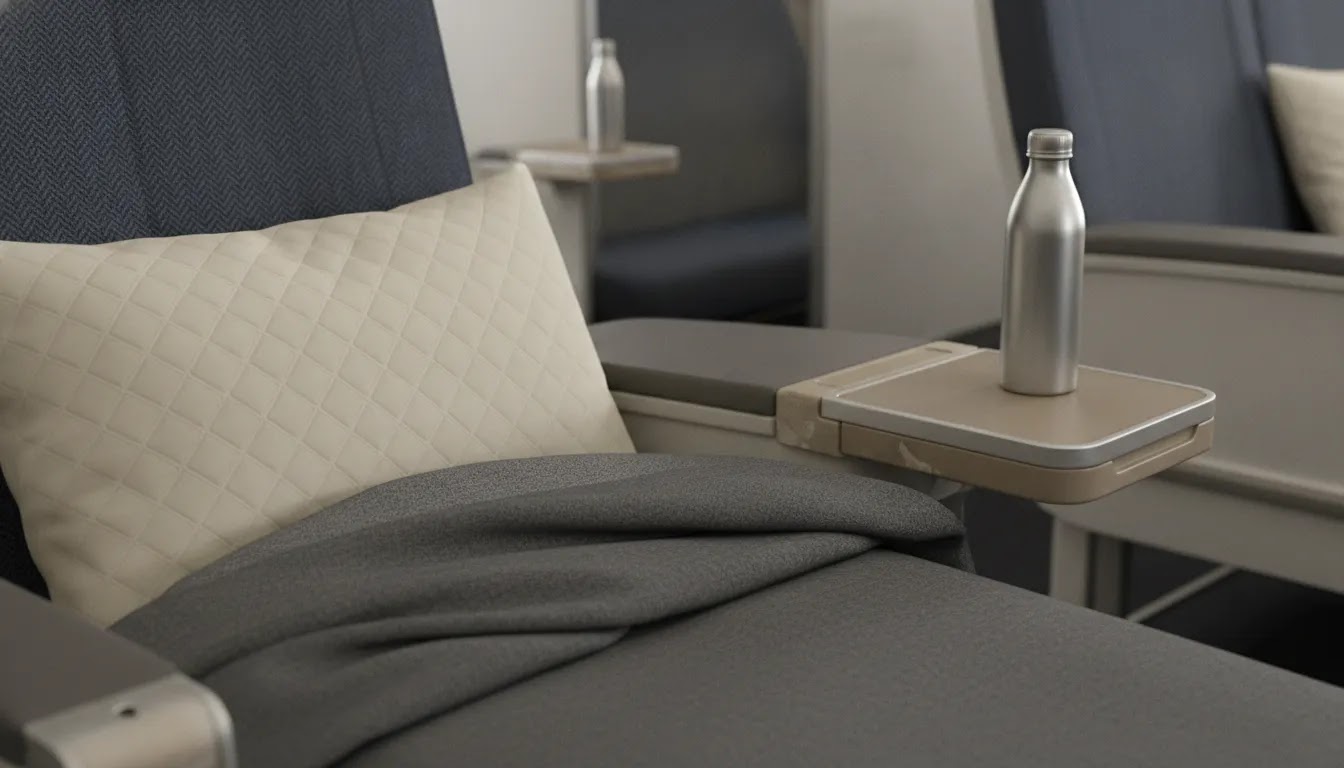
If your question is not merely which airlines have business class, but where those airlines tend to matter most, this shortlist provides a useful route-based snapshot.
| Route category | Airlines commonly highlighted |
|---|---|
| U.S. to Europe | British Airways, Air France, Lufthansa, Swiss, Virgin Atlantic, Delta Air Lines, United Airlines, American Airlines, Air Canada |
| U.S. to Asia | ANA, Japan Airlines, Singapore Airlines, Cathay Pacific, EVA Air, Korean Air, United Airlines, American Airlines, Delta Air Lines |
| U.S. to Middle East and Africa | Qatar Airways, Emirates, Etihad Airways, Turkish Airlines, Saudia, Ethiopian Airlines, Royal Air Maroc |
| U.S. to Australia and the Pacific | Qantas, Air New Zealand, Fiji Airways, United Airlines, American Airlines on selected partnerships and routes |
| Intra-Europe or short regional travel | British Airways, Lufthansa Group carriers, Air France, KLM, Iberia, Finnair, SAS, TAP Air Portugal |
- For U.S. to Europe: British Airways, Air France, Lufthansa, Swiss, Virgin Atlantic, Delta Air Lines, United Airlines, American Airlines, Air Canada
- For U.S. to Asia: ANA, Japan Airlines, Singapore Airlines, Cathay Pacific, EVA Air, Korean Air, United Airlines, American Airlines, Delta Air Lines
- For U.S. to Middle East and Africa: Qatar Airways, Emirates, Etihad Airways, Turkish Airlines, Saudia, Ethiopian Airlines, Royal Air Maroc
- For U.S. to Australia and the Pacific: Qantas, Air New Zealand, Fiji Airways, United Airlines, American Airlines on selected partnerships and routes
- For intra-Europe or short regional travel: British Airways, Lufthansa Group carriers, Air France, KLM, Iberia, Finnair, SAS, TAP Air Portugal
Travelers planning long-haul premium itineraries often begin with route categories rather than airline names. Flight Experts, for example, structures part of its planning around regions such as Business Class Flights to Asia and other premium long-haul markets because route context usually matters more than branding alone.
How to read an airline’s business class offering
The airline name alone rarely tells the full story. You need to read the offering through four filters.
Aircraft type
A Boeing 777, Airbus A350, Boeing 787, or Airbus A330 typically signals a long-haul cabin with more substantial business class design. Narrowbody aircraft may still offer business class. However, the product could be a recliner seat or a European-style blocked-seat layout. For a deeper look at layouts, see this guide to business class seats.
Route length and timing
An overnight transatlantic flight places a premium on bed length, privacy, bedding quality, and a well-paced meal service. By comparison, a daytime six-hour flight may make seating ergonomics and lounge access more relevant than sleep.
Hub strength
Some airlines perform best on routes tied closely to their home hubs. A flagship route from Doha, Singapore, Tokyo, or Dubai may showcase the carrier at its best. Peripheral routes may still be good, but they sometimes use older interiors or show less consistent service rhythms.
Ground experience
Business class begins before boarding. Lounge quality, chauffeur arrangements where offered, fast-track services, and dedicated check-in can influence the overall value of the ticket almost as much as the seat itself. If lounge access is a priority, this overview of business class lounge access may help.
This is also where a concierge-style advisor can add perspective. An agency like Flight Experts does not treat business class as a generic inventory category. Its business class flight booking service covers major global carriers and route types. In addition, consultant-led guidance may help clients compare aircraft, seating, and itinerary flow before they commit.
How cleanliness and cabin upkeep vary in premium cabins
Premium travelers often ask a practical question that airline marketing rarely answers directly: how thoroughly is the seat area cleaned between flights? In most cases, carriers refresh the cabin between sectors. Still, the extent of that work may vary by station, turnaround time, route importance, and aircraft utilization.
On a short ground turn, crews and ground teams typically remove visible debris, replace used items, reset bedding and service elements where applicable, and prepare the cabin for the next departure. A deeper refresh may be more likely on overnight turns, long-haul rotations, or at major hub airports with stronger premium handling infrastructure. That does not mean every aircraft receives the same level of attention on every sector, even within a highly regarded airline.
A useful way to assess cabin upkeep is to look beyond a single review or promotional image. Airline consistency, aircraft age, route prominence, and the overall quality of the ground experience often provide a clearer signal. Carriers that invest heavily in flagship lounges, premium check-in environments, and newer cabin interiors may also maintain stronger housekeeping standards across the broader journey, though that is never something to assume without current, route-specific guidance.
For official travel requirements, readers should review current guidance from the U.S. Department of State and the Transportation Security Administration.
What business class usually includes beyond the seat
A serious evaluation of business class should extend well beyond seat width, bed length, or whether the cabin has a door. Premium travelers experience the journey as a sequence, not a single onboard moment. Check-in, lounge access, boarding flow, dining, connectivity, and arrival handling all shape whether a business class ticket feels genuinely well judged for the trip.
On long-haul routes, business class commonly includes priority check-in, expedited baggage handling, lounge access, enhanced onboard dining, larger entertainment screens, power access, and amenity kits. Wi-Fi may be available for purchase or included in some cases, though policies vary widely. Certain airlines may also include partner lounge access, private transfer arrangements, or chauffeur service on selected routes or fare types, subject to airport limitations and current airline policy. Those benefits are never uniform across every market, even within the same brand.
The inclusions that matter most depend on the journey itself. On an overnight flight, a fully flat bed, thoughtful bedding, quiet cabin positioning, and an efficient pre-sleep meal service usually matter more than an elaborate second dining option. On a daytime sector, lounge quality, reliable Wi-Fi, workspace comfort, and a prompt arrival may carry more weight. For a shorter regional flight, priority ground handling and a calm airport experience may be more valuable than the seat alone, especially if the hard product differs only modestly from the main cabin.
This is one reason experienced travelers often compare business class products by use case rather than airline marketing language. Two cabins can appear similar in photographs and still deliver very different outcomes in practice. If you are also weighing cabins below business class, this guide to premium economy vs business class can add helpful context.
A specialist advisor who reviews premium itineraries regularly can help distinguish the features that are decorative from those that materially improve sleep, privacy, productivity, or connection flow.
Route patterns that matter most

Transatlantic routes
Transatlantic business class is widely available. Most legacy carriers linking North America and Europe offer it across a large share of their network. You will often find the deepest choice from New York, Boston, Washington, Chicago, Miami, Los Angeles, San Francisco, and Toronto.
Product variation remains substantial. One route may feature a new suite with direct aisle access in every seat. Another may still operate an older but perfectly serviceable layout. Therefore, aircraft verification is especially important.
Transpacific routes
Business class is almost universal on nonstop flights between North America and Asia, and for good reason. These are long sectors where the premium cabin materially changes the journey. Airlines such as ANA, Japan Airlines, Singapore Airlines, EVA Air, Cathay Pacific, United Airlines, and Delta Air Lines are central players here.
Middle East connections
For many travelers headed beyond the Gulf, the business class decision is really about connection quality. A well-timed one-stop itinerary through Doha, Dubai, or Abu Dhabi may outperform a less elegant routing with awkward layovers, even if the flight time is similar on paper.
Intra-Europe and short regional business class
This is the area where expectations most often become misaligned. Business class within Europe usually focuses on priority services, cabin spacing, and onboard catering rather than a distinct seat shell. It may still be worthwhile, especially if your trip includes tight connections, lounge access, and a full workday on either side of the flight. However, it is not the same proposition as long-haul business class.
Where not to sit in business class
The least suitable business class seat is rarely defined by row number alone. It is usually the seat that conflicts with your priority for the flight. Travelers focused on sleep may want to avoid seats near galleys, lavatories, bassinets, or high-traffic cross aisles. In those areas, noise and light can remain active well after the main service ends. The last row can also be less appealing on some aircraft if it sits close to service areas or receives more disruption during meal preparation.
Privacy-focused travelers should look carefully at cabin geometry, not only the seat map. Some business class cabins place certain seats closer to the aisle or expose them more directly to foot traffic. Others create a tighter footwell because of staggered layouts. Similar-looking cabins can also differ meaningfully in shoulder room, console placement, or how visible you are to the rest of the cabin. That is especially true on older configurations and some regional products.
If quick deplaning matters most, the first rows may be preferable, provided they do not bring excess galley activity. If you plan to work and dine with minimal disturbance, a quieter mid-cabin seat may be the better choice. Ultimately, the best business class seat depends on whether you are optimizing for rest, privacy, service pacing, or a fast airport exit on arrival.
How discerning travelers narrow the field
The most efficient way to narrow airlines with business class is to start with your route, then screen for product type, then evaluate timing and connection quality.
- List the nonstop and one-stop carriers serving your city pair.
- Confirm whether the aircraft offers a lie-flat seat, a suite-style product, or a regional business layout.
- Check whether the route is a flagship market for that airline.
- Assess the ground experience, especially lounge access and transfer efficiency.
- Review whether your trip priority is sleep, privacy, schedule, or continuity across multiple segments.
A couple heading to Tokyo for an anniversary may choose very differently from a chief executive flying to Frankfurt for a single meeting. One values rest, privacy, and a graceful arrival. The other may prioritize a specific departure time, airport flow, and the ability to work comfortably in flight.
That is why some travelers move from online comparison fatigue to specialist guidance. Flight Experts offers both business class booking support and complex itinerary planning for multi-city premium travel. This can be especially useful when several carriers technically offer business class on your route, but only one or two align with how you actually prefer to travel.
If you are still exploring route families rather than specific airlines, the broader Premium Cabin Experience & Amenities section and Airline Business & First Class Reviews library can help you continue your research in a more structured way.
Frequently Asked Questions

Do all international airlines offer business class?
No. Many full-service international airlines do, but not every carrier offers business class across its entire network. Some leisure-focused or hybrid airlines may focus on premium economy or extra-legroom concepts instead. Others may offer business class only on long-haul routes, while using a simpler premium cabin on shorter sectors. The term itself can also cover very different products. For a traveler planning an important trip, it is wise to verify both the cabin label and the actual onboard seat type before booking.
Which airlines have business class from the United States to Europe?
The list is extensive and includes U.S. carriers such as American Airlines, Delta Air Lines, and United Airlines, along with European and international carriers such as British Airways, Air France, KLM, Lufthansa, Swiss, Virgin Atlantic, Iberia, Finnair, TAP Air Portugal, SAS, Turkish Airlines, and Air Canada on many transatlantic routings. Availability depends on city pair and season. Larger gateways typically offer the broadest selection, while secondary U.S. departures may require a connection before reaching a long-haul business class cabin.
Which airlines have business class from the United States to Asia?
Major operators include ANA, Japan Airlines, Singapore Airlines, Cathay Pacific, EVA Air, Korean Air, China Airlines, Air India, United Airlines, Delta Air Lines, and American Airlines on selected routes. Some one-stop itineraries also bring in Qatar Airways, Emirates, and Etihad Airways via the Middle East, depending on your final destination. For Asia-bound trips, business class quality often varies by aircraft and route family, so the carrier name alone should not be the only factor in your decision.
Is business class always lie-flat?
No. On long-haul intercontinental routes, lie-flat seating is common and often expected. On shorter regional flights, especially within Europe, parts of Asia, and some domestic markets, business class may be a recliner or a standard seat with more space and enhanced service. That difference is one of the main reasons travelers can feel disappointed if they rely on the label alone. A careful review of aircraft type, seat map, and route length usually gives a much clearer picture of what you are actually buying.
Are there airlines with business class on domestic routes?
Yes. In the United States, premium domestic products appear on selected transcontinental and Hawaii services, and occasionally on widebody-operated flights. In Australia, major domestic routes may also feature a meaningful business class product because of sector length. The experience, however, is not always equivalent to an intercontinental cabin. Some domestic routes offer fully flat beds, while others provide a more conventional premium seat with elevated dining, dedicated boarding, and stronger ground services.
How can you tell if a business class airline is offering its best product on your route?
Look at the aircraft, cabin generation, and whether the route is a flagship market. Airlines often introduce their strongest products first on high-visibility routes from major hubs. You should also check if every seat has direct aisle access, whether the flight is operated by the airline itself or a partner, and what lounge access is included at your departure point. Published business class branding can stay the same even when cabins differ materially between aircraft types.
Do alliance partners all offer similar business class experiences?
No. An alliance helps with network reach, lounge reciprocity, and through-ticketing, but it does not create product uniformity. One alliance may include airlines with exceptional long-haul suites alongside carriers with older cabins still in rotation. Service culture, bedding, seat width, and dining style can all differ noticeably. The alliance matters for connectivity, especially on complex itineraries, yet the specific operating carrier remains the more important consideration if comfort and rest are your priorities.
What is the best airline for business class?
There is no single answer that suits every route or traveler. Airlines such as Qatar Airways, Singapore Airlines, ANA, Japan Airlines, Emirates, Cathay Pacific, EVA Air, and several European and North American carriers are often strong contenders. Even so, the best option usually depends on aircraft type, route timing, cabin configuration, and the quality of the ground experience at your departure and connection points. A highly regarded airline can still operate an older business class seat on a particular route, while a less discussed carrier may offer an excellent experience on one of its core markets.
Where not to sit on a plane if you are flying business class?
The answer depends on your priorities, but many travelers prefer to avoid seats close to galleys, lavatories, bassinets, and heavy foot traffic areas if sleep and privacy matter most. On some aircraft, the last row may experience more disruption from service activity, while certain staggered layouts can create tighter footwells or greater aisle exposure in specific seats. Reviewing the seat map is useful, but it should be paired with aircraft-specific knowledge because similar-looking cabins can feel quite different once onboard.
What airlines can you fly business class on for international trips?
The list is broad and includes most major full-service global airlines across North America, Europe, Asia, the Middle East, Oceania, Latin America, and Africa. Examples include American Airlines, Delta Air Lines, United Airlines, Air Canada, British Airways, Air France, Lufthansa, Swiss, Qatar Airways, Emirates, Etihad Airways, Singapore Airlines, ANA, Japan Airlines, Cathay Pacific, EVA Air, Qantas, LATAM, and Ethiopian Airlines. The more important question is often not whether an airline offers business class in general, but whether it offers the right type of business class on your specific international route.
Do airlines clean seats between flights?
Typically, yes, though the extent of cleaning may vary by airline, airport station, turnaround time, aircraft type, and route. Between flights, crews and ground teams usually remove visible debris, reset the seat area, and replace or refresh service items as needed. Deeper cleaning may occur on longer ground turns, overnight stops, or major long-haul rotations. For premium travelers, airline consistency, cabin age, and the overall quality of the carrier’s ground operation often provide a better indication of likely cabin upkeep than a general policy statement alone.
What is the difference between a business class airline and a first class airline?
Many airlines offer business class but not first class. Business class is the top cabin on a large share of global carriers and usually delivers lie-flat seating on long-haul routes, lounge access, premium dining, and priority services. First class, where offered, adds another level of privacy, personalization, and exclusivity. Carriers such as Emirates, Lufthansa, ANA, Japan Airlines, and Air France are often discussed in that context, but many excellent premium trips are booked entirely in business class.
Do low-frequency or niche international airlines ever offer strong business class cabins?
Yes, and some can be excellent choices for the right route. A smaller carrier may have fewer destinations but a very appealing onboard product, more intimate cabin atmosphere, or strong service consistency on core long-haul markets. The tradeoff may involve fewer frequencies, less flexible reaccommodation options during disruptions, or less familiar airport infrastructure outside the airline’s home base. Those factors do not automatically make the carrier less suitable, but they should be weighed carefully against your itinerary needs.
Should you choose the airline first or the route first?
For most travelers, the route should come first. Once you identify the realistic nonstop and one-stop options, you can compare which airline offers the right seat, timing, connection flow, and overall experience. Starting with a favorite brand can work if you already know its product well, but many premium travelers find that a route-led approach produces better outcomes. It keeps the decision grounded in how you want the journey to feel from departure to arrival, not just in brand familiarity.
Key Takeaways
- Business class is offered by most major full-service global airlines, but not every route or aircraft delivers the same standard of experience.
- Long-haul intercontinental routes usually provide the most complete business class product, including lie-flat seating and elevated ground services.
- Regional business class, especially within Europe, often emphasizes airport flow and onboard service more than a radically different seat.
- Aircraft type, route length, and hub importance are often better predictors of quality than the airline name alone.
- Specialist guidance can be valuable when several carriers operate your route but only a few align with your schedule, privacy preferences, and comfort expectations.
Conclusion
The answer to what airlines have business class is broad, but the useful answer is more selective. Many carriers offer the cabin in name. Fewer offer the right version of it for your particular route, timing, and expectations. That is why experienced travelers tend to evaluate business class in layers: airline, aircraft, route, ground experience, and overall itinerary logic.
If you are planning a long-haul journey for business, a milestone celebration, or a multi-stop international itinerary, a personalized review can save a great deal of uncertainty. Flight Experts is one example of the concierge-style approach many discerning travelers prefer, especially when comparing major carriers across Europe, Asia, the Middle East, Australia, and other premium long-haul markets. If you would like tailored guidance, you may wish to speak with a luxury travel specialist and discuss which business class options best fit the way you travel.



