
Business Class vs Economy: Is It Worth the Upgrade?
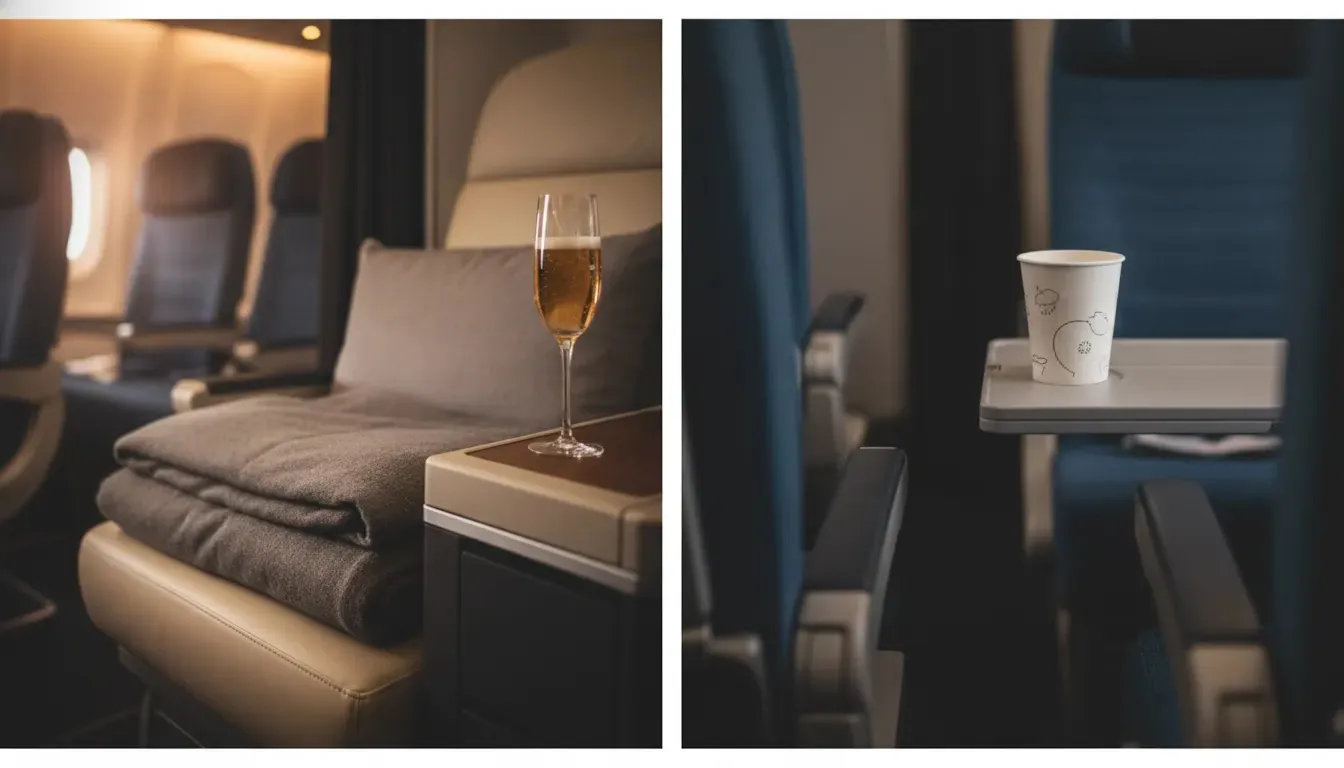
You board the same aircraft, depart at the same hour, and land at the same destination. However, the journey can feel completely different depending on your cabin. If you want a broader foundation before comparing cabins head to head, start with what is business class. This article stays focused on seat comfort, service, and value, especially for long-haul and international travelers.
The Core Difference Between Business Class vs Economy
Economy focuses on efficient transportation at scale. By contrast, Business Class focuses on reducing friction. That difference shapes almost every part of the trip, from seat size to meal pacing to how quickly you move through the airport.
On most long-haul routes, Economy gives you a narrower seat, less recline, less privacy, and a busier cabin flow. Business Class usually adds more space, better bedding or sleep support, more attentive service, enhanced food and beverage options, and priority treatment on the ground. Depending on the airline, aircraft, and route, that may mean anything from a recliner-style domestic seat to a fully flat international suite with direct aisle access.
For readers comparing adjacent cabins, premium economy vs business class is often the next useful step. For this article, the sharper question is whether business class vs economy delivers enough added comfort and service to justify the premium on your specific trip.
Business Class vs Economy: Quick Verdict
Choose Business Class if sleep, privacy, time efficiency, or arriving ready for work or a major occasion matters more than simply reaching the destination. Choose Economy if your flight is short, daytime, or low-stakes enough that extra space and service are pleasant but not essential.
Business Class vs Economy Comparison Table
| Category | Business Class | Economy |
|---|---|---|
| Price | Typically a substantial premium. Through Flight Experts, Business Class bookings generally range from $2,000 to $8,000+ depending on route and airline. | Usually the lower fare category on the same aircraft, though pricing may still vary sharply by season, route, and flexibility. |
| Target user | Travelers prioritizing rest, productivity, privacy, and a more refined airport-to-arrival experience. | Travelers focused primarily on transportation rather than premium comfort or service enhancements. |
| Key strength | Meaningfully better comfort and sleep potential, especially on long-haul international flights. | Wider accessibility and practicality for shorter or less demanding trips. |
| Key weakness | The premium may feel excessive on shorter flights or routes with weaker cabin products. | Limited personal space, lower sleep quality, and fewer ground privileges on most routes. |
| Best for | Overnight sectors, milestone travel, demanding schedules, and travelers who want to protect energy on arrival. | Short daytime travel, lower-priority journeys, and passengers comfortable trading comfort for a simpler fare structure. |
| Worst for | Travelers who will not use the extra comfort, service, or airport benefits in practice. | Anyone who struggles to sleep upright, values privacy, or needs to arrive rested after a long flight. |
Business Class vs Economy Seat Comfort and Personal Space
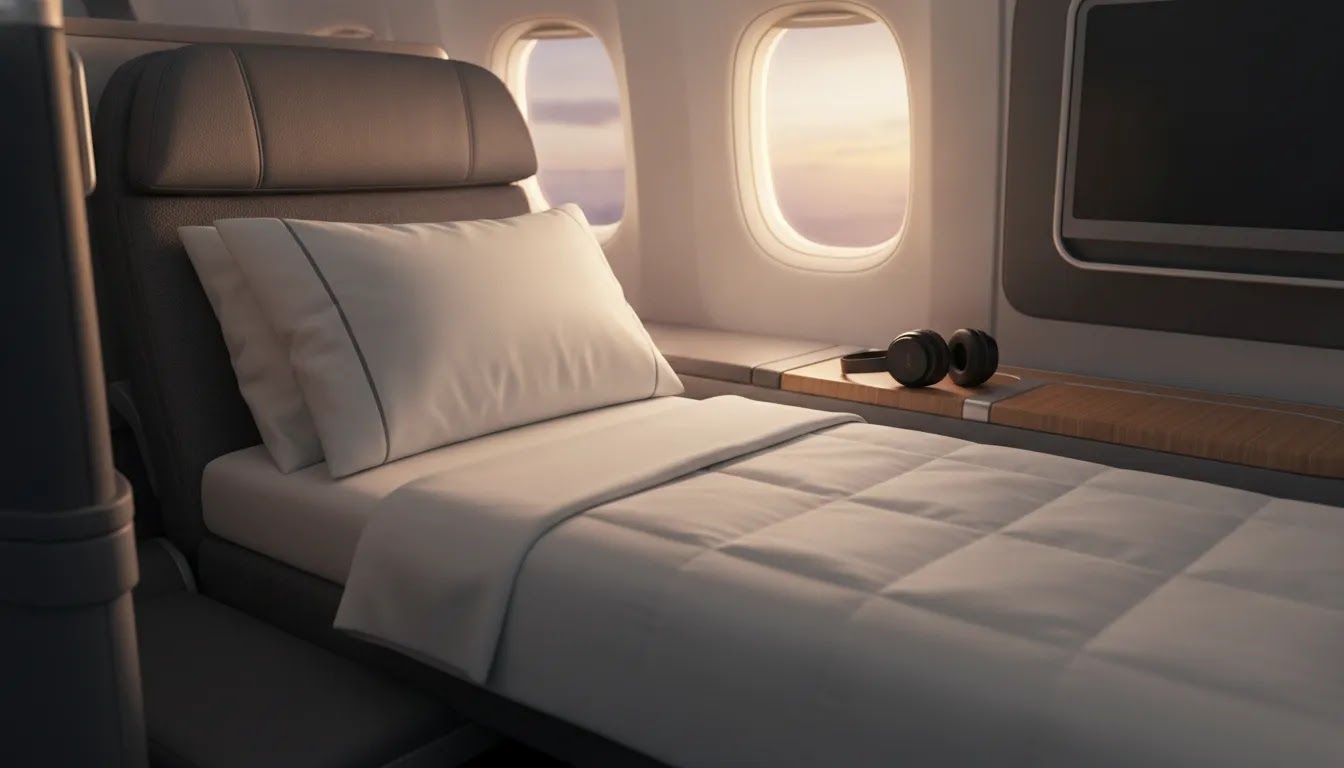
Business Class leads decisively on seat quality. On long-haul aircraft, the advantage is not just a wider seat. It also includes more pitch, better recline, leg support, shoulder room, storage, and more control over your space. Many international products now offer lie-flat or angled-flat designs, better bedding, larger screens, and direct aisle access on premium carriers.
Economy, by contrast, is built for cabin density. Seats are usually narrower, recline is modest, and personal space depends partly on your neighbors. On a short flight, that may be manageable. On an overnight crossing to Europe, Asia, Australia, or the Middle East, the compromise becomes much more noticeable.
Winner on this dimension: Business Class. If the seat is the main reason you are considering the upgrade, business class vs economy usually shows its clearest and most measurable difference here.
Business Class Cabin Types and Why They Matter
One of the most important points in the business class vs economy discussion is that Business Class is not a single, uniform product. A long-haul suite with a fully flat bed and direct aisle access feels very different from an angled-flat seat. Both also differ from the wider recliner-style products often found on shorter domestic or regional flights.
That is why the product details deserve close attention before booking. First, check whether the seat goes fully flat or only partially reclines. Next, review the layout. A 1-2-1 configuration usually means every passenger has aisle access, while denser layouts may require climbing over a neighboring traveler or accepting less privacy.
Storage, shoulder space, door or shell design, bedding quality, and tray positioning also matter more than many booking screens suggest. On overnight sectors, even small differences in privacy and sleeping posture may change the quality of the next day.
Route-specific aircraft assignment is just as important. An airline may market an excellent Business Class product on one route while operating an older seat on another. Even the same city pair may see equipment changes by season or day of week. Premium carriers such as Emirates, Qatar Airways, Singapore Airlines, Cathay Pacific, and Turkish Airlines are often discussed because product quality can be very strong.
However, even within those brands, the exact experience may vary by aircraft and route. For that reason, experienced travelers usually evaluate the seat map, aircraft type, and operating schedule before drawing conclusions from the cabin label alone. For a deeper look at layouts and expectations, see this guide to business class seats.
Business Class vs Economy Service, Dining, and Cabin Environment
Business Class generally offers a calmer cabin atmosphere. Fewer passengers per crew member may allow for more attentive service, more flexible meal timing, higher-quality tableware, and a quieter setting. On stronger international products, you may also see upgraded wines, better amenity kits, mattress pads, and turndown-style preparation for sleep.
Economy service is designed for consistency across a much larger cabin. Meals may be perfectly acceptable, but choice, pacing, and personalization are more limited. In addition, cabin noise is usually higher, lights and service cycles affect more people at once, and it can be harder to create a restful environment.
Winner on this dimension: Business Class. The upgrade often feels most pronounced not in a single luxury detail, but in the combined effect of calmer service and more space.
Business Class vs Economy Airport Experience and Time Savings
Business Class often starts paying off before boarding. Depending on the airline and airport, travelers may receive priority check-in, faster baggage handling, earlier boarding, lounge access, and sometimes dedicated security lanes. These privileges can remove a surprising amount of stress from departure, especially in busy hubs or during peak periods.
Economy travelers usually move through the main passenger flow unless they hold elite status or purchase add-on services. That is not always a problem on a quiet midweek departure. However, it may feel very different during holiday peaks or on complex international itineraries with tight connections. For example, the TSA outlines how screening rules and passenger flow can affect airport timing in the United States.
Winner on this dimension: Business Class. The ground experience does not always justify the upgrade by itself, but on demanding travel days it may add significant value.
Business Class vs Economy Value for the Premium Investment

This is where the answer becomes more nuanced. Business Class is not automatically worth it simply because it is better. It is worth it when the benefits change the outcome of the trip for you.
That may mean landing able to go straight into meetings, protecting the tone of a honeymoon, reducing exhaustion before a family celebration, or preserving energy during a multi-city journey. Economy may still be the sensible choice when the route is short, the flight is daytime, or your priority is destination spending rather than in-flight comfort.
A six-hour daytime flight and a fourteen-hour overnight flight are not the same decision, even if the cabin labels are identical. For readers asking the broader question beyond this direct comparison, is it worth it depends heavily on route length, aircraft type, schedule, and the quality gap between the two cabins on that specific airline.
Winner on this dimension: Business Class for long-haul and overnight travel, Economy for shorter or lower-stakes journeys. The more the flight affects your next day, the stronger the case for Business Class becomes.
How Business Class vs Economy Changes by Route Length and Timing
Route length changes the calculation quickly. On a six-hour daytime flight, Business Class may feel worthwhile mainly for space, privacy, and a calmer working environment. However, the difference may not feel transformational if you are not planning to sleep.
On an overnight transatlantic sector, the value often centers on whether you can rest properly and avoid sacrificing the first day after arrival. On ultra-long-haul journeys to Asia or similarly extended itineraries, your cabin choice may shape not only comfort in the air but also jet lag, connection resilience, and how usable the trip feels once you land.
When the upgrade matters most
Traveler intent matters just as much as elapsed time. If you need to arrive prepared for meetings, maintain concentration after landing, or begin a milestone occasion without fatigue already setting the tone, Business Class may justify itself more clearly. The same can apply to travelers who do not sleep well upright or who find a congested cabin draining before the trip properly begins.
If the flight is mainly transportation and the arrival day is intentionally light, Economy may remain entirely appropriate. This becomes even more itinerary-specific on routes where travel patterns are less straightforward. A journey to Tokyo or Hong Kong may involve a long overnight sector where a lie-flat seat changes the arrival experience.
Trips to Bali, Pakistan, or Nepal often involve long elapsed travel times, intermediate stops, or connection windows that make rest and airport efficiency especially valuable. Two itineraries of similar mileage may not feel equally demanding in practice. As a result, experienced advisors judge business class vs economy against the actual routing, timing, and purpose of the journey rather than using a universal rule.
Who Should Choose Business Class vs Economy
Business Class usually suits travelers who place a premium on rest, privacy, and time protection. That includes executives flying overnight, couples starting a milestone trip, older travelers who value physical comfort, and anyone with a tight schedule on arrival. It may also suit those booking complicated journeys where smoother connections and airport privileges add practical value beyond the seat itself. If your trip centers on a long-haul premium itinerary, this business class international flight guide may help.
Economy may suit travelers who are comfortable with a simpler onboard experience, especially on short or moderate daytime routes. If you sleep easily in almost any setting, do not mind a busier cabin, and place less importance on lounge access or priority services, Economy can remain a rational choice.
Where Not to Sit in Economy if Comfort Matters
Even travelers who choose Economy for a particular trip can improve the experience by avoiding the least comfortable parts of the cabin. Seats close to lavatories or galleys tend to bring more foot traffic, more light, more noise, and less privacy. Bulkhead rows may look attractive for legroom, yet on some flights they are also close to bassinets, which can make rest less predictable on overnight sectors.
The last row may have restricted recline, and some window seats on certain aircraft are misaligned. That can leave the window post at shoulder level rather than beside the seat. Seat selection in Economy is often about reducing friction rather than finding perfection.
Travelers who value a quieter environment may prefer to sit away from service areas and high-traffic crossover points. Those planning to sleep may want to avoid seats where nearby lines form during meal periods or before landing. On wide-body aircraft, reviewing the specific seat map can also reveal missing windows, narrower rows, or proximity to crew work areas that may not be obvious during booking.
This guidance does not change the broader business class vs economy comparison, but it does help on shorter or lower-priority trips where Economy remains the sensible choice. A carefully selected Economy seat will not replicate Business Class, though it may materially improve comfort when the route does not justify a premium-cabin booking. For general cabin health and in-flight comfort guidance, the CDC air travel page is also a useful reference.
Business Class vs Economy Pros and Cons
Business Class vs Economy strengths
- Business Class typically provides substantially more personal space, which may improve comfort from boarding through landing.
- Sleep quality is usually much better in Business Class, especially on lie-flat long-haul products.
- Priority airport services and lounge access may reduce stress and protect time on busy travel days.
- Dining, beverage service, and crew attention are often more refined in Business Class.
- Economy remains practical for shorter flights where a full premium-cabin experience may not be necessary.
- Economy may be easier to justify on leisure trips where in-flight comfort is less central than the destination itself.
Business Class vs Economy considerations
- Business Class quality varies widely by airline, route, and aircraft, so the label alone does not guarantee the same level of luxury.
- The fare premium may feel difficult to justify on short flights or weaker regional products.
- Economy may become physically tiring on overnight or ultra-long-haul routes, particularly for taller travelers or light sleepers.
- Some airport privileges associated with Business Class may vary by airport, alliance arrangements, and fare rules.
Flight Experts Perspective on Business Class vs Economy
For discerning travelers, the most reliable way to compare Business Class and Economy is to assess the exact route rather than the label alone. A transatlantic lie-flat product and a domestic recliner-style premium seat may both be sold as Business Class, yet they serve very different needs. Flight Experts approaches these decisions with that level of specificity, looking at aircraft, schedule, cabin layout, seat type, and the practical demands of your trip.
Flight Experts specializes in Business Class Flight Booking, with service covering major routes across Europe, Asia, the Middle East, Australia, and domestic U.S. travel. Travelers researching broader premium options may also explore Premium Cabin Experience & Amenities or Premium Flight Booking & Tips. If your itinerary is more complex than a single city pair, the team also offers Complex Itinerary Planning. For a personalized view of whether Business Class truly improves your specific journey, connecting with Mike Chirilenco and the Flight Experts team may save time and sharpen the decision.
Frequently Asked Questions
Is Business Class always lie-flat?
No. On long-haul international flights, Business Class often includes lie-flat seating, but not always. On shorter domestic or regional routes, it may be a wider recliner with enhanced service rather than a bed. Aircraft type and route matter more than the cabin name alone, so those details should always be checked before booking.
Is Economy uncomfortable on international flights?
That depends on your height, sleep habits, route length, and tolerance for a denser cabin. Many travelers manage daytime international flights in Economy without issue. Overnight sectors are usually where limitations become more pronounced, especially if rest, privacy, or arriving in strong condition matters to your plans.
Does Business Class include lounge access?
In most cases, long-haul international Business Class does include lounge access, though access rules may vary by airline, partner arrangements, and airport. Some domestic premium products are more limited. Travelers should confirm the exact lounge entitlement attached to the fare they are considering rather than assuming it is universal.
How much more valuable is Business Class on overnight flights?
Usually much more valuable than on daytime flights. The ability to recline fully, stretch out, and sleep in relative privacy may change how you feel for the first day of your trip. For travelers heading directly to work, events, or connections, that difference can be materially important.
Is Business Class worth it for leisure travel?
It may be, particularly for honeymoons, anniversaries, or long trips where the journey itself is part of the experience. If the flight is short or daytime, the added comfort could feel less essential. The value tends to rise when the travel occasion is significant and the trip begins or ends with a demanding long-haul sector.
Can Economy ever be the better choice?
Yes. Economy may be the better fit if the route is short, the schedule is easy, and you do not place much weight on sleep, privacy, or airport privileges. It can also make sense when you would rather allocate more of the trip investment to hotels, dining, or ground experiences instead of the flight itself.
How should I judge a Business Class product before booking?
Look at the aircraft, seat layout, whether direct aisle access is offered, lounge access terms, baggage policy, and departure timing. A well-timed overnight flight with a strong seat may justify the premium far more than a weaker product on the same route. Product consistency also varies by airline.
What if Business Class feels excessive but Economy feels too limiting?
That is often the point where Premium Economy becomes relevant. On many long-haul routes, it offers more space and a calmer experience than Economy without reaching full Business Class pricing. The best fit depends on how much you value sleep, airport privileges, and the ability to arrive rested.
What is better, business class or economy?
Business Class is better in terms of space, rest, privacy, service, and airport privileges. Economy can still be the better choice for a specific trip if the route is short, the schedule is easy, or the premium would not materially improve your arrival experience. The stronger question is usually not which cabin is objectively better, but which one is better matched to the flight and purpose of travel.
Is it worth paying extra for business class?
It may be worth paying extra when the upgrade changes the quality of the trip in a meaningful way. Overnight flights, long-haul itineraries, important business travel, and milestone vacations tend to make the value clearer. On shorter daytime routes, the improvement may still be enjoyable, but it is less likely to feel essential unless privacy or productivity matters greatly to you.
Where should you not sit on a plane if you are flying economy?
If comfort matters, travelers often avoid seats near lavatories, galleys, bassinets, and the last row, where recline may be limited. Some aircraft also have misaligned window seats or rows with reduced width because of fuselage shape or equipment placement. The exact seat map should always be reviewed, because the least comfortable seats vary by aircraft and airline.
What is the difference between business class, premium economy, and first class?
Business Class usually focuses on lie-flat comfort, elevated dining, lounge access, and a more refined airport-to-arrival experience. Premium Economy typically offers more space and improved service over Economy, but not the full privacy, bed, or ground privileges associated with Business Class. First Class, where offered, generally adds an even more exclusive environment, larger suites or exceptionally spacious seating, and more individualized service. The exact distinctions may vary significantly by airline and route.
Key Takeaways
- Business Class and Economy are separated most clearly by seat quality, service rhythm, and airport treatment.
- Business Class usually delivers its strongest value on overnight and long-haul international travel.
- Economy may still be appropriate for shorter, daytime, or lower-pressure trips.
- The same cabin label can vary significantly by aircraft and route, so product details matter.
- For premium travel decisions, the right answer is usually itinerary-specific rather than universal.
Business Class vs Economy Recap
If your priority is arriving rested, protected from airport friction, and better able to enjoy or perform on arrival, Business Class generally justifies the upgrade more convincingly than many travelers expect. If your flight is shorter or your comfort demands are modest, Economy may remain the more sensible cabin.
| Choice | Cabin | Best for | Price context |
|---|---|---|---|
| 1 | Business Class Flight Booking | Long-haul travelers who value sleep, privacy, and a more refined end-to-end journey | $2,000 to $8,000+ |
| 2 | Economy | Shorter or less demanding trips where premium comfort is not central | Varies by route and season |
Conclusion
Business Class is rarely worth upgrading for the label alone. It becomes worthwhile when the additional space, service, and airport advantages change the quality of your trip in a meaningful way. On long-haul overnight travel, that difference may be substantial. On shorter daytime routes, Economy may remain entirely adequate. The key is to judge the actual product, not the marketing category. If you would like an expert, route-specific recommendation, Flight Experts can help you compare cabins with greater precision. To begin planning your next premium journey, speak with Mike Chirilenco or connect with the Flight Experts team for personalized guidance.



