
Is Business Class Worth It?: What You Actually Get

For many travelers, the real question is not whether Business Class is nicer than the main cabin. It is whether the cabin gives you enough benefit to justify the added spend across the rest of your journey. If you want a clear baseline first, it helps to understand what is business class on today’s airlines before judging whether it suits your own travel priorities.
The short answer
Business class is typically worth it if the flight is long enough for sleep, important enough to protect your energy, or complex enough that airport friction matters. The premium usually buys far more than a wider seat. Depending on the airline and route, you may receive lounge access, priority ground handling, better baggage treatment, elevated dining, greater privacy, and in many cases a lie-flat bed.
That said, not every Business Class fare delivers equal value. A transcontinental suite on a flagship aircraft can feel materially different from a short regional business product with a blocked middle seat and a modest meal. Therefore, make the decision product by product, not by cabin label alone.
When business class is worth it by flight length and trip purpose
Flight length changes the value equation, but duration alone is not the full story. A four-hour daytime flight may feel comfortable enough in the main cabin for some travelers, especially if nothing demanding follows on arrival. However, that same four-hour sector may look very different if it comes before a board meeting, private celebration, or tightly scheduled connection. In those cases, a calmer airport process, better seating, and time to work in the lounge can carry real value.
How flight length changes business class value
On flights around eight hours, the answer becomes more nuanced. If the route is daytime and the schedule is relaxed, Business Class may be desirable rather than essential. By contrast, if that same eight-hour journey is overnight, crosses multiple time zones, or lands early in the morning, the practical value usually rises quickly. A true lie-flat seat, bedding, a quieter cabin, and more flexible dining may help protect the next day in a way that is hard to recreate after arrival.
Nine-hour and longer sectors are where Business Class often becomes easier to justify for experienced travelers. At that stage, seat design, direct aisle access, bedding quality, and the rhythm of service usually matter far more than the cabin label itself. On ultra-long-haul flights, the difference may shape not only comfort in the air, but also how much recovery time you need before meetings, touring, or onward transfers.
Why trip purpose matters as much as flight time
The purpose of the trip should sit beside the clock in any serious evaluation. An overnight transatlantic departure before a morning presentation is very different from a leisure trip with two free days built in on arrival. Travelers who have recovery time at the destination may place greater value on accommodations or private touring. Meanwhile, travelers who need to perform soon after landing often find that Business Class supports the entire itinerary, not only the flight.
What business class actually delivers
The strongest case for flying business class is that it changes the journey before, during, and after the flight. In the air, the biggest advantages are usually seat comfort, personal space, and the ability to arrive rested. On the ground, the gains may include dedicated check-in, faster security access in some airports, lounge privileges, earlier boarding, and priority baggage handling.
This is why the value question differs from a simple hotel comparison. In a business class flight vs hotel stay comparison, the hotel improves your destination time, while Business Class may protect the travel day itself. If your itinerary includes an overnight crossing, an early meeting, or a same-day event after landing, the flight may influence how well the entire trip unfolds.
For readers exploring premium travel more broadly, the Premium Cabin Experience & Amenities section provides a useful foundation. If your decision also involves choosing between premium cabins, a direct business class vs first class review can clarify where the extra spend in First Class meaningfully changes the experience and where it may not.
For broader industry guidance on cabin and baggage standards, travelers can also review the IATA baggage guidance. In addition, official airline seat maps and aircraft details on FAA-regulated carriers can help verify what a ticketed product is likely to deliver.
1. Sleep and physical recovery
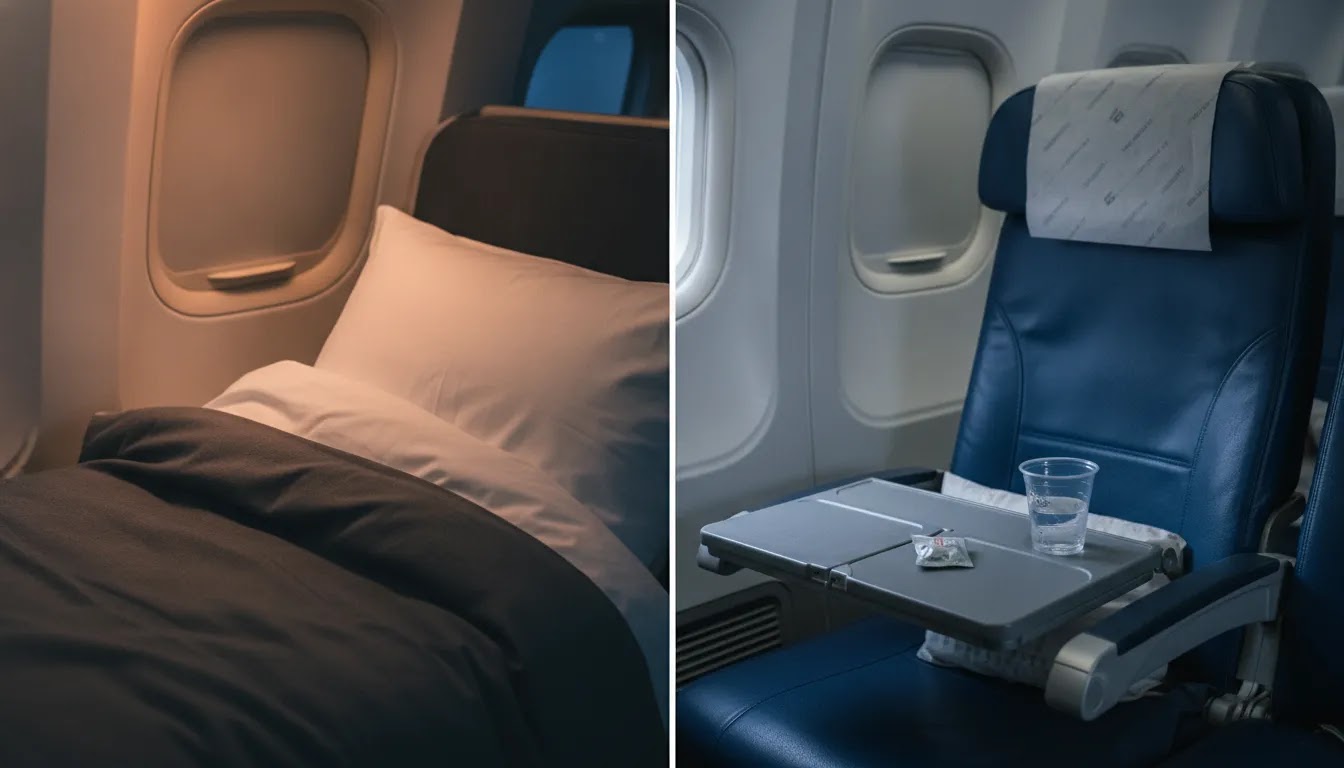
The most persuasive reason Business Class may be worth it is sleep. On long-haul routes, especially overnight sectors, a lie-flat bed can affect your first full day after arrival more than almost any in-flight luxury detail. Travelers landing for board meetings, private events, weddings, or tightly paced touring often notice the difference right away.
There is also a practical health dimension. Better recline, more room to move, easier aisle access, and less physical compression may reduce the strain that builds over eight to fourteen hours in the air. This does not make Business Class medically necessary in most cases. However, it often makes the journey far more manageable, particularly for older travelers, taller passengers, and those sensitive to fatigue.
A simple example helps. On a daytime domestic flight, extra comfort may be pleasant. On a night departure from the US to Europe, the ability to sleep for several hours could shape your meetings, dining plans, or sightseeing the next morning.
2. Time saved at the airport
Many travelers focus on the seat and overlook how much value sits on the ground. Premium check-in areas, lounge access, boarding priority, and priority baggage delivery can shorten or soften the most tiring parts of travel. This matters most in major hubs, during peak holiday periods, or on itineraries with tight connections.
Airline lounges vary widely, but the better ones offer a genuinely calmer pre-flight environment. For example, they may provide quieter seating areas, showers on long-haul routes, stronger food and beverage options, and business-friendly workspaces. Depending on the airport, that can turn an uncomfortable layover into usable time. If lounge access is central to your decision, see this guide to business class lounge access.
For travelers planning strategically, not impulsively, understanding these extras is as important as knowing how much business class cost on the route you actually intend to fly. A fare that seems high at first glance may look different once you weigh the practical value of rest, lounge time, and reduced airport stress.
What lounge access and ground services really add
Lounge access is one of the most misunderstood parts of the Business Class experience because it is not uniform. Eligibility may depend on the airline, route, airport, alliance rules, and whether you are flying a long-haul international segment or a shorter regional service. Some tickets include access to an airline’s flagship lounge or a high-quality partner facility. Others may include only a more limited space, or none at all in certain circumstances. That difference is worth verifying before you assume the ground experience will match the fare.
When the lounge offering is strong, the practical benefits can be substantial. Showers may make a meaningful difference before an overnight departure or after a long connection. Proper dining can spare you an uncertain terminal meal. In addition, quiet work areas, reliable Wi-Fi, and calmer seating arrangements may help you prepare for meetings or simply reduce sensory fatigue before boarding. In some airports, premium travelers may also have access to private check-in zones, escort services, or chauffeur and premium ground transfer arrangements where the airline offers them, subject to route and fare conditions.
The real test is whether these services improve the schedule you are actually flying. On a short nonstop departure from a quiet airport, the lounge may be pleasant but not decisive. On a long connection, a late-night departure, or an early-morning arrival with little recovery time, ground services may materially improve the journey. This is one reason experienced travelers evaluate Business Class as a full travel-day product rather than an in-flight seat alone.
3. Privacy, space, and focus
Business class is often worth it for travelers who need control over their environment. That may mean quiet enough space to work, enough room to avoid feeling compressed, or simply the ability to travel without constant interruption from neighboring seats.
Modern premium cabins on airlines such as Qatar, Singapore, ANA, JAL, Delta One, United Polaris, and others may include direct aisle access, suite-style partitions, larger screens, storage space, and a layout designed for both work and rest. These details sound minor in isolation. Yet together, they create a far more self-contained experience than the main cabin. If you are comparing seat designs more closely, this overview of business class seats can help frame the differences.
For couples, the value may come from beginning the trip in a calmer frame of mind. For executives, it may come from working privately before landing. For solo leisure travelers, it may simply be the relief of having physical space and a more predictable environment over a long journey.
4. A more controlled service environment
The service difference is not only about better meals. Business Class typically gives the crew more time per passenger, which often translates into smoother pacing, more attentive problem-solving, and greater flexibility around dining and sleep. On well-executed premium carriers, you are less likely to feel processed and more likely to feel looked after.
Cabin atmosphere matters too. Fewer passengers, lower noise, better bedding, upgraded amenity kits, and stronger wine or dining programs all contribute to the experience. Condé Nast Traveler and Forbes Travel Guide routinely treat these details as markers of premium quality because they affect how refined the journey feels, not just how full the tray table looks.
This is one reason experienced travelers often compare products rather than labels. Flying business class on a top-tier long-haul aircraft can deliver much of what many travelers actually want, without requiring them to move all the way into First Class.
5. Better value on certain routes than others
The value equation is highly route-specific. Business Class tends to justify itself most clearly on long-haul international flights, overnight transatlantic departures, and journeys where you need to function soon after landing. It may be less persuasive on shorter daytime sectors where the seat is recliner-style rather than lie-flat.
Aircraft type matters as much as geography. A true long-haul product with aisle access, strong bedding, and a polished lounge can feel like a meaningful upgrade. A narrow-body cabin sold as Business Class may deliver a more limited benefit. This is why travelers often benefit from comparing the exact operating carrier, aircraft, and schedule rather than assuming all business cabins are equivalent.
If you are still weighing timing and fare strategy, you may also want to read about how to get business class fares strategically. The title focuses on price, but the more useful lesson is often timing and product selection rather than simply chasing the lowest number.
How to evaluate the exact business class product before booking
The most reliable way to judge whether Business Class is worth it is to verify the exact product, not simply the fare class. Start with the aircraft type. That often determines whether you are getting a true long-haul seat, an angled or recliner-style seat, or a regional cabin with fewer meaningful advantages. Seat configuration matters just as much. Direct aisle access, cabin density, privacy partitions, and the position of paired seats all influence whether the experience will support sleep, work, or quiet.
Check the seat, layout, and lie-flat details
Lie-flat capability should be confirmed rather than assumed. Many sophisticated travelers specifically want a bed for overnight sectors, yet some flights marketed as Business Class may provide a more limited recline, especially on shorter routes or narrow-body aircraft. Lounge access should also be checked carefully, along with the quality of the connection itself. A premium seat on one segment may be less compelling if the itinerary includes a rushed transfer, an inferior connecting product, or a long layover in an airport with limited premium facilities.
Review route-specific differences before you book
Route-specific variation can be significant, even within the same airline. A flagship long-haul route may feature the carrier’s newest suite, upgraded bedding, enhanced dining, and a stronger lounge. A shorter regional sector on that same airline could feel far more modest. Wi-Fi performance, amenity kits, bedding, and meal service may also differ by route, departure time, and aircraft assignment, all of which remain subject to operational change.
This is why discerning travelers often benefit from expert review before ticketing. The right choice is rarely “airline A versus airline B” in the abstract. Instead, it is often flight A on aircraft A at a particular departure time versus flight B on aircraft B with a different ground experience and connection quality. That level of product detail may be where premium value becomes clear, or where a weaker offering is best avoided. Travelers who want more support can also review how a business class travel agency helps compare these details.
What about the downsides?
The counterargument is straightforward: Business Class can be expensive, and the premium is not always matched by the product. The cabin name alone does not guarantee a lie-flat bed, a private suite, or exceptional dining. On some routes, especially shorter ones, the experience may be comfortable without being transformative.
There is also an opportunity-cost question. If upgrading the flight forces compromises elsewhere in the trip, such as reducing the quality of accommodations, shortening the stay, or giving up private ground arrangements, the value may weaken. For some travelers, a superior hotel and a better destination experience will matter more than a premium seat for a few hours in the air.
One more limitation deserves mention. Business Class typically improves comfort and convenience, but it does not remove all travel disruption. Delays, aircraft swaps, lounge crowding, and service inconsistencies may still occur, depending on the airline, airport, season, and route.
When this may not apply
Business Class may not be worth it if your flight is short, daytime, and low-pressure enough that rest and privacy are not central to the trip. It may also be less compelling if you already plan a recovery day on arrival and place greater value on the hotel, villa, or on-property experience.
Families with younger children sometimes reach a different conclusion as well. A premium cabin may still help, but the added value may depend more on seating configuration and bedtime logistics than on luxury cues. Travelers booking purely by cabin name, without verifying aircraft and route details, are also at higher risk of disappointment.
For that reason, the best answer to “is flying business class worth it” is rarely universal. It depends on the role the flight plays within the trip.
Flight Experts perspective
Flight Experts approaches Business Class as a product-selection question, not a status symbol. The agency’s Business Class Flight Booking service covers major premium routes from the US to Europe, Asia, the Middle East, Australia, and domestic US itineraries, with personal consultant support, seat selection assistance, meal preference coordination, price monitoring, and cabin upgrade alerts. Current published pricing context begins around $2,000 and may extend to $8,000+ depending on route and airline.
That perspective matters because two fares in the same cabin can produce very different journeys. Flight Experts also offers Premium Flight Booking & Tips resources and concierge-style guidance for travelers who want clarity on aircraft type, schedule quality, connection risk, and whether a specific fare truly reflects premium value. If you would like a tailored view based on your route and priorities, you can speak with Mike Chirilenco or the Flight Experts team for a personalized recommendation.
Practical implications
If you are deciding whether Business Class is worth it, evaluate the cabin against the role of the trip rather than the marketing label. Four questions usually clarify the decision quickly.
- How long is the flight, and is it overnight? The longer and more sleep-dependent the journey, the stronger the case.
- What happens after landing? A meeting, celebration, or immediate transfer often increases the value of arriving rested.
- What exact product is operating? Check the aircraft, seat type, lounge access, and whether the route offers a true long-haul premium cabin.
- What are you giving up elsewhere? If the upgrade harms the broader quality of the trip, the answer may change.
- How much airport friction do you want removed? Priority services and lounge access may matter more than many travelers expect.
Travelers comparing premium cabins often benefit from looking beyond fare alone and toward itinerary design. On a complex multi-city journey, the right premium flight can preserve energy across several destinations. On a single short flight, the same spend may have less practical impact.
Business class value by scenario
| Scenario | How the article describes the value | Why it may matter |
|---|---|---|
| 4-hour daytime flight | May be comfortable enough in the main cabin for some travelers | Business Class may be more discretionary unless airport ease, privacy, or timing matters |
| 8-hour daytime flight | May be desirable rather than essential | Value depends more on the exact seat, service quality, and schedule |
| 8-hour overnight flight | Practical value typically rises quickly | A lie-flat seat, bedding, quieter cabin, and flexible dining may protect the next day |
| 9-hour and longer sectors | Often much easier to justify for experienced travelers | Seat design, direct aisle access, bedding quality, and service rhythm matter more |
| Ultra-long-haul flight | The difference may shape comfort in the air and recovery time after arrival | Can influence meetings, touring, or onward transfers |
Pros and Cons
Strengths
- May provide materially better sleep on overnight and long-haul flights, especially with lie-flat seating.
- Typically offers more privacy, personal space, and a quieter in-flight environment than the main cabin.
- Often improves the airport experience through priority check-in, lounge access, and faster baggage handling.
- Can help travelers arrive more prepared for meetings, events, or tightly scheduled leisure itineraries.
- Usually includes more attentive service, elevated dining, and stronger amenity quality.
Considerations
- The premium may be hard to justify on short routes or daytime flights.
- Business Class is not a uniform product, and quality may vary sharply by airline, aircraft, and route.
- The fare may compete with other high-value trip elements, such as superior accommodations or extended stay length.
- Even premium cabins remain subject to delays, aircraft changes, and service inconsistency.
Frequently Asked Questions
Is business class worth it for overnight flights?
In many cases, yes. Overnight routes are where Business Class usually delivers its strongest practical value because sleep, physical comfort, and lower stress may shape your first day after arrival. The exact benefit still depends on whether the aircraft offers a true lie-flat seat and how much you need to function soon after landing.
Is flying business class worth it for leisure travel?
It can be, especially for honeymoons, anniversaries, milestone journeys, or complex international vacations where the flight is part of the experience. If the premium helps you begin the trip rested and relaxed, many leisure travelers find the investment worthwhile. On shorter vacations with slower pacing, the value may feel more personal than essential.
What do you actually get in business class?
You typically get a larger seat, more space, enhanced dining, premium beverages, higher-touch service, and airport benefits such as lounge access or priority services. On long-haul routes, many airlines also provide lie-flat beds, bedding, amenity kits, and direct aisle access. Inclusions may vary significantly, so the exact flight matters more than the cabin name.
Is business class always lie-flat?
No. Many long-haul international products offer lie-flat seating, but not all Business Class cabins do. Some regional or shorter-haul routes may have recliner seats or a more limited product. Confirm the aircraft and seat map before booking, especially if sleep is one of the main reasons you are considering the upgrade.
Is business class better value than First Class?
Often, yes, depending on your priorities. Business Class may provide most of the practical advantages travelers care about: sleep, space, airport ease, and better service. First Class may add privacy, exclusivity, and more individualized attention, but the incremental value is not always necessary for every route or traveler.
Does Business Class make a difference on domestic flights?
It may, though usually less dramatically than on long-haul international routes. The benefits are often more about space, priority boarding, lounge access in some cases, and a calmer airport process than about sleep. On premium transcontinental products, the improvement can be meaningful. On shorter domestic hops, it may be more comfort-oriented than transformative.
What are the disadvantages of business class?
The main disadvantages are that the premium may be substantial, the product may vary more than travelers expect, and the cabin label alone does not guarantee a top-tier experience. On some routes, particularly shorter daytime sectors, the difference may feel incremental rather than transformative. Even in premium cabins, delays, aircraft swaps, crowded lounges, and uneven service may still occur.
Is business class worth it for a 4 hour flight?
It may be, though usually for reasons other than sleep. On a four-hour flight, the value often comes from space, a quieter environment, lounge time, and a more efficient airport process. If you have a meeting, event, or tight onward schedule after landing, those benefits may matter more. If the flight is daytime and the itinerary is relaxed, the advantage may feel more discretionary.
Is business class worth it for an 8 hour flight?
Quite often, yes, especially if the flight is overnight or crosses several time zones. An eight-hour sector is long enough for seat comfort, direct aisle access, bedding, and cabin quiet to influence how you feel on arrival. On a daytime route with recovery time built into the itinerary, the value may still be strong, though it could depend more on the exact seat and service quality.
Is business class worth it for a 9 hour flight?
In many cases, yes. Around nine hours, Business Class often shifts from a comfort preference to a more strategic travel choice, particularly on overnight or long-haul international routes. A true lie-flat product, thoughtful ground services, and a calmer cabin may materially improve the next day. The strength of that value still depends on the aircraft, route, and what your schedule requires after landing.
Should I choose Business Class or spend more on the hotel?
That depends on where the trip holds the most value for you. If the flight is overnight or you need to arrive in strong form, Business Class may influence the entire journey. If the flight is manageable and the destination stay is the central priority, a stronger hotel choice could matter more than the cabin.
Can a travel specialist help determine whether Business Class is worth it?
Yes. A specialist can compare aircraft, schedules, cabin layouts, airport experience, and route suitability, all of which affect value. Flight Experts, led by Mike Chirilenco, assists travelers with Business Class Flight Booking and premium itinerary planning, which may be particularly useful when several premium options look similar on paper.
Key Takeaways
- Business Class is usually worth it when it changes sleep quality, energy on arrival, and airport ease in meaningful ways.
- The best value tends to appear on long-haul, overnight, or high-stakes itineraries rather than short daytime flights.
- Aircraft type and route matter as much as cabin label, since Business Class quality varies widely.
- The right comparison is not only fare versus fare, but flight comfort versus the quality of the whole trip.
- Expert review of the exact product may prevent paying a premium for a cabin that does not deliver premium substance.
Conclusion
Business Class is worth it when the flight is more than transportation. If it protects your rest, helps you arrive composed, and removes the most draining parts of premium travel, the investment may be fully justified. If the route is short, the product is limited, or the same funds would improve the trip more meaningfully elsewhere, the answer may be no.
That is why discerning travelers tend to evaluate Business Class in context, not in theory. The route, aircraft, timing, and purpose of the journey all matter. To begin planning a premium itinerary with tailored guidance, contact Mike Chirilenco or speak with the Flight Experts team. Their concierge-style support can help you identify whether Business Class genuinely fits your travel priorities.



