
Business Class Flights to Australia (2026 Guide)

Which Airlines Stand Out for Australia
For most travelers booking a business class flight to Australia from the USA, the strongest options typically come from airlines that combine a competitive hard product with dependable long-haul service culture. In practice, that often means looking at carriers such as Qatar Airways, Singapore Airlines, Qantas, ANA, and Emirates, depending on your departure city and final destination in Australia.
There is no single best answer for every traveler. Some airlines excel in privacy and seat design. Others stand out for smoother one-stop routings, superior lounges, or more restful overnight timing. A honeymoon couple flying to Sydney may prioritize privacy, attentive dining, and refined transit facilities. A corporate traveler headed to Melbourne may care more about schedule discipline, productive lounge space, and efficient arrival timing.
Flight Experts offers Business Class Flight Booking across major carriers including Emirates, Qatar, Singapore, Lufthansa, British Airways, ANA, JAL, Delta One, United Polaris, and American Airlines Flagship. According to current service information, pricing for Business Class bookings generally ranges from $2,000 to $8,000+, varying by route and airline, and options are usually presented within 30 minutes after a request is submitted. For travelers considering a more elevated premium cabin on selected routes, first class to Australia may also be worth comparing.
What Matters Most on This Route
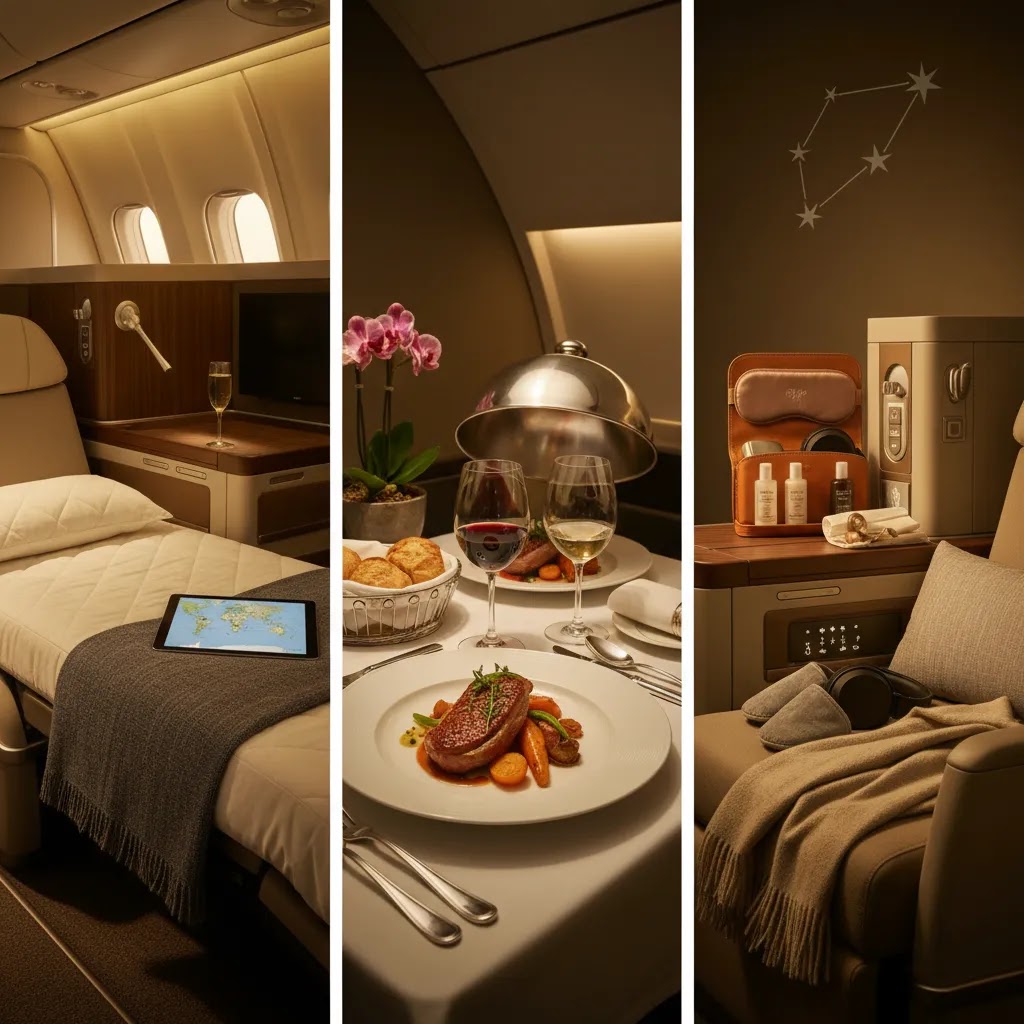
Australia is one of the clearest examples of where Business Class quality is not merely a comfort preference. It is a practical decision that may influence sleep, arrival readiness, and the overall tone of the journey. On flights of this length, the key differentiators are usually the seat, the transit experience, and the consistency of service across all sectors.
Seat architecture should be your first filter. Direct aisle access is highly desirable, and on many modern aircraft it is effectively the expectation. Reverse herringbone and suite-style Business Class seats usually perform well for privacy and sleeping comfort. Older angled or paired layouts may still appear on some routes, depending on the carrier and aircraft swap risk.
Lounge and ground experience matter more than many travelers expect. A thoughtful connection in Singapore, Doha, Tokyo, or Dubai may feel restorative rather than disruptive if the lounge offers proper dining, showers, and quiet zones. This becomes especially relevant on itineraries with a single stop en route to Perth, Melbourne, Brisbane, or Sydney.
Routing logic is another critical element. The shortest itinerary is not always the most restful. In some cases, a better-timed one-stop connection may outperform a more direct but poorly scheduled option. This is where professional itinerary planning becomes valuable, especially for couples, families, and executives with fixed arrival commitments.
Flight Experts also provides Complex Itinerary Planning for multi-city, open-jaw, and alliance-based premium travel. For travelers extending the journey beyond Australia, pairing your trip with business class to NZ may be an efficient option, particularly when building a broader South Pacific itinerary.
What Influences Business Class Pricing to Australia (Without Over-Simplifying It)
From a practical standpoint, Business Class pricing to Australia often reflects two realities at once: the route is long, premium-heavy, and capacity-constrained compared to many transatlantic markets, and demand tends to concentrate around predictable travel windows. That combination can make pricing feel inconsistent when you are comparing different dates, gateways, and routings.
Seasonality is usually the most visible factor. Australian summer typically coincides with high-demand holiday periods, and school holidays in both Australia and the United States may tighten premium inventory. Major events and peak leisure windows can have a similar effect, particularly for Sydney and Melbourne. In most cases, shoulder-season travel dates can broaden cabin choice and improve schedule flexibility, subject to availability.
Day-of-week and departure timing can also influence what you see. For long-haul Business Class, travelers often favor departures that support a natural sleep cycle and a composed arrival. Flights that align well with overnight rest patterns may price differently than less desirable timings, especially when there are limited alternatives from a specific U.S. gateway.
Route structure matters more than many travelers expect. A one-stop itinerary with an efficient, premium-friendly connection may price differently than a two-stop journey that looks similar on a search screen but carries more operational complexity. Longer routings, inconvenient connection times, or airports requiring terminal changes may appear less expensive, while cleaner one-stop options can be priced at a premium because they tend to be the itineraries discerning travelers actually want to fly.
Cabin inventory behavior on ultra-long-haul flights is another element that gets overlooked. Airlines manage premium seats carefully on routes where Business Class demand is consistently strong. Inventory can open and close quickly as the airline adjusts for booking pace, schedule updates, and expected corporate demand. That is why the same itinerary can look meaningfully different from one week to the next without any obvious external reason.
Here is the thing: many “from” prices displayed online are not always like-for-like Business Class products. A lower fare may be tied to mixed-cabin sectors, an older aircraft configuration on one leg, or a connection plan that is technically valid but not particularly comfortable. It is also common to see attractive pricing attached to less desirable layovers, such as short connections that increase stress, or very long connections that dilute the advantage of traveling premium.
For discerning travelers, aircraft and routing discipline are often the difference between a premium experience and an itinerary that simply has a Business Class label. Before you evaluate whether a price is “good,” confirm the seat type on each sector, the connection timing, and whether the routing supports the sleep and arrival rhythm you actually need.
Consider this when thinking about timing strategy: planning earlier typically widens choice. It may not guarantee a lower fare, but it often improves access to preferred seat types, more sensible connection windows, and better overall schedules. Flexibility can also help, particularly with U.S. departure gateways and Australian arrival cities. Even a change from one U.S. hub to another, or choosing Melbourne rather than Sydney on the inbound, can expand high-quality options, subject to availability and the realities of airline scheduling.
Best Airlines for Business Class to Australia
Qatar Airways is often among the strongest all-around choices for travelers who value privacy, polished onboard service, and a premium transit experience in Doha. Its Qsuite product, where available, remains especially appealing for couples and solo travelers seeking a more enclosed cabin feel. The trade-off is that routings may be longer than some Asia-based alternatives, depending on your U.S. gateway and Australian endpoint.
Singapore Airlines tends to suit travelers who prioritize service refinement and calm consistency. The airline is known for gracious hospitality, strong catering, and a highly regarded hub experience at Changi Airport. For passengers who do not mind a carefully planned stop in Singapore, it may offer one of the most balanced premium journeys to Australia.
Qantas is often attractive for travelers who prefer Australian carrier familiarity and, in some cases, more straightforward transpacific routing logic. Its appeal may be strongest for nonstop or near-nonstop style journeys into major cities. Product consistency can vary by aircraft, so equipment review is important before booking.
ANA is an excellent option for travelers who value understated service, strong punctuality, and an orderly transfer through Japan. It often appeals to experienced premium travelers who care less about visual flair and more about sleep quality, attentive detail, and operational smoothness.
Emirates remains a compelling choice for passengers who appreciate a more theatrical premium travel style, with strong lounge infrastructure in Dubai and generally solid long-haul comfort. Depending on the route, it may be especially appealing for those combining Australia with onward travel or seeking a more indulgent ground experience.
Other major carriers can also be appropriate depending on departure point, schedule, alliance preferences, and aircraft. The best business class to Australia from USA is often the airline that aligns most closely with your timing, seat priorities, and tolerance for connection length, rather than the one with the most publicity. If Sydney is your final destination, reviewing dedicated options for business class to Sydney may help narrow the field more effectively.
Common Routings From the USA to Australia, and How to Choose a Connection Point
Now, when it comes to building an Australia Business Class itinerary from the United States, most routings fall into a few practical families. Each can be excellent when aligned with your sleep timing, connection tolerance, and final Australian city. The aim is not to chase the most direct map line, but to select an itinerary that feels controlled and predictable from door to door.
Transpacific nonstop options can be appealing when they align with your preferred departure and arrival rhythm. The advantage is obvious: fewer moving parts, fewer transfers, and less reliance on connection performance. The reality is that nonstop seats can be limited, and the timing may not suit every traveler, especially if you require a certain arrival window. On ultra-long sectors, the specific aircraft and seat design are decisive, as you will be in that seat for an extended period with no meaningful reset.
One-stop via Asia hubs is a common and often comfortable structure, particularly for travelers who prefer a calm, premium transfer experience and a routing that supports sleep in two well-timed segments. Cities such as Singapore and Tokyo can offer strong lounge infrastructure, efficient terminal layouts, and a disciplined transfer flow. In many cases, this can be an excellent approach for Sydney, Melbourne, and Brisbane, and it can also work well for Perth depending on schedules.
One-stop via Middle East hubs is frequently chosen by travelers who value lounge depth, polished ground service, and premium cabin consistency across multiple sectors. This routing can be longer in elapsed time, but it may deliver a very refined experience, particularly if the connection is timed to allow a proper meal, a shower, and a rest period between flights. It is also a useful approach for certain city pairs where Asia routings are less convenient or where seat availability is stronger through the Gulf, subject to airline schedules.
What many travelers overlook is that a “good airport” is only part of a good connection. Connection quality often comes down to a few criteria that materially affect comfort on this route. A reasonable minimum connection time can reduce stress if an inbound flight is delayed. Access to a lounge with showers and proper dining is valuable on itineraries where you want to reset before the onward long-haul. Terminal transfer complexity also matters, especially when you are connecting between partners or between terminals that require a train, bus, or security re-screening. For premium travelers, these details are the difference between a restorative stop and a connection that feels like work.
Overnight timing is another key consideration. Some routings create two night-like segments, which can be excellent for sleep and adaptation. Others force an awkward pattern, such as an overnight followed by a short daytime sector, or a daytime first leg that leaves you too alert to sleep on the longest flight. The right pattern depends on whether you prefer to sleep immediately after takeoff, sleep closer to arrival, or split rest across both flights.
It is also important to acknowledge the risk trade-offs of tight connections on ultra-long-haul travel. A short connection may look efficient on paper, but it can become fragile if you are moving between gates that are far apart, changing terminals, or relying on re-screening. For travelers with fixed commitments on arrival, such as meetings, events, or cruise departures, a more conservative connection can be the more premium decision, even if it adds time.
Finally, routing choice often changes meaningfully by Australian endpoint. Sydney and Melbourne typically offer the broadest range of long-haul arrivals, while Brisbane and Perth can require more careful planning depending on the season and the airline network. Think of it this way: “best airline” frequently depends on which city you are actually flying into and out of, and whether you value arriving in your final city on the same day or are comfortable with an overnight in a gateway. This is precisely where an advisor can translate airline network reality into an itinerary that fits your preferences, rather than forcing your trip into a routing that only looks convenient in a fare display.

Pros and Cons
Strengths
- Business Class to Australia typically offers lie-flat seating, which may materially improve rest and arrival comfort on an exceptionally long journey.
- The best airlines on this route usually provide access to high-quality lounges, priority check-in, and smoother transfer support at major international hubs.
- One-stop premium itineraries often open access to stronger airline products than a traveler might find by focusing only on the shortest route.
- Australia-bound Business Class can be highly customizable, with varied options for privacy, dining style, alliance loyalty, and stopover preferences.
- Working with a specialist may help reduce the risk of choosing an inferior aircraft type, awkward transit, or poorly timed connection.
Considerations
- Product quality may vary significantly by aircraft, even within the same airline, so brand name alone is not enough.
- The most acclaimed carriers may involve longer total travel times if they route through the Middle East or Asia rather than across the Pacific.
- Availability in preferred cabins, on preferred dates, may tighten quickly during Australian summer, school holiday periods, and major event windows.
- Published pricing and route options can change frequently, particularly on long-haul premium itineraries subject to aircraft swaps or seasonal schedules.
Who This Type of Booking Suits
Business Class flights to Australia are especially well suited to travelers who view the journey as part of the trip rather than an inconvenience to be endured. That includes executives arriving for meetings with little room for fatigue, couples planning a honeymoon or anniversary journey, families seeking a more controlled long-haul experience, and retirees embarking on a milestone itinerary.
It is also a strong fit for travelers who want expert help sorting through aircraft variations, transit airports, and airline service differences. On a route this long, small details may have outsized effects. A well-chosen seat, well-timed connection, or superior lounge stop could make the difference between arriving depleted and arriving composed.
Flight Experts Recommendation
For discerning travelers considering business class flights australia-wide, Flight Experts is best used as an advisory resource rather than a simple ticketing source. The company’s current Business Class Flight Booking service covers major Australia-relevant carriers and includes a personal travel consultant, seat selection support, meal preference coordination, check-in assistance, price drop monitoring, and cabin upgrade alerts. The booking process is straightforward: submit a request, receive expert support at no charge, and review curated options, typically within 30 minutes.
That model is particularly valuable for Australia itineraries because these routes often involve nuanced trade-offs between aircraft type, alliance partner, stopover city, and final destination within the country. For travelers planning a more complex journey, including multi-city travel or open-jaw returns, the agency’s expert-led approach may be even more relevant. To compare routing logic and premium cabin options further, you may also explore the Premium Flight Booking & Tips section. If you would like tailored guidance, visit Flight Experts or contact Mike Chirilenco to discuss your travel preferences and receive a personalized recommendation.

How to Choose the Right Airline
1. Evaluate the aircraft, not only the airline. A carrier with an excellent reputation may still operate multiple Business Class products. Before booking, confirm the aircraft type and current seat layout. A newer suite-style seat with direct aisle access will usually outperform older staggered or paired configurations on a flight of this length.
2. Consider transit quality as part of the overall experience. A one-stop itinerary through Singapore, Doha, Tokyo, or Dubai may actually feel more comfortable than a less refined alternative. Lounge access, shower facilities, and walking distance between gates all matter on Australia routes. Condé Nast Traveler and similar premium travel authorities frequently highlight the importance of airport experience in shaping long-haul satisfaction, and that is especially true here.
3. Match the carrier to your travel purpose. Honeymooners may prefer privacy-focused cabins and more romantic dining presentation. Corporate travelers often prioritize punctuality, work-friendly lounges, and dependable Wi-Fi. Families may place more value on helpful service rhythms, manageable connection times, and consistency across multiple seats on the same booking.
4. Think beyond Sydney if needed. Australia is not a single-destination market. Melbourne, Brisbane, Perth, and Adelaide may each call for a different routing strategy. Some itineraries are stronger when ticketed into one city and out of another, especially if you plan to see multiple regions. This is where expert itinerary review becomes particularly useful.
5. Use specialist support for premium complexity. On premium long-haul trips, the difference between an acceptable option and a genuinely well-matched one is often found in details that self-service platforms do not explain well. Flight Experts’ current services include Business Class, First Class, Premium Economy, Group & Corporate Travel, and Complex Itinerary Planning. For travelers seeking a wider premium-cabin perspective beyond Australia, related category resources such as Airline Business & First Class Reviews may help inform carrier comparisons.
Common Misconceptions From Online Fare Searching (And What Actually Holds Up in Practice)
Australia is a route where online fare searching can create false confidence, especially when a result looks like a premium itinerary but hides important qualifiers. A discerning traveler benefits from validating a few concrete details before purchase, rather than assuming that a Business Class label guarantees a Business Class experience end to end.
Does clearing browsing history lower flight prices? In most cases, clearing cookies or browsing history does not reliably change the underlying fare for a given itinerary. What more commonly explains price movement is inventory changing as seats sell, fare rules governing what is available in a specific booking class, and timing relative to schedule adjustments and demand cycles. In some situations, the fare presented can also vary based on point-of-sale and currency assumptions, or based on how an itinerary is constructed, but these variables are not the same as a browser-based price penalty.
What sets this apart for premium travelers is what should be verified before committing. Confirm whether the itinerary includes mixed-cabin sectors, particularly on shorter domestic or regional legs that can be marketed as part of a Business Class journey. Verify the seat type on each segment, not only the headline airline, since an aircraft change or a different subfleet can materially affect privacy and sleep. If the routing involves partner airlines, confirm how lounge access rules apply in practice, since access can depend on the operating carrier, the fare basis, and the class of service on the departing leg. These details can be subject to change, and they are precisely the points where an advisor can provide current guidance.
Schedule protection is another area where online searching can be misleading. A premium itinerary on a single ticket typically offers clearer rebooking pathways if a connection is disrupted, compared to an itinerary built as separate tickets, where responsibility can become fragmented. Separate tickets are not inherently wrong, but they can add risk on journeys involving ultra-long-haul segments and tight onward connections, particularly if you have an important arrival commitment in Australia.
For experienced travelers, a professional decision framework is usually straightforward. Validate aircraft and seat type first, then confirm timing and the sleep pattern the itinerary supports, then assess connection quality, including lounge access and terminal transfer complexity. Once those fundamentals are right, refine the choice based on service style, dining preferences, and the specific lounge environment you prefer. This approach typically produces better outcomes than attempting to interpret fare fluctuations in isolation.
Frequently Asked Questions
Which airline usually offers the best business class flight to Australia?
There is rarely a single universal winner. Qatar Airways, Singapore Airlines, Qantas, ANA, and Emirates are often among the strongest contenders, but the right choice depends on your departure city, connection tolerance, aircraft type, and preferred service style. A specialist will typically compare the actual aircraft and schedule, not simply the airline brand.
What is usually more important on this route: nonstop service or a better one-stop product?
For many travelers, a well-planned one-stop itinerary may be more comfortable than a less compelling direct option. Lounge access, a proper shower, and a refreshed onward sector can significantly improve a very long journey. The better choice usually depends on your sleep preferences, total travel time tolerance, and arrival commitments in Australia.
Is Qantas always the best option for business class flights to Australia from USA?
Not always. Qantas may be attractive for its Australian network and routing familiarity, but it is not automatically the strongest fit for every traveler. Some Asia- or Gulf-based carriers may offer more refined seating, stronger privacy, or a better transit experience. Aircraft type and schedule should always be reviewed before making a decision.
How much does a business class flight to Australia typically cost?
Pricing may vary substantially by season, route, airline, and booking window. Based on current Flight Experts service data, Business Class bookings generally range from $2,000 to $8,000+. That range is directional rather than route-specific. For current options tailored to your departure city and dates, it is best to request a personalized quote.
How expensive is business class to Australia from the United States?
It can vary widely based on seasonality, routing, airline, and how much premium inventory is available on your exact dates. As a directional reference, current Flight Experts service information indicates Business Class bookings generally range from $2,000 to $8,000+, but Australia routings can sit anywhere within that span depending on aircraft, connection structure, and travel windows. For a like-for-like comparison that matches your preferred seat type and connection quality, a tailored quote is usually the most reliable approach.
Is it worth flying business class to Australia for such a long journey?
For many discerning travelers, yes, because lie-flat rest, a more controlled airport experience, and a well-planned connection can materially affect how you arrive. The value is often highest when you have commitments soon after landing, are traveling for a milestone occasion, or simply prefer to protect your time and energy on a journey of this length. The right answer depends on whether you prioritize sleep quality, privacy, and ground experience, and on how well the itinerary aligns with your preferred timing.
Does clearing browsing history lower flight prices?
In most cases, clearing browsing history does not reliably change the underlying fare for a given itinerary. Price movement is more commonly driven by inventory changes, fare rules, and timing, along with how a routing is constructed and ticketed. If you are seeing inconsistent results, it is usually more productive to verify that you are comparing like-for-like cabins, aircraft, and connection structures, rather than focusing on browser behavior.
What month is the cheapest to fly to Australia?
It depends on your departure city, the Australian city you are flying into, and how airline schedules are structured for that season. In general, months outside peak holiday and Australian summer travel periods may offer broader availability and more flexibility, but pricing and inventory can still shift quickly based on demand and capacity. For premium itineraries, the more useful question is often which travel windows provide the best combination of aircraft, timing, and connection quality for your preferences.
Is it worth considering First Class instead of Business Class to Australia?
It may be, particularly for milestone travel or travelers who place exceptional value on privacy and ground service. That said, Business Class on leading airlines is often more than sufficient for most Australia itineraries. The strongest choice depends on whether your priority is practical lie-flat comfort or a more elevated end-to-end premium experience.
Which connection cities are usually best for a premium Australia itinerary?
Singapore, Doha, Tokyo, and Dubai are often strong connection points because they typically combine major long-haul airline hubs with quality premium lounges and efficient transfer facilities. The ideal hub depends on airline preference, final Australian city, and total elapsed travel time. Some travelers also prefer culturally familiar or quieter transfer environments.
Do Business Class products vary within the same airline?
Yes, sometimes quite substantially. Many airlines operate multiple Business Class seat types across different aircraft fleets, and schedule changes may occasionally alter the equipment after booking. That is why experienced premium travelers and advisors review the actual aircraft and seat map carefully rather than relying only on marketing descriptions.
Can Flight Experts help with more than a simple round trip to Australia?
Yes. Current Flight Experts services include Complex Itinerary Planning for multi-city, open-jaw, and round-the-world style arrangements, in addition to Business Class and First Class bookings. This may be especially useful if your Australia trip includes New Zealand, stopovers in Asia or the Middle East, or multiple cities within Australia itself.
How quickly can Flight Experts usually provide options?
According to current service details, Business Class and First Class booking requests are usually responded to within 30 minutes after submission, with an expert assigned at no charge. More complex itineraries may take longer, depending on routing complexity and the level of customization required for the trip.
Key Takeaways
- The best business class flights to Australia depend on aircraft, routing, lounge access, and service consistency, not airline reputation alone.
- Qatar Airways, Singapore Airlines, Qantas, ANA, and Emirates are often among the strongest premium options for U.S. travelers.
- A well-timed one-stop itinerary may outperform a shorter but less comfortable routing on journeys of this length.
- Current Flight Experts Business Class booking support includes consultant guidance, seat selection, and premium itinerary assistance.
- Professional advice may be especially valuable for multi-city Australian trips, milestone travel, and travelers comparing several premium carriers.
Conclusion
Business class flights to Australia are best approached as a highly personalized travel decision rather than a simple fare search. The right choice may depend on whether you prioritize privacy, sleep quality, transit comfort, arrival timing, or network reach within Australia. On journeys this long, details that seem minor at booking stage often become decisive in the air. Flight Experts offers a refined, expert-led approach for travelers who want those details evaluated carefully, whether you are planning a straightforward Sydney itinerary or a broader Pacific journey. To begin planning your next premium trip, visit Flight Experts and speak with Mike Chirilenco or a Flight Experts travel specialist for a tailored recommendation built around your preferences.



