
First Class Flights to Australia (2026)

Overview
Booking first class flights to Australia is more nuanced than many travelers expect. Unlike transatlantic markets with broader premium cabin frequency, Australia often involves a smaller pool of true international first class products, fewer nonstop options, and complex onward connections through Asia, the Middle East, or the Pacific. Carrier choice matters enormously. A flagship first class suite on one airline may include private check-in, elevated lounge dining, chauffeur coordination in select markets, and a highly individualized onboard service rhythm. Another may be strong in the air but less impressive on the ground.
Flight Experts offers a dedicated First Class Flight Booking service for long-haul routes including the United States to Asia, the Middle East, Europe, transatlantic, and transpacific travel, making it well suited to Australia itineraries built through premium global gateways. The service includes white-glove personal assistance, lounge access coordination, chauffeur service arrangements where available, and guidance on luxury amenities and routing choices. Travelers considering an alternative cabin for part of the journey may also wish to review business class to Australia, especially where a carrier operates an exceptional business suite but no true first class on the final segment.
For broader regional planning, readers can also explore Business & First Class Flights to Australia & Pacific and Premium Cabin Experience & Amenities for context on cabin differences and route expectations.
Best Routing Options From the United States to Australia
Here is the thing about first class flights to Australia: many itineraries that clients initially describe as “first class to Australia” are, in practical terms, mixed-cabin journeys. True international first class is typically concentrated on a long-haul sector from the United States to a major hub, then the onward flight to Australia may operate in business class depending on aircraft type, route economics, and schedule. This is not a drawback if it is planned deliberately, but it is important to evaluate the itinerary based on which segments actually feature a first class cabin, and which do not.
From a practical standpoint, the gateway strategy often begins with geography and circadian rhythm. West Coast departures can reduce total elapsed time and may simplify the connection logic, while East Coast departures can still be excellent if the first long-haul sector is chosen to protect sleep and avoid overly tight transfers. In most cases, the right question is not only “Which airline has the best first class suite?” but also “Where do I want my longest, most sleep-critical sector to occur, and what connection pattern is least likely to add friction?”
What many travelers overlook is that the operational details can matter as much as the brochure description of a cabin. Aircraft swaps do occur, seasonal frequencies can change, and a flight that is expected to operate with a specific first class configuration may shift based on fleet planning, maintenance cycles, and demand patterns. For that reason, a thoughtful first class itinerary is built around current operating schedules and realistic contingencies, with an understanding that the exact aircraft and cabin can be subject to change. This is where professional itinerary review is especially valuable, because the quality of a premium journey is often determined by the less visible elements: connection length that allows for a calm transfer, timing that supports rest, and routing choices that reduce misconnect risk across a multi-segment trip.
The Experience
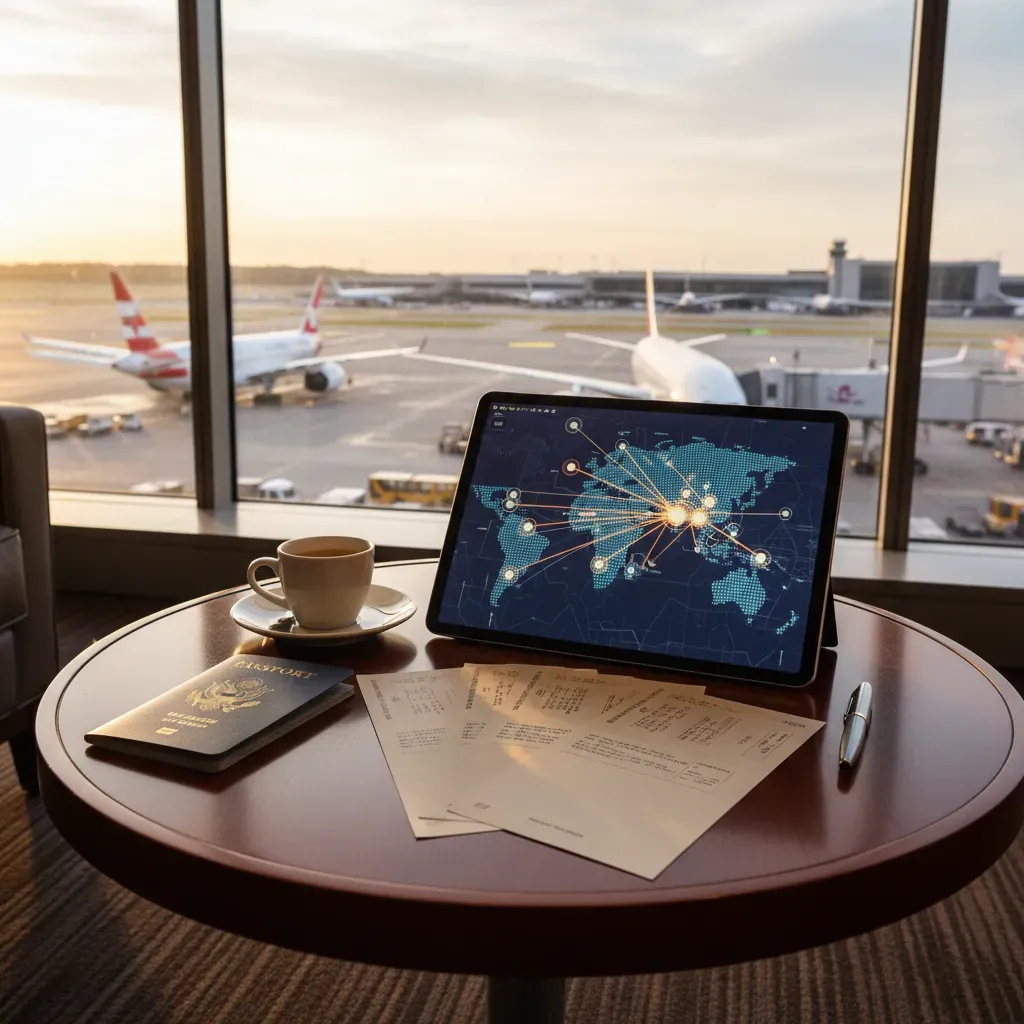
A first class journey to Australia typically begins well before boarding. On the best carriers, the experience may include dedicated airport assistance, expedited formalities, and lounge environments designed more like private clubs than waiting areas. This matters on Australia itineraries because total travel time is substantial. Reducing friction on the ground is not a cosmetic benefit, it helps preserve energy before a very long flight.
In the air, the distinction between first class and business class becomes clearer on routes of this length. First class generally offers fewer seats in the cabin, more personal space, stronger privacy, more elaborate bedding, elevated beverage programs, and service pacing that feels less standardized. On carriers such as Emirates, Singapore, ANA, JAL, Lufthansa, Etihad, Qatar, Swiss, and Air France La Première, the premium is often felt in the details: quieter cabins, more attentive turndown service, better caviar or multi-course dining execution, and a higher level of discretion from the crew.
Australia itself complicates product consistency. A traveler may depart the United States in a true first class cabin to a hub such as Dubai, Singapore, Tokyo, or another major gateway, then continue onward in a different premium configuration depending on aircraft type and route. This is one reason experienced itinerary design matters. A booking should not be judged only by the headline airline brand. It should be judged by the exact aircraft, cabin product, transfer logic, and connection quality.
Flight Experts structures this process around personal consultation rather than automated search results. According to the current service details, clients submit a request, an expert is assigned at no cost, and options are usually presented within 30 minutes. For a high-value long-haul journey, that model is often more useful than browsing dozens of inconsistent fare displays without clarity on what the experience will actually feel like.
Investment and Value
For Australia-bound long-haul travel, first class pricing is typically substantial. Based on current Flight Experts service data, First Class Flight Booking generally falls within a range of $5,000 to $20,000+, though actual pricing varies meaningfully by airline, origin city, routing, season, and how many segments are operated in true first class rather than mixed premium cabins.
Travelers searching for a first class flight to Australia price often assume there is a single market benchmark. In practice, there is not. A nonstop or near-nonstop premium itinerary from a major U.S. gateway may price very differently from a one-stop routing through Asia or the Middle East. Demand around major school holiday periods, Australian summer, year-end travel, and marquee events can also move fare levels considerably. Cabin availability may be limited on the most desirable aircraft and schedules.
Flight Experts states that its first class service may provide significant savings versus published fares, but the more meaningful value for many clients is not simply fare access. It is the combination of itinerary curation, premium product evaluation, and service coordination. For some travelers, the highest-value booking is the one that protects sleep, minimizes airport friction, and preserves schedule integrity. On an itinerary this long, those factors may justify the investment more convincingly than any headline number.
The service currently carries a 5.0 Trustpilot rating across 79 reviews, which reinforces confidence in the consistency of client care. Still, travelers should approach pricing with realistic expectations. The finest Australia itineraries are capacity constrained, and first class remains a rare product on many routes.
Booking Timing, Availability, and What Drives Price Variation
The reality is that first class inventory is limited by design. Many aircraft cabins have a small number of first class seats, and Australia routings often depend on specific long-haul sectors where demand can be consistently high. That dynamic is one reason pricing can vary so widely between two itineraries that appear similar at a glance. In peak travel windows, including Australian summer and major holiday periods, preferred departure days and the most sought-after cabin products may book out earlier than many travelers expect.
Consider this from a planning perspective: flexibility tends to be the lever that expands what is realistically possible. A date window rather than a single fixed departure day, openness to more than one U.S. departure airport, or willingness to route through a particular hub can materially change which first class products are available to book. Even when the service level remains premium, the way inventory is filed and released by airlines can make one routing feasible and another impractical for the same week of travel.
Many travelers also hear theories about tracking tools, repeated searching, or clearing browsing history as a way to influence outcomes. For premium cabins, those tactics are typically less relevant than the fundamentals: published fare rules, seat and cabin capacity, route demand, and the airline’s inventory management at that moment in time. A specialist approach focuses on what actually determines the booking, including which fare buckets are open, which aircraft is scheduled, whether a connection is operationally sensible, and whether the itinerary aligns with the traveler’s tolerance for transfers and total elapsed time.

Strengths and Considerations
Strengths
- True first class materially improves comfort on one of the world’s longest commercial journeys, especially through better privacy, rest quality, and service pacing.
- Flight Experts provides a personal travel consultant rather than a self-service booking path, which is particularly valuable when Australia itineraries involve mixed cabins or multiple carriers.
- The service includes lounge access coordination and chauffeur arrangement guidance where available, helping align the ground experience with the premium cabin investment.
- Options are usually presented within 30 minutes after a request is submitted, giving travelers an efficient starting point without sacrificing expert review.
- Carrier coverage includes many of the world’s most respected first class brands, including Emirates, Singapore Suites, Lufthansa, ANA, JAL, Etihad, Qatar, Swiss, and Air France La Première.
Considerations
- Not every route to Australia offers true international first class, so some itineraries may involve business class on onward sectors even when marketed around a first class journey.
- The highest-profile products are subject to limited availability, and the best aircraft or schedules may not align with every traveler’s dates or preferred departure city.
- First class pricing to Australia can be substantial, and the premium over an excellent business class suite is not always justified for every traveler.
- Ground services such as chauffeur transfers vary by airline, airport, and fare conditions, so expectations should be confirmed case by case.
First Class Versus Business Class on Australia Routes
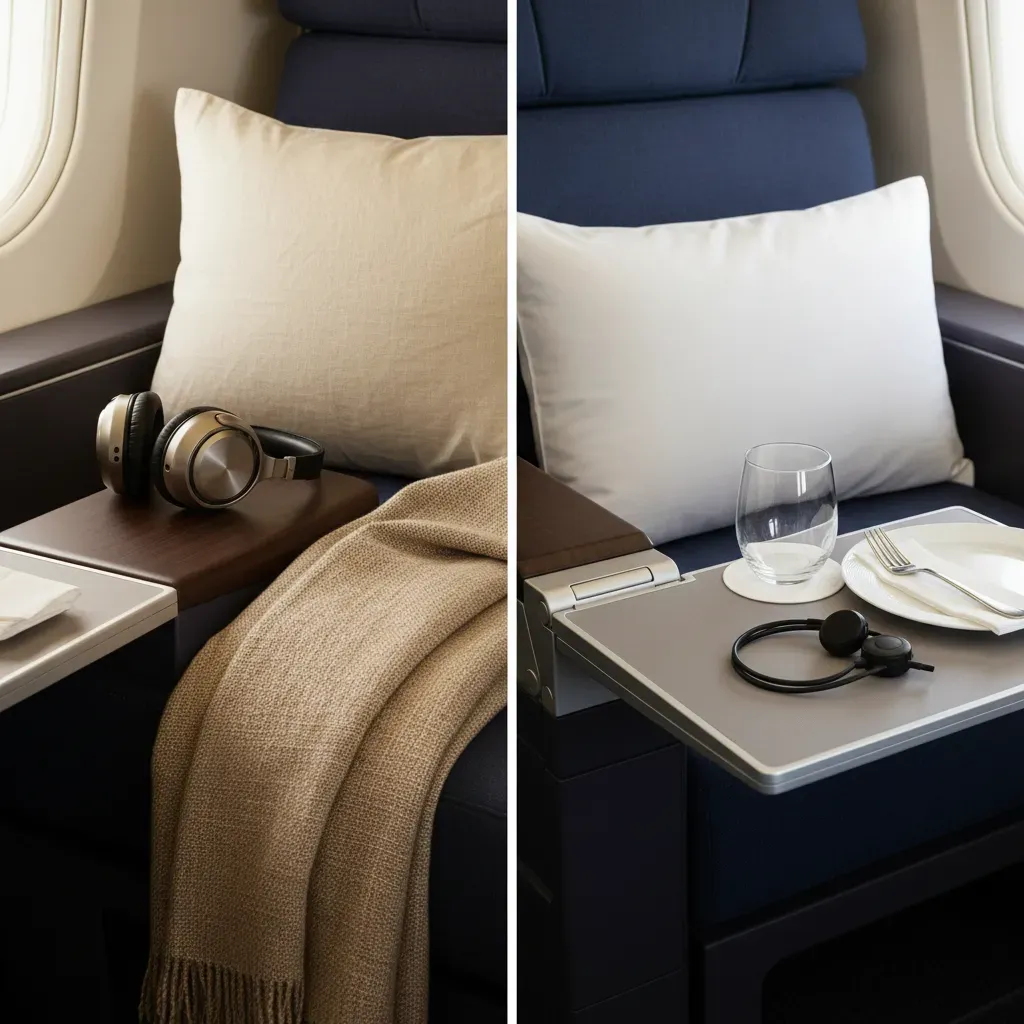
Now, when it comes to deciding between first class and business class for Australia, the most useful approach is a decision framework rather than a blanket rule. First class tends to justify itself when privacy and quiet are a genuine priority, when a traveler wants a service cadence that feels unhurried across a long overnight sector, and when arriving well rested is the central goal. On an ultra-long itinerary, the ability to sleep deeply, eat on one’s preferred schedule, and limit cabin noise can be the difference between arriving functional and arriving depleted.
That said, the premium cabin landscape to Australia is unusual. Some carriers deliver exceptionally strong business class suites on Australia sectors, while offering limited or no first class on key onward flights. In those cases, insisting on first class end-to-end can lead to awkward routings or connection patterns that undermine the overall experience. A top-tier business suite, paired with a well-chosen long-haul first class sector where it matters most, can be the more refined outcome for many clients.
Think of it this way: consistency across segments is often the hidden variable. If the itinerary includes multiple flights, the traveler’s experience will be shaped by the least favorable segment, not only the best one. A tailored combination may provide the right balance between privacy, sleep protection, and schedule reliability, especially when aircraft types and cabin products vary by route and are subject to operational change.
Who This Experience Is For
This experience is best suited to travelers who view long-haul air travel as a meaningful part of the journey rather than a logistical necessity. That includes couples planning honeymoons or anniversaries, executives who need to arrive functional after extensive travel time, and seasoned premium travelers who know the difference between a good business class seat and a truly elevated first class environment. It also suits clients who value a single expert point of contact. Flight Experts is especially relevant for travelers who prefer careful guidance from Mike Chirilenco and his team instead of piecing together complex Australia routes on general booking platforms.
How to Begin Planning With a Specialist
The process begins by submitting a request through Flight Experts with your preferred dates, origin city, destination in Australia, flexibility range, and any service priorities such as privacy, nonstop preference, specific airline interest, or airport assistance. From there, an expert is assigned without charge and reviews the most suitable first class and, where relevant, mixed-cabin or premium alternatives.
Clients typically receive options within 30 minutes, although more complex itineraries may require additional refinement. At that stage, the value of specialist input becomes clear. Rather than sorting through fare displays alone, you can assess which airline product is operating, whether the transfer sequence is sensible, what lounge and ground privileges may apply, and whether the itinerary genuinely fits your travel style.
If the journey includes multiple stops or custom routing beyond a simple round trip, Flight Experts can also support more intricate planning through its broader premium travel services. To begin with a formal, personalized approach, speak with a luxury travel specialist at Flight Experts or contact Mike directly through flight-experts.com to discuss your travel preferences.
Frequently Asked Questions
Which airlines offer the most compelling first class flights to Australia?
The strongest options often involve premium carriers such as Emirates, Singapore, ANA, JAL, Etihad, Qatar, Lufthansa, Swiss, and Air France, depending on routing. The right choice depends on more than brand reputation alone. Aircraft type, lounge access, connection quality, and whether each long-haul sector is operated in true first class all matter.
What is a realistic first class flight to Australia price?
Current Flight Experts service data indicates a general first class booking range of $5,000 to $20,000+, with actual totals varying by route, season, and airline. Australia itineraries can price above or within that range depending on availability and the number of sectors operated in first class. Custom quotes are essential for an accurate picture.
Is Qantas first class always the best option for Australia?
Not necessarily. Qantas first class may be attractive for travelers who prioritize the Australian carrier experience and specific gateway combinations, but the best option depends on schedule, aircraft, connection logic, and your priorities in the cabin and on the ground. In some cases, another airline’s suite or service model may deliver a more refined overall journey.
Why work with a specialist instead of booking first class online?
Australia is one of the clearest examples of why expert support matters. Online booking tools rarely explain product differences, mixed-cabin risks, lounge entitlements, or how one connection can materially affect a 20-plus-hour trip. A specialist helps evaluate the full travel experience, not just the fare display, and provides accountability throughout the booking process.
Can Flight Experts help if my itinerary includes multiple Australian cities?
Yes. If your journey goes beyond a simple round trip and includes open-jaw routing, stopovers, or onward flights within Australia, the agency’s complex itinerary planning capabilities may be relevant. That is particularly useful when travelers want to combine international first class with carefully timed domestic or regional premium connections.
How quickly can I receive options?
For the current first class booking service, Flight Experts indicates that options are usually presented within 30 minutes after a request is submitted and an expert is assigned. More intricate itineraries may take longer, especially when routing, cabin consistency, or multiple destinations require additional review and coordination.
Are chauffeur service and lounge access included with every booking?
These elements may be available, but they vary by airline, airport, route, and fare conditions. Flight Experts provides lounge access coordination and chauffeur arrangement guidance as part of its first class service offering. The exact benefits should be confirmed for your chosen itinerary rather than assumed across every carrier and market.
How much is it to fly 1st class to Australia?
Pricing is route dependent and can vary considerably by season, airline, and how many segments are truly operated in first class. Flight Experts service data indicates a general first class booking range of $5,000 to $20,000+, and Australia itineraries may fall within or above that range depending on timing, routing, and availability. The most reliable way to understand what is realistic for your dates is a tailored quote based on your origin city, preferred gateways, and cabin priorities.
Is it worth flying business class to Australia?
For many discerning travelers, a top-tier business class suite can be an excellent choice on Australia routes, particularly where true first class is not offered on the onward sector. Business class may provide outstanding sleep comfort, privacy, and lounge access while enabling more practical routings and schedules. The right answer depends on whether you value absolute privacy and first class service pacing above all, or whether the best overall itinerary and consistency across segments matters more for your trip.
Does clearing browsing history lower prices?
In most cases, premium cabin pricing is driven by inventory, fare rules, and cabin capacity, not by a traveler’s browsing history. Fares can change as airlines adjust availability and as seats sell, which can create the impression that searching caused an increase. A specialist approach focuses on what is actually available for your dates and which routings and fare structures align with your priorities.
Can a pilot sleep while flying?
On many long-haul operations, airlines typically staff augmented crews and use controlled rest procedures so that pilots can take turns resting according to strict rules and safety protocols. The exact practice varies by carrier, route length, and regulatory jurisdiction. For travelers, the practical takeaway is that ultra-long flights are designed with crew management in mind, and your choice of routing and departure time should be centered on your own rest strategy and connection comfort.
Key Takeaways
- First class flights to Australia are highly route specific, and true first class availability may be limited depending on airline and final destination.
- The most important booking factors are the exact cabin product, aircraft, transfer logic, and ground experience, not airline branding alone.
- Flight Experts offers dedicated first class booking support with personal consultation, lounge coordination, and guidance on premium service details.
- Current pricing guidance for first class booking is generally $5,000 to $20,000+, though actual fares vary by season, routing, and availability.
- For travelers who value discretion, comfort, and expert planning, specialist guidance can materially improve both the booking process and the journey itself.
Conclusion
First class flights to Australia can be extraordinary, but only when the itinerary is chosen with care. This is a market where product quality, routing realism, and premium ground handling all matter as much as the seat itself. For some travelers, true first class will be the right investment. For others, an exceptional business class alternative may prove more practical on certain sectors. The essential point is that Australia-bound premium travel deserves expert evaluation, not guesswork. Flight Experts brings that perspective through a personal, concierge-style approach led by Mike Chirilenco, helping clients assess airline options with clarity and confidence. If you are considering a first class journey to Australia, reach out to discuss your preferences and receive a personalized recommendation.



