
Business Class Flights to Sydney (2026)
Overview
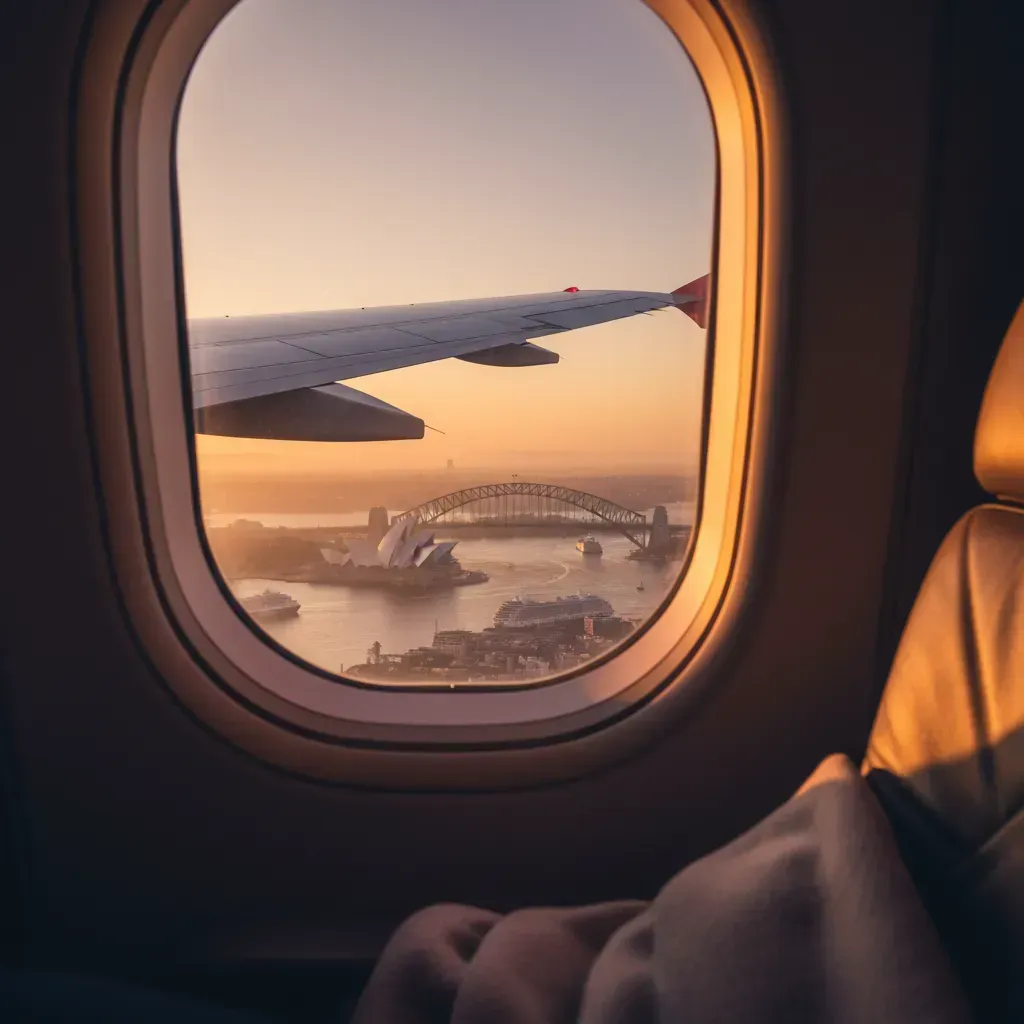
Sydney remains one of the defining long-haul premium routes for travelers based in North America and Europe. From the United States, itineraries may operate nonstop or connect through major Pacific gateways such as Los Angeles, San Francisco, Dallas, Vancouver, Tokyo, Singapore, or the Middle East, depending on the carrier and routing strategy. For many travelers researching business class to Australia, Sydney is the first and most important decision point, because the route often sets the tone for the entire trip.
Flight Experts offers a dedicated Business Class Flight Booking service covering routes from the US to Australia, with support across major premium carriers including Emirates, Qatar, Singapore Airlines, Lufthansa, British Airways, ANA, JAL, Delta One, United Polaris, and American Airlines Flagship products where relevant by itinerary. According to current service data, clients receive a personal travel consultant, seat selection support, meal preference coordination, check-in assistance, price monitoring, and cabin upgrade alerts. The booking process is direct and professionally managed: submit a request, receive an assigned expert at no charge, review curated options, and proceed with booking once the itinerary meets your priorities.
For readers comparing premium long-haul options more broadly, the site also organizes relevant route content under Business & First Class Flights to Australia & Pacific and practical advisory content under Premium Flight Booking & Tips.
Routes and Connection Strategies for Business Class to Sydney
Here is the thing: most of the comfort, sleep quality, and overall ease of a business class flight to Sydney comes down to route design, not just the name on the tail. In practical terms, Sydney itineraries tend to fall into a few routing families, each with distinct trade-offs that may matter more than the headline elapsed time.
One family is the nonstop transpacific option from select US gateways. This routing typically optimizes simplicity and reduces the number of moving parts, which can be appealing if you want to avoid a connection and arrive with fewer variables. The compromise is that the longest sector may be very long indeed, and your sleep timing must be managed carefully, because you are effectively committing to one continuous onboard rhythm.
A second family is a one-stop itinerary via Asia. Depending on the city pair and operating aircraft, this option may optimize sleep timing by splitting the journey into two more manageable overnight segments, with a strong ground experience in between. It can also be a thoughtful choice for travelers who value a premium lounge during transit and prefer to reset between flights, provided the connection is not rushed.
A third family is a one-stop itinerary via the Middle East. This can work well for travelers departing the East Coast who prefer a more structured break and a lounge experience that supports a longer reset between sectors. The total distance can be substantial and the travel day can be long, but in some cases the combination of onboard product and ground amenities can feel more restorative than an itinerary that looks shorter on paper.
Departure city within the United States often determines what is realistic. West Coast departures frequently have the cleanest access to nonstop service and one-stop options that keep total elapsed time contained. From the East Coast and many interior markets, some routings naturally become two-stop, particularly when you must first position to a long-haul gateway. From a practical standpoint, the right question is not whether two stops are acceptable in theory. It is whether the added complexity is compensated by a meaningfully better long sector in business class, a connection that supports proper rest, and an arrival time that does not compromise the first day in Sydney.
Consider this as a checklist for any proposed itinerary. Verify the operating carrier versus the marketing carrier, because the onboard product and lounge rules typically track the airline operating the flight. Confirm the aircraft type on each long sector, since a business class seat can vary materially by aircraft even within the same airline. Review the minimum connection time and the terminal transfer requirements, especially at large hubs where a short connection may add unnecessary stress. Finally, look at whether the longest sector is timed for sleep. A flight that departs late enough for you to eat lightly and rest soon after takeoff may feel far better than a longer itinerary with awkward mid-flight timing, even if the total elapsed time is slightly shorter.
The Experience
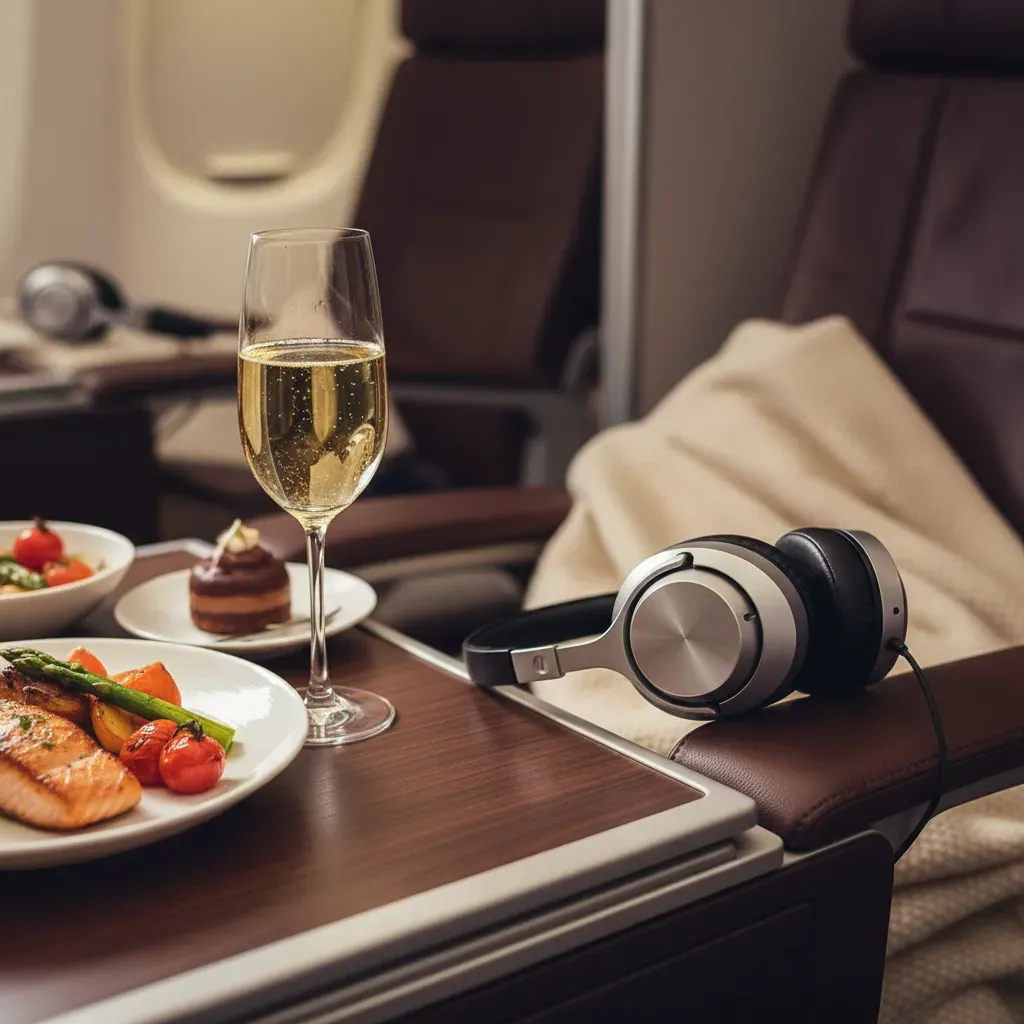
The best business class flights to Sydney deliver far more than a larger seat. On a journey of this length, travelers should expect direct aisle access on most leading carriers, a fully lie-flat bed, upgraded bedding, elevated dining, attentive cabin service, and airport privileges that reduce friction before boarding. The details matter. A true long-haul business class product should give you space to sleep comfortably, enough privacy to work or rest, and a ground experience that includes priority check-in, faster airport processing where available, and lounge access before departure or during transit.
Not every airline offers the same experience on every Sydney-bound route. Some carriers operate highly polished suites with excellent privacy and refined meal service, while others may have older cabin configurations on certain aircraft. The route itself also changes the experience. A nonstop service from the United States can be appealing for efficiency, but a one-stop itinerary through Asia or the Middle East may offer superior lounges, stronger onboard catering, or a better timed overnight sector. Travelers asking about business class flights to Sydney from USA departure points often assume the shortest itinerary is automatically the best. In practice, the better choice depends on whether your priority is total elapsed time, sleep quality, connection comfort, loyalty preferences, or a smoother arrival schedule.
Flight Experts is structured for exactly this kind of evaluation. Rather than forcing a traveler into a self-service search path, the agency presents curated options based on route logic and cabin quality. The current service includes consultant-led seat selection and meal preference handling, which may sound minor until one considers how important seating position and service personalization become on a transpacific or multi-sector itinerary. Turnaround is usually within 30 minutes, although the final recommendation may depend on route complexity and current airline availability.
For travelers considering a business class flight London to Sydney, similar principles apply. Aircraft type, connection point, and the consistency of the airline’s premium product remain more important than headline schedule alone. On ultra-long journeys, refinement in both the air and on the ground is what determines whether the experience feels restorative or simply tolerable.
Choosing the Right Airline for Sydney, Beyond the Brand Name
What many travelers overlook is that “best airline” is often the wrong framing for Sydney. The more reliable approach is to evaluate the specific business class product on the aircraft operating your longest sector, then work outward to the ground experience and connection quality. Two itineraries with the same airline name can feel completely different if one is operated by an aircraft with an older seat and the other features a newer cabin with better privacy and sleep comfort.
Begin with the seat configuration signals that matter most on ultra-long-haul. Direct aisle access is typically the starting expectation, but privacy geometry matters as well, including how exposed your shoulders and head are when reclining. Footwell size and shape can be decisive for sleep, particularly for taller travelers, because a narrow, angled footwell may restrict natural movement. Storage and surface space matter on a Sydney routing because you will live at the seat for a long time. From there, look at cabin consistency. Some airlines deliver a very consistent business class experience across their long-haul fleet, while others may have multiple seat generations in service, and your comfort depends on the specific aircraft assigned, which is always subject to operational change.
On a flight of this length, small operational details tend to become big comfort variables. Bedding quality can affect whether you sleep or simply lie flat awake. Cabin temperature control can be uneven, so the best cabins are the ones that manage airflow and comfort without creating persistent cold spots. Service cadence matters, because a well-paced service that allows a clean rest window may be more valuable than a long, drawn-out meal sequence. Galley noise and lavatory placement can also affect rest, especially if you are seated close to high-traffic zones. These are the factors that a specialist typically evaluates quickly when comparing viable routings.
Now, when it comes to mixed-carrier itineraries, alliance and partnership details deserve careful review. Lounge access and through-checked baggage are often straightforward when the journey is ticketed and operated within the same alliance, but eligibility can vary by ticketing airline, operating airline, and the specific fare family. In most cases, a professionally constructed itinerary will protect the experience by ensuring the connection city has the right lounge access, the transit time is realistic, and baggage handling is aligned with the actual operating carriers. This is also where travelers can be caught by assumptions, because a familiar brand name on the itinerary does not always mean the premium ground experience will match that expectation.
Think of it this way: a “better” one-stop itinerary can outperform a nonstop if it upgrades both the onboard product and the ground experience without introducing fragile connections. A one-stop may allow a superior seat on the longest overnight sector, a lounge that supports a proper reset, and a schedule that aligns sleep with Sydney arrival. A nonstop may still be the right answer if you value simplicity above all and the specific operating aircraft offers a strong business class product. The decision becomes clearer when you compare the whole experience end to end, not only the timetable.
Investment and Value
Current Flight Experts product data lists business class pricing in a typical range of $2,000 to $8,000+, with variation by airline, route, and season. For Sydney, travelers should assume the upper end of that spectrum may be more common on peak travel dates, preferred nonstop services, and premium carriers with especially strong business class reputations. Published fares in the market can also shift quickly based on inventory, cabin demand, booking window, and departure city.
This is why the phrase “cheap business class flight to Sydney” can be misleading in a premium context. What discerning travelers usually want is not the lowest headline number, but a fare that represents sound value for the cabin product, route quality, schedule, and service support provided. A lower fare can sometimes come with less desirable seat maps, awkward transit windows, older aircraft, or more restrictive conditions. On a route this long, those compromises are rarely trivial.
Flight Experts states that its business class service may provide access to exclusive consolidator fares and ongoing price drop monitoring. The agency also notes typical savings of up to 25 to 60 percent off published fares, though all fare outcomes are naturally route specific and subject to availability at the time of booking. More important than any single pricing claim is the structure of the service itself: clients are not left to interpret fare rules, compare inconsistent cabin products, or coordinate premium travel details alone.
For travelers investing in a Sydney itinerary, value is usually found in the alignment between price, comfort, schedule quality, and professional management. That is especially true for honeymoon travel, business-critical trips, and multi-stop Australia itineraries where one weak flight segment can affect the entire journey.
Timing and Seasonality: When Business Class to Sydney Tends to Be Most Competitive
The reality is that Sydney is not only a long-haul market, it is a highly seasonal one. Without making any promises about pricing, it is fair to say that availability pressure typically rises during Australian summer, major holiday periods, and school breaks, particularly when families and couples are traveling on fixed dates. In those periods, the best cabin products and the cleanest routings may be the first to tighten, even when alternative flights still appear widely available.
Shoulder seasons can sometimes offer more flexibility for travelers who want specific flights, preferred seat pairs, or a particular connection strategy. Flexibility here is not only about dates. It can also include being open to a different US gateway, a different transit city, or a slightly different departure time that improves sleep timing. For flights to Sydney in business class, those adjustments often matter more than travelers expect, because one improved long sector can change the entire arrival experience.
From a booking-window standpoint, premium cabins to Sydney commonly become more constrained as the travel date approaches, especially for travelers who want two seats together in the most private sections of the cabin or who have strong preferences around aircraft type. Couples often want paired center seats, and families may want a specific block of seats that keeps them close while minimizing exposure to high-traffic areas. Those are finite resources, so it is typically wise to approach this route with enough lead time to preserve choice, even if final inventory and schedules can evolve.
Fare conditions also deserve a more careful review than many travelers give them. On long-haul premium tickets, change flexibility, cancellation terms, and the details surrounding voluntary changes can vary meaningfully by fare type and carrier. Upgrade eligibility and the ability to preserve certain benefits on mixed-carrier itineraries can also depend on the exact fare construction. A specialist review before ticketing helps ensure you are not trading away important flexibility or comfort simply because the itinerary looks attractive at first glance.
Strengths and Considerations
Strengths
- Business class to Sydney offers meaningful physical comfort on one of the world’s longest and most fatiguing air journeys, especially when booked on a strong lie-flat product.
- Flight Experts provides a personal consultant rather than an automated booking flow, which is particularly valuable when evaluating multiple long-haul routings and aircraft types.
- The service includes practical premium-travel support such as seat selection, meal preference coordination, check-in assistance, price monitoring, and upgrade alerts.
- Coverage includes major global carriers, allowing for a broader and more curated comparison of transpacific, Asia-connection, and Middle East connection options.
- Turnaround is usually within 30 minutes, which may help travelers move quickly once they are ready to evaluate serious options.
- The current Trustpilot rating listed for the service is 5.0 across 79 reviews, which provides a helpful trust signal for prospective clients.
Considerations
- Sydney is a long-haul premium market, so pricing can be substantial and often rises meaningfully during holiday and peak Australian travel periods.
- Not all business class cabins are equal, even on respected airlines, because aircraft type and route assignment may affect seat privacy, storage, and overall comfort.
- A nonstop itinerary is not always the most restorative choice, particularly if connection timing, lounge quality, or sleep patterns make a one-stop routing more appealing.
- Availability for preferred seats, specific carriers, and ideal departure times may tighten quickly on this route, especially for couples or families traveling together.
Who This Experience Is For
This approach is best suited to travelers who value comfort, precision, and personal oversight on a major long-haul journey. That includes couples planning anniversaries or honeymoons in Australia, executives traveling on demanding schedules, and families organizing a premium Australia vacation with multiple moving parts. It also suits travelers who have outgrown self-service booking platforms and prefer a single point of contact who can evaluate route quality, explain trade-offs clearly, and manage the details with discretion. Readers who simply want the fastest possible self-booking search may not need this level of support. Travelers who care about the full premium travel experience usually do.
How to Begin Planning With a Specialist
The starting point is straightforward. Submit your travel request through Flight Experts and outline your preferred departure city, travel dates, flexibility, passenger count, and any airline or alliance preferences you may already have. From there, an expert is assigned without charge and presents itinerary options, usually within 30 minutes according to current service information.
This is where the value of a specialist becomes clear. Rather than sorting through fragmented search results, you can review options in the context of what actually matters on a Sydney routing: total travel time, overnight comfort, transit quality, seat type, and the practical details surrounding departure and arrival. Mike Chirilenco leads Flight Experts with a client-focused, concierge-style approach built around professional guidance rather than self-service transactions. For travelers committing substantial time and money to a premium long-haul itinerary, that relationship-led model is often the difference between a merely acceptable booking and a genuinely well-planned journey.
If you are considering a business class flight to Sydney, contact Mike or speak with a luxury travel specialist at Flight Experts to discuss your travel preferences and receive tailored options based on your route, schedule, and service expectations.
Frequently Asked Questions
Which airlines are commonly considered for business class flights to Sydney?
Flight Experts currently works across major carriers including Emirates, Qatar, Singapore Airlines, Lufthansa, British Airways, ANA, JAL, Delta One, United Polaris, and American Airlines Flagship products where relevant. The best fit depends on your departure city, connection preference, aircraft type, and the quality of the specific cabin operating your route.
How much does a business class flight to Sydney usually cost?
Current Flight Experts service data lists a typical business class range of $2,000 to $8,000+, with Sydney itineraries varying by season, route, and carrier. Premium long-haul fares are dynamic, so pricing may shift quickly. A specialist can help assess whether a fare reflects strong value for the cabin, schedule, and service level involved.
How expensive is business class to Australia?
It is typically a significant premium purchase because of distance, cabin demand, and limited high-quality inventory on the most desirable routings. Flight Experts currently lists a typical business class pricing range of $2,000 to $8,000+, and Australia itineraries can often sit toward the higher end depending on seasonality, departure city, and aircraft. Rather than focusing on a single number, it is usually more useful to evaluate whether the fare aligns with the specific business class product, flight timing for sleep, and the overall routing quality.
Is it worth flying business class to Australia?
For many travelers, yes, particularly on Sydney and other Australia routes where the travel time can be demanding. The value is typically found in sleep quality, reduced travel friction, and arriving in better condition for the first days of the trip. Whether it is worthwhile depends on your priorities, including your sensitivity to jet lag, the importance of being productive on arrival, and whether the itinerary includes one very long sector or multiple long segments.
What month is the cheapest to fly to Sydney, Australia?
Pricing can shift quickly in premium cabins and varies by departure city, airline, and inventory, so it is not reliable to treat any single month as consistently lowest. In most cases, demand pressure tends to rise around Australian summer, major holidays, and school break periods, while shoulder seasons may offer more flexibility in routing and seat selection. A specialist can help you interpret your specific date range in terms of availability and cabin choice, rather than relying on a generalized calendar rule.
What is the best airline to fly with to Australia?
The best choice is usually the airline operating your longest sector with the strongest business class seat and the most consistent premium experience on that aircraft type, subject to schedule and availability. For Sydney, it can be helpful to evaluate direct aisle access, privacy, footwell comfort, and service cadence, then consider the lounge and connection experience on any one-stop itinerary. Because aircraft assignments and lounge eligibility rules can change, a specialist review is often the most dependable way to match the airline and routing to your priorities.
Are nonstop flights always better than connecting itineraries to Sydney?
Not necessarily. A nonstop flight can reduce total travel time, but some one-stop routings offer a superior aircraft, stronger lounge experience, better meal service, or a more comfortable overnight schedule. For many travelers, the best itinerary is the one that balances rest, efficiency, and a smoother overall premium travel experience.
What does Flight Experts include with its business class booking service?
The current service includes a personal travel consultant, seat selection support, meal preference coordination, check-in assistance, price drop monitoring, and cabin upgrade alerts. The booking path is also simple: submit a request, receive an assigned expert, review curated options, and then confirm the itinerary that best fits your travel priorities.
How quickly can I receive options for a Sydney itinerary?
According to current Flight Experts product data, options are usually presented within 30 minutes for business class requests. Timing may still vary with route complexity, date flexibility, and how specific your preferences are. More complex Australia itineraries may require additional review to ensure the recommended routing is genuinely the right one.
Is working with a specialist worthwhile for a single long-haul trip?
For a route as demanding as Sydney, many travelers find that it is. Long-haul premium itineraries involve more than fare selection. Cabin consistency, connection quality, airport support, seating strategy, and overall trip timing all matter. A specialist helps evaluate those details with professional judgment, which can be especially valuable for milestone or business-critical travel.
Key Takeaways
- A business class flight to Sydney is a premium purchase where route design and cabin quality matter as much as fare level.
- Not all business class products are equal, and aircraft type, transit point, and schedule can materially affect comfort.
- Flight Experts offers consultant-led business class booking support for Australia routes, including seat selection, meal preferences, and check-in assistance.
- Current pricing guidance for business class bookings is typically $2,000 to $8,000+, though Sydney itineraries may vary significantly by season and carrier.
- For travelers who value discretion, efficiency, and expert oversight, specialist booking support can materially improve the planning process.
Conclusion
Booking business class to Sydney is rarely a matter of choosing the first lie-flat seat that appears in a search result. The route is long, the product differences are real, and the impact of a poor connection or weaker cabin can be felt for days after arrival. Travelers who approach this journey thoughtfully tend to focus on sleep quality, airport experience, service consistency, and the overall logic of the itinerary, not just the fare headline. Flight Experts is designed for that level of decision-making, with a concierge-style process led by Mike Chirilenco and supported by consultant guidance that reflects the realities of premium long-haul travel. If you are preparing for Sydney and want your itinerary handled with care and professional judgment, reach out to Flight Experts to begin the conversation.



