
What to Wear on a First Class Flight

You can spend weeks selecting the right suite, timing a connection through an elegant lounge, and arranging every detail of a long-haul journey. Then you may still pause in front of your closet the night before departure. That uncertainty is common. Dress norms in first class are rarely posted clearly, and they vary across airlines, routes, and departure cities.
A polished New York to London daytime flight may feel very different from an overnight Middle East departure or an Asia-bound journey on a carrier known for more ceremonial service. This article explains what to wear on a first class flight with route-aware guidance, airline culture cues, and practical outfit strategies. As a result, you can balance elegance, comfort, and discretion. Total time: about 12 minutes. Difficulty level: Beginner to Intermediate.
Quick overview: how to dress for first class flight
- Check whether your airline and route lean formal, fashion-forward, or relaxed.
- Start with refined, comfortable foundation pieces in breathable fabrics.
- Add structure through a blazer, knit jacket, polished trousers, or elevated dress.
- Wear shoes that move easily through the airport but still look intentional.
- Dress differently for a daytime transatlantic flight than for a long overnight sector.
- Avoid outfits that are too revealing, overly athletic, wrinkled, or difficult in-flight.
- Keep one discreet layer and one cabin-ready change item within reach.
What you’ll need for a first class flight outfit
- Your airline, aircraft, and route details
- A clear sense of whether you are flying daytime, overnight, or onward to a meeting or hotel transfer
- One polished core outfit that remains comfortable when seated for hours
- A light layer for cabin temperature changes
- Footwear that is easy to remove if needed, yet still appropriate in premium spaces
- A small personal item with socks, skincare, and any change pieces you may want after takeoff
How to dress for first class flight when rules are not posted

If you are researching what is first class, clothing may seem like a minor detail compared with suites, dining, and lounge access. In practice, dress shapes how you feel from check-in to arrival. It also affects how naturally you move through premium spaces.
Most commercial first class cabins do not publish strict dress codes for passengers. However, social expectations still exist. They come less from written rules and more from the tone of the airline, the city pair, the cabin design, and the traveler mix onboard.
A West Coast departure to Asia on a design-led carrier may feel understated and fashion-conscious. By comparison, a financial corridor route with many executives may lean tailored and restrained. A leisure-heavy route to a resort destination may allow more ease, but not carelessness.
The safest principle is polished discretion. You do not need to dress as though you are attending a gala. At the same time, you should not assume that first class is simply another place for loungewear. The goal is to look composed, comfortable, and intentional.
If you compare premium cabins more broadly, our look at the best premium economy airlines shows how dress expectations often soften as cabins become less formal.
Step 1: How to dress for first class flight by route
Step 1: Identify the culture of your specific flight
The best answer to how to dress for first class flight starts with context, not clothing. Airline identity matters. Some first class products are highly ceremonial, with formal service rhythms, premium lounge environments, and a clientele that tends to dress with more intention. Others feel private and residential, where elegance is still welcome but visible formality is less pronounced.
Route matters just as much. A New York to Paris daytime departure often carries a different visual tone than Los Angeles to Tokyo, Zurich to Dubai, or a red-eye to Singapore. Business-heavy routes usually favor quiet tailoring, dark neutrals, and clean footwear. Meanwhile, leisure routes may tolerate softer silhouettes, though still within a refined standard.
- Transatlantic daytime: Smart separates, knit jackets, loafers, dresses with structure, polished denim only if very refined
- Long-haul overnight to Asia or the Middle East: Soft tailoring, breathable layers, elevated knitwear, trousers with stretch, discreet luxury sneakers or travel loafers
- Resort-bound first class: Relaxed elegance, linen blends, cashmere wrap, elevated flat sandals only if the overall look remains composed
- Corporate arrival route: Arrival-ready dressing, blazer, crease-resistant trousers, shirting or knit top that can carry you straight to the car or meeting
Advisors who arrange first class flight booking often guide clients on the full experience, not only the seat, because route culture influences everything from lounge atmosphere to whether changing onboard feels natural or unnecessary.
What to wear in first class by airline style
Once you have read the route, refine the decision by airline style. Most carriers do not publish a formal first class dress code beyond broad standards of safety and decency. What differs is the atmosphere the airline creates.
U.S. domestic first class on carriers such as Delta, United, or American typically feels more relaxed than an international flagship first class product. This is especially true on shorter sectors where travelers may board in polished city clothing and leave quickly on arrival. A composed knit, tailored trousers, clean sneakers or loafers, and one structured layer will usually feel appropriate.
International flagship first class tends to invite a more considered version of the same idea. The lounge environment may be quieter, the dining more formal, and the cabin itself more ceremonial. That does not mean formalwear. It means clothes that look intentional from private check-in or lounge dining through boarding and landing.
Travelers often do best with restrained palettes, refined fabrics, and shoes that remain elegant even after several hours in the air. If you also want to understand first class flight amenities, the cabin features themselves often explain why a polished but comfortable outfit works best.
Gulf carriers, including Emirates, often create the strongest expectation of visible polish, particularly on long-haul routes where premium ground services and onboard rituals are part of the experience. There is usually no published requirement to dress formally, but many travelers prefer to avoid anything that reads overtly athletic, visibly wrinkled, or overly exposed. A smart travel outfit that could sit comfortably in an excellent hotel lounge is generally the right benchmark.
These distinctions are guides, not rules. Cabin products, aircraft, and service style may change by route, and some departures are naturally more relaxed than others. If you are uncertain, dress for the most refined part of the journey, which is usually the lounge and boarding window, then adjust onboard if the flight includes sleepwear or a long rest period.
Quick comparison for how to dress for first class flight
| Flight context | Visual tone | Best outfit direction |
|---|---|---|
| U.S. domestic first class | More relaxed | Composed knit, tailored trousers, clean sneakers or loafers, one structured layer |
| International flagship first class | More ceremonial and formal | Restrained palettes, refined fabrics, elegant shoes, intentional layers |
| Gulf carriers including Emirates | Strong visible polish | Smart travel outfit suited to an elegant hotel lounge |
| Transatlantic daytime | Smart and city-ready | Smart separates, knit jackets, loafers, dresses with structure |
| Long-haul overnight to Asia or the Middle East | Soft but refined | Soft tailoring, breathable layers, elevated knitwear, trousers with stretch |
| Resort-bound first class | Relaxed elegance | Linen blends, cashmere wrap, elevated flat sandals if the overall look stays composed |
| Corporate arrival route | Arrival-ready | Blazer, crease-resistant trousers, shirting or knit top |
Step 2: Build a first class flight outfit around smart comfort
Step 2: Start with fabrics and fit that travel well
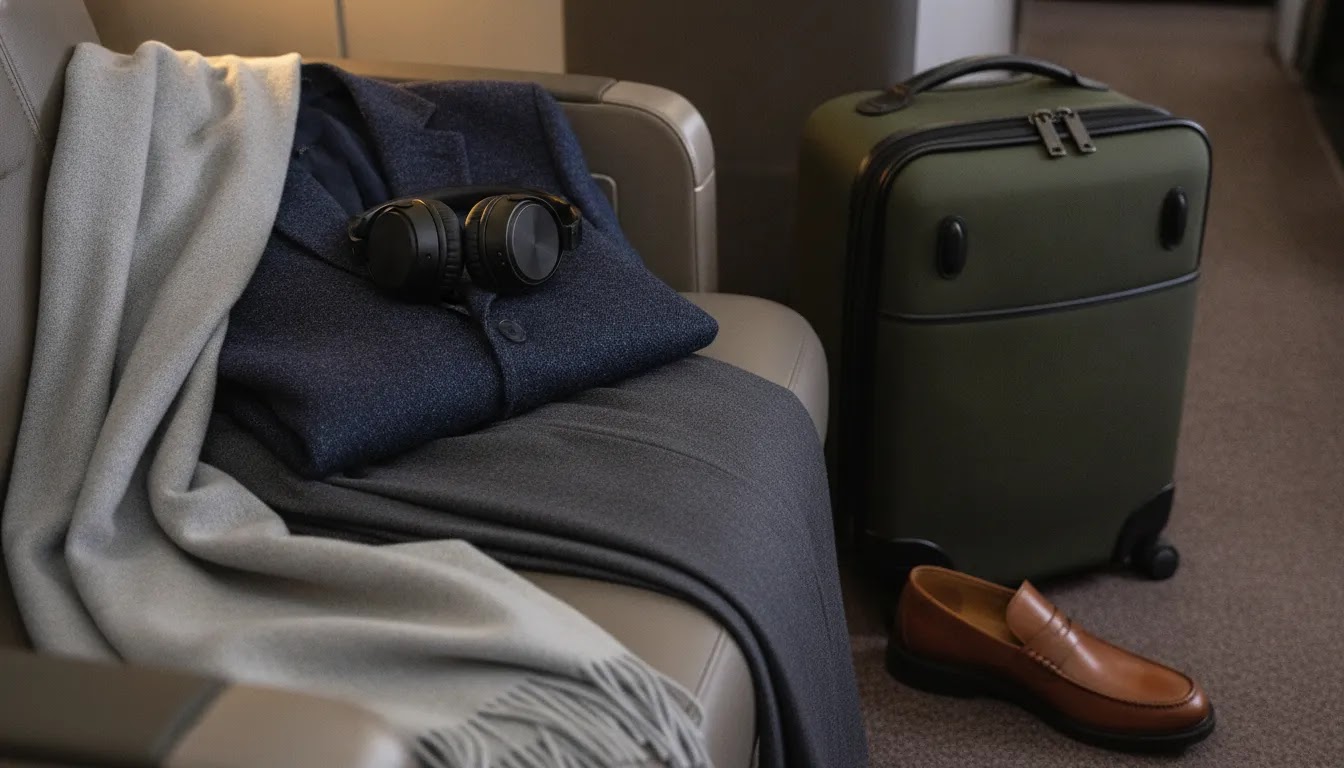
Comfort in first class is not permission to dress without structure. Instead, it is permission to prioritize high-quality comfort. The right first class flight outfit usually begins with soft, breathable materials that keep their shape after hours of sitting.
For men, that may mean tailored drawstring trousers in wool jersey, refined chinos with stretch, or soft unstructured suiting pieces. For women, it could mean fluid trousers, a knit dress with clean lines, tailored wide-leg pants, or matching separates in merino, crepe, or ponte. In both cases, the fit should skim rather than cling.
Avoid anything that looks gym-derived unless it is exceptionally elevated. Even premium cashmere joggers require careful styling to look intentional in a flagship lounge. The same applies to leggings. They may work on private aviation or in certain celebrity-adjacent settings, but on commercial first class they can still read too informal depending on route.
Neutral palettes almost always work best. Navy, cream, charcoal, camel, black, olive, and soft white tend to photograph well, resist visual fatigue, and transition more gracefully from airport to arrival.
Step 3: Choose first class travel outfits that hold shape
Step 3: Add one element of structure
A strong answer to what to wear on a first class flight usually includes one structured piece. This is what keeps the outfit from sliding into sleepwear territory before you even board.
For men, the simplest option is an unlined blazer, a tailored overshirt, or a fine-gauge knit jacket. For women, structure may come from a collarless jacket, a longline blazer, a polished trench, or a dress with architectural seams. This layer also helps in premium terminals and lounges, where the environment feels more hotel-like than purely functional.
Choose garments that recover well from sitting. Heavy crease-prone linen, overly stiff cotton, and fragile silk can look beautiful at departure and tired by landing. Travelers planning more involved itineraries often benefit from the same logic used in complex itinerary planning, where each piece needs to perform across several stages of a journey.
- Excellent structure choices: knit blazer, soft suiting jacket, tailored cardigan-jacket, polished midi dress, refined overshirt
- Less reliable choices: hoodie as outer layer, distressed denim, bodycon pieces, highly wrinkling fabrics, graphic tops
Step 4: Plan what to wear on a first class flight from airport to cabin
Step 4: Dress for the full sequence, not just the seat
Your outfit has to work in several environments: curbside, check-in, security, lounge, boarding, cabin, possible sleep, and arrival. That is why first class travel outfits should be judged by movement and function, not only mirror appeal.
Shoes deserve special attention. In most cases, the best options are leather sneakers without overt branding, loafers, ballet flats, elegant low-profile boots, or slip-on shoes with support. High heels may still suit a short daytime flight tied to an event, but they are rarely ideal for a long-haul premium journey. Backless sandals can also feel too casual in some airline lounges and may be impractical in colder cabins.
Keep one accessible layer for temperature changes. Cabins can feel cool, and lounges may vary widely. A cashmere wrap, fine merino cardigan, or light jacket usually serves better than a bulky sweatshirt. If you want category-level context on cabin comfort and onboard expectations, Premium Cabin Experience & Amenities is a useful starting point.
At Flight Experts, the planning conversation often extends to these practical details because premium travel is experienced as a sequence. A polished itinerary feels better when your clothing supports the pace and tone of the trip rather than fighting it. In addition, travelers comparing first class flight seats may find that seat style, privacy, and sleeping setup also shape what feels practical to wear.
What to pack within reach for a first class flight
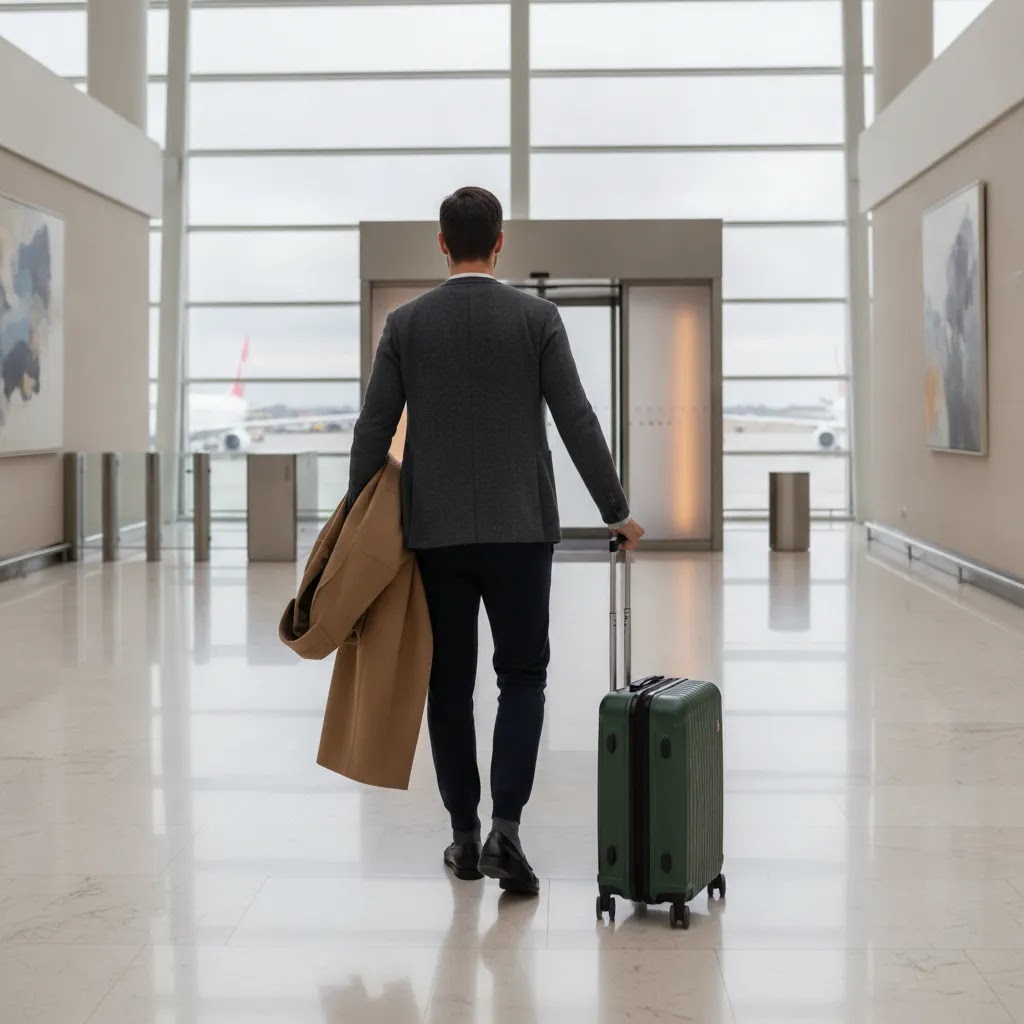
A well-dressed departure is only part of the equation. On longer sectors, especially overnight, the items you keep close at hand often matter just as much as the outfit itself. Your personal item should carry a few cabin-ready essentials that help you maintain comfort and a composed appearance without searching through larger luggage after boarding.
In most cases, that means socks for changing out of shoes, a light extra layer, skincare suited to dry cabin air, deodorant, and one small fabric-safe refresh item for minor upkeep. Some travelers also keep a clean top or compact change piece within reach if they expect to sleep deeply, use airline-provided sleepwear, or arrive directly into a car transfer, hotel, or meeting.
The goal is not to overpack the seat area. Instead, keep the few items that genuinely help you reset before landing. This is particularly useful on long-haul and overnight routes where lounge departure, onboard rest, and arrival may span many hours.
Having a thoughtful small kit allows you to freshen discreetly and restore the polish of your original look before descent. That is often more effective than wearing an overly complicated outfit and hoping it still looks perfect at arrival.
Step 5: Adjust your first class flight outfit for overnight versus daytime
Step 5: Match the outfit to the rhythm of the flight
This is where many travelers misjudge what to wear in first class. They either dress too formally for an ultra-long overnight, or too casually for a daytime sector where they will be visible in lounges, dining spaces, and arrival transfers.
For daytime first class, keep the outfit closer to city dressing. You may spend more of the journey awake, dining, working, or speaking with crew. A collared shirt, refined knit, polished dress, or jacket-based look feels appropriate.
For overnight flights, shift toward softer construction and less restrictive waistlines while preserving visual polish. Your clothes should allow you to sleep, change into airline-provided sleepwear if offered, and dress quickly again before landing. If your route features first class flights with beds, softer layers and easy-change pieces become even more valuable.
Overnight first class does not require you to board in pajamas. Even on airlines that provide elegant loungewear, boarding in a composed travel outfit and changing later usually feels more appropriate. This matters most on routes where lounge use is part of the experience and where first impressions still carry social weight.
- Best for daytime: smart dress, tailored trousers and knit, blazer with soft shirt, elegant flats or loafers
- Best for overnight: soft trousers, luxurious knit top, knit jacket, wrinkle-resistant dress, supportive slip-on shoes
Step 6: Avoid first class flight outfit mistakes that draw attention
Step 6: Remove the elements that feel out of place
The most common first class flight outfit mistakes are rarely about formality alone. They are about imbalance. An outfit can be expensive and still look wrong for the setting if it is too loud, too exposed, too stiff for sitting, or too casual for a premium environment.
Visible logos, extreme athleisure, nightclub styling, and garments that require constant adjustment usually age poorly over a long flight. So do pieces that wrinkle aggressively, overheat the body, or make it difficult to use the lavatory comfortably during the night.
A better approach is edited luxury. Clean lines, excellent fabric, proper fit, and understated accessories nearly always read more confidently than trend-driven statement dressing. If you want practical planning ideas beyond clothing, Premium Flight Booking & Tips covers the broader decision-making process around premium journeys.
For travelers flying multiple sectors or mixing business and leisure, an agency like Flight Experts can be useful not because it dictates style, but because expert planning aligns the route, cabin, airport flow, and timing of the trip. That often changes what clothing will actually work best on the day.
What not to order or wear if you want to arrive looking composed
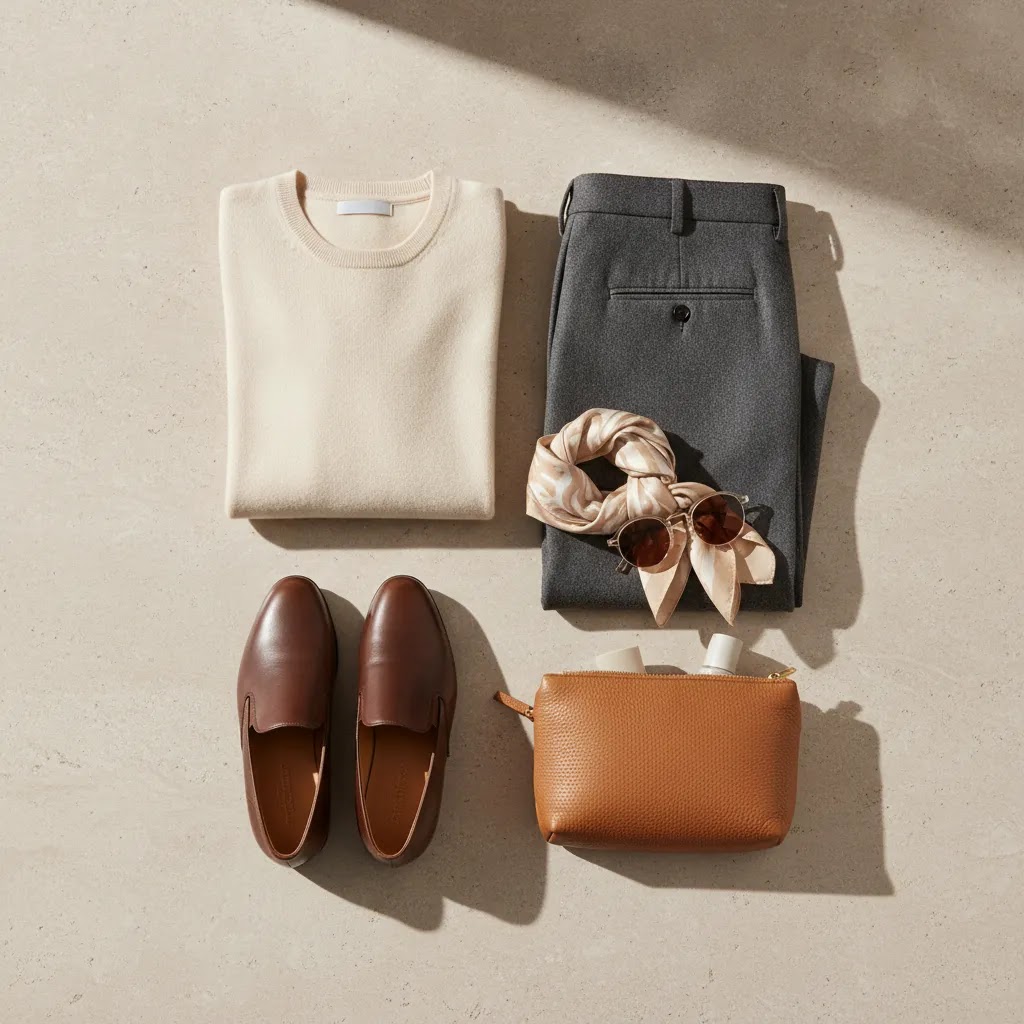
Looking polished at arrival depends partly on what you consume in the air. If your goal is to step off the aircraft looking rested and put together, excessive alcohol may work against you. It can affect hydration, sleep quality, and how your skin and eyes look by landing.
The same can be true of heavily caffeinated or dehydrating choices late in an overnight sector, particularly if you are trying to rest before an early arrival. For general wellness travel guidance, the CDC Travelers’ Health resource is a useful reference.
Food and drink choices also have a practical clothing dimension. Deeply staining red wine, strong-colored sauces, and anything awkward to eat in tailored or pale clothing introduce unnecessary risk, especially in turbulence or in a private suite where you may be dining in a more relaxed posture. If you are wearing cream, white, silk, or delicate knits, discretion at the table often matters as much as discretion in the wardrobe itself.
Strong fragrance is another detail worth editing. In a premium cabin, close quarters still apply, and scent can become more noticeable in dry cabin air. Clothing choices should support the same objective. Pale fabrics, delicate materials, and pieces that crease or mark easily may be less practical if you hope to arrive looking precise.
A composed arrival usually comes from restraint: balanced hydration, measured drinks, and clothes that can tolerate the realities of a long flight. For airline consumer guidance and travel rights, travelers can also consult the U.S. Department of Transportation Fly Rights page.
Common mistakes to avoid when deciding what to wear in first class
- Assuming all first class cabins feel the same. Airline culture and route type can shift the social tone considerably.
- Dressing only for the seat. Your look also has to work in lounges, private transfers, and arrivals.
- Choosing overly tight or rigid pieces. Even beautiful tailoring becomes uncomfortable after several hours.
- Relying on athletic wear as the whole outfit. Comfort matters, but visible gym styling can feel misaligned with premium spaces.
- Ignoring cabin temperature. A well-chosen layer often matters more than one extra accessory.
What to do next after planning your first class flight outfit
Once your outfit is settled, turn your attention to the rest of the experience. Confirm whether your airline offers onboard sleepwear, review lounge access arrangements, and think through your arrival plans. If your trip includes multiple destinations, climate changes, or a same-day meeting, clothing decisions may need to serve more than one purpose.
If you are still deciding whether first class is the right cabin for the journey, it helps to compare the full experience rather than relying on the label alone. You may also want a broader review of route-specific premium cabin options before finalizing your travel plans. For personalized guidance on premium routes, cabin differences, and complex trip flow, you can speak with the Flight Experts team and begin the conversation with a clear picture of how you want the journey to feel.
Frequently Asked Questions
Is there an official dress code in first class?
Usually no. Most airlines do not publish a formal passenger dress code for first class beyond general requirements around footwear, decency, and safety. Social expectations still exist, though. Those expectations often come from route culture, lounge environment, and the kind of traveler the cabin attracts.
A polished, composed appearance is the safest standard. You do not need formalwear, but you should aim for clothing that looks deliberate and remains comfortable through boarding, dining, and arrival.
Can I wear sneakers in first class?
Yes, in many cases you can, provided they are clean, minimal, and clearly premium in appearance. Leather or refined fabric sneakers with a low profile often work well, especially on long-haul routes where comfort matters.
Bright running shoes, heavily branded styles, or visibly worn athletic footwear may feel out of place in premium lounges and first class cabins. If you are unsure, loafers, elegant flats, or understated travel shoes remain the most reliable option across airlines and routes.
Are leggings acceptable in first class?
They can be, but only with caution. Leggings styled under a long cashmere sweater, tailored coat, and polished shoes may pass comfortably on some overnight routes. On many commercial first class journeys, however, they still read more casual than ideal, especially during daytime departures or in formal lounge settings.
If your goal is to look refined without sacrificing ease, structured knit pants, ponte trousers, or soft tailored separates usually offer a stronger result than leggings alone.
Should I dress differently for domestic first class and international first class?
Yes, that is often wise. Domestic first class in the United States may be more relaxed, particularly on short daytime routes where travelers move quickly from airport to car. International first class, especially long-haul, often carries a more elevated atmosphere tied to flagship lounges, premium service rituals, and a more visible luxury context.
The clothing does not need to become formal, but it should typically be more considered. International first class rewards fabrics, fit, and restraint more than purely casual convenience.
What is the best first class flight outfit for a long overnight route?
A strong overnight outfit balances softness and structure. Good options include fluid trousers, a fine knit top, a soft blazer or jacket, and supportive slip-on shoes.
For women, a wrinkle-resistant midi dress with a wrap or cardigan can also work beautifully. For men, tailored knit trousers with a collared knit or soft overshirt often travel well. The key is preserving a polished silhouette while making it easy to change into onboard sleepwear, rest comfortably, and look composed again before landing.
Do airline lounges have different dress expectations from the cabin?
In some cases, yes. Lounges, especially flagship or first class lounges, may feel more like private hospitality spaces than waiting areas. That changes how casual clothing is perceived.
An outfit that seems acceptable once settled into a suite may feel less fitting in a fine dining room, private terminal, or elegant bar setting before departure. This is one reason arrival-ready, lounge-appropriate dressing often works best. You are dressing for the whole premium journey, not only for the seat itself.
What should women wear on a first class flight?
Women generally do best with refined separates or dresses that hold shape without restricting movement. Tailored trousers, knit sets, midi dresses, polished flats, loafers, and one elegant outer layer are all strong choices. Jewelry and accessories should feel intentional but not excessive.
Route matters. A daytime city-pair flight may suit a sharper silhouette, while an overnight long-haul sector may call for softer lines and more forgiving fabrics. The most successful looks feel effortless, not overworked.
What should men wear on a first class flight?
Men usually look best in tailored but relaxed clothing such as soft chinos, refined travel trousers, merino knits, collared shirts, unstructured jackets, and clean loafers or minimalist sneakers. The outfit should allow you to sit for hours without losing shape.
Full business suiting may make sense if you are flying directly into a formal engagement, though many travelers now prefer softer tailoring for long-haul comfort. Loud logos, gym wear, and overly casual hoodies generally feel less appropriate in premium settings.
Is it appropriate to change into sleepwear onboard?
Yes, on many long-haul first class flights that is completely appropriate, especially if the airline provides sleepwear. Boarding in polished travel clothing and changing after takeoff is often the most elegant approach.
It lets you move naturally through lounges and boarding while still taking advantage of the comfort the cabin offers later. Keep your change items organized and easy to access. On shorter flights or daytime sectors, changing may feel unnecessary and can interrupt rather than enhance the journey.
How much should fashion matter compared with comfort?
In first class, the most successful style is rarely the most dramatic. Comfort should lead, but comfort expressed through quality, fit, and restraint. Clothing that looks exceptional for twenty minutes and feels miserable for twelve hours is a poor choice, even in the most luxurious cabin.
On the other hand, dressing purely for softness can leave you feeling underprepared in premium social spaces. Aim for a thoughtful middle ground where your outfit supports the experience without becoming the focus of it.
What should I wear when flying first class?
You should usually wear clothing that feels polished, comfortable, and appropriate to the airline and route. In most cases, that means refined separates, a knit or structured layer, and shoes that are easy to walk in but still look intentional.
A daytime international flight may call for a sharper, city-ready look, while an overnight sector often favors softer tailoring and fabrics that recover well after rest. The goal is to appear composed from lounge to arrival, not overdressed or overly casual.
Is there a dress code for Emirates first class?
There is typically no formal published passenger dress code for Emirates first class beyond general standards, but the product often carries a more ceremonial and visibly polished atmosphere than many domestic premium cabins. Travelers usually feel most comfortable in attire that would suit an elegant hotel lounge: tailored trousers, refined knitwear, dresses with structure, and understated shoes.
Overtly athletic wear, very casual sandals, or anything overly revealing may feel out of step with the tone, though the exact atmosphere can still vary by route and departure city.
What should I wear on an overnight first class flight?
An overnight first class outfit should allow you to rest comfortably while still looking put together before and after sleep. Soft trousers, a breathable knit top, a light jacket or wrap, and supportive slip-on shoes are usually strong choices.
You may also want a simple change item and fresh socks within reach if the airline provides sleepwear or if you prefer to reset before landing. Boarding in a polished travel outfit and changing later, if appropriate, is often the most elegant solution.
What drinks should I avoid ordering on a plane if I want to arrive looking polished?
If your priority is to arrive looking rested and composed, it is often wise to be restrained with alcohol and with drinks that may contribute to dehydration, especially late in an overnight flight. Red wine and other strongly colored beverages can also create obvious staining risk if you are wearing pale or delicate fabrics.
Many travelers find that balanced hydration and measured drink choices support better sleep, more comfortable skin, and a neater appearance on arrival than treating the flight as an indulgent evening out.
Key Takeaways
- How to dress for first class flight depends more on airline culture and route type than on a universal rule.
- The strongest first class travel outfits combine breathable comfort with one structured, polished element.
- Daytime and overnight flights call for different styling choices, even within the same cabin class.
- Shoes, layers, and fabric recovery matter as much as the visible silhouette.
- Expert trip planning can help align cabin choice, lounge flow, and arrival needs so your clothing works for the full journey.
Conclusion: how to dress for first class flight with confidence
The right first class outfit does not announce itself loudly. Instead, it communicates ease, judgment, and respect for the environment you are entering. That is why the question is not simply what to wear on a first class flight, but what to wear on this airline, on this route, at this time of day, for this kind of arrival.
Once you approach it that way, the answer becomes much clearer. Choose quality fabrics, soft structure, discreet shoes, and a silhouette that allows you to move from lounge to suite to arrival without feeling underdressed or overdone.
For travelers arranging more complex premium journeys, those details are often easier to refine with experienced guidance. Flight Experts is one resource for discerning travelers who want a concierge-style approach to first class and multi-destination planning, with support that takes the full rhythm of the journey seriously. If you would like tailored advice on premium cabin options or a more personalized approach to your next itinerary, you are welcome to reach out and discuss your travel preferences with the team.



