
Is First Class Worth It?: What to Expect for the Price

Typical international first class fares often start around $5,000 and can exceed $20,000, so prestige alone is rarely enough. Instead, the better question is whether the premium changes the journey enough to justify the cost. In practice, that means better sleep, stronger time protection, smoother ground handling, and deeper personal comfort.
This article examines first class through that lens. It offers a clear, experience-based answer rather than cabin mythology. Where helpful, it also reflects how a specialist such as Flight Experts reviews options route by route and carrier by carrier, rather than assuming every product labeled first class delivers the same result.
Is First Class Worth It for What It Really Buys?
First class is not simply a wider seat and better champagne. At the top end, it can include a closed-door suite, dedicated check-in, premium lounge access, elevated dining, and more personal onboard attention. On some carriers, it also includes chauffeur arrangements or other refined ground services. However, the gap between a strong business class product and true first class varies sharply by airline and route. That is why the answer to is first class worth it depends less on the label and more on the actual product you fly.
Flight Experts’ first class booking service focuses on major premium carriers including Emirates, Singapore Suites, Lufthansa, ANA, JAL, Etihad, Qatar, Swiss, and Air France La Première, with routes across the US to Europe, Asia, the Middle East, and other long-haul markets. The agency’s current service data places typical first class pricing in the $5,000 to $20,000+ range, subject to route, season, airline, and fare conditions. As a result, some first class tickets feel genuinely worthwhile, while others feel excessive for what they deliver.
If you are still weighing the baseline distinction between cabins, this broader comparison of business class vs first class helps clarify where first class genuinely separates itself and where premium business class narrows the gap.
What You Actually Get in First Class, By Product Type
One reason this category creates confusion is that first class does not describe a single experience. On some domestic routes, first class may mean a larger recliner seat, earlier boarding, and improved meal service. That can be comfortable, but it is not comparable to international flagship products. On long-haul intercontinental flights, first class may instead mean a highly private suite, a true bed, a very small cabin, elevated lounge access, and more attentive ground handling.
Aircraft and route matter as much as airline branding. A carrier may market first class on one route while offering a product that feels only modestly above business class, especially where the cabin is older or designed for shorter sectors. By comparison, another airline may reserve its most distinctive suites, lounge spaces, and airport treatment for a narrow set of flagship aircraft and long-haul routes. That is why experienced travelers judge the specific flight, not only the airline name on the ticket.
The most useful value drivers are practical rather than symbolic. Ask how private the seat feels once the cabin settles. Ask whether the bed supports real sleep. Also consider how many passengers share the cabin, how strong the lounge and predeparture environment are, and whether the ground experience reduces friction in a meaningful way. If those elements combine to change how you travel and how you arrive, the fare may be justified. If they do not, the label alone may not carry enough value.
For a broader cabin primer, the International Air Transport Association offers general passenger guidance at https://www.iata.org/en/programs/ops-infra/baggage/passenger-rights/, while the U.S. Department of Transportation provides consumer travel resources at https://www.transportation.gov/airconsumer.
Is First Class Worth It at Typical Price Ranges?

The simplest numerical answer is this: international first class commonly falls between $5,000 and $20,000+. That range reflects Flight Experts’ current first class service data and should be treated as directional rather than fixed. On shorter premium routes, the fare may sit toward the lower end. On flagship long-haul sectors with limited inventory, the price can rise far beyond that.
| Tier | Typical Price Range | What That Usually Reflects |
|---|---|---|
| Entry long-haul first class | $5,000 to $8,000 | Less exclusive routes, advance purchase, or carriers where the step above business class is meaningful but not transformational |
| Mid-range international first class | $8,000 to $14,000 | Well-regarded products on major intercontinental routes, often with stronger lounge access and more polished onboard service |
| Flagship or ultra-premium first class | $14,000 to $20,000+ | Highly sought-after suites, limited cabin inventory, premium ground treatment, and top-tier dining and privacy |
For a more cost-specific discussion, see this analysis of first class cost. You can also review how much a first class ticket costs on international flights for route-focused context. Price matters, but value depends on whether the extra spend materially improves the trip you are taking.
Factors That Change Whether First Class Is Worth It
Route length and timing
First class often earns its keep most clearly on overnight long-haul flights. A ten-to-fourteen-hour journey with sleep built into the schedule creates far more room for value than a daytime sector where you would remain awake anyway. If the purpose of the fare is proper rest before a board meeting, gala, or multi-stop arrival sequence, the premium may make practical sense.
How much better the airline’s first class is than its business class
Some airlines operate a first class product that is dramatically more private and refined than business class. Others offer a narrower difference, especially on routes where business class is already strong. Therefore, travelers should compare not only fare levels but also the actual seat, suite geometry, bedding quality, lounge standard, and service cadence. Readers considering alternatives may also want context from related premium flights that start in business class and move upward through upgrade paths.
Ground experience
For some travelers, the airport portion justifies more of the premium than the cabin itself. Dedicated check-in, calmer lounges, faster assistance, and coordinated ground handling can protect energy on demanding itineraries. This matters most to travelers who place high value on discretion, reduced friction, and time discipline.
Occasion value
A honeymoon departure, landmark anniversary, or once-in-a-generation family trip creates a different value framework from a routine shuttle. In these cases, first class may be less about efficiency and more about making the journey feel equal to the occasion. That does not make every fare sensible, but it does change the threshold for what feels worthwhile.
Opportunity cost of fatigue
For executives, public figures, speakers, and travelers with immediate post-arrival commitments, arriving depleted can carry a real professional cost. If first class helps preserve focus, appearance, and recovery, the premium can be easier to defend. By contrast, a leisure traveler with two free days at the hotel may feel far less return.
Is First Class Worth It on Short, Medium, and Long Flights?
Duration changes the answer quickly. On a short domestic flight of around two hours, first class is usually worth considering only if airport handling, personal space, or schedule pressure matters more to you than the onboard seat itself. The cabin may feel calmer and more comfortable, but the difference is rarely transformational unless the day around the flight is unusually demanding.
On medium-length flights of roughly four to five hours, the case becomes more situational. A transcontinental route, a tightly timed connection, or a day built around meetings on arrival may make first class more defensible, particularly if the product offers meaningful privacy and a quieter cabin. If it is simply a daytime leisure flight with ample recovery time afterward, the practical value may remain modest.
Long-haul international and especially overnight sectors are where first class most often justifies itself. Once the itinerary involves a genuine sleep window, major time zone changes, formal commitments shortly after landing, or a desire for discreet travel, the premium may produce a measurable difference in how the trip unfolds. In that setting, the right first class product is not only more comfortable, it may preserve an entire day that would otherwise be lost to fatigue.
A useful decision lens is to judge the flight by outcome rather than by cabin label. Ask whether this specific first class product is likely to improve sleep, privacy, airport handling, and readiness on arrival enough to matter. If the answer is yes, the fare may be sensible. If the answer is no, a strong business class seat or even a shorter premium domestic product may already accomplish what the trip requires.
When Is First Class Worth It Enough to Pay the Premium?
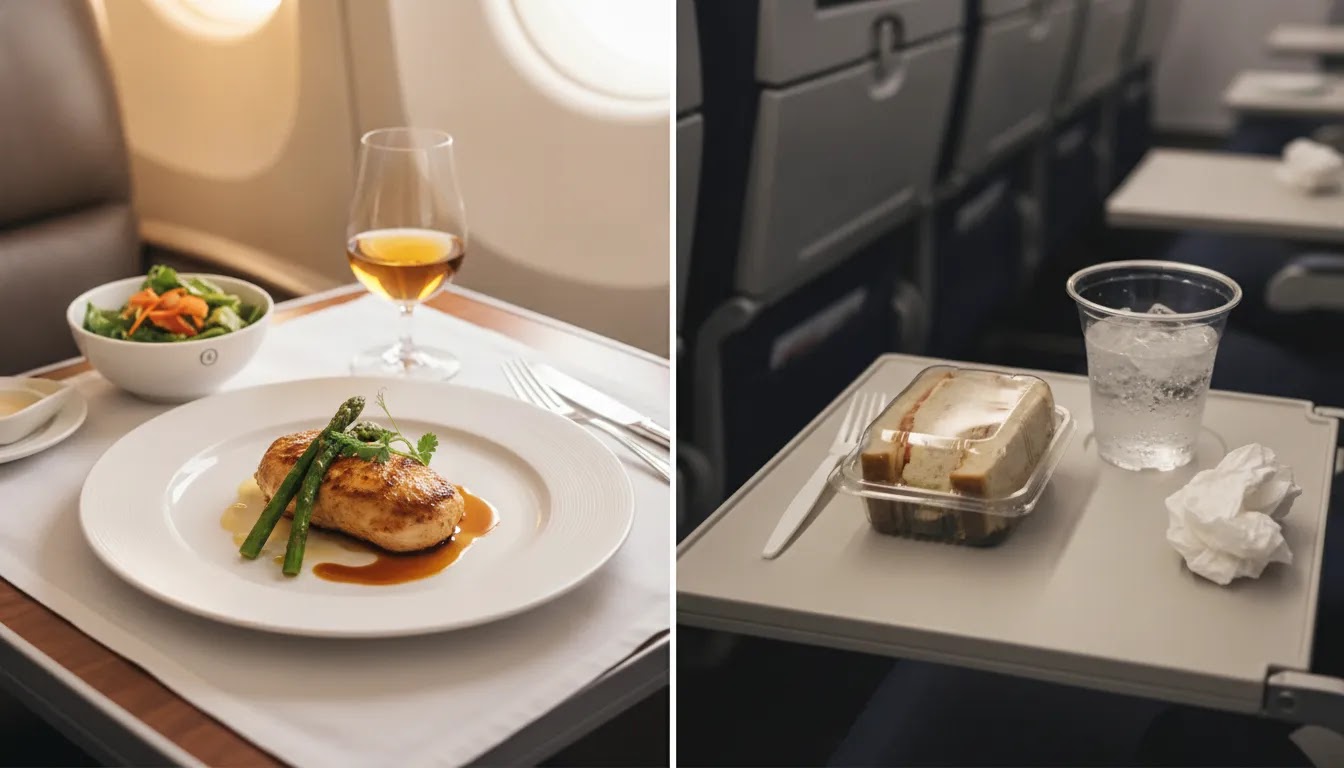
The strongest case for first class appears when the cabin delivers measurable personal value, not merely visible luxury.
Is first class worth it for overnight rest?
It can be worth paying more for overnight long-haul rest. A genuine suite, better bedding, fewer cabin disturbances, and more tailored meal timing can change how you arrive. If the alternative is losing a day of function at destination, the premium may repay itself in preserved time and performance.
Is first class worth it for privacy?
It can be worth paying more for privacy. Travelers managing sensitive work, personal security concerns, or a high need for quiet often value enclosure and lower interaction density. This is one of the least discussed but most defensible reasons to choose first class.
Is first class worth it for milestone travel?
It can be worth paying more for a milestone journey. Not every celebratory trip requires first class, but some do benefit from it. A wedding trip to Asia, a major anniversary crossing, or a special parent-child journey may justify the extra investment because the travel day becomes part of the event rather than an inconvenience to be endured.
When is first class not worth it compared with business class?
It is usually less compelling when business class is already excellent. On routes served by modern business suites with direct aisle access, strong lounges, and polished onboard dining, the first class premium can become difficult to defend unless privacy or occasion value is especially high. That is one reason many travelers also explore related premium flights before committing to the top cabin.
When is flying first class worth it less often?
It is usually less compelling on short or daytime flights. If sleep is not a core objective and ground services are modest, the fare can feel disproportionate. In those cases, the premium may buy polish rather than transformation.
For travelers comparing the broader premium cabin universe, the categories for Premium Flight Booking & Tips and Premium Cabin Experience & Amenities provide useful context around where first class sits within the larger spectrum of high-end air travel.
When First Class Is Not Worth It
There are clear cases where the premium is hardest to justify. Very short flights, especially daytime sectors with minimal ground differentiation, often do not give the cabin enough time to deliver meaningful value. The same is true when an airline’s business class is already excellent and first class adds only incremental polish rather than materially better sleep, privacy, or service flow.
Leisure itineraries with generous recovery time on arrival may also weaken the argument. If you land in the afternoon and have two unstructured days before anything important begins, the practical benefit of first class may be far lower than on a trip that starts immediately. In those cases, travelers sometimes pay more for the prestige of the label than for an experience improvement they will genuinely feel.
One rational approach is selective use. Booking first class one way, particularly on the overnight or most demanding sector, may deliver most of the benefit without applying the premium where it does not matter. That can be especially sensible on round trips where one leg is a daytime return and the other is a sleep-critical departure. Ultimately, the right answer is often not first class everywhere, but first class exactly where the itinerary calls for it.
Strengths and Considerations of First Class Travel

Strengths
- Delivers the most complete premium travel experience on routes with genuine international first class.
- Can provide materially better sleep, privacy, and calm than many business class cabins.
- Ground services, lounge access coordination, and personalized onboard service often create a smoother door-to-destination journey.
- Particularly valuable for milestone travel where the flight itself is part of the experience.
- Can protect energy and presentation on arrival-heavy business or event itineraries.
Considerations
- The fare premium may be difficult to justify on shorter routes or daytime flights.
- Not every first class product is equally exclusive, and some business class cabins come surprisingly close.
- Availability may be limited by route, aircraft, and season, especially on the most sought-after carriers.
- Travelers who care primarily about transportation rather than privacy or experience may not feel the return on the extra spend.
Who First Class Makes Sense For
First class tends to make the most sense for affluent travelers who place a high premium on privacy, sleep quality, and frictionless logistics. That includes couples planning milestone trips, executives crossing multiple time zones with immediate obligations, families marking a major occasion, and repeat luxury travelers who know exactly which discomforts they want removed from the journey. In short, it is less about chasing a label and more about knowing which parts of travel carry the highest personal cost when they go wrong.
How to Evaluate Whether First Class Is Worth It With a Specialist
A proper first class decision starts with the itinerary, not the cabin name. Flight Experts approaches these requests by looking at route logic, airline product differences, timing, and what the traveler actually wants the flight to accomplish. The agency’s current first class service includes white-glove personal support, exclusive first class deal access, lounge access coordination, chauffeur service arrangements, and luxury amenity guidance.
According to current service details, the process is straightforward: submit a request, receive an assigned expert at no charge, review presented options, and proceed with the itinerary that best fits your priorities. Turnaround is typically fast, often within about 30 minutes, though final availability always depends on the carrier and market conditions. If you are comparing search options, this guide on how to book first class flights may also help.
For travelers who want a dedicated advisor rather than an automated search platform, that distinction matters. Mike Chirilenco leads Flight Experts with a concierge-style philosophy centered on personalized guidance, professionalism, and long-term client relationships. If you want to assess whether a first class fare is sensible for your route, speak with a luxury travel specialist at Flight Experts and discuss the trip in terms of comfort, timing, privacy, and overall journey design.
Frequently Asked Questions
Is first class always better value than business class?
No. First class is usually the more refined product, but value depends on the route and the gap between cabins. On some airlines, business class already offers an excellent suite, strong lounge access, and polished service. In those cases, first class may be worthwhile only if privacy, occasion value, or overnight rest matters enough to justify the added premium.
Is flying first class worth it for a honeymoon or anniversary trip?
It can be, especially on a long-haul overnight itinerary where the journey itself is part of the celebration. The best outcomes usually come when the cabin aligns with the emotional importance of the trip and with practical needs such as rest, privacy, and smooth airport handling. It is less compelling if the route is short or the product difference is modest.
What does first class usually include that business class may not?
Depending on the airline, first class may include a more private suite, finer dining, more individualized service, higher-end lounge access, and stronger ground arrangements. Some carriers also offer enhanced predeparture support or chauffeur coordination. The exact inclusions vary by airline, aircraft, and route, so the cabin name alone does not tell the full story.
How expensive is first class compared with other premium cabins?
Current Flight Experts service data places first class broadly in the $5,000 to $20,000+ range, while business class is generally shown from $2,000 to $8,000+. Those are directional ranges, not guarantees. The important point is that first class often costs substantially more, so the decision should rest on travel outcomes, not on prestige.
Is first class worth it for business travelers?
Sometimes, yes. It makes the strongest case for travelers who need true rest, privacy, and composure on arrival. If the trip includes immediate meetings, formal appearances, or demanding connection patterns, first class may support performance in ways that are genuinely useful. If the itinerary is simple and business class is strong, the premium may be harder to defend.
Can a travel specialist help determine whether first class is worth it?
Yes. A specialist can compare actual products, not just fare labels, and can evaluate whether the route, timing, and cabin difference justify the spend. That is particularly helpful where certain carriers offer outstanding first class on one aircraft but a less distinctive proposition on another. Product detail often determines value more than brand reputation alone.
Is first class worth it on a 2 hour flight?
Usually not for the seat alone. On a flight of around two hours, first class may offer more personal space, quieter boarding, and a smoother airport experience, but the time onboard is often too short for the premium to transform the journey. It tends to make more sense when schedule pressure, privacy, or same-day obligations on arrival carry unusual importance.
Is first class worth it for a 4 hour flight?
Sometimes. A four hour flight sits in the middle, where value depends heavily on the product and the purpose of travel. If the route is transcontinental, the day is tightly structured, or the cabin is meaningfully calmer and more private, first class may be sensible. If it is a relaxed daytime itinerary, the improvement may feel modest relative to the premium.
Is first class worth it international?
International first class is where the strongest case usually exists, especially on overnight long-haul routes. That is where suite privacy, bed quality, lounge standards, and ground services may combine to create a materially better arrival experience. Even then, the answer depends on the specific airline, aircraft, and how strong business class is on the same route.
Do airlines clean seats between flights?
In most cases, yes, but the depth and timing of cleaning may vary by airline, station, aircraft turnaround, and operational conditions. Premium cabins are typically maintained to a high standard, though exact procedures can change. Travelers who place particular importance on onboard cleanliness should treat current practice as airline-specific rather than universal.
Key Takeaways
- First class is usually worth it only when the premium produces meaningful gains in rest, privacy, time protection, or occasion value.
- Typical international first class fares often range from $5,000 to $20,000+, depending on airline, route, and season.
- The best value appears on overnight long-haul routes with a genuine first class product, not merely a premium label.
- Strong business class cabins can narrow the value gap considerably on some carriers.
- An expert route-by-route review is often the clearest way to decide whether the premium is justified.
Conclusion
First class earns its price when it changes the journey in a way that matters to you. That may mean arriving rested enough to begin negotiations within hours, preserving privacy on a highly visible trip, or making a milestone departure feel worthy of the occasion. It does not earn its price simply because the cabin carries a prestigious name.
The most reliable assessment is always specific: airline, aircraft, route, timing, and purpose of travel. That is where expert evaluation becomes valuable. Flight Experts provides first class booking support for discerning travelers who want clear guidance, discreet service, and options shaped around real priorities. If you are weighing whether first class is the right investment for an upcoming journey, contact Mike to begin planning your next luxury journey.



