
Which Airlines Don’t Have First Class?

This matters because the cabin label is only one part of the story. A premium seat may mean extra legroom, a large recliner, a domestic first class seat, or a transcontinental business class product. If you are planning around comfort, privacy, airport flow, or sleep quality, the name alone is not enough. Therefore, this article explains which U.S. airlines do not have first class, what they offer instead, and how to assess those options with a discerning standard. For broader cabin context, it also helps to understand what is first class often being compared against in domestic and international premium travel.
Why first class Southwest Airlines seats cause confusion
In the U.S. market, premium cabin terminology is inconsistent. Some airlines use first class for short domestic routes. Others use business class on premium transcontinental services. Meanwhile, some avoid the first class label entirely.
That is why travelers often ask, does southwest have first class, does spirit airlines have first class, or which airlines have first class. They are not really asking about the label. Instead, they want to know what level of comfort and service they can expect.
An airline can sell a more comfortable experience without offering first class. For example, you may still find a larger seat, earlier boarding, extra baggage allowance, or a quieter front cabin. However, the degree of privacy, service ritual, lounge access, and overall refinement is usually lower.
U.S. airlines that do not offer first class
Southwest Airlines and first class Southwest Airlines seats
Southwest does not offer first class. There are no first class southwest airlines seats. There is also no dedicated premium front cabin with wider recliners or lie-flat seating. The airline runs a single-cabin model, so every passenger uses the same general onboard product.
Many travelers overlook Southwest’s internal booking class codes and fare families. At first glance, they can resemble the fare structure used by premium airlines. On Southwest, though, those codes usually reflect inventory and fare rules, not a separate onboard cabin. They may affect change flexibility, refundability, and boarding order. They do not create first class southwest airlines seats or a physically distinct front cabin.
If comfort is your priority, you need a different verification method on a single-cabin airline. Southwest aircraft usually have one consistent seat type across the cabin. As a result, the real variable is where you sit. Boarding order, exit row availability, and load factors matter more. Exit row seats and forward rows may be available, subject to aircraft type, operational constraints, and last-minute policy changes.
Spirit Airlines
Spirit does not offer first class either. If you are searching does spirit airlines have first class, the answer is no. Spirit may sell upgraded seating with more space or a better location. However, those options do not create a separate premium cabin experience.
Frontier Airlines
Frontier also does not have first class. Like Spirit, it may offer seating upgrades that improve personal space or position within the aircraft. Still, those options do not equal a dedicated premium cabin with elevated dining, ground services, or greater privacy.
Allegiant Air
Allegiant does not operate a first class cabin. Its product structure centers on a simplified onboard model rather than a layered premium hierarchy.
Avelo Airlines and Breeze Airways
These newer U.S. carriers may offer different seat types depending on aircraft and route. Even so, they are generally not known for a traditional first class cabin. On some flights, you may find a more spacious seat. Yet it is not the full first class experience many premium travelers expect.
What first class Southwest Airlines seats are not: the real alternatives
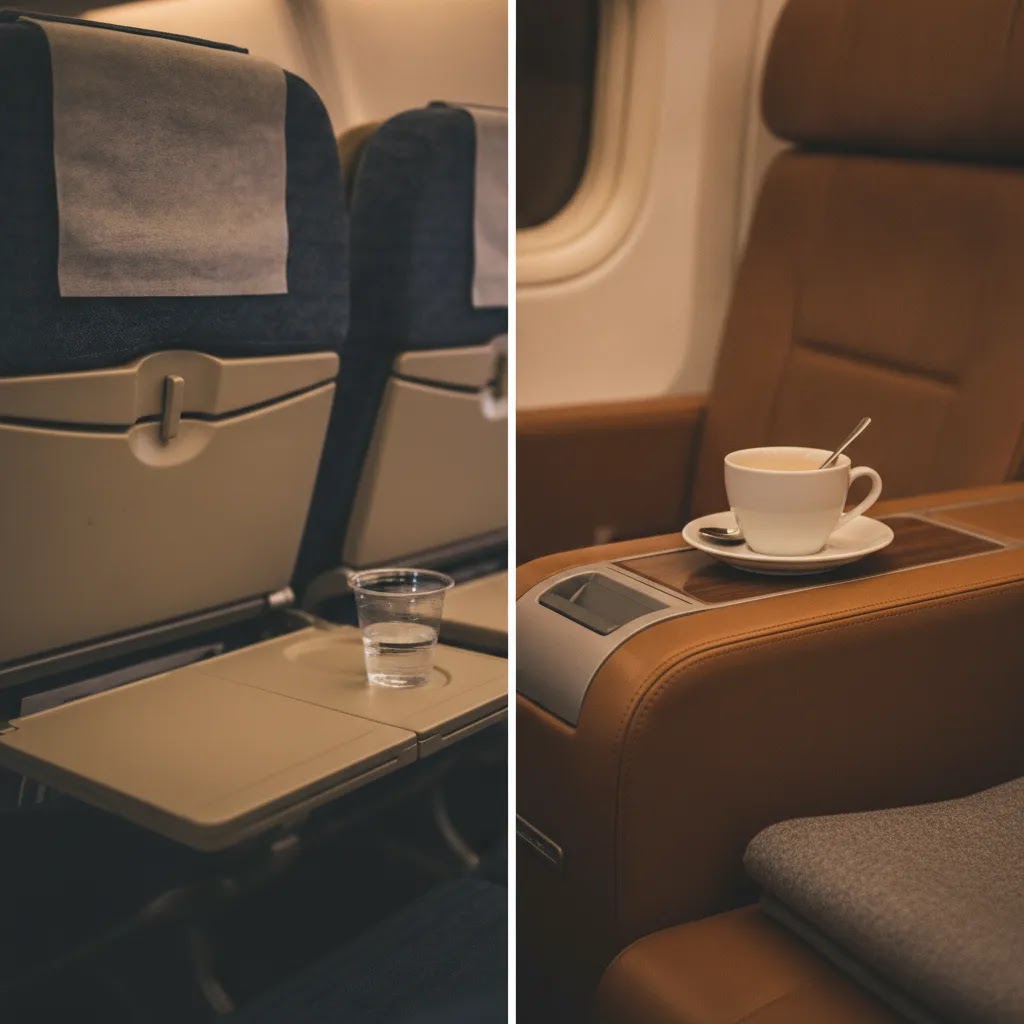
If an airline does not have first class, that does not mean every option will feel unsuitable. Instead, you need to judge the alternative on its own terms.
Southwest’s alternative to first class Southwest Airlines seats is flexibility
Southwest’s stronger points usually center on schedule simplicity, route convenience, and a flexible approach to changes. What it does not offer is a differentiated onboard premium environment. If your priority is a larger seat, cabin exclusivity, pre-departure beverage service, or a quieter forward section, Southwest will usually fall short.
Spirit and Frontier alternatives are seat upgrades, not first class substitutes
Both airlines may sell larger seats or seats with additional pitch, but these are functional upgrades rather than a curated premium journey. You may gain room. You usually do not gain the ceremonial elements that define first class for many travelers, such as attentive cabin service, a polished meal offering, or meaningful airport privileges.
JetBlue is a useful comparison because labels can mislead
JetBlue is often mentioned in the same conversation, and it shows why terminology matters. The airline does not generally present itself around a domestic first class identity in the same way legacy carriers do. Yet certain premium routes can be far more compelling than many travelers assume. If that question is relevant to your search, see this closer look at JetBlue first class and how that comparison is usually framed.
Airlines that do offer first class
Among major U.S. airlines, American Airlines, Delta Air Lines, and United Airlines all offer domestic first class on many routes. On select long-haul or premium international services, the structure becomes more nuanced. In those cases, business class often serves as the top widely available cabin.
Alaska Airlines also offers domestic first class, usually with a recliner-style seat and a more elevated front-cabin service than the main cabin. Hawaiian Airlines has offered premium front-cabin products as well, especially on longer flights where seat comfort matters more acutely.
This is where many travelers discover that “which airlines have first class” is only the opening question. The more useful question is which airline has the right version of first class for your route. A domestic recliner between Los Angeles and Dallas is very different from a true international first class suite on carriers such as Lufthansa, Air France, or Japan Airlines.
How discerning travelers should compare these options
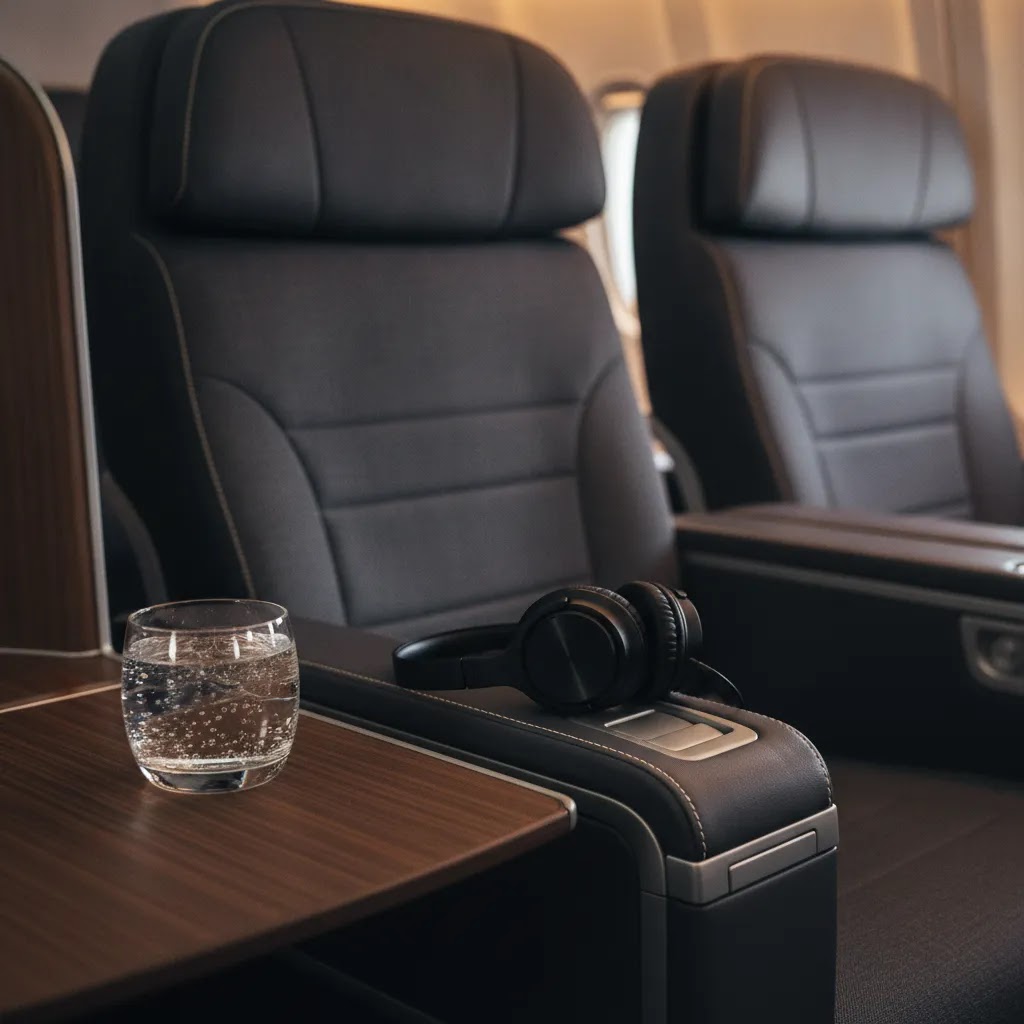
Start with the seat, not the marketing label
A larger seat does not necessarily mean first class, and first class does not always mean an exceptional seat. On U.S. domestic routes, first class often means a wider recliner with enhanced service. On airlines without first class, the best available seat may still work for a daytime flight. Rarely, though, is it equal in comfort or privacy.
Assess the airport experience separately
Many travelers assume any premium seat includes lounge access or a dedicated check-in path. That is not consistently true. Airlines without first class may offer priority boarding or upgraded fare bundles, but they generally do not recreate the smoother airport journey many affluent travelers value.
Match the cabin to the route length
On a short nonstop flight, a lack of first class may be tolerable if timing is ideal and the seat is reasonable. On a transcontinental, late-night, or connection-heavy itinerary, the difference becomes more significant. As a result, your tolerance for compromise usually narrows as the journey grows longer and more layered.
Separate convenience from luxury
Some airlines without first class still serve a practical purpose. They may work well for nonstop access to a secondary city or a simple domestic hop. Ultimately, luxury travelers make better decisions when they separate convenient transport from a premium travel experience, rather than expecting one product to deliver both equally well.
How to verify “first class” claims quickly: seat maps and aircraft configuration checks
The fastest way to confirm a true first class product is to verify whether the aircraft has a physically separate front cabin. Search results and fare displays can use premium language that sounds more elevated than the aircraft really is. This is especially common on mixed itineraries.
A simple framework usually works well. First, confirm the cabin map and look for an actual forward cabin separated by a bulkhead or curtain, with a seat layout that differs from the main cabin. Second, confirm the seat type. Check whether it is a wider recliner, a lie-flat seat, or the same seat as the rest of the aircraft in a better location. Third, verify whether the product includes any meaningful ground experience, because many premium outcomes are shaped before you board.
Aircraft swaps can occur, sometimes close to departure. When that happens, the seat map and the onboard product may change. Therefore, if you are traveling for a milestone occasion or heading straight into business, it is wise to choose flights with a stronger chance of keeping the intended configuration. Also monitor seat assignments and equipment updates as your trip approaches.
Many travelers overlook the highest-risk areas on mixed itineraries. Domestic positioning segments may be operated by a carrier with no first class at all. In other cases, a regional partner may offer a smaller forward cabin with a materially different seat from a mainline aircraft. Tight connections and late-day departures can also raise the chance of irregular operations. Checking each segment, not just the headline long-haul flight, is often what protects the overall experience.
Where expert guidance matters most
The cabin name alone rarely tells the whole story, especially across mixed itineraries. A traveler might book a comfortable transatlantic business class ticket, then discover the domestic positioning segments are on airlines with no first class at all. That mismatch can change the feel of the trip more than expected.
This is one area where a concierge-style agency can add real value. Flight Experts, led by Mike Chirilenco, focuses on premium flight planning and helps travelers compare true first class, business class, and premium alternatives across route types rather than relying on inconsistent airline branding. For travelers planning long-haul journeys, the agency’s First Class Flight Booking and Business Class Flight Booking services reflect that tailored approach.
For travelers balancing multiple segments, regions, or cabin products, an option such as Complex Itinerary Planning may be especially relevant. Meanwhile, if you are evaluating premium carriers more broadly, this overview of the best airlines can help clarify where business class may outperform a nominal domestic first class product.
Frequently Asked Questions
Does Southwest have first class?
No. Southwest does not offer a first class cabin. There are no dedicated first class southwest airlines seats, no larger front-cabin recliners, and no separate premium service zone. The airline uses a single-cabin model, so the onboard experience is much more uniform than on legacy carriers. If you value schedule convenience and a straightforward domestic itinerary, Southwest may still suit the trip. If you expect a differentiated seat, a quieter forward cabin, or elevated inflight service, you will likely need another airline.
Is there a first class in Southwest?
No. Southwest does not have a separate first class cabin. Any upgraded purchase on Southwest usually changes boarding position or fare flexibility rather than placing you into a different cabin with a different seat. Policies and naming can evolve over time. Still, the most reliable check is whether the aircraft shows a distinct forward cabin, which Southwest does not offer in its standard single-cabin configuration.
Does Southwest have a premium class?
Southwest may sell options that feel premium in an operational sense, such as earlier boarding that can improve your chances of selecting a preferred seat. That said, it is not a premium class in the usual airline sense of a separate cabin with a distinct seat, more attentive inflight service, and a more refined ground experience. For travelers who define premium as space, privacy, and calm, Southwest’s product remains fairly uniform across the aircraft.
Does Southwest have a business class seat?
Southwest does not typically offer a separate business class seat in the way many travelers mean it. There is no different seat installed in a dedicated cabin. Southwest’s best available outcome is usually a preferred location within the same cabin, often shaped by boarding order. If you require a materially different seat, another airline’s true front cabin is usually the more consistent choice.
Is first class worth it on Southwest?
Southwest does not sell first class, so the question becomes whether its paid enhancements are worth it for your priorities. In most cases, you are deciding whether earlier boarding and improved seat choice will meaningfully affect comfort on that specific flight. On very short daytime nonstops, that may be enough. On longer flights, late-night segments, or trips where you need to arrive fully rested, the limitation is simple: the seat itself does not become a first class product.
Does Spirit Airlines have first class?
No. Spirit does not have first class in the traditional airline sense. Some flights may offer more spacious seating options, but those are seating upgrades rather than a distinct premium cabin. You should not expect the broader first class framework many travelers associate with larger seats, more attentive service, and a more polished airport journey. If the route is short and convenience is high, those upgrades may still have value. They are simply not substitutes for true first class.
Which U.S. airlines typically do not have first class?
Southwest, Spirit, Frontier, and Allegiant are the most commonly cited U.S. airlines without first class. Some newer carriers, such as Avelo and Breeze, also may not offer a traditional first class product, even if certain seats are marketed as upgraded or extra-legroom options. The easiest way to avoid disappointment is to verify the actual cabin map and service level before booking. The phrase premium can mean very different things depending on the airline and route.
Are extra-legroom seats the same as first class?
No. Extra-legroom seats improve space, but they do not automatically create a first class experience. First class usually includes a wider seat, better spacing, more attentive service, and sometimes a more refined ground experience. An extra-legroom row may solve a comfort problem on a short flight, but it rarely changes the overall character of the journey. For premium travelers, that distinction matters because comfort is only one part of what makes a front-cabin experience feel elevated.
Do airlines without first class still have worthwhile premium options?
Sometimes, yes. The value depends on your route, your expectations, and the purpose of the trip. A more spacious seat can be perfectly acceptable on a short daytime sector. It becomes less compelling on longer flights where meal service, boarding priority, privacy, and overall calm begin to matter more. The right way to judge these products is not by asking whether they are luxurious, but whether they fit the length and importance of the itinerary.
Which airlines have first class in the U.S. domestic market?
American Airlines, Delta Air Lines, United Airlines, Alaska Airlines, and in many cases Hawaiian Airlines offer domestic first class on at least part of their networks. Even then, the experience varies by aircraft, route, and fare type. Some domestic first class cabins are comfortable for a daytime journey, while others may feel less elevated than travelers expect from the name alone. That is why checking the seat type and route profile is often more useful than relying on the cabin label.
Is business class sometimes better than first class?
Yes, especially once you move beyond U.S. domestic flying. International business class on leading carriers can be more private, more modern, and more restful than many domestic first class products. Lie-flat seating, direct aisle access, and stronger lounge infrastructure often matter more than whether the ticket says first or business. On premium long-haul trips, seasoned travelers usually compare the actual product rather than the title. That is often where the better decision becomes clear.
Do first class flights Southwest travelers search for actually exist?
No. Searches for first class flights southwest or first class southwest airlines seats reflect demand, not an actual product. Travelers often assume there must be a premium cabin option because the airline is so widely used in the domestic market. In reality, Southwest does not sell first class. If your goal is more comfort on a domestic route, the better answer is usually another airline’s front cabin or a clear tradeoff in favor of schedule convenience.
How should luxury travelers choose between convenience and cabin quality?
The answer usually depends on what the flight is doing within the larger trip. If it is a brief nonstop sector before a resort stay or an important meeting, convenience may matter more. If the flight itself is long, late, or physically demanding, cabin quality often becomes the wiser priority. The most successful itineraries make those tradeoffs deliberately. They do not assume every premium-sounding fare delivers the same level of comfort or service.
Can a travel specialist help compare airlines without first class?
Yes. This is especially useful when an itinerary includes mixed carriers, international connections, or milestone travel where compromises have outsized consequences. A specialist can help you evaluate whether a route without first class is sensible, where a business class alternative would materially improve the trip, and how to preserve comfort across the full itinerary. Flight Experts is one example of an agency that approaches premium air travel through tailored guidance rather than a one-size booking process.
Key Takeaways
- Southwest, Spirit, Frontier, and Allegiant do not offer traditional first class cabins.
- Searches for first class southwest airlines seats reflect traveler expectations, not an actual Southwest product.
- Seat upgrades on airlines without first class may improve comfort, but they rarely replicate a true premium cabin experience.
- For discerning travelers, route length, airport treatment, and seat design matter more than the cabin label alone.
- Expert itinerary guidance can help you avoid mismatched segments and preserve a more consistent premium experience.
Conclusion
The most useful answer to which airlines do not have first class is not just a list, though the list matters. Southwest, Spirit, Frontier, Allegiant, and several newer U.S. carriers may offer comfortable enough transport, but they do not provide the structured first class experience many premium travelers expect. That distinction matters even more when a domestic segment sits inside a larger international or milestone itinerary.
If you are choosing between convenience, cabin comfort, and the overall rhythm of the journey, clarity matters more than branding. A well-selected business class flight may be the better premium answer. In other cases, a practical nonstop on an airline without first class may still make sense, provided you know exactly what you are giving up. If you would like tailored guidance on premium cabin choices, route strategy, or a more cohesive long-haul itinerary, you may wish to speak with the Flight Experts team to discuss your travel preferences.



