
Find cheap business class flights to Asia (2026)
Service: Business Class Flight Booking
Routes: US to Asia (plus multi-city options across Asia)
Typical Savings: Up to 25-60% off published fares
Response Time: Usually within 30 minutes
Cost to Quote: Free, no obligation
Personal travel consultant assigned. Trustpilot rating: 5.0 (79 reviews).
Searching for “cheap business class flights to Asia” usually means one thing: you want a real Business Class seat, but you do not want to pay the full public fare you see on airline websites. That is exactly where Flight-Experts helps. We source premium cabin options using consolidator pricing, then present a short list of bookable itineraries that fit your dates, departure city, and comfort priorities.
If you already know your destination, you can also jump straight to route-focused guides like business class to Japan, business class to India, and business class to Singapore.
What “cheap” business class to Asia really means

For long-haul Asia routes, the best value usually comes from a combination of pricing method, routing, and flexibility. A “good deal” is rarely the absolute lowest number on a random date. It is the best total value for (1) seat quality, (2) total travel time, (3) changeability, and (4) the fare rules behind the ticket.
- Consolidator pricing vs published fares: Many of the best Business Class fares are not displayed publicly at the same level you might see through retail channels.
- One-stop can be smarter than nonstop: A single well-timed connection can reduce cost significantly and often improves seat consistency (especially when the nonstop is priced at a premium).
- Shoulder seasons often win: Pricing can improve outside peak holiday weeks, major events, and school breaks.
- Departing from an alternate gateway: If you can reposition to a major hub, the long-haul segment can price more favorably.
Best-value routes and booking patterns to Asia
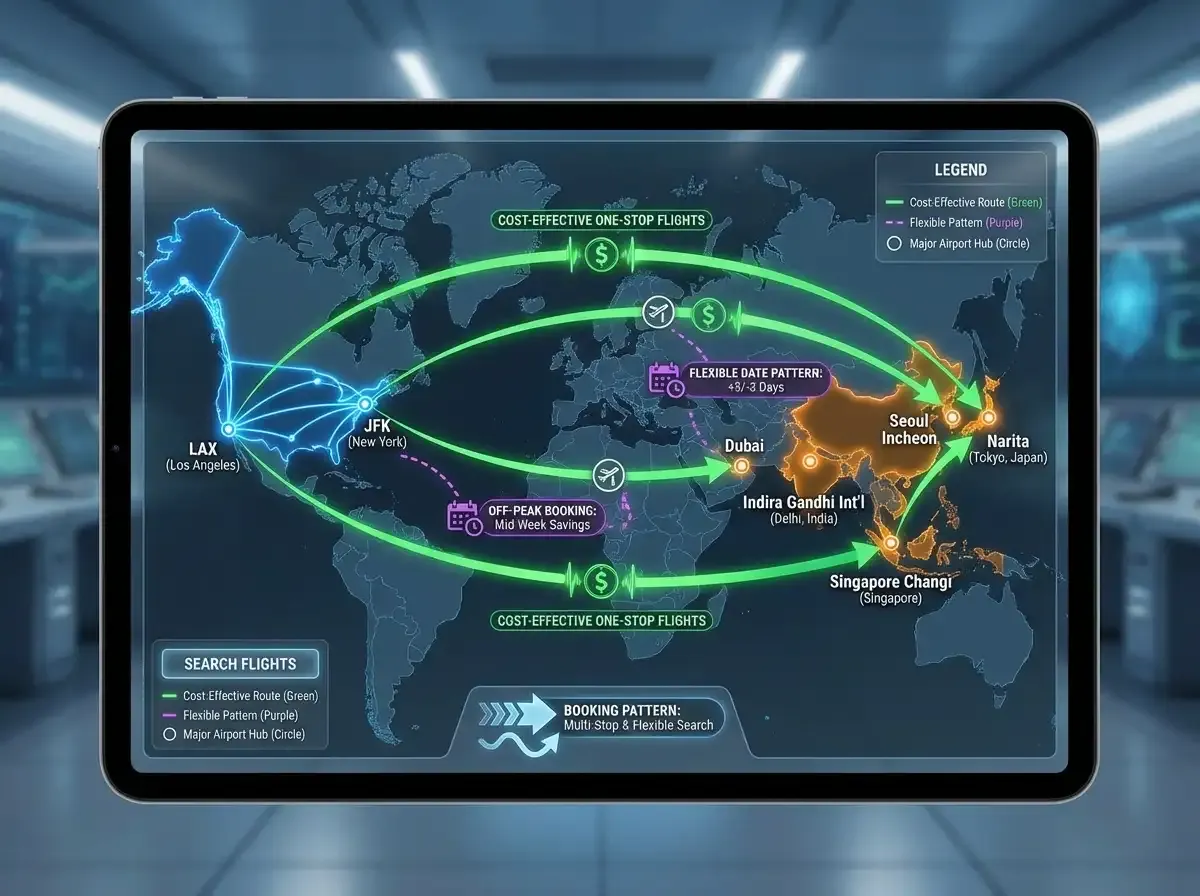
Asia is not one market. Fares can vary widely by region and by the airline alliances that dominate each corridor. When clients ask us for the “cheapest business class tickets to Asia,” we typically start by clarifying the destination region and what you value most: nonstop, newest seat, shortest total travel time, or best overall price.
High-demand routes (often best with early planning)
Japan, Singapore, and major Southeast Asia hubs can command higher public pricing, especially in peak seasons. If your dates are fixed, we typically focus on consolidator options, alternative gateways, and one-stop routings that protect comfort without inflating the fare. For destination-specific planning, see business class to Japan and business class to Singapore.
South Asia routes (value can depend heavily on connection quality)
For India, the best value often comes from balancing a fair price with a connection that does not add unnecessary fatigue. Timing, layover length, and aircraft type matter. If India is your focus, use business class to India to narrow your city pair and cabin priorities.
Multi-city Asia trips (where pricing can improve with smart construction)
If you are visiting two or more cities in Asia, a single multi-city ticket can price better than separate one-ways, and it can be easier to manage if plans change. This is where expert routing becomes a meaningful advantage, especially for open-jaw itineraries such as flying into one city and returning from another.
Airlines and Business Class cabins to prioritize
Not all Business Class products feel the same, even at similar price points. When we build your shortlist, we look beyond the fare and validate the experience: lie-flat quality, seat privacy, aircraft type, schedule reliability, and connection practicality.
- Lie-flat consistency: On some routes, older aircraft can still appear. We help you confirm seat type before you commit.
- Connection experience: A great lounge and a short, predictable layover can make a one-stop itinerary feel far easier than a longer nonstop with poorer timing.
- Cabin layout and privacy: If you are traveling solo, you may prefer a more private seat. Couples often prioritize paired seating.
- Service and dining expectations: Some travelers care most about sleep, others care about meal service pacing. We align the itinerary to your preference.
How Flight-Experts finds lower premium fares
Flight-Experts is built for travelers who want premium cabins with a smarter buying process. Instead of sending you to a booking engine, we assign a personal consultant who sources options across airlines and pricing channels, then presents the best matches for your trip.
What we handle for you:
- Search and comparison across multiple airlines and routings for Business Class to Asia
- Access to exclusive consolidator deals (when available) that can reduce cost versus published fares
- Seat selection support, meal preferences, and practical trip details
- Price drop monitoring and cabin upgrade alerts when applicable
Typical turnaround is fast. For many requests, you get options usually within 30 minutes. Complex Asia itineraries can take longer, especially if you want multiple date scenarios or very specific flight times. Consolidator availability also varies by season and route, so we set expectations clearly before you book.
How to request options (and what to send us)
If you want the best Business Class flight deals to Asia, the fastest path is to give us the right inputs upfront. Your quote is free and there is no obligation to book.
Step-by-step
- Send your trip basics: origin airport (or region), destination city, dates, passenger count, and any must-have timing constraints.
- Tell us your comfort priorities: nonstop vs one-stop, preferred airlines (if any), and whether you care most about sleep, privacy, or total travel time.
- We present options: typically within 30 minutes for straightforward roundtrips. We show you a short list that is actually bookable.
- You choose, we book: once you approve an itinerary, we handle ticketing and support details.
What to do if you are flexible
If your dates are flexible by even 1 to 3 days, tell us. That flexibility often improves the odds of finding a better fare while keeping a strong cabin and schedule.
Pricing overview for premium cabins to Asia
Below are typical starting ranges from our current services. Your exact price depends on origin city, seasonality, airline, routing, and availability of consolidator inventory.
| Service | Typical Range | Savings |
|---|---|---|
| Business Class Flight Booking | $2,000 – $8,000+ (varies by route and airline) | Up to 25-60% off published fares |
| Premium Economy Flight Booking | $800 – $3,000 (varies by route) | Competitive pricing through consolidator deals |
| First Class Flight Booking | $5,000 – $20,000+ (varies by route and airline) | Significant savings vs published fares |
| Complex Itinerary Planning | Varies by itinerary complexity | Expert routing can save significantly vs booking separately |
If you are deciding between Business and First for a flagship trip to Asia, we can quote both so you can compare the real price difference on your exact dates.
When to book Business Class to Asia for the best value
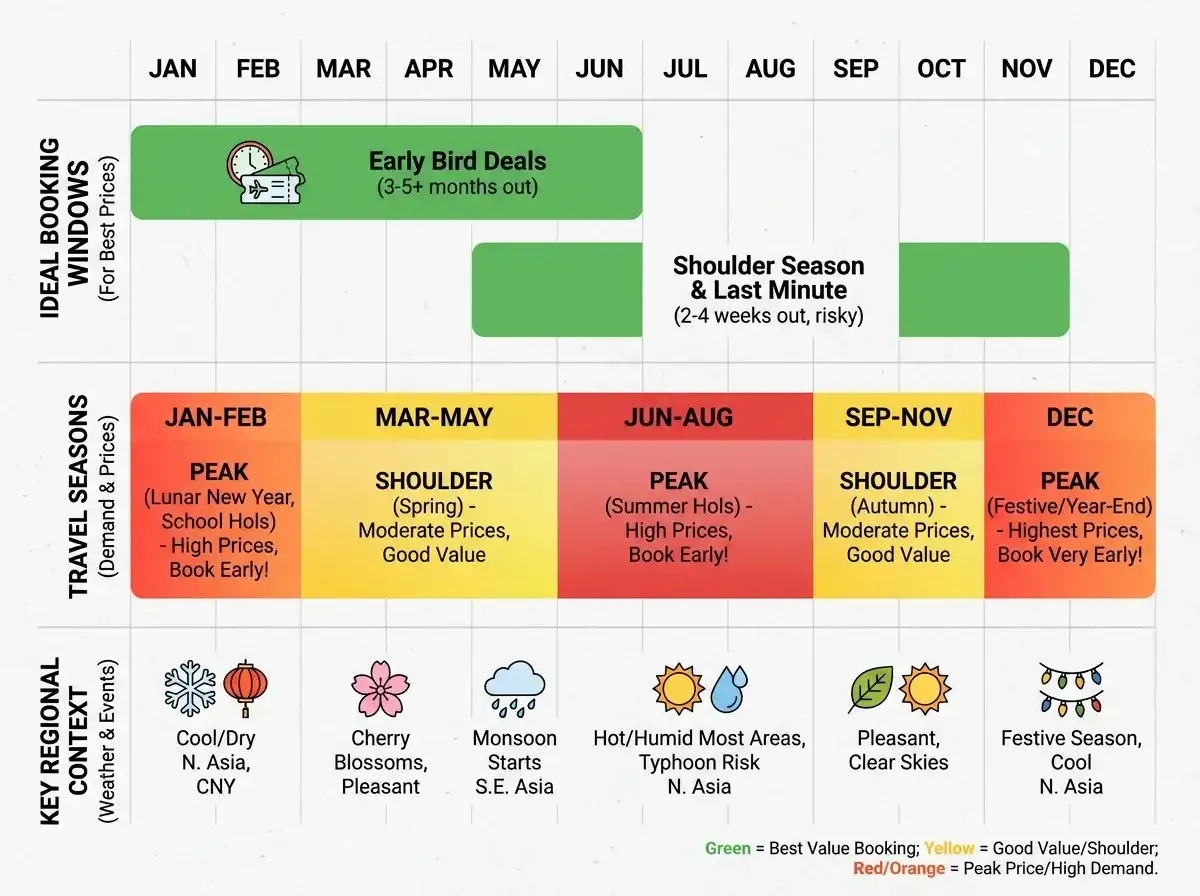
Here’s the thing: “the best time to book” depends less on a magic number of days and more on how many constraints you have. When you have fixed dates, a specific arrival window, and a nonstop preference, you are competing for a smaller slice of inventory. When you can accept a one-stop itinerary or adjust by a couple of days, pricing opportunities open up.
From a practical standpoint, what tends to work
- Peak periods reward earlier action: Holiday weeks, school breaks, and major event windows tend to price strongly and can sell through premium inventory faster.
- Shoulder-season travel offers more price movement: In quieter periods, we often see more workable routings and a wider range of fare rules to choose from.
- Weekday departures can matter: Depending on the route, shifting outbound or return by a day or two can be the difference between a “fine” price and a genuinely strong one.
What many travelers overlook about holding out
Waiting for a last-minute drop can work occasionally, but it is not a plan. On premium-heavy routes to Asia, the risk is that the remaining seats are either very expensive or tied to awkward schedules. If you want the best overall value, it usually makes sense to identify a good, bookable option, then decide based on the fare rules and your change tolerance.
How to evaluate Business Class seats on Asia routes (without getting surprised)
Two tickets can both say “Business Class” and still feel completely different in the air. The reality is that aircraft swaps and mixed fleets can change the seat you expected, especially when you connect or you pick a route served by multiple aircraft types.
What to confirm before you book
- Seat type and layout: Look for true lie-flat, then check whether the cabin is a 1-2-1 layout (more direct aisle access) or a denser layout where some seats require stepping over a neighbor.
- Privacy for solo travelers: If you value space and fewer sightlines, tell us you want a more private seat style so we can screen for it when we build your shortlist.
- Couples seating: If you want to talk and dine comfortably, paired center seats are often the best fit, but not every layout makes that easy.
- Long-haul segment quality: On a one-stop itinerary, the longest leg is the one that should do the heavy lifting for comfort. Sometimes that means picking a slightly longer routing if the long-haul aircraft and timing are better for sleep.
Mixed-cabin itineraries: when they are acceptable
On certain city pairs, you may see an itinerary where a shorter segment is in a different cabin than the long-haul leg. This can be fine when the premium seat is on the overnight or longest segment, and the shorter flight is timed well. If you are sensitive to consistency, tell us and we will screen those out.
Nonstop vs one-stop to Asia: what changes in price and comfort
Many travelers start with “nonstop only,” then soften once they see the pricing difference. Consider this: a smart one-stop can actually improve the experience if it breaks up the journey and gives you a predictable connection with a strong lounge and clean timing.
When nonstop is worth paying for
- You have a tight schedule on arrival: If you need to land and go straight into meetings, nonstop reduces connection risk.
- You want to protect sleep: Some travelers sleep best on one continuous overnight segment.
- You are traveling with complex luggage needs: Fewer transfers can reduce stress.
When a one-stop itinerary can be the better buy
- Price is a priority: One-stop routings often open up more competitive fare construction.
- You want better seat consistency: In some markets, the nonstop can be priced high or scheduled on older aircraft, while a one-stop option can place you on a more consistent long-haul product.
- You want a controlled break: A well-chosen connection can reduce fatigue, especially on very long itineraries.
Using miles or paid tickets: how to decide for Asia trips
Some travelers can use points for Business Class to Asia, and sometimes that can be a great outcome. The main question is not “cash or miles,” it is value and certainty: do you have the points, can you find the space, and does the routing actually work for your dates.
Think of it this way
- If your dates are fixed: A paid ticket can be more straightforward, especially when award seats are limited or require inconvenient connections.
- If you can be flexible: Award space can be a strong option if you can adjust by a few days or accept an alternate gateway.
- If you care about change rules: Some paid fares offer clear change conditions, while some award tickets can still involve fees, limited inventory, or complicated rebooking.
If you are unsure, you can request paid Business Class options and compare them against your best realistic points scenario. Many clients find that once you account for routing and time, the right paid ticket is the simplest way to protect comfort.
Last-minute Business Class to Asia: what is realistic
Last-minute premium travel is possible, but it is not consistently “cheap.” The closer you get to departure, the more the pricing is driven by who still needs to travel, not by what is left over. What we can do is focus on viable routings, reasonable connection times, and fare rules that match how uncertain your plans are.
What tends to help on short notice
- Being open to one-stop routings: This widens the pool dramatically.
- Using an alternate departure gateway: If you can start from a different major hub, it can create workable inventory that is not available from your closest airport.
- Prioritizing “sleep segments”: If you cannot get the ideal itinerary, we focus on placing Business Class on the overnight or longest segment, so you still arrive in better shape.
Explore more Asia route guides
FAQ
Is the quote really free, and am I obligated to book?
Yes. Flight-Experts provides free, no-obligation quotes. You can review the itineraries, pricing, and routing tradeoffs before you commit. If you want changes, such as different dates, a different departure airport, or a nonstop-only preference, tell your consultant and we will refine the options.
How quickly will I receive Business Class options to Asia?
For many standard roundtrips, options are presented usually within 30 minutes. Timing depends on complexity. Multi-city Asia trips, mixed-cabin requests, or highly constrained schedules can take longer because we validate inventory, fare rules, and practical connections before presenting choices.
How much can I save on business class flights to Asia?
Savings vary by route, season, and airline, but our Business Class Flight Booking service lists typical savings of up to 25-60% off published fares when consolidator pricing is available. Some trips will save less, especially during peak demand, but we will show you transparent comparisons so you can decide with confidence.
Can you help if I need a specific airline or seat style?
Yes. If you have strong preferences, such as wanting a specific carrier, an aircraft type, or a more private seat layout, tell us upfront. We will prioritize those constraints while still looking for strong value. If the preference materially raises the fare, we will show alternatives so you can weigh comfort versus cost.
What if I need to change my itinerary after booking?
Changes depend on the fare rules of the ticket that is issued. Your consultant can walk you through flexibility tradeoffs before you buy, including whether paying slightly more improves change conditions. After booking, we can continue to assist with schedule changes, re-accommodation options, and practical trip support.
Do you book Premium Economy or First Class to Asia too?
Yes. If Business Class pricing is high on your dates, Premium Economy can be a smart step up with a lower total cost. For milestone trips, First Class can make sense when the true incremental cost is reasonable for your route. We can quote multiple cabins side-by-side.
Can you handle multi-city Asia trips like Tokyo plus Singapore?
Yes. Multi-city and open-jaw itineraries are a core use case for our Complex Itinerary Planning service. These trips often need careful scheduling to avoid long layovers and to keep the best long-haul segments in a comfortable cabin. Send your cities and target dates, and we will design viable routings.
Any limitations I should know before I request options?
Flight-Experts is an online and phone-based service, not a walk-in office. Consolidator inventory is not guaranteed on every route or date, and availability can change quickly. Same-day booking is not guaranteed, and complex itineraries may take longer than 30 minutes to quote. We will set expectations clearly.
Is it better to book Business Class to Asia with miles or pay cash?
It depends on how flexible you are and how important the schedule is. If you have fixed dates, you may find that a paid Business Class ticket delivers a better routing and more predictable timing. If you can flex by a few days or depart from an alternate gateway, miles can be a strong option when award space appears. If you want, we can still quote paid options so you can compare them against your most realistic points plan.
Should I book a nonstop flight to Asia, or accept a connection to save?
Nonstop is often best when you need to reduce connection risk or you want one continuous sleep window. A one-stop itinerary can be the better value when it significantly reduces cost and the connection is short and predictable. If you tell us your priorities, such as sleep, total travel time, or nonstop-only, we will build options that match those constraints.
How can I avoid booking an older Business Class seat on an Asia route?
Before you ticket, confirm the aircraft and seat layout for the long-haul segment, not just the cabin label. Some routes rotate aircraft, and some airlines operate multiple seat generations. If seat privacy and direct aisle access matter to you, tell your consultant so we can screen for the layouts you prefer and help you confirm the seat type before you commit.
Are last-minute Business Class flights to Asia ever actually cheaper?
Sometimes, but it is not consistent. On many Asia routes, last-minute pricing can rise, especially around peak travel periods. What tends to work better is being flexible on gateways and accepting a one-stop routing. If you are booking close-in, we will focus on what is realistically available, then prioritize the long-haul segment so the comfort payoff is still there.
Ready to book Business Class to Asia with better pricing?
If you are serious about finding cheaper Business Class flights to Asia without sacrificing the seat and schedule that make the trip worth it, let us do the heavy lifting. You will get a personal consultant, a clear set of options, and straightforward guidance on the tradeoffs that matter. Your quote is free, and you can move forward only when the itinerary feels right.



