
Business class flights to Japan (2026 Guide)
Overview: what “great” business class to Japan looks like in 2026
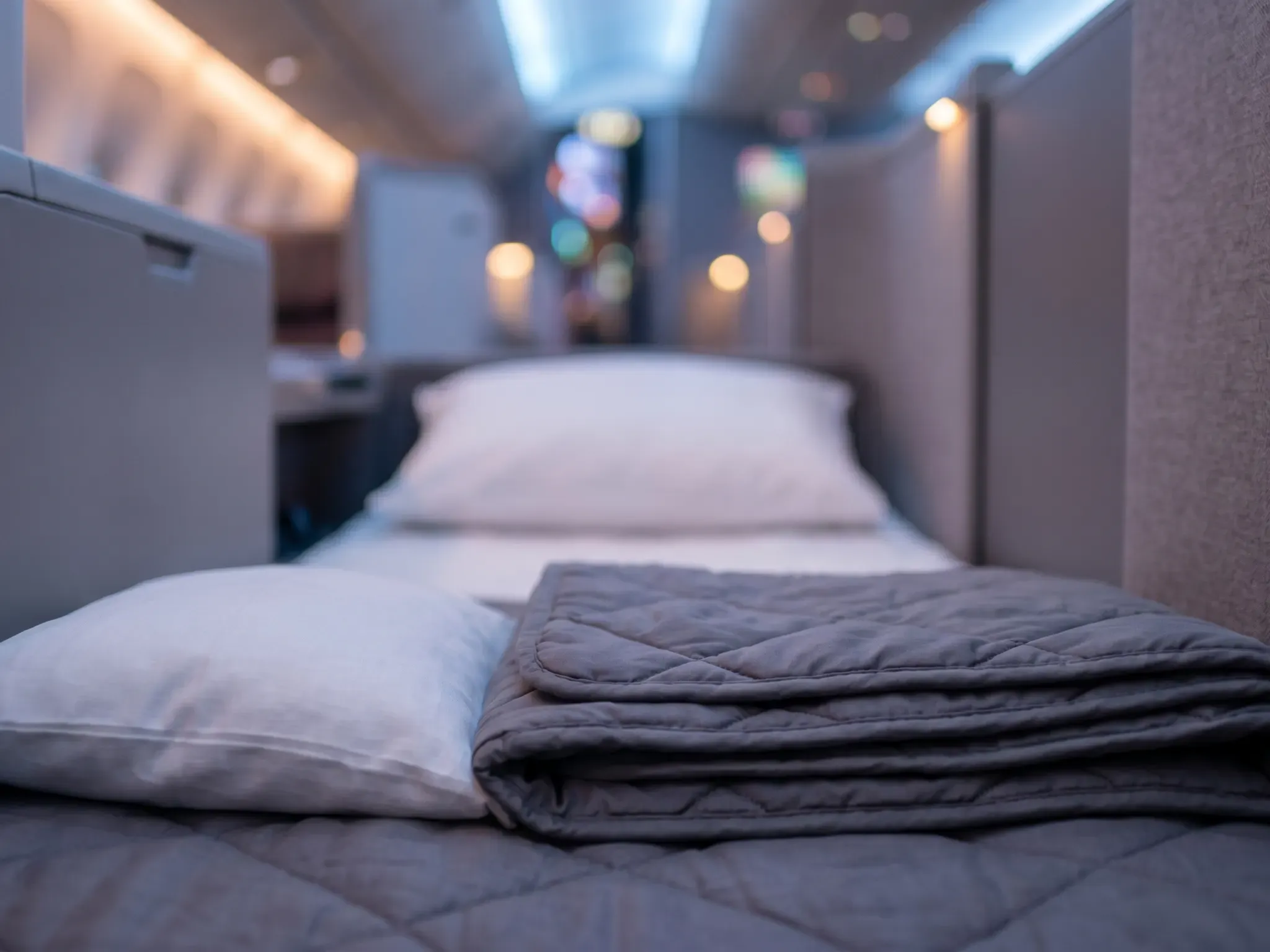
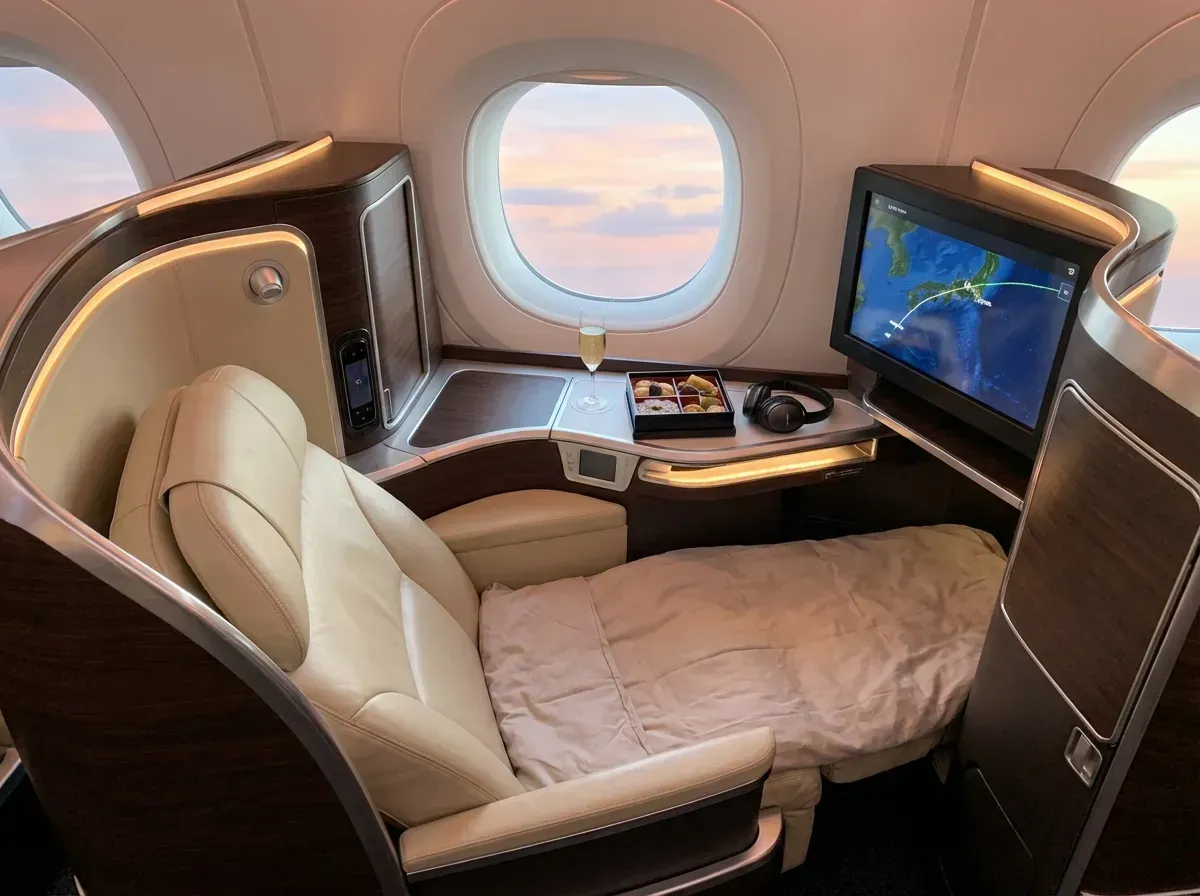
On most US to Japan routes, you are buying two things: sleep and a calmer end-to-end travel day. The best business class flights to Japan deliver a true lie-flat bed with enough privacy to stay asleep, dependable service pacing (so you are not being woken up repeatedly), and a strong ground experience during your connection or at the departure airport.
Seat design matters more than many travelers expect. A technically lie-flat seat can still feel mediocre if it has a narrow footwell, limited shoulder space, or a layout that forces you to climb over a neighbor. For most travelers, direct aisle access for every seat is non-negotiable on a long transpacific flight, especially on overnight departures to Tokyo.
Service style is the second big differentiator. Japanese carriers often excel at consistency and detail, while some Middle East and Singapore-based products win on “wow factor,” lounges, and long-haul dining polish. US carriers can be very competitive when you prioritize a nonstop route, schedule, and loyalty benefits, but cabin consistency varies by aircraft type.
If Tokyo is your destination, see our dedicated guide to business class to Tokyo for airport and timing considerations.
Quick picks: best business class flights to Japan by traveler type
- Best for sleep and consistency: ANA, Japan Airlines (JAL)
- Best for service polish and connections beyond Japan: Singapore Airlines
- Best for lounge and onboard “wow” on a one-stop itinerary: Qatar Airways, Emirates
- Best for nonstop convenience from the US and mileage strategy: United Polaris, Delta One, American Airlines Flagship (route and aircraft dependent)
Comparison table: best airlines for business class flights to Japan
| Airline | Typical routing to Japan | Best for | Watch-outs |
|---|---|---|---|
| ANA (All Nippon Airways) | Nonstop US to Tokyo + Japan connections | Reliable sleep, Japanese service consistency | Seat and cabin can vary by aircraft and route |
| Japan Airlines (JAL) | Nonstop US to Tokyo + domestic Japan network | Quiet cabin feel, strong soft product | Availability and aircraft type matter |
| Singapore Airlines | One-stop via Singapore (often longer but very polished) | Service, catering, premium consistency | Travel time can be significantly longer vs nonstop |
| Qatar Airways | One-stop via Doha | Qsuite-style privacy, lounges, premium feel | Routing can be indirect for North America to Japan |
| Emirates | One-stop via Dubai | Onboard comfort, lounges, global connectivity | Longer total trip time; aircraft variation by route |
Best airlines for business class flights to Japan: detailed reviews
1) ANA (All Nippon Airways) business class to Japan
Overview: ANA is a top choice when you want a calm, predictable premium experience and you value service consistency as much as the seat itself. For many travelers, ANA is the “set it and forget it” option for a business class flight to Japan.
Why it stands out: The overall experience feels intentionally quiet and efficient, which helps on overnight flights when your goal is to arrive functional.
Strengths
- Strong service consistency with a professional, detail-oriented style
- Cabin environment often feels quieter and more sleep-friendly
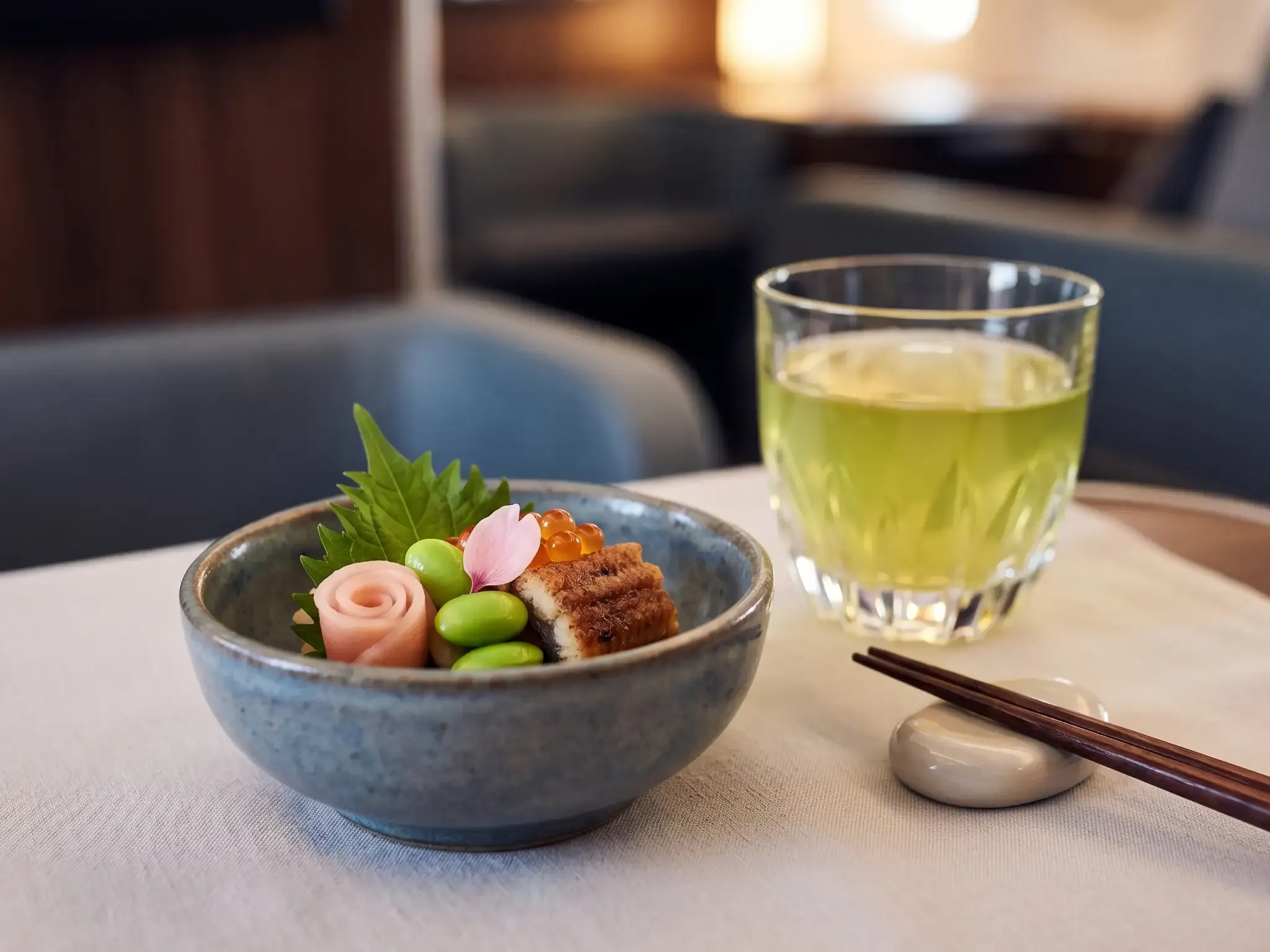
- Solid dining quality with Japanese options that suit long-haul pacing
- Good fit for travelers connecting onward within Japan after Tokyo
Considerations
- Aircraft and seat type can vary by route, which changes the “privacy” level
- Some configurations can feel more open than travelers expect
- Award and upgrade availability can be competitive in peak seasons
Who it is for: You want dependable premium delivery, you prefer a quieter cabin vibe, and you care about arriving rested more than having a party atmosphere onboard.
Verdict: A top-tier baseline for business class flights to Japan, especially for travelers who prioritize sleep and consistent execution.
2) Japan Airlines (JAL) business class to Japan
Overview: JAL competes at the top end for transpacific business class, with a polished soft product and a cabin feel that many travelers describe as calming. If you like premium service that is attentive but not intrusive, JAL is a strong fit.
Why it stands out: JAL tends to deliver a well-judged balance: hospitality, good rest potential, and a refined onboard rhythm.
Strengths
- Service style favors discretion and consistency, great for overnight flights
- Dining tends to be thoughtfully presented with strong Japanese choices
- Comfort-forward cabin feel that supports rest and reduced “noise”
- Strong choice for Tokyo arrivals with onward domestic connections
Considerations
- As with many carriers, the aircraft type can change the seat experience
- Popular dates can price high, especially on nonstop US routes
- If you want a highly social onboard vibe, JAL can feel understated
Who it is for: You care about a refined, calm premium experience and want a business class flight to Japan that reliably supports sleep and a smooth arrival day.
Verdict: One of the most “complete” business class options to Japan when the specific aircraft offers a competitive seat and privacy level.
3) Singapore Airlines business class to Japan
Overview: Singapore Airlines is often the safe recommendation for travelers who want consistently high service standards and premium cabin polish, even if it means a longer total travel time due to routing.
Why it stands out: End-to-end refinement, from cabin service to the overall premium tone, is where Singapore Airlines tends to win.
Strengths
- Strong service polish and well-paced dining on long-haul segments
- High consistency across the brand compared with many global competitors
- Excellent option if you want to build a broader Asia itinerary
- Premium feel remains strong even on connecting itineraries
Considerations
- Routing via Singapore can add meaningful travel time versus nonstop to Japan
- Connection timing can make the trip feel long if layovers are not well chosen
- Not always the best “value per hour” if Japan is your only destination
Who it is for: You value consistent premium service and do not mind adding travel time for a smoother, more polished experience, especially on multi-stop Asia trips.
Verdict: A premium, dependable choice when schedule and routing work, and when you value consistency over the fastest possible itinerary.
4) Qatar Airways business class to Japan
Overview: Qatar Airways is a frequent favorite among premium flyers because it often combines a highly private business class seat concept with a strong lounge and dining reputation. To Japan, the trade-off is typically routing efficiency.
Why it stands out: Privacy and a premium “suite-like” feel on many aircraft can be excellent for work, relaxation, and sleeping with fewer disturbances.
Strengths
- High-privacy business class experience on many routes and aircraft types
- Strong ground experience and lounge ecosystem for connections
- Dining and beverage service often feel closer to first class standards
- Great for travelers combining Japan with Europe, Middle East, or Africa routing
Considerations
- For many North America departures, the routing to Japan can be indirect
- Not all aircraft offer the same flagship seat, so flight selection matters
- Long connection itineraries can increase fatigue despite a great seat
Who it is for: You prioritize privacy, lounge time, and premium service polish, and you are open to a one-stop itinerary to Japan.
Verdict: Potentially outstanding, but you should choose flights carefully to get the best seat and avoid an overly long total travel day.
5) Emirates business class to Japan
Overview: Emirates is often chosen for its global network and premium onboard feel. For Japan itineraries, it is most compelling when you want a one-stop routing that pairs a strong ground experience with comfortable long-haul flying.
Why it stands out: Emirates tends to deliver a very “full service” premium journey, particularly for travelers who enjoy a more social onboard environment and extensive amenities.
Strengths
- Strong premium brand consistency and a comfortable long-haul rhythm
- Good lounge access experience on many itineraries
- Solid connectivity via Dubai for travelers combining multiple regions
- Works well for travelers who enjoy a lively onboard atmosphere
Considerations
- Total travel time can be longer and more indirect for US to Japan trips
- Business class seat experience can vary significantly by aircraft
- Not always the best option if your priority is the fastest Tokyo arrival
Who it is for: You want a premium, amenity-rich trip and do not mind routing via Dubai, especially if Japan is part of a broader multi-region itinerary.
Verdict: A very good premium option when the aircraft and routing line up, but not the default pick if minimizing total travel time is your main goal.
Booking guide: how to choose the right business class flight to Japan
When clients ask for the “best business class flights to Japan,” the fastest way to the right answer is to narrow the decision to five criteria. This keeps you from overpaying for features you will not use and helps you avoid the common pitfalls like selecting a great airline on a weak aircraft type.
1) Start with route logic: nonstop vs one-stop
If your priority is arriving in Tokyo ready for meetings, nonstop is often the best value, even if the onboard product is slightly less glamorous. A one-stop itinerary can be worth it when the premium seat is materially better for sleep, or when you are combining Japan with another region.
2) Prioritize seat privacy and direct aisle access
On an overnight to Japan, the seat is the product. Look for a true lie-flat bed, direct aisle access for every seat, and enough space to sleep without twisting. If you are traveling as a pair, check whether the best seats are “together” or separated by a console.
3) Evaluate the ground experience where it matters
Lounges matter most during long connections or when you arrive early. If you are connecting, favor airports where the premium lounge is reliably strong and the terminal layout is simple. If you are departing from a US hub, weigh whether the lounge experience meaningfully improves your day or if you would rather optimize schedule and arrival time.
4) Consider schedule, arrival airport, and onward Japan connections
Tokyo has two major airports (HND and NRT). Your choice can change your ground time, especially if you are connecting to another city. If you already know you are targeting Tokyo, use our guide to business class to Tokyo to plan the smoothest arrival.
5) Decide what “value” means for you (cash, miles, or flexibility)
Value can mean lowest published fare, best seat for the money, or most flexible change terms. Booking direct with an airline can be attractive for loyalty benefits and simpler post-ticket support. Working with a specialist can be valuable when you want help comparing aircraft, timing, and cabin differences across multiple carriers, or when you want assistance optimizing a multi-city trip.
Where Flight-Experts fits (and when to book direct)

If you are comparing multiple airlines, dates, or gateways, Business Class Flight Booking through Flight-Experts can save time and often improve value by tapping consolidator pricing that is not always visible on public booking sites. Typical pricing for this service ranges from $2,000 to $8,000+ depending on route and airline, and you get a personal consultant to help with seat selection, meal preferences, and price drop monitoring. For complex Japan trips (Tokyo plus Osaka, or Japan plus another country), Complex Itinerary Planning can be especially useful for open-jaw and multi-city routings. If business class is not pricing the way you want, Premium Economy Flight Booking can be a strong compromise on longer itineraries.
You can explore options under Business Class to Asia, or if you already have dates in mind, reach out via the Contact page for a personalized quote. Note: consolidator availability varies by season and route, and Flight-Experts is online and phone-based (no walk-in office), so it is not ideal for same-day booking needs.
Pros and Cons
Strengths
- Japan-bound business class has several truly world-class options (especially for sleep and service consistency).
- Nonstop routes can deliver excellent “value per hour,” particularly for business travelers with tight schedules.
- One-stop options via premium hubs can significantly improve lounge time, privacy, and onboard dining quality.
- Strong ability to tailor the experience: privacy-focused seats for solo travelers or paired seating for couples (aircraft dependent).
- With expert planning, multi-city Japan itineraries (Tokyo and Osaka) can be optimized without sacrificing rest.
Considerations
- Aircraft variation is a real issue: the same airline can feel very different depending on the specific plane.
- Peak seasons (cherry blossom and year-end holidays) can push business class tickets to Japan to very high price points.
- Indirect routings can add fatigue even if the seat and lounge are excellent, so total travel time should be part of your decision.
- Some travelers overpay for “brand name” business class when a nonstop on a good aircraft would be the better experience.
Frequently Asked Questions
What are the best airlines for business class flights to Japan?
For most travelers, ANA and Japan Airlines are top picks for comfort and consistent service on nonstop routes to Tokyo. If you are open to a one-stop itinerary for a more “luxury hotel in the sky” feel, Singapore Airlines, Qatar Airways, and Emirates are often excellent, but routing and aircraft selection matter. The best choice depends on whether you value nonstop convenience, seat privacy, lounge time, or total trip length.
How much are business class tickets to Japan in 2026?
Pricing varies widely by season, departure city, and how far in advance you book. As a general service range, Flight-Experts’ Business Class Flight Booking typically falls between $2,000 and $8,000+ depending on route and airline. For a more specific breakdown by timing and seasonality, refer to our Japan price guide.
Is it better to fly into Haneda (HND) or Narita (NRT) in business class?
Many travelers prefer Haneda because it can be closer to central Tokyo and can reduce post-flight ground time, which matters after a long overnight. Narita can still be very practical depending on your airline, schedule, and onward connections. The “best” arrival airport is the one that shortens door-to-door travel and aligns with your hotel or meetings, not necessarily the one with the most famous lounge.
What is the best business class seat layout for Japan flights?
For long-haul to Japan, prioritize a lie-flat seat with direct aisle access. Privacy features like a door or high shell walls can help you sleep, but they are secondary to bed length, footwell space, and how easily you can change positions. If you travel as a couple, confirm whether the best seats are close together or separated by consoles, since layouts vary.
Should I book business class to Japan directly with the airline?
Booking direct can be a strong choice when loyalty earning, upgrades, and airline-managed changes are your top priorities. It is also straightforward when you already know the exact flights you want. The trade-off is that public pricing is not always the best available, and you do not get help comparing aircraft or optimizing multi-city routings. A specialist can be useful when choices are not obvious.
Can a travel agency help me get better business class pricing to Japan?
Sometimes, yes. Specialist agencies may have access to consolidator fares on premium cabins that are not always visible through public booking tools. Flight-Experts focuses on premium cabins and can provide a free quote and side-by-side options, often within about 30 minutes depending on complexity. Availability varies by route and season, so it is not guaranteed, but it is worth checking.
What is the best way to plan a Tokyo and Osaka business class itinerary?
An open-jaw itinerary can be a smart approach, for example flying into Tokyo and out of Osaka (or the reverse), which can reduce backtracking on trains. This is where routing expertise matters, especially when mixing nonstop and one-stop options or coordinating connection times. If you want help designing a multi-city routing, Flight-Experts’ Complex Itinerary Planning service is built for this use case.
Are US airlines good options for business class flights to Japan?
They can be, especially when a nonstop schedule fits your trip and you value mileage earning and status benefits. The main caution is product consistency: seat type, privacy, and overall cabin feel can vary by aircraft and route. If you are considering a US carrier, verify the aircraft operating your dates and compare it against top international options on total trip time, sleep potential, and flexibility.
Is premium economy worth considering instead of business class to Japan?
If business class pricing is high for your dates, premium economy can be a practical middle ground: more space, better recline, and generally a calmer cabin than economy. It will not replace a lie-flat bed on an overnight flight, but it can deliver meaningful comfort gains at a lower price point. Flight-Experts can quote premium cabins across options via Premium Economy Flight Booking.
How far in advance should I book a business class flight to Japan?
For peak travel windows, booking earlier usually gives you better choice of flights and seats, not just better pricing. For off-peak periods, you may see more flexibility in schedules and occasional pricing opportunities. The best approach is to start with a shortlist of acceptable departure dates and gateways, then compare aircraft types and arrival times. If you want help narrowing options, request a quote through Flight-Experts.
Key Takeaways
- The “best” business class to Japan depends on your priorities: nonstop convenience versus maximum privacy and lounge quality.
- ANA and JAL are standout choices for calm, consistent premium travel on Japan-bound routes.
- Singapore Airlines, Qatar, and Emirates can be excellent on one-stop routings, but total travel time and aircraft selection matter.
- Always verify the aircraft and seat layout, because product consistency varies even within the same airline.
- Use a price reference point first, then choose the cabin that best supports sleep and your arrival-day schedule.
Conclusion
The best business class flights to Japan are the ones that help you arrive with energy: a seat that truly supports sleep, a service style that matches your preferences, and a routing that does not add unnecessary fatigue. Start by deciding whether you need a nonstop to Tokyo or if a one-stop itinerary is acceptable, then narrow by aircraft and seat layout. If you would like a side-by-side comparison across multiple airlines and dates, Flight-Experts can provide a free, no-obligation quote and help you choose the best overall value for your trip. Explore Business Class Flight Booking options, or contact our team through the Contact page to start planning.



