
How to Upgrade to First Class: When to Ask, Bid, or Buy
This guide explains how to upgrade flight to first class with a practical focus on timing, eligibility, and value. It avoids vague myths and stays close to real airline behavior. Expect to spend about 12 minutes reading, and the difficulty level is Intermediate. If you are comparing premium cabin paths more broadly, including whether a lower step up makes more sense on certain routes, see this guide on upgrade to business class.
Quick overview of how to upgrade flight to first class
- Confirm that your flight actually offers a true first class cabin.
- Review your fare type, airline rules, and eligibility for paid or bid upgrades.
- Watch for upgrade offers in the airline app, email, and manage-booking portal.
- Compare fixed-price upgrades with bid offers and airport day-of-departure options.
- Ask through the channel most likely to control inventory, not just at the gate.
- Accept quickly if the route, aircraft, and total experience justify the premium.
What you’ll need to upgrade flight to first class
- Your booking reference and airline confirmation details
- The exact aircraft type and route
- Your original cabin and fare class information
- Access to the airline app or manage-booking portal
- A clear ceiling for what you are willing to pay in $
- Flexibility, because upgrade inventory is always subject to availability
Step 1: Identify whether true first class exists on your route
Start by confirming what the airline means by first class on your exact flight. On many domestic routes, “first class” may mean a larger recliner seat with priority services. On long-haul international routes, true first class is a materially different experience. It often includes a smaller cabin, more privacy, premium dining, enhanced lounge access, and at times chauffeur or ground-service coordination.
This distinction matters because how to upgrade flight to first class changes with the product. Airlines such as Emirates, Lufthansa, ANA, JAL, Singapore Airlines, Swiss, Etihad, and Air France may offer genuine long-haul first class on select routes, but not across every aircraft or frequency. If your goal is a premium cabin outcome rather than the top published label, reviewing Airline Business & First Class Reviews can help you judge whether a specific first class product is worth pursuing.
If your flight does not have a true first class cabin, you cannot really upgrade flight to first class on that itinerary. Instead, you are choosing the highest cabin that aircraft offers. For a broader product overview, see what is first class flight.
Step 2: Check your original ticket and fare conditions
Before you start chasing an upgrade, inspect the ticket you already hold. Some fares are far more upgrade-friendly than others. Airlines may limit upgrade eligibility based on fare class, route, sales channel, or whether the ticket was issued by the operating carrier or a partner airline.
Look for three things: whether paid upgrades are allowed, whether invitation-only bidding is available, and whether day-of-departure offers are typical on that carrier. Deeply restrictive fares may still receive paid offers. However, the pattern is less predictable. Codeshare tickets can also complicate matters because the marketing carrier and operating carrier do not always show the same upgrade options.
That is one reason experienced travelers avoid broad assumptions from online searches. In practice, how to upgrade your flight to first class usually depends on the exact fare basis and operating airline rather than the route name alone.
How to upgrade flight to first class when airline priority controls the seat
Fare rules are only one part of the picture. Upgrade outcomes may also depend on elite hierarchy, waitlist position, cabin demand, operational priorities, and the point in the journey when the airline processes requests. Some carriers manage premium upgrades centrally before departure. Others confirm more inventory during airport control. On heavily traveled premium routes, especially those with a very small true first class cabin, the airline may protect that space until quite late.
It also helps to separate three different upgrade paths. A confirmed paid upgrade means the airline has sold you the seat and changed your cabin. A waitlisted request means you asked for the seat, but the airline has not cleared it. An operational upgrade is different again. It is usually driven by oversales or irregular operations rather than passenger preference.
Travelers often group these paths under the same word, but airlines do not. Therefore, polite airport requests rarely override premium cabin control. Courtesy still matters. Yet on high-demand long-haul flights, inventory management usually decides the outcome. If you want clarity, focus on channels that can display or confirm a paid option instead of assuming a check-in conversation can change the system. For carrier rules and consumer protections, review the U.S. Department of Transportation at https://www.transportation.gov/airconsumer.
Step 3: Monitor airline offers to upgrade flight to first class
Many first class upgrades appear quietly, long before you reach the airport. After ticketing, monitor your email, the airline app, and the manage-booking page regularly. Some carriers release fixed-price offers in stages. Others send bid invitations only on select itineraries.
The strongest window is often after ticketing but before online check-in opens. During that period, airlines balance cabin load, forecast demand, and inventory control. A first class offer that appears seven days before departure may not return once it expires. Another may improve later, but that is never guaranteed.
If you are flying a carrier where route-specific upgrade behavior is a major factor, an airline-focused article such as this guide to an AA upgrade to first class can be useful because American’s process differs from several international carriers. The same “wait and see” approach does not perform equally well across airlines.
Step 4: Evaluate whether to bid, buy, or request at check-in
There are three main paths to a first class upgrade: a fixed-price purchase offer, a bid upgrade, or a day-of-departure request at check-in or the airport service desk. Each path carries a different level of certainty and risk.
Fixed-price upgrades are the clearest option. You know the cabin, the price in $, and the timing. This is often the most rational choice when the flight is long enough for the cabin difference to matter and the offer appears on an airline known for a truly differentiated first class product.
Bid upgrades can work well if the airline supports them, but they require discipline. Bid only what you would genuinely be comfortable paying if accepted. The existence of a bid option does not mean the upgrade will clear cheaply. On some flights, airlines use bidding simply to test the highest amount a passenger will offer for unsold premium inventory.
Airport requests can still succeed, especially on routes with softer premium demand, but they are less strategic than many travelers assume. By airport stage, the airline may already have allocated inventory to operational needs, elite priorities, or earlier paid offers. Is it cheaper to upgrade at the airport? Sometimes, yes. Just as often, the better value appeared earlier in the booking cycle and disappeared.
| Upgrade path | What the article says | Main tradeoff |
|---|---|---|
| Fixed-price purchase | You know the cabin, the price in $, and the timing. | Higher certainty, less flexibility |
| Bid upgrade | The airline may allow bidding on select itineraries, but the result is not guaranteed. | Potential value, but uncertain outcome |
| Airport request | It can work, but inventory may already be allocated by the time you reach the airport. | Last-minute chance, weakest control |
Step 5: Ask at the right moment and in the right channel
If you are going to ask, ask where inventory decisions are most visible. Start with the airline’s direct servicing channels: the app, manage-booking portal, reservations team, or premium customer support desk if your ticket provides access. Gate agents handle boarding control, standby lists, seating issues, and disruptions. They are not always the best source for creative upgrade solutions.
The right timing depends on the channel. Before check-in, ask whether a confirmed paid upgrade is available. During online check-in, review any prompts carefully because some carriers present limited-time cabin offers at that moment. At the airport, ask at the staffed check-in counter rather than waiting until boarding if your intention is to purchase an upgrade.
Be precise. Ask whether a confirmed first class upgrade is available for purchase today, and whether the fare includes all first class ground and lounge privileges tied to that route. That point matters because some upgrade types may not reproduce every published first class benefit.
What a first class upgrade may and may not include
An upgraded seat does not always recreate the airline’s full published first class experience. In many cases, you may receive the onboard cabin, meal service, and seat assignment associated with first class. However, certain ground privileges could vary by airline, route, and upgrade type. Lounge access, dedicated check-in, priority security handling, chauffeur transfers, and additional baggage allowance are all areas where the rules may differ.
This matters most on international itineraries where the ground component is part of the value. Some airlines treat a confirmed paid upgrade almost like a reissued premium ticket. Others provide the seat without every service layer. Bid upgrades and day-of-departure airport upgrades can be even less consistent. A traveler may move into first class onboard, yet still find that chauffeur service, private terminal access, or a higher baggage entitlement does not apply.
Before accepting any offer, verify exactly what is included. That is especially relevant on routes where first class is defined not only by the suite itself, but by pre-flight handling and lounge quality. Cabin products and ground privileges may also change over time. Therefore, if the experience details are central to your decision, current confirmation from the operating carrier or a premium travel advisor is the most reliable way to assess value. You can also compare likely inclusions in this guide to first class amenities.
Step 6: Decide quickly when the offer is genuinely worthwhile
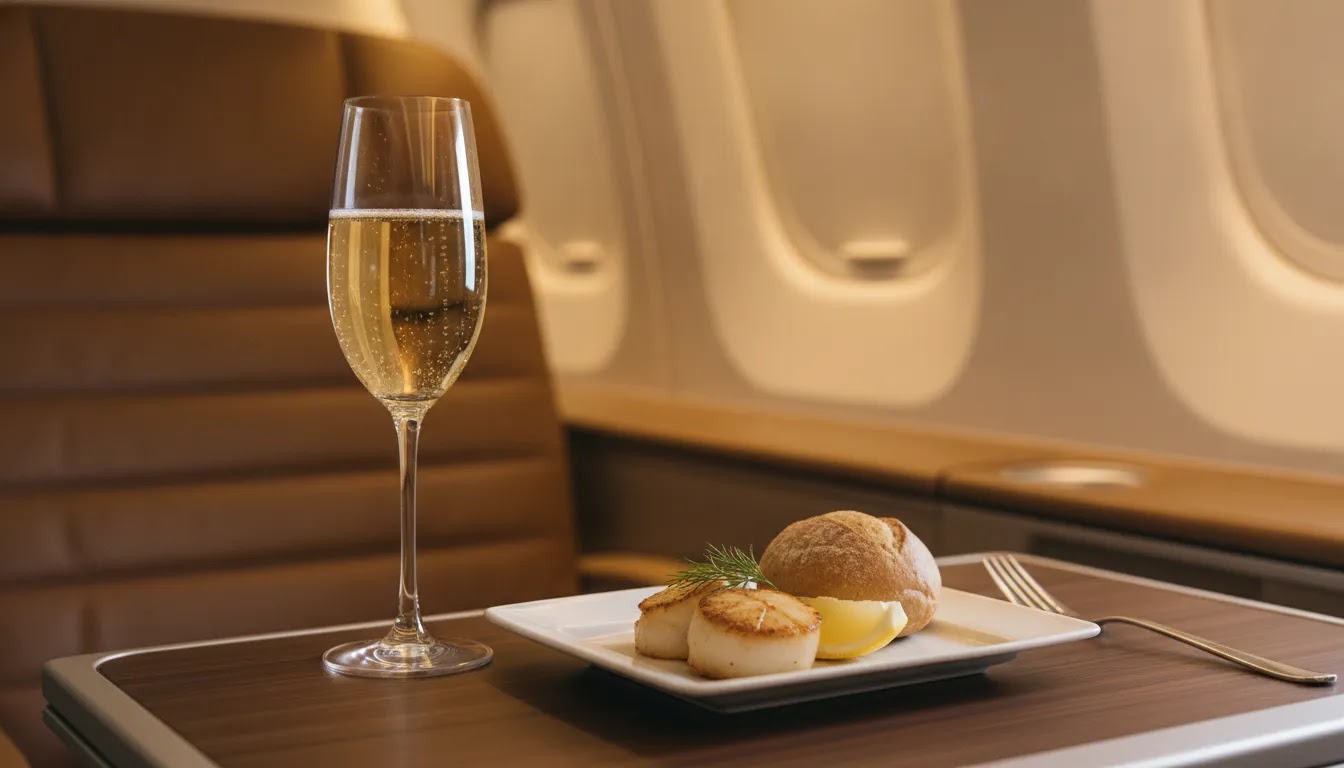
Once a credible offer appears, evaluate the whole experience, not just the seat number. On some flights, first class means a private suite, elevated bedding, premium champagne, dine-on-demand service, and markedly stronger ground handling. On other flights, the difference from business class is narrower and may not justify the added spend.
Route length matters. A daytime five-hour segment may not deliver the same value as an overnight long-haul journey where privacy, sleep quality, and quiet service become central. Aircraft matters as well. A flagship first class cabin on one plane may be far more compelling than an older product on another.
Travelers who prefer a managed, concierge-style approach sometimes ask a specialist to review whether the offer is sensible in context. Flight Experts focuses on premium cabin bookings, including Premium Flight Booking & Tips and first class itineraries that may range from about $5,000 to $20,000+ depending on route and carrier, with service features that can include lounge access coordination, chauffeur arrangements, and white-glove booking support. For complex premium travel, Mike Chirilenco’s advisory model is less about impulse buying and more about matching the right cabin to the actual journey.
When booking first class outright may be smarter than waiting to upgrade
Waiting for an upgrade is not always the smartest strategy. On milestone trips such as honeymoons, anniversaries, major birthdays, and time-sensitive business journeys, uncertainty may work against the experience you want to create. The same applies to overnight long-haul flights where sleep quality matters, tightly timed international connections where ground handling is part of the appeal, and routes with very limited first class inventory from the outset.
A confirmed first class booking gives you certainty from the moment the trip is ticketed. You know the cabin you are getting, the schedule you are building around, and in most cases the ground privileges attached to that fare. Later offers and bids may produce an excellent result, but they remain conditional until the airline confirms them. For some travelers, especially those planning around a special occasion, that uncertainty is not a worthwhile trade.
This is also where expert planning can outperform upgrade chasing. Rather than hoping for inventory to appear later, a specialist may help you choose the carrier, aircraft, departure time, and route where first class is strongest from the beginning. That approach is often more effective on flagship international services, where the difference between one airline’s first class and another’s can be considerable and where true availability may be limited well before departure. If you are weighing published fares first, review how much does first class cost.
Common mistakes when you upgrade flight to first class
- Assuming every “first class” label means the same experience. Domestic recliner products and international suite-style cabins should not be valued the same way.
- Waiting only for the airport. Some of the most reasonable paid offers appear earlier through digital channels and never reappear at check-in.
- Bidding emotionally. A bid should reflect your actual ceiling, not your excitement about the trip.
- Ignoring fare rules. Your original ticket may shape which upgrade paths are available.
- Judging value without checking the aircraft. The cabin on paper may differ significantly from the cabin on your actual flight.
What to do next if you want to upgrade flight to first class
If you have not booked yet, begin by identifying the exact carrier, route, and aircraft where first class is genuinely distinct. Then decide whether you want to buy into first class from the start or wait for a structured upgrade opportunity. If your trip may work just as well in a strong business class product, compare that path separately rather than treating first class as the automatic answer.
For more route and cabin context, review broader premium booking guidance and airline-specific first class analyses before you commit. If the itinerary involves multiple cities, mixed cabins, or high-stakes timing, a specialist can help evaluate whether an upgrade offer reflects real value or simply clever airline yield management. For general airline policies and travel requirements, the official TSA site at https://www.tsa.gov/travel can also help with airport-day planning.
Frequently Asked Questions about how to upgrade flight to first class
Do first class upgrades get cheaper closer to the flight?
Sometimes, but not reliably. Airlines may reduce the price of a paid upgrade closer to departure if they expect unsold premium inventory. They may also withdraw offers if demand strengthens or seats are needed for operational reasons. Waiting can work, but it is not a dependable rule. The best approach is to compare each offer against the route, aircraft, and expected first class experience.
Is it cheaper to upgrade at the airport?
It can be, especially if the airline is trying to monetize remaining premium seats on the day of departure. It can also be worse than an earlier digital offer, or unavailable altogether. Airport pricing is highly situational. Travelers should treat it as one possible channel, not the default strategy for securing a worthwhile first class upgrade.
How much does it cost to upgrade flight to first class?
There is no single number that applies across airlines. The amount may vary by route length, original fare, aircraft, departure window, and the airline’s commercial strategy. A domestic upsell may be modest compared with a long-haul international move into a true first class suite. Any amount shown by the airline should be judged in relation to the actual cabin and included ground experience.
How do you get a first class flight upgrade for free?
Complimentary upgrades into true international first class are uncommon. Operational upgrades do happen, but they are not something travelers should plan around. Elite status, irregular operations, and oversold cabins may influence outcomes, yet none of that guarantees a move into first class. A practical strategy centers on confirmed paid or bid opportunities rather than hoping for an unexpected free outcome.
Is bidding better than buying a fixed-price upgrade?
Buying is usually better if the price is reasonable and you want certainty. Bidding can be attractive when the airline offers it on a route where upgrade demand appears softer, but it introduces uncertainty and may not include the same clarity around timing. If the trip is important, many travelers prefer a confirmed paid upgrade over a speculative bid.
Can you upgrade American Airlines to first class after booking?
Yes, in many cases, but the path depends on the route, the original ticket, and whether American is selling a direct upgrade or processing requests through its own hierarchy. The details differ between domestic first class, premium transcontinental service, and long-haul partner itineraries. Reviewing an airline-specific process is often more useful than relying on a generic rule.
How do I upgrade my ticket to first class?
Start by checking whether your airline offers a confirmed paid upgrade, a bid program, or an airport purchase option for your exact booking. Then verify that your fare is eligible and confirm whether the flight actually has a true first class cabin. In most cases, the most reliable path is through the airline app, manage-booking portal, or reservations team rather than waiting to ask at the gate.
How easy is it to get upgraded to first class?
That depends heavily on the route, airline, aircraft, and the type of first class involved. Domestic first class on some routes may be more attainable than a long-haul international first class suite with only a few seats for sale. Travelers should assume that true first class upgrades on premium international routes are selective and inventory-controlled, not casually granted.
How do I upgrade to first class after buying tickets?
After booking, monitor your email and manage-booking page for upgrade offers, and check again as departure approaches. Some airlines present fixed-price offers shortly after ticketing, while others may surface options during online check-in or through direct servicing channels. If nothing appears automatically, contact the operating carrier and ask whether a confirmed first class upgrade is available for purchase on your itinerary.
How to get upgraded to first class on international flights?
International upgrades require more precision because true first class cabins are limited and the value difference can be substantial. Confirm the aircraft, understand your fare rules, and watch for structured upgrade offers well before airport day. If the trip is important and the route has a very small first class cabin, booking the cabin outright from the beginning may be more sensible than relying on waitlists or last-minute availability.
Key Takeaways
- First class upgrade success usually depends more on timing and eligibility than on asking at the gate.
- Always confirm whether your flight offers true first class or a narrower premium product.
- Monitor the airline app and manage-booking page regularly after ticketing.
- Fixed-price offers provide certainty, while bids trade certainty for possibility.
- The value of an upgrade should be judged by route, aircraft, and the full ground-to-air experience.
Conclusion
A first class upgrade works best when you treat it as a timing decision, not a last-minute favor request. Travelers who understand the cabin, the fare, and the airline’s upgrade channels put themselves in a stronger position than those who simply hope something opens at the airport. That matters most on long-haul journeys where the difference between business class and true first class can be substantial.
For travelers arranging premium long-haul itineraries, Flight Experts offers first class booking support with a personal consultant, usually with response times around 30 minutes, and a concierge-style process built around individual preferences rather than automated inventory screens. If you would like an expert view on whether to buy into first class now or wait for a more favorable opportunity, speak with a luxury travel specialist at Flight Experts.



