
Business Class From Chicago (ORD): Best Routes

ORD is especially compelling because it combines one of the country’s strongest long-haul networks with the concentrated hub power of United and a meaningful American Airlines presence. That combination may create unusually practical Business Class options to Europe and selected onward global gateways. As a result, many travelers can avoid the compromises that often come with positioning flights. If you are comparing Chicago with other major departure cities, including flights from New York, the distinction is less about airport prestige and more about nonstop structure, aircraft consistency, and alliance fit. For discerning travelers, that is where ORD becomes strategically interesting.
Why Business Class Flights from Chicago Work So Well
Chicago O’Hare occupies a useful middle ground in the U.S. premium market. It is large enough to support broad intercontinental flying. However, its real strength comes from network concentration rather than sheer size.
For Business Class travelers, that often translates into more nonstop choices and better schedule depth on major corridors. It also improves your chance of matching the route to your priorities. For example, you may want lie-flat sleep on an overnight Atlantic crossing, a same-alliance onward connection, or a familiar elite ecosystem.
United’s hub strength is particularly relevant at ORD because it supports a wide range of international departures with Polaris branding and Star Alliance connectivity beyond the first long-haul leg. American’s presence adds another layer, especially for travelers who prefer its transatlantic network logic, Flagship service touchpoints, or oneworld continuity. Depending on date and aircraft assignment, that dual-carrier foundation may make ORD more flexible than many single-hub cities.
Where United and American Create the Most Value
The distinctive advantage at ORD is not simply that both airlines are present. Instead, they create different kinds of value for different premium travelers.
United typically appeals to travelers who want hub depth, broad Star Alliance reach, and a straightforward bridge from domestic feeder flights into long-haul Polaris service. On a well-timed ORD departure, that may mean a smoother same-terminal rhythm. It may also mean easier baggage through-check on a multi-segment ticket and stronger onward access to Europe, Asia, or the Middle East via partner carriers.
American’s strength from Chicago is often more selective, but that selectivity can be useful. If your preferred route aligns with American’s long-haul schedule, the value may come from cleaner oneworld continuity, attractive East Coast or European partner integration, and a product that some travelers find especially suitable for transatlantic business-oriented schedules.
For many Chicago departures, the real decision is not United versus American in the abstract. It is specific aircraft, specific route timing, and specific onward logic. A polished premium itinerary may depend on whether the overnight leg offers direct aisle access, whether the return avoids a punishing midday connection, and whether the lounge and terminal flow support a calm departure experience.
Five Chicago Business Class Route Types Worth Prioritizing
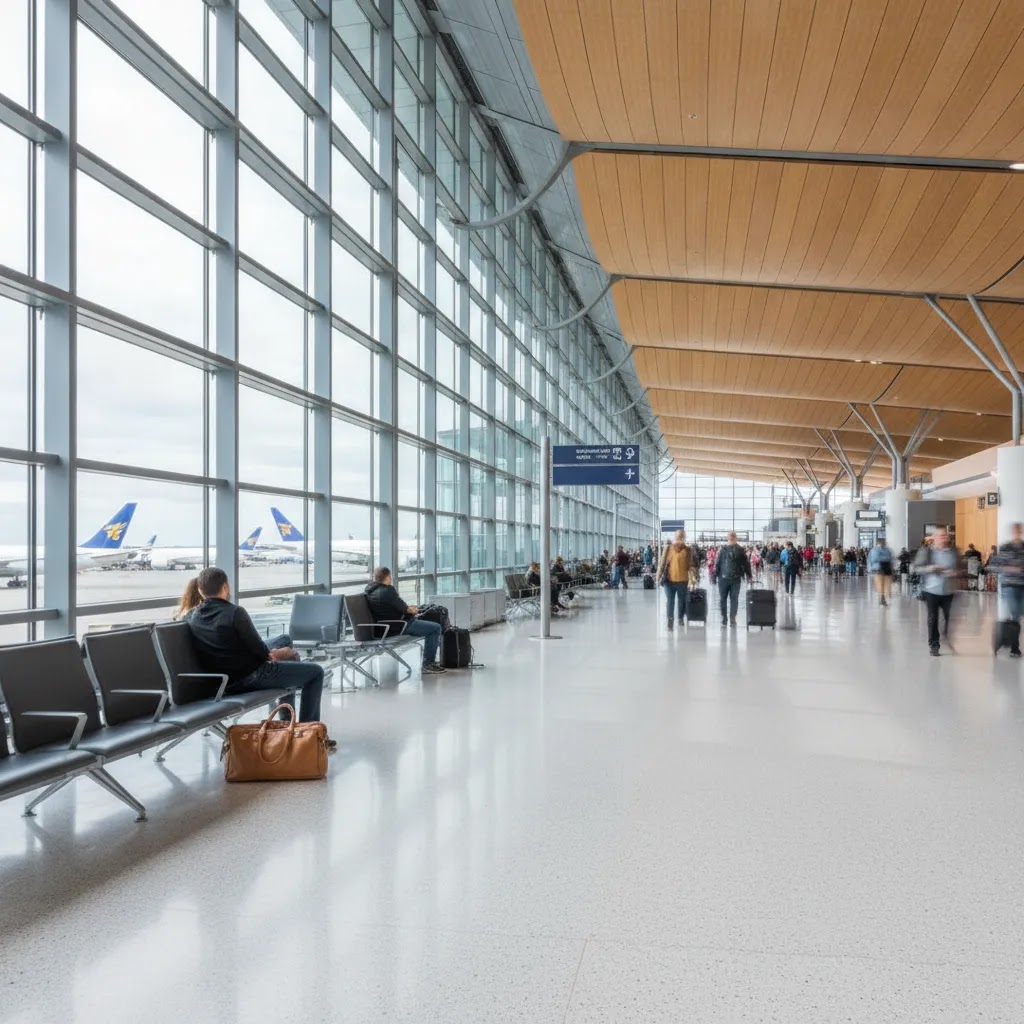
Rather than ranking routes by name alone, it is more useful to group the strongest ORD premium opportunities by how they function for the traveler.
1. Core Transatlantic Financial Centers
Chicago nonstop service to major European business capitals is usually the most dependable place to start. These routes often justify Business Class because they combine overnight timing, strong corporate demand, and a higher likelihood of competitive premium cabin quality. For a traveler who needs to arrive capable of working or beginning a private itinerary immediately, these are often the most rational ORD bookings.
2. High-Value Western Europe Leisure Gateways
For anniversary trips, summer cultural travel, or refined multi-city journeys, nonstop service to Western Europe may offer the right mix of comfort and simplicity. A direct ORD departure can remove the friction of an East Coast connection before an overnight sector. In practice, that benefit is often more meaningful than it first appears.
3. Select Long-Haul Flagship Routes on United
United’s long-haul network from Chicago may be especially compelling where the route functions as both a destination flight and a Star Alliance bridge. That matters for travelers continuing deeper into Europe, Asia, or the Middle East on a single coordinated itinerary. The elegance lies in the connection architecture, not just the seat itself.
4. American-Operated Premium Business Markets
Where American offers a true long-haul nonstop from ORD, the appeal may center on alliance preference and traveler familiarity. Clients who already favor oneworld carriers, or who intend to connect onward on a partner, may find these routes strategically cleaner than a mixed-carrier itinerary.
5. Nonstop Gateways That Launch Broader Multi-City Trips
Some business class flights from chicago are most valuable not because Chicago is your final market, but because the first nonstop leg creates a better opening move for a larger itinerary. That is especially true for travelers planning open-jaw Europe journeys, two-center luxury vacations, or corporate schedules that mix meetings and leisure. In those cases, the first long-haul segment should be evaluated as part of the whole trip, not in isolation.
Key ORD Nonstop Markets for Business Class Flights from Chicago
Many travelers approach ORD as a single route map. In practice, it is more useful to think in regions. Chicago’s nonstop strengths vary by season, aircraft assignment, and how reliably a route supports a consistent Business Class experience. For discerning travelers, the goal is not simply to find a nonstop. It is to choose the nonstop that is most likely to deliver the cabin, timing, and onward continuity you expect.
Europe: The core market for business class flights from chicago
Europe remains the core nonstop region from Chicago, and it is typically where you will see the most schedule depth. This matters because multiple daily options can let you prioritize the more sleep-friendly departure, the better aircraft, or a return flight that protects your final day on the ground.
Seasonality may still play a role, particularly on leisure-heavy routes where frequencies can increase in summer and taper in shoulder seasons. In those periods, aircraft type and cabin configuration may change. Therefore, it is wise to verify the specific operating aircraft rather than relying on what you flew last year.
Asia and the Middle East: Strong routes, but more route-dependent
Asia from ORD can be excellent, but it is more route-dependent. On certain city pairs, a nonstop is the most composed way to cross the Pacific. On others, nonstop service may be limited in frequency, operate seasonally, or be subject to aircraft swaps that materially change the seat and cabin feel.
The reality is that a single well-chosen connection can sometimes deliver a more consistent premium cabin. This is especially true if it places you on an airline and aircraft combination that you would actively choose rather than simply accept. As a result, many travelers should view Chicago as the start of a long-haul strategy, not as a requirement that every segment be nonstop.
The Middle East is often best approached as a gateway region. Depending on the specific market, nonstop options from Chicago may be limited or may not operate daily. In those cases, one connection through a major European hub can provide a refined path with strong lounge infrastructure and reliable onward connectivity. For travelers continuing beyond a Middle East gateway to secondary cities, alliance alignment and through-ticket construction become especially important for baggage handling and irregular-operations support.
What to confirm before booking
Evaluating any ORD nonstop route, there are a few details that should be confirmed route-by-route. First, verify the operating carrier versus the marketing carrier. A partner-operated flight may come with a different seat, lounge eligibility rules, and service cadence.
Second, confirm the aircraft and seat type, because even within a single airline, Business Class comfort can vary by configuration. Third, consider how onward connectivity typically works for your region. Europe often offers dense same-day connections, while Asia and Middle East onward journeys may be more sensitive to minimum connection times, terminal transfers, and the timing of banked departures. Those are small details on paper, but they often separate a premium itinerary that feels composed from one that feels merely expensive.
Pros and Cons
Strengths
- ORD may offer unusually strong nonstop depth because United supports a major hub operation and American adds meaningful premium competition on selected routes.
- Chicago departures often reduce the need for domestic positioning flights, which may improve comfort and lower the risk of missed long-haul connections.
- Business Class from ORD is especially practical on overnight Europe sectors where lie-flat rest, lounge access, and priority airport handling can materially improve arrival quality.
- Alliance choice is a genuine advantage. Travelers may align with Star Alliance through United or oneworld through American depending on route and loyalty preferences.
- ORD can work well for complex premium itineraries because nonstop gateways may be paired with onward international partners on one ticket.
- Flight selection at Chicago is broad enough that travelers can often prioritize schedule, aircraft, or arrival timing rather than accepting a single compromise option.
Considerations
- O’Hare is a large and sometimes demanding airport, so terminal flow, weather disruption, and connection planning still require care.
- Not every ORD Business Class flight offers the same cabin standard. Product quality may vary significantly by aircraft type and route assignment.
- American’s long-haul strength from Chicago is more selective than United’s, so oneworld loyalists may have fewer nonstop choices depending on destination.
- Some of the most attractive premium routings may be seasonal or subject to schedule changes, particularly outside the strongest transatlantic periods.
Nonstop Versus One-Stop From Chicago: When a Connection Can Be the More Refined Choice
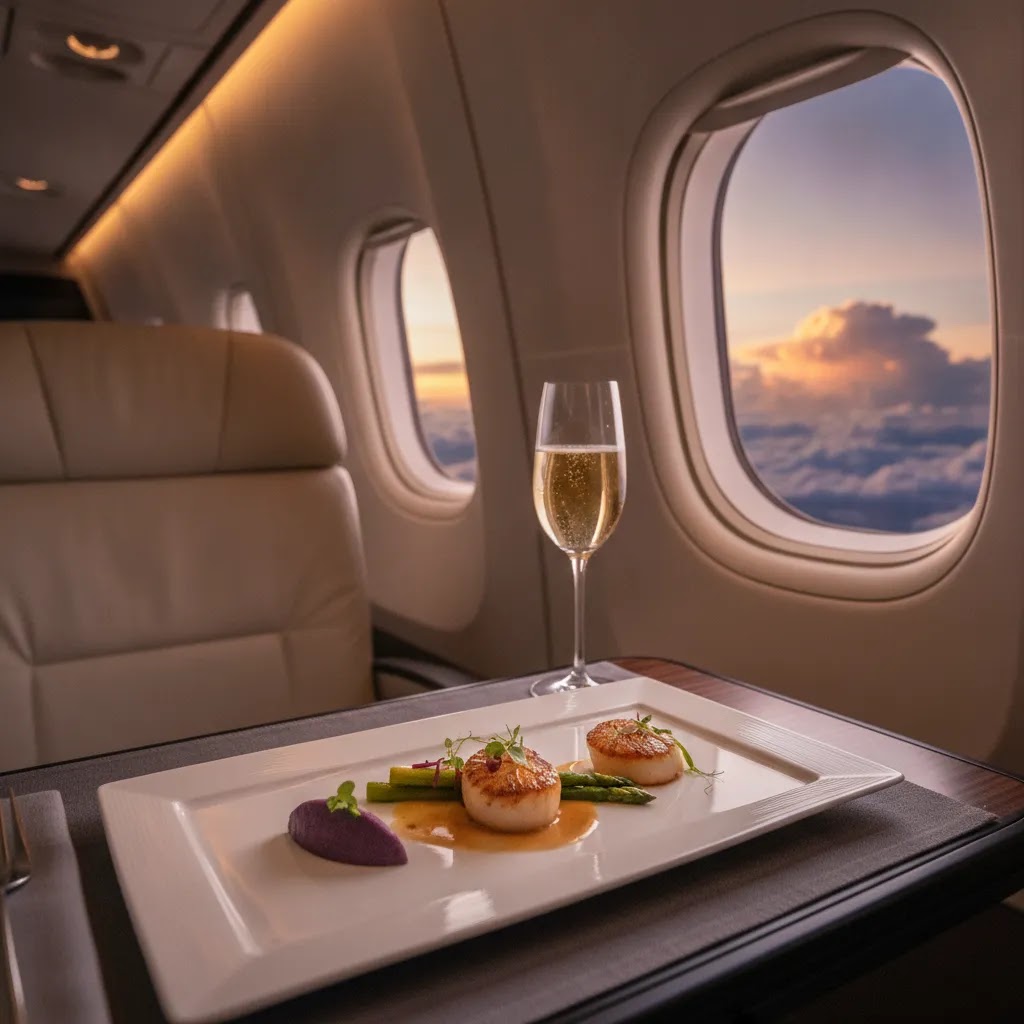
Nonstop is often the most elegant answer, but it is not automatically the most refined. The better approach is to decide what you are optimizing for: sleep quality, arrival timing, cabin consistency, or the resilience of the itinerary if something changes.
When nonstop business class flights from chicago are the better choice
Nonstop is usually superior on overnight Europe, where the value of uninterrupted rest is difficult to replicate. A one-stop routing that adds a short transatlantic segment followed by a longer intra-Europe leg can weaken the very reason you chose Business Class. The fewer interruptions between dinner, sleep, and arrival, the more likely you are to step off the aircraft feeling capable of your first day.
A one-stop routing may still be the better choice when it places you on a materially stronger hard product, when it improves the timing of your arrival, or when it reduces the risk of an overly tight schedule. For Asia and some Middle East itineraries, a connection can also create a more consistent premium experience if the nonstop from ORD is operating on an aircraft you would not actively choose, or if the schedule is limited to days that do not match your calendar.
How to judge a premium connection
For discerning travelers, the connection airport matters as much as the second flight. Evaluate three elements in particular. First, whether the minimum connection time is realistic given the airport’s layout and typical operational pace.
A theoretical connection can look acceptable on paper while still feeling rushed in practice, especially if it involves passport control, security re-screening, or a terminal change. Second, confirm lounge continuity, meaning whether your Business Class access carries cleanly through the connection and whether the lounge is actually convenient to your departing gate. Third, consider terminal transfer complexity. Some hubs are designed for easy premium transit. Others can introduce long walks, train rides, or multiple checkpoints that erode the calm you expect from Business Class.
Hidden trade-offs travelers often miss
What many travelers overlook are the hidden trade-offs that can undermine a premium journey. Mixed-cabin risk is one of them. A short feeder segment may not offer lie-flat seating, or it may sell out of premium inventory earlier than the long-haul segment.
Baggage considerations also deserve attention. Through-checked baggage is typical on a single ticket, but some international transfer scenarios can require baggage re-claim and re-check, depending on the airport and routing. Finally, irregular-operations handling often differs depending on whether the itinerary is built within one alliance or across multiple carriers. In most cases, a well-constructed ticket within a single alliance provides clearer rebooking pathways, particularly when weather or air traffic constraints affect multiple departures at once.
Who Business Class Flights from Chicago Suit Best
Business class flights from chicago tend to suit travelers who value control, continuity, and time protection. That includes executives heading to Europe for short stays, couples planning milestone journeys, and experienced premium travelers who care about alliance structure as much as seat comfort.
ORD is also a strong fit for clients based in the Midwest who would prefer to avoid repositioning through another gateway before the longest segment of the trip. If your priorities include a calm overnight crossing, predictable baggage handling, and a premium cabin that supports real rest, Chicago nonstop service may be the most sensible starting point.
Flight Experts Perspective on Business Class Flights from ORD
From an advisory standpoint, Chicago is one of the more nuanced Business Class departure cities in the country. The route map is impressive, but the better outcomes usually come from matching the traveler to the right nonstop rather than selecting the broadest network by default.
That may mean favoring United for Star Alliance continuity, choosing American where oneworld fit is stronger, or structuring a larger itinerary around the gateway that gives you the calmest first long-haul sector.
Flight Experts offers Business Class Flight Booking for major global routes, with personal consultant support, seat selection assistance, meal preference coordination, check-in guidance, and cabin upgrade alerts. For more elaborate journeys, Complex Itinerary Planning may be especially valuable when ORD is only the first step in a multi-city premium itinerary. If you would like a tailored recommendation, you may contact Mike Chirilenco and the Flight Experts team to review the most suitable Chicago departure options for your travel style.
How to Evaluate Business Class Flights from Chicago

A polished premium booking from ORD should be assessed on several levels, not merely fare class and departure time.
1. Aircraft and seat architecture for business class flights from chicago
Begin with the operating aircraft and the actual Business Class seat for that flight. A branded product name alone is not enough. On long overnight sectors, direct aisle access, seat privacy, bed length, and storage design may have a greater effect on comfort than lounge quality or meal service.
2. Hub logic and alliance continuity
If your trip continues beyond the first gateway, look closely at alliance alignment. United may be the cleaner choice for travelers building around Star Alliance. American may suit those who prefer oneworld consistency. This matters for baggage handling, lounge reciprocity, irregular operations support, and the overall coherence of the trip.
3. Departure and arrival timing
Not all nonstops are equal. Some ORD departures are better timed for dining, sleep, and next-day functionality than others. A route that leaves too early in the evening or arrives at an awkward local hour may look attractive on paper yet feel less refined in practice.
4. Ground experience at O’Hare
Large-hub departures reward planning. Premium check-in, security access, lounge location, terminal transfers, and buffer time all matter. A discerning traveler should assess the whole airport sequence. The strongest itinerary is often the one that feels controlled before boarding even begins.
5. Whether the trip is simple or layered
A straightforward round trip to London requires a different strategy than a two-week Europe circuit ending in a separate city. For layered itineraries, expert ticket construction can matter as much as cabin choice.
Flight Experts supports premium travelers with consultant-led booking across Business Class, First Class, Premium Economy, and multi-city planning. Current service ranges shown by Flight Experts indicate Business Class bookings typically fall within $2,000 – $8,000+ depending on route and airline, while final pricing and availability remain subject to timing and carrier inventory.
What ORD-Based Travelers Often Overlook: Lounges, Terminals, and Connection Friction
At O’Hare, your experience can feel premium in the air and surprisingly demanding on the ground if terminal and lounge planning is treated as an afterthought. ORD is a large, operationally complex airport, and for Business Class travelers, the difference between a calm departure and a rushed one often comes down to gate geography, terminal rhythm, and realistic buffer time.
Lounge and terminal planning matters more than many expect
Start with terminal expectations. Many long-haul departures are concentrated around the major hub carriers and their typical terminal footprints, but ORD gate assignments can shift. Some international flights may also depart from concourses that require more walking than you expect.
Lounge access is also more nuanced than most travelers assume. Eligibility is typically tied to the operating carrier, the cabin you are actually flying on that day, and the specific rules of the alliance program involved. Even when you have access, lounge proximity matters. A lounge that is technically available but located far from your gate can add friction at precisely the time you are trying to keep the experience composed.
Build realistic buffers for ORD connections
Connection planning at ORD also deserves a more candid look. Weather disruption is a meaningful factor in Chicago, particularly in winter, and irregular operations can cascade quickly across a hub schedule. Runway programs and air traffic constraints may affect departure flow even on clear days.
If you are connecting domestically into an international Business Class departure, a tight connection can turn a well-designed premium trip into an anxious sprint. In most cases, it is wise to build a buffer that reflects the size of the airport, the possibility of a gate change, and the reality that premium boarding windows still close at fixed times.
Why the ground sequence is part of the premium product
What sets this apart for premium travelers is that the ground sequence is part of the product. A consultant will typically optimize the end-to-end flow, not simply the flight number. That may include selecting flights that reduce terminal transfer exposure, aligning a departure time with the most predictable airport rhythm, and confirming lounge options that make sense for your actual concourse.
It can also include simple, high-impact choices such as which check-in approach best matches your ticket and status, when to arrive to avoid an unnecessary wait at the gate, and how to keep the departure experience controlled even when ORD is busy. Ultimately, the most refined business class flights from chicago are usually the ones that feel unhurried. That is as much an airport planning decision as it is an in-flight decision.
Frequently Asked Questions
Is Chicago a strong city for Business Class nonstop travel?
Yes, in most cases it is. ORD benefits from substantial long-haul network depth and meaningful premium service concentration. Its value is especially clear on nonstop routes where United’s hub scale and American’s selected international presence give travelers more than one credible premium path, depending on destination and alliance preference.
Which is usually better from ORD, United or American?
The better choice usually depends on the route and the rest of your itinerary. United may offer broader long-haul depth and stronger Star Alliance continuity. American may be attractive where its nonstop route aligns with your schedule or where oneworld partnership logic better suits your onward travel plans.
Are nonstop flights from Chicago always the best option?
Not always. A nonstop is often the most elegant choice, particularly for overnight travel to Europe. Still, some one-stop itineraries may offer a better seat, stronger lounge access, or a more favorable arrival time. The right answer usually depends on your priorities rather than the route map alone.
Does Business Class from ORD make the biggest difference on Europe routes?
Very often, yes. Overnight Atlantic flights are where lie-flat sleep, quieter cabin space, and priority ground handling may have the clearest impact. Arriving in Europe rested for meetings, private touring, or immediate onward transfer is one of the strongest reasons travelers choose Business Class from Chicago.
What are the most popular international Business Class routes from Chicago O’Hare?
In most cases, the strongest demand concentrates on nonstop transatlantic corridors to major European business and cultural centers, along with select long-haul gateway routes that function well for onward connections. That said, “popular” is not always the same as “most suitable.” A route with multiple daily frequencies may offer better control over aircraft selection and timing, while a less frequent route may still be the better choice if it aligns with your onward itinerary and preferred premium cabin.
How far in advance should I book Business Class flights from Chicago for peak seasons?
For peak travel periods, it is typically wise to begin the process well in advance, particularly if you care about a specific aircraft, a specific departure time, or traveling on the same ticket as your onward segments. Availability patterns can vary by route and airline, and aircraft assignments may change closer to departure. A consultant-led approach can be useful here, because the objective is not simply securing a seat, but securing the right seat on the right flight for the journey you are actually taking.
Which airlines fly Business Class nonstop from ORD to Asia or the Middle East?
Nonstop Business Class options from Chicago to Asia or the Middle East depend on the specific destination, season, and schedule, and they can change. United is often the primary nonstop operator on a number of long-haul routes from ORD, with additional options potentially available on select international carriers depending on the market. Because cabin quality and configurations may vary and aircraft swaps can occur, it is important to confirm the operating carrier and the aircraft type for your exact flight rather than relying on a general route assumption.
Are there Business Class options from Chicago that include a stopover on the way to Asia?
In some cases, yes, depending on the carriers involved, fare rules, and how the itinerary is constructed. A stopover can be a refined way to break a long journey, but it should be planned carefully so that premium continuity is preserved across segments and connection logistics remain manageable. If a stopover is of interest, it is best evaluated as part of a complete itinerary, including lounge access, terminal transfers, and whether the routing keeps you within a coherent alliance structure.
What should I check before booking a Chicago Business Class flight?
Review the operating aircraft, seat map, lounge access rules, terminal flow, baggage allowances, and change conditions. If your trip includes onward segments, verify whether the itinerary is constructed within one alliance or across multiple carriers. Those details often shape the real premium experience more than marketing language does.
Can Flight Experts help with routes beyond a simple round trip?
Yes. Flight Experts provides Complex Itinerary Planning for multi-city, open-jaw, and broader premium routing needs. That may be especially useful if you want to depart from Chicago, arrive in one European city, continue regionally, and return from another gateway without compromising cabin quality or ticket coherence.
What other premium booking services does Flight Experts offer?
In addition to Business Class Flight Booking, Flight Experts also offers First Class Flight Booking, Premium Economy Flight Booking, Group & Corporate Travel, and consultant-led multi-city planning. The service model is personal rather than transactional, which may be valuable for travelers who want one trusted point of contact throughout the booking process.
How quickly can Flight Experts present options?
For many flight requests, Flight Experts indicates an expert is assigned at no charge and options are usually presented within 30 minutes. Timing may vary for more complex itineraries, seasonally constrained routes, or requests involving multiple destinations and mixed-carrier premium cabins.
Key Takeaways
- Chicago O’Hare is especially strong for premium nonstop travel because United and American create two distinct hub-driven route strategies.
- The best Business Class flights from Chicago are usually defined by aircraft, timing, and onward alliance fit, not by airline name alone.
- ORD is particularly effective for nonstop Europe departures and for gateway flights that launch broader premium itineraries.
- Travelers should evaluate the full experience, including lounge access, terminal flow, and connection logic, not only the seat.
- Flight Experts may be especially useful where route choice, cabin quality, and multi-city ticket construction all need to work together.
Conclusion
Chicago remains one of the more strategically useful U.S. departure points for discerning Business Class travelers, but its value is most evident when you read the route map with precision. ORD works best for travelers who want nonstop efficiency shaped by real hub strength, especially where United and American offer materially different advantages.
The better choice may depend on cabin configuration, alliance continuity, and the structure of the journey after the first long-haul leg. If you are weighing business class flights from chicago for a high-value trip, Flight Experts can help you assess the options with greater clarity. To begin planning, speak with Mike Chirilenco or connect with a Flight Experts travel specialist for a personalized recommendation.



