
First Class Flight to Australia (2026)
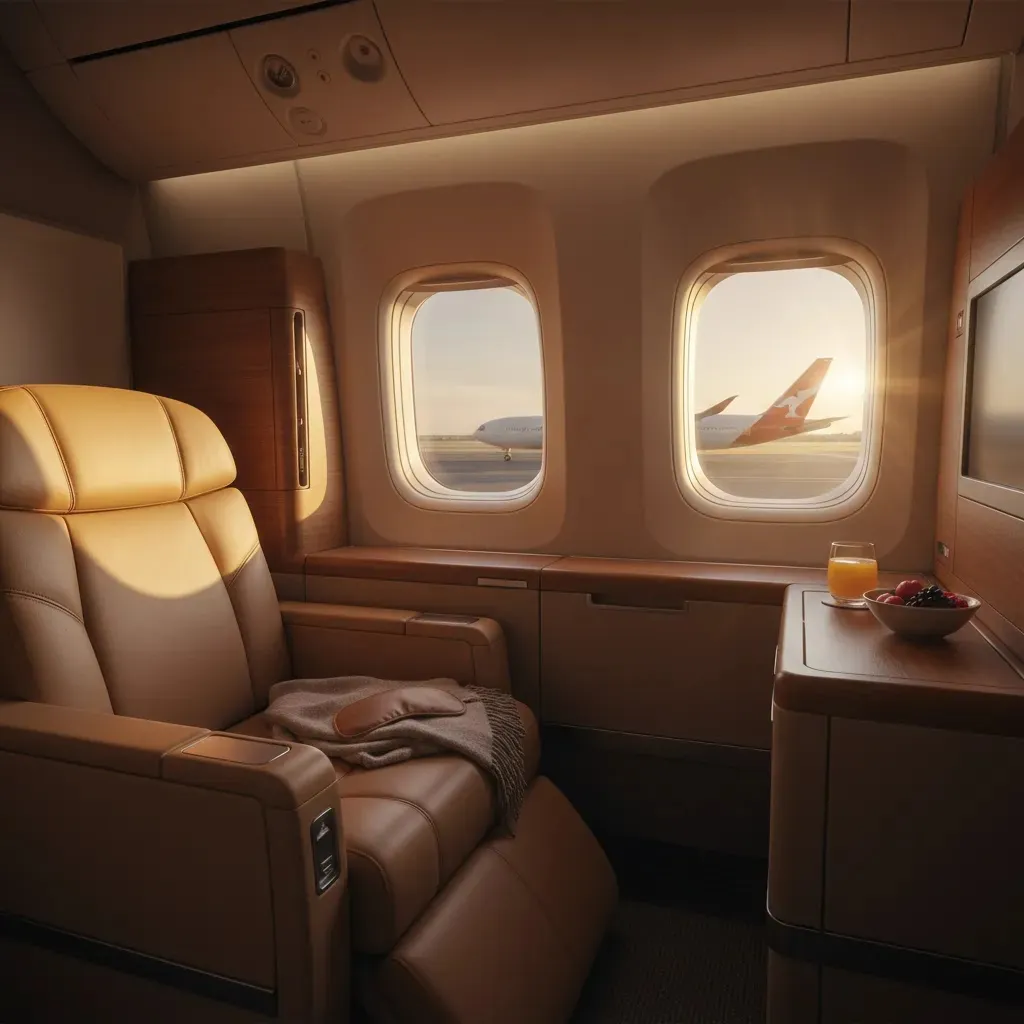
A first class flight to Australia remains one of the most ambitious long-haul air journeys a traveler can book, and it is exactly the kind of itinerary where expert handling matters. On routes this long, cabin quality, connection strategy, ground services, and schedule design all influence whether the journey feels refined or simply expensive. For travelers considering first class tickets to Australia, the right approach is not only choosing an airline, but matching the product to the route, season, and purpose of travel. Flight Experts, led by Mike Chirilenco, approaches these bookings as a concierge-style service rather than a self-service transaction, helping clients evaluate premium options with care. Readers also exploring the broader first class to Australia category will benefit from understanding how route design and product access shape the experience.
Overview
Australia-bound first class travel is a specialized segment of premium aviation. True international first class is not offered on every carrier serving Sydney, Melbourne, Brisbane, or Perth, and in many cases the journey involves at least one connection through major premium hubs in Asia or the Middle East. That means travelers are often evaluating a combination of aircraft type, suite configuration, lounge access, transfer ease, and total elapsed travel time rather than simply selecting a fare.
Flight Experts offers a dedicated First Class Flight Booking service for long-haul premium travel on airlines including Emirates, Singapore Suites, Lufthansa, ANA, JAL, Etihad, Qatar, Swiss, and Air France La Première. According to current service data, this offering covers major long-haul markets including transpacific and other intercontinental itineraries, with white-glove personal service, lounge access coordination, chauffeur service arrangements where applicable, and luxury amenity guidance. For Australia planning in particular, that advisory layer matters because product quality may vary significantly by route and aircraft.
Travelers comparing broader regional options may also wish to review Flight Experts’ Business & First Class Flights to Australia & Pacific coverage and related premium cabin resources in Premium Cabin Experience & Amenities.
Key Routes and Connection Hubs for First Class to Australia (2026)
Most “first class flight to Australia” itineraries from the United States are not defined by a single nonstop. In most cases, the strongest first class products appear on specific long-haul sectors, and reaching Australia requires a premium hub connection that keeps the overall experience coherent from a comfort and ground-services standpoint. Here is the thing, Sydney and Melbourne are typically the easiest Australian gateways to build around because they tend to have the widest range of long-haul service patterns, while Brisbane and Perth may require more deliberate connection planning depending on the carrier and season.
From a practical standpoint, many U.S.-origin routings follow one of two broad patterns. The first is a transpacific approach where a traveler positions to a major Asian hub, then continues onward to Australia. The second is a Middle East hub routing, where the long-haul first class sector may occur between the United States and the hub, between the hub and Australia, or as a combination, subject to aircraft assignments and schedule changes. Both patterns can work well, but they feel very different in execution.
Now, when it comes to choosing between an Asia connection and a Middle East connection, discerning travelers often weigh three factors more heavily than miles or maps: transfer ease, lounge quality, and the likelihood of maintaining first class continuity on the sector that matters most. Some hubs offer exceptionally refined first class lounges, discreet ground staff support, and straightforward airside transfers. Others can involve longer walks, more complex terminal changes, or higher variability in gate operations depending on time of day and airline. The reality is that a hub can elevate the journey or quietly undermine it, even when the onboard suite is excellent.
Think of it this way, elapsed time and experience quality do not always move together. A shorter itinerary that includes mixed-cabin segments or an underwhelming connection may arrive earlier, but it can also deliver less rest and more friction. A slightly longer itinerary, built around a superior first class long-haul sector and a calmer transfer, may preserve sleep and privacy more effectively, which is often the real objective when arriving into Sydney, Melbourne, or onward connections within Australia. Flight Experts typically evaluates both the clock and the feel of the journey, including how each connection supports dining, shower access, quiet space, and boarding flow, recognizing that airline schedules and aircraft types are always subject to change.
The Experience
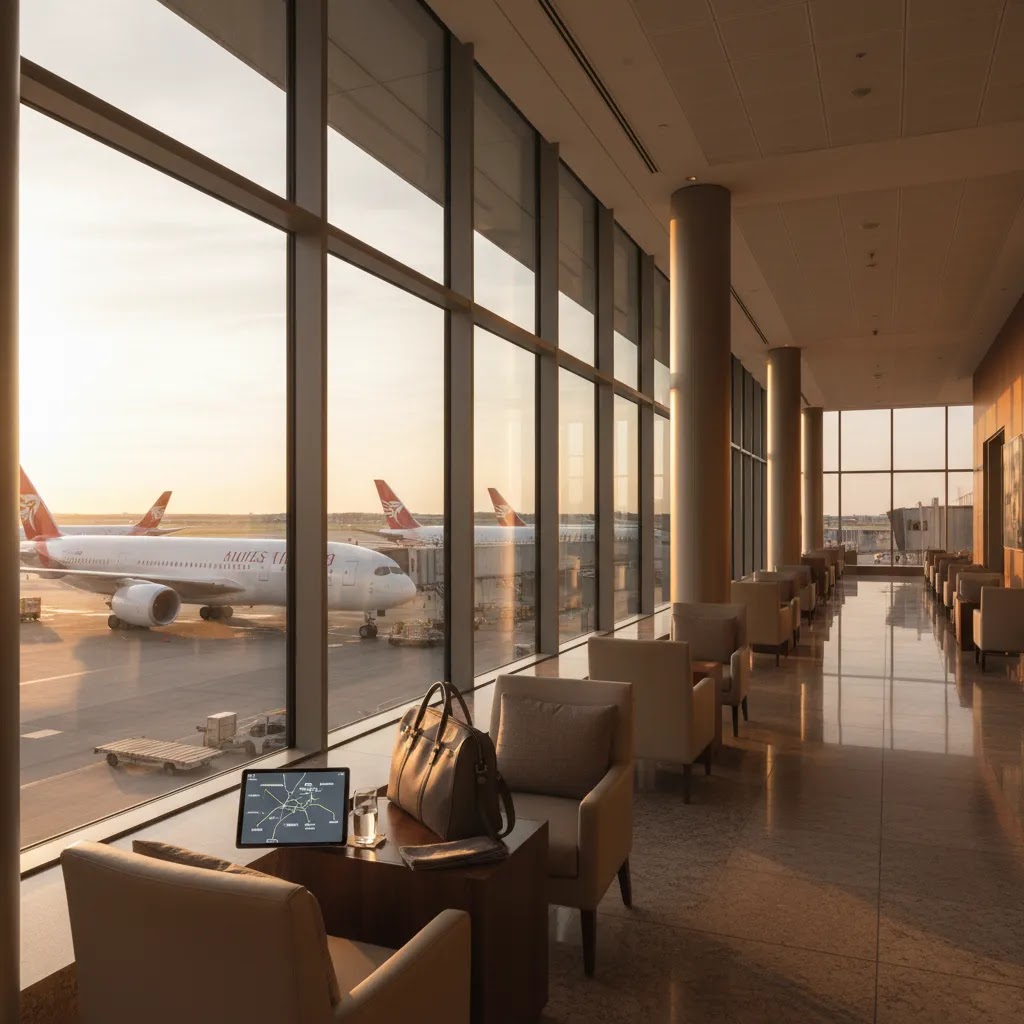
A first class flight to Sydney or another Australian gateway is defined less by a label and more by the continuity of the experience from departure airport to final arrival. At the leading end of the market, travelers may begin with dedicated check-in, escorted ground handling, premium lounge dining, and in some cases chauffeur transfers or private terminal elements, depending on carrier and departure city. On board, the strongest first class products provide enclosed or semi-enclosed suites, elevated bedding, dine-on-demand service, premium wines and spirits, high-touch cabin crew attention, and a noticeably quieter, more private environment than business class.
The challenge is that “first class” is not uniform. Emirates first class, for example, differs materially from Japan Airlines or ANA, both in suite design and soft product. Some routings to Australia may feature a true first class long-haul sector paired with a shorter business class connection. Others may route through hubs where the airport experience itself is part of the value equation. Travelers heading to Sydney for a honeymoon, anniversary, or high-value business engagement often care as much about preserving energy and privacy as they do about cabin prestige.
Flight Experts structures this process around a personal consultant rather than an automated search result. Current booking data shows a streamlined process: submit a request, receive an expert assignment at no charge, review presented options, then choose and book. Typical response time is usually within 30 minutes, although actual booking complexity may vary by route and travel dates. For ultra-long journeys, that human review helps identify where the experience is truly premium and where an itinerary only appears so on paper.
Aircraft and Cabin Product Details That Matter (Suites, Configurations, and Consistency)
What many travelers overlook is that “first class” is often an aircraft-specific promise, not a universal airline-wide experience. An airline may operate multiple first class configurations across its fleet, with meaningful differences in suite privacy, storage, seating ergonomics, and even the sense of space created by the cabin’s layout. On certain aircraft, first class may offer fully enclosed suites. On others, it may be open or semi-enclosed, still premium, but not necessarily comparable in privacy. Soft product can also vary by route, catering station, and crew base, and those variations may be noticeable on an itinerary as long as the journey to Australia.
Consider this, two itineraries may both display “first class” on the long-haul sector, yet deliver different experiences because of the operating aircraft type. For travelers who have a clear preference, for example a door suite versus a more open suite, the booking process should include confirming the aircraft assignment at time of ticketing and monitoring it as schedules update. Aircraft swaps can occur for operational reasons, and even premium routes are not immune. A specialist will typically check more than one indicator, including the published aircraft type, the seat map logic that matches the expected cabin, and whether the flight historically operates the intended configuration, recognizing that none of these signals is absolute until travel day.
Mixed-cabin itineraries deserve special attention on Australia journeys. In many cases, it is strategically sensible to prioritize first class on the longest overnight sector where sleep and privacy have the highest value, while accepting business class on a shorter connection that functions more as positioning. The opposite can also be true if a short sector is scheduled at an awkward hour, or if the connection airport experience is a priority. The goal is to protect the segment that carries the most physical and experiential weight, while keeping transfers realistic and maintaining a premium ground flow, subject to live availability and schedule design.
Investment and Value
Current Flight Experts product data lists First Class Flight Booking in a typical range of $5,000 to $20,000+, with pricing varying by airline, route, season, and availability. For Australia, readers should assume that first class flight to Australia price expectations often sit toward the upper end of long-haul premium travel because of distance, limited true first class inventory, and strong demand during peak travel periods.
That said, the published fare is not the only benchmark sophisticated travelers should use. Value in this category comes from securing the right cabin on the right aircraft, protecting connection quality, and ensuring the ground experience matches the fare level. Flight Experts notes exclusive first class deals and significant savings versus published fares may be available, subject to carrier rules and live inventory, but the more meaningful advantage for many clients is expert curation. A poorly timed connection, an inferior aircraft substitution, or a route lacking full first class continuity can materially reduce the value of a high-ticket booking.
On a journey this long, a well-structured first class itinerary may justify its investment by improving sleep quality, reducing travel fatigue, and preserving time on arrival. That is particularly relevant for travelers going directly into business meetings, luxury tours, milestone celebrations, or private yacht and resort schedules.
Booking Timing and Availability Realities for First Class Tickets to Australia
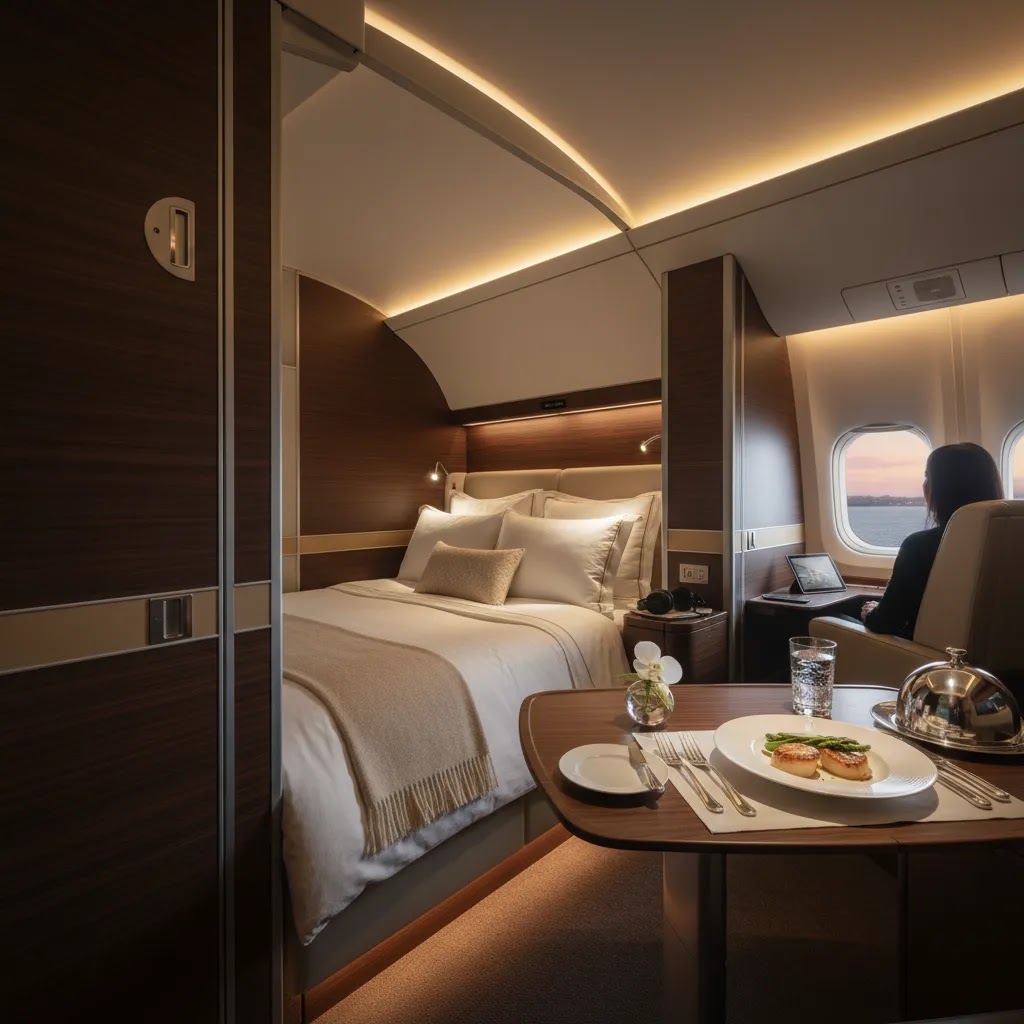
First class availability to Australia can be limited for reasons that have nothing to do with demand alone. One constraint is simply supply: fewer carriers operate true international first class consistently on Australia-bound routes, and even when a carrier offers first class within its network, it may not place that cabin on every aircraft serving Australian gateways. Add seasonal peaks, and inventory can narrow quickly, particularly for travelers who want a very specific departure day, a specific suite type, or a specific connection hub.
What sets this apart for Australia is how pronounced peak periods can be. December through January travel, school holiday windows, and major events in Sydney and Melbourne can compress availability, especially for travelers who require multiple first class seats on the same flights. In those periods, earlier planning typically matters more, not because it guarantees a particular outcome, but because it allows more room to evaluate multiple routing patterns and protect the most important sector before options become constrained. In quieter periods, flexibility can often substitute for lead time, particularly flexibility in U.S. departure city, preferred hub, or willingness to arrive into one Australian gateway and continue onward within Australia.
Flight Experts approaches timing as an operational discipline as much as a planning preference. An expert-led process may include monitoring schedule changes after ticketing, re-checking aircraft assignments as airlines update rotations, verifying that connection times remain realistic, and designing the itinerary so that a single change does not unravel the premium experience. The reality is that long-haul travel to Australia involves genuine variables, and the most reliable way to protect the overall journey is to build the routing thoughtfully from the start rather than relying on a single search result to define what “first class” will feel like on the day of travel.
Strengths and Considerations
Strengths
- Access to a concierge-style booking process rather than a generic online platform.
- Coverage across major premium carriers known for long-haul first class products, including Emirates, Singapore Suites, ANA, JAL, and others.
- Lounge access coordination and chauffeur arrangement guidance, which can materially improve the journey on long Australia itineraries.
- Expert review of routing quality, helping travelers avoid itineraries that look prestigious but include weak connections or inconsistent cabin standards.
- Usually fast response times, with options often presented within 30 minutes for straightforward requests.
- Support with details such as seat selection, premium service expectations, and itinerary refinement for travelers who value discretion and efficiency.
Considerations
- True first class to Australia is not available on every carrier or every date, so flexibility may be required.
- Some itineraries may include a mix of first class and business class segments, especially on regional connections within the broader journey.
- Pricing can be substantial and may change quickly based on seasonality, route demand, and fare inventory.
- The most desirable products often depend on specific aircraft and hub combinations, which can narrow the available schedule choices.
Who This Experience Is For
This service is best suited to travelers who view the flight itself as an important part of the journey rather than a logistical necessity. That includes couples celebrating a honeymoon or anniversary in Australia, executives who need to arrive rested and presentable, families arranging a premium long-haul vacation, and frequent international travelers who no longer wish to manage complex routing alone. It is particularly well matched to clients who value a single, accountable expert to oversee premium air arrangements, explain trade-offs clearly, and align the booking with personal preferences rather than presenting an undifferentiated list of fares.

How to Begin Planning With a Specialist
The first step is to submit a request through Flight Experts with your intended dates, preferred Australian destination, departure city, and any non-negotiables such as specific airlines, overnight timing, or lounge and transfer expectations. From there, an expert is assigned to review the request and present first class options that reflect both route logic and service quality.
Mike Chirilenco leads Flight Experts with a client-centered, concierge-style approach designed for travelers who expect professional oversight rather than self-service booking. Instead of forcing a traveler to decode fare classes, aircraft differences, and premium ground services independently, the agency curates options and clarifies what each itinerary actually delivers. That may include guidance on whether a first class flight to Sydney Australia is best routed via Asia or the Middle East, whether a given product justifies its premium, and how to structure the journey for comfort on arrival.
To begin, contact Mike or speak with a luxury travel specialist at Flight Experts through flight-experts.com and request a tailored review of your preferred Australia itinerary.
Frequently Asked Questions
Are there nonstop first class flights from the US to Australia?
In many cases, true first class availability on US to Australia travel is limited, and many itineraries involve a connection through Asia or the Middle East. Availability depends on airline network decisions, aircraft type, and schedule changes. A specialist can help determine whether a nonstop option, if available, is preferable to a connecting itinerary with a materially better first class product.
What is the typical first class flight to Australia price?
Flight Experts currently lists first class flight booking in a range of $5,000 to $20,000+, though actual pricing for Australia may vary significantly based on route, season, lead time, and carrier. For many travelers, the more useful question is whether the itinerary delivers a true end-to-end premium experience that justifies the investment.
Which airlines offer the strongest first class experience for Australia trips?
That depends on the route and what matters most to you. Emirates is often favored for suite privacy and ground service touches. Singapore Suites appeals to travelers who prioritize cabin design and refined service. ANA and JAL are highly regarded for precision and hospitality. The strongest choice is usually route-specific rather than universal.
Is first class to Sydney worth it compared with business class?
For some travelers, yes. On a journey of this length, first class may offer more privacy, better sleep, more attentive service, and a calmer ground experience. That said, some modern business class cabins are excellent. The answer depends on your priorities, the specific aircraft, and whether the itinerary includes true first class throughout the most important long-haul sectors.
What does Flight Experts handle during the booking process?
According to current service data, Flight Experts provides white-glove personal service, presents curated options, coordinates lounge access details, assists with chauffeur arrangements where relevant, and offers luxury amenity guidance. The process begins with a submitted request, followed by expert assignment and review of presented options before booking is finalized.
How quickly can I receive first class options to Australia?
For the First Class Flight Booking service, Flight Experts indicates that options are usually presented within 30 minutes. Complex requests, unusual routings, or high-demand travel windows may take longer, particularly if the brief requires detailed comparison across several carriers or stopover possibilities. Timing can vary with live inventory conditions.
Can Flight Experts help with premium airport services too?
Yes, the service includes lounge access coordination and guidance around premium amenities, and it may also assist with chauffeur service arrangements where offered by the carrier. On long Australia itineraries, those details can make a noticeable difference, especially for travelers with tight schedules, overnight departures, or a strong preference for privacy and comfort.
How much is it to fly 1st class to Australia?
Flight Experts currently lists first class flight booking in a range of $5,000 to $20,000+, and Australia itineraries may vary significantly within that spectrum depending on route design, seasonality, and live inventory. For many travelers, the most accurate way to set expectations is to review options built around your departure city, preferred hub strategy, and the specific first class product you want on the longest sector.
Can a pilot sleep while flying?
On long-haul flights, airlines typically manage pilot rest through regulated duty limits and controlled rest procedures that vary by carrier, route, and jurisdiction. In many cases, augmented crews and dedicated rest facilities allow pilots to rest in rotation while other qualified pilots remain at the controls. The details can vary, and procedures are designed around safety requirements rather than passenger cabin class.
Does clearing browsing history lower prices?
There is no reliable, consistent evidence that clearing browsing history alone will materially change premium long-haul fares. Airfare typically changes based on inventory, fare rules, market demand, and timing, rather than an individual’s browser cookies. For first class tickets to Australia, the more meaningful variables are route availability, aircraft assignment, and the fare inventory that is actually open at the time of booking.
What is the 45 minute rule for American Airlines?
This commonly refers to a minimum recommended, or sometimes required, check-in time before departure that can vary by airport, itinerary type, and whether travel is domestic or international. Exact cutoffs are subject to change and should be confirmed for your specific departure airport and ticket, particularly for international itineraries where document checks can add time. For premium travel, it is still prudent to arrive earlier than the minimum, especially when planning lounge time and a calm boarding experience.
Key Takeaways
- A first class flight to Australia is a complex premium booking where route design matters as much as fare level.
- Current Flight Experts data places first class booking in a typical range of $5,000 to $20,000+, subject to route and availability.
- True first class is not uniform across airlines, so aircraft, hub, and connection strategy should be reviewed carefully.
- Flight Experts provides a personal consultant, curated options, lounge coordination, and high-touch guidance for long-haul premium travel.
- This service is particularly valuable for milestone trips, executive travel, and clients who want accountable expert oversight.
Conclusion
Booking first class flights to Australia requires more discernment than many travelers expect. The distance is substantial, the route structures are varied, and the difference between a merely expensive itinerary and a genuinely refined one can be significant. For travelers considering first class tickets to Australia, the most important decision is often not whether to book first class, but which product, route, and service pattern will best support the journey. Flight Experts offers a measured, high-touch approach for exactly that purpose, combining premium airline access with personal guidance from Mike Chirilenco and his team. If you are planning a first class Australia flight and would like a tailored assessment of routes, cabin products, and overall value, speak with a luxury travel specialist at Flight Experts to begin the conversation.
Travel experiences, pricing, availability, airline schedules, and service details are subject to change at any time and may vary by carrier, route, season, and booking date. Content is provided for informational purposes only and does not constitute a binding service commitment or guaranteed availability. Readers should confirm current first class options and booking terms directly with Flight Experts before making travel decisions.



