
Cheapest Business Class Tickets: Best Airlines & Routes

What Cheapest Business Class Tickets Really Mean
The phrase cheapest business class tickets can be misleading. In premium travel, the lowest fare on paper is not always the best outcome. A deeply reduced fare may come with weaker aircraft, limited lounge access, less attractive schedules, or restrictive change conditions. For most travelers, the more relevant goal is identifying the best-value Business Class option on the route you actually want to fly.
In most cases, stronger Business Class value appears on competitive long-haul corridors such as the US to Europe, select US to Asia markets, and some Middle East routes. Flight Experts currently books Business Class Flight Booking across routes including US to Europe, US to Asia, US to Middle East, US to Australia, and domestic US. The service covers major carriers such as Emirates, Qatar, Singapore, Lufthansa, British Airways, ANA, JAL, Delta One, United Polaris, and American Airlines Flagship, with pricing typically ranging from $2,000 to $8,000+ depending on route and airline.
If you are comparing cheapest business class flights, it is wise to weigh fare quality alongside aircraft type, lie-flat consistency, airport experience, and itinerary design. Travelers often discover that a slightly higher fare delivers a meaningfully stronger onboard and ground experience.
What Shapes Better Business Class Value
Business Class pricing usually reflects a combination of route competition, seasonality, departure city, airline strategy, and booking timing. Nonstop prestige routes may carry a premium, while nearby gateway airports or one-stop itineraries through major hubs can sometimes produce better value. This is especially true if the connection is through an airline hub known for strong premium ground services.
Aircraft type matters as much as fare level. A modern suite-style Business Class seat on carriers such as Qatar, Singapore, ANA, JAL, or select transatlantic operators may justify a moderate fare difference over an older angled or less private cabin. For an overnight crossing, privacy, direct aisle access, bedding quality, and lounge access typically influence whether the journey feels restorative or simply tolerable.
Booking conditions deserve close attention as well. The most attractive published fare may not include ideal seat assignments, responsive support if plans change, or guidance on aircraft swaps and mixed-cabin issues. Flight Experts’ Business Class Flight Booking service includes a personal travel consultant, seat selection, meal preference assistance, check-in support, price drop monitoring, and cabin upgrade alerts. That service model may be particularly valuable if you are balancing meeting schedules, family coordination, or milestone travel dates.
Timing also plays a decisive role. Travelers researching the best time to buy often find that flexibility of even a few days can materially improve options. Fare movement may vary by season, route demand, and airline inventory strategy, so expert monitoring often produces a better result than a one-time search.
For broader planning context, Flight Experts also maintains resources within Discounted Business & First Class Deals and Premium Flight Booking & Tips, which can help you compare route patterns and timing considerations before committing.
How “Cheapest” Varies by Destination Region and Route Pattern (2026)

The routes where travelers tend to find lower Business Class fare levels are not random. They often cluster around regions where competition is intense, where one-stop hub itineraries are easy to construct, and where airlines adjust capacity seasonally. The question is less about finding a universally low fare and more about understanding which destination patterns typically produce more favorable premium pricing, subject to availability and change.
In 2026, many travelers searching for value focus on long-haul markets where multiple carriers can serve the same destination using different hubs. This is why journeys such as the US to India or the US to Southeast Asia, including the Philippines or Bali, may sometimes show more attractive Business Class pricing than a prestige nonstop to a single high-demand gateway. In many cases, there is a natural one-stop structure through major hubs, and that density of routings can put downward pressure on premium fares at certain times of year.
China and parts of East Asia can behave differently. Capacity, schedule patterns, and carrier networks can change meaningfully across seasons, and fare behavior may be less predictable than on established transatlantic corridors. Nepal and other destinations where service is more limited can also skew higher because there are fewer viable routings, more dependence on specific regional connections, and fewer premium seats across the network. The final segment into a smaller market may be the constraint that shapes overall fare levels and itinerary quality.
Even when a route appears to be the same destination, the fare behavior is often defined by the gateway. A traveler willing to depart from an alternate US gateway, or arrive into a nearby international gateway and connect onward, may see a different set of premium options than a traveler locked into one airport. The same principle applies overseas. Selecting a connection through a hub known for excellent premium lounges and efficient transfers can improve both the pricing logic and the ground experience, especially on ultra long-haul itineraries where a well-timed break can be restorative.
One-stop routings can be excellent, but mixed-cabin pitfalls deserve careful attention. On some itineraries, the long-haul segment may be Business Class while a regional segment is booked into a lower cabin, or the schedule may force a connection that undermines sleep and arrival quality. These details can be easy to miss when focusing only on the headline fare. A specialist review typically confirms that the long sectors are truly lie-flat Business Class, that connection times are realistic, and that the itinerary design supports the purpose of your trip.
Pros and Cons
Strengths
- Competitive long-haul routes may offer very strong Business Class value, particularly where multiple premium carriers serve the same region.
- One-stop itineraries through major hubs often provide better pricing while still preserving lie-flat comfort, lounge access, and priority services.
- Working with a specialist can surface fare constructions and routing options that are not always obvious in consumer search tools.
- Flight Experts provides personal consultant support, usually with options presented within 30 minutes for Business Class requests, which may be helpful when timing matters.
- Major airlines in the Flight Experts portfolio include both leading Gulf carriers and strong Asian, European, and US operators, allowing for meaningful itinerary comparison.
- Business Class fares secured through expert assistance may deliver stronger overall value once seat quality, schedule logic, and support are factored in.
Considerations
- The lowest fare available may not correspond to the best cabin, best aircraft, or most convenient schedule.
- Premium cabin pricing can shift quickly depending on season, inventory, and departure city, so results are rarely fixed for long.
- Some lower-priced itineraries may involve longer connections, less attractive lounge access, or mixed cabin segments.
- Not every route has equal competition, so value tends to vary widely between Europe, Asia, Middle East, Australia, and domestic markets.
Who This Approach Suits Best
This approach is best suited to travelers who care about value, but not at the expense of the experience. You may be planning a transatlantic business trip, a honeymoon with lie-flat overnight flights, a family journey where schedule reliability matters, or a multi-city itinerary that would be frustrating to price manually. It is also well suited to travelers who have already seen inconsistent results across online platforms and want one knowledgeable point of contact to interpret the differences. If your priority is not merely finding a lower fare, but securing the right Business Class product for your route, this is where expert-led guidance usually proves most useful.
Flight Experts Recommendation

For travelers seriously comparing premium airfare, Flight Experts is best viewed as a practical advantage rather than a simple booking intermediary. The company’s Business Class Flight Booking service covers major intercontinental markets and includes direct consultant support, check-in assistance, seat selection guidance, and fare monitoring. Current pricing context from Flight Experts places Business Class bookings generally between $2,000 and $8,000+, depending on airline and route.
If your search has included phrases such as discount tickets or lowest business class fares, it is worth reframing the conversation around cabin quality, trip purpose, and itinerary logic. Flight Experts can help you compare whether a premium Gulf carrier, a Japanese airline, a European flag carrier, or a US nonstop product is the more suitable fit for your departure city and travel style. To begin planning, speak with a luxury travel specialist at Flight Experts or contact Mike Chirilenco for a personalized recommendation tailored to your route, dates, and onboard preferences.
A Practical Framework for Comparing “Low” Business Class Fares Without Getting Misled
A headline-low Business Class fare can be a poor choice if it creates operational friction or delivers an inconsistent premium experience. Many travelers only discover the issue after ticketing, when they realize the itinerary is built around long connections, unfavorable departure and arrival times, or an aircraft assignment that does not match their expectations. In premium travel, those tradeoffs can be disproportionate because the goal is typically to arrive rested, composed, and on schedule.
There are several reasons a low fare can be misleading. A routing may include a connection that looks acceptable on paper but leaves little margin for delays. It may place the longest sector at an awkward time, reducing sleep quality. It may rely on a weaker aircraft type on the most important overnight segment. In some cases, the fare looks attractive because the change and refund rules are materially more restrictive than comparable options, which can be significant if the trip is tied to business obligations, family commitments, or event dates.
For discerning travelers, due diligence typically comes down to a simple checklist mindset before purchasing. Confirm the aircraft and seat for the long sectors, recognizing that assignments can change. Verify the operating carrier, not only the marketed flight number, since onboard service standards and seat types may differ across partners. Assess connection quality, including terminal transfers and whether the layover is long enough to be comfortable but not so long that it consumes the journey. Lounge access should also be treated carefully. Access rules can vary by airline, cabin, fare type, and airport, and they are subject to change, so assumptions should be verified against the current itinerary.
It is also wise to understand which variables are most likely to shift after ticketing. Schedule changes and equipment swaps happen across the industry, and premium cabins are not immune. In a managed booking, proactive monitoring and support means watching for schedule adjustments, checking seat maps and aircraft updates, and advising on re-accommodation options if a change affects the quality of the experience. A well-priced Business Class ticket is most valuable when it remains a well-designed itinerary as the airline updates schedules and inventory.
How to Choose the Right Option
Selecting among the most affordable Business Class tickets requires more than comparing headline fare levels. A well-chosen premium ticket should align with the actual purpose of your trip and the level of comfort you expect.
1. Evaluate the route before the airline brand
A superior airline on the wrong routing may be less attractive than a slightly less prestigious carrier on a much cleaner itinerary. Nonstop flights typically suit business travelers and shorter premium trips. One-stop options may offer stronger value on long-haul leisure journeys, especially where the connecting hub has excellent lounges and efficient transfers.
2. Check the aircraft and seat, not just the cabin label
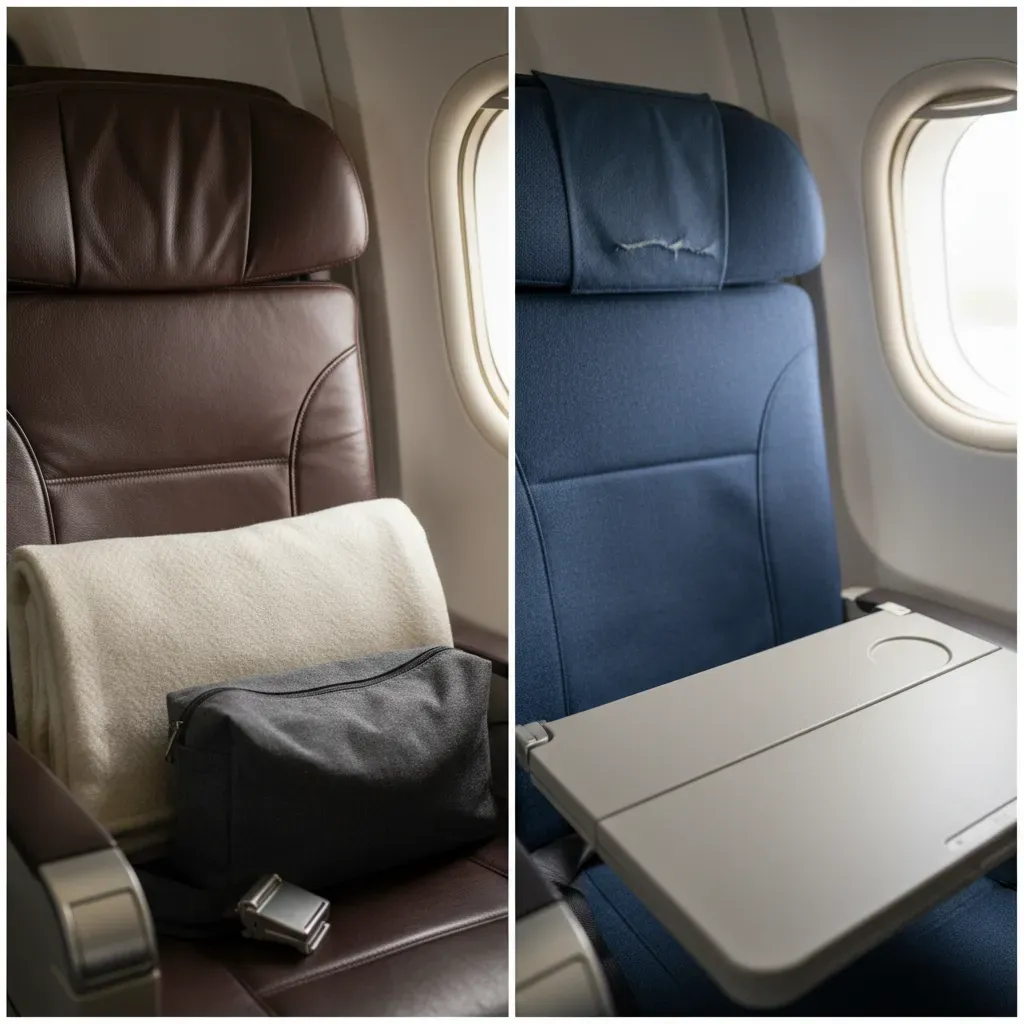
Business Class is not uniform. Some cabins offer enclosed suites, others offer open staggered seating, and some older products may still appear on secondary routes. Direct aisle access, bed length, privacy, and storage all affect the experience. This is often the dividing line between a merely acceptable fare and a genuinely worthwhile one.
3. Consider the total ground experience
For many discerning travelers, the value of Business Class begins before boarding. Dedicated check-in, fast-track services where available, a calm lounge environment, and dependable baggage handling all matter. On some carriers, premium ground services are a major reason to choose a connecting itinerary over a nonstop alternative.
4. Match the fare rules to your trip sensitivity
If your plans may shift, change flexibility can be worth prioritizing over a lower initial fare. This is particularly relevant for corporate schedules, family travel with multiple moving parts, and journeys tied to events or cruises. A specialist can help you identify whether the fare is attractive because it is genuinely competitive or because the conditions are more restrictive.
5. Use expert support when timing and routing are complex
Complex premium airfare is rarely a one-click purchase. Multi-city itineraries, open-jaw plans, and mixed-carrier options often benefit from human review. Flight Experts also offers Complex Itinerary Planning for multi-destination, open-jaw, and round-the-world requests, in Business or First Class, where expert routing can be especially valuable. If you are still researching options adjacent to this topic, reviewing pages focused on Business Class timing and fare strategy may help clarify your next step, but most travelers at this stage benefit most from a direct consultation.
What Fare Monitoring and “Price Alerts” Miss in Premium Cabins
Many travelers approach premium airfare with a monitoring mindset, using alerts to watch for price movement. Those tools can be useful for noticing change, but they often miss what matters most in Business Class. A number can move in the right direction while the product becomes less consistent, the fare basis becomes more restrictive, or the itinerary design introduces mixed-cabin risk. The number is only one data point, and in premium cabins it is rarely the most important one.
Alerts typically do not evaluate product quality. They do not tell you whether the long-haul segment is on a modern suite-style seat or an older cabin with less privacy. They often do not surface whether the ticket is sold under one carrier but operated by another, which can affect the onboard experience. They also tend to understate fare class restrictions that may matter later, including change conditions, rebooking priority during irregular operations, and how the ticket behaves if the airline adjusts schedules.
In practice, monitoring for premium itineraries is more interpretive. It often involves watching multiple gateways rather than one home airport, evaluating different hub connections that may offer a better lounge and transfer experience, and validating that the specific flights being priced are the same aircraft and cabin standard you actually want. Inventory can shift quickly. A favorable fare might appear briefly on a less desirable flight time, or a more attractive option might open through a different hub as airlines adjust premium seat availability.
Set expectations accordingly. There is rarely a single universal best time or lowest price for Business Class across all routes, and the same market can behave differently month to month. For discerning travelers, the value of a specialist is the interpretation of those movements and the protection of itinerary quality. Monitoring should not be limited to whether the fare drops. It should confirm that the ticket still aligns with your sleep plan, arrival needs, cabin expectations, and willingness to accept a connection, all while recognizing that schedules and equipment remain subject to change.
Frequently Asked Questions
What is the cheapest way to fly Business Class?
In most cases, the strongest value comes from combining flexible dates, competitive departure gateways, and the right airline or connecting hub. The absolute lowest published fare is not always the best option. A specialist can help assess whether a lower fare still delivers the aircraft, seat, lounge access, and schedule quality you expect from Business Class.
Which airlines typically offer better Business Class value?
Value varies by route and season, but travelers often compare carriers such as Qatar, Emirates, Singapore, Lufthansa, British Airways, ANA, JAL, Delta One, United Polaris, and American Airlines Flagship. The best choice depends on whether you prioritize nonstop convenience, onboard privacy, lounge quality, or a particular regional network.
Are one-stop itineraries worth considering for lower Business Class fares?
Yes, often they are. A one-stop itinerary may offer materially stronger value than a nonstop, especially on long-haul routes to Asia, the Middle East, or Australia. The key question is whether the transfer is well structured and whether the connecting airport offers a premium ground experience that makes the additional journey time feel worthwhile.
When should I book Business Class for the best result?
Booking timing depends on route demand, season, and airline inventory strategy. There is no universal booking window that works every time. Travelers with fixed dates for peak periods typically benefit from planning earlier, while flexible travelers may have more room to wait. Monitoring patterns with expert support usually produces better results than relying on a single search session.
Do lower Business Class fares mean an inferior seat?
Sometimes, but not always. A lower fare may reflect a less convenient schedule, a secondary departure city, a longer connection, or an older aircraft. It can also reflect temporary competitive pricing on an excellent product. That is why cabin verification matters. Looking at the specific seat and aircraft is essential before judging whether a fare is truly attractive.
Can Flight Experts help with Business Class seat selection and service details?
Yes. Flight Experts’ Business Class Flight Booking service includes personal consultant support, seat selection, meal preference assistance, check-in support, price drop monitoring, and cabin upgrade alerts. For travelers investing in a premium journey, those details may make a meaningful difference to comfort and overall trip management.
What if I need a multi-city Business Class itinerary?
That is often where professional assistance becomes most valuable. Multi-city and open-jaw premium itineraries can be difficult to structure efficiently through self-service tools. Flight Experts offers Complex Itinerary Planning for these scenarios, which may help travelers preserve a higher-quality cabin experience while improving routing logic across several destinations.
Is Business Class worth it for Europe versus longer routes to Asia or Australia?
For overnight flights to Europe, Business Class is often valued for lie-flat sleep and a more productive arrival. On longer journeys to Asia or Australia, the benefits may be even more pronounced because seat comfort, service rhythm, and lounge quality become more significant over extended travel time. The route length often changes the value equation considerably.
Should I book directly with an airline or through a specialist?
Direct booking may suit simple itineraries when you already know the exact flight and cabin you want. A specialist is often more useful when you are comparing several airlines, considering alternate gateways, managing complex travel plans, or simply want guidance on the real differences between premium products. The value lies in interpretation, support, and itinerary quality.
How to get the cheapest business class flights?
In most cases, the best path is to broaden the search beyond a single airport and a single routing. Flexibility with gateways, willingness to consider well-designed one-stop itineraries through strong hubs, and careful attention to seasonality can improve the range of premium options available. The key is verifying that the itinerary still delivers the aircraft, seat, and schedule quality you expect, rather than selecting an option solely because it is priced lower.
What is the cheapest business class airline?
There is rarely a single airline that is consistently the lowest across all routes and seasons. Business Class pricing is typically driven by competition, capacity, and network structure, so one carrier may be attractive in one market and less competitive in another. A more reliable approach is to evaluate the best-value option for your specific city pair, including aircraft type, connection quality, and fare conditions.
How to get business class for a cheap price?
For premium travelers, the most effective strategy is usually to focus on value rather than a single low number. Consider alternate departure gateways, adjust travel dates within a workable range, and compare one-stop routings that preserve a high-quality ground experience. Before ticketing, confirm that the long-haul segments are truly Business Class and that the fare rules align with how sensitive your plans are to changes.
How to get business class tickets for a cheaper price?
In most cases, you improve outcomes by treating the itinerary as a full design problem. The routing, departure day, connection hub, and aircraft assignment all influence fare levels and comfort. Monitoring can help, but premium fares can change quickly and not always in a way that improves the experience. Specialist support is often valuable for verifying cabin consistency, interpreting restrictions, and identifying alternate gateways that may produce a stronger overall result.
Key Takeaways
- The cheapest business class tickets are not always the best-value premium tickets once seat quality, schedule, and service are considered.
- Competitive routes, nearby gateways, and carefully selected one-stop itineraries often produce stronger Business Class value.
- Aircraft type, direct aisle access, lounge quality, and fare rules should be reviewed before choosing a lower-priced option.
- Flight Experts offers Business Class Flight Booking with consultant support, typically presenting options within 30 minutes.
- Discerning travelers usually benefit from expert guidance when balancing fare level with comfort, convenience, and overall trip quality.
Conclusion
For premium travelers, securing stronger Business Class value is a matter of judgment, not just price comparison. The right itinerary may involve a different gateway, a better-timed booking window, or a carrier whose onboard product far exceeds what the fare alone suggests. Flight Experts helps translate those variables into a clear recommendation built around your schedule, preferences, and expectations. If you are evaluating the cheapest business class tickets for an upcoming long-haul journey, contact Mike Chirilenco or speak with a Flight Experts travel specialist to review your options. A personalized consultation may help you secure a more intelligent, more comfortable, and more refined outcome than a self-service search is likely to provide.



