
Business Class Ticket Price: Route-by-Route Breakdown
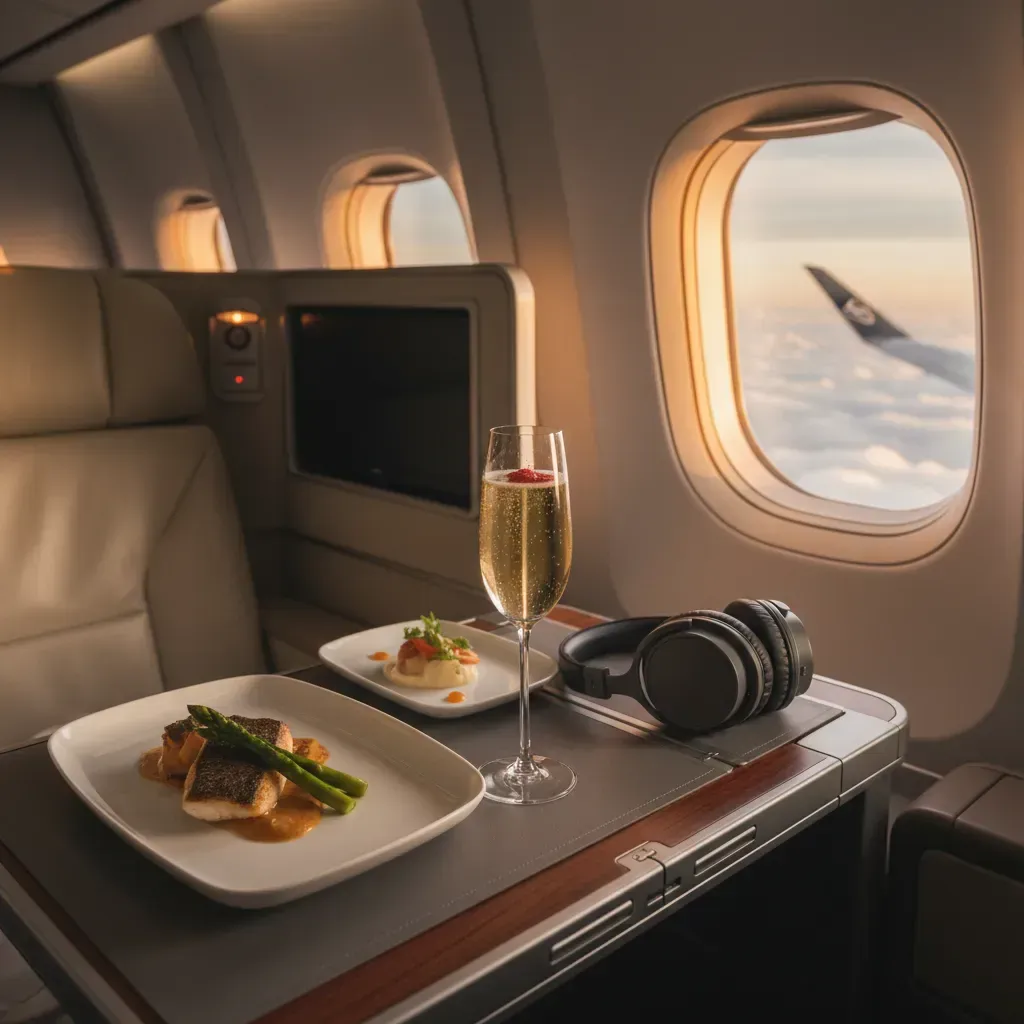
What a Business Class Ticket Price Really Includes
A business class ticket price is not simply the cost of a larger seat. In most cases, you are paying for an integrated premium journey that may include priority airport handling, elevated lounge access, lie-flat or deeply reclining seating on long-haul aircraft, enhanced dining, greater schedule flexibility, and a more reliable rest environment before arrival.
For travelers departing the United States, Flight Experts lists current Business Class Flight Booking pricing broadly at $2,000 to $8,000+, depending on route and airline. That range covers major travel patterns including the US to Europe, US to Asia, US to the Middle East, US to Australia, and domestic US routes. The wide spread is normal. New York to London on an older aircraft may price very differently from Los Angeles to Tokyo on a flagship cabin with direct aisle access and a premium lounge network.
For many discerning travelers, the more relevant question is not simply how much is a business class ticket, but whether the fare aligns with the quality of cabin, aircraft, airport experience, and itinerary convenience offered. That is where expert comparison becomes more useful than a self-service search result. If you are also reviewing current business class deals, it helps to judge each option against route, aircraft type, and travel purpose rather than headline price alone.
Route-by-Route Business Class Price Ranges
Based on current Flight Experts service data, Business Class fares typically fall within a broad premium range of $2,000 to $8,000+ for key long-haul markets. Within that framework, route characteristics matter considerably.
US to Europe
Business class ticket price to Europe is often among the most actively compared categories because there are many airlines, multiple alliance options, and frequent nonstop routes from major US gateways. Even so, fare differences may be substantial depending on whether you are flying overnight eastbound, traveling in peak summer, or selecting a carrier with a top-tier lounge and latest-generation suite seat.
Travelers focused on this market may also want to compare route-specific options for cheap business class to Europe, especially if schedule flexibility or alternate departure cities are possible.
US to Asia
Business class ticket price to Asia is typically shaped by flight length, aircraft quality, and the consistency of service across ultra-long-haul sectors. On these routes, the difference between a good fare and a strong fare often comes down to sleep quality, connection design, and transit airport experience. Airlines such as ANA, JAL, Singapore Airlines, and leading Gulf carriers often attract attention here because the onboard product can materially affect how you arrive.
US to Middle East
Business Class fares to the Middle East may reflect premium positioning, especially on carriers known for polished ground service, lounge quality, and carefully choreographed onboard hospitality. For some travelers, a one-stop itinerary through a major hub may provide stronger value than a less refined routing at a similar price point.
US to Australia
This is one of the most demanding premium markets. Business class pricing by route tends to rise here because of stage length, limited nonstop capacity, and the high value travelers place on fully flat seating and rest. A lower fare may still be less attractive if it adds weak connection timing or an inferior aircraft for the longest sector.
Domestic US Premium Routes
Domestic US Business Class or premium domestic products may sit at the lower end of the stated range, but travelers should evaluate carefully. Not every domestic premium fare delivers the same privacy, meal service, lounge access, or seat design. A route marketed as Business Class can differ materially from a long-haul international Business Class product.
Route Examples: How to Think About Business Class Price Bands

Most travelers do not encounter “business class price” in a vacuum. You typically see it in the context of a specific trip length, a routing pattern, and a set of travel dates. That is why fare expectations tend to form around the shape of the itinerary, not simply the cabin label.
Business Class pricing often behaves differently across three broad distance profiles. Shorter long-haul markets, such as many transatlantic crossings, may produce more frequent competitive pricing because multiple carriers can operate similar schedules from the same gateways. True long-haul routes to Asia often carry a higher premium because elapsed time is longer, nonstop options may be fewer, and the seat and service quality on the longest sector tends to matter more. Ultra-long-haul markets, including certain Australia routings, can price at the top end more consistently due to stage length, limited premium capacity, and the operational challenge of offering a high-rest product for so many hours.
Itinerary type can change the quote just as much as distance. A nonstop itinerary may command a premium over a one-stop routing even when the onboard seat is similar, simply because time and simplicity are valuable and inventory can be tighter. A well-designed one-stop can still be an excellent choice, but connection quality matters. A short, protected connection at a well-run hub typically feels very different from a long layover that disrupts sleep and increases misconnect risk.
Daytime versus overnight flying is another overlooked driver. Overnight departures that support immediate sleep and a rested morning arrival often price differently than daytime crossings where rest is less essential. For discerning travelers, this is where value becomes personal: if the trip purpose requires you to arrive ready for meetings or an event, you may prioritize the timing that protects rest even when the fare sits higher.
Published headline numbers are often tied to limited inventory in a specific fare bucket, on specific dates, sometimes from specific departure cities. Once that inventory moves, the next available fare may look meaningfully different. This is why a consultant-led quote tends to be more comparable than scattered headline figures. A specialist can align the comparison around the same variables, including the same travel window, similar routing logic, and a verified aircraft and cabin, so you can judge the premium experience you are actually buying.
What Influences Business Class Pricing Most
Understanding business class fare structure is often more useful than obsessing over a single number. In professional itinerary planning, five factors tend to shape business class ticket cost most clearly.
- Route demand and seasonality: Holiday periods, summer crossings, major corporate travel windows, and school breaks may all push premium fares upward. Shoulder periods often present stronger value without requiring meaningful compromise.
- Airline and cabin quality: Carriers operating newer suites, direct aisle access, premium bedding, and superior lounges often command higher fares. This may be justified for overnight or ultra-long-haul flying.
- Aircraft type: A Boeing 787 or Airbus A350 with a modern Business Class suite may price differently from an older aircraft with denser seating. For discerning travelers, this is one of the most important yet overlooked variables.
- Booking structure: One-way pricing, open-jaw itineraries, and multi-city routing may materially change the total fare. Travelers considering stopovers or combined destinations often benefit from professional review rather than piecing sectors together independently.
- Included service support: Flight Experts provides a personal travel consultant, seat selection support, meal preference assistance, check-in guidance, price drop monitoring, and cabin upgrade alerts. For many clients, the advisory element has real value because premium airfare decisions are rarely only about the ticket.
If you are still early in your research, the educational resource on cheap business class tips may help clarify the timing and routing principles that can improve your options without reducing your travel standards. Readers can also browse the broader Premium Flight Booking & Tips category for planning guidance and the Discounted Business & First Class Deals section for premium fare-focused content.
What “Business Class” Means on Different Carriers and Cabins (and Why It Affects Price)
One of the most important clarifications about Business Class pricing is that “Business Class” is not a uniform product across airlines, or even within the same airline across different aircraft types. Two flights can carry the same cabin label and still deliver very different outcomes for privacy, rest, and overall polish, which can be reflected in the fare.
The most visible differentiator is often the seat architecture, sometimes described as the “hard product.” Direct aisle access for every passenger, a more private suite-style layout, and a seat that converts into a truly flat and stable sleep surface can justify a higher fare on overnight or ultra-long-haul flying. By contrast, some configurations still place travelers in paired middle seats or layouts where privacy is limited and aisle access requires stepping over a neighbor. Those products can still be comfortable, but the experience is not identical, and the pricing often recognizes that.
The “soft product” is the second layer and it can be decisive for frequent premium travelers. Bedding quality, dining consistency, service pacing, and lounge network strength at the airports you actually use all shape the perceived value. A strong lounge option at a major hub can be particularly meaningful on connecting itineraries, where the ground experience is a genuine part of the journey rather than a brief formality.
Not every higher fare is driven by a materially better cabin. Sometimes it is demand, timing, or limited premium inventory. That is why a professional comparison should test whether a higher number is buying a demonstrably better rest and privacy outcome, or whether the product is broadly similar and the difference is primarily market conditions.
Verification matters. Aircraft swaps and cabin configuration changes can occur, and the exact seat you expect may vary by tail assignment and operational needs. Before selecting a fare, it is prudent to confirm the aircraft and cabin, understand how consistent the product is on that route, and evaluate the itinerary as a whole. This is one of the areas where a specialist can provide current, route-specific guidance rather than relying on assumptions.
Pros and Cons

Strengths
- Business Class pricing can offer meaningful variation by route, giving travelers room to optimize around schedule, aircraft, and service priorities.
- For long-haul travel, the fare often includes substantial quality-of-journey benefits such as lie-flat seating, lounge access, premium dining, and priority airport handling.
- On overnight and ultra-long-haul routes, a stronger Business Class product may materially improve rest, productivity, and arrival condition.
- Flight Experts supports major Business Class routes worldwide and provides consultant-led service, typically with options presented within 30 minutes.
- Professional review may uncover stronger itinerary construction than self-service booking, especially for complex, multi-segment, or mixed-airline travel.
Considerations
- A higher business class ticket price does not always guarantee the best seat, aircraft, or lounge experience, so quality must be verified route by route.
- Published fares may shift quickly based on season, inventory, and departure city, which means timing can significantly affect final quotes.
- Domestic premium cabins and international Business Class products are not directly comparable, even when marketed under similar naming conventions.
- Travelers focused only on headline fare may overlook important factors such as connection quality, airport transfers, or onboard privacy.
Who This Suits Best
This pricing guide is most useful for travelers who know they want Business Class, but want to understand where the value lies before committing. That may include an executive traveling repeatedly between the US and Europe, a couple planning a celebratory trip to Asia, or a family balancing comfort and schedule reliability on a long-haul journey. It is especially relevant if you prefer a refined booking process, want clarity on aircraft and cabin differences, or need help comparing several premium options without spending hours interpreting inconsistent airline fare displays.
Flight Experts Recommendation
For discerning travelers, the right approach to business class price comparison is rarely to search for the lowest visible fare and assume it represents the best overall choice. The more sophisticated method is to compare fare quality, routing design, aircraft type, schedule, and service support together. Flight Experts offers Business Class Flight Booking across major global routes, with a personal consultant, seat selection support, meal preference coordination, check-in assistance, price drop monitoring, and cabin upgrade alerts. Current service pricing is listed broadly at $2,000 to $8,000+ depending on route and carrier.
If you are preparing to book, speak with a luxury travel specialist rather than relying on automated search results alone. Contact Mike Chirilenco and the Flight Experts team to begin planning your itinerary, discuss your preferred airlines and travel dates, and receive a curated Business Class recommendation aligned with your priorities.
How to Evaluate a Business Class Fare

A thoughtful Business Class purchase usually comes down to four core criteria.
1. Judge the seat, not just the cabin label
Not all Business Class products are created equally. Some offer enclosed suites or highly private staggered seating, while others may use older angled or less spacious layouts. On flights over seven hours, this distinction may matter more than a modest difference in fare.
2. Prioritize route logic
The best business class price comparison should account for departure time, layover length, arrival convenience, and airport experience. A slightly higher fare may be worthwhile if it eliminates a poor overnight connection or places you on a superior long-haul sector.
3. Consider the ground experience
For premium travelers, the airport portion of the journey is part of the value equation. Lounge access, priority check-in, efficient transfers, and in some cases chauffeur coordination can transform how the trip begins. This may be especially important for milestone travel or tightly scheduled corporate itineraries.
4. Match fare type to trip purpose
A honeymoon, anniversary trip, or client-facing business journey may justify a stronger premium product than a short daytime sector. The best business class fare is the one aligned with your purpose, not simply the lowest visible quote.
5. Use specialist guidance for complex itineraries
If you are combining cities, alliances, or stopovers, expert booking support becomes even more valuable. Flight Experts also offers Complex Itinerary Planning for multi-destination and open-jaw travel in Business or First Class. In many cases, a specialist can present routing options that would be difficult to evaluate accurately through a general booking interface.
Fare Rules That Matter for Discerning Travelers
Two Business Class fares that look similar on the surface can behave very differently once plans change. For corporate travel, milestone trips with fixed dates, or any itinerary that requires coordination with multiple people, the fare rules can be as important as the seat.
In most cases, the fare-rule elements that materially affect value include change terms, cancellation terms, and any difference in how the fare is repriced when you adjust dates. Some fares may allow changes with more favorable conditions, while others may impose more restrictive terms or require that you rebook into whatever inventory is available at the time of the change. If your schedule could move, or you simply prefer to protect optionality, it is worth confirming how the fare behaves before you commit.
Seat selection is another practical point that experienced travelers prioritize. Some Business Class fares may offer earlier access to advance seat assignment, while others may limit seat selection until closer to departure or restrict certain preferred seats. This can be particularly relevant for couples seeking a specific paired configuration, or for travelers who strongly prefer a quieter zone of the cabin.
Minimum stay and ticketing conditions can also influence premium pricing, especially on itineraries that resemble corporate travel patterns. While the details vary by carrier and route, the principle is consistent: fare construction is not only about distance, it is about how the market expects travelers to use the ticket.
For corporate travelers, there is also the operational value of reducing misconnect risk. A slightly different routing, even at a higher fare, may be justified if it minimizes tight connections, avoids airports prone to congestion at certain hours, or keeps the most important long-haul sector on a carrier with more consistent premium operations. No itinerary is immune to disruptions, but smart structure can improve your options when irregular operations occur.
Expert review tends to be most valuable for mixed-carrier itineraries, open-jaw structures, and any trip where you are tempted to combine separate tickets to create a desired routing. Separate-ticket construction may reduce visibility into protections and rebooking priority if a delay occurs, and it can complicate baggage and connection handling depending on the circumstances. A specialist can evaluate whether the itinerary should be kept on one ticket, how the fare rules align across sectors, and where the real risks and trade-offs sit for your specific trip.
Frequently Asked Questions
How much is a business class ticket from the USA?
According to current Flight Experts service data, Business Class Flight Booking typically ranges from $2,000 to $8,000+ depending on route, airline, and travel pattern. A domestic US premium fare may sit lower than a long-haul itinerary to Asia or Australia. Final pricing may also vary based on season, aircraft, and fare rules.
Why does business class ticket price vary so much by route?
Route distance is only one factor. Pricing may also reflect airline competition, seasonal demand, aircraft type, cabin quality, and whether the route is heavily traveled by corporate passengers. A shorter route with limited premium inventory may occasionally price above a longer route with more competition and greater schedule choice.
Is business class ticket price to Europe usually lower than to Asia?
In many cases, yes, though not always. Europe routes often have more nonstop options and more competing carriers from major US gateways. Asia itineraries are typically longer and may involve fewer ideal nonstop choices depending on your departure city. The better comparison is the complete product, not distance alone.
Does a higher business class fare always mean a better experience?
No. A higher fare may reflect demand, schedule convenience, or inventory constraints rather than superior seating or service. Some lower fares may still offer an excellent hard product and lounge experience. This is why aircraft type, seat map, and connection quality should be reviewed before selecting any premium itinerary.
What is included in Flight Experts Business Class Flight Booking service?
Flight Experts lists a personal travel consultant, exclusive consolidator fare access, seat selection, meal preference support, check-in assistance, price drop monitoring, and cabin upgrade alerts. Options are usually presented within 30 minutes. This service structure may be especially valuable for travelers who want one expert point of contact throughout the booking process.
Are domestic US Business Class fares comparable to international Business Class?
Usually not. Domestic premium cabins may offer wider seats, upgraded meals, and priority services, but they often differ significantly from international long-haul Business Class with lie-flat beds and more extensive lounge privileges. Travelers should compare based on seat design, flight length, and airport experience rather than cabin name alone.
When should I start comparing business class fares?
For premium long-haul travel, it is generally wise to begin early enough to preserve route and aircraft choice, especially for holiday periods or milestone trips. Exact timing may vary by destination and season. Early planning is particularly helpful if you need specific seats, ideal connection windows, or coordinated ground arrangements.
Can a travel specialist help with business class price comparison?
Yes. A specialist can compare not just fare totals, but also aircraft quality, lounge access, schedule logic, fare rules, and traveler preferences. For clients booking complex or high-value itineraries, that layered analysis may produce a stronger overall outcome than simply selecting the lowest visible option online.
What if I need multiple cities on one Business Class trip?
That is precisely where professional planning tends to be most helpful. Multi-city Business Class pricing can be difficult to evaluate because separate tickets do not always represent the best structure. Open-jaw and alliance-based options may sometimes offer a more elegant solution, depending on your travel dates and destinations.
How much does a business class ticket cost?
According to current Flight Experts service data, Business Class Flight Booking is commonly seen in the $2,000 to $8,000+ range for major long-haul markets, subject to route, season, airline, and itinerary structure. The most reliable way to interpret a price is to confirm what it includes: the aircraft and seat type, the routing and elapsed time, and the fare rules that govern changes and cancellations.
Is first class better than business?
In most cases, international First Class is positioned above Business Class in privacy, space, and personalization, but it is not universally available, and it is not always offered on the routes you need. Some modern Business Class suites are so refined that the experience may feel close to First Class on certain carriers. The better question is whether First Class meaningfully improves your rest, discretion, and overall journey for that specific route, aircraft, and schedule.
How to get cheap business class?
For travelers who want to improve Business Class pricing without compromising the quality of the trip, the most effective levers are typically timing, flexibility on departure airports, and routing strategy, rather than accepting an inferior aircraft or poorly timed connection. The resource on cheap business class tips explains these principles in more detail. A specialist can also help you evaluate whether a lower fare is tied to restrictive rules, weaker seat quality, or a routing that increases travel fatigue.
Is business class worth it on planes?
For long-haul and overnight travel, Business Class is often worth it for travelers who value arriving rested and ready, particularly when the product offers a true lie-flat bed and a quiet, private environment. On shorter daytime sectors, the value may depend more on your schedule, the ground experience, and how important space and service are to you on that specific day. In most cases, it is worth evaluating “worth it” against your purpose, not against the cabin name alone.
Key Takeaways
- Current Flight Experts Business Class Flight Booking pricing typically ranges from $2,000 to $8,000+ depending on route and airline.
- Business class ticket price should be assessed alongside aircraft type, seat quality, lounge access, and routing convenience.
- US to Europe, Asia, Middle East, Australia, and domestic US routes can differ significantly in premium fare structure.
- A consultant-led comparison may help identify stronger overall value than a headline fare viewed in isolation.
- Flight Experts provides personalized Business Class booking support with advisor guidance throughout the booking process.
Conclusion
Business Class pricing is rarely as simple as one route, one fare, and one obvious answer. The right ticket depends on where you are flying, how you want to arrive, and which elements of the premium journey matter most to you. A lower fare may not represent the strongest choice if the aircraft is dated, the connection is poorly timed, or the airport experience feels compromised. Flight Experts exists to bring clarity to that decision. If you are ready to compare premium options with the help of a specialist, contact Mike Chirilenco or speak with a Flight Experts travel advisor to review your route, preferences, and travel goals. It is the most efficient way to secure a Business Class itinerary that feels properly tailored to you.



