
First Class Tickets to Hawaii: Best Deals & Airlines
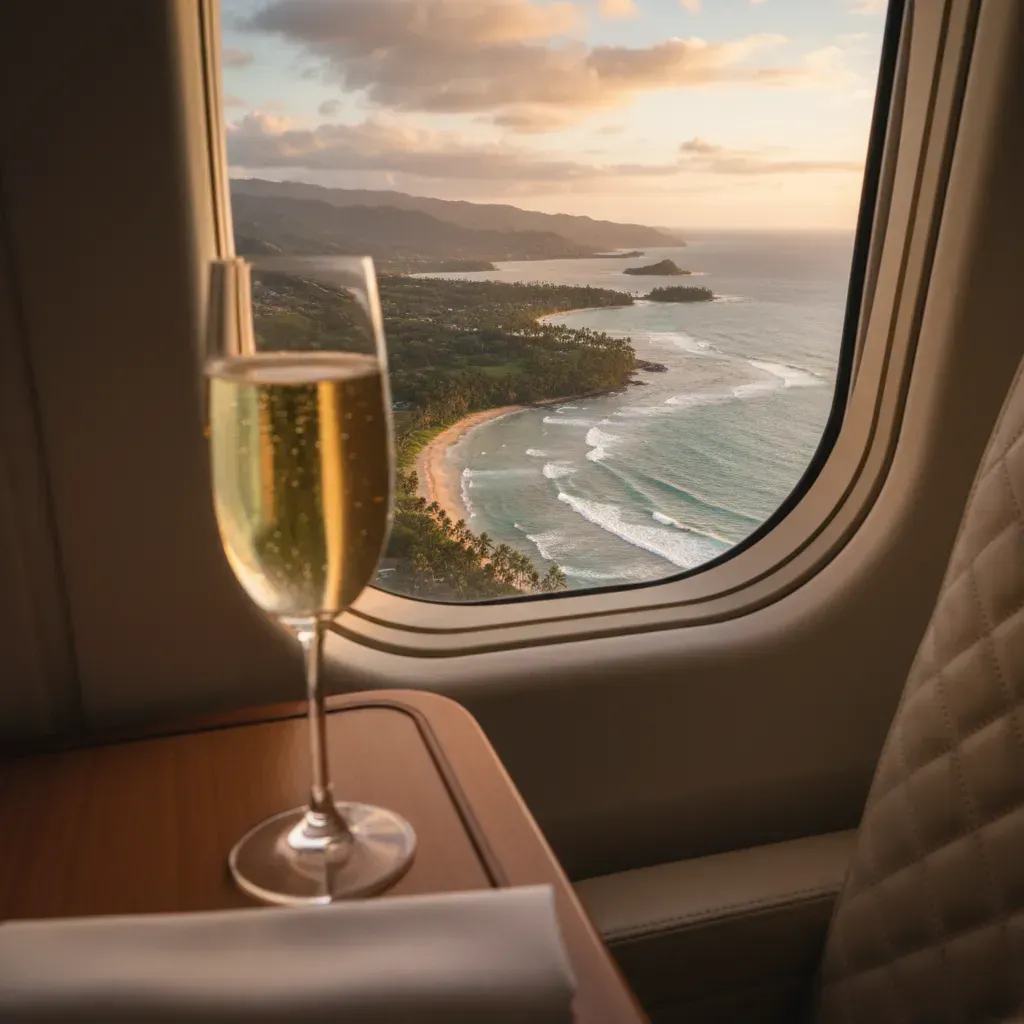
What First Class to Hawaii Really Means
One of the most important distinctions in this market is that First Class to Hawaii is not always the same experience across airlines or routes. On shorter West Coast departures, you may find a spacious recliner-style domestic First Class seat with upgraded dining and priority airport services. On longer routes, particularly from the East Coast or on select premium transcontinental aircraft, the experience may be materially closer to long-haul Business Class, with lie-flat seating and a more restful overnight or extended daytime journey.
That difference matters. A traveler flying from Los Angeles to Honolulu may prioritize priority services and a larger seat. A traveler departing from New York, Boston, or Washington may place a much higher value on a fully flat bed, quieter cabin space, and timing that supports immediate vacation recovery on arrival.
At Flight Experts, the relevant service for this type of journey is often either First Class Flight Booking or Business Class Flight Booking, depending on the aircraft and route actually operating your flight. Flight Experts currently arranges First Class bookings with a stated range of $5,000 – $20,000+ depending on airline and routing, and Business Class bookings with a stated range of $2,000 – $8,000+. For Hawaii, many sophisticated travelers should also compare business class to Hawaii, especially when a lie-flat Business Class seat may offer better rest than a branded domestic First Class product.
Key Features to Evaluate
The most successful Hawaii premium bookings begin with product accuracy. Airlines may label cabins differently, but the traveler experience depends on the specific aircraft, route, and configuration. A narrow-body aircraft with domestic First Class service will feel very different from a wide-body or premium transcontinental aircraft with a lie-flat seat.
Seat design should be your first checkpoint. For flights over five hours, a true lie-flat or near-flat seat may significantly improve comfort, especially for overnight returns or travelers connecting onward to islands or resorts. Recliner seats can still be pleasant, but they are usually better suited to shorter West Coast departures.
Airport treatment is also part of the value equation. Priority check-in, earlier boarding, expedited security in some terminals, and lounge eligibility where available can make departure materially calmer. Not every Hawaii First Class fare includes lounge access, so this should be verified rather than assumed.
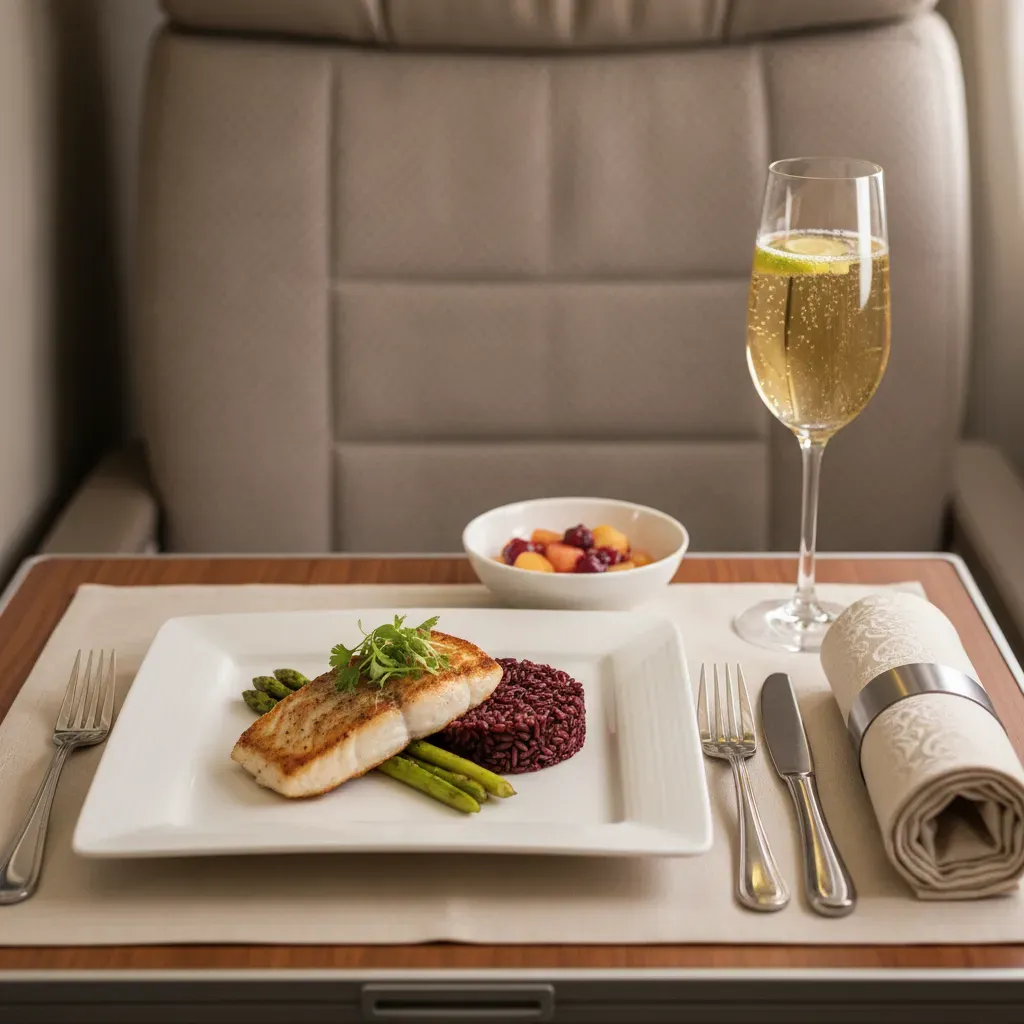
Dining and onboard service vary widely. Some airlines provide plated meals with stronger wine and spirits programs, while others offer a more limited domestic premium service. Travelers celebrating honeymoons, anniversaries, or family milestones usually notice this difference immediately.
Routing strategy is where expert guidance often becomes decisive. A nonstop may be preferable, but not in every case. Depending on schedule, aircraft type, and airport experience, a one-stop itinerary with a superior premium cabin could feel more refined overall. Readers comparing published fare promotions may also review broader first class airfare deals, though the right match is usually about product quality as much as headline fare visibility.
Flight Experts supports these bookings with personal travel consultant service, seat selection assistance, meal preference coordination, check-in support, and booking turnaround that is usually within 30 minutes. For travelers who prefer a guided process rather than managing premium travel independently, that service layer may be just as important as the seat itself.
Best Departure Gateways and Aircraft Types for First Class to Hawaii
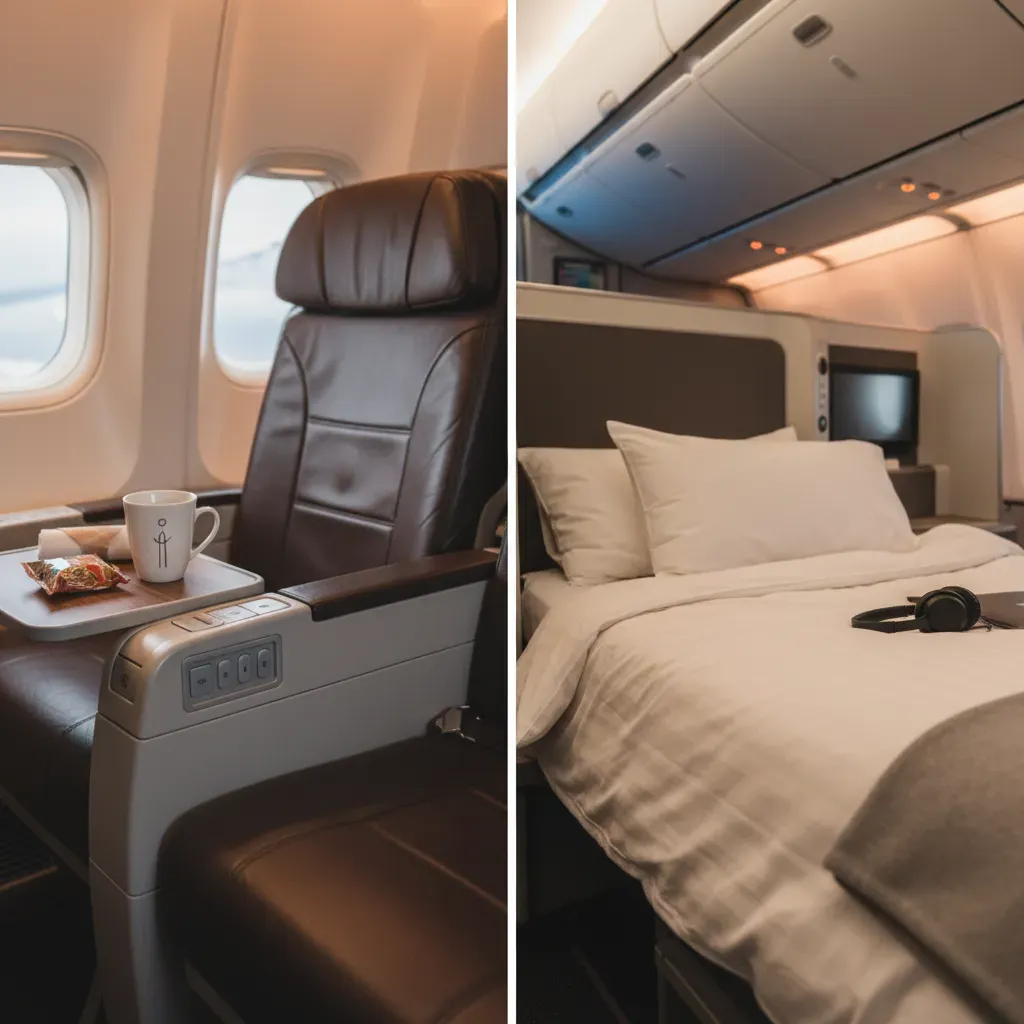
For Hawaii, the word “First Class” on a booking page is only a starting point. The onboard product can change materially based on your departure gateway and the aircraft the carrier assigns to that route. Two itineraries that look similar on paper may feel very different in the air, particularly once you account for seat design, cabin density, and the consistency of premium service on that specific operation.
West Coast nonstops often deliver the cleanest journey, and for many travelers that is the priority. The flight time is typically manageable in a high-quality recliner-style domestic First Class seat, and the simplicity of boarding once and arriving once has real value, especially when traveling with family or coordinating resort transfers. In most cases, these routes are operated by aircraft configured for domestic service, which can mean excellent space and attentive cabin crews, but not necessarily a lie-flat seat.
For longer mainland departures, particularly from the East Coast or certain interior hubs, the routing logic changes. Some itineraries connect through a major gateway to reach Hawaii, and that short connection can occasionally unlock a superior premium seat on the longer ocean segment, including lie-flat or near-flat products on select aircraft. Equipment and configurations are always subject to change, and carriers do swap aircraft, but the planning principle remains consistent: a top-cabin label is not a guarantee of a long-haul sleep-capable seat.
Discerning travelers often choose between two priorities. The first is the nonstop, chosen for simplicity, less exposure to misconnect risk, and a straightforward arrival day. The second is a carefully planned one-stop itinerary, chosen when the connection is manageable and the long segment offers meaningfully stronger seat comfort, privacy, or a more consistent premium service cadence. If you value immediate resort readiness on arrival, a lie-flat seat on the main segment may justify a short, well-timed connection. If you value predictability and minimal logistics, a nonstop may remain the most refined choice even with a recliner seat.
This is one of the areas where professional review tends to pay off. Flight Experts evaluates your likely aircraft, cabin layout, and timing across the full itinerary, because “First Class to Hawaii” is not a single product. It is a set of route-specific experiences that should be matched to your goals for rest, privacy, and arrival-day ease.
Pros and Cons
Strengths
- First Class to Hawaii may provide a notably quieter, more spacious start to your trip, which is especially valuable for milestone vacations and longer mainland departures.
- Priority airport handling often improves the overall journey, with faster check-in, earlier boarding, and in some cases access to premium lounges or dedicated service channels.
- On select routes, travelers may secure a lie-flat or premium transcontinental-style seat that delivers a materially better rest experience than a conventional domestic recliner.
- Premium cabin booking through Flight Experts includes concierge-style assistance such as seat selection, meal preferences, and check-in support, which may reduce friction before departure.
- Flight Experts offers both First Class Flight Booking and Business Class Flight Booking, allowing travelers to compare true cabin quality rather than relying on airline marketing labels alone.
Considerations
- Not every First Class flight to Hawaii is a true international-style First Class experience. In many cases, it is a domestic premium cabin with limited differentiation beyond seat width and service.
- Lounge access is not universal and may depend on fare rules, airline policy, route, or elite status, so assumptions can lead to disappointment.
- For some itineraries, a premium Business Class product may outperform domestic First Class, which means the most expensive cabin label is not always the best choice.
- Aircraft swaps and schedule changes may affect the onboard product, particularly on routes where carriers operate multiple configurations.
What Your Ticket Typically Includes (and What It May Not)
First Class to Hawaii is still, in many cases, a domestic top-cabin product. That means inclusions can look familiar, but they are not always uniform across airlines, routes, or fare types. A refined booking begins by confirming what is included, and just as importantly, what is not.
In most cases, First Class tickets to Hawaii typically include priority check-in, an elevated baggage allowance, and boarding priority. Onboard, you can usually expect a more attentive service flow and an upgraded meal relative to the main cabin, with variations in dining style and beverage programs depending on the airline and departure time. These are meaningful quality-of-journey benefits, but the exact details are governed by fare rules and operating carrier policies, which can change.
Lounge access is where expectations often become misaligned. Some travelers assume that a top cabin automatically unlocks airport lounge entry, dedicated premium check-in areas, or expedited security channels. The situation is more nuanced. Lounge eligibility may depend on the specific route, the carrier’s policy for Hawaii service, the ticketed cabin versus the marketed cabin, and in some cases elite status. Even where priority screening exists, access can be terminal-dependent and subject to airport operations.
Before you purchase, it is worth confirming a small set of details that tend to define satisfaction in premium Hawaii travel. Confirm the actual seat type and whether it is lie-flat or recliner, confirm the meal service level you will receive on your specific departure, confirm lounge eligibility rather than assuming it, confirm change and cancellation terms for your fare, and confirm how any inter-island or mainland connection will be handled if irregular operations occur. This is especially important when the itinerary includes multiple carriers or a connection where baggage handling and rebooking responsibility may not feel as straightforward as travelers expect.
Flight Experts reviews these points with clients as part of the planning process because premium travel is most rewarding when it is predictable. The goal is a top-cabin experience that feels consistent from check-in through arrival, not a booking that looks impressive but delivers avoidable surprises.
Who First Class to Hawaii Suits Best
First Class to Hawaii typically suits travelers who view the flight as part of the holiday rather than a simple transfer between destinations. That includes couples marking an anniversary or honeymoon, families beginning a high-value island stay, and executives extending a business trip into leisure time without sacrificing comfort. It is also well suited to travelers departing from cities where flight time is long enough for seat quality and personal space to materially affect arrival day energy.
If your priority is maximum rest, an elevated airport experience, and professional support before you travel, a premium cabin may be worth serious consideration. If your route offers a superior lie-flat Business Class option instead, that could be the more intelligent premium choice.
Flight Experts Recommendation
For Hawaii, the strongest booking strategy is rarely to search by fare alone. The more refined approach is to compare route, aircraft, cabin design, departure timing, and airport experience together. Flight Experts is particularly well positioned for this because the agency handles both First Class Flight Booking and Business Class Flight Booking, with service that includes a personal consultant, exclusive consolidator access, seat coordination, and support through booking and departure.
If your Hawaii trip involves a special occasion, a complex multi-island schedule, or a preference for the best available premium product rather than the most visible listing online, speaking with a specialist may save considerable time and uncertainty. Flight Experts also offers Complex Itinerary Planning for travelers combining Hawaii with the mainland, Asia, Australia, or multi-city stopovers. To begin planning, contact Mike Chirilenco or speak with a Flight Experts travel specialist for a personalized recommendation tailored to your departure city, preferred cabin style, and travel priorities.
How to Choose the Right Option
Selecting first class tickets to Hawaii should begin with five criteria.
1. Confirm the actual seat, not just the cabin label. This is the single most important filter. Some flights offer a recliner-style domestic First Class seat, while others may provide a significantly more comfortable lie-flat experience. For a longer flight, especially from the East Coast, that distinction could define the value of the booking.
2. Match the cabin to the route length. A five-to-six-hour West Coast service may justify a premium recliner if timing is convenient and service is polished. A much longer itinerary usually warrants a stronger emphasis on bed comfort, personal space, and arrival readiness.
3. Evaluate the airport experience. Premium travelers often underestimate how much departure and connection logistics shape the journey. Dedicated counters, shorter lines, and lounge access may create a calmer beginning, but these benefits differ by airline and ticket type. Review them in advance rather than presuming uniformity.
4. Consider whether Business Class is the better premium product. Hawaii is one of the few markets where the words First Class and Business Class can create confusion. On some airlines, First Class is the branded top cabin domestically. On others, a long-range or premium transcontinental Business Class-style seat may be the more compelling option. Readers who want a broader view of premium fares can also review curated cheap first class flights, but the best premium investment still depends on route-specific quality, not just fare visibility.
5. Use expert support for high-value itineraries. Flight Experts offers a personal consultant, cabin guidance, check-in assistance, and route-specific recommendations. The agency’s published services cover premium cabins across major carriers, with turnaround usually within 30 minutes for presented options. For travelers spending meaningfully on Hawaii accommodations, private transfers, or celebratory experiences, the value of precise air planning is often substantial.
If you are also researching broader premium strategy, the site’s Premium Cabin Experience & Amenities and Premium Flight Booking & Tips sections may help clarify how cabin type, fare structure, and service inclusions differ across airlines and routes.
Hawaii Arrival and Packing Considerations for Premium Travelers
Arrival day in Hawaii can be deceptively complex, even for premium travelers. Your cabin may improve the journey significantly, but once on the ground, you still need a plan for agricultural screening, baggage flow, and time-sensitive transfers to resorts or inter-island flights.
Many travelers ask what is not allowed to bring to Hawaii, and the most common friction points involve agricultural restrictions and inspections. Hawaii has protections designed to limit pests and plant diseases, so certain fresh items may be restricted or require declaration and inspection. As a general guideline, travelers should be cautious with fresh fruits and vegetables, plants, soil, and similar items that may trigger additional screening. Rules and enforcement can vary, and requirements can change, so if you are carrying anything that could be considered agricultural, it is wise to declare it and allow extra time. For premium arrivals, this is less about inconvenience and more about protecting the calm tone of your first hours on the islands.
Arrival timing also deserves attention. If you have booked private transfers or are heading directly to a resort with a specific check-in window, build a buffer for deplaning, baggage delivery, and airport congestion. Priority tags and premium handling may help in some cases, but they do not eliminate variability. If your itinerary includes an inter-island connection, the safest approach is often to allow more time than you would on a mainland domestic transfer, particularly during peak arrival banks.
For travelers carrying high-value items or special-occasion attire, a disciplined carry-on strategy can prevent avoidable disruptions. Keep essential medications, jewelry, watches, formalwear, and critical skincare or cosmetic items with you, and consider how your bag will be handled through any connection. Even in First Class, bags can be delayed by weather, operational issues, or tight connections, and Hawaii is a destination where replacing a specific item quickly may be more difficult than expected. The goal is simple: arrive ready for the experience you planned, without your first evening being shaped by logistics.
Frequently Asked Questions
Is First Class to Hawaii always worth it?
It depends on your route, the aircraft, and your travel priorities. On a shorter West Coast departure, the benefit may center on space, priority services, and a more polished onboard meal. On longer itineraries, the value increases if the flight offers a lie-flat seat or materially better rest. For milestone travel, many clients find the comfort and reduced friction worthwhile.
What is the difference between First Class and Business Class to Hawaii?
In many Hawaii markets, First Class refers to the top domestic cabin, which may or may not include lie-flat seating. Business Class, where available, may offer a more international-style premium product. The better option depends on the airline and aircraft. This is why comparing cabin hardware is often more useful than relying on the label alone.
How much do first class tickets to Hawaii typically cost?
Pricing varies widely by departure city, season, airline, booking window, and aircraft type. Flight Experts lists First Class Flight Booking in a general range of $5,000 – $20,000+ and Business Class Flight Booking in a range of $2,000 – $8,000+, though Hawaii-specific pricing should be confirmed directly. Personalized quotes are the most reliable way to assess current premium options.
How much is it to fly 1st class to Hawaii?
It varies widely based on departure city, travel dates, airline, aircraft type, and how far in advance you book. For reference, Flight Experts lists First Class Flight Booking in a general range of $5,000 – $20,000+ depending on airline and routing, though Hawaii-specific pricing should be confirmed directly for your preferred dates and gateway. The most reliable way to evaluate value is to price your exact itinerary and confirm the seat type you will actually receive.
Is it worth flying first class to Hawaii?
For many discerning travelers, it can be, particularly when the flight is long enough that comfort affects arrival-day energy, or when the itinerary supports a lie-flat or premium transcontinental-style seat. It is often most compelling for milestone trips, tight schedules, and travelers who value a calmer airport experience. The decision should be made route by route, because the difference between a recliner-style seat and a lie-flat seat can be substantial, and the cabin label alone does not always indicate which you are buying.
Do first class flights to Hawaii include lounge access?
Not always. Lounge access may depend on the airline, route, fare rules, and elite status. Some premium Hawaii itineraries include lounge privileges, while others do not, even when booked in the top domestic cabin. This should be verified before purchase if the pre-flight airport experience is important to you.
Which airline has the best First Class to Hawaii?
There is no single answer for every traveler. The best option usually depends on where you depart, whether the route offers lie-flat seating, how important lounge access is, and how much you value service style or schedule. Aircraft type often matters more than airline branding alone, especially for longer mainland departures.
Should I choose nonstop or a connecting itinerary?
A nonstop is often preferable for convenience, but it is not always the superior premium experience. In some cases, a connection may provide access to a stronger aircraft or a more comfortable premium cabin. Travelers should weigh total travel time against onboard comfort, especially if arrival day plans are important.
What is not allowed to bring to Hawaii?
Hawaii applies agricultural protections that can restrict or require declaration of certain items, particularly some fresh fruits and vegetables, plants, and items that may carry pests or soil. Requirements and enforcement can vary, and policies can change, so the practical guidance is to avoid packing questionable agricultural items, declare anything that could be subject to inspection, and allow a little extra time on arrival. If you are unsure, a travel specialist can help you plan conservatively so that arrival remains smooth.
Is $2000 enough for a week in Hawaii?
It depends entirely on your travel style, island, season, and what is included in that figure. Hawaii can range from restrained to extremely high-touch, and many premium travelers find that accommodations, dining, and experiences can exceed a simplified weekly number, particularly at luxury resorts and for private services. If you are planning a premium trip, it is usually better to build a tailored budget around your preferred resort level, transportation style, and experiences, then align flights accordingly.
Can Flight Experts help with Hawaii trips that include multiple islands?
Yes. For travelers combining Oahu, Maui, Kauai, or the Big Island with mainland connections or broader international travel, Flight Experts may assist through its Complex Itinerary Planning service. That can be especially useful when ticketing strategy, connection timing, and premium cabin consistency all need to be considered together.
How quickly can Flight Experts provide options?
For First Class Flight Booking and Business Class Flight Booking, Flight Experts states that options are usually presented within 30 minutes after a request is submitted and an expert is assigned. More complex itineraries may take longer, depending on route structure and trip requirements. Timing can vary, but the process is designed to be highly responsive.
Is it better to book directly with an airline or use a specialist?
For straightforward trips, either may work. For premium Hawaii travel, a specialist may add value by comparing aircraft types, cabin quality, service inclusions, and routing logic across carriers. That guidance becomes more important when the trip marks a special occasion or when the premium investment is substantial enough that product precision matters.
Key Takeaways
- First Class to Hawaii is not a uniform product. Aircraft type and seat design matter more than the cabin label alone.
- For longer routes, a lie-flat Business Class option may be preferable to a domestic-style First Class seat.
- Airport services, lounge access, and onboard dining should be verified individually because inclusions vary by airline and fare.
- Flight Experts offers personalized support for First Class, Business Class, and complex premium itineraries, with options usually presented within 30 minutes.
- The strongest Hawaii booking decisions balance cabin quality, routing, and travel purpose rather than focusing on fare visibility alone.
Conclusion
Choosing first class tickets to Hawaii is ultimately about matching the right premium experience to the way you travel. For some travelers, that means a spacious nonstop from the West Coast with priority services and a smooth arrival. For others, it means selecting a superior aircraft or even a Business Class-style product that offers deeper rest and a more refined journey. The key is understanding what you are actually buying before you commit. Flight Experts is well suited to guide that decision with personalized cabin advice, route comparison, and attentive booking support. If you would like a curated recommendation for your next Hawaii trip, contact Mike Chirilenco or speak with a Flight Experts travel specialist to begin planning with confidence.



