
American Airlines Premium Economy Review
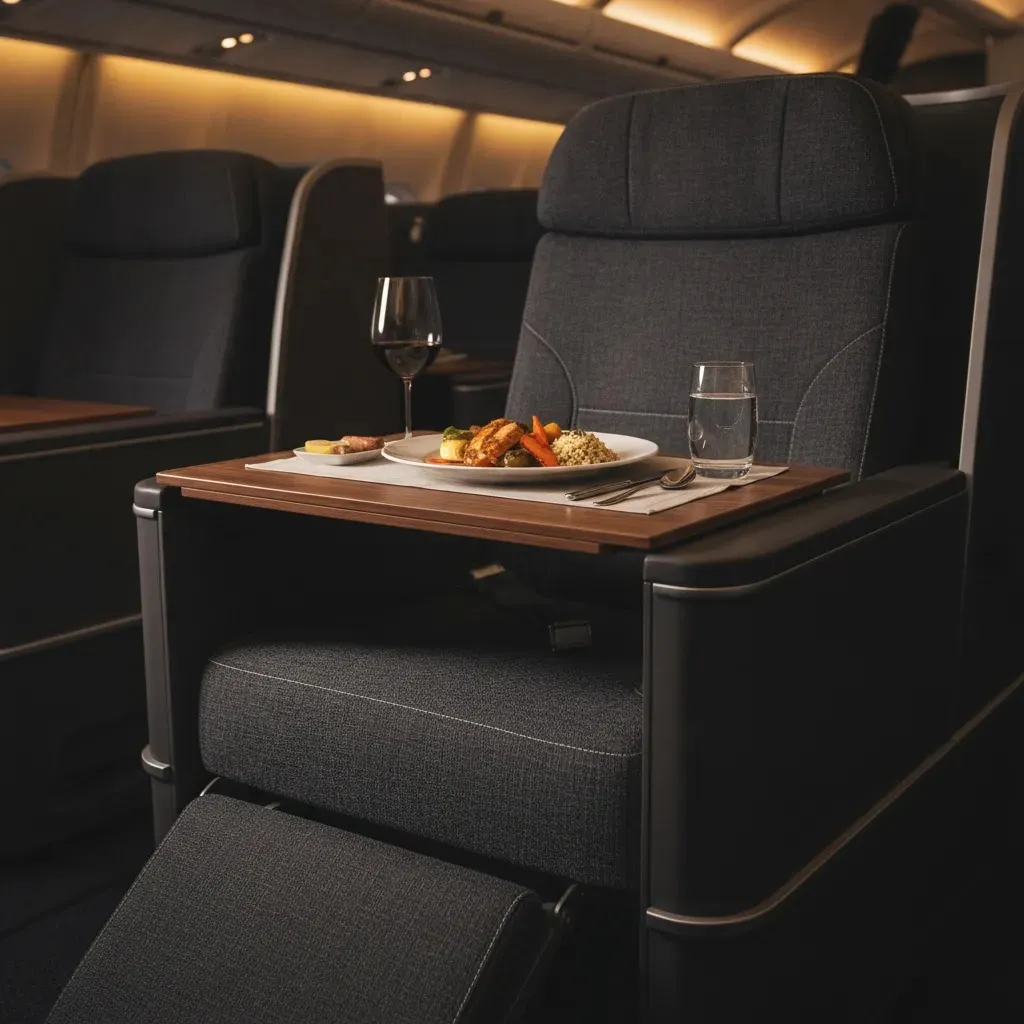
American Airlines Premium Economy Review: Cabin Snapshot
American Airlines Premium Economy usually appears on the carrier’s long-haul widebody fleet, not on short domestic aircraft. Therefore, travelers should judge this product in an international setting. On the right route, it can offer a meaningful step up from Main Cabin for travelers who want a quieter and more contained experience without moving into Business Class.
The strongest part of the proposition is the hard product. American generally equips Premium Economy with a dedicated seat that has more width, deeper recline than standard economy seating, a leg rest or footrest arrangement, larger entertainment screens, and a more substantial console area. That physical separation matters more than branding language. On flights of eight hours or longer, the seat architecture often decides whether the cabin feels restorative or simply less tiring.
Meal service is the second major differentiator. On many international sectors, Premium Economy receives plated dining with improved presentation compared with the main cabin. It also gets upgraded tableware and a more deliberate service flow. The experience may still vary by route, crew, catering station, and flight length. Even so, it usually shows that American intends this cabin to sit above a simple extra-legroom product.
American Airlines Premium Economy Review: Ground Experience
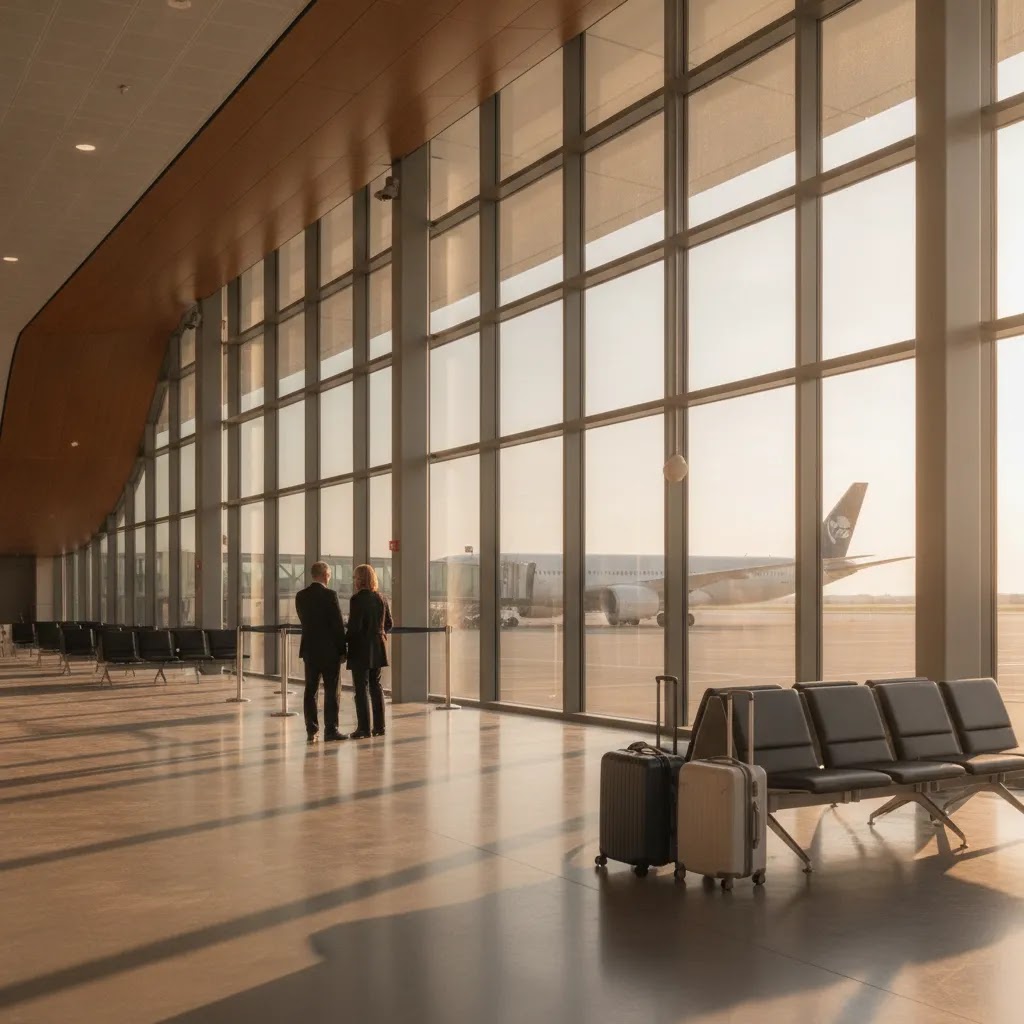
Many travelers judge Premium Economy by the airport flow as much as the seat. So, set expectations carefully. American Airlines Premium Economy may include select priority services on the ground. However, the exact mix often depends on the airport, the itinerary type, and the fare rules on your ticket.
Check-in and airport flow
Some airports offer priority check-in access, especially on international departures with clearly defined premium facilities. In other stations, Premium Economy may share the general check-in area with the main cabin. Sometimes the airline reserves priority lanes for higher cabin classes and elite tiers. As a result, the cabin can feel premium in the air while the ground experience remains more variable.
Boarding and baggage details
Boarding is usually more consistent. On many itineraries, American places Premium Economy travelers in a boarding group that lets them settle in before the main cabin. That helps protect overhead bin space and reduces crowding at the gate. Still, boarding treatment can change by route, operations, and elite status. Therefore, confirm what your boarding pass shows instead of relying on assumptions.
Baggage allowance also deserves a quick check. Some Premium Economy fares include a more generous checked-bag allowance than Main Cabin on international routes. However, allowances can differ by destination, fare brand, and whether the trip includes codeshares or partner-operated segments. Importantly, the most useful detail is not the headline allowance itself. It is how the allowance applies across the full itinerary, including returns and connections.
Lounge access creates the most confusion. Premium Economy does not automatically include lounge access in most cases. Instead, travelers usually need another path such as eligible elite status, a qualifying premium cabin on another segment, or separate lounge arrangements. In practice, Premium Economy upgrades the onboard experience more reliably than the preflight experience. So, if lounge access matters to you, confirm it in advance.
American Airlines Premium Economy Review: Seat and Dining
The clearest reason to consider American Airlines Premium Economy is the seat. It generally feels purpose-built. On international widebodies, this is not just a standard coach seat with minor changes. The shell, padding, recline profile, and cabin separation usually create a more settled environment. That matters most on red-eyes, where personal space and posture support shape the entire flight.
Seat width and armrest definition tend to help right away. Travelers who find Main Cabin shoulder space restrictive often notice the difference before departure. The leg rest and foot support also matter. They do not turn the seat into a sleeper product. However, they often improve circulation and reduce the rigid lower-body posture that makes overnight flights feel much longer than scheduled.
Storage and surface area offer another practical advantage. Premium Economy seats on widebodies often provide a more usable tray table, better device placement, and a setting that works better for dining or laptop use. That is especially useful for travelers who plan to read, work lightly, or enjoy a full meal without balancing everything in a confined space.
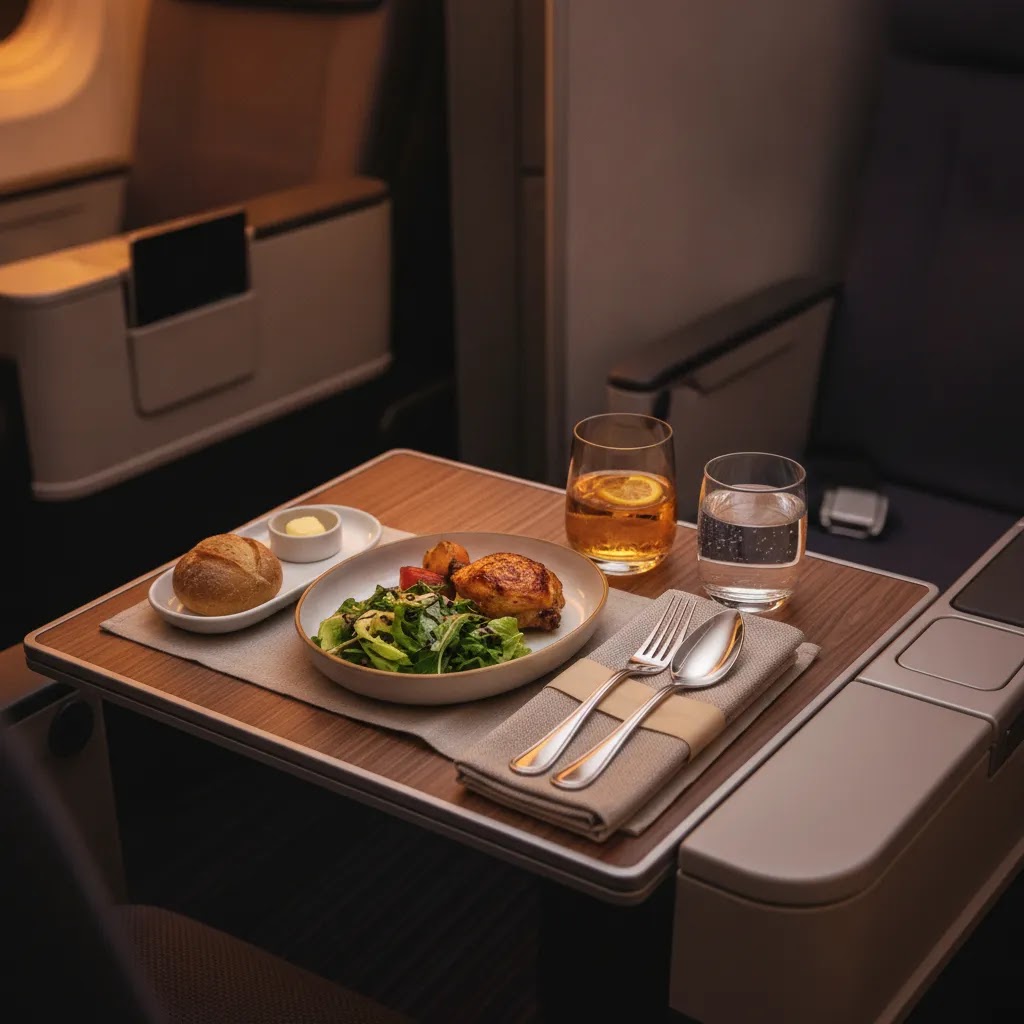
Meal service is where the cabin can shift from “better economy” to “entry-level premium cabin.” On many long-haul flights, American presents Premium Economy meals with china-style service elements, linen-style touches, and a more structured sequence than the main cabin receives. Quality may vary, as airline catering always can. Even so, the difference in presentation usually helps the cabin feel distinct rather than symbolic.
If you want a narrower airline-specific overview alongside this seat-and-service analysis, see this focused page on AA premium economy.
What You Actually Receive Onboard: Amenities, Alcohol, and Cabin Details That Vary by Aircraft
Premium Economy travelers often want clear details beyond the seat and meal presentation. The reality is simple: onboard inclusions vary by route, aircraft, and catering station. Therefore, treat them as typical features rather than fixed promises.
Typical amenities in AA premium economy review findings
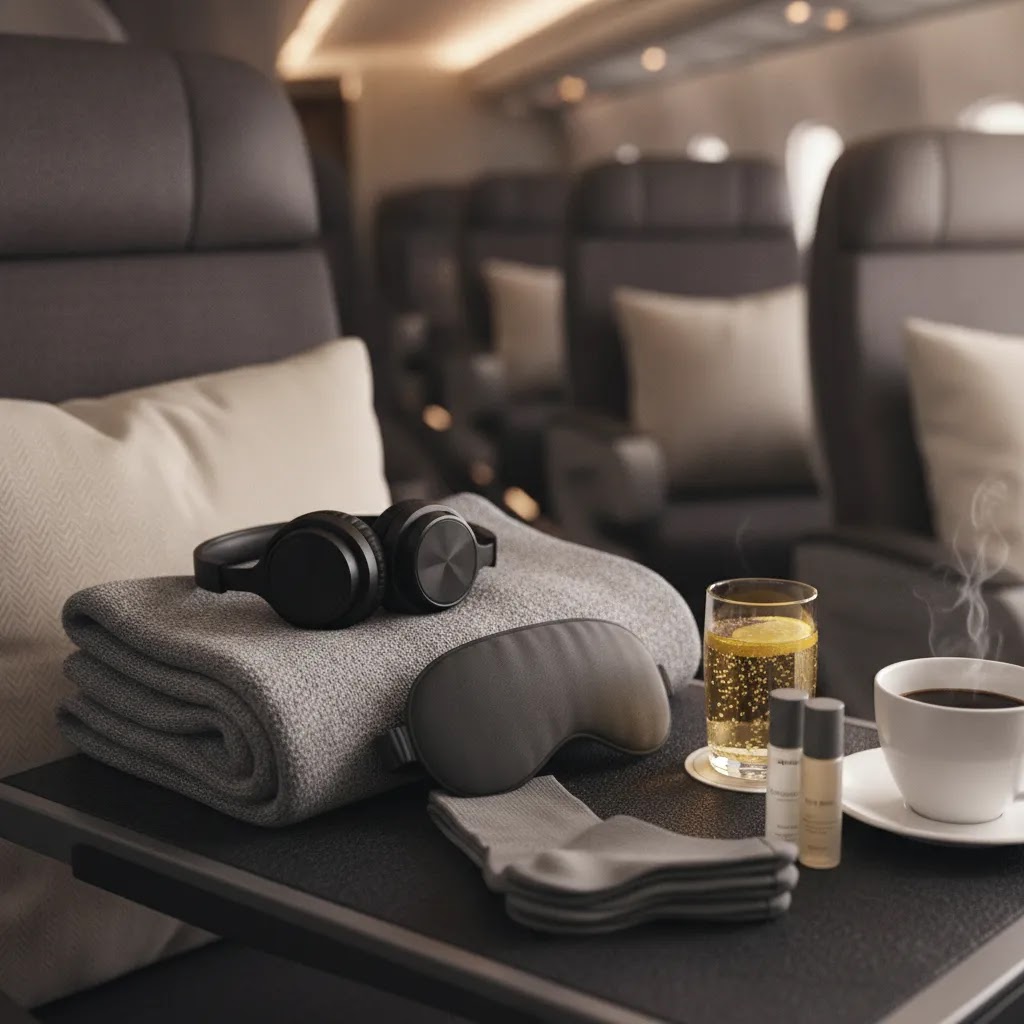
On many long-haul international flights, Premium Economy may include upgraded soft goods such as a more substantial pillow and blanket than the main cabin. Some routes also provide an amenity kit. Headphones are commonly distributed, though the exact style and quality can differ by aircraft and provisioning.
Wi-Fi availability and performance also depend on the aircraft. Even when the plane is equipped, service quality can fluctuate because of coverage and network load. For travelers who plan to work or stay connected, it is worth checking the operating aircraft type and current connectivity notes before departure.
Alcohol, seat choice, and aircraft differences
Alcohol is another common question. On many international Premium Economy services, the airline typically offers alcoholic beverages. However, the selection can be narrower than Business Class and may follow route-level service standards. If a specific detail matters, such as a particular wine or spirit, keep expectations measured. Premium Economy improves the overall service feel, but it does not mirror a Business Class bar program.
Seat selection can matter almost as much as the cabin label. Bulkhead rows may offer a greater sense of space in front. On the other hand, they can bring tradeoffs such as fixed armrests, limited under-seat storage during takeoff and landing, and proximity to bassinets on some flights. Rows near galleys and lavatories may see more light and foot traffic. As a result, they can undercut the calmer atmosphere many travelers want. In most cases, the best rows preserve a quiet buffer from high-traffic zones, subject to the layout of the specific aircraft on the day.
Aircraft family differences are easy to feel in practice. A Boeing 777 and a Boeing 787 may both offer Premium Economy, but the cabin can feel different because of spacing, galley placement, and cabin segmentation. Even within one family, subfleet configurations and retrofits can change the sense of privacy and the amount of movement around your row. For discerning travelers, confirming the operating aircraft and reviewing the cabin map is not a minor detail. It is often the deciding factor in whether the cabin feels composed or merely upgraded.
Finally, sleep in Premium Economy is possible, but it is not the same type of rest that Business Class is built to deliver. Recline and foot support may make it easier to relax, especially if you are comfortable sleeping in a semi-upright posture. The best results usually come from managing expectations and posture. For example, use the footrest well, support your neck, and choose a seat away from the busiest parts of the cabin. Premium Economy may help you arrive less fatigued, but it is not a lie-flat alternative.
American Airlines Premium Economy Review: Widebody Reality Check
This american airlines premium economy review focuses on international widebodies because that is where the product matters most. The exact experience may differ by aircraft family and retrofit history. Therefore, discerning travelers should always check the operating aircraft before ticketing. Seat maps, inflight entertainment placement, galley proximity, and lavatory traffic can all influence how polished the cabin feels in practice.
On Boeing 777 and 787 aircraft, Premium Economy generally has the strongest case because the cabin is physically separated and intentionally positioned between Business Class and the main cabin. That usually supports a calmer atmosphere. Depending on configuration, some rows may feel more private, while others may see more movement from service areas or bassinets.
The meal service can also feel different depending on the departure station. A transatlantic evening flight out of a major gateway may deliver a more composed dining sequence than a shorter daylight sector or an irregular operation with catering substitutions. Frequent premium travelers already know this pattern from many global carriers. Cabin class is only one part of the equation. Route timing, catering quality, and crew pacing matter almost as much.
For that reason, American Airlines Premium Economy is best judged not by a single headline promise, but by how the widebody seat and international service standards come together on your specific flight.
Pros and Cons
Strengths
- The dedicated Premium Economy seat on long-haul widebodies usually creates a more substantial comfort upgrade than extra-legroom economy products.
- Meal service on international routes often includes noticeably improved presentation, helping the cabin feel meaningfully distinct from the main cabin.
- The cabin environment is typically quieter and less dense, which may support better rest and a calmer inflight rhythm.
- Seat features such as a leg rest, wider armrest spacing, and a larger entertainment screen generally improve long-haul usability.
- For travelers who do not require a lie-flat bed, the product may strike a sensible middle ground between comfort and overall trip investment.
Considerations
- Meal quality and catering execution may vary by route, departure station, and crew, so dining is not uniformly excellent on every flight.
- Premium Economy does not usually replicate the privacy, sleep quality, or airport privileges associated with long-haul Business Class.
- Aircraft swaps or subfleet differences could affect seat details, cabin placement, and the overall feel of the product.
- Lounge access should never be assumed, as it may depend on ticket type, elite status, or separate access arrangements.
Who This American Airlines Premium Economy Review Suits Best
American Airlines Premium Economy often suits travelers who value physical comfort and a more composed meal service, but do not necessarily need the fully horizontal sleep and privacy envelope of Business Class. That may include couples on a celebratory trip, executives crossing the Atlantic for a short stay, or families booking a long-haul itinerary where consistency and cabin separation matter.
It is also a sensible option for travelers who care more about the seat itself than prestige signaling. If your priority is a noticeably better upright travel experience, stronger dining than the main cabin, and less friction over a long flight, American’s widebody Premium Economy may compare well with many transatlantic alternatives.
Flight Experts View
From a luxury travel advisory perspective, American Airlines Premium Economy is most compelling when the itinerary includes a genuine long-haul sector and the traveler wants a refined middle option rather than the largest possible cabin leap. The widebody seat is the real anchor of value here. If the aircraft is confirmed and the route length justifies it, the product may deliver a far more comfortable experience than a standard main cabin booking.
At Flight Experts, we encourage clients to assess Premium Economy in context: flight timing, aircraft type, onward connections, overnight rest needs, and whether airport privileges matter more than onboard dining. For travelers comparing long-haul cabins across carriers, our team can help interpret the differences between Premium Economy and Business Class options, including support through our Premium Economy Flight Booking and Business Class Flight Booking services. Flight Experts is led by Mike Chirilenco, with a concierge-style approach designed for clients who prefer expert guidance over self-service booking friction.
How to Evaluate This Cabin Before You Book
1. Confirm the aircraft, not just the fare label. American Airlines Premium Economy on an international widebody is the focus here. Before booking, verify the operating aircraft and review the cabin map carefully. A good Premium Economy experience begins with the hard product actually being the one you expect.
2. Judge the seat by your sleep style. Some travelers care most about width and recline. Others prioritize leg support, a footrest, or reduced cabin density. On overnight sectors, those details may matter more than menu language or amenity packaging. If you are highly sensitive to sleep quality, Premium Economy could still fall short of what you need from Business Class.
3. Treat meal service as an enhancement, not a guarantee of excellence. American generally positions Premium Economy dining above the main cabin on international routes. That is a real advantage. Still, airline catering can vary substantially by station and flight length. It is wise to expect a better meal experience while recognizing that consistency is never perfect.
4. Review ground benefits separately. Many travelers assume a premium cabin label automatically includes lounge access and priority treatment across the board. In reality, these benefits may depend on airport, fare rules, elite status, and alliance arrangements. Ground experience should always be confirmed rather than inferred.
5. Compare the itinerary, not just the seat. The strongest cabin on paper may not be the best trip overall if it creates a poor connection, inconvenient departure time, or weak onward service. Travelers planning more complex international journeys may benefit from expert itinerary design through services such as Complex Itinerary Planning, especially where mixed cabins, alliance connections, or schedule protection are involved.
The 45-Minute Rule and Connection Planning in Premium Economy
Travelers researching American Airlines Premium Economy sometimes see references to a “45-minute rule,” usually in connection with short transfers. There is no single universal rule that guarantees a comfortable, or even possible, connection across every airport and itinerary. In most cases, people mean a mix of minimum connection times, boarding cutoffs, and the reality that a short connection becomes fragile quickly when delays appear.
What the 45-minute rule usually means
Airlines and airports publish minimum connection times that decide whether an itinerary can be ticketed as a valid connection. That number may be close to 45 minutes in some domestic scenarios, but international itineraries are often far more complex. Premium Economy does not change the core mechanics of immigration, security, terminal changes, or baggage recheck requirements where they apply.
If a trip involves entering a country, clearing immigration, and re-clearing security, the practical connection time you want is usually longer than the minimum. That remains true even when the itinerary is protected on a single ticket.
Why longer connections often work better
Connection planning in Premium Economy should form part of the cabin’s full value. A comfortable seat matters less if the itinerary forces a rushed transfer, limits your ability to eat or reset between flights, or raises the odds that irregular operations will cascade into missed onward travel. This matters especially on transatlantic and transpacific routings, where schedule padding can be thin and arrival banks often compress many long-haul flights into a short window.
Consider a few details when you evaluate a connection: whether you must change terminals, whether the connecting airport has a record of congestion during your arrival time, and whether your onward flight is the last viable option of the day. If you are connecting from an international arrival to a domestic segment, or between international flights, extra time can reduce the stress of border processing and re-screening. It may also give you a more controlled experience if a delay occurs. No strategy removes risk entirely. However, thoughtful connection timing often contributes more to trip quality than marginal differences in onboard amenities.
Frequently Asked Questions
Is American Airlines Premium Economy a real premium cabin or just extra legroom?
On international widebodies, it is typically a true intermediate cabin with a dedicated seat, improved recline, more space, enhanced meal service, and a more separated environment. That makes it materially different from a simple extra-legroom row. The exact experience may still vary by aircraft and route.
How good is the American Airlines Premium Economy seat on long-haul flights?
The seat is usually the strongest part of the product. Width, recline, leg support, and the general sense of personal space often make the cabin appealing on long sectors. It does not replace a lie-flat bed, but for travelers staying seated upright for most of the flight, it may feel noticeably more comfortable than the main cabin.
Does American Airlines Premium Economy include better meals?
Yes, in most cases on international widebodies, the meal service is positioned above the main cabin with more thoughtful presentation and a more premium sequence. Quality may differ by route, departure station, and operational conditions, so it is best viewed as an improvement rather than a uniform fine-dining promise.
Is AA Premium Economy worth it for overnight flights?
For many travelers, yes, particularly if you value extra space, better recline, and a calmer cabin but do not need a flat bed. The cabin may be especially worthwhile on overnight Atlantic crossings where posture, shoulder room, and leg support affect how functional you feel on arrival.
Does American Airlines Premium Economy include lounge access?
Lounge access should not be assumed. It may depend on the airport, elite status, alliance entitlements, or separately purchased access. Premium Economy often improves the onboard experience more reliably than the lounge experience, so travelers should confirm access details before departure rather than relying on cabin name alone.
Which American Airlines aircraft usually have Premium Economy?
The product is generally associated with international widebodies such as Boeing 777 and 787 aircraft. Subfleet configurations can change over time, and operational swaps are always possible. Travelers should verify the specific operating aircraft at the time of booking and again closer to departure.
How does American Airlines Premium Economy compare with Business Class?
The largest gap is sleep and privacy. Premium Economy may offer a much better upright seat and meal service than the main cabin, but Business Class typically adds direct aisle access on many aircraft, more attentive ground privileges, and lie-flat comfort. The better choice depends on route length, timing, and rest priorities.
Is this cabin a good choice for leisure travelers heading to Europe or Asia?
It often is, particularly for travelers who want the journey to feel more composed without committing to a higher premium cabin. On flights to Europe or Asia, the additional space and enhanced dining may improve the first and last impression of the trip, especially on milestone travel or multi-stop itineraries.
Can a travel advisor help with Premium Economy choices?
Yes. An experienced advisor may help compare aircraft, seat quality, connection risks, fare conditions, and whether stepping up to Business Class is justified on a specific trip. For travelers who value tailored guidance, Flight Experts offers personalized support across Premium Economy and more advanced premium-cabin itineraries.
Is American premium economy worth it?
It may be, particularly on long-haul widebodies where the dedicated seat and more deliberate meal service create a noticeable separation from the main cabin. The cabin tends to be most worthwhile when you value shoulder space, recline, and a calmer environment, and when the itinerary is well-constructed with sensible timing and connections. If lounge access and lie-flat sleep are central to your travel style, Business Class may still be the better fit.
What is the 45 minute rule for American Airlines?
In most cases, the phrase is an informal shorthand for short-connection scenarios rather than a single guaranteed rule. Airlines use minimum connection times to determine whether an itinerary can be ticketed, and airports also have practical constraints such as immigration processing, security re-screening, terminal changes, and boarding cutoffs. For international travel, especially where you must clear immigration and re-enter a secure area, many travelers prefer more time than the minimum to reduce stress and exposure to delays.
What do you get in premium economy on American?
Typically, you receive a more substantial seat than the main cabin, with additional width, deeper recline, and leg or foot support features on many widebodies, along with improved meal presentation on many international flights. Depending on the route and aircraft, there may also be upgraded soft goods such as a better pillow and blanket, and sometimes an amenity kit. Priority services, baggage, and lounge access can vary by itinerary, airport, fare rules, and elite status, so those benefits should be confirmed before departure.
Can you sleep on premium economy?
Many travelers can, particularly if they are comfortable sleeping in a more upright position. Premium Economy’s recline and foot support can help reduce fatigue and improve posture on overnight flights, but it typically will not provide the flat, private sleep environment of Business Class. Seat selection and cabin location, such as avoiding high-traffic rows near galleys or lavatories, may meaningfully influence how restful the experience feels.
Key Takeaways
- American Airlines Premium Economy is most persuasive on international widebodies, where the dedicated seat creates a real upgrade over the main cabin.
- The hard product is usually stronger than the headline marketing, especially for travelers who prioritize space, posture support, and a calmer cabin.
- Meal service is generally improved and more deliberately presented, though consistency may vary by route and catering station.
- This cabin often suits travelers who want a refined long-haul experience without requiring full Business Class sleep capability.
- Aircraft verification, seat selection, and ground-benefit confirmation remain essential before booking.
American Airlines Premium Economy Review Conclusion
American Airlines Premium Economy earns its strongest marks through substance, not branding alone. The more substantial widebody seat and upgraded meal service usually create a clear improvement on international routes. For travelers who care about posture, personal space, and a calmer dining experience in the air, it can offer real value over the main cabin. Its limits are also clear. This is not a substitute for long-haul Business Class when lie-flat sleep and stronger ground privileges matter most. If you would like help comparing American with other premium cabins, or selecting the right itinerary for a milestone journey or complex international trip, contact Mike Chirilenco and the Flight Experts team for personalized guidance and a tailored recommendation.



