
Business Class Flights to Prague (2026 Guide)
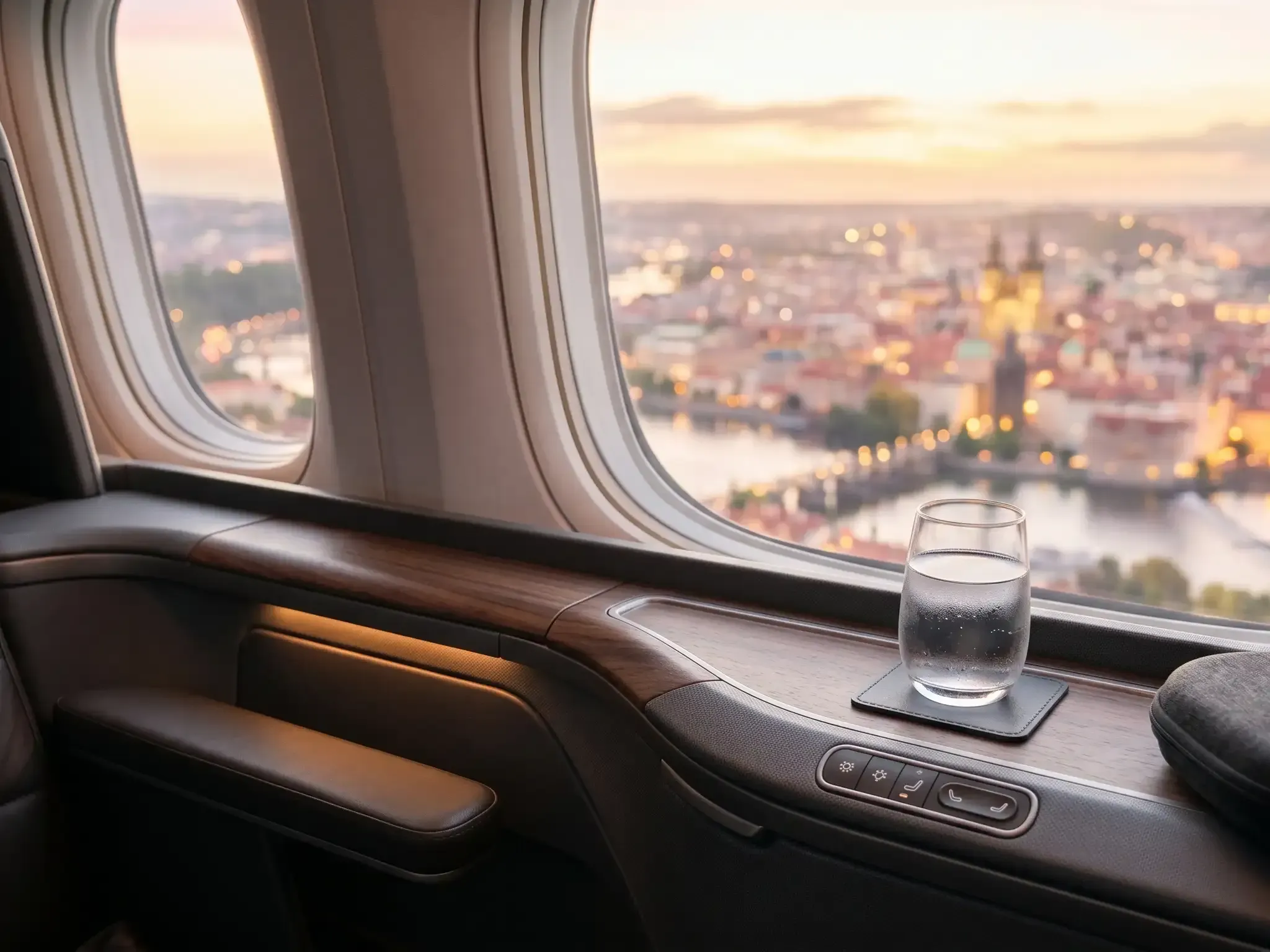
Why Prague routes are different (and how to plan around it)
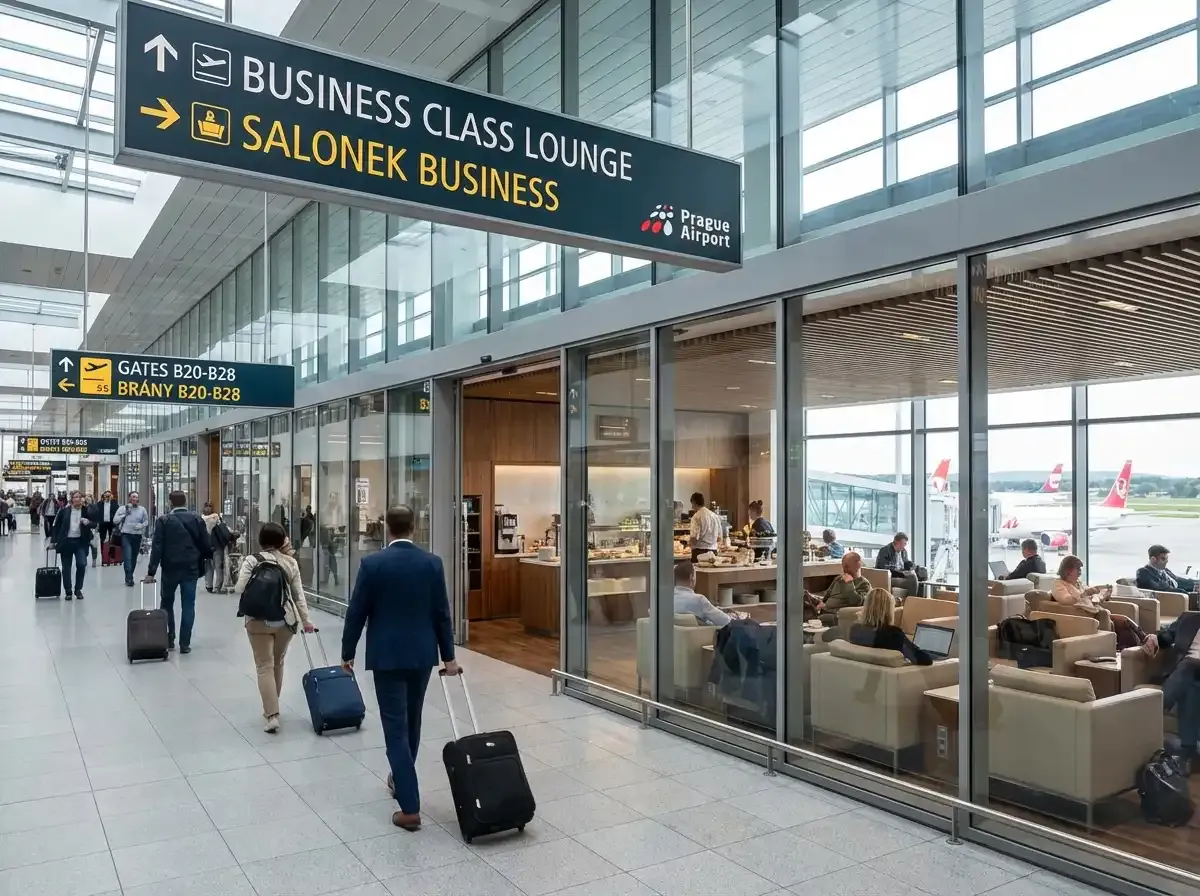
Here’s the thing: Prague (PRG) is a major European destination, but it is not a mega long-haul hub like Frankfurt, London, or Paris. That means many long-haul itineraries route you through a larger European gateway first, then connect onward to Prague on a shorter intra-Europe flight.
In practice, this means your “Business Class” experience is usually two different products on one ticket: a long-haul lie-flat seat across the ocean, followed by a shorter European Business Class seat that may look more like an Economy seat with the middle blocked.
Consider this when you evaluate options. The long-haul segment drives most of your comfort. The connection airport drives most of your stress level.
If you want a broader framework for choosing carriers and cabins across the continent, start with best business class Europe, then bring it back to Prague-specific routing and schedules.
Direct flights vs one-stop: what you should expect
Depending on season and airline schedules, some markets may offer nonstop service to Prague, but for many US departures you should plan on one stop. A well-planned one-stop itinerary can still be smooth, productive, and genuinely restful.
The goal is simple: pick an airport where (1) the long-haul arrival and PRG departure align well, (2) lounges are easy to access, and (3) the minimum connection time is realistic for your terminal transfer and passport control situation.
The best connection cities for Prague in Business Class
Now, when it comes to Prague connections, your best option is rarely “whatever is fastest on paper.” You want a hub that is built to handle premium connections efficiently, because you are often arriving at peak morning banks of flights.
Frankfurt, Munich, Zurich, Vienna: the Central Europe sweet spot
For many travelers, Central Europe gateways feel logical for Prague. They are geographically close, they often have frequent onward flights, and they can reduce backtracking. The tradeoff is that some hubs are more sprawling than others, so connection time matters.
Vienna is also worth considering, especially if you want a calmer hub feel and a short hop into Prague. If that appeals, see business class to Vienna and compare which city gives you the better schedule and connection time for your dates.
London, Paris, Amsterdam: great networks, but watch the friction
Big Western European hubs can offer excellent long-haul premium cabins and lots of daily departures. The reality is that they can also introduce more moving parts: terminal changes, security re-screening, or longer walks. When your Prague flight is a short sector, a missed connection is especially frustrating.
From a practical standpoint, if you are traveling for a time-sensitive meeting or a milestone trip where you want the day to start smoothly, favor itineraries with comfortable connection buffers over the tightest legal connection.
Doha and Dubai: a smart option from the West Coast and beyond
If you are starting far from the US East Coast, a Middle East connection can sometimes create a very comfortable rhythm: one long segment, a premium lounge break, then another long segment into Europe with a short final hop. For some travelers, two long, well-serviced flights are better than one long flight plus a stressful European sprint.
Airlines and Business Class products you will actually feel
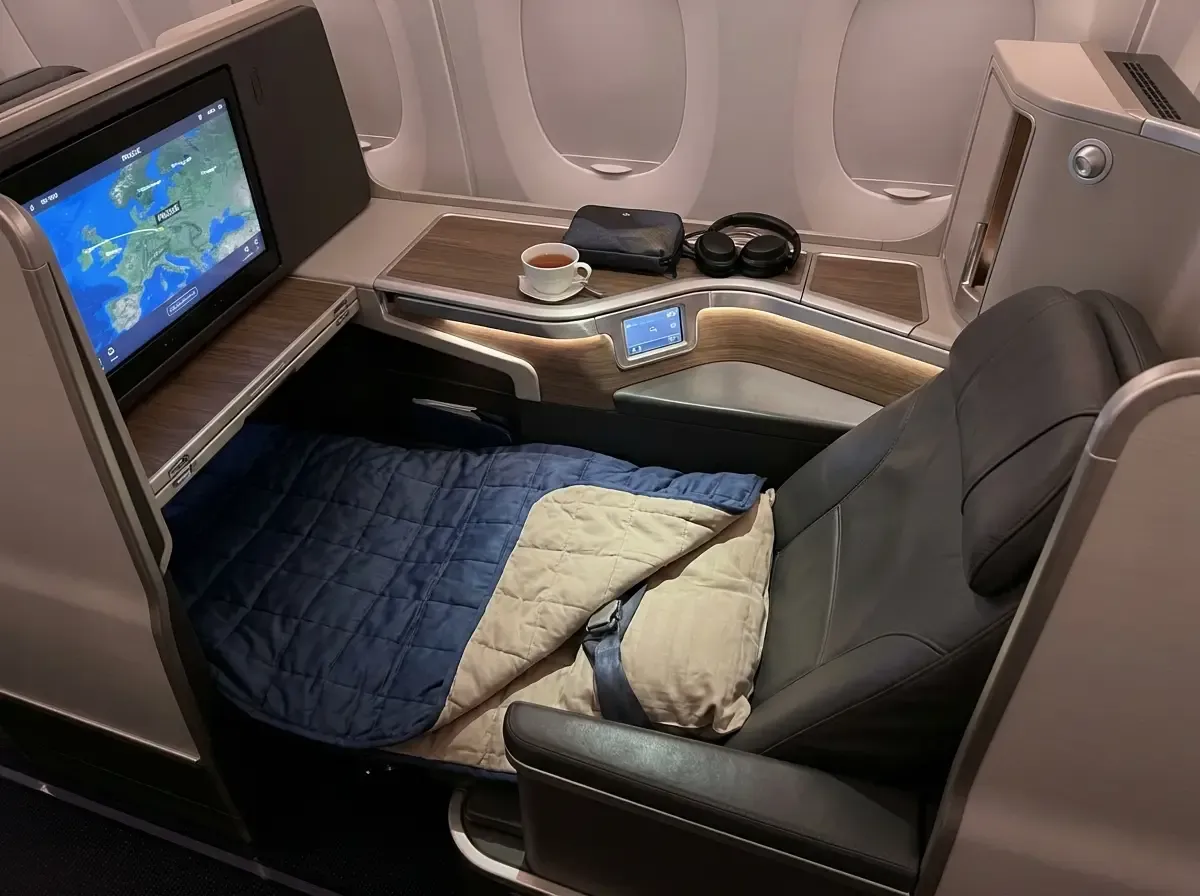
When people say “Business Class,” they often mean three different things: the seat, the soft product (food, service, bedding), and the ground experience (lounge, priority lanes, rebooking help). On a Prague itinerary, you will likely experience all three across at least two airports.
Long-haul priorities: lie-flat seat and direct aisle access
Your long-haul seat is where you win or lose this trip. If you are taking a red-eye, prioritize a true lie-flat bed and, ideally, direct aisle access. That usually means a 1-2-1 layout, but not always, so it is worth checking the aircraft type and seat map before you commit.
What many travelers overlook is that the “best” seat is not just the newest one. If you sleep on your left side, a window seat with a better shoulder cutout can matter more than a trendy suite door you never close.
Short-haul reality: intra-Europe Business Class is different
Your Prague connection segment within Europe is often a shorter flight, and the Business Class seat may not be lie-flat. That is normal. You are paying for extra space, a more comfortable onboard experience, and priority handling, not a bed.
Think of that short segment as a protected transfer: it is the part of the journey where priority boarding, lounge access during irregular operations, and baggage handling can quietly save the day.
Where a specialist can help without overcomplicating it
If you are comparing multiple one-stop routings, a specialist service like Flight-Experts can be useful as a filter, especially when consolidator inventory produces Business Class options that do not always show up clearly in standard search results. With Business Class Flight Booking, you can request options that focus on the long-haul seat quality and connection practicality, not just the lowest published fare. You can see how it works here: Business Class Flight Booking.
How to pick the right itinerary for your trip type
Consider this: the “best” Prague Business Class route is different for a Monday morning client meeting than it is for a Thursday night romantic weekend. Your schedule goals should drive your routing choices.
If you are traveling for business: protect your first day
If you need to be sharp on arrival, prioritize (1) a red-eye that allows meaningful sleep, (2) an arrival time that gives you a buffer before your first commitment, and (3) a connection airport where you feel confident navigating quickly.
A common mistake is choosing an itinerary that arrives into Prague too early with a long day ahead and no hotel check-in. If you cannot access your room, you end up burning the comfort you just paid for.
If you are traveling for a long weekend: minimize transfers
For short trips, time is the real currency. A slightly “less perfect” seat can be worth it if it saves an airport change or cuts total travel time significantly. You are not trying to optimize for eight hours of productivity, you are trying to maximize time in Prague.
If you are traveling as a couple or family: seat placement matters
Couples often prefer paired center seats for easy conversation on the long-haul. Families may care more about keeping one adult close to a teen while still having aisle access. If you are connecting, you may also want to avoid ultra-tight connections that become stressful with kids and carry-ons.
Booking and seat selection tips that matter on Prague routes
Prague itineraries often look similar on a search screen. The details are where the value is.
Focus on the long-haul aircraft type
Two flights can both say “Business Class” and feel completely different. One might offer a modern suite-style seat with plenty of privacy. Another might be an older 2-2-2 layout where you climb over a neighbor to reach the aisle. If sleep is your priority, the aircraft and seat layout usually matter more than menu marketing.
Choose connection times like a frequent flyer
The reality is that European hubs can be fast, but they can also be unpredictable at peak times. Give yourself a connection that can absorb a minor delay without turning into a sprint. If you are arriving from the US and connecting onward, remember that passport control may sit between you and your gate, depending on the routing.
Be intentional about lounge time
Lounge time is not just “nice to have.” On Prague routings with a connection, it is your reset button: shower, espresso, quiet space to answer messages, and a calm place to regroup if the schedule shifts. If a longer connection gives you a better lounge and less stress, it can be the smarter premium choice.
Arrival strategy: transfers, timing, and staying fresh
Arriving well is the point of premium travel. Prague is very manageable once you are on the ground, but your first hour can set the tone for the whole stay.
Plan the airport-to-city transfer before you fly
Prague Airport is not far from the center, but traffic and time of day still matter. If you are landing early, consider arranging a car in advance, especially if you are headed straight to a meeting or a hotel in the Old Town where access can be slower. If you are arriving with checked baggage, build a small buffer for delays and keep essentials in your carry-on.
Use your Business Class benefits to reduce friction
Priority lanes and early boarding are useful, but the bigger benefit is problem-solving support when something goes wrong. If a connection misconnects, premium rebooking lines and alliance support can be the difference between arriving the same day and losing a night of your trip.
Staying awake vs sleeping: pick one strategy
If you arrive in the morning, decide in advance whether you will stay up to adjust to local time or take a controlled nap. The worst outcome is a four-hour “accidental” afternoon sleep that wrecks your first night. A lie-flat seat helps, but your plan is what keeps the jet lag from stealing your time in Prague.
Connection-proofing your itinerary: Schengen, terminals, and minimum connection time
What many travelers overlook is that the same “one stop” can feel completely different depending on where you clear immigration, whether you have to change terminals, and how the airport handles morning arrival banks. Prague routing is often simple on paper, but the mechanics of the connection are what decide whether you arrive calm or rushed.
Know where you will clear passport control
If you connect in Europe on the way to Prague, you typically clear immigration at your first point of entry into the Schengen Area, not in Prague. That means your connection airport may include a passport control step between your long-haul arrival and your onward gate.
From a practical standpoint, this is why a “legal” connection is not always a smart connection. A short queue at passport control can be fine, but a long queue can erase your buffer quickly, especially when multiple long-haul flights land at once.
Terminal changes matter more than the timetable suggests
Some hubs make connections feel effortless, while others can involve long walks, trains, or security re-screening. If you are choosing between two similar itineraries, favor the one that keeps you in one terminal or one concourse whenever possible.
Consider this if you are traveling with a laptop-heavy work bag, carrying gifts for family, or moving with kids. A connection that is “only 75 minutes” can be fine for a frequent flyer who knows the airport well, but it can be uncomfortable if you are learning the layout in real time.
Minimum connection time is a floor, not a target
Airlines publish minimum connection times, but those are built around best-case assumptions. If you want a Prague itinerary that stays smooth even when the long-haul flight is a bit late, build in a buffer that can absorb a delay without forcing you into a sprint.
Here’s the thing: the most useful buffer is not always “more hours.” It is choosing a connection where there are multiple daily flights onward to PRG. More frequency gives you real schedule protection.
Baggage, ticket rules, and IRROPS: what matters on one-stop Prague itineraries
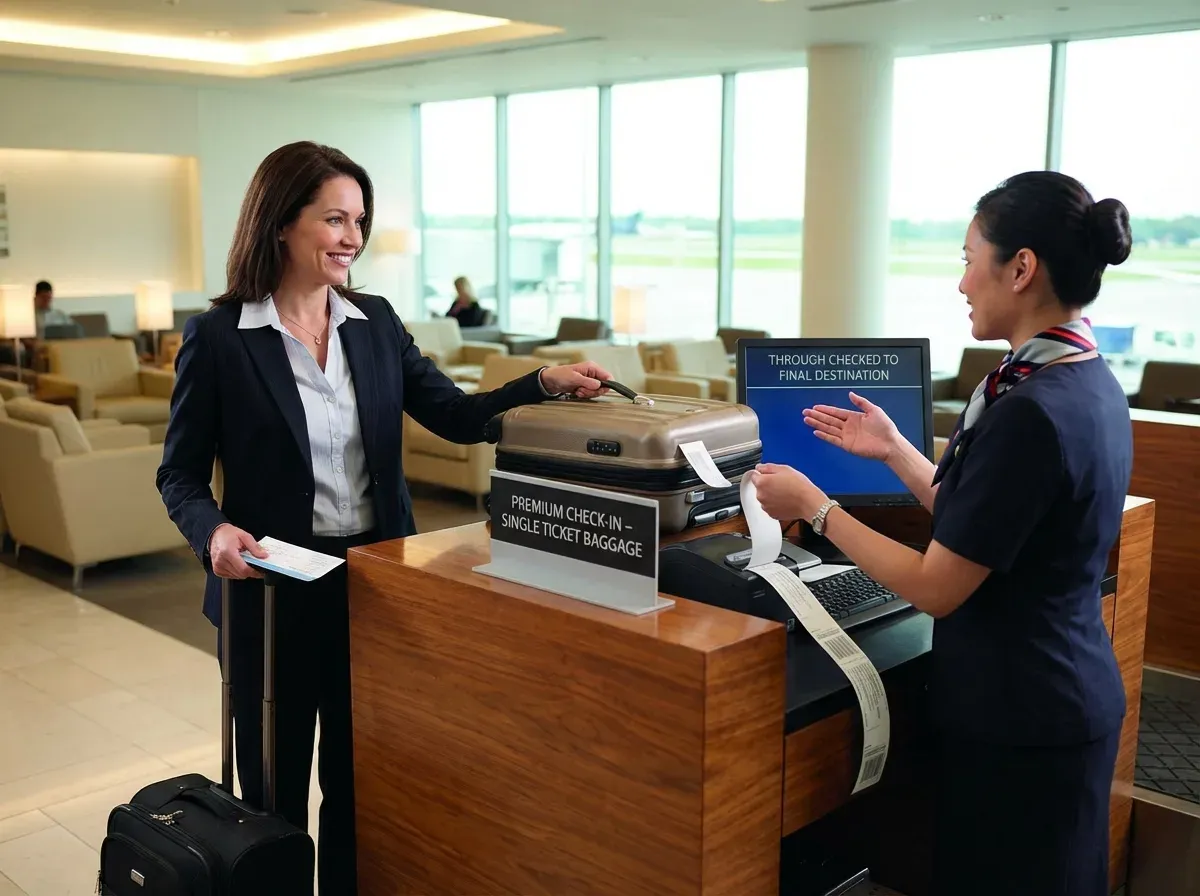
When everything runs on time, the Prague connection is straightforward. The stress comes from edge cases: a late inbound, a gate change, a short-haul cancellation, or a baggage delay. Business Class helps most when you have planned for those moments.
Protect your bags by keeping the itinerary on one ticket
If your long-haul and your Europe-to-Prague segment are on one ticket, the airline has a defined responsibility to get you to PRG, and your checked baggage is usually tagged through. If you try to “build” a Prague route with separate tickets, a minor delay can turn into a missed flight with no protection.
Think of it this way: one ticket keeps the logistics aligned. Separate tickets can look tempting, but they create two separate problems to solve if anything shifts.
Short-haul Business Class can quietly help during disruptions
That intra-Europe segment may not be glamorous, but it often comes with priority services that matter when the schedule breaks. Better rebooking access, lounge access while you wait, and premium customer support at the hub can reduce the friction of a delay.
Don’t let baggage rules surprise you mid-connection
Baggage allowances can differ by airline and by fare type, even within Business Class. If you are traveling with a heavier carry-on or you plan to check a second bag, verify what your ticket includes before departure so you are not repacking at the counter.
If you have a tight connection, keep essentials in your carry-on: one change of clothes, key chargers, medications, and anything you need for your first meeting. Even premium baggage handling is not a guarantee against a misconnect.
Miles, alliances, and lounge access: getting the most from a Prague routing
Prague is a route where loyalty strategy can actually improve the experience, not just the points balance. The reason is simple: you are almost always touching a hub, and hubs are where alliance networks, partner airlines, and lounge access make a real difference.
Choose an itinerary with strong partner coverage at the hub
If your hub has multiple partner-operated flights to PRG each day, you have more options when a connection is tight. That kind of network depth is often more valuable than saving a small amount of time on the schedule.
The reality is that not all “one stop” itineraries offer the same recovery options. If there is only one flight a day to Prague from the hub, a missed connection can be a long wait.
Confirm lounge access rules for the connection airport
Business Class tickets usually include lounge access, but the exact lounge you can use can vary based on the airline operating the flight, the terminal you are departing from, and the time of day. If you are switching terminals, the best lounge might not be accessible without reclearing security, which can defeat the purpose of a lounge break.
From a practical standpoint, it is worth checking: is the lounge in the same departure area as your Prague flight, and will you have enough time to actually use it without rushing?
Credit strategy: don’t waste a premium trip on a poor earning setup
If you care about earning and status, make sure your frequent flyer number is set correctly, and check whether the fare class earns well in your preferred program. Some discounted Business Class fares can earn fewer miles than travelers expect, depending on the program rules.
Prague arrival details most travelers miss: PRG terminal flow, SIMs, and currency
Prague is easy to enjoy once you are in the city, but a smooth first hour is usually the difference between “this trip is going to be great” and “I need a reset.” A few small choices can make arrival feel controlled, especially after a one-stop itinerary.
Know what you want to do before you turn your phone on
If your plan is to get online immediately, decide whether you will use an international plan, an eSIM, or airport Wi-Fi. It is a small detail, but it helps you avoid standing in the arrivals hall trying to solve connectivity with a driver waiting outside.
Have a simple cash plan, even if you expect to pay by card
Prague is very card-friendly, but having a small amount of local currency can be useful for quick purchases. If you need cash, favor standard banking options and be cautious about high-fee exchange offers in the airport corridor. Keeping this simple helps you move through arrivals quickly.
If you land early, plan a “first-hour routine”
If you are arriving before hotel check-in, decide in advance where you will reset: breakfast near the hotel, a short walk, or a quiet place to regroup before meetings. This is one of the easiest ways to protect the value of Business Class. You paid to arrive functional, so give your first hour a plan that matches that goal.
Frequently Asked Questions
Are there nonstop business class flights to Prague from the US?
Sometimes, depending on season and airline schedules, you may see nonstop service from select US gateways. Many travelers, though, will connect via a major European hub. If you are choosing between nonstop and one-stop, weigh the total travel time against reliability and arrival time. A nonstop can be convenient, but a well-timed one-stop with a strong long-haul Business Class seat and a smooth hub connection can feel just as easy, especially if it gives you better sleep timing.
What is the best connection city for business class flights to Prague?
The best connection is usually the one that balances three things: an efficient airport layout, frequent onward flights to PRG, and a realistic buffer for passport control and terminal transfers. Central Europe hubs can be very logical geographically, while Western Europe hubs can offer more long-haul frequency. If you value calmer connections and short onward flights, routing through Vienna can be a smart comparison point, especially when schedules line up well with your departure city.
Will I get a lie-flat seat all the way to Prague?
Typically, you will get a lie-flat seat on the long-haul segment (for example, US to a European hub). The final segment into Prague is often an intra-Europe Business Class product, which may not be lie-flat. That is normal and still valuable for priority handling and a more comfortable experience. The best approach is to optimize the long-haul seat for sleep and treat the short hop as a protected transfer that gets you into PRG smoothly.
Is “European Business Class” worth it on the short flight to Prague?
It can be, especially as part of a single Business Class itinerary. On short segments, the value is less about the seat turning into a bed and more about the overall trip flow: lounge access, priority boarding, and support during disruptions. If you are checking bags, premium handling also reduces the chance of a long wait at baggage claim. If you are traveling with tight schedules, those operational benefits are often the real win.
How far in advance should I book Business Class to Prague?
For popular travel periods like summer, major holidays, and conference weeks, you usually get better choice on schedules and seats by planning earlier. If you have flexibility, last-minute opportunities can appear, but they are inconsistent. From a practical standpoint, the sweet spot is often when the flight schedule is stable enough to trust and seat availability is still broad enough to pick the exact long-haul seat you want, not just “a seat.”
What seat should I choose for a better night’s sleep on the long-haul?
Start with the layout: direct aisle access is helpful if you wake up often or do not want to step over a neighbor. Then consider location. Many travelers sleep best away from galleys and lavatories, often mid-cabin. Window seats usually offer more privacy, while center pairs are great for couples. If you are sensitive to noise, bring a real sleep kit: eye mask, earplugs, and a light layer, even in Business Class.
Should I connect in Vienna for Prague?
Vienna can be an appealing connection for Prague because it is close, the onward flight is short, and the schedule often supports a clean one-stop routing. Whether it is “best” depends on your departure city, total travel time, and how the long-haul segment is operated. It is worth comparing Vienna against other hubs when you care about a calmer transfer and you want to reduce the number of variables between you and PRG.
How do I compare airlines if the price is similar?
When prices are close, compare what you will actually feel: the long-haul seat type, privacy, bedding quality, meal timing, and the connection experience at the hub. Also look at schedule protection. If one airline offers multiple daily options into Prague from the hub, it can be easier to recover from delays. If you want help sorting through those tradeoffs, some travelers use a specialist to shortlist routings based on seat quality and practical connection times.
Can a travel consultant help me find better Business Class options to Prague?
Yes, especially when Prague requires a connection and you want the best balance of comfort and reliability. A consultant can compare aircraft types, identify routings with better connection buffers, and flag when an itinerary looks good on paper but creates stress in reality. Flight-Experts, for example, assigns a personal consultant and can access consolidator inventory that may price differently than standard published fares. For many travelers, the biggest benefit is simply saving time while making a confident choice.
Do I clear immigration in Prague or at my connection airport?
In many routings, you will clear immigration at your first point of entry into the Schengen Area, then take a short onward flight to Prague as a domestic-style segment within Schengen. That is why connection time and airport layout matter so much on Prague itineraries: passport control can be part of the connection process.
Is it risky to book separate tickets for the connection to Prague?
It can be. Separate tickets can reduce protections if your long-haul flight is delayed and you miss the Prague segment. A single ticket usually provides better support for rebooking and often allows baggage to be tagged through. If you are traveling for business or on a short trip, keeping the itinerary on one ticket is often the safer premium choice.
How can I reduce the chance of missing my connection to Prague?
Favor realistic connection buffers, avoid itineraries with complicated terminal changes, and consider hubs with multiple daily flights onward to PRG. Those choices give you time and options, which is what you want when a flight arrives a bit late or gates shift. If you have to choose, a slightly longer connection with a good lounge can be more comfortable than a tight connection that turns the trip into a sprint.
Will I have lounge access during my connection on a Business Class ticket?
Usually, yes, but the specific lounge depends on the airline, the terminal, and sometimes the operating carrier for the next segment. If you have a terminal change, make sure the lounge you plan to use is actually accessible without extra screening steps. The best lounge is the one you can reach comfortably and still arrive at the gate relaxed.
Key Takeaways
- Most business class flights to Prague involve a connection, so optimize both the long-haul seat and the hub experience.
- Prioritize a true lie-flat seat for the overnight segment, then treat the short hop to PRG as a premium transfer.
- Choose connection times with real-world buffers, especially when passport control or terminal changes are likely.
- Match the itinerary to your trip type: protect your first day for business, minimize transfers for short leisure trips.
- If you want help comparing aircraft, seats, and connection logistics, a specialist can shortlist the most practical options quickly.
Conclusion
Prague rewards travelers who plan their flights like a premium traveler, not just a price shopper. Because many routings connect through a larger hub, the best strategy is to put your effort into two decisions: the long-haul Business Class seat you will sleep in, and the connection airport where you will spend your most vulnerable travel minutes.
Once you focus on seat layout, aircraft type, and realistic connection timing, the options become clearer. You stop chasing “perfect on paper” itineraries and start choosing flights that help you arrive ready for a client meeting, a family itinerary, or a long weekend you have been looking forward to.
If you want help comparing premium options to Prague, you can request a free, no-obligation quote and see what works for your dates.



