
Business Class to Vienna Austria (2026 Guide)
How business class flights to Vienna actually route
Most travelers reach Vienna (VIE) either via a major European hub or via a nonstop to another city followed by a short hop. The “best” routing depends on what you value more: maximum sleep, the smoothest connection, or the strongest ground experience.
Option 1: Connect through a major European hub
From the US, common connection points include Frankfurt, Munich, Zurich, Vienna-adjacent hubs like Istanbul, and occasionally London or Paris depending on airline and schedules. Here is the thing: a strong hub can make a connection feel effortless, with excellent Business Class lounges, fast-track security, and frequent onward flights.
From a practical standpoint, the risk is misconnecting if your first flight runs late or if your itinerary includes a terminal change. If you are traveling for a time-sensitive meeting, prioritize longer connection windows and airports known for smooth transfers.
Option 2: Fly nonstop to a nearby gateway, then continue to Vienna
Sometimes you will find a more comfortable long-haul seat to Frankfurt, Munich, Zurich, or even Prague or Budapest, then connect onward to Vienna. In practice, this means you are selecting the best long-haul Business Class product first, and treating the last segment as a short add-on.
Consider this if you care most about lie-flat quality and privacy on the overnight portion. Just be sure the short connection segment is not in a cramped regional aircraft if you are traveling with tight shoulders or you need to work on a laptop right up to landing.
If you are comparing Vienna to nearby markets, it can also help to look at broader European patterns, especially if you are flexible with gateways. The bigger-picture view in best business class Europe gives context on how different carriers stack up across the continent.
Best airlines for business class tickets to Vienna: what to look for
Not all business class flights to Vienna feel the same, even within the same alliance. The airline you choose can change the entire rhythm of your trip: how well you sleep, how quickly you can refresh, and whether you feel like you arrived ready for a boardroom or ready for a nap.
European network carriers: consistency and frequency
Many itineraries to Vienna involve a European network carrier on at least one segment. The upside is frequency, predictable service standards, and strong hub operations. The tradeoff is that intra-Europe “Business Class” often means an economy-style seat with the middle seat blocked, which is fine for a one-hour hop but not the same as long-haul comfort.
What many travelers overlook is how that short segment can impact your total experience. If you land after a long overnight and then squeeze into a tight short-haul seat, the last hour can feel longer than the entire ocean crossing.
Middle East hubs: high-end soft product and great connectivity
For some US departure cities, connecting through the Middle East can offer excellent onboard dining, strong lounge networks, and a very polished cabin experience. It can also be a smart choice if you are combining Vienna with another destination like the Gulf, South Asia, or Southeast Asia.
The reality is the routing can be longer. For a pure US to Vienna trip, you should decide whether the incremental comfort is worth the additional travel time.
Mixing airlines on one ticket: when it helps and when it hurts
Mixing carriers can unlock better schedules or a better long-haul seat, but it can complicate seat selection, meal requests, and IRROPS handling during disruptions. If you are traveling with family or you have a tight first day in Vienna, simpler is often better.
If your trip also includes nearby countries, pairing Vienna with Germany is a common and very workable plan. For route ideas and what to expect across the border, see business class to Germany.
How to compare Business Class seats and cabins like a frequent flyer
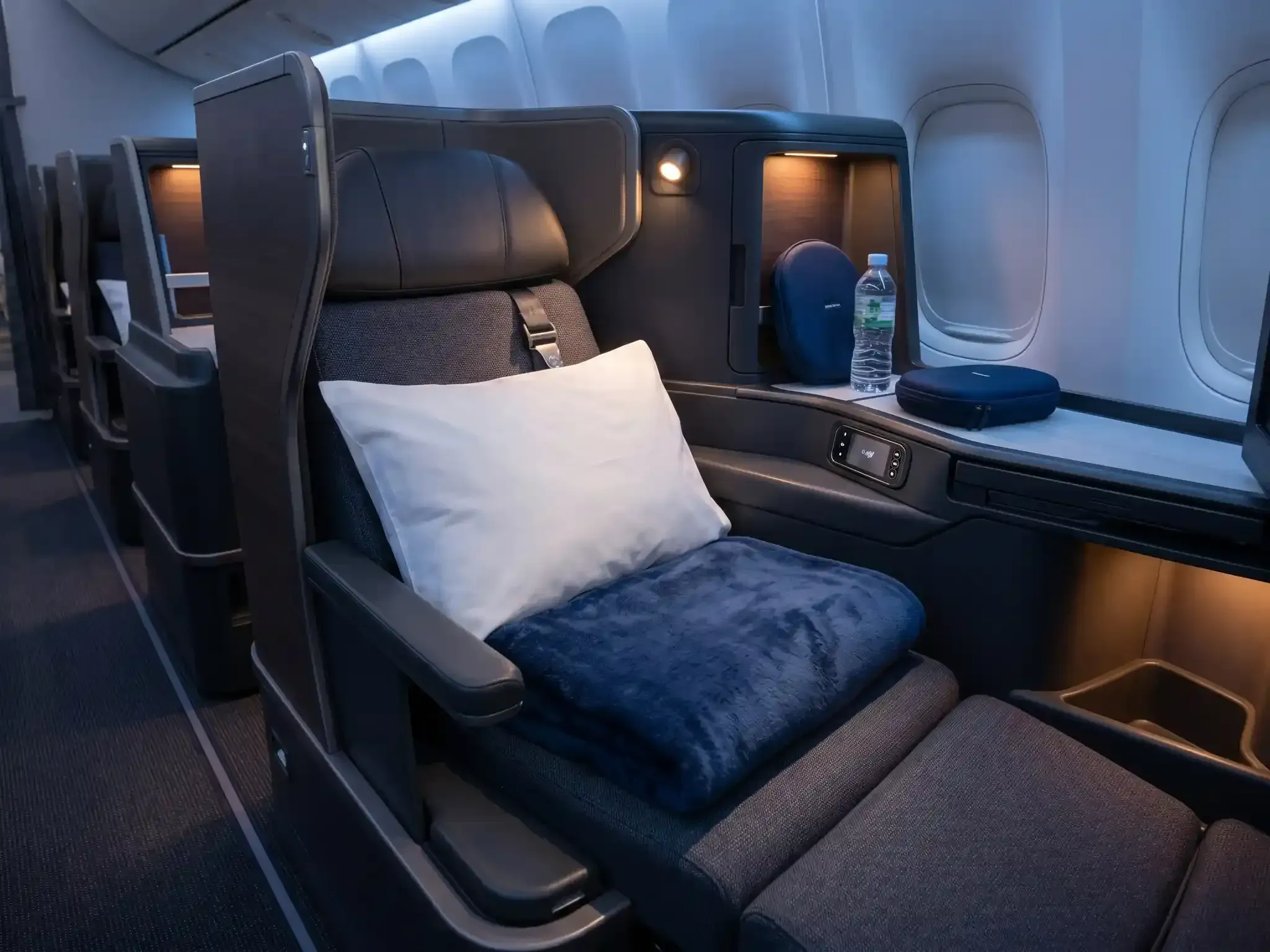
Airlines market Business Class with beautiful photos, but the seat geometry is what changes your night. If you want to feel the value of business class to Vienna, focus on sleep, privacy, and ease of movement.
Start with the non-negotiables: lie-flat and aisle access
On the overnight portion, you want a true lie-flat seat. Then check whether you have direct aisle access. If you are in a layout where you have to step over a neighbor, it can be annoying on a red-eye when you want to get up quietly.
Think of it this way: the best seats are the ones that let you fall asleep quickly and stay asleep. Privacy wings, a solid footwell, and minimal cabin traffic matter more than an extra appetizer course.
Know the common layouts and what they mean for you
- 1-2-1 layouts: Usually best for solo travelers and couples who want privacy and easy aisle access.
- 2-2-2 layouts: Can be good for couples, less ideal for solo travelers who prefer privacy.
- Staggered and “throne” seats: Great when you can select the right seat, but some positions have tight footwells.
Cabin environment: the details you feel at 3 a.m.
Pay attention to cabin temperature tendencies, the quality of bedding, and whether the airline offers a real mattress pad. If you are a light sleeper, also consider how many lavatories serve the cabin and whether your seat is near a galley.
In practice, this means you should choose seats away from the busiest areas, even if that means not sitting in the first row. The first row looks appealing, but it is often closer to foot traffic.
Vienna Airport (VIE): lounges, arrivals, and the ground game
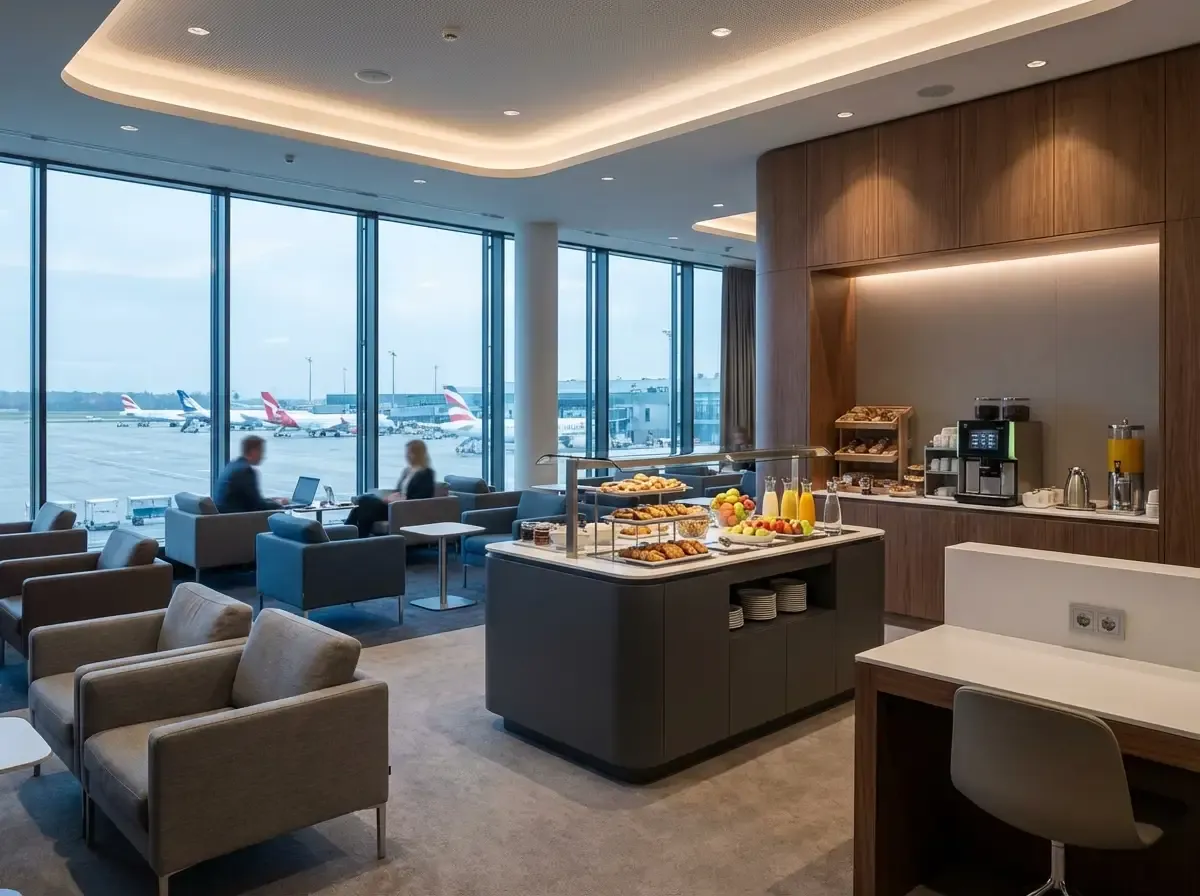
Vienna is a civilized airport for premium travelers, especially compared to some megahubs. Still, your experience depends heavily on the terminal area, your arrival time, and how you plan to get into the city.
Arriving in Vienna: how to maximize the first day
If you land early morning, you can often go straight into the city and start your day. The catch is hotel check-in. For business trips, consider arranging early check-in or booking the prior night so you can shower and reset.
For leisure trips, an early arrival is perfect for a light first day: coffee, a walk around Innere Stadt, and an early dinner so you can adjust your sleep schedule.
Transfers into the city: reliability matters
Vienna’s rail links are excellent, and taxis and car services are straightforward. If you are arriving with a tight schedule, choose the option with the fewest variables, even if it costs a bit more. After a long-haul, decision fatigue is real.
When to book business class to Vienna Austria (and what really moves the price)
You will see big swings in business class tickets to Vienna based on seasonality, day of week, and how many premium seats an airline wants to fill on a given flight. What you should not do is assume the highest fare equals the best seat, or that last-minute always means expensive.
Seasonality: Vienna has true peaks
Vienna’s Christmas markets, New Year’s, spring music season, and summer holidays can all tighten premium availability. If your dates fall in these windows, plan earlier and prioritize flexibility on departure city or connection points.
Schedule matters: the “sleepable” flight is often the first to sell
The most desirable itinerary is usually the one that gives you a full sleep opportunity and lands at a useful hour. That is why the best-timed overnights often price higher. If you can tolerate a slightly earlier departure or a slightly longer connection, you may find better value without sacrificing comfort.
How specialists evaluate options
One option is to use a specialist service that compares published fares with consolidator inventory and monitors for price drops. For example, Business Class Flight Booking through Flight-Experts includes a personal consultant and price drop monitoring, with options typically presented quickly after you submit your dates and preferences. You still choose the itinerary, but you do not have to do the spreadsheet work yourself.
Smart “deal” strategies that still feel premium
People often search for “cheap business class flights to Vienna,” but the better goal is value: a seat you can actually sleep in, on a routing that does not punish you with awkward connections. Now, when it comes to getting strong value, a few strategies show up again and again.
Be flexible on your US gateway when it makes sense
If you live near multiple airports, compare them. A different gateway can change aircraft type, seat model, and total travel time. Even if the fare difference is modest, the comfort difference can be huge if it moves you from an older seat to a newer 1-2-1 cabin.
Use an open-jaw or multi-city plan if your trip is wider than Vienna
If you are visiting Vienna plus Salzburg, Munich, Prague, Budapest, and alpine regions. An open-jaw can save time and reduce backtracking. This is where planning matters more than hunting for the lowest number.
Complex Itinerary Planning can be useful when you want to arrive in Vienna and depart from a different city, or add a stopover without piecing together separate tickets.
Focus on the long-haul segment first
If your itinerary includes a short European hop, prioritize the best possible long-haul seat for the overnight. A less exciting short-haul segment is usually tolerable. A poor long-haul bed is the part you will remember.
Mistakes that make Business Class to Vienna feel like a missed opportunity

Business class should make you feel more in control of your travel day. The most common mistakes happen when travelers optimize for the wrong thing.
Choosing a “Business Class” label without checking the seat
Always confirm aircraft type and seat layout on the long-haul segment. “Business Class” is a cabin category, not a guarantee of a modern suite-style seat.
Underestimating connection stress
A tight connection looks efficient on paper, but it can erase the calm you paid for. If Vienna is for a milestone celebration or a critical business week, give yourself breathing room.
Forgetting the first morning plan
Landing refreshed is great, but only if you can shower, change, and settle in. Plan your arrival day with your hotel and meetings in mind so you do not burn the value of your premium cabin on avoidable logistics.
What “Business Class to Vienna” looks like on Austrian Airlines and partner carriers
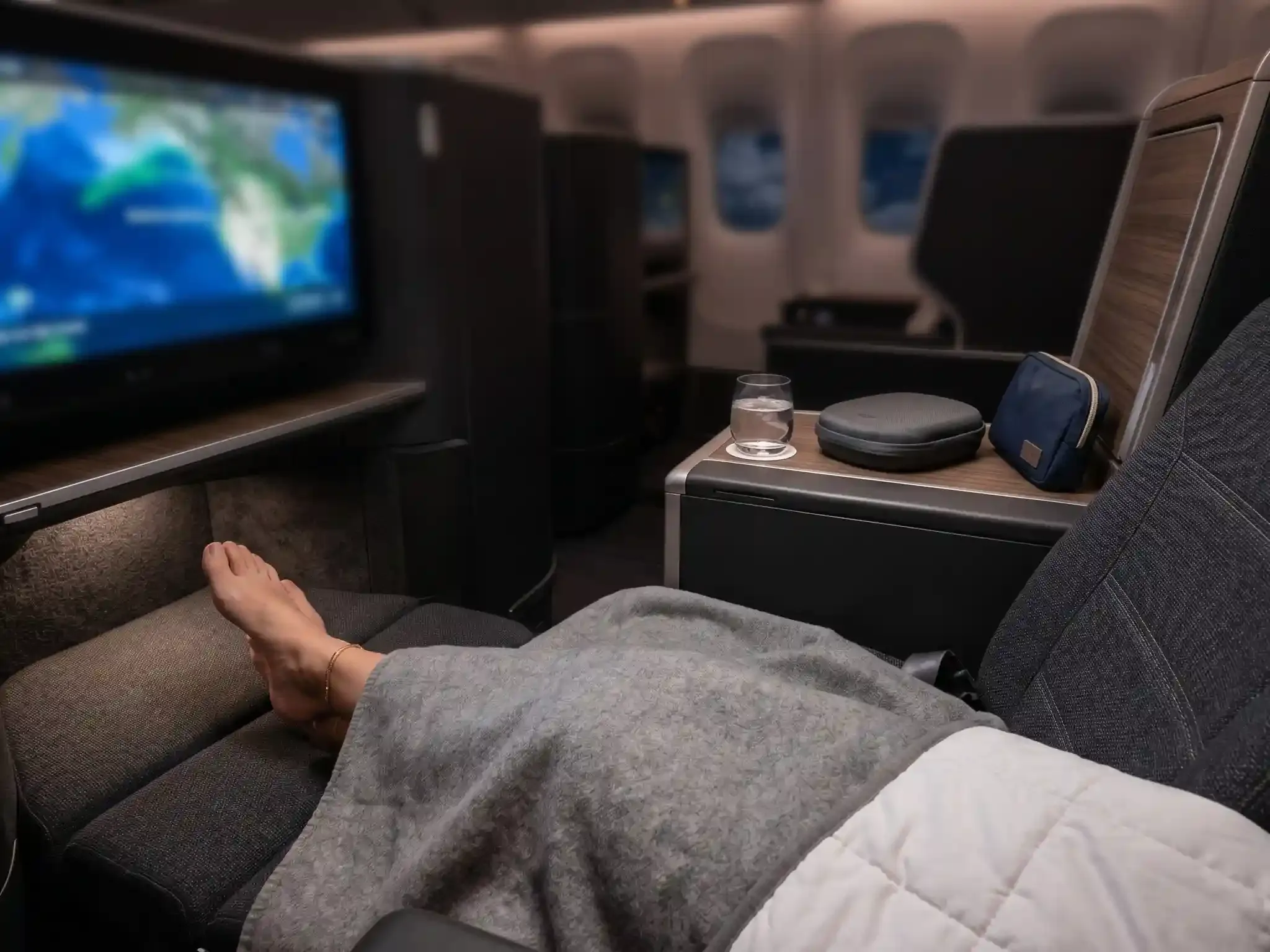
Vienna is a home market for Austrian Airlines, so it shows up frequently in itineraries, either as the long-haul carrier into VIE or as the short hop at the end of a connection. That is why many travelers specifically search for Austrian seat maps and aircraft types when they are shopping business class flights to Vienna.
Here is the thing: what you get depends on which segment you are looking at.
Long-haul into Vienna: focus on the bed and the cabin density
On overnight flights, the long-haul business cabin is where the trip is won or lost. Look beyond the brand name and confirm the aircraft and the seat configuration for your specific flight number. Two flights sold under the same airline can feel very different if one aircraft has a denser cabin, a tighter footwell, or more galley traffic.
If you are tall or you sleep on your side, pay extra attention to bed length and how the footwell is shaped. A seat can be technically lie-flat and still feel restrictive if your feet taper into a narrow space.
Short-haul into Vienna: treat it as a positioning segment
A lot of Vienna itineraries end with a short intra-Europe flight. Even when it is sold as Business Class, it may be the familiar “blocked middle seat” setup rather than a true premium seat. The real value is priority services, more personal space, and a calmer boarding process, not a better bed.
What many travelers overlook is timing: if that last hop is very early morning after an overnight, the airport experience matters more. Fast-track security, lounge showers at the connection point, and a realistic layover can make you feel human again before you land in Vienna.
If your ticket includes partner airlines, confirm who operates each segment
When flights are marketed by one airline but operated by another, the onboard product you experience is the operating carrier’s seat, catering, and crew. From a practical standpoint, that is not a reason to avoid the itinerary. It is a reason to verify the details so you can compare options fairly and avoid surprises on the day of travel.
Aircraft and seat-map realities: why “777 business class” searches can mislead
Competitor research shows a lot of travelers search by aircraft type, especially “777 business class,” because it feels like a shortcut to knowing what the seat will be like. Consider this: aircraft type alone is not enough.
The same aircraft type can have multiple business class products
Airlines refresh cabins over time, and fleets are rarely uniform. A Boeing 777 (or any widebody) can operate with an older configuration on one route and a newer one on another, or even rotate across days. That is why the best research habit is to confirm the seat map and, when possible, look for aircraft-specific seat details tied to your flight.
Seat maps tell you layout, not comfort
A seat map can show you whether the cabin is 1-2-1 or 2-2-2, where the galleys and lavatories are, and whether you are close to the aisle. It will not tell you whether the footwell is tight, whether the shoulder space feels narrow, or whether the seat padding stays comfortable after six hours.
Think of the seat map as your filter, not your final decision. Use it to avoid the obvious drawbacks, like a bassinet row if you are sensitive to noise, or a seat directly adjacent to a high-traffic galley.
What to check before you lock in seats
- Aircraft type for the long-haul segment and whether it changes on different days of the week.
- Whether your seat has direct aisle access and a footwell that looks usable for your height.
- If you are traveling as a couple, whether the “center pair” seats are close enough to talk without leaning into the aisle.
- If you plan to work, whether the seat has a usable table and enough elbow room to type comfortably.
Layover strategy for Vienna: connection time, terminal changes, and protecting the trip
The fastest itinerary is not always the best one, especially when you are paying for Business Class to arrive ready. A smooth connection can feel premium. A rushed one can make you feel like you sprinted your way across Europe for no reason.
How much connection time is “enough” in real life
Airlines publish minimum connection times, but that is not the same as a comfortable connection. If you have a tight first day in Vienna, build in a buffer. That buffer is what protects you from a late inbound, a bus gate, a slow security checkpoint, or a gate change that sends you across the airport.
Terminal changes and passport control are the hidden friction points
Depending on where you connect, you may have security re-screening, passport control, or a terminal change. Any of those can turn a short layover into a stressful one. If you have a choice, favor itineraries that keep the connection simple, even if the total travel time is slightly longer.
One ticket versus separate tickets
If you build your trip using separate tickets, you can sometimes create interesting routings, but you also take on more risk. If the first flight is late, the second airline may treat you as a no-show, and your bags may not through-check. For premium travel where timing matters, keeping the long-haul and the onward connection on one ticket is usually the safer, calmer play.
The real cost drivers for business class tickets to Vienna (beyond seasonality)
Seasonality matters, but it is not the only reason the price moves. Two itineraries that look nearly identical can be priced very differently because of fare rules and inventory, not because one is “better” in a meaningful way.
Refundability and change rules can swing the fare
Some Business Class tickets are priced higher because they are more flexible. Others are priced to be competitive but come with stricter change and cancellation rules. If your schedule might move, it is worth checking the rules before you optimize for the lowest fare in the premium cabin.
Point of sale and itinerary construction can matter
Airlines price based on origin, destination, and how they want to sell inventory on a given route. That is why changing your departure gateway, choosing a different connection point, or using an open-jaw can sometimes change the fare more than you would expect. The trick is to make those changes in a way that improves the trip, not just the number.
Why similar “Business Class” fares can deliver very different value
When you are comparing options, separate the price from the experience. A slightly higher fare may buy you a better sleep opportunity, a more reliable connection, and a calmer arrival time. On the other hand, a higher fare can also simply reflect a popular departure time with no real improvement in seat quality. That is why it pays to compare aircraft, seat layout, and arrival timing side by side, not just brand names.
Frequently Asked Questions
Are there nonstop business class flights to Vienna from the US?
Some seasons and city pairs may offer nonstop service, but many itineraries route through major European hubs. The best approach is to start with your preferred departure airport and then compare: a nonstop that lands at a good hour versus a one-stop that gives you a better long-haul seat or a more reliable schedule. If sleep is your priority, focus on the overnight segment’s aircraft and seat type first. A well-timed one-stop can still deliver an excellent, rested arrival.
What is the best connection airport for business class flights to Vienna?
It depends on your priorities. For many travelers, hubs known for efficient transfers and strong premium lounges make the trip feel smoother. Look for airports with clear signage, short walking distances, and frequent onward flights to Vienna, so a small delay does not ruin the day. If you are traveling for work, favor reliability over “cool factor.” If you are traveling for a honeymoon or celebration, lounge quality and onboard service may matter more.
How do I compare Business Class seats when airlines all call them “lie-flat”?
Confirm three things: whether the seat is fully flat, whether you get direct aisle access, and whether the footwell looks restrictive. Then look at cabin density and seat location. A lie-flat bed near a galley can still feel disruptive. Seat maps help, but aircraft-specific reviews are even better because the same airline can operate different seat types. If you are a side sleeper or tall, the footwell and bed length become particularly important.
Is intra-Europe “Business Class” the same as long-haul Business Class?
No. On many European carriers, short-haul Business Class is often an economy-style seat with the middle seat blocked and improved service. It can still be worthwhile for priority services and a calmer airport experience, but it will not feel like a long-haul lie-flat product. If your itinerary includes a short hop into Vienna, treat it as a positioning segment and focus your evaluation on the long-haul portion where comfort matters most.
When should I book business class to Vienna Austria for the best value?
For peak periods like December and summer, booking earlier often gives you more seat choice and better schedules. For shoulder seasons, you may see good availability closer in, especially if you are flexible on departure day. What moves value most is not only timing, but flexibility: being open to a different gateway airport, a slightly longer connection, or a different return city. If you want to maximize sleep, prioritize the most “sleepable” departure and landing times first.
Is it better to fly into Vienna and out of another city?
Often, yes. Vienna pairs naturally with Munich, Salzburg, Prague, Budapest, and alpine regions. An open-jaw itinerary can reduce backtracking and make your trip feel more relaxed, especially if you are combining business and leisure. The key is to keep the long-haul segments on one ticket where possible, so protection during irregular operations is clearer. Multi-city planning also helps you choose the best premium cabin options in each direction.
What should I prioritize if I need to work on the flight?
Choose a seat with a stable, spacious work surface and easy aisle access. Privacy also matters because you may be on calls or working on sensitive documents. Reliable Wi-Fi is helpful, but do not assume it will be perfect over the ocean. Plan to do deep work offline and use Wi-Fi for lighter tasks. If you need to arrive ready for a meeting, prioritize sleep first, then work. A rested brain beats a tired laptop marathon.
Do I get lounge access when flying Business Class to Vienna?
Most long-haul Business Class tickets include lounge access and priority airport services, but specifics depend on the airline and fare rules. If you are connecting, you may also have access to partner lounges based on alliance agreements. Check whether your itinerary includes a lounge at your departure terminal and at the connecting airport, since that can shape how relaxed the connection feels. If you are traveling with family, also check guest rules and whether the lounge has showers.
How can I avoid paying more than I need to for business class tickets to Vienna?
Start by comparing aircraft and seat types, not just airline names. Then compare multiple gateways and connection points. Consider an open-jaw if your itinerary is multi-city. You can also explore working with a premium-focused booking specialist that can compare published fares with consolidator options. Flight-Experts, a specialist premium travel agency, often helps travelers review multiple routings quickly and can monitor for price drops after you book, so you are not stuck wondering if you overpaid.
What is the simplest way to choose between two similar itineraries?
If the fares are close, choose based on these tie-breakers: the long-haul seat layout (1-2-1 usually wins), the arrival time in Vienna, and the connection risk. After that, look at lounge quality and the return flight timing. Think about your real first day: Do you need to be sharp for meetings, or do you want energy for museums and dinner? The best itinerary is the one that protects that first day.
Is Austrian Airlines Business Class to Vienna always lie-flat?
On long-haul routes, Business Class is typically a lie-flat product, but the exact seat and layout depend on aircraft and configuration. On short-haul intra-Europe segments into Vienna, “Business Class” is often not lie-flat and may be an economy-style seat with a blocked middle seat. The practical move is to evaluate the overnight long-haul segment first, then treat the short hop as a positioning segment.
Why do people search for “Austrian Airlines Business Class seat map,” and what should I look for?
Seat maps help you confirm the layout, find pairs for couples, and avoid high-traffic zones like galleys and lavatories. What they do not tell you is how restrictive the footwell feels or how private the seat is. Use the seat map to narrow down your options, then choose seats that protect sleep, such as those away from the busiest areas.
Does “777 business class to Vienna” guarantee a better seat?
No. Aircraft type is not a reliable shortcut because airlines can have multiple business class products on the same aircraft type, and fleets are not always uniform. Confirm the specific flight’s seat layout and make sure it is a true lie-flat product with direct aisle access if that matters to you.
What connection time should I aim for on business class flights to Vienna?
Minimum connection times can be tight in real life, especially if you have passport control, security re-screening, or a terminal change. If your first day in Vienna is time-sensitive, build in a more comfortable buffer so a small delay does not cascade into a missed flight and a rough arrival.
Key Takeaways
- For business class to Vienna Austria, optimize the long-haul seat first, then worry about the short European hop.
- Direct aisle access and a quiet seat location often matter more than onboard “extras.”
- Peak Vienna seasons reward earlier planning, especially if you want the best schedules and seat selection.
- Open-jaw and multi-city tickets can improve comfort and save time when Vienna is part of a broader trip.
- If you want help comparing complex options, a consultant-led service can simplify routing, seats, and timing.
Conclusion
Vienna is the kind of destination where arriving well matters. Whether you are stepping into a week of meetings, treating your partner to a concert-filled long weekend, or building a multi-city itinerary through Central Europe, the right Business Class choice changes how the whole trip feels. Focus on the long-haul seat and sleep opportunity, keep connections realistic, and plan your first morning logistics so your premium cabin actually delivers value.
If you are weighing a few strong options and want a second set of expert eyes, Flight-Experts offers free, no-obligation quotes.



