
Business Class Flights to Tokyo (2026)
Overview
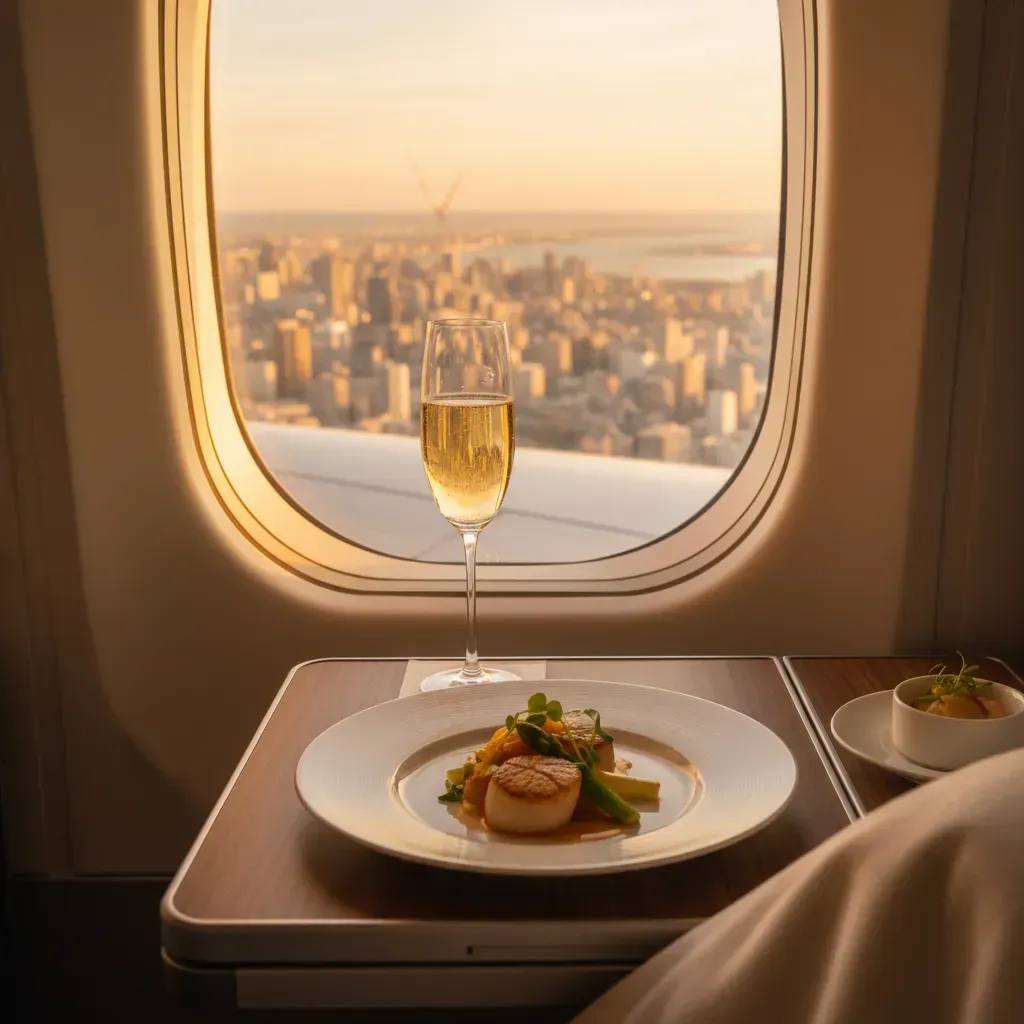
Tokyo remains one of the most important premium long-haul markets in Asia. It serves both corporate and leisure demand, and it rewards careful booking because not every business class product offers the same level of privacy, rest, dining, or ground service. Travelers may depart from major U.S. gateways such as Los Angeles, San Francisco, New York, Chicago, or Dallas, and the right choice will often depend on whether a nonstop service is available, which carrier is operating the route, and what aircraft is scheduled.
Flight Experts offers a dedicated Business Class Flight Booking service covering U.S. to Asia routes, with support across major premium carriers including Emirates, Qatar, Singapore, Lufthansa, British Airways, ANA, JAL, Delta One, United Polaris, and American Airlines Flagship. According to current service data, clients receive a personal travel consultant, seat selection support, meal preference coordination, check-in assistance, price drop monitoring, and cabin upgrade alerts. The booking process is straightforward: submit a request, receive an expert assignment at no charge, review curated options, and proceed when the itinerary aligns with your preferences. Turnaround is usually within 30 minutes, although more nuanced routing requests may require added review.
For readers comparing broader regional options, the site also features relevant topic areas such as Business Class Flights to Asia and Premium Flight Booking & Tips, both of which support a more informed decision when planning a Tokyo itinerary.
Tokyo Airports and Arrival Strategy (HND vs NRT)
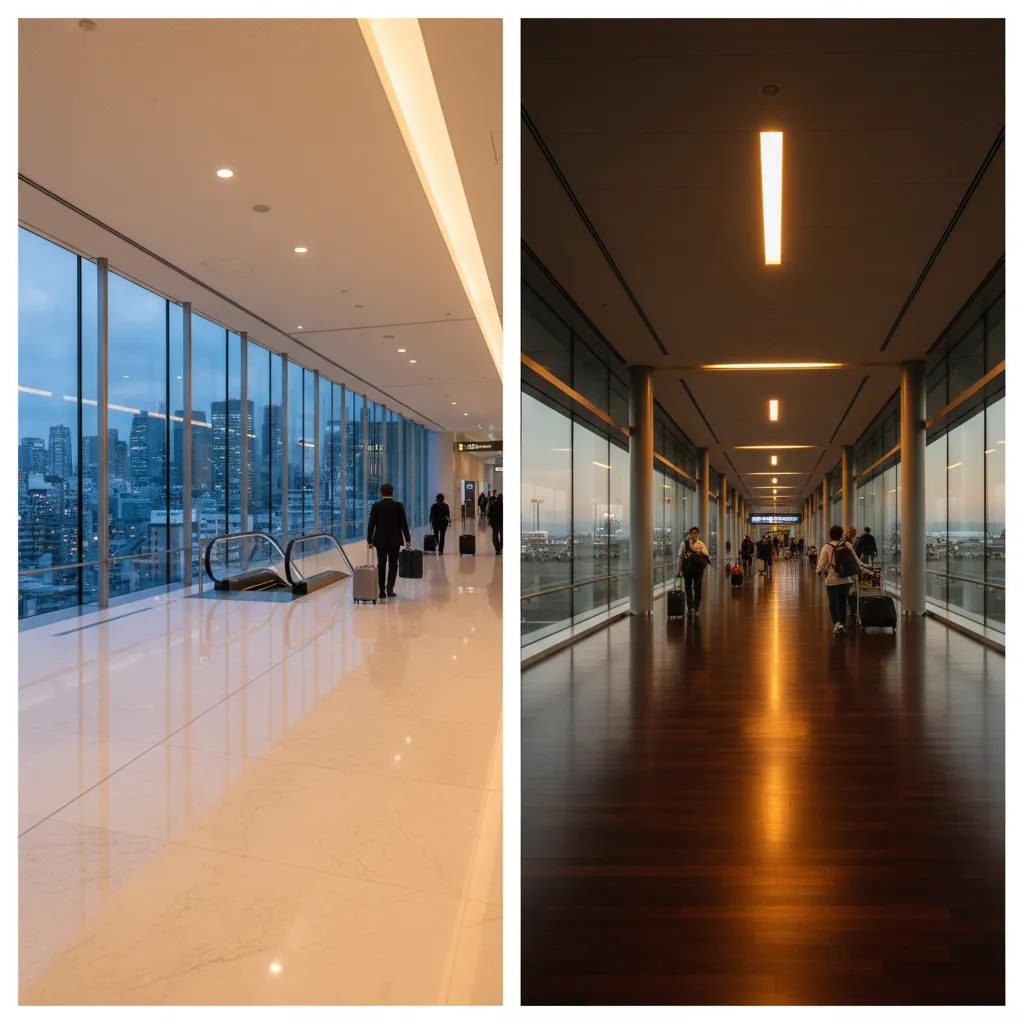
Here is the thing, for a premium itinerary, your arrival airport can shape the entire first day. Tokyo is served by Haneda (HND) and Narita (NRT), and the practical difference is not academic. Haneda is typically closer to central Tokyo, which may translate into a shorter transfer after a long-haul overnight and a more composed arrival at your hotel. Narita is farther out, and while the rail and private transfer options are well-established, the added distance can become a material factor if you are landing early morning, arriving late at night, or heading directly into meetings.
From a routing standpoint, HND versus NRT can also influence which nonstop or one-stop itineraries are realistic from your U.S. gateway city. Some departure cities may have stronger nonstop patterns to one airport than the other, and others may rely on connections that arrive into a specific terminal based on the operating carrier. In most cases, travelers benefit from deciding the airport first, based on hotel location and the desired first-day pace, then letting that decision guide the best flight and aircraft options.
What many travelers overlook is the set of confirmations that should happen before a ticket is issued. If you plan to connect onward within Japan, the airport choice may affect connection time, the ease of domestic transfers, and whether you will need to change terminals. If your flight lands late evening, it is wise to confirm how you prefer to handle ground arrangements, and whether your hotel’s check-in practices align with your arrival time. Lounge access and ground services can also vary by terminal, alliance relationships, and operating carrier, and those details can change. A specialist typically verifies the operating airline, the terminal you should expect, and the best arrival strategy for your itinerary, so your business class journey remains coherent from touchdown to hotel.
The Experience
The strongest Tokyo business class journeys begin well before boarding. On the right route, travelers can expect priority check-in, premium cabin baggage handling, lounge access, and a seat designed for genuine rest rather than simple recline. For overnight departures, especially westbound or transpacific services, lie-flat seating and a thoughtful sleep setup matter far more than marketing language. The difference between an older angled product and a newer direct-aisle-access suite can be the difference between arriving depleted and arriving composed.
For a flight from LAX to Tokyo business class, nonstop options are often attractive because they reduce transit time and preserve rest. Yet a nonstop is not always the superior choice if the aircraft features an older seat or inconsistent soft product. In some cases, a one-stop itinerary may deliver a more polished cabin, better lounge access, and stronger onboard dining. For travelers originating outside the United States, including those researching a business class flight London to Tokyo, the same principle applies. Route convenience should be weighed against the actual onboard product, connection quality, and airport experience.
Flight Experts is positioned for this kind of decision-making. Rather than simply presenting a fare, the service is built around curated premium options and personal guidance. A client may need a quiet window suite for overnight rest, easy seat pairing for a couple, alliance continuity for status benefits, or enough schedule flexibility to accommodate meetings in Tokyo and onward connections within Japan. Those distinctions are exactly where a specialist becomes useful.
The experience also extends to practical details many travelers would rather not manage themselves. Seat assignments, meal requests, and check-in support may sound minor until a long-haul premium itinerary becomes time-sensitive. Flight Experts includes those services within its business class booking offering, which reflects the agency’s concierge-style approach. The goal is not only to secure business class tickets to Tokyo, but to shape a journey that feels considered from departure to arrival.
Choosing the Right Cabin for the Route: What to Compare Beyond “Lie-Flat”
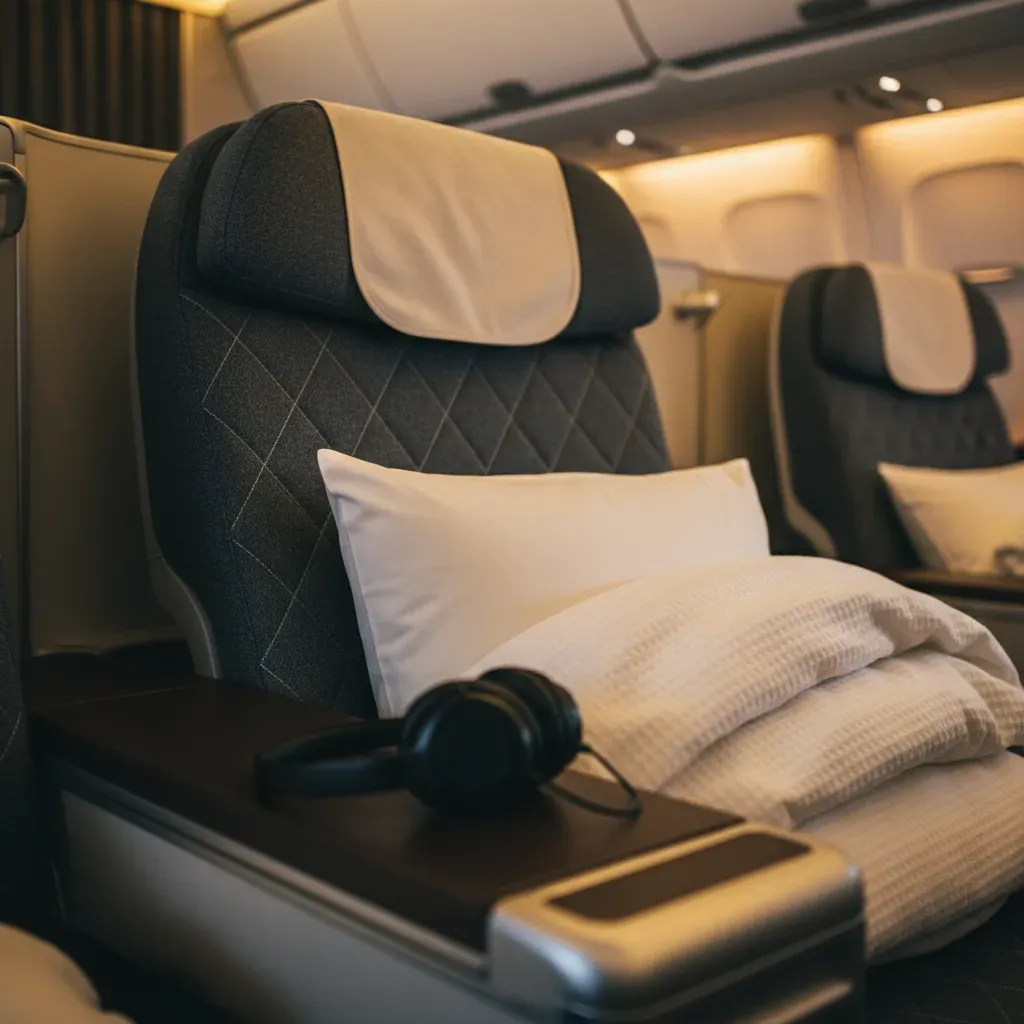
Now, when it comes to evaluating business class to Tokyo, “lie-flat” is only the starting point. Two seats can both recline into a bed, yet deliver very different rest, privacy, and usability on a long transpacific sector. For discerning travelers, the practical comparisons tend to be consistent: whether every seat has direct aisle access, how much visual privacy the suite or shell provides, and whether the seat layout forces you to step over another passenger. Bed length and footwell design matter as well, particularly for taller travelers or those who prefer to sleep on their side. Even within the same airline, you may see newer suite-style seats on certain aircraft and older configurations on others, and the difference can be meaningful on a route of this duration.
Consider this, the soft product often determines how well you actually sleep. Bedding quality, cabin temperature control, and how the crew paces service on an overnight departure can either protect rest or interrupt it. Dining is a similar factor. Some airlines time the main meal service in a way that supports an immediate sleep window, while others may run a longer sequence that can feel at odds with your schedule. Noise and light management also tend to separate a truly restful cabin from a merely comfortable one, especially in layouts with higher foot traffic or less defined personal space.
From a practical standpoint, aircraft and route information at booking time should be treated as an informed indication, not an unchangeable guarantee. Airlines may swap aircraft for operational reasons, and seat maps can update late. What sets this apart is how you interpret that risk. A specialist can identify which routes typically operate a newer product, which flights may be more prone to configuration changes, and which seats are most resilient choices across common variations. For many travelers, the goal is simple: maximize the probability of arriving in Tokyo rested, with the fewest compromises to privacy, sleep quality, and onboard rhythm.
Investment and Value
Current product data from Flight Experts lists business class pricing at $2,000 to $8,000+, depending on route and airline. Tokyo itineraries typically fall within that broader U.S. to Asia range, but the final figure may vary significantly based on season, departure city, booking window, aircraft, fare conditions, and whether the itinerary is nonstop or connecting. Premium cabin pricing is never one-size-fits-all, especially on a route with strong demand from both corporate and leisure travelers.
Some readers searching for cheap business class flights to Tokyo are often reacting less to absolute price and more to uncertainty about value. In practice, the more useful question is whether the ticket aligns with the experience being purchased. A lower fare on an outdated cabin, poor connection, or unfavorable change conditions may not represent strong value for a discerning traveler. By contrast, a well-routed itinerary with a superior seat, lounge access, and better schedule integrity may justify a higher fare because it protects time, comfort, and travel reliability.
Flight Experts notes that its business class service may provide access to exclusive consolidator arrangements and personalized fare monitoring. The service also includes price drop monitoring and cabin upgrade alerts, which can be valuable on competitive Asia routes. While outcomes vary and availability is always subject to airline inventory, the broader value lies in informed selection, professional support, and reduced friction throughout the booking process.
Connections and Transit Quality: When a One-Stop Itinerary Is the Better Premium Choice
The reality is that a one-stop itinerary to Tokyo can be the more premium experience, even for travelers who typically prefer nonstop. The question is not whether connections are ideal in theory, but whether a particular connection preserves rest and reduces friction in practice. Connection time is central. Tight connections may look efficient on paper, yet become stressful if an inbound delay compresses your margin, or if the airport requires a long terminal transfer. In most cases, premium travelers benefit from a more generous buffer, especially when crossing time zones and managing fatigue.
Think of it this way, the quality of the transit environment can either reset you or drain you. Strong connection airports offer business class travelers a quieter lounge experience, better dining, and facilities that make it easier to refresh between sectors. In some cases, premium ground handling and a predictable transfer process can keep the journey composed, even across multiple flights. These details are subject to change by carrier and airport, but the principle remains consistent: the connection should serve the itinerary, not complicate it.
Examples tend to fall into familiar profiles. A nonstop can be ideal for a traveler with limited time, a single meeting schedule, or a preference to minimize moving parts. A one-stop may be preferable for a traveler who values a specific cabin product, needs a better departure time from their home city, or wants an arrival into Tokyo that aligns more naturally with hotel check-in and the first evening plan. For couples or families, a connection can also provide a controlled break in the journey, provided the airport experience is genuinely comfortable and the timing is realistic. A specialist evaluates these tradeoffs in context, so the itinerary reflects your priorities rather than an arbitrary preference for nonstop.
Strengths and Considerations
Strengths
- Access to a personal travel consultant rather than an automated booking flow, which is especially useful for premium Tokyo itineraries with multiple viable routing options.
- Coverage across major carriers serving Asia, including ANA, JAL, Singapore Airlines, Qatar Airways, Delta One, United Polaris, and other leading premium operators.
- Practical support features such as seat selection, meal preference coordination, check-in assistance, and cabin upgrade alerts.
- Usually fast response times, with options commonly presented within 30 minutes for straightforward requests.
- Particularly well suited to travelers who value schedule quality, aircraft selection, and premium cabin comfort over simply choosing the first available fare.
- Strong social proof from a current 5.0 Trustpilot rating based on 79 reviews.
Considerations
- Tokyo business class availability can tighten quickly during peak travel periods such as cherry blossom season, major holidays, and late-year departures, so the ideal itinerary may not always be available on a preferred carrier.
- Not every business class to Tokyo product is equal. Travelers may need to balance a preferred schedule against cabin age, aircraft layout, or connection time.
- Pricing may vary substantially by departure city and season, so early assumptions about cost can be misleading until specific live options are reviewed.
- Clients seeking a purely self-directed, no-consultation booking path may not be the best fit for a concierge-style specialist service.
Who This Experience Is For
This service is best suited to travelers who want their Tokyo journey handled with precision. That includes executives flying on tight schedules, couples planning a refined Japan itinerary, families arranging premium long-haul travel, and experienced travelers who no longer wish to compare every airline and fare rule themselves. It is especially relevant for clients who understand that business class is not a single uniform product. They want to know which route offers the strongest sleep experience, which cabin is worth prioritizing, and how to structure the trip so arrival in Tokyo feels efficient rather than exhausting.
How to Begin Planning With a Specialist
The process begins by submitting a request through Flight Experts with your preferred dates, departure city, destination airport in Tokyo, and any relevant preferences. These may include nonstop service, preferred airlines, alliance loyalty considerations, seating priorities, or onward travel plans. Once the request is received, an expert is assigned at no charge and curated options are typically presented quickly.
From there, the value of specialist guidance becomes more apparent. Rather than sorting through countless fare displays, you can evaluate a shortlist shaped around actual travel priorities: rest, privacy, timing, airport experience, and flexibility. Mike Chirilenco leads Flight Experts with a client-centered, professional approach that reflects the agency’s broader luxury positioning, and the service is designed for travelers who prefer a trusted point of contact over a self-service platform. To begin planning your next Tokyo journey, speak with a luxury travel specialist at Flight Experts and discuss the itinerary, cabin preferences, and routing details that matter most to you.
Frequently Asked Questions
What is the best airline for a business class flight to Tokyo?
The answer depends on your departure city, preferred schedule, and the aircraft operating the route. ANA and JAL are often highly regarded for Japanese hospitality and service consistency, while carriers such as Singapore Airlines, Qatar Airways, and leading U.S. airlines may be attractive depending on routing. The strongest option is usually the one that balances seat quality, schedule, connection logic, and fare conditions.
Is nonstop always better for business class flights to Tokyo?
Not necessarily. A nonstop service is often preferable for convenience, especially from major gateways such as Los Angeles or New York. Yet a one-stop itinerary may provide a newer seat, better lounge experience, or stronger overnight rest. For premium travelers, the cabin itself matters as much as total travel time, particularly on a long-haul route where sleep quality shapes the first day in Tokyo.
How far in advance should I book business class tickets to Tokyo?
For popular travel windows, earlier planning is usually wise. Cherry blossom season, Golden Week periods, year-end holiday demand, and major conference dates can affect inventory and fare levels. Booking windows vary by airline and route, but travelers seeking specific seats, preferred carriers, or tightly timed departures often benefit from beginning the process well before their intended travel date.
Can Flight Experts help with seat assignments and special requests?
Yes. Current business class service details include seat selection support, meal preference coordination, check-in assistance, price drop monitoring, and cabin upgrade alerts. Those details are especially helpful on long-haul Tokyo routes, where travelers may care deeply about privacy, aisle access, sleep position, or dining preferences. Support remains personalized rather than automated.
What price range should I expect for business class to Tokyo?
Flight Experts currently lists business class pricing from $2,000 to $8,000+ for routes including U.S. to Asia. Tokyo itineraries may fall within that range, although the actual cost depends on airline, season, booking window, departure city, and fare rules. Premium pricing should always be reviewed against the actual cabin product and itinerary quality, not in isolation.
How much is business class to Japan usually?
In most cases, business class to Japan falls within the broader premium range Flight Experts currently lists for U.S. to Asia, which is $2,000 to $8,000+. Where your itinerary lands in that range depends on the departure city, whether you fly nonstop or connect, the operating carrier, seasonal demand, and fare conditions. A specialist typically confirms value by comparing the actual aircraft and cabin product against the schedule and routing, not by treating the fare as the only deciding factor.
What airline has the best business class to Japan?
There is no single universal answer because “best” depends on what you prioritize: sleep comfort, privacy, service pacing, lounge quality, or schedule integrity. ANA and JAL are often strong choices for service consistency, while other leading carriers may offer standout seats or lounge experiences on specific routes and aircraft. Since aircraft assignments can vary and may change, the most reliable approach is to evaluate the exact flight, aircraft, and seat options available for your dates and departure city.
Is Japan business class worth it?
For many experienced travelers, it can be, particularly on long overnight sectors where sleep quality determines how you function on arrival. The value tends to be strongest when the itinerary includes a modern lie-flat seat with strong privacy, a service flow that protects rest, and ground experiences that reduce friction. If the cabin is an older configuration or the routing creates unnecessary strain, the experience may not justify the investment for a discerning traveler.
How much does a business class ticket cost?
Business class ticket costs vary widely based on route length, seasonality, carrier, and fare rules. Flight Experts currently lists $2,000 to $8,000+ as a general range for business class on routes including U.S. to Asia, and Tokyo flights may fall within that range depending on the specifics. A precise quote requires reviewing live availability for your dates, departure city, and the cabin product operating the flight.
Can Flight Experts assist with complex Japan itineraries beyond Tokyo?
Yes. In addition to business class flight booking, Flight Experts offers complex itinerary planning for multi-city, open-jaw, and alliance-based premium travel. That can be useful for travelers combining Tokyo with Kyoto, Osaka, Hokkaido, Southeast Asia, or onward long-haul sectors. More complex routing may require additional planning time, but it can produce a much better overall journey structure.
How quickly will I receive flight options?
According to current product data, straightforward business class requests are usually answered within 30 minutes. More complex itineraries, unusual routing needs, or multi-city premium journeys may take longer. The speed matters, but the greater advantage is that the options are curated by a specialist who understands premium cabin differences rather than generated through a generic booking engine.
Key Takeaways
- Tokyo is a premium long-haul market where route choice, aircraft type, and cabin quality meaningfully affect the travel experience.
- Flight Experts provides business class booking support for U.S. to Asia routes with personal consultant service and premium itinerary guidance.
- Current service features include seat selection, meal preferences, check-in assistance, price drop monitoring, and upgrade alerts.
- Business class pricing for Asia routes is currently listed at $2,000 to $8,000+, though Tokyo fares vary by airline, season, and itinerary details.
- The service is especially valuable for travelers who want expert support, refined routing advice, and a more accountable alternative to self-service booking platforms.
Conclusion
A business class Tokyo flight is not simply a seat purchase. It is a decision about how you want to arrive, how much rest matters, and whether the journey itself reflects the standards you expect from premium travel. On a route of this length and importance, details matter: aircraft, seat design, timing, lounge access, and the quality of support behind the reservation. Flight Experts offers a consultative path for travelers who want those details handled with care. With premium carrier coverage across Asia routes, practical booking support, and a personal specialist assigned to each request, the service is well suited to clients who value professionalism and thoughtful planning. If you are considering business class flights to Tokyo, contact Mike or speak with a luxury travel specialist at Flight Experts to review the options most appropriate for your schedule and travel priorities.



