
Business Class Flight to Korea (2026)
Overview
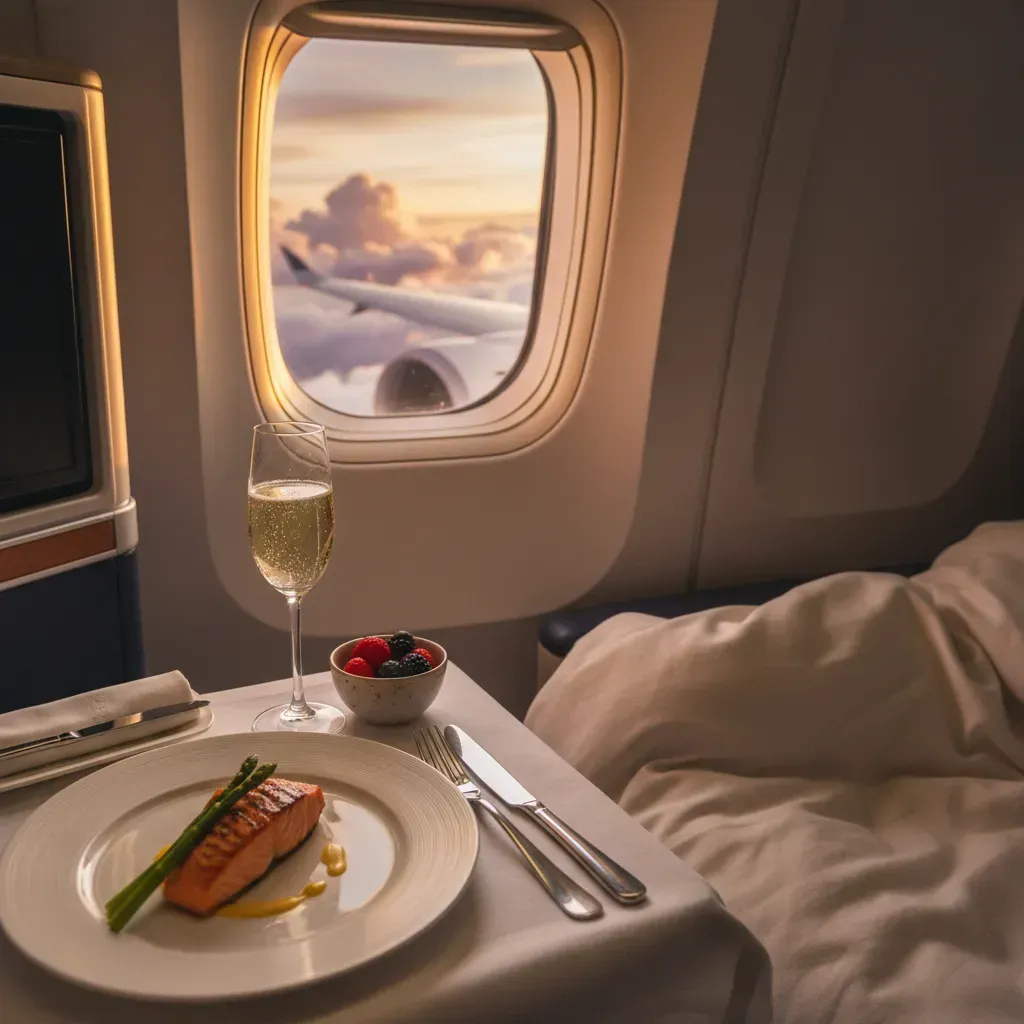
South Korea is one of the most important premium long-haul markets in Asia, with Seoul Incheon serving as the principal gateway for international business and leisure arrivals. For travelers departing from the United States, the strongest business class options typically include nonstop or one-stop services from major gateways such as Los Angeles, San Francisco, Seattle, New York, Dallas, Chicago, and Washington, depending on season and airline schedule.
From a booking perspective, this falls squarely within Flight Experts’ Business Class Flight Booking service, which covers US to Asia routes on major carriers including Emirates, Qatar, Singapore, Lufthansa, British Airways, ANA, JAL, Delta One, United Polaris, and American Airlines Flagship. The agency’s service includes a personal travel consultant, seat selection support, meal preference coordination, check-in assistance, price drop monitoring, and cabin upgrade alerts.
For readers comparing broader regional options, Flight Experts also maintains a dedicated section for Business Class Flights to Asia as well as editorial planning resources in Premium Flight Booking & Tips. If Korea is one stop in a larger East Asia itinerary, professional review of alliance combinations and connection timing becomes especially important.
Readers still evaluating broader routing strategies across the region may also find it useful to review cheap business class to Asia, particularly as a comparative planning reference for premium long-haul travel.
Route and Airport Strategy for Seoul (ICN) and Korea
Here is the thing, routing to Seoul is not only about flight time. For most US departures, the decision between nonstop and one-stop typically changes how you arrive, how protected you are during irregular operations, and how usable the day of arrival may be for business schedules.
Nonstop service into Seoul Incheon (ICN) is usually the cleanest option for travelers who value simplicity and continuity. You avoid a connection that could introduce missed onward segments, terminal changes, or a long layover that dilutes the benefit of flying premium. In most cases, the nonstop also provides a more predictable arrival cadence for meetings, site visits, or family obligations planned shortly after landing, although even nonstop services may be subject to schedule adjustments.
One-stop routings can be excellent when they are constructed intentionally. A connection may allow you to choose a stronger seat, better departure timing from your home airport, or a more reliable network for your specific dates. The trade-off is that connection reliability becomes part of the premium experience. From a practical standpoint, connection planning should account for realistic minimum connection times, potential terminal changes, and the operational complexity of transferring during peak bank periods. It also matters whether the itinerary is issued on a single ticket with aligned carriers. In most cases, single-ticketing and alliance-consistent routing can improve protection and re-accommodation options when delays or cancellations occur, though outcomes always depend on the day-of-travel situation and carrier policies.
Airport choice inside Seoul also deserves attention. ICN is the primary long-haul gateway and is where most intercontinental business class arrivals will land. Gimpo (GMP) may appear on itineraries that include an onward domestic segment or a short regional hop. If GMP is involved, the itinerary can require additional ground logistics, and transfer timing becomes more sensitive. What many travelers overlook is that a premium cabin does not automatically make an airport transfer effortless. When two airports are involved, it is wise to map the transfer window, traffic patterns, and arrival formalities carefully, and to confirm whether the routing creates unnecessary friction for the purpose of the trip.
The Experience
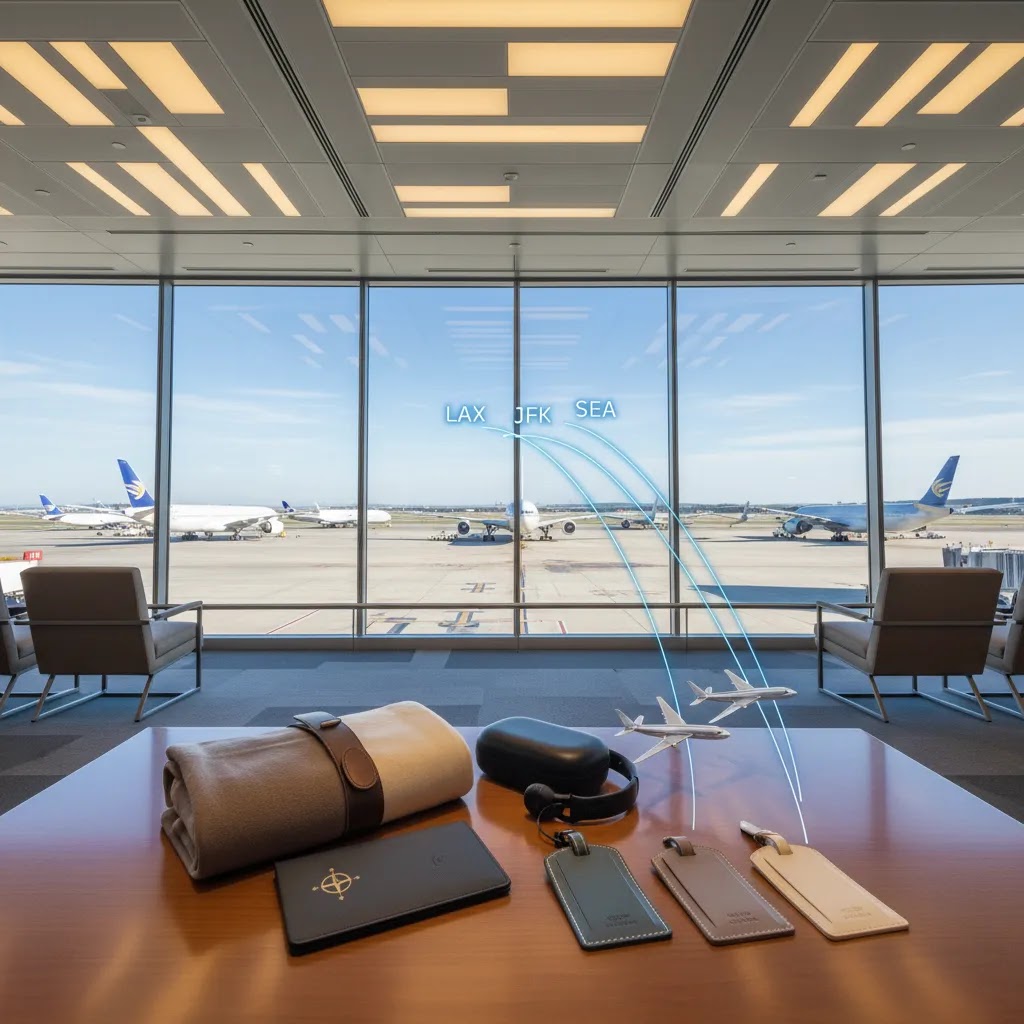
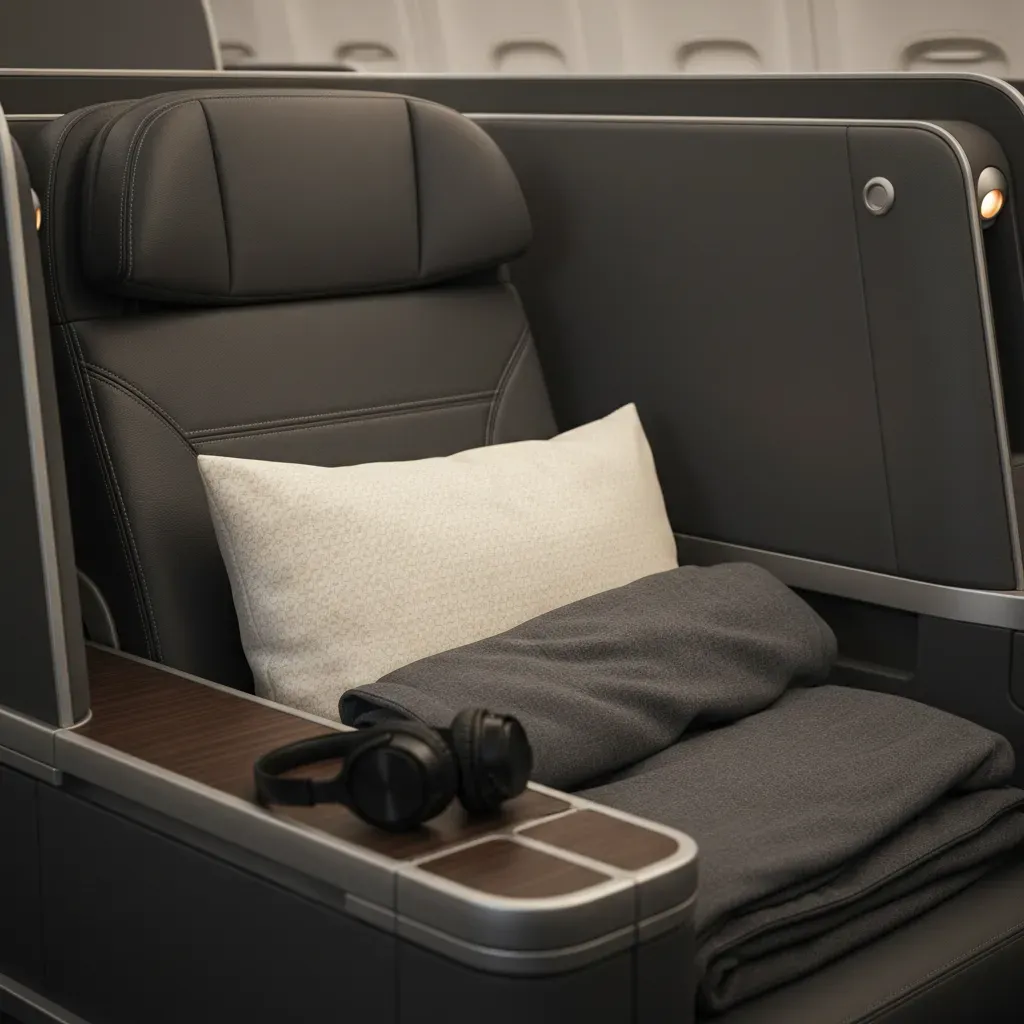
The business class experience to South Korea varies more than many travelers expect. On the strongest routes, you can expect direct aisle access, a fully flat bed, elevated dining, priority ground handling, and access to premium lounges before departure. On weaker configurations, the seat may still convert to lie-flat but offer less privacy, narrower footwells, or an older cabin design that feels less refined on an eleven to fourteen hour transpacific sector.
Korean Air business class is often a natural point of reference for Seoul-bound travelers because it offers direct relevance to the destination and generally dependable service standards. Yet it is not automatically the right answer for every itinerary. Japanese carriers such as ANA and JAL may provide exceptionally polished service on one-stop routings via Tokyo, while United Polaris or Delta One can be more practical for travelers who prioritize efficient departure points from the United States. Qatar Airways and Singapore Airlines can be attractive in very specific, more complex routings, though they are not the default choice for a simple US to Seoul journey.
The premium experience begins on the ground. Priority check-in, shorter premium security access where available, and lounge time before departure can materially improve the start of a Korea trip, particularly for business travelers arriving with meetings scheduled soon after landing. In the air, the critical factors are seat ergonomics, sleep quality, and arrival timing. For Seoul, overnight westbound departures and properly timed connections often matter more than minor differences in meal presentation.
Travelers should also pay attention to aircraft assignment. The same airline may operate a far stronger seat on one route than another. That is one of the clearest reasons to use a specialist instead of relying on fare displays alone.
What to Verify Before You Book: Aircraft, Seat, and Cabin Consistency
Consider this, the words “business class” on a Korea-bound itinerary do not always guarantee the same standard of privacy, space, and continuity across every segment. Before committing, discerning travelers benefit from verifying a few details that directly affect the lived experience of the journey.
First, confirm the aircraft type and the seat layout for your exact flight number and date. A true long-haul business class product typically includes direct aisle access for every passenger and a bed that supports uninterrupted sleep. Some routes, particularly on certain aircraft or older configurations, may still present an angled or less private layout even though the cabin is marketed as business class. Seat maps can be a helpful indicator, but they should be interpreted carefully since configurations may change and published maps may not always reflect last-minute operational assignments.
Second, review the full itinerary for mixed-cabin risk, especially on one-stop routings. It is common for a long-haul segment to be excellent while a short feeder segment is operated with a different standard of premium seating, or in some cases a different interpretation of business class depending on aircraft and route. Think of it this way, you are not only buying the longest flight. You are buying the entire day of travel, including the connection and the segment that positions you for Seoul.
Third, keep expectations calibrated around aircraft swaps and operating carrier variations. Even well-built premium itineraries can experience equipment changes, and partner-operated segments may have different lounge access rules, different premium check-in arrangements, or different ground handling standards. Lounge access and ground services are typically tied to operating carrier, cabin, and ticketing arrangements, and they can also be influenced by local station constraints and day-of-travel conditions. A specialist review is valuable precisely because it checks these details with current routing logic, not only the marketing name of the product.
Investment and Value
Flight Experts lists its business class booking service for US to Asia routes within a typical range of $2,000 to $8,000+, with pricing varying by airline, season, route, and booking window. For Korea specifically, travelers should expect that nonstop peak-date departures to Seoul may price very differently from one-stop itineraries or shoulder-season travel.
The value proposition is not simply the ticket itself. It is the quality of matching the right fare structure and airline product to the traveler’s priorities. Some clients care most about sleeping well before an executive schedule in Seoul. Others prioritize a specific carrier, a preferred alliance, or the convenience of departing from a regional US city on a single ticket. Flight Experts’ model is built around that level of personalization.
The service also includes expert assignment at no additional consultation charge in the initial stage, with options usually presented within 30 minutes according to current product data. That responsiveness is useful when premium inventory changes quickly or when a client needs to compare several Korea-bound departures with different connection patterns. Trustpilot data currently shows a 5.0 rating from 79 reviews, which supports the agency’s reputation for attentive service.
For travelers asking how much is business class flight to Korea, the honest answer is that there is no single reliable number. Fare construction, seasonality, and carrier selection all matter, and premium air pricing is always subject to availability at the moment of booking.
Timing and Seasonality That Matter for Korea Premium Travel
The reality is that premium planning for South Korea is affected by timing in ways that go well beyond the fare. Holiday travel periods, major cultural dates, and high-demand seasons can tighten cabin availability and reduce the number of clean, well-timed options, particularly for nonstop service into ICN. If your schedule is fixed around an event, a conference, or a family milestone, the booking window and a small degree of flexibility in departure day or time can materially influence which aircraft, which routing, and which seat types are realistically available, always subject to availability at the time of booking.
Now, when it comes to comfort and performance, departure and arrival timing often matters more than marginal differences in onboard service. Many travelers prefer an overnight westbound departure that supports immediate sleep and a structured arrival rhythm into Seoul. Eastbound returns may be easier when timed to reduce fatigue and maximize productivity on arrival back in the United States. For business travelers, an arrival time that allows a controlled check-in, a shower, and a short reset before meetings can be more valuable than an incremental upgrade in dining or amenity presentation.
Shoulder seasons can be an excellent time to travel for those who value a slightly calmer operational environment, but there are planning nuances. Airlines may adjust frequency, rotate aircraft types, or change route schedules during seasonal transitions. That means a flight that is consistently operated by a preferred aircraft in one period could, in some cases, shift to a different configuration later. What sets this apart is the need to confirm details close to booking and again closer to departure, particularly when seat privacy and direct aisle access are a priority.
Strengths and Considerations
Strengths
- Korea-bound business class itineraries can be tailored around nonstop convenience, superior lie-flat products, or alliance preferences rather than whichever fare appears first online.
- Flight Experts supports major premium carriers serving Asia, including ANA, JAL, Delta One, United Polaris, and other long-haul business class products relevant to Seoul travel.
- The booking process is structured and efficient: submit a request, receive an expert assignment, review options, and book with human guidance rather than automated prompts.
- Service inclusions such as seat selection, meal preferences, check-in assistance, and upgrade alerts improve the practical quality of the journey, not merely the reservation itself.
- Professional oversight is especially valuable for travelers combining South Korea with additional Asian destinations or open-jaw returns.
Considerations
- Not every Korea route offers the same cabin quality, even within the same airline. Aircraft changes and route-specific configurations may affect the onboard experience.
- Premium pricing to Seoul can move quickly during peak business periods, holidays, and cherry blossom or autumn travel seasons, so flexibility often improves results.
- Travelers focused only on finding the absolute lowest published premium fare may not value the concierge-led advisory process as much as those who prioritize fit, reliability, and service continuity.
- Some one-stop itineraries may provide a stronger onboard product than a nonstop, but they can also increase transit time and require more careful connection planning.
Who This Experience Is For
This service is best suited to travelers who view premium air travel as part of the overall quality of the trip, not an isolated purchase. That includes executives traveling to Seoul on a defined schedule, couples planning an elevated journey through South Korea and East Asia, and experienced long-haul travelers who prefer a single expert to manage cabin selection and routing details. It is also well suited to clients who have outgrown anonymous booking platforms and want the discretion, consistency, and accountability of a dedicated specialist. For more complex arrangements, Flight Experts can also support multi-city routing through its broader premium itinerary planning capabilities.
How to Begin Planning With a Specialist
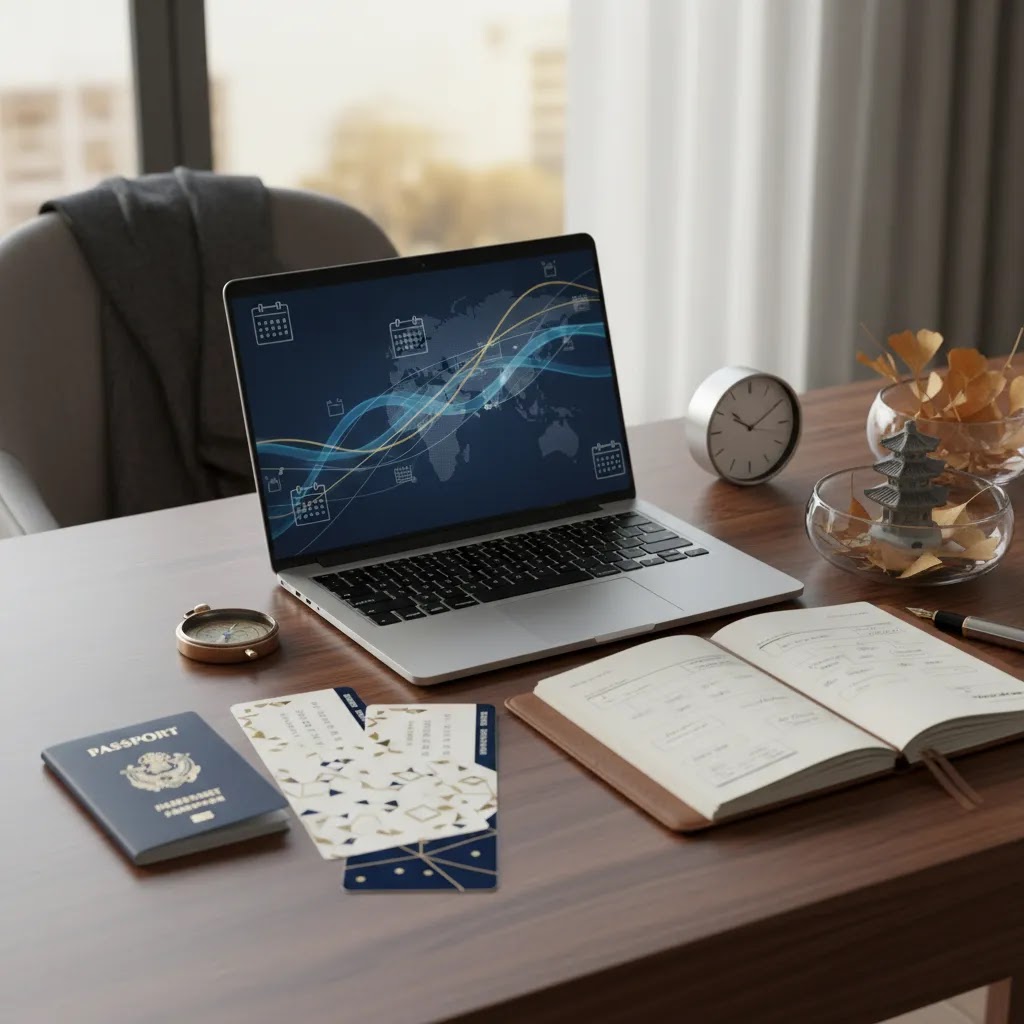
The process is designed to be direct and personal. A traveler begins by submitting a request through Flight Experts, after which an expert is assigned without charge at the initial consultation stage. For business class bookings, current product information indicates that options are usually presented within 30 minutes, although timing may vary with itinerary complexity.
At that stage, the most useful approach is to share not only dates and airports, but also preferences that materially shape the Korea-bound experience: preferred airlines, desired alliance, nonstop versus one-stop tolerance, meeting or event timing in Seoul, and whether sleep quality or airport service is the primary priority. That is where a concierge-style agency adds real value.
Mike Chirilenco leads Flight Experts with a service philosophy centered on personalized guidance rather than automated volume sales. Travelers who want a premium journey handled with care may contact Mike to begin planning, discuss travel preferences in detail, and receive tailored business class options aligned with the standards expected of a luxury travel specialist.
Frequently Asked Questions
What is the best airline for a business class flight to South Korea?
The best option depends on your departure city, schedule, and expectations onboard. Korean Air is often the most direct reference point for Seoul, but ANA, JAL, Delta One, and United Polaris may be stronger for certain US gateways or connection patterns. The most important factor is the specific route and aircraft, not only the airline name.
How much is business class flight to Korea usually?
Flight Experts lists business class pricing for US to Asia routes in a typical range of $2,000 to $8,000+, though Korea-specific pricing may vary considerably by season, route, and cabin inventory. Nonstop departures, holiday periods, and short booking windows can affect fare levels. Exact pricing is always subject to availability at the time of booking.
Is Korean Air business class worth considering for Seoul?
Yes, particularly for travelers who want a straightforward Seoul-focused itinerary and generally consistent service. It can be an appealing option for nonstop access to Incheon and a familiar premium product. That said, other carriers may offer a more private seat, stronger lounge access, or a better overall schedule from your specific US departure city.
Are one-stop flights to Seoul ever better than nonstop?
They can be. A one-stop itinerary through Tokyo or another major hub may offer a superior cabin product, more refined service, or better availability in business class. The trade-off is added travel time and the need for a carefully timed connection. For some travelers, especially those who prioritize sleep and seat quality, that can still be the better choice.
What does Flight Experts include with a business class booking?
Current service data includes a personal travel consultant, seat selection, meal preference coordination, check-in assistance, price drop monitoring, and cabin upgrade alerts. The agency also works with all major premium carriers on US to Asia routes. This is intended to make the process more personalized and more precise than a self-service booking path.
How quickly can I receive options for Korea-bound flights?
According to current Flight Experts product information, business class options are usually presented within 30 minutes after a request is submitted and an expert is assigned. Timing may vary depending on how complex the routing is, especially if you are combining Seoul with additional destinations or have very specific airline and schedule requirements.
Is this suitable for multi-city travel that includes South Korea?
Yes. If Seoul is one stop within a broader Asia journey, Flight Experts also offers complex itinerary planning for multi-destination, open-jaw, and alliance-based premium travel. That becomes particularly helpful when travelers want to combine South Korea with Japan, Southeast Asia, or Australia while keeping the itinerary coherent and well paced.
What is the 52 hour rule in Korea?
The term “52 hour rule” is commonly used to describe South Korea’s standard maximum workweek framework, which limits many employees to 52 hours per week in most cases. It is not an aviation rule, and it does not typically affect flight bookings directly. For business travelers, it may be relevant only in the broader context of meeting planning and local scheduling expectations, which can influence preferred arrival days and times.
Is Korean Air business class good?
It is often a strong and dependable option for Seoul travel, particularly for nonstop routing into ICN and a service style that many travelers find consistent. The more precise question is whether the specific flight you are considering has the cabin configuration and seat privacy you expect, since aircraft assignment and interior versions may vary. A specialist review can confirm the current product on your date and whether it aligns with your priorities for sleep and space.
How much does it cost to fly in business class?
It depends on route length, seasonality, airline product, and booking window. Flight Experts lists business class pricing for US to Asia routes in a typical range of $2,000 to $8,000+, and Korea itineraries can fall anywhere within that range or beyond it depending on nonstop demand, connection patterns, and availability at the moment of booking. For premium travelers, the more useful focus is often on selecting the right aircraft, seat, and schedule for the purpose of the trip.
What is the world’s most bizarre airline?
This is subjective, and “bizarre” can mean many things, from unconventional branding to unusual route networks or distinctive onboard rituals. Aviation also changes quickly, and what is considered unusual in one period may become commonplace later. If your question is really about avoiding mismatched expectations, the most reliable approach is to focus on the specific aircraft, cabin configuration, and operating carrier for your itinerary rather than broad reputations.
Key Takeaways
- A business class flight to Korea should be judged by route, aircraft, and schedule quality, not by airline brand alone.
- For US to Asia travel, Flight Experts offers a structured business class booking service with personal consultant support and premium trip coordination.
- Typical business class pricing for these routes ranges from $2,000 to $8,000+, though Korea fares vary by season and availability.
- Seoul-bound travelers often benefit from expert evaluation of nonstop versus one-stop options, especially where aircraft type materially affects comfort.
- A concierge-style specialist is particularly valuable for travelers who expect accountability, personalization, and efficient premium planning.
Conclusion
For discerning travelers, booking a business class flight to South Korea is rarely just about securing a seat in the forward cabin. It is about choosing the right route, the right aircraft, and the right level of service for the purpose of the trip. Seoul is served by several credible premium options, but the differences between them are meaningful once sleep quality, lounge access, timing, and connection logic are taken seriously. That is where expert guidance proves its worth. Flight Experts approaches premium air travel as a managed relationship, led by professional judgment and personalized care. If you are planning a Korea journey and want the process handled with clarity and discretion, speak with a luxury travel specialist at Flight Experts and begin shaping an itinerary that reflects your priorities from departure to arrival.



