
Business Class Flights to China (2026)
Overview
For most U.S.-origin travelers, booking a flight to China in business class means balancing three variables: cabin quality, total travel time, and the reliability of the route itself. Nonstop service may be limited depending on current airline schedules and regulatory conditions, so many itineraries involve a connection through major hubs in East Asia, the Middle East, or Europe. That is where expert oversight becomes particularly valuable.
Flight Experts offers Business Class Flight Booking for routes from the U.S. to Asia, including the broader long-haul premium market that covers China-bound itineraries. According to current service data, the agency books all major carriers, including Emirates, Qatar, Singapore, Lufthansa, British Airways, ANA, JAL, Delta One, United Polaris, and American Airlines Flagship products. The service is not limited to issuing a ticket. Clients receive a personal travel consultant, assistance with seat selection, meal preferences, check-in guidance, price drop monitoring, and cabin upgrade alerts where applicable.
For readers comparing broader regional options, Flight Experts also maintains a dedicated section for Business Class Flights to Asia. Travelers still evaluating regional alternatives may also find value in this article on cheap business class to Asia, especially when deciding between China and neighboring East Asian gateways.
Choosing the Right Airline for China Business Class: What to Compare Beyond the Seat
Here is the thing, the best business class flight to China is rarely defined by a single feature. A lie-flat seat is a baseline expectation in this category, but the total experience is shaped by product consistency, aircraft assignment, ground services, and the cadence of service on long overnight sectors. A thoughtful comparison framework usually yields a better outcome than choosing by brand recognition alone.
From a practical standpoint, the first question is consistency by aircraft type. Many airlines operate multiple long-haul business class cabins across different fleets. One aircraft may offer higher privacy with a door or staggered layout, while another may use an older configuration with less personal space, even though both are sold as business class. For China routes, this matters because aircraft swaps can happen, and because the same airline may deploy different cabins depending on season, frequency, and operational needs. Confirming the aircraft type, the specific seat layout, and whether direct aisle access is truly universal in that cabin can help set expectations appropriately before ticketing.
Now, when it comes to comfort outcomes, discerning travelers often prioritize sleep support as much as seat architecture. Bedding quality, mattress pads on select carriers, and how the airline manages cabin temperature and lighting all influence rest on a long-haul overnight. Service cadence is also relevant, particularly on routes where you prefer an uninterrupted sleep window. Some airlines are excellent at offering a quick, well-timed meal service and then letting the cabin settle, while others may run longer service sequences that feel less aligned with rest. This is not a criticism, but it is a preference question that can be managed with the right airline selection and flight timing.
What many travelers overlook is lounge network strength and access rules across the journey. A strong lounge at the departure airport is valuable, but on a one-stop China itinerary, the connecting lounge can be the make-or-break element, especially during a late-night or early-morning transit. Lounge access may also depend on operating carrier, alliance rules, and whether the journey is ticketed under one carrier or involves codeshare logic. These details typically require confirmation in advance, particularly for travelers who treat the lounge as a working environment or a place to reset properly between long segments.
Consider this, on certain routings it may be worth prioritizing the long-haul segment over the shorter first segment, or the reverse. If your itinerary begins with a domestic or short international positioning flight, you may place greater emphasis on ensuring the longest segment has the most refined seat and the best sleep conditions. In other cases, a superior first segment can matter because it sets you up for a smooth connection and reduces friction early in the journey. Flight Experts typically reviews this in context of your departure city, desired arrival time in China, and how much connection tolerance you consider comfortable.
The Experience
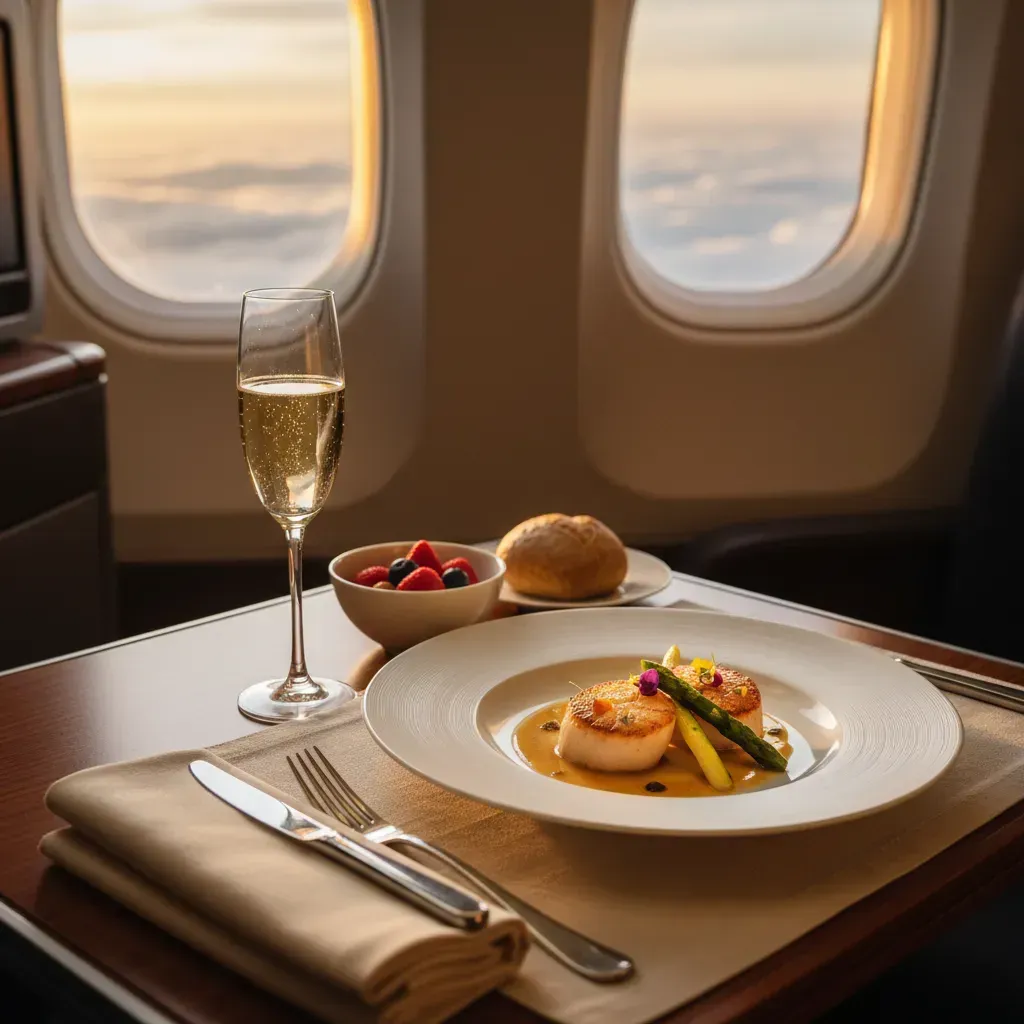
The on-board experience to China varies considerably by airline, aircraft type, and connection city. On stronger products, travelers can expect direct aisle access, a fully lie-flat seat, elevated dining, premium bedding, lounge access, and priority airport services. On more dated aircraft, the seat may still recline fully flat, but privacy, storage, and finish may feel less polished. That distinction matters on journeys that often exceed 12 hours in the air, particularly when a second long segment is involved.
For China itineraries, many discerning travelers favor carriers known for refined long-haul business class execution. ANA and JAL are often appreciated for attentive service standards and calm cabin presentation. Qatar Airways is frequently chosen for privacy and a strong connecting experience through Doha. Singapore Airlines is respected for consistency and catering, although routings may not suit every origin city. U.S. carriers such as United Polaris and Delta One can work very well on the right aircraft and route, especially when schedule convenience is the priority.
The ground experience can be just as important as the seat itself. Premium check-in, expedited baggage handling, and lounge access help reduce friction before departure. On a multi-segment itinerary, the quality of the connecting airport can shape the overall trip. A well-timed connection in Tokyo, Doha, or Singapore may feel substantially more composed than a rushed transfer in a crowded hub with weaker lounge infrastructure.
Flight Experts approaches these bookings with a concierge mindset. Rather than presenting an overwhelming list of search results, the service typically narrows the field to viable premium options and helps align the itinerary with the client’s priorities, whether that means shorter elapsed time, a preferred airline, a superior seat, or a more comfortable transit experience. Additional planning insight is also available through the site’s Premium Flight Booking & Tips section.
Business Class to China: Routes, Hubs, and Connection Strategy
Think of it this way, two itineraries can show similar elapsed times on paper and feel completely different in real travel. For many U.S.-origin trips to Mainland China, a one-stop routing is the most common structure, and the connection city often determines the quality of the transfer, the lounge standard, and how well your sleep aligns with the long-haul sectors.
Typical one-stop logic usually falls into three broad patterns: connecting via East Asia, via the Middle East, or via Europe. East Asia hubs can be appealing because they often provide efficient transfers and premium lounge experiences, and they can create a natural break between two long segments. Middle East hubs may offer strong premium ground services and a highly polished long-haul cabin on at least one segment, but the departure and arrival times can sometimes feel less intuitive depending on your U.S. gateway and final city in China. European connections may suit specific origin points and schedules, but they can add complexity in terms of transit times and airport flow, particularly when the connection involves terminal changes or bus transfers at larger airports.
From a practical standpoint, connection duration deserves careful attention on China itineraries because you are typically managing two long segments, not one. A very short connection can look attractive for total travel time, but it may increase misconnect risk if the first flight is delayed, if the inbound gate changes, or if security re-screening is required in transit. A slightly longer connection can feel more controlled, particularly if it allows time for a proper lounge visit, a shower on longer journeys, or simply a calmer transfer without rushing. The right balance depends on the hub, the time of day, and how comfortable you are with tight timing after a long flight.
The reality is that nonstop options, when available, are not always the most reliable choice for every traveler. Schedules and operating permissions can change, and certain routes may be more prone to adjustments than others. In some cases, a specialist may prioritize the most reliable itinerary over the most direct one, especially when an on-time arrival is important for meetings, events, or onward connections within Asia. A well-constructed one-stop plan can also provide better rebooking protection if irregular operations occur, depending on how the ticket is issued and which carriers are involved.
For discerning travelers, it is often worth evaluating the connection as part of the premium experience, not merely as a necessary inconvenience. The best hubs are the ones that support a composed transfer with strong lounges, clear wayfinding, and realistic minimum connection times. That approach can turn a long journey into a manageable sequence that preserves energy and reduces stress on arrival.
Investment and Value
Current Flight Experts product data lists business class pricing at approximately $2,000 to $8,000+ for eligible routes, with the important caveat that pricing varies by route and airline. For a business class flight to China, the final investment may depend on departure city, seasonality, booking window, aircraft assignment, and whether the itinerary is nonstop or connecting. Holiday periods, trade fair demand, and last-minute corporate travel patterns can all influence fare levels.
Travelers searching phrases such as business class flight to China price or business class flight to China cost are often looking for a single answer. In practice, there is no reliable single figure. A New York to Shanghai itinerary on one carrier during a lower-demand period may price very differently from a Los Angeles to Beijing routing on another carrier during peak travel dates. The same is true when comparing a one-stop premium itinerary through Tokyo against a more direct but less refined option on a different airline.
What Flight Experts adds is not simply access to inventory, but informed evaluation. The agency’s business class booking service includes consultant support, exclusive consolidator fare access, and a typical response time of about 30 minutes after a request is submitted. That can be particularly helpful for travelers assessing multiple airlines at once and trying to understand whether a lower fare reflects a genuine opportunity or a meaningful compromise in cabin quality, schedule, or fare conditions.
The current Trustpilot rating listed for the service is 5.0 based on 79 reviews, which supports the agency’s positioning as a high-touch premium booking resource rather than a self-service fare engine.
Understanding Fare Conditions and Ticket Details That Matter on China Itineraries
What sets this apart for China travel is that fare conditions can matter as much as the seat, particularly on itineraries that involve long sectors, connections, and time-sensitive arrival needs. Premium travelers often assume that business class automatically implies generous flexibility, but change and cancellation terms can still vary meaningfully by fare type, carrier, and ticketing channel.
Key items typically worth confirming before booking include change and cancellation flexibility, any deadlines that apply to changes, and whether a fare is more restrictive than expected for a premium cabin. Advance seat assignment is another frequent point of confusion. Some airlines allow complimentary seat selection at booking across much of the cabin, while others restrict certain preferred seats or charge for advance selection depending on fare conditions, status, or timing. On a long-haul China flight, where sleep and privacy preferences are specific, this detail can affect satisfaction more than travelers anticipate.
Baggage rules should also be interpreted across the whole journey, not just the longest segment. A through-ticketed itinerary usually applies baggage allowances based on the governing carrier rules, but edge cases can occur when multiple carriers are involved. It is also important to confirm whether bags are checked through to the final destination and what procedures apply during connections, especially if your itinerary crosses regions with different transfer processes.
Consider this, the difference between a single protected itinerary and separate tickets can become decisive during delays. When flights are issued as one itinerary, the operating carrier typically has a clearer obligation to rebook you to the final destination in irregular operations, subject to fare rules and availability. With separate tickets, a delay on the first flight can leave you responsible for the missed onward segment, and premium cabin availability for re-accommodation may be limited. For China itineraries with two long segments, Flight Experts often advises clients toward protected ticketing structures whenever feasible, because the value shows up when conditions are not perfect.
From a practical standpoint, pricing conversations also become more precise when a quote request includes a few key details. Preferred departure and arrival airports, date flexibility, ideal arrival time in China, and connection tolerance all help narrow the field quickly. If you have a strong preference on aircraft type, seat style, or lounge standards for the hub, that can be shared up front as well. The goal is to move from broad browsing to a focused set of options that match your priorities, with fare conditions clearly understood before you commit.
Strengths and Considerations
Strengths
- Access to a wide range of major global carriers serving Asia-bound premium routes, including several airlines frequently chosen for long-haul comfort and service quality.
- Consultant-led support for seat selection, meal preferences, check-in coordination, and itinerary refinement, which is especially useful on long-haul China trips with connections.
- Typically fast response time, with options usually presented within 30 minutes for standard business class inquiries.
- Support that extends beyond the ticket itself, helping travelers evaluate the real quality of the cabin, transfer airport, and overall routing.
- Price drop monitoring and cabin upgrade alerts may add value after booking, depending on airline and fare conditions.
Considerations
- Business class to China is not a uniform product. Cabin quality may vary widely by airline, route, and aircraft, even within the same carrier.
- Availability can shift quickly, particularly on strong premium routes or around major travel periods, so preferred options may not remain open for long.
- The lowest available fare is not always the best premium experience. Some lower-priced itineraries may involve less desirable transit times, older seats, or weaker lounge access.
- Travelers seeking a fully self-directed online booking process may not value the advisory nature of a concierge-style service to the same degree as those who prefer guided support.
Who This Experience Is For
This service is particularly well suited to executives flying long-haul to major Chinese business centers, couples planning a high-comfort international journey, and experienced travelers who value precision over trial-and-error booking. It also serves families and multi-stop travelers who need clarity on the best premium routing into China and onward within Asia. Those who have outgrown impersonal booking platforms, or who simply do not wish to spend hours decoding fare rules and seat maps, will generally find the greatest value in working with a specialist agency such as Flight Experts.
How to Begin Planning With a Specialist
The process is intentionally straightforward. Flight Experts’ current booking flow is: submit a request form, receive an assigned expert at no charge, review the options presented, and then choose the preferred itinerary for booking. For business class flight requests, options are usually returned within about 30 minutes, although more nuanced itineraries may require additional review.
At this stage, it helps to be specific about priorities. A client traveling to Shanghai for meetings may care most about arrival timing and sleep quality on the overnight segment. A leisure traveler heading to Beijing may prefer the most polished lounge experience and a longer but more comfortable connection. The more clearly those preferences are communicated, the more tailored the recommendations can be.
Flight Experts is led by Mike Chirilenco and positioned as a concierge-style luxury travel agency rather than an automated booking tool. For travelers who value a dedicated professional relationship, that distinction matters. To begin planning, reach out through Flight Experts and discuss your route, timing, and cabin preferences with a specialist.
Frequently Asked Questions
What is typically included in a business class flight to China?
Most long-haul business class itineraries to China include a lie-flat or angled-flat premium seat, lounge access, priority airport services, upgraded dining, and increased baggage allowance. The exact experience varies by carrier and aircraft. The strongest products also include direct aisle access, more privacy, and superior bedding, which can make a substantial difference on overnight routes.
How much does a business class flight to China usually cost?
Flight Experts currently lists business class pricing broadly at $2,000 to $8,000+ depending on route and airline. China-specific pricing may fall within or above that range depending on season, departure city, cabin demand, and airline choice. For accurate current pricing, a tailored quote is the only reliable way to evaluate the real market for your dates.
Which airlines are often strongest for China business class routes?
That depends on your origin and connection options, but airlines such as ANA, JAL, Qatar Airways, Singapore Airlines, and some premium U.S. carrier products are often considered strong contenders. The best choice is not always the most recognizable name. Aircraft type, schedule, lounge access, and connection quality all affect the final experience.
Is a connecting flight to China worth it in business class?
Often, yes. A well-planned one-stop itinerary may offer a better seat, stronger service, and a more composed airport experience than a less refined direct option. The key is choosing the right hub and connection length. A premium transfer through Tokyo or Doha can feel efficient and comfortable when it is structured properly.
How much is a business class flight to China?
Flight Experts lists a broad business class range of approximately $2,000 to $8,000+ for eligible routes, but a business class flight to China may price within or above that range depending on your departure city, season, booking window, and airline. The most reliable way to answer this for your trip is to request a quote based on your exact dates and preferred arrival timing, since similar-looking itineraries can carry different fare conditions and product quality.
Is China business class worth it?
For many experienced travelers, yes, particularly on overnight sectors where sleep quality and reduced airport friction materially affect how you arrive. The value tends to be highest when the aircraft offers strong privacy and bedding, the service cadence supports rest, and the routing uses a hub with a composed premium transfer experience. It may be less compelling if the itinerary relies on a dated cabin, inconvenient connection timing, or fare conditions that do not match your flexibility needs.
How much does it cost to fly business class?
Business class pricing varies widely by route length, seasonality, airline, and fare rules. Flight Experts currently lists business class pricing at approximately $2,000 to $8,000+ across eligible routes, but some markets and peak periods may exceed that range. For a meaningful estimate, it is important to match pricing to your specific origin, destination, travel dates, and cabin preferences, rather than relying on a single generalized figure.
Why work with Flight Experts instead of booking directly with the airline?
Direct booking can work for simple trips, but China-bound premium travel often involves product variations, connection trade-offs, and fare complexities that are not obvious in public search results. Flight Experts provides consultant-led guidance, airline comparison across major carriers, and post-booking support features such as seat selection help and price drop monitoring.
How quickly can I receive options for my trip?
For standard business class requests, Flight Experts states that options are usually presented within 30 minutes after the request form is submitted. More complex itineraries may take longer, particularly if they involve multiple cities, mixed carriers, or specific cabin requirements. Timing can also vary with market conditions and route complexity.
Can Flight Experts help with more complex China itineraries?
Yes. In addition to standard business class bookings, Flight Experts also offers complex itinerary planning for multi-city, open-jaw, and alliance-based routing. That can be particularly useful if your trip includes China plus other destinations in Asia, Australia, or the Middle East, or if you need mixed-cabin logic reviewed carefully.
Key Takeaways
- A business class flight to China should be evaluated by cabin quality, connection strategy, and ground experience, not fare alone.
- Flight Experts currently books major premium carriers to Asia and provides consultant-led support beyond simple ticketing.
- Typical business class pricing across eligible routes is listed at $2,000 to $8,000+, though China pricing may vary significantly by route and timing.
- The strongest itineraries often come from careful airline and hub selection, especially when nonstop options are limited.
- Travelers who value discretion, time efficiency, and a tailored premium experience are generally best served by working with a specialist.
Conclusion
Choosing the right business class flight to China is less about finding a single headline fare and more about securing the right overall journey. Cabin consistency, transfer quality, airline service standards, and schedule logic all matter on a trip of this length. That is precisely where specialist guidance earns its place. Flight Experts offers a polished, consultant-led booking process for premium long-haul travel, with support that extends from itinerary selection to practical details that shape the journey itself. If you are planning business or leisure travel to China and want a more considered path than a generic online booking engine can provide, speak with Mike or a luxury travel specialist at Flight Experts to review your preferred routes and travel priorities.



