
First Class Flight to Germany (2026 Complete Guide)

What “First Class to Germany” really means

Here’s the thing: first class flights to Germany can mean two very different experiences.
International First Class is the full product: a larger, more private suite or seat, elevated dining and drinks, and a ground experience that can include dedicated First Class check-in, premium security handling in some airports, and top-tier lounges. On certain airlines and airports, the ground experience is the main reason people pay for First Class.
But many itineraries marketed as “First” are actually intra-Europe business-style seating on short hops (think: an economy-style seat with the middle blocked). If you are connecting onward from Frankfurt or Munich to another European city, that second segment might be “First” on the boarding pass, yet it will not feel like international First Class.
Nonstop vs connecting: the biggest comfort difference
If you can fly nonstop from the US to Frankfurt (FRA) or Munich (MUC) in true First Class, you typically get the clearest value: fewer touchpoints, more sleep, and less chance of misconnects. A connection can still make sense if it gets you onto a better aircraft, a better departure time for sleep, or a superior ground experience.
If you want a broader view of how travelers find value in premium cabins across the continent, start with cheap first class Europe. It sets expectations for what is realistic and what is marketing fluff.
Best Germany gateways for First Class
Germany is straightforward in one way: most long-haul premium traffic funnels through Frankfurt and Munich. From a practical standpoint, those are the airports to focus on if you are serious about a true First Class cabin.
Frankfurt (FRA): best for connectivity and premium infrastructure
Frankfurt is Lufthansa’s largest hub and the most common entry point for long-haul premium cabins into Germany. If you are continuing to Berlin, Hamburg, Düsseldorf, Stuttgart, or beyond, FRA often gives you the most flight choices and the most resilient rebooking options if a schedule changes.
Munich (MUC): often calmer, still premium, great for Bavaria
Munich is a favorite for travelers headed to Bavaria, Austria, Northern Italy, or Switzerland. Many frequent flyers find MUC easier to navigate than FRA, which matters if you have a tight connection and you care about protecting lounge time and minimizing walking.
Berlin (BER) and secondary airports: usually not true long-haul First Class
Berlin and other secondary airports can be excellent destinations, but nonstop First Class across the Atlantic is less common. In practice, this means you are often better off flying into FRA or MUC in your long-haul premium cabin, then connecting onward.
Lufthansa First Class: what to expect
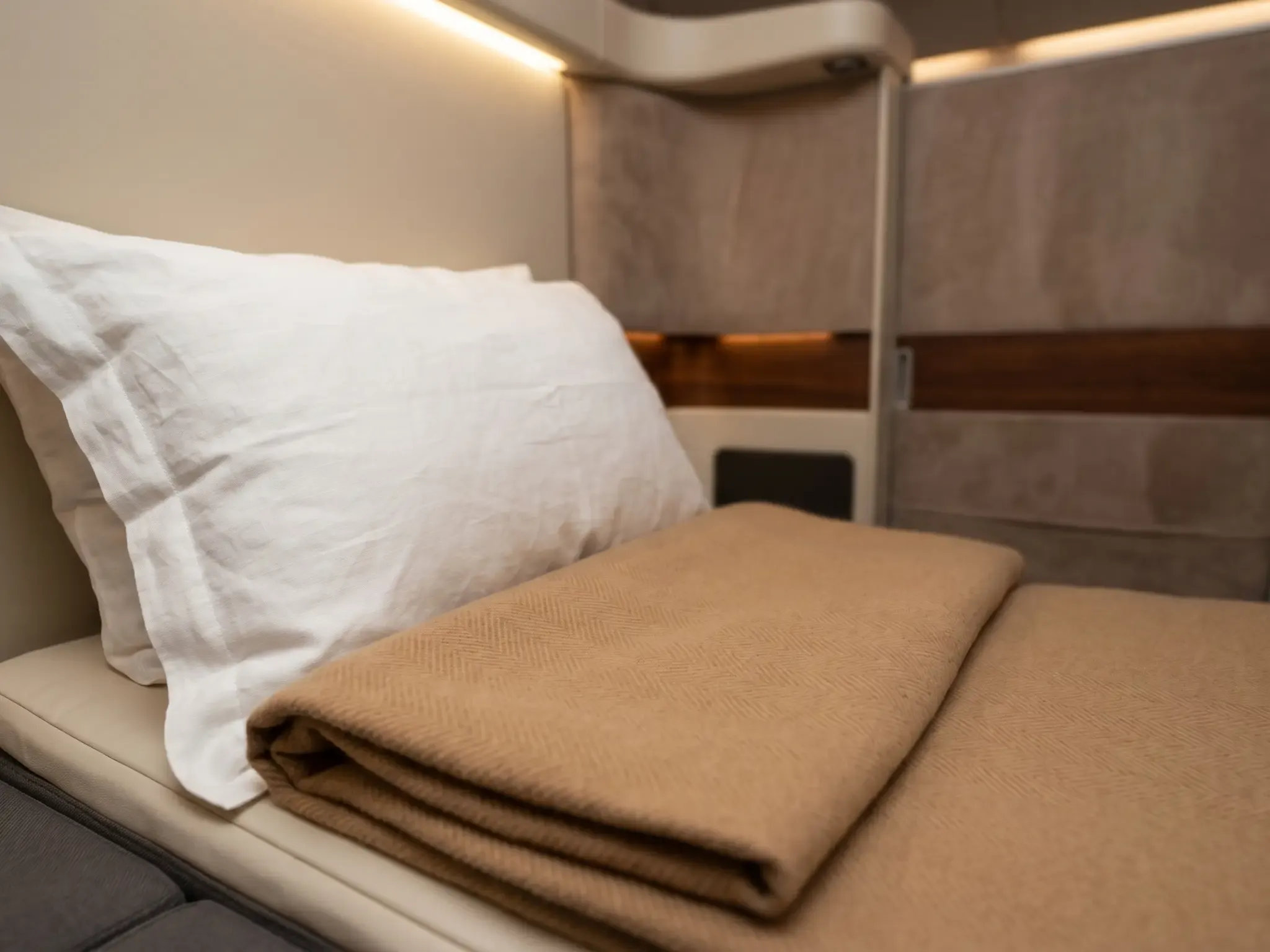
When people picture a first class flight to Germany, they are often thinking about Lufthansa. It is one of the most iconic First Class products in Europe, especially because the ground experience can be just as memorable as the flight.
Seat and cabin: privacy, space, and quiet
Lufthansa First Class is designed around space and calm. You typically get a large seat that converts into a fully flat bed, with better bedding and a more refined sense of privacy than most Business Class cabins. The cabin is small, which changes the feel of service. You are not “one of many,” which matters on overnight flights where you want attentive, low-friction service.
Dining and service: where First Class separates itself
Now, when it comes to onboard dining, First Class is not only about “better food.” It is about flexibility and pacing. You can eat quickly and sleep, or you can treat it like a proper dinner with multiple courses. If you are arriving for a morning meeting in Frankfurt, that control is valuable.
Ground experience: the hidden value for business travelers
What many travelers overlook is that the biggest “upgrade” is sometimes on the ground. First Class can mean a smoother check-in, a more peaceful lounge, and a calmer pre-flight routine. If you are traveling during a major trade show week or peak summer, that calm is worth real money.
Consider this: if your itinerary requires a connection and you want it designed around rest rather than “whatever is on sale,” Complex Itinerary Planning can help map open-jaw and multi-city routings while keeping the long-haul segment in the cabin you actually want. You can find it here: Complex Itinerary Planning.
Airline and aircraft reality check: why the plane matters as much as the cabin
A practical mistake travelers make is shopping “First Class” like it is one identical product. The reality is that the aircraft and cabin layout drive the experience: privacy, noise, storage, and whether you can truly sleep like you would in a quiet hotel room.
Before you commit, confirm the aircraft type for the long-haul segment and check what the First Class cabin actually looks like on that plane. Even within the same airline, one aircraft can feel meaningfully more private, while another can feel more open. For sleep-focused travel, that difference matters more than menu photos.
What to look for if sleep is the priority
- Does the seat convert into a fully flat bed with enough length for your height?
- Is the cabin small and quiet, or is it a larger premium cabin where light and foot traffic are higher?
- Is there a true separation between you and the aisle, or will service carts and movement be close?
- How is the seat oriented: do you feel exposed, or do you have a more sheltered setup?
When an excellent Business Class can beat a “so-so” First Class
Consider this: some modern Business Class suites offer exceptional privacy and direct aisle access for every passenger. On certain routes, that can translate into better sleep than a First Class seat that feels wide but more exposed. If you are paying primarily for rest and you do not plan to maximize ground benefits, it is worth comparing the actual hard product rather than buying the label.
Other First Class options via Europe
If Lufthansa First Class is not available on your dates, or if the routing is awkward, you still have options. Many top First Class products do not fly directly into Germany from every origin city, but they can work beautifully via a European connection.
Connecting via another European hub
Think of it this way: you fly First Class to a major European hub, then connect in a short intra-Europe premium cabin to Germany. The second leg will feel more like Business Class, but the long-haul segment is where you sleep and where the experience matters most.
For a broader comparison of what stands out across the continent, review best first class Europe. It helps you decide when Lufthansa is the right call and when another carrier’s First Class is a better fit.
When Business Class is the smarter “premium” play
The reality is that today’s top Business Class products can be outstanding, especially on airlines with direct aisle access, modern suites, and strong lounges. If you are flying to Germany for a long weekend, or you are traveling with family and want multiple lie-flat seats, Business Class can deliver most of the comfort with fewer constraints on availability.
Pricing and value: what you are paying for
Let’s talk about the question behind most searches: first class flight to Germany price. Published fares can vary dramatically based on season, origin city, how close you are to departure, and how limited the First Class cabin is on that route.
If you see content promising “cheap first class flights to Germany,” treat it carefully. Sometimes it is real, but often it is either a flash fare with strict rules, a mixed-cabin itinerary, or a route that is not actually international First Class on the long-haul segment.
What drives cost on Germany routes
- Seasonality: Summer, major holidays, and big events in Munich or Frankfurt can push premium pricing up fast.
- Cabin size: Small First Class cabins sell out sooner, which reduces flexibility.
- Aircraft type: Some aircraft have more consistent sleep comfort and privacy than others.
- One-way pricing: One-way First Class tickets can price disproportionately high compared to round-trip.
Value checklist: when First Class earns its keep
From a practical standpoint, First Class tends to pay off when you will use the ground benefits, protect meaningful sleep on an overnight flight, and arrive needing to perform immediately. If your trip is flexible and you are traveling mostly for leisure, the value equation can shift toward Business Class, or even Premium Economy plus a great hotel.
Timing strategy for 2026: when to look, when to lock, and when to wait
With First Class, timing is not about chasing a mythical “best day to book.” It is about aligning your booking window with availability patterns and your tolerance for risk.
Here’s the thing: First Class cabins are small. On Germany routes, that means availability can look wide open one week and disappear the next, especially around summer travel, major conventions, and holiday peaks.
If you need specific dates, treat First Class like a scarce resource
If you are traveling for a fixed meeting, a wedding, or a set cruise or tour date, the smartest approach is usually to lock in the itinerary once you find a routing that protects sleep and has reasonable fare rules. Waiting can work in Business Class because there are more seats. In First Class, it can backfire because there are fewer seats to begin with.
If you have flexibility, use it to optimize airports and routings
Flexibility is most valuable when you can adjust one of these variables: departure airport, day of week, or which German gateway you use. Even a small shift can open up a better aircraft, a better overnight schedule, or a smoother connection. That is often a more meaningful “savings” than trying to squeeze the last dollar out of a fare.
A simple sanity check before you buy
Before you commit, confirm three things: the long-haul segment is true First Class, the schedule supports your sleep, and the fare rules match your reality. If one of those three is wrong, the price is not the real problem.
How to book smarter and avoid common mistakes
Booking a first class flight to Germany is less about luck and more about making a few high-impact choices early. Most frustration comes from travelers focusing only on the cabin label and ignoring the aircraft, connection design, and fare rules.
Mistake #1: booking “First” that is only First on the short hop
Always confirm which segment is actually international First Class. If your long-haul segment is Business Class and the short hop is “First,” you are not getting the experience you think you are paying for.
Mistake #2: choosing a connection that kills your sleep
Overnight flights to Europe are about sleep strategy. A poorly timed connection can shorten your sleep window and leave you arriving tired even in a premium cabin. Aim for a schedule that lets you eat, sleep, and wake with enough time for a calm arrival routine.
Mistake #3: ignoring the fare rules and change flexibility
First Class fares can vary widely in flexibility. If there is any chance your meeting date moves, you want to understand change fees, fare differences, and what happens if a schedule change triggers a rebooking.
One option some travelers use is a specialist booking service like First Class Flight Booking, which pairs you with a personal consultant and can present multiple First Class routings quickly. Details are here: First Class Flight Booking.
Miles, upgrades, and availability: how First Class really gets booked
Many travelers assume there is a consistent “upgrade path” into First Class on transatlantic routes. The reality is more nuanced. Airlines treat First Class inventory as premium real estate, and upgrade availability can be limited, especially on peak Germany travel dates.
Three common ways travelers end up in First Class
- Buying a published First Class fare when the schedule and fare rules align with the trip.
- Using miles for an award ticket, when availability opens and the program rules make sense for your situation.
- Upgrading from a paid ticket, which can work, but is far from guaranteed on routes with small First Class cabins.
What to watch for with mixed-cabin pricing
Mixed-cabin itineraries can be perfectly reasonable if you understand what you are buying. A common pattern is First Class on the long-haul segment and a short intra-Europe “First” or Business-style segment into Germany. The trap is the reverse: paying a premium for a “First” label when your long-haul seat is not actually First Class.
Why availability feels unpredictable
Airlines may change aircraft, adjust schedules, or release premium seats in phases. That is one reason travelers sometimes see First Class appear, disappear, then return. If your goal is a specific date and route, it helps to decide in advance what you will do if true First Class is not available: shift airports, take a connection, or choose an excellent Business Class product instead.
The ground game in Germany: what to plan for at FRA and MUC

If you are paying for First Class, treat the airport plan as part of the product. Germany hubs can be efficient, but they can also be busy, and the difference between a smooth day and a stressful one often comes down to planning the ground experience.
Arriving in Frankfurt or Munich: make your arrival day realistic
First Class helps you arrive more rested, but it does not eliminate real-world friction like passport control peaks, long walks, or tight onward connections. If you have a same-day commitment, build in time for the arrival process and for a short reset. A calm arrival routine is one of the best returns on your First Class spend.
Connections within Germany and Europe: protect your buffer
On itineraries connecting through FRA or MUC, the connection is often where the experience breaks. A tight connection can erase the benefit of flying First Class overnight because you spend the final hour anxious instead of recovering. If you are connecting onward, aim for a connection that gives you time to transfer without rushing, and still leaves room to enjoy the lounge if that matters to you.
Think beyond the lounge: the “quiet workflow” benefit
When you are traveling for work, the most valuable ground benefit is often not luxury, it is focus. A calmer check-in process and a quiet place to regroup before boarding can protect your energy for what you are actually flying to Germany to do.
Who should actually fly First Class to Germany
First Class is not “better for everyone.” It is better for specific trips.
First Class is a strong fit if:
- You are flying overnight and need maximum sleep before a same-day work commitment.
- The ground experience matters, especially during peak travel periods.
- You are celebrating something significant and want the journey to feel like part of the event.
- You value privacy, quiet, and personalized service more than raw seat width.
Business Class may be the better call if:
- You want more flight options and better schedule flexibility.
- You are traveling as a family and need multiple premium seats on the same flight.
- You care about a modern suite and direct aisle access, more than a “First” label.
If you are comparing premium cabins across several possible routes, a category like First Class Flights can be a useful starting point to understand the landscape of true First Class versus excellent Business Class alternatives.
Frequently Asked Questions
Does Lufthansa fly First Class to Germany from the US?
Lufthansa is one of the most common ways to book true international First Class into Germany, typically via Frankfurt (FRA) or Munich (MUC). Availability depends on the route, aircraft assignment, and season. The key is confirming that the long-haul segment is actually in First Class, not just a short intra-Europe connector labeled “First.” If you are starting from a smaller US city, you may need a domestic connection before the long-haul flight, which can still work well if timed for sleep.
What is a realistic first class flight to Germany price in 2026?
First Class pricing varies widely by origin city, time of year, and how close you book to departure. Peak summer and holiday periods tend to price higher, and one-way tickets often cost disproportionately more than round-trip. Be cautious with headlines promising “cheap first class flights to Germany,” because they may involve mixed-cabin itineraries or very restrictive fare rules. A practical approach is to price a few date ranges and nearby departure airports, then decide whether the incremental comfort and ground benefits justify it for your trip.
Are there true first class flights to Germany, or is it mostly Business Class?
There are true First Class options into Germany, but they are not as common as Business Class. Many flights into Frankfurt and Munich offer excellent Business Class, while only select services feature a dedicated First Class cabin. If your itinerary includes a connection within Europe, that short segment may be sold as “First Class” but usually resembles a premium economy-style seat with the middle blocked. The best way to confirm is to check the cabin for the long-haul segment specifically.
Is it better to fly into Frankfurt or Munich in First Class?
Frankfurt is usually best for connectivity and flight frequency, which matters if you are continuing to another German city or want backup options during irregular operations. Munich can feel calmer and easier to navigate, which helps if you value a lower-stress airport experience. Your best choice depends on your final destination and schedule. For Bavaria and nearby regions, MUC can save time on the ground. For broader connections and rebooking flexibility, FRA often wins.
If I connect to Germany via another European city, will I still get a First Class experience?
You can absolutely build a First Class trip to Germany via a European hub, but the experience will be concentrated on the long-haul flight. The intra-Europe segment is often marketed as “First,” yet it typically does not include a lie-flat seat. This is not necessarily a problem, because the long flight is where sleep and privacy matter most. The smart move is to choose a connection that protects your rest and leaves a comfortable buffer for transferring terminals.
Is First Class worth it for a leisure trip to Germany?
It can be, especially for milestone trips like honeymoons, anniversaries, or a once-in-a-decade family vacation. The decision usually comes down to how much you value arriving fully rested and how much you will enjoy the elevated dining and ground experience. If you are staying longer and your first day is flexible, top-tier Business Class can deliver most of the sleep benefit. For a short trip or an arrival that goes straight into activities, First Class can feel like a meaningful quality-of-life upgrade.
What should I check before booking first class flights to Germany?
Confirm the long-haul cabin (true First vs Business), the aircraft type, and the seat map so you know what privacy and bed setup you are getting. Review connection times carefully, because tight transfers can erase the comfort advantage. Also read the fare rules, including change fees and how rerouting works if there is a schedule change. If you are paying for First Class mainly for sleep, prioritize a departure time that supports a full rest cycle and minimizes early wake-ups.
Can a specialist help find better First Class options without guessing?
Yes, especially when you are comparing multiple departure cities, flexible date ranges, or open-jaw itineraries like flying into Frankfurt and back from Munich. A specialist can also sanity-check whether the itinerary is true long-haul First Class or a mixed-cabin setup. Flight-Experts, for example, assigns a personal consultant and typically returns options quickly, which can be helpful when availability is limited and you want to compare routes side by side. If you want context first, their Europe overview at cheap first class Europe is a solid reference point.
What’s the biggest mistake travelers make when searching “cheap first class flights to Germany”?
The most common mistake is assuming the label guarantees the experience. Some itineraries price attractively because only one segment is in First Class, or because the long-haul is Business Class and the short hop is “First.” Another pitfall is focusing only on the fare and ignoring timing, which can lead to connections that destroy sleep. If your goal is to arrive feeling sharp, prioritize the long-haul seat, the departure time, and a sensible connection plan first, then evaluate price.
Is First Class to Germany mostly about the seat, or the ground experience?
It depends on your trip, but for many frequent travelers, the ground experience is a surprisingly large part of the value. A quieter check-in flow and a calmer pre-flight routine can matter as much as the onboard seat, especially when you are flying to Germany during peak periods and you want to arrive feeling steady rather than depleted.
How do I avoid booking a “First Class” itinerary that is really Business Class?
Look at the cabin on the long-haul segment first, then evaluate the short segments. If the overnight transatlantic flight is not in First Class, you are not buying a true First Class experience, even if your short intra-Europe connection shows “First” on the boarding pass. When in doubt, confirm the long-haul booking code and aircraft, and check the seat map for that specific flight.
Are upgrades into First Class to Germany easy to get?
Upgrades can happen, but they are not something to count on, particularly on routes with small First Class cabins and heavy premium demand. If the trip truly requires First Class for sleep and performance, it is usually better to book it intentionally rather than hoping an upgrade clears at the last minute.
Is it smarter to fly into Germany nonstop, or connect through another European hub?
Nonstop is usually simplest and is often best for protecting sleep and minimizing misconnect risk. A connection can still be smart if it gets you onto a better long-haul aircraft, a departure time that fits your sleep strategy, or a routing that aligns with your final destination. The key is keeping the long-haul segment in the cabin you actually want, then building a connection that does not create stress.
Key Takeaways
- A “first class flight to Germany” can mean true long-haul First Class or just a short intra-Europe segment labeled First.
- Frankfurt and Munich are the best gateways for finding real First Class cabins and smoother connections.
- Lufthansa First Class stands out for service and ground experience, not only the seat.
- Price varies heavily by season, aircraft, and one-way vs round-trip, so always confirm what cabin you are actually getting.
- If sleep is your priority, schedule and connection design often matter more than the airline name.
Conclusion
If you are considering First Class to Germany, start by clarifying your goal. Is it uninterrupted sleep before a high-stakes meeting in Frankfurt, a smoother arrival for a family holiday, or a celebratory trip where the journey is part of the memory? Once you know that, the right choice gets clearer: focus on gateways like FRA and MUC, verify that the long-haul segment is true First Class, and build an itinerary that protects your rest instead of squeezing in a risky connection.
When you compare options, keep one rule in mind: you are not only buying a seat. You are buying time, calm, and a better arrival day. If you want help reviewing routings or confirming which flights offer the real First Class experience, you can explore options with a free, no-obligation quote.
If you want expert help sorting through First Class routings to Germany, Flight-Experts offers free quotes with a personal consultant.



