
Find cheapest first class flights to europe (2026)

Service: First Class Flight Booking
Routes: US to Europe, Transatlantic
Typical Savings: Up to 25-60% off published fares (availability varies)
Response Time: Usually within 30 minutes
Cost to Quote: Free, no obligation
Tell us your dates, departure city, and preferred airline. We will return vetted First Class options and explain the trade-offs clearly.
If you are searching for the cheapest First Class flights to Europe, the fastest path is rarely a public fare calendar. Real value in First Class often comes from inventory that is not marketed as a “sale” and from routing choices that reduce the fare while keeping the cabin experience intact.
This page is written for travelers ready to book, who want a clear, service-led way to secure strong First Class pricing and confirm what they are actually getting (aircraft, seat type, connection risk, change rules, and total trip time). If you want the broader hub view, start with cheap first class to Europe.
What “cheapest” First Class really means
“Cheapest” can mean three different things, and choosing the wrong definition is how travelers overpay or end up with a longer, more tiring itinerary:
- Lowest total price: The smallest dollar figure, sometimes requiring extra stops, awkward departure times, or long layovers.
- Lowest price for a true First Class product: A fare that still delivers a flagship First Class seat and service level, not just a label on a short regional segment.
- Best value per hour in the air: Paying slightly more to protect sleep, reduce connection risk, and arrive ready.
Our job at Flight-Experts is to show you the best-priced First Class options that still make sense for your trip, then clearly explain what you gain or give up with each choice.
Where First Class savings usually come from

On Europe routes, First Class pricing is shaped by availability, seasonality, and how airlines file premium inventory. The “deal” is usually created through a combination of pricing access and routing strategy:
- Consolidator access: Some premium fares are distributed through channels not displayed the same way as public pricing. Availability varies by route and season.
- Departure city strategy: A nearby gateway can price materially differently than your home airport, especially on transatlantic routes.
- Connecting in the “right” place: One connection can reduce cost, but the best connection is the one that preserves sleep and minimizes misconnect risk.
- Mixing cabins intelligently: For some itineraries, keeping the longest segment in First Class and placing shorter segments in Business can reduce total price without changing the core experience.
Understanding what “First Class to Europe” actually is (and what it is not)
Here’s the thing: “First Class to Europe” is not a single, consistent product across airlines, and the label can be misleading if you do not confirm the aircraft and cabin on the long-haul segment.
- True international First Class: This is the flagship experience most travelers picture, typically with a larger seat or suite, elevated dining, and a more personalized service flow. It is also limited in supply, and not every airline offers it on every route.
- Business Class marketed as the top cabin: On many transatlantic flights, Business Class is the highest cabin available. Some booking tools still surface “First” wording on short feeder legs, which can create confusion.
- Short-haul “First Class” within Europe: Intra-Europe First on many carriers is often an economy seat with a blocked middle and a different service level. It can be nice, but it is not comparable to long-haul First, and it should not be the deciding factor in what you pay.
From a practical standpoint, “cheapest First Class flights to Europe” only makes sense when the longest flight, usually the overnight crossing, is the cabin you actually care about. When we quote, we focus on that long segment first and then build the rest of the itinerary around it.
Gateway and routing tactics that can lower First Class pricing
What many travelers overlook is that Europe pricing is often more about where you start and where you connect than about the final city you type into a search box. If your goal is strong First Class value, these are some of the highest-impact levers:
- Compare nearby US gateways: New York, Boston, Washington, Miami, Chicago, Dallas, Los Angeles, and San Francisco can price very differently. Sometimes a short positioning flight to a major gateway reduces the long-haul fare enough to justify the extra step.
- Do not anchor on a single European arrival city: Pricing into one hub can be materially better than another, even if they are close. If you can arrive into one city and take a short onward connection, you often open better inventory.
- Choose connections that protect sleep: A cheaper itinerary is not a win if it forces a long layover at 5 a.m. local time or adds a second stop that increases misconnect risk. The best one-stop is the one that keeps the trip smooth.
- Be careful with “must route through London” planning: London is a common target for premium travel, but forcing the routing through a specific airport can narrow inventory and inflate fares. If London is your destination, that is different, and we will price it accordingly.
Timing and availability reality check for First Class to Europe
The reality is that First Class is capacity-constrained, and the cheapest outcomes come from pairing realistic expectations with smart flexibility. A few timing realities matter:
- Inventory can be strong far in advance, then tighten: Some airlines release premium seats early, then manage remaining seats dynamically. If you see a configuration you want, waiting is not always rewarded.
- Last-minute can go either way: Occasionally, pricing improves close-in, but just as often it spikes because only fully flexible inventory remains. If you must travel on fixed dates, it is usually safer to price early and monitor options.
- Seasonality is real: Summer, major holidays, and major event weeks compress availability quickly. Shoulder seasons can offer better value, but only if the routes you want are actually operating the aircraft with the First product you expect.
Think of it this way: the cheapest First Class fare is not the one you saw once, it is the one you can book with acceptable routing, reasonable rules, and a cabin that matches your expectations.
Miles and upgrades: when they help, and when a paid First Class fare is cleaner
Some travelers pursue “cheap First Class” through upgrades or points, and it can work well, but it is not always the most predictable path for Europe. Consider this before you rely on it:
- Upgrades are often capacity-controlled: You may buy a ticket expecting to upgrade, then find the upgrade space never clears, especially on popular days and nonstop routes.
- Not all premium cabins are created equal: If you are paying cash plus miles plus fees, confirm what you end up in. On many routes, the most meaningful comfort jump is from Economy to Business, not from Business to First.
- One-stop itineraries can be easier to upgrade than nonstops: Splitting the trip into segments sometimes creates more upgrade opportunities, but it also increases complexity and the risk of ending up mixed-cabin in a way you do not like.
If you want the cleanest, most controllable outcome, a paid First Class fare with clear rules often reduces uncertainty. When you request options, tell us if upgrades are part of your strategy so we can price a straightforward paid option alongside a value-focused alternative.
How Flight-Experts finds your best options
Flight-Experts is a premium flight booking service focused on Business and First Class. When you request a quote, you are not dropped into a self-serve engine. A consultant reviews your specifics and returns options you can actually book, with the details you need to choose confidently.
What we need from you (so we can price accurately)
- Departure city (or a short list of acceptable airports)
- Destination city (or flexible Europe region)
- Date window and trip length
- Nonstop vs one-stop tolerance
- Airline preferences and alliance loyalty (if any)
- Any must-haves: lie-flat on every long segment, daytime flight, specific aircraft, lounge priorities
What you get back
- Several First Class itineraries priced for your dates
- Clear notes on layovers, total trip time, aircraft, and cabin consistency
- Guidance on where a small change saves meaningful money
Timing note: options are usually provided within 30 minutes. For complex requests, multi-city trips, or peak travel periods, it can take longer because we confirm availability and compare more combinations.
Pricing overview and what drives the range

Below are typical ranges for premium bookings through Flight-Experts. Your exact pricing depends on route, dates, fare rules, and how much flexibility you have with airports and connections.
| Service | Typical Range | Savings |
|---|---|---|
| First Class Flight Booking | $5,000 – $20,000+ (varies by route and airline) | Significant savings vs published fares |
| Business Class Flight Booking | $2,000 – $8,000+ (varies by route and airline) | Up to 25-60% off published fares |
| Premium Economy Flight Booking | $800 – $3,000 (varies by route) | Competitive pricing through consolidator deals |
| Complex Itinerary Planning | Varies by itinerary complexity | Expert routing can save significantly vs booking separately |
What tends to increase First Class cost to Europe
- Fixed travel dates, especially around holidays and major events
- Nonstop requirements from non-gateway airports
- Last-minute travel
- Only one acceptable arrival city
What tends to reduce First Class cost without “downgrading the trip”
- Small date shifts (even 1 to 2 days)
- Using a different European arrival city with a short onward connection
- Choosing the best single connection rather than forcing nonstop
- Open-jaw returns (fly into one city, home from another) when pricing favors it
Smart compromises that keep it First Class
If your goal is the cheapest First Class flight to Europe, the best “savings levers” are the ones that do not turn your itinerary into an endurance test.
- Protect the longest segment: Prioritize First Class on the overnight transatlantic leg where sleep matters most.
- Optimize connections: A well-timed connection can lower price while keeping your total travel time reasonable.
- Choose the right airports: Some trips price better to major hubs, even if your final destination is a short hop away.
- Be honest about London: If you are specifically searching “cheap first class flights from London,” tell us if you can depart from or arrive into London without forcing the entire itinerary through it. Flexibility around London airports and timing can change pricing materially.
When Business Class or Premium Economy is the better value
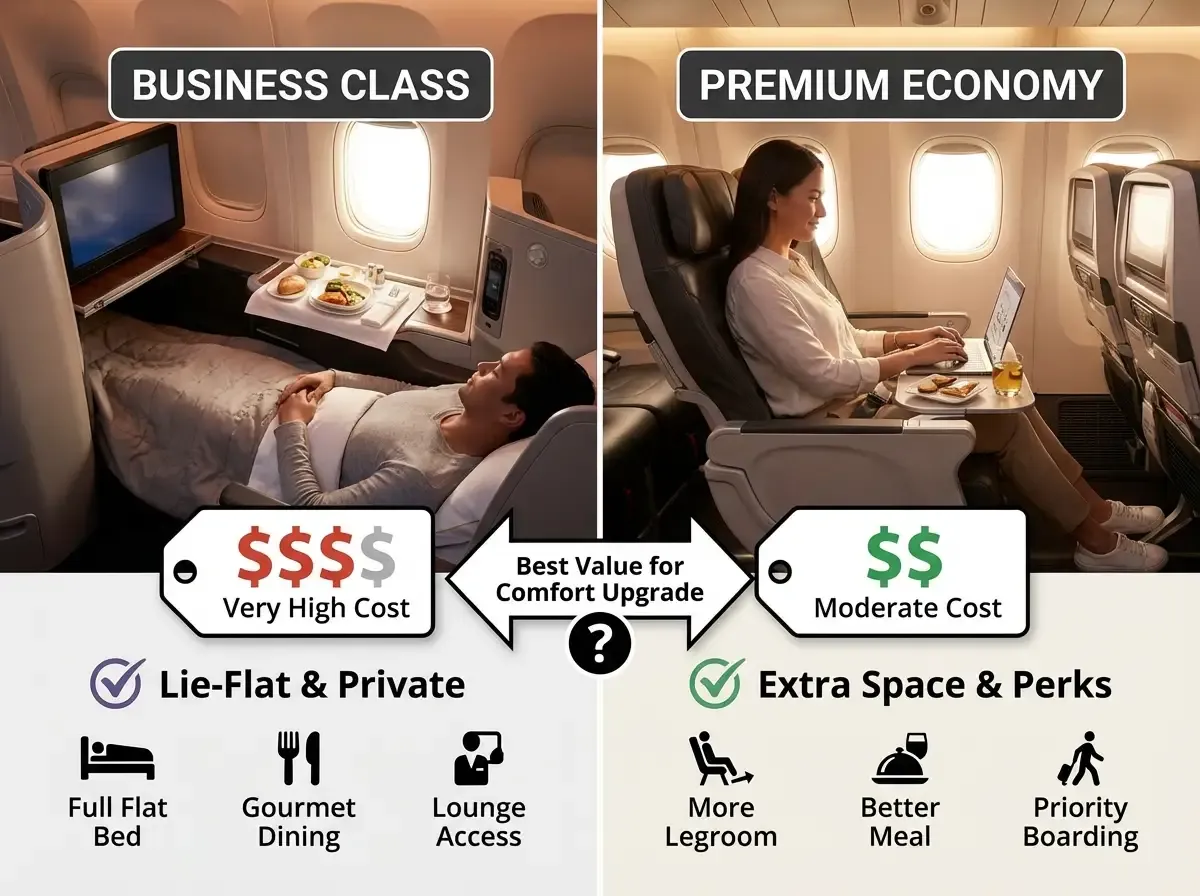
First Class to Europe can be exceptional, but it is not always the smartest spend. If the price jump is large for your dates, consider:
- Business Class for lie-flat value: Many travelers get 80 to 90 percent of the comfort with a much smaller total fare. If you want to compare, use our Business Class Flight Booking service.
- Premium Economy for daytime flights: For some daytime crossings, Premium Economy can be a practical middle ground, especially if you value priority services and extra space more than a full suite.
- Mixed-cabin solutions: Keep the overnight leg premium, then use a different cabin for short intra-Europe positioning flights.
- First Class Flight Booking
- Business Class Flight Booking
- Premium Economy Flight Booking
- Complex Itinerary Planning
FAQ
Is the quote really free, and am I obligated to book?
Yes. Flight-Experts provides free, no-obligation quotes. You can review pricing and itineraries, ask questions, and decide if you want to proceed. We aim to make the comparison easy by clarifying what is included in each option, including routing, travel time, and cabin consistency.
How fast will I receive First Class options to Europe?
Options are usually presented within 30 minutes. Some trips take longer, especially if you need a complex routing, have multiple passengers, or are traveling during peak periods when First Class inventory is tight and we need to confirm what is realistically available.
Can you help if I need a multi-city or open-jaw Europe itinerary?
Yes. If you are flying into one city and returning from another, or you want stopovers, use Complex Itinerary Planning. This is often where meaningful value appears because pricing can improve when the routing is structured correctly rather than booked as separate one-ways.
Will you prioritize nonstop flights if that is important to me?
Yes, if nonstop is available and aligns with your goals. If nonstop pushes pricing far above strong one-stop options, we will show both and explain the trade-offs. Many clients choose one stop when it protects sleep and reduces total cost without adding unnecessary travel stress.
What if I need to change my trip after booking?
Change and cancellation flexibility depends on the fare rules of the ticket we book. When we quote, ask us to show options with stronger flexibility if your schedule is uncertain. We will explain the differences in plain language so you can decide between a lower price and more flexible terms.
Do you handle preferences like seats, meals, and special requests?
Yes. Flight-Experts supports the details that matter in premium travel, including seat preferences and meal requests where the airline allows it. If your itinerary includes multiple carriers or connections, we also help you understand where benefits carry through and where rules change.
Are First Class “deals” always available to Europe?
No. First Class pricing and availability vary by season, route, and airline inventory. Some weeks offer excellent value, others do not. The most reliable way to confirm what is possible for your dates is to request options and let us price the best combinations available at that moment.
What should I send to get the most accurate quote?
Send your dates (or a range), cities, passenger count, and any must-haves such as nonstop-only, a specific airline, or a preference for the overnight leg. If you have flexibility, mention it. Even small flexibility can open better pricing while keeping the trip comfortable.
How much is a First Class flight to Europe?
It depends on your departure city, the specific airline and aircraft, your travel dates, and how flexible you are with connections and arrival cities. For many travelers, the most useful way to think about it is the range you are willing to consider for a true long-haul First Class cabin, then we price the best options available for your exact dates and explain what is included in each fare.
Why do some “First Class to Europe” searches show Business Class style seats?
Because on many Europe routes, Business Class is the top cabin, and some search tools mix terminology across segments. Also, a short domestic or regional “First” segment can appear on an itinerary even when the long transatlantic leg is Business. Always confirm the cabin on the longest segment and the aircraft operating that flight.
Is it ever smarter to book Business Class and try to upgrade to First?
Sometimes, but upgrades are not guaranteed and can be difficult on popular routes and peak dates. If you need certainty, a paid First Class fare is usually the cleaner solution. If you are open to some uncertainty, tell us your upgrade goals and we can help you compare a straightforward paid option versus a value-focused plan that relies on upgrade availability.
Ready to Book Your Next Trip?
If you want the cheapest First Class flights to Europe without guessing, start with a free quote. We will price realistic First Class itineraries for your dates, show the best-value alternatives, and explain the differences so you can book with confidence.



