
First Class Flight to Philippines (2026 Guide)
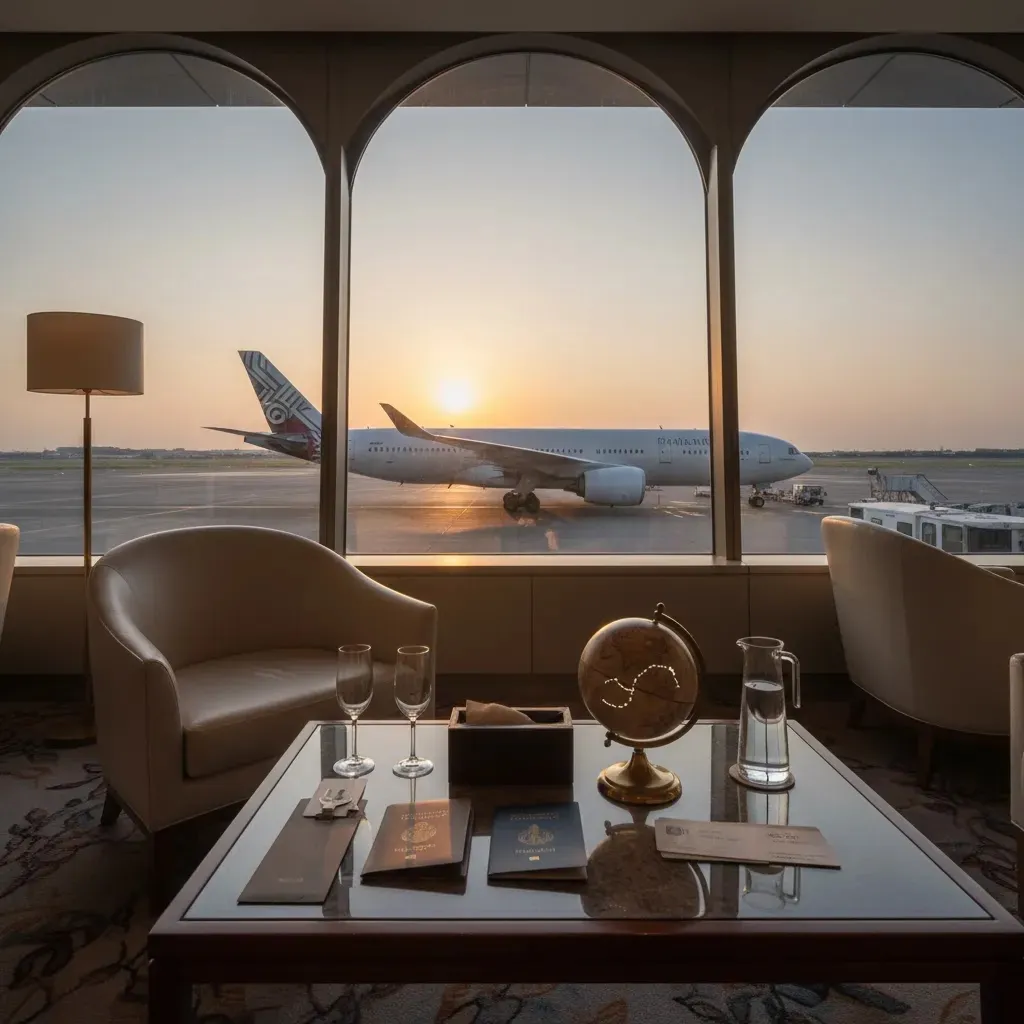
What First Class to the Philippines Usually Means
A genuine first class flight to the Philippines typically involves one of two scenarios. The first is a long-haul First Class segment from the U.S. to a major Asian or Middle Eastern gateway, followed by a regional Business Class connection into the Philippines. The second is a premium itinerary where the most important overnight sector is booked in First Class, even if shorter legs are not.
This distinction matters. Unlike routes to cities such as Singapore, Tokyo, or London, nonstop or single-airline First Class service into the Philippines is more limited. Many carriers serving Manila operate excellent Business Class cabins, but not all deploy international First Class on the final segment. For discerning travelers, the question is not only whether First Class is available, but whether the itinerary delivers the level of privacy, rest, lounge access, and ground handling you expect for a significant travel investment.
Flight Experts offers First Class Flight Booking for major premium routes to Asia, with service covering airlines such as Emirates, Singapore Airlines, Lufthansa, ANA, JAL, Etihad, Qatar Airways, Swiss, and Air France La Première. The service includes white-glove personal support, lounge access coordination, chauffeur service arrangements where applicable, and guidance on luxury amenities. For some Philippines trips, that expertise may be the difference between an impressive fare display and an itinerary that actually feels refined from departure to arrival.
First Class Availability Realities (Including Philippine Airlines)
Here is the thing, many itineraries advertised as a first class flight to the philippines are not First Class from end to end. In most cases, the itinerary is First Class to a major hub, followed by Business Class onward to Manila or Cebu. This is not a compromise so much as a reflection of how airlines deploy their true international First Class cabins. The final leg into the Philippines is often operated by aircraft and route structures where carriers prioritize high-quality Business Class rather than a separate First Class cabin.
What many travelers overlook is that “First Class” can describe three different realities on a single booking: a true long-haul international First Class product, a regional premium cabin marketed as First Class on shorter routes, or a mixed-cabin itinerary where only one segment is sold in First Class. Those distinctions can influence everything from your lounge access to your ground handling on the connection, and it is why segment-by-segment verification matters.
A common question is whether Philippine Airlines offers First Class. Philippine Airlines has offered premium cabins over the years, but travelers should not assume that a “First” label on a Philippines sector means a comparable international First Class suite experience. Depending on route and aircraft, Philippine Airlines may offer Business Class as the top cabin on many long-haul services, and its premium branding and configuration can change over time. From a practical standpoint, the important step is confirming what is marketed and what is actually operated on your specific flight, including seat type, cabin layout, and service standard for that aircraft.
Think of it this way, a premium itinerary is only as strong as its operating details. When you review an itinerary, confirm whether each segment is marketed and operated as international First Class, or whether the “First” designation is limited to a regional cabin style. This is especially relevant on connecting trips where lounge and ground entitlements may be driven by the operating carrier, the cabin on the long-haul sector, and the rules of the ticket. In most cases, your advisor should confirm the fare basis and operating carrier for each sector, because those details can shape whether you receive First Class-level lounge access throughout the journey or only at specific points.
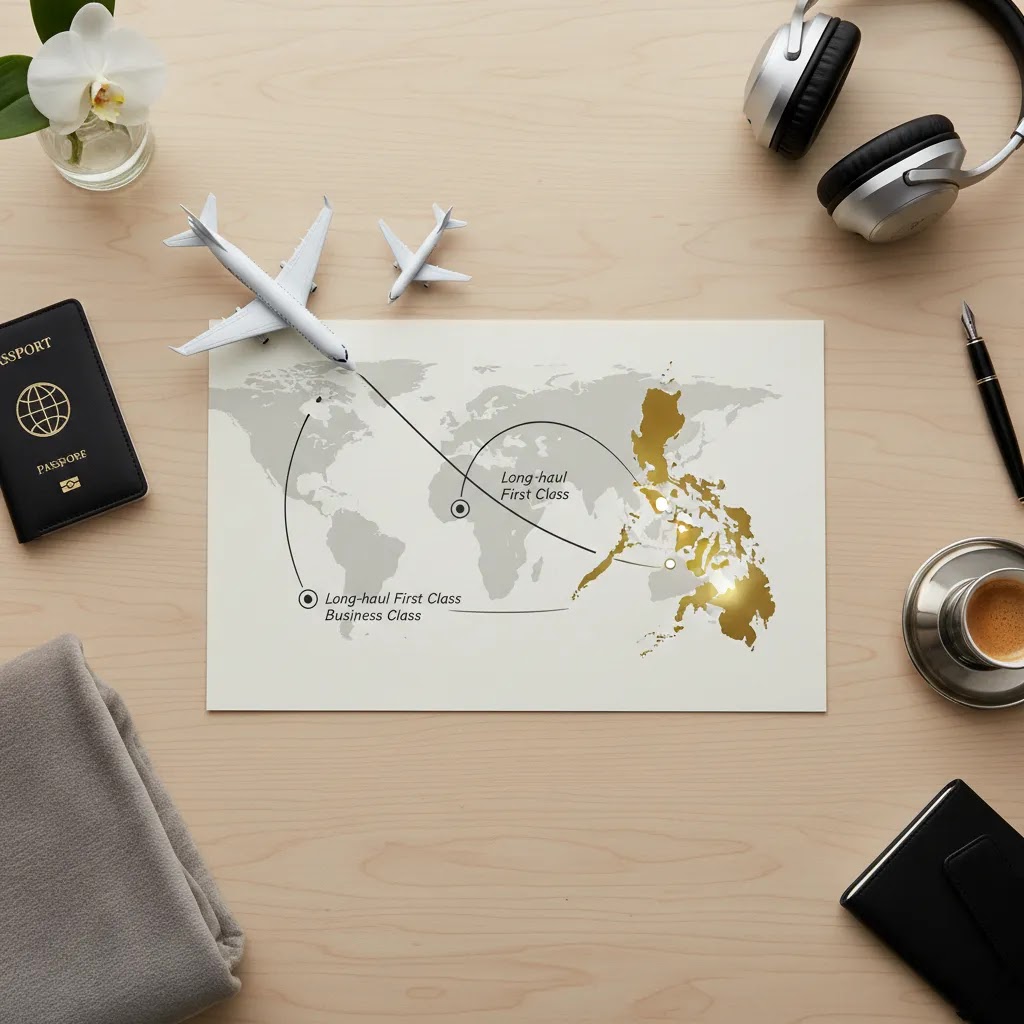
Key Route and Cabin Features
The most attractive First Class itineraries to the Philippines usually prioritize the longest segment. On a U.S. departure, that may mean routing through Tokyo, Singapore, Doha, Dubai, or another premium hub before connecting onward to Manila. In practice, the best option depends on whether you value sleep quality, ground services, schedule efficiency, or a specific airline’s First Class environment.
Aircraft type is central. A beautifully marketed First Class experience may vary significantly depending on whether you are on a flagship long-haul aircraft or an older configuration. Suite-style privacy, shower facilities, dine-on-demand service, and a true mattress-style bed are not universal. In most cases, travelers should verify the exact aircraft operating each sector rather than assuming every First Class label reflects the same standard.
Airport experience also shapes the journey. Premium travelers often care as much about the calm before departure as the seat itself. Depending on the airline and hub, your trip could include dedicated check-in, expedited security channels, premium lounges, private transfers to the aircraft, or chauffeur coordination. Those details become particularly valuable on a multi-segment trip to Southeast Asia, where a poorly timed connection can diminish the benefits of an otherwise excellent cabin.
There is also a practical comparison to consider with business class Philippines itineraries. On some routes, leading Business Class products may offer nearly all the sleep comfort you need with broader schedule choices. A well-advised traveler should compare the full itinerary, not only the cabin title.
For readers researching broader route patterns and planning considerations, the First Class Flights to Asia category and Premium Flight Booking & Tips section are useful next references.
Route Planning for the Philippines: Gateways, Manila vs Cebu, and Connection Strategy
Now, when it comes to premium route planning, the Philippines is a country where connection strategy can make or break the experience. Most U.S. departures will route through a high-capacity premium hub, and that hub choice typically determines your First Class availability, your lounge experience, and how straightforward the final connection feels after an ultra-long-haul sector. In practical terms, this often means evaluating the journey as a sequence of experiences: the overnight long-haul segment, the transfer environment, then the final leg into the Philippines.
Consider this, a connection that looks acceptable on paper can feel very different in reality depending on airport layout, transfer formalities, and timing. Some hubs are designed for efficient premium transfers with clear wayfinding and short walks, while others can involve longer distances, multiple security points, or timing constraints that reduce your ability to enjoy the lounge and reset between sectors. For discerning travelers, the objective is usually not the shortest connection at any cost, it is the most controlled and predictable transfer that protects rest and minimizes friction.
Manila versus Cebu routing deserves special attention. Manila is often the stronger choice if you want maximum international connectivity, broader schedule options, and more flexibility if irregular operations affect a segment. It can also be the practical gateway if you are combining the Philippines with another Asian destination and need reliable onward connections. Cebu can be an excellent arrival point if your final destination is in the central Visayas or nearby resort areas, because it may reduce a domestic add-on and allow you to reach your end destination sooner. That said, Cebu schedules and aircraft types may be more limited on certain days or seasons, and the premium cabin mix can vary by route.
The reality is that many Philippines itineraries involve mixed-cabin tickets, and that is not inherently a negative. A well-constructed itinerary places First Class where it matters most and uses Business Class strategically for shorter segments. The key is ensuring your connections are protected on a single ticket when possible, and that minimum connection times are realistic for the airport and time of day. During peak periods, tight connections can create unnecessary stress if a delay forces a re-accommodation into less desirable timings or aircraft. An experienced advisor will typically aim for connection buffers that reflect how the route actually performs, not only what a reservation system will allow.
What sets this apart is the attention to operational detail. Protected connections, realistic layovers, and clear confirmation of operating carriers help reduce disruption risk on multi-segment premium itineraries. For travelers who expect the journey to feel composed from departure to arrival, this is where expert oversight can be as valuable as the cabin itself.
Pros and Cons
Strengths
- First Class on the main long-haul sector may deliver meaningfully better privacy, bedding, and personalized dining than even strong Business Class alternatives.
- Ground services are often more refined, with premium lounge access, dedicated check-in, and in some cases chauffeur or escort-style support depending on the airline and airport.
- For milestone travel such as honeymoons, anniversaries, or significant family journeys, the experience may feel appropriately elevated from the outset.
- Expert itinerary construction can help concentrate First Class where it matters most, especially on overnight or ultra-long-haul segments.
- Flight Experts’ First Class Flight Booking service covers major premium carriers to Asia and includes personalized assistance, usually with options presented within 30 minutes after inquiry.
Considerations
- True end-to-end First Class to the Philippines is limited, and many itineraries include regional Business Class segments rather than First Class throughout.
- Cabin quality may vary substantially by airline, aircraft, and route, so the First Class label alone does not guarantee a uniform experience.
- Some travelers may find that a top-tier Business Class itinerary offers a better balance of routing convenience and comfort, particularly if final connections are short.
- Availability may be restricted during holiday periods, peak winter travel, and major Asian festival windows.
Who This Option Suits Best
A first class flight to the Philippines tends to suit travelers who place a premium on privacy, rest, and service consistency over the course of a long journey. This may include couples celebrating a honeymoon, executives flying on demanding schedules, or families planning a once-in-a-lifetime trip where the journey itself is part of the occasion. It is also well suited to travelers who prefer one point of professional contact rather than managing separate long-haul and regional bookings independently. If your priority is the most polished overnight segment possible, First Class may be the right choice. If your priority is broader schedule flexibility, a top Business Class itinerary could be equally compelling.
Safety and On-the-Ground Planning for U.S. Travelers Arriving in the Philippines
For many U.S. travelers, an important question is not only how to fly well, but how to arrive well. Safety in the Philippines is best approached with nuance. Rather than asking whether an entire city is “safe,” it is more useful to evaluate neighborhood choice, hotel location, arrival time, and how ground transportation is arranged. In most cases, premium travelers can meaningfully reduce friction and exposure to common issues by making a few deliberate planning decisions.
From a practical standpoint, late-night arrivals after a long-haul First Class sector require special care. If you land in Manila or Cebu in the evening, you may prefer to pre-arrange a professional transfer and select a first-night hotel that keeps the transition simple. The objective is protecting rest and maintaining the quality of the journey, particularly if you have an early domestic connection, a resort transfer, or a scheduled meeting the next morning.
What many travelers overlook is that the ground plan should match the level of the cabin experience. The value of First Class can be diminished if the first hour after arrival feels uncertain or disorganized. Coordinated airport pickup, a clear arrival flow, and a well-chosen first night location can help you reset quickly and begin the trip with the composure you intended when you chose a premium cabin.
An advisor can also help you align your routing with on-the-ground priorities. For example, arriving into Manila may offer stronger international connectivity, while arriving into Cebu may reduce additional domestic segments if your final destination is in the central Philippines. The right choice depends on your schedule, the aircraft operating your final leg, and how you want the first day to feel. Travel advisories and local conditions can change, so it is wise to verify current guidance through official sources and to plan your arrival logistics with the same care you apply to the flight itself.
Flight Experts Recommendation
For Philippines-bound premium travel, Flight Experts generally recommends evaluating the itinerary as a whole rather than pursuing First Class for its own sake. The strongest outcomes usually come from matching the cabin to the route structure, traveler profile, and connection pattern. A couple flying for a celebratory trip may want the most elegant lounge and suite experience available. A frequent traveler may prefer the most dependable sleep and arrival timing. A family may prioritize simpler connections and coordinated premium support.
Flight Experts provides both First Class Flight Booking and Complex Itinerary Planning, which is especially relevant for the Philippines because many premium routings involve multi-city or open-jaw considerations. The agency’s service includes personal consultant support, tailored options, and premium travel guidance aligned with the expectations of discerning clients. If you would like a personalized recommendation, you may contact Mike Chirilenco or the Flight Experts team to review the best First Class and premium-cabin combinations for your dates, departure city, and preferred style of travel.

How to Choose the Right First Class Itinerary
1. Prioritize the longest and most demanding segment.
For most travelers to the Philippines, the best use of First Class is on the overnight or ultra-long-haul portion. This is where suite privacy, superior bedding, quieter cabins, and more attentive service may have the greatest effect on how you feel on arrival. If the final regional connection is relatively short, Business Class for that sector is often entirely reasonable.
2. Compare hubs, not only airlines.
Doha, Dubai, Tokyo, and Singapore all create different transfer experiences. Some travelers prefer highly efficient transit with minimal walking. Others value exceptional flagship lounges or a longer connection that allows time to enjoy premium ground services. An experienced advisor will usually weigh the airport itself as part of the product.
3. Check aircraft and cabin generation carefully.
Within the same airline, one route may feature a flagship suite while another uses an older seat. Depending on the carrier, that gap can be significant. Travelers planning a first class flight philippines itinerary should confirm aircraft type, cabin layout, and whether any segment is sold as First Class but operates with a more limited regional product.
4. Consider whether Business Class may outperform a weaker First Class connection.
This is one of the most important judgment calls. A smoother one-stop Business Class itinerary on a leading carrier may be more practical than a more fragmented routing built around one excellent First Class leg. This is why route design and schedule logic matter just as much as the headline cabin.
5. Use professional support for complex premium travel.
Flight Experts specializes in premium air arrangements with a personal consultant model, usually returning options within 30 minutes for core flight requests, while more complex itineraries may require additional review. That service is particularly useful for the Philippines, where mixed cabins, alliance combinations, and schedule coordination often shape the final result more than a simple fare search would suggest.
Frequently Asked Questions
Is there true First Class all the way to the Philippines?
Usually not on every segment. In many cases, travelers book a true international First Class cabin on the primary long-haul sector, then continue in Business Class on the final regional flight into Manila or another Philippine gateway. The exact structure depends on airline, route, season, and aircraft availability.
Which airlines may offer the best First Class options for the Philippines?
Strong options may include airlines known for premium Asia and Middle East networks, such as Emirates, Singapore Airlines, ANA, JAL, Qatar Airways, or Etihad, depending on your departure city and routing. The best choice typically depends on aircraft type, transfer hub, and how much you value lounge and ground service details.
Is First Class worth it for a trip to the Philippines?
It may be, particularly if the main sector is overnight and you value privacy, rest, and a more individualized service environment. For some travelers, especially on milestone trips, that added refinement is meaningful. In other cases, a top Business Class itinerary may provide a stronger overall balance of comfort and scheduling.
How far in advance should I plan a first class flight to the philippines?
For peak periods, it is wise to start early. Holiday travel, school breaks, and major seasonal demand windows may reduce premium inventory or narrow the most desirable aircraft and connection options. Early planning also gives more room to compare hubs, seating configurations, and ground service inclusions.
Are airport lounges significantly better in First Class?
Often, yes. Depending on the airline and hub, First Class passengers may access more exclusive lounges, elevated dining, private relaxation suites, spa-style amenities, or escorted transfer services. That said, lounge quality varies considerably by airport, so expectations should be set according to the specific carrier and departure point.
Can Flight Experts help if my itinerary includes more than one destination in Asia?
Yes. Flight Experts offers Complex Itinerary Planning for multi-city, open-jaw, and alliance-based premium itineraries. That may be particularly useful if your trip includes the Philippines plus another destination such as Singapore, Japan, or a Middle Eastern stopover, where booking strategy can materially affect the travel experience.
What is the difference between First Class and Business Class to the Philippines?
First Class typically offers greater privacy, fewer seats, more personalized dining, superior lounge access, and enhanced ground services. Business Class may still be excellent, especially on leading carriers, and can be the stronger option when schedules are better or the route does not support a meaningful First Class advantage.
Does Flight Experts publish fixed prices for First Class to the Philippines?
No fixed fare should be assumed from a general article. Flight Experts’ First Class Flight Booking service notes a typical price range of $5,000 to $20,000+ depending on airline and route, but actual pricing may vary significantly by departure city, season, booking window, and aircraft availability.
How quickly can Flight Experts present options?
For core First Class flight requests, the stated turnaround is usually within 30 minutes after submission, with an expert assigned at no charge during the initial process. More complex routings, especially multi-city trips or unusual premium combinations, may require additional planning time.
How much does a flight from the US to the Philippines cost?
Total airfare varies widely based on your departure city, routing, season, and how far ahead you book. For premium travelers, the more relevant variable is often the cabin and the itinerary quality, such as aircraft type, hub experience, and connection timing. If you are considering First Class for the primary long-haul segment with a Business Class connection into the Philippines, an advisor can quote current options for your exact dates and help you understand what you are receiving on each sector.
Does Philippine Airlines offer first class?
Philippine Airlines premium cabins and branding can vary by route and aircraft, and offerings may change over time. Many long-haul Philippine Airlines services are sold with Business Class as the highest cabin, even when some regional sectors may be marketed differently. The most reliable approach is to confirm the marketed cabin and the operating aircraft for each segment so you know whether you are receiving a true long-haul First Class product or a different premium configuration.
What is the safest city in the Philippines for Americans?
Safety is best evaluated by neighborhood, hotel location, and arrival logistics rather than by broad city rankings. In major gateways such as Manila or Cebu, many travelers stay in well-known business or resort areas and rely on pre-arranged transportation, particularly for late arrivals. Conditions can change, so it is wise to review official travel advisories and to plan ground transfers and first-night logistics with the same care you apply to your flight.
How much does first class airfare cost?
First Class pricing depends heavily on route structure, airline, seasonality, and availability. For Philippines itineraries, the total often reflects whether you have First Class on the primary long-haul segment and Business Class on the final leg, or whether you are building a more complex routing around a specific flagship First Class product. Flight Experts can provide current options and clarify what is included in the fare and experience for each sector, subject to availability.
Key Takeaways
- A first class flight to the Philippines often means First Class on the longest segment and Business Class on the final connection.
- The best itinerary depends on aircraft type, transfer hub, lounge access, and overall schedule quality, not cabin title alone.
- For some travelers, premium Business Class may be the more practical choice if routing is significantly smoother.
- Flight Experts supports First Class Flight Booking and Complex Itinerary Planning for premium Asia travel.
- Professional guidance is especially valuable on Philippines routings, where mixed cabins and connection strategy often shape the experience.
Conclusion
A well-planned first class flight to the Philippines can be deeply rewarding, but the right answer is rarely obvious from a fare display alone. The most successful itineraries usually balance a true flagship First Class experience on the segment that matters most with sensible connections, strong lounge access, and dependable arrival timing. For discerning travelers, that level of planning benefits from specialist oversight. Flight Experts brings a personalized, expert-led approach to premium air travel, with services covering First Class booking, complex itineraries, and refined support throughout the process. To begin planning your trip, contact Mike Chirilenco or speak with a Flight Experts travel specialist for a tailored recommendation based on your route, dates, and travel priorities.



