
One Way Business Class Flights Europe to US (2026 Guide)

Why one-way business class can be the right choice
One-way premium travel often suits people whose schedules are fluid, high value, or both. You may be returning from a longer European stay, combining business with leisure, repositioning for a second trip, or coordinating travel for family members arriving in different cities. In each of these cases, a round-trip structure may be less useful than it first appears.
Consider this, if you are leaving Europe after a milestone celebration in the South of France, but your U.S. plans depend on meetings that could end in New York, Miami, or Los Angeles, a one-way itinerary gives you breathing room. You are not forced to shape your plans around a return segment booked too early. That flexibility can be worth far more than theoretical convenience.
What many travelers overlook is that a one-way booking also creates room for a more curated overall itinerary. You might pair a premium transatlantic flight with a separate domestic connection, a helicopter transfer, a private car service, or a short stop in another U.S. gateway city before continuing onward. This is exactly the kind of scenario where Europe to US Business & First Class (Reverse Routes) becomes useful as a broader planning reference.
What to look for in a Europe to US business class flight
Not all lie-flat seats feel equally premium
Airlines market business class with similar language, yet the actual experience can vary meaningfully. Some cabins offer direct aisle access at every seat, stronger privacy, more refined bedding, and better storage. Others may still meet the technical definition of long-haul business class while feeling noticeably less polished, especially on overnight or high-demand routes.
From a practical standpoint, the seat matters most on westbound flights that depart Europe in the morning or afternoon and arrive in the United States the same day. You may not need a full overnight sleep, but you will still value personal space, quiet, and the ability to work or rest without interruption. A cabin with excellent ergonomics and thoughtful service tends to make that long transatlantic stretch feel much shorter.
Airport experience is part of the product
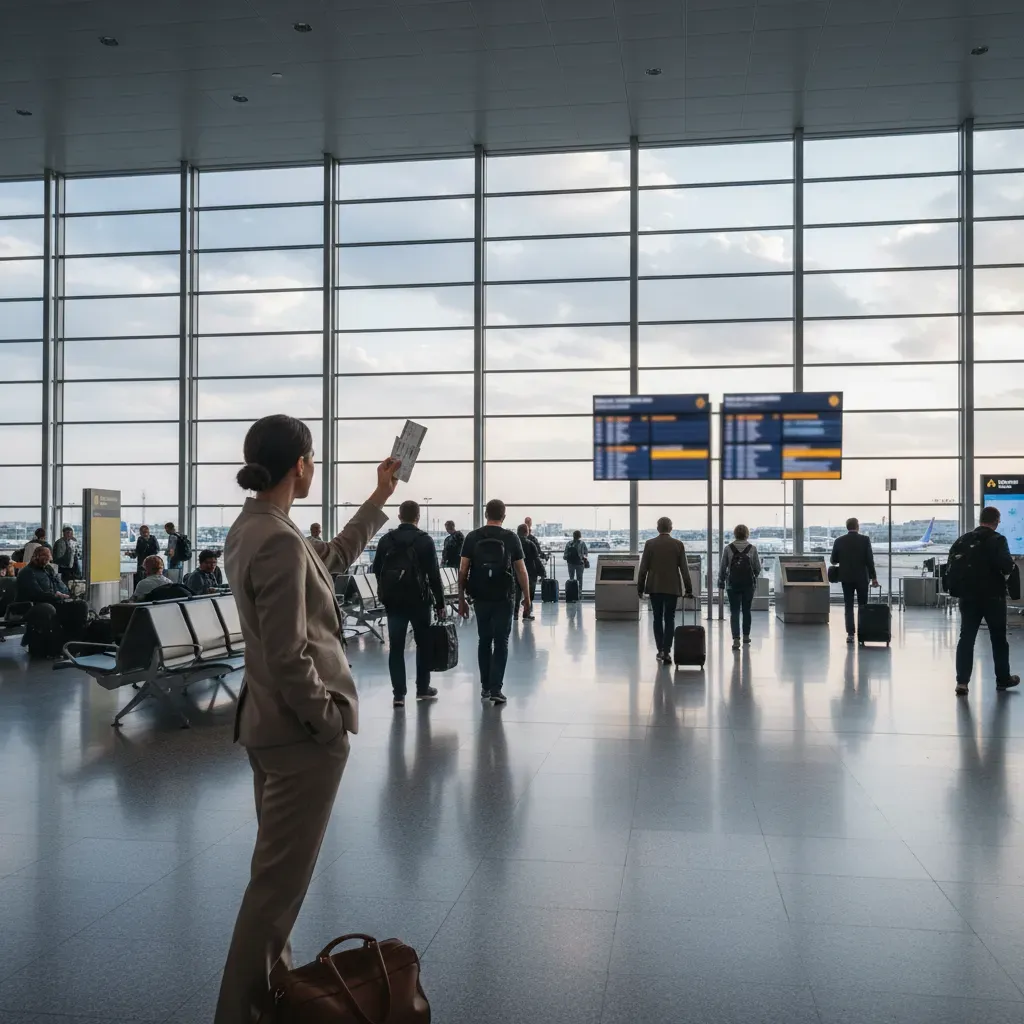
For premium travelers, the journey begins well before boarding. The quality of the ground experience, check-in efficiency, lounge atmosphere, dining, shower suites, and transfer support, can shape your entire day. Major European gateways such as London Heathrow, Paris Charles de Gaulle, Frankfurt, Zurich, Amsterdam, and Munich each offer different strengths depending on airline and terminal arrangement.
Here’s the thing, an elegant business class experience is not only about what happens at 35,000 feet. If you are departing after a packed schedule in Europe, a calm lounge, attentive staff, and a smooth security process may matter just as much as the onboard meal service. Readers comparing premium booking decisions may also find value in Flight Experts’ Premium Flight Booking & Tips category for broader context.
Timing can be more important than brand alone
Many travelers focus first on airline name, but schedule fit often deserves equal weight. An early morning departure may be ideal if you want to maximize same-day productivity in the United States. A late afternoon flight could make more sense if you prefer a relaxed final day in Europe before heading to the airport. The best option is often the flight that matches your body clock, your arrival obligations, and your connection strategy.

Which airlines and cabin configurations to prioritize on Europe to US one-way flights
For discerning travelers, the most reliable way to evaluate Europe to U.S. business class is to focus on the hard product first, then let the airline name support the decision rather than lead it. The same carrier may operate multiple business class cabins across different aircraft, and even on the same route over a season. Aircraft swaps are always possible, so the goal is to confirm what you are likely to receive, then book with eyes open.
Think of it this way, prioritize direct aisle access, suite-style privacy where available, and cabin consistency across the aircraft types commonly assigned to your city pair. A true 1-2-1 layout typically offers a more composed experience than older 2-2-2 configurations, particularly for solo travelers who value privacy and do not want to step over a neighbor. Some of the most refined transatlantic business cabins now include door-equipped suites or enhanced partitioning, but those features can be aircraft-specific rather than airline-wide.
From a practical standpoint, a few items deserve verification before you commit to a one-way premium itinerary. The seat map matters, but it should be interpreted carefully because seat map presentation may not reflect the nuances of space and privacy in the cabin. Staggered 1-2-1 layouts can be excellent, yet they often alternate between seats closer to the aisle and seats closer to the window. Couples may prefer paired center seats that keep conversation easy. Solo travelers often feel more comfortable in window-adjacent positions with greater separation from the aisle.
What many travelers overlook is that certain seats can be both highly desirable and imperfect. “Throne” style seats, where offered, may provide outstanding privacy and surface space, but can also come with tighter footwells or proximity to galley areas depending on the aircraft. Bulkhead positions can offer a sense of openness, yet they may be closer to lavatories, and bassinets may be assigned nearby on some flights. These tradeoffs are not problems in themselves, but they should be evaluated against your own preferences for quiet, privacy, and ease of movement.
The decision filter that tends to work best is simple: choose the specific aircraft and the specific cabin version operating your flight whenever possible, then assess the airline, lounge network, and schedule around that foundation. In a one-way context, where you may be balancing flexibility and timing, that product-first approach typically leads to the most satisfying outcome.
Best departure strategies from Europe
Different European departure points create different business class experiences. Your ideal airport is not always the nearest one. In some cases, a short positioning flight or rail transfer may be worthwhile if it gives you access to a stronger aircraft, a more comfortable seat, or a better U.S. arrival point.
London remains one of the most important gateways
London offers extensive nonstop coverage to the United States, along with a wide range of airline choices and frequency. That depth of service can be especially helpful if you need a one-way booking on a specific date or want more flexibility around departure times. If your plans center on the United Kingdom, this route-specific reference on London to NY is a natural next step.
Continental hubs can offer a calmer rhythm
Paris, Amsterdam, Zurich, Frankfurt, Munich, Madrid, and Milan each bring their own rhythm to transatlantic travel. Some travelers prefer the sheer volume of options in London, while others favor a more contained airport environment on the continent. If your priority is a composed pre-flight experience, a slightly smaller but well-run hub may feel more aligned with the tone of a premium itinerary.
Think beyond the obvious U.S. gateway
New York, Miami, Boston, Chicago, Los Angeles, San Francisco, Dallas, and Washington all serve different purposes. Now, when it comes to one-way planning, choosing the right U.S. arrival city can be just as strategic as choosing the right European departure point. If your final destination is Aspen, Napa, Palm Beach, or Jackson Hole, it may be smarter to arrive where your domestic transfer is smoother, even if that means bypassing the most famous gateway.
Nonstop vs one-stop: choosing the right connection point for a one-way premium itinerary
Nonstop flights are often the most straightforward expression of premium travel, yet a one-stop routing can sometimes be the more elegant choice. The reality is that the best nonstop option from your departure city may be operated by an aircraft with a weaker cabin, limited lounge appeal, or a timing pattern that does not support the flow of your day. A thoughtfully chosen connection can improve the long-haul seat, upgrade the ground experience, and set you up for a more comfortable arrival.
Consider this, a one-stop itinerary may be preferable if it places you on a significantly stronger long-haul business class product for the transatlantic segment, gives you access to a calmer lounge environment during a natural break in the day, or routes you into a U.S. gateway that better matches your onward plans. For travelers continuing to a second home, a resort destination, or a smaller domestic airport, the right arrival gateway can reduce friction more than a nonstop flight to a famous city.
Connection quality is the deciding factor. Terminal transfers matter, especially in airports where premium facilities are concentrated in certain terminals and moving between them can be time-consuming. Minimum connection time is a technical threshold, not a comfort standard. Many premium travelers prefer a buffer that allows for a composed transfer, time to refresh, and the ability to absorb minor delays without stress. Misconnect risk tolerance should be honest, particularly when the transatlantic arrival is followed by a time-sensitive meeting, an event, or a private transfer that is waiting on the other side.
Immigration strategy can also influence the decision about where to connect. Some travelers prefer to clear U.S. formalities at the first point of entry and then continue domestically, accepting that the first arrival may feel more procedural. Others prefer to arrive at a gateway with a smoother premium arrivals flow, especially if they are ending their journey there. Your onward domestic plan, the time of day you land, and the overall rhythm you want for the travel day should guide whether a Europe-side connection or a U.S.-side connection feels more aligned.

Booking considerations that matter more than most travelers expect
Fare rules deserve careful attention
A premium one-way fare may come with conditions that affect changes, refunds, and ticketing windows. Those details are easy to overlook if you are moving quickly. Yet for travelers whose plans may evolve, the exact fare basis can matter far more than a glossy cabin photo. You want to understand what level of flexibility you are truly purchasing.
Mixed-cabin and multi-city structures can be useful
In practice, this means your best one-way solution may not be a simple nonstop. Some travelers choose a premium short-haul feeder within Europe and a stronger long-haul business class segment across the Atlantic. Others benefit from a multi-city structure if they plan to stop briefly in another European city before returning to the United States. Flight Experts offers Complex Itinerary Planning for multi-city, open-jaw, and alliance-based routing, which is particularly relevant when a straightforward search fails to reflect the trip you are actually taking.
Aircraft type still matters
You should confirm the aircraft and cabin layout before finalizing any booking. A modern wide-body with a fully updated business class suite usually delivers a different experience than an older cabin with less privacy or less intuitive storage. The reality is that two flights sold under the same airline brand may feel very different once you board.
Connections need to be elegant, not merely possible
A short layover can look efficient, but premium travel should also account for comfort and risk tolerance. If you are clearing immigration, changing terminals, or transferring to a domestic U.S. segment, a rushed connection may add stress where there should be ease. A well-planned one-way itinerary respects your time without asking you to sprint through an airport.
One-way ticket mechanics: fare construction, partner availability, and why pricing can feel inconsistent
One-way premium pricing can feel inconsistent, even to frequent travelers, because it is driven by fare construction rather than intuition. Airlines file fares into specific booking classes and fare families, and those buckets can behave differently by route, season, and competitive pressure on a particular city pair. In some markets, one-way logic is filed in a way that tracks closely to a round-trip structure. In other markets, one-way fares may be positioned differently, particularly when demand patterns are heavily business-driven or when an airline is protecting premium inventory for specific departure days.
Here’s the thing, what you see as “one seat in business class” is often the end result of several layered variables. Inventory may open and close as the airline manages expected demand, and the same flight can present meaningfully different conditions depending on the fare basis selected. This is one reason timing influences options. It is not only about availability, it is about which fare categories are offered at a given moment, and what rules attach to them.
Partner and alliance availability can add another layer. A flight operated by one carrier may be sold under multiple flight numbers, and the ticketing carrier can affect which fare types are offered, which routings appear, and what happens when irregular operations occur. Subject to availability, it is possible for the “same airline” experience to show up as materially different options depending on whether the itinerary is ticketed on the operating carrier or a partner. In a one-way context, where travelers may be combining segments, this distinction can influence both flexibility and support in the event of a schedule change.
What sets this apart for premium planning is the value of confirming the mechanics in advance. You may want to request clarity on the ticketing carrier, the specific change and refund rules attached to the fare, and how baggage is expected to be handled if the itinerary is built across multiple tickets. Through-checked baggage is never something to assume, particularly when separate ticketing is involved. It is also wise to discuss what typically happens during schedule changes, including how re-accommodation is handled and whether seat assignments may need to be revisited after an aircraft swap. For one-way business class to the USA, these details can materially affect how calm and controlled your day feels if plans shift.
When expert support becomes especially valuable
One-way premium travel looks simple until the details begin to stack up. You may be deciding between several carriers, balancing schedule against cabin quality, or trying to coordinate arrival with a hotel check-in, a private transfer, or a domestic continuation. That is often the point where professional guidance stops feeling optional and starts feeling practical.
Flight Experts is one example of a concierge-style agency that assists with Business Class Flight Booking across major long-haul routes, including Europe to the United States, with support for seat selection, meal preferences, check-in assistance, and cabin-related guidance. The agency also handles First Class Flight Booking and more involved routing where premium standards need to hold across multiple segments.
Think of it this way, the right advisor is not there merely to issue a ticket. The value is in evaluating what will actually work for you, given timing, comfort expectations, airport flow, and the rest of your travel design. Flight Experts notes that an expert is typically assigned quickly after inquiry, and for travelers who prefer one point of contact rather than a self-service search, that relationship-led approach may be especially appealing.
Frequently Asked Questions
Are one way business class flights from Europe to the US commonly available?
Yes, in most cases they are widely available across major transatlantic routes, especially from leading hubs such as London, Paris, Frankfurt, Amsterdam, Zurich, and Madrid. Availability may vary by season, airline schedule, and aircraft assignment, so flexibility around dates and gateways can improve your options. The more important point is that availability alone does not determine quality. You still need to assess cabin layout, departure timing, lounge experience, and onward travel logistics before deciding which itinerary genuinely suits your needs.
Is a one-way ticket a sensible choice for luxury travelers?
Very often, yes. A one-way business class ticket may suit travelers whose plans remain fluid, those ending a longer European stay, or those combining several destinations in one broader itinerary. It can also work well for executives, families, or couples who do not want to lock the entire trip structure too early. What matters is whether the ticket aligns with your wider travel objectives. If flexibility and itinerary elegance are priorities, a one-way structure may be the more intelligent premium choice.
Which European cities usually offer the strongest one-way business class options to the USA?
London is frequently one of the strongest gateways because of route frequency and airline variety. Paris, Frankfurt, Amsterdam, Zurich, and Munich also tend to offer excellent options depending on your preferred carrier and U.S. destination. The ideal city for departure depends on more than map geography. You should weigh airport efficiency, lounge quality, aircraft type, and how smoothly the departure fits into your final days in Europe. Sometimes the best premium experience starts with a short repositioning segment rather than the nearest airport.
How important is lounge access on a daytime transatlantic flight?
It is often more important than travelers expect. On a daytime Europe to U.S. flight, you may spend more waking hours in the airport and onboard than on an overnight crossing. A calm lounge with proper dining, showers, attentive service, and comfortable work or rest areas can set the tone for the entire journey. For business travelers, it may provide a final productive window before departure. For leisure travelers, it creates a composed transition from Europe to the next stage of the trip.
Should I choose the airline first, or the schedule first?
Usually, you should evaluate both together. A highly regarded airline may still be the wrong choice if the departure time or arrival city creates friction in the rest of your day. On the other hand, a convenient schedule may disappoint if the cabin product is materially weaker than alternatives. The best choice is often the combination that respects your body clock, your obligations upon arrival, and your comfort expectations. Premium travel planning works best when schedule, seat, and airport experience are treated as one decision.
Are nonstop flights always the best option?
Not necessarily. Nonstop service is often attractive, especially after a busy stay in Europe, but there are cases where a one-stop itinerary delivers a stronger premium experience overall. You may gain access to a superior aircraft, better lounge facilities, or a more convenient final U.S. arrival point. That said, any connection should feel elegant and manageable, not merely technically possible. For high-value itineraries, the quality of the transfer matters just as much as the number of flight segments.
What if my U.S. arrival city is not my final destination?
That is very common, and it should shape the way your one-way ticket is planned. If you are continuing to a resort area, second home, or smaller domestic airport, your transatlantic gateway becomes a strategic decision. You may prefer a city with easier domestic transfers, shorter terminal distances, or stronger premium ground handling. Travelers often focus on the long-haul segment first, but the real comfort of the day may depend on how gracefully you move through the airport after landing in the United States.
Can a travel specialist help with more than the flight itself?
Yes. In many premium travel scenarios, the flight is only one piece of a broader experience. A specialist may help evaluate routing, fare conditions, seat strategy, departure airport choice, and whether a multi-city structure is more suitable than a simple one-way ticket. Agencies such as Flight Experts also reference support features such as seat selection, meal preferences, check-in assistance, and routing guidance. For travelers who value continuity and discretion, having one expert oversee those details may substantially improve the experience.
How far in advance should I book a one-way business class flight from Europe to the US?
There is no universal rule because demand patterns, seasonal peaks, and airline inventory management can change. In general, earlier planning tends to provide more choice in flights and seating, especially on flagship routes and during high-demand periods. At the same time, some travelers book one-way premium travel closer to departure because their plans remain intentionally open. The right timing depends on how fixed your schedule is, how particular you are about cabin product, and whether your trip includes onward segments that also need coordination.
What makes a business class experience feel truly premium on this route?
A strong seat is only the beginning. A genuinely premium experience usually combines smooth airport handling, a refined lounge, direct aisle access, attentive but unobtrusive onboard service, quality dining, thoughtful bedding, reliable connectivity where offered, and an arrival time that works for the rest of your day. It should feel coherent from departure to landing. The most satisfying itineraries are those where every element supports the next, rather than requiring you to compensate for poor timing, weak airport flow, or an inconsistent cabin product.
What is the best European airline for business class?
There is no single answer that holds across every route and aircraft type. In most cases, the best choice is the airline operating the strongest business class seat and most consistent onboard service on the specific flight you are taking, paired with a lounge and airport flow that fit your day. What many travelers overlook is that an airline can have multiple cabin generations in service at once. For one way business class flights Europe to US, a product-first evaluation, aircraft type, seat layout, and cabin version, typically produces a more satisfying result than choosing based on airline reputation alone.
Which airlines offer lie-flat seats in business class?
Most major transatlantic carriers offer lie-flat seats on long-haul business class routes between Europe and the United States, but the design and privacy level can vary widely. Some aircraft feature a modern 1-2-1 layout with direct aisle access for every passenger, while others may still operate configurations where not every seat has the same level of privacy or convenience. Since aircraft assignments can change, it is wise to confirm the operating aircraft and cabin layout at the time of booking and again closer to departure.
What is the cheapest way to travel from Europe to the USA?
For travelers focused strictly on minimizing outlay, routing and timing tend to influence total trip cost more than any single tactic. That said, Flight Experts typically advises discerning travelers to frame the question differently: what is the most appropriate way to travel for your schedule, comfort expectations, and risk tolerance. In premium travel, the lowest available option may come with less favorable timing, a weaker cabin, or connection points that introduce unnecessary friction. A well-chosen itinerary is the one that protects your time and experience while aligning with your broader plans.
What is the cheapest way to buy a business class ticket?
Business class pricing is driven by fare rules, inventory buckets, and market conditions on specific city pairs, so it can fluctuate in ways that feel inconsistent. Instead of chasing a single “best” purchase method, many premium travelers focus on securing the right aircraft, cabin, and schedule first, then selecting a fare that matches their flexibility needs. An advisor can also clarify which fare conditions you are accepting, what change and refund rules apply, and whether a slightly different departure city, arrival gateway, or connection strategy could deliver a meaningfully better overall outcome for the trip you are actually taking.
Key Takeaways
- One way business class flights Europe to US are often ideal for travelers who want flexibility, fluid scheduling, or a more customized overall itinerary.
- The best premium choice depends on more than airline name, cabin layout, airport experience, timing, and arrival strategy all matter.
- London is a major gateway, but continental hubs may offer a calmer and more suitable departure experience depending on your priorities.
- Fare rules, aircraft type, and connection quality deserve close attention before any premium one-way booking is finalized.
- Expert guidance becomes especially valuable when your flight is part of a larger luxury itinerary with multiple moving parts.
Conclusion
Booking one way business class flights Europe to US can be straightforward on the surface and surprisingly nuanced once you begin comparing real options. For discerning travelers, that nuance matters. The difference between a merely acceptable itinerary and an excellent one often comes down to details such as the departure airport, the aircraft, the lounge, the fare conditions, and how intelligently the flight fits into the rest of your plans.
If your journey is part of a larger business schedule, an extended European stay, or a carefully designed leisure itinerary, it may be worth speaking with a specialist who understands premium air travel beyond the booking screen. Flight Experts takes a relationship-led approach to business class, first class, and complex itinerary planning, which may suit travelers who prefer thoughtful guidance over generic search results. If you would like tailored recommendations for your route, timing, and travel style, you can reach out to the team to discuss your itinerary in greater detail.



