
LATAM Airlines Premium Economy Review
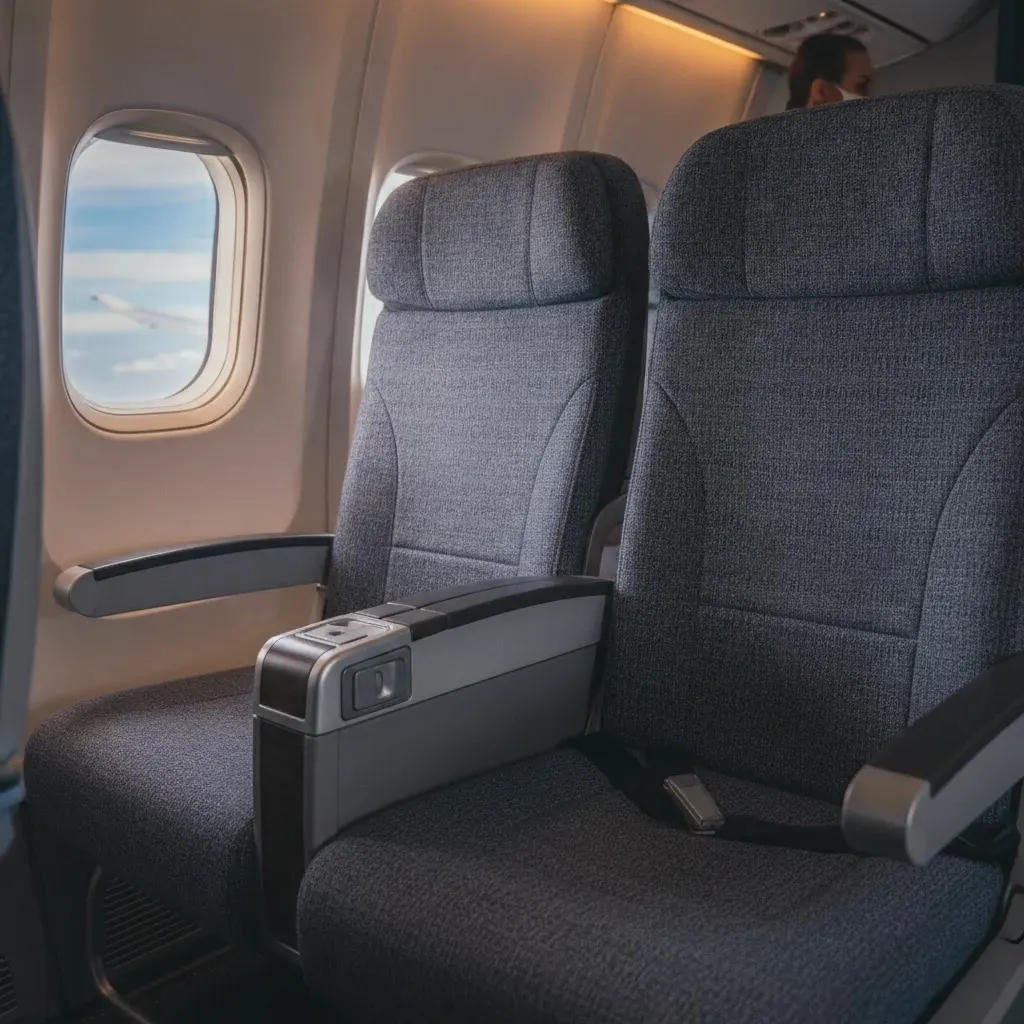
Rather than promising a separate widebody cabin with oversized seats, LATAM usually presents Premium Economy as a more private and efficient short or medium-haul option. If you are comparing it with the best premium economy products worldwide, context matters. This evaluation explains what changed after the refresh, where the product works well, and which traveler is most likely to find it worthwhile.
How LATAM Premium Economy Is Structured
LATAM Premium Economy is not a uniform product across the airline in the way many travelers expect from transatlantic or transpacific carriers. On many South American and select U.S.-linked routes, LATAM places this experience in the front rows of a narrowbody aircraft instead of offering a separate long-haul cabin. In most cases, that means a 2-2 layout or an Economy-style 3-3 layout with the middle seat blocked, depending on aircraft and route.
That difference matters because the value proposition is less about a dramatically larger seat shell and more about personal space, reduced cabin density, faster airport flow, and a calmer working or resting environment. After the refresh, LATAM seems to sharpen that proposition visually and operationally rather than imitate a long-haul Premium Economy seat that the aircraft itself may not support.
For travelers moving between major cities in South America, or connecting between the U.S. and regional points deeper in the continent, this can still be a meaningful step up. It may be especially attractive if your priority is a more orderly airport and onboard experience without committing to full Business Class.
What the Cabin Refresh Means on South American and U.S. Routes
The cabin refresh matters because it clarifies LATAM’s identity in a region where route length, aircraft type, and service expectations vary widely. On many South American sectors, travelers are not asking for a lie-flat bed. Instead, they want a polished daytime cabin, more breathing room, and less friction during connection-heavy itineraries through hubs such as Santiago, Lima, or São Paulo.
The refreshed product usually aims to improve the visual cohesion of the cabin, seat finishes, and the sense that Premium Economy is a distinct zone rather than merely the first few rows of Economy with a different fare basis. Depending on aircraft assignment, travelers may notice upgraded upholstery, a more refined color palette, and clearer separation from the main cabin. Those details matter more than they may seem on paper. A cabin that feels intentionally designed often feels calmer and more premium, even when the hard product remains regionally configured.
On U.S. routes operated by aircraft with this regional-style Premium Economy setup, expectations should remain disciplined. You may get a better short or medium-haul experience than standard Economy, but you should not expect the style of seat found on long-haul premium cabins flown by some North American, European, or Asian carriers. Travelers considering longer or more complex regional itineraries, especially those weighing a move up to business class South America options, should compare total travel time, connection patterns, and overnight segments rather than the cabin name alone.
LATAM Premium Economy Seat, Space, and Service Experience
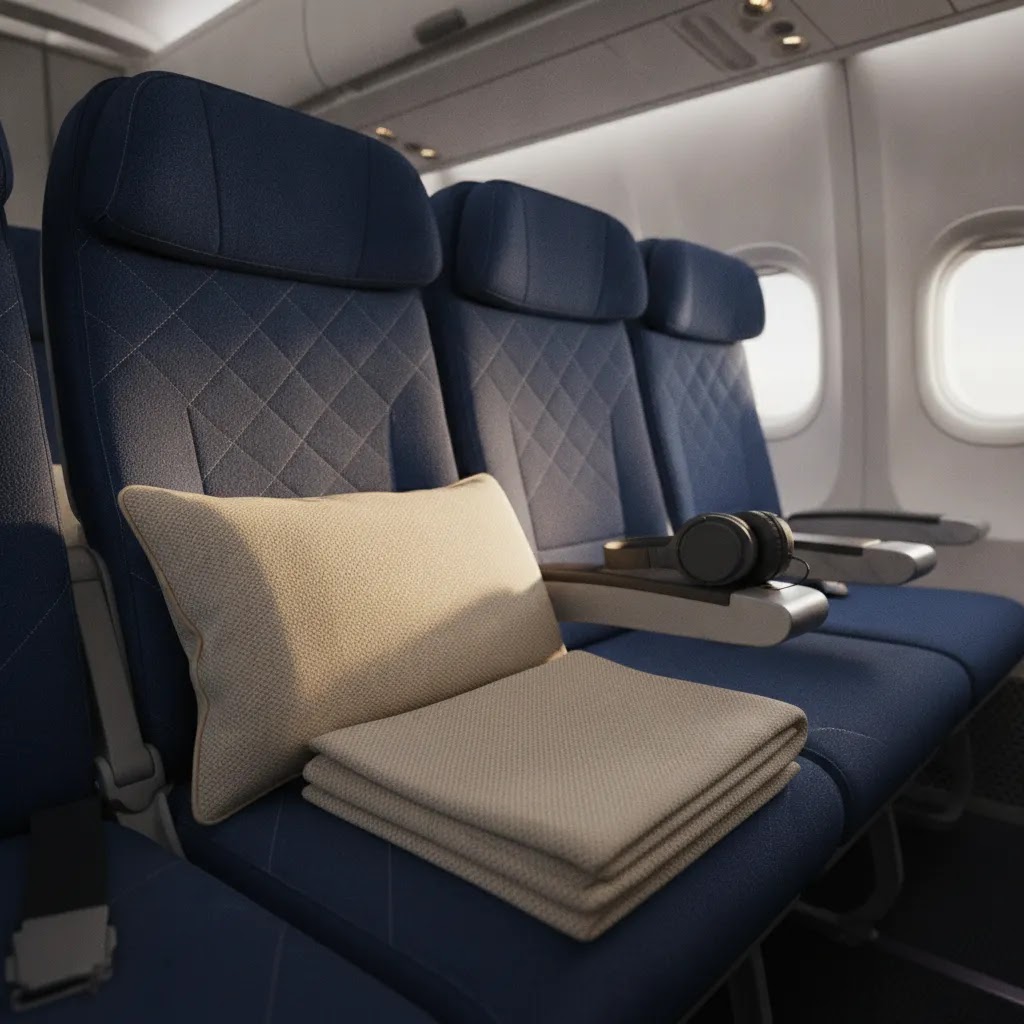
The strongest argument for LATAM Premium Economy after the refresh is space efficiency rather than dramatic luxury. On narrowbody aircraft, the blocked middle seat can transform the feel of a regional flight. For solo travelers, that added elbow room may create a much quieter working environment. For couples, a two-seat side or a row without a stranger in the middle often feels substantially more private.
Airport benefits are frequently part of the equation. Premium cabin passengers on major network airlines may receive priority check-in, earlier boarding, and baggage handling preferences, although the exact package could vary by route, airport, and fare rules. On a connection through a busy South American hub, those practical advantages may be as valuable as the seat itself.
Travelers should view inflight dining and beverage service as enhanced regional service rather than ceremonial premium dining. Depending on stage length and departure time, you may receive a more attentive meal or snack presentation than in the main cabin. However, do not expect the multi-course format associated with long-haul Business Class. This is where honest expectation-setting is essential.
If your benchmark is efficiency, privacy, and a more composed regional journey, LATAM Premium Economy can compare well. If your benchmark is a wide recliner, leg rest, and dedicated long-haul Premium Economy shell seat, the product may feel limited. Aircraft swaps, route variations, and operational changes still matter. Therefore, always check cabin maps and current service details before ticketing.
What LATAM Premium Economy Typically Includes Beyond the Seat
What many travelers overlook is that the Premium Economy experience often lives or dies on the ground. LATAM Premium Economy can include practical handling advantages that make travel feel more controlled, particularly on connection-heavy itineraries. The precise inclusions may vary by route, airport, and fare conditions. Therefore, the safest approach is to confirm what your specific ticket includes before you commit.
Airport Handling and Priority Benefits
In many cases, travelers may see some form of priority check-in at the departure airport, earlier boarding groups, and preferential baggage handling. Those benefits are not always identical across every station. For example, a major hub may deliver premium handling more consistently than a smaller regional airport. In addition, operational constraints at certain airports can change how staff provide those benefits, even when they are included.
Baggage Rules and Fare Details
Baggage is another area where clarity matters. LATAM Premium Economy often comes with a more generous allowance than standard Economy, but allowances can differ by fare brand, route type, and whether the itinerary includes partners or separate ticketing. Think in terms of rules rather than assumptions. Carry-on limits, personal item rules, and checked baggage pieces or weight may depend on the fare level, not the cabin name alone.
Your most dependable reference is the baggage allowance listed in your ticketed fare details and booking confirmation. Consider this a simple verification routine before ticketing: review the fare brand attached to the Premium Economy offering, open the section that describes what is included, and confirm the specific baggage and airport benefits listed for each segment.
If you are connecting through a hub where timing is tight, it is also wise to confirm how Premium Economy works at that airport. Check where priority check-in is located and whether dedicated lines are usually available when you travel. These details seem small. However, on a long travel day, they often make the difference between a composed journey and an unnecessarily tiring one.
Pros and Cons
Strengths
- The refreshed cabin typically feels more intentional and polished, which improves perceived quality on regional sectors.
- Blocked middle seats or lower-density seating can create meaningful personal space, especially for solo business travelers and couples.
- Priority airport services may reduce stress during busy transfers across major South American hubs.
- For daytime and medium-haul routes, the product often delivers a sensible middle ground between Economy and full Business Class.
- LATAM’s network relevance within South America can make Premium Economy particularly useful on multi-city itineraries where consistency matters more than spectacle.
Considerations
- The product name may suggest a long-haul style Premium Economy experience that the actual aircraft and seat do not provide.
- Seat comfort gains could be modest on some routes if your expectations are based on larger international Premium Economy cabins.
- Meal and service enhancements are usually incremental rather than transformative.
- Benefits and cabin presentation may vary depending on aircraft assignment, route length, and local airport handling.
Who This Cabin Suits Best
LATAM Premium Economy usually suits travelers who value time-saving airport privileges and personal space more than theatrical luxury. A frequent flyer commuting between major South American business centers may appreciate the quieter cabin flow. A couple connecting from the U.S. to a multi-stop leisure itinerary may value the blocked middle seat and smoother ground experience. It may also suit travelers who do not need a lie-flat product on daytime sectors but still want a more composed journey than the main cabin generally offers.
It is less compelling for travelers expecting a true long-haul Premium Economy benchmark with a wider fixed-shell seat, expanded recline mechanics, and a distinctly separate service culture. On longer overnight sectors, full Business Class may be the more suitable investment if sleep quality is your top priority.
Flight Experts View
At Flight Experts, LATAM Premium Economy is best understood as a route-sensitive product. Its value typically rises on busy regional sectors, connection-heavy South American itineraries, and trips where a refined airport process matters nearly as much as the seat. It is less about extravagance and more about removing friction from the day of travel.
That distinction is where professional guidance becomes useful. Flight Experts offers Premium Economy Flight Booking, with a personal consultant, support for seat selection, and assistance comparing premium cabin options across major carriers. The service is designed for travelers who want clearer choices rather than generic search results. The team also provides Complex Itinerary Planning for multi-city journeys, which can be especially relevant in South America where aircraft type, connection timing, and cabin consistency may shape the entire experience. To begin planning, you may contact Mike Chirilenco or speak with a Flight Experts travel specialist for a tailored recommendation.
How to Evaluate LATAM Premium Economy Before Booking
A strong Premium Economy choice begins with matching the cabin to the route rather than the marketing label. Four criteria matter most here.
1. Aircraft Type and Cabin Layout
Start with the aircraft. Narrowbody routes often deliver the regional interpretation of Premium Economy, where space management matters more than seat engineering. That can still be worthwhile, but it is a different proposition from a long-haul premium seat.
2. Time of Day and Flight Length
LATAM Premium Economy generally makes the best case on daytime sectors and medium-length flights. If you are traveling overnight or planning back-to-back regional legs, fatigue compounds quickly. In those cases, a move to Business Class may deserve serious consideration.
3. Airport Experience Across the Itinerary
Do not assess the product only by the seat. Priority check-in, earlier boarding, and faster baggage delivery may materially improve a trip that includes connections, immigration lines, or tight transfer windows. For many clients, those details influence satisfaction more than tray table dimensions.
4. Consistency Across Multi-Segment Travel
South American itineraries often involve more than one carrier, more than one aircraft family, or both. A premium experience can feel uneven if one segment is materially weaker than the others. Reviewing each leg individually is often wiser than assuming the same standard throughout.
5. Your Personal Premium Threshold
Not every premium traveler is seeking the same outcome. Some want privacy and speed. Others want sleep, lounge time, and a stronger dining program.
Aircraft Variations That Can Change the Premium Economy Experience
Aircraft type can shape your entire impression of LATAM Premium Economy. LATAM often uses Premium Economy as a regional premium zone on narrowbody aircraft. As a result, it often feels different from the Premium Economy many travelers know on long-haul widebodies.
LATAM Premium Economy on A320 Family Aircraft
On A320-family aircraft, Premium Economy usually functions as the front cabin section with a better sense of space. LATAM often creates that space through a blocked middle seat or reduced density rather than a distinct recliner seat for long-haul comfort. In practical terms, this setup can work very well for a focused work flight, a daytime hop between major cities, or a connection where you value a calmer boarding and deplaning flow. However, it does not aim to replicate the physical comfort of a dedicated long-haul Premium Economy seat shell.
Widebody Expectations and Seat Map Checks
Widebody assignments such as the Boeing 787 or Boeing 777 can create a different set of expectations, subject to change by route and schedule. Even when the cabin name stays the same, the geometry of a widebody may feel more long-haul in character. Aisle width, cabin separation, and service flow all play a role. On certain widebody configurations, travelers might see layouts that resemble true Premium Economy cabins on other airlines. On other flights, the name may still describe only a modest step up within an economy-forward layout.
The seat map is often more revealing than the marketing label. A blocked middle seat concept reads very differently from a cabin with a clearly defined premium section using a distinct seat type and a fixed layout such as 2-3-2 or 2-4-2. When you review your flight, look for signs that the premium zone is structurally different from the rest of the aircraft. Also consider how far forward the cabin is, how many rows are designated as Premium Economy, and whether there is a physical divider between cabins. These clues can help you predict cabin atmosphere and privacy before you board.
For discerning travelers, route selection can be the final refinement step. If comfort is central to the trip, such as on an overnight crossing before a busy arrival day, it may be worth prioritizing a departure time and routing with a stronger likelihood of operating the preferred aircraft type and configuration. That does not guarantee the same aircraft on the day of travel, but it can improve the odds.
LATAM Premium Economy Lounge Access Reality Check
Lounge access is one of the most common points of misunderstanding with LATAM Premium Economy. Many travelers naturally associate the words “premium” and “priority” with lounge entry. However, a Premium Economy ticket does not always include lounge access. Eligibility can depend on the route type, the airport, alliance arrangements, elite status, and local lounge contracts.
Three Ways Lounge Access May Work
It helps to separate three scenarios. First, cabin-based access, where a premium cabin ticket explicitly grants entry. Second, status-based access, where your frequent flyer tier or equivalent recognition may grant lounge privileges even on a Premium Economy ticket. Third, airport-specific arrangements, where access may be available in certain stations due to local agreements, while other airports may offer no lounge option that matches your eligibility. As a result, a traveler connecting through multiple airports can face different outcomes on the same itinerary.
What to Verify Before Departure
Domestic and short regional international flights are often the segments where expectations need the most discipline. Even when Premium Economy includes priority check-in and boarding, lounge access may still be excluded. On U.S.-linked itineraries, the picture can be mixed, particularly when connections, operating carriers, or station-level lounge availability come into play. For a couple or family, guest rules matter just as much. Even if one traveler is eligible, guests may not be included, or the guest allowance could vary by lounge and program policy.
What sets this apart for planning is the verification step. Confirm lounge eligibility in your booking confirmation and the fare or benefits summary for the specific flight. Next, verify which lounge is actually available in the terminal where you will depart or connect, since some airports have multiple terminals and location-specific lounge options. Finally, if you are traveling with others, confirm guest policies before the day of departure so expectations remain aligned.
Frequently Asked Questions
Is LATAM Premium Economy a true separate cabin?
Usually not in the same sense as long-haul international Premium Economy on many other airlines. On many South American and some U.S.-linked routes, it is typically a regional premium product at the front of the aircraft, often with a blocked middle seat or a lower-density layout rather than a distinct widebody-style cabin.
Does the cabin refresh change the seat itself?
The refresh may improve cabin finishes, visual identity, and perceived separation from the main cabin. Depending on aircraft and route, it could also make the premium zone feel more deliberate and refined. That said, travelers should not automatically expect a completely different long-haul style seat architecture after the refresh.
Is LATAM Premium Economy worth it on short flights?
It can be, especially if you value easier boarding, faster airport handling, and more personal space. On shorter flights, the comfort difference from the seat alone may feel modest, so the overall value often comes from reduced friction and a calmer regional travel experience rather than from a dramatic onboard transformation.
How does LATAM Premium Economy compare with full Business Class?
Business Class typically offers a more complete premium proposition, which may include deeper recline, more attentive service, stronger dining, and in some markets lounge access or additional ground benefits. LATAM Premium Economy is usually better viewed as an elevated regional cabin rather than a substitute for a full premium long-haul product.
Are U.S. routes operated with the same Premium Economy concept as South American routes?
In many cases, yes, though the exact experience may vary by aircraft and operational schedule. Travelers should verify the aircraft type and seat map for each specific flight. A U.S. route marketed under the same cabin name may still feel different depending on duration, service timing, and onboard configuration.
Does LATAM Premium Economy include lounge access?
Lounge access policies may vary and are not always included simply because a seat is sold as Premium Economy. Access can depend on route, airport arrangements, alliance status, or fare conditions. It is wise to confirm current rules directly before departure rather than assuming a universal entitlement.
Is the product suitable for overnight flying?
It may be acceptable for some travelers on shorter overnight sectors, but suitability depends on your comfort expectations. If restful sleep is central to the trip, especially before an important meeting or a milestone vacation arrival, a full Business Class cabin will often provide a more reliable overnight experience.
Who should be most careful before booking LATAM Premium Economy?
Travelers who regularly fly long-haul Premium Economy on airlines with larger recliner seats should be especially careful. The LATAM product may be well executed for regional travel, but it could feel less substantial if you are expecting a near-long-haul standard based solely on the cabin name.
What is the difference between LATAM Economy and Premium Economy?
LATAM Premium Economy typically focuses on added personal space and a more controlled airport experience. On many routes, the onboard distinction may be a blocked middle seat or a lower-density seating zone at the front of the aircraft, along with priority-style handling that may include earlier boarding and other ground benefits, depending on fare rules and airport execution. Economy is the main cabin product with fewer inclusions and a denser seating environment.
What is the 3-1-1 rule on LATAM Airlines?
The 3-1-1 rule is a security standard commonly applied at airports for liquids in carry-on baggage. It generally refers to containers of up to 3.4 ounces (100 milliliters), placed inside one clear, quart-size bag, with one bag per traveler. Enforcement can vary by country and airport screening procedures, so travelers should follow local security guidance for each departure point.
What baggage allowance comes with LATAM Premium Economy?
Baggage allowance is typically determined by the specific fare conditions and route rather than the cabin name alone. Many Premium Economy fares may include a higher checked baggage allowance than standard Economy, but the exact pieces, weight, and carry-on rules can vary. The most reliable step is to confirm the allowance shown in the “what is included” section for your fare and in your booking confirmation for each segment.
Is LATAM Premium Economy available on the Boeing 787 or Boeing 777, and does it feel different than the A320?
LATAM operates a mix of narrowbody and widebody aircraft, and Premium Economy may appear on different aircraft types depending on route and schedule. The experience can feel different, since A320-family aircraft often present Premium Economy as a regional premium zone, while widebodies such as the 787 or 777 may present different cabin geometry and service flow. Because configurations and aircraft assignments can change, travelers should verify the aircraft type and seat map for their specific flight before ticketing.
Key Takeaways
- LATAM Premium Economy is typically strongest as a refined regional product, not as a long-haul style Premium Economy equivalent.
- The post-refresh experience appears to improve cabin polish, separation, and consistency more than fundamental seat architecture.
- Its best advantages are often personal space, priority handling, and smoother connections across South America.
- Travelers should evaluate aircraft type, route length, and overnight timing before deciding between Premium Economy and Business Class.
- Expert itinerary review can be especially valuable on multi-segment South American trips where cabin consistency may vary.
Conclusion
LATAM Airlines Premium Economy can be a smart and satisfying choice, provided you assess it for what it actually is. After the cabin refresh, the product typically presents a more polished regional premium experience, particularly on South American and selected U.S. routes where airport efficiency and personal space shape the trip more than elaborate onboard luxury.
If you are planning a journey that includes multiple LATAM sectors, overnight timing, or a mix of premium cabins, a tailored review of each flight often leads to a better outcome than relying on cabin labels alone. To discuss your itinerary in detail, contact Mike Chirilenco or speak with a Flight Experts travel specialist. The team can help you compare Premium Economy, Business Class, and complex routing options with a more personalized lens.



