
Air France Premium Economy Review
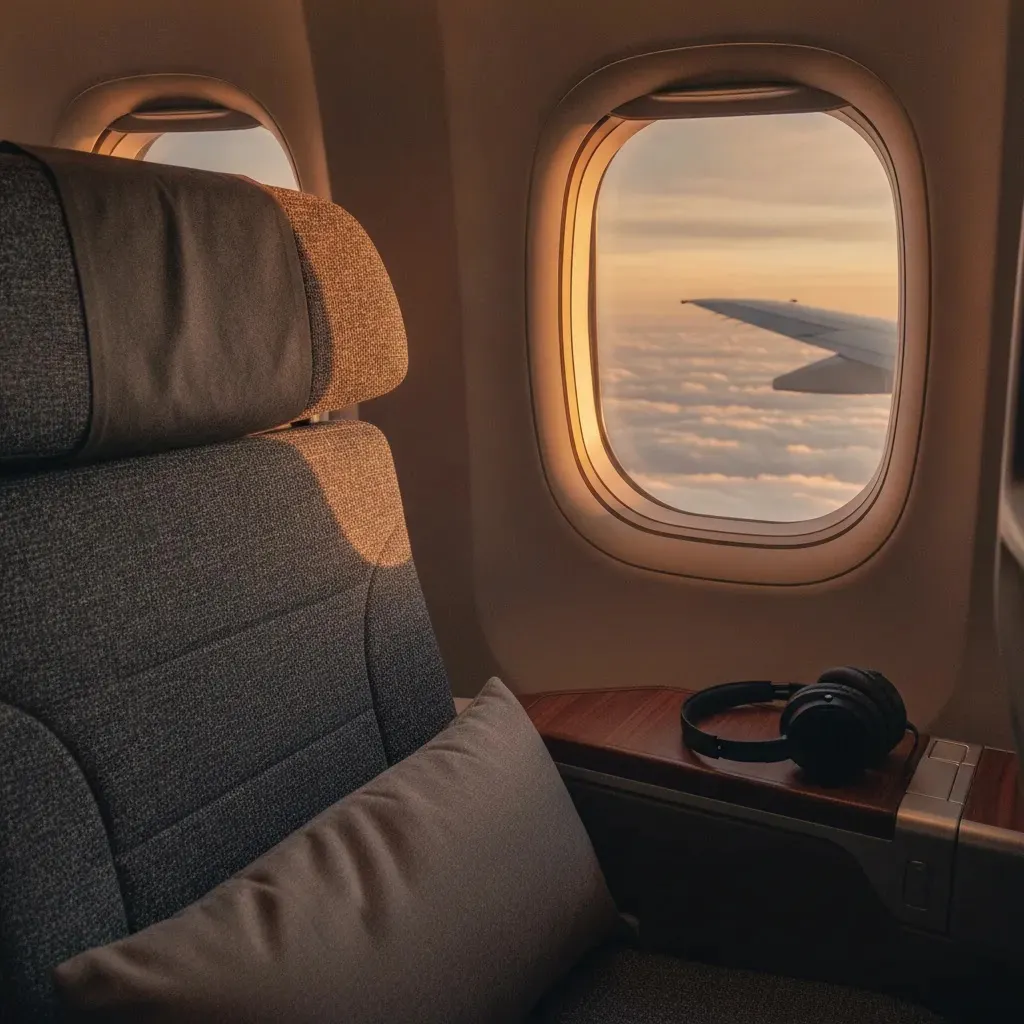
Cabin Snapshot on the A350 and 777
Air France Premium Economy sits between simple extra-legroom seating and a genuinely elevated long-haul product. On the A350 and many 777 aircraft, the cabin usually feels more separate, quieter, and roomier than Economy. That difference matters most on overnight sectors to Paris and beyond. Better posture, more shoulder room, and smoother meal pacing can all shape how you feel on arrival.
The airline’s appeal in this cabin does not come from one feature alone. Instead, it comes from several upgrades working together. You usually get a wider seat, deeper recline, better dining touches, and service that often feels calmer than Economy. The experience does not match Business Class for privacy or sleep. Even so, it often delivers a more considered journey than a standard long-haul coach seat.
For travelers who value French branding and a polished onboard atmosphere, Air France often stands out in this category. If your comparison extends upward, our Air France Business Class review helps show where the real divide sits between upgraded comfort and full premium travel.
Amenities and Onboard Extras in Air France Premium Economy
Many travelers judge Premium Economy almost entirely by seat measurements. However, that is only part of the story. Air France Premium Economy can also feel quite different because of the smaller details. What is waiting at the seat matters. So do the soft goods, the screen, and the Wi-Fi.
Comfort items and small cabin touches
In most cases, you can expect a more considered comfort setup than Economy. That usually includes a pillow and blanket that feel more substantial than the main cabin version. The exact quality and presentation can vary by route length and catering station. In addition, small differences between outbound and return flights are not unusual. Headphones are generally provided, but the type may depend on aircraft and supply. As a result, travelers who care about audio quality often bring their own.
Amenity kits can be less predictable. On some long-haul sectors, Air France may provide a small kit with basic comfort items. On other flights, the airline may focus more on the seat and dining than on packaged extras. If an amenity kit matters to you, verify the inclusions for your exact flight rather than relying on general expectations.
Entertainment and connectivity expectations
Entertainment and connectivity also shape the value of this cabin, especially on longer flights. You may want to work early in the journey and rest later. Air France long-haul aircraft typically offer seatback entertainment, but screen size and responsiveness can differ by aircraft generation. Wi-Fi availability and performance can vary as well.
Importantly, route, satellite coverage, and day-of-travel factors may affect connectivity. If you need reliable internet for time-sensitive work, confirm the aircraft and onboard offering in advance. Even then, it is wise to plan for variable performance.
How the Seat Performs Over Long Hours
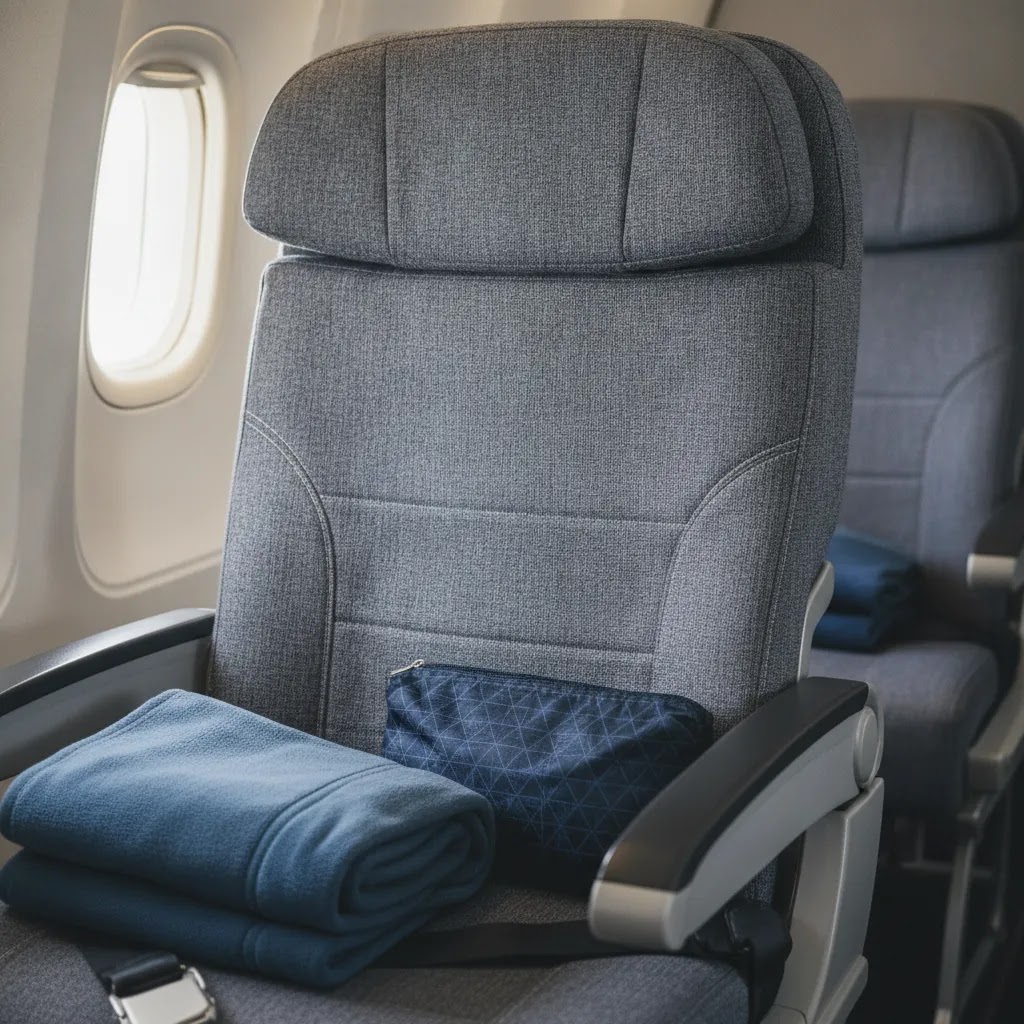
The seat is the main reason to consider Air France Premium Economy on an A350 or 777. In most cases, you are looking at a fixed-shell style seat or a modern recliner with firmer structure than Economy. That design usually creates a more stable personal space. For example, it helps when the passenger in front reclines during meal service or while you are working on a laptop.
On long-haul flights, the seat’s value is not just about pitch. Cushion support, seat width, armrest spacing, leg rest design, and recline mechanics often matter more after several hours. Air France generally performs well here. The seat usually feels built for sustained sitting, not lightly adapted from the main cabin.
The A350 often leaves the stronger impression because newer cabins can feel cleaner, quieter, and more cohesive. Lighting, bins, window size, and cabin freshness all add to comfort. Meanwhile, the 777 can still be an excellent choice. However, differences across subfleets mean you should verify the exact aircraft and seat map before assuming identical comfort.
What tends to work well in practice:
- More shoulder room than Economy, which may matter greatly on full overnight flights
- A leg rest or foot support system that could make a meaningful difference for shorter and average-height travelers
- Recline that usually feels more substantial and better engineered than the main cabin
- A smaller, calmer cabin section that may reduce noise and foot traffic
The main limitation is just as clear. Premium Economy is still a recliner product. If uninterrupted sleep is your priority, especially on westbound or overnight sectors after a demanding workday, it may still feel like a compromise rather than a true rest solution.
Air France Premium Economy Seat Map and Best Seats (A350 vs 777)
Seat selection is where a strong Premium Economy cabin can become either quietly excellent or needlessly compromised. Air France Premium Economy layouts and seat features can differ between the A350-900 and different 777 variants. Even within the same aircraft type, there may be subfleet variations and last-minute equipment swaps. Therefore, treat the seat map as specific to your exact flight number, date, and aircraft assignment.
Where the best seats usually are
For most travelers, the most appealing rows are the ones that protect sleep and focus. In practice, that often means limiting light spill, galley activity, and lavatory traffic. Bulkhead rows can be attractive because they usually offer more open space in front. They also avoid the feeling of a seatback close to your knees.
However, bulkhead positions come with trade-offs. Fixed armrests can reduce flexibility. Entertainment screens may be stored in the armrest. The leg rest or foot support may also feel different. Some travelers find bulkheads brighter as well, especially when crews prepare the cabin for service.
Seat map risks to watch before you book
Rows near galleys and lavatories are the most common source of dissatisfaction in Premium Economy. Even in a smaller cabin, these zones can bring standing passengers, queues, and repeated door movement. The noise may be intermittent rather than constant. On an overnight flight, that can still disrupt sleep in a meaningful way.
The fixed-shell concept also deserves attention. It usually protects your space when the passenger in front reclines. On the other hand, it can create a more defined shell around you. That may affect how easily you reach forward or work on a laptop. For resting, check whether the leg rest supports your calves or mainly acts as a foot prop. That detail often shapes comfort after several hours.
Ultimately, the best seat is the one that matches your own priorities for quiet, light, and movement. Before you confirm a seat, check the armrest design, leg rest style, and cabin partitions for your exact aircraft. In some layouts, the cabin feels well separated. In others, it can feel more open to through-traffic during service and lavatory use.
Finally, do not assume the first row is always best. A mid-cabin location can sometimes be darker and quieter. In Premium Economy, the best choice is often the seat that avoids becoming a corridor for activity.
Meals, Drinks, and Cabin Service
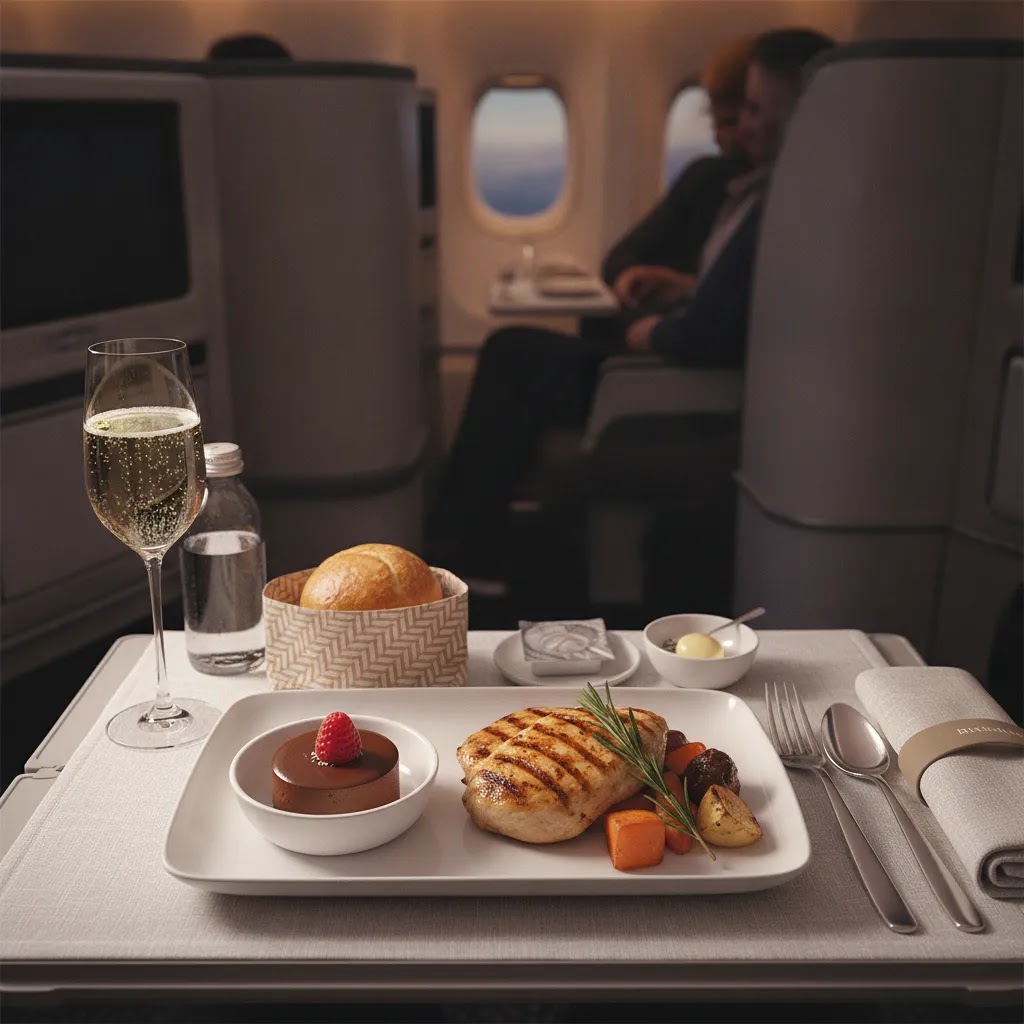
Air France often earns attention for its soft product, and that is fair. In Premium Economy, the meal service is usually one of the clearest signs that you are not simply in an Economy row with more space. Presentation tends to feel more polished. The service also carries a more premium visual identity than the main cabin.
How dining feels different from Economy
On long-haul A350 and 777 routes, you can typically expect upgraded tableware, a more thoughtfully composed tray, and beverage service that feels less hurried than in Economy. Depending on route, departure time, and catering station, the exact menu may vary. Even so, Air France generally tries to preserve a sense of French style in the cabin. That often shows in the bread service, cheese, desserts, or wine selection.
How crew pacing shapes the premium feel
Service style matters just as much as the food itself. In a strong Premium Economy experience, crew pacing helps the cabin feel distinct rather than merely adjacent to Economy. Air France often does well when crews recognize that passengers are paying for more than extra centimeters of space. They are also paying for a calmer and more attentive rhythm.
That difference may show up in more deliberate meal delivery, a less crowded feel during service runs, and more responsive follow-up with drinks.
Where the soft product tends to stand out:
- Meals usually feel upgraded in presentation, not just in portioning
- Wine and beverage service may feel more aligned with the Air France brand than on many competing carriers
- The smaller cabin can support more attentive interactions, depending on crew and load
- The overall tone often feels more refined than a purely transactional service flow
Still, variability remains part of the equation. Catering quality may shift by station. Crew warmth may differ by flight. Turbulence or late departures can also compress the service pattern. Premium Economy improves the onboard experience, but it does not guarantee the ceremonial attention associated with premium front cabins.
Ground Experience: Check-in, Boarding Priority, and Lounge Access Reality
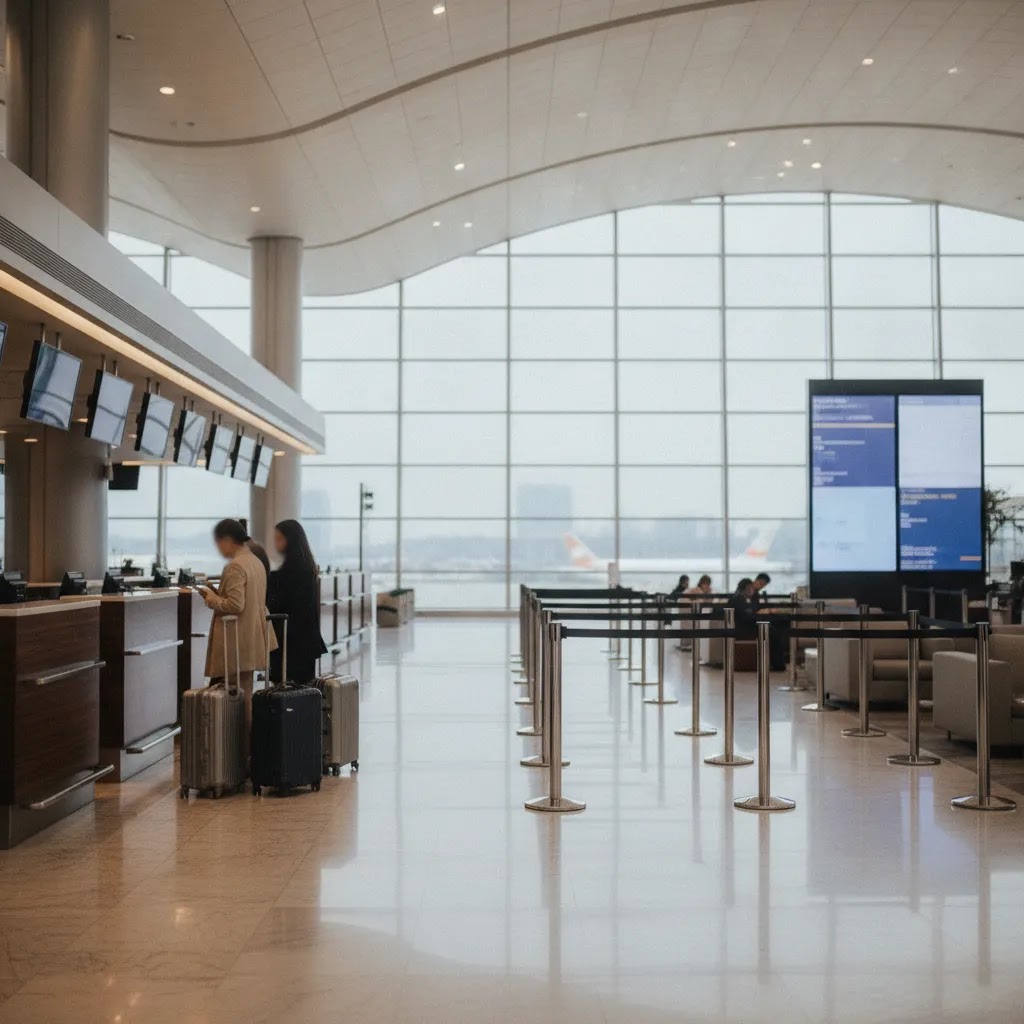
Premium Economy can feel most valuable when the experience is smoother from the airport onward, not only once you are seated. With Air France, ground privileges may include a more efficient check-in path, boarding sequence advantages, and baggage allowances that are more generous than Economy. The key word is may. These inclusions can vary by fare family, route, airport, and day-of-travel conditions.
Priority services at the airport
Boarding is a good example. A Premium Economy boarding group can help you settle earlier and protect overhead bin space. However, the benefit depends on how the airport manages the process and how closely boarding groups are enforced. At major hubs, the flow is often more structured. At outstations, the difference may be less pronounced. If you travel with valuable carry-ons, check your boarding group and confirm how your departure airport handles it.
Lounge access and connection realities
Lounge access is where expectations most often drift away from reality. In most cases, Premium Economy does not include lounge access as a standard benefit. Entry may be available through eligible elite status, a fare that explicitly includes it, or a separate membership or arrangement. Even then, connections through Paris can add complexity because terminal, carrier, and partner lounge options may change on the day.
Connecting itineraries add even more variables. You may have access at the long-haul departure but not on the intra-Europe connection, or the reverse. Operational changes also matter. A gate change, terminal reassignment, or lounge closure can affect access even when eligibility exists.
Before travel, it is sensible to verify a few points so the ground experience matches your expectations:
- Whether your specific fare includes priority check-in, priority boarding, and any enhanced baggage allowance, as these can vary by ticket type
- Whether lounge access is granted through the ticket, elite status, or a separate entitlement, and whether it applies across the full itinerary or only certain segments
- Which lounge is realistically usable at your departure and connection points, taking into account terminal location and day-of-travel operational changes
For travelers who care about smooth airport flow, these confirmations matter almost as much as seat selection. In practice, Air France Premium Economy works best when the airport experience aligns with the onboard product.
Pros and Cons
Strengths
- The seat usually offers a meaningful comfort upgrade over Economy on long-haul A350 and 777 flights, especially in width, recline, and personal space.
- Meal presentation often feels intentionally elevated, which helps the cabin feel distinct rather than lightly modified.
- Air France’s brand identity translates well to Premium Economy, particularly in wine, dining tone, and overall cabin atmosphere.
- The smaller cabin environment may create a calmer experience with less traffic and less visual clutter than the main cabin.
- On newer aircraft, especially the A350, the full environment often feels polished and modern.
Considerations
- This is still a recliner-style experience, so sleep quality may remain limited on overnight flights compared with Business Class.
- 777 product consistency may vary by subfleet, refit status, and operational aircraft changes.
- Service quality, while often strong, can still depend heavily on crew, route, and catering station.
- Travelers expecting lounge access as a built-in Premium Economy benefit should verify entitlements carefully rather than assume inclusion.
Who Air France Premium Economy Usually Suits
Air France Premium Economy usually suits travelers who want a more composed long-haul experience without moving into the full investment of Business Class. It can be especially appealing for couples flying overnight to Paris, professionals who need to arrive in presentable condition, and leisure travelers who care about food, service style, and cabin ambiance as much as raw seat dimensions.
It may be less suitable for travelers whose first priority is deep sleep, extensive ground privileges, or maximum privacy. In those cases, the cabin can still feel like an intermediate step rather than a final answer. Overall, the product is strongest for travelers who want an upgraded journey across several touchpoints, not only a larger seat.
Flight Experts View
At Flight Experts, we generally see Air France Premium Economy as a strong option for clients who value soft product details and want more than functional comfort. The cabin often appeals to travelers who care how a flight feels, not just what the seat map promises. That distinction becomes especially relevant on long-haul trips to Europe, particularly when a client wants a more refined experience but does not require a lie-flat bed.
Flight Experts offers Premium Economy Flight Booking for long-haul international travel, with personal consultant support, seat selection guidance, and a typically quick response process. If you want a personalized recommendation based on route, aircraft, and comfort priorities, speaking with Mike Chirilenco or the Flight Experts team may help you narrow the right option efficiently.
How to Evaluate This Cabin Before You Book
A good Premium Economy decision starts with matching the cabin to the specific flight, not to the airline’s marketing language. Air France can be very appealing here, but the right fit depends on several practical factors.
1. Check the exact aircraft, not just the airline
An A350 may deliver a newer-feeling environment than some 777 variants. Cabin freshness, storage details, lighting, and seat generation all affect the outcome. If your comfort expectations are high, aircraft type should be part of the booking decision from the outset.
2. Separate seat comfort from sleep expectations
Premium Economy may improve posture and reduce fatigue, but it usually will not replace the restorative value of a flat bed. On a daytime flight, that may be entirely acceptable. On a short overnight, it may still be a compromise you are happy to make. On a longer night sector, the trade-off becomes more significant.
3. Treat meal quality as part of the value equation
Some travelers care deeply about onboard dining, while others mainly want efficiency. Air France is often strongest with travelers in the first group. If service tone, wine, and meal presentation shape your impression of the journey, this cabin may feel more rewarding than competing products that focus almost exclusively on seat hardware.
4. Verify ground inclusions carefully
Priority check-in, baggage allowances, and boarding benefits may vary by fare family and airport. Lounge access is not something you should assume in Premium Economy unless it is explicitly attached through the fare, a membership, or elite status. This matters especially on connecting itineraries.
5. Consider the full itinerary, not just the transatlantic leg
If you are connecting beyond Paris, the value of Premium Economy could change depending on transfer time, onward cabin, and airport flow. Travelers with complex itineraries often benefit from expert handling here. That is especially true if they want consistency across carriers or need help deciding whether a mixed-cabin approach makes more sense.
Frequently Asked Questions
Is Air France Premium Economy worth it on the A350?
For many travelers, yes, especially if you value a newer cabin environment and a more spacious seat than Economy. The A350 often feels especially cohesive because the aircraft itself is quieter and more modern. Whether it is worth the extra investment depends on your route, tolerance for sleeping upright, and how much you value improved dining and cabin atmosphere.
Is the 777 version the same as the A350 version?
Not always. Air France’s 777 fleet may include configuration differences, refit variations, or operational changes that affect the cabin feel. The broad concept remains similar, but seat generation and surrounding cabin environment could differ. It is wise to verify the exact aircraft assigned to your route before treating the products as interchangeable.
How much better is the seat than Economy?
The difference is usually meaningful rather than minor. You can typically expect more personal space, greater recline, and a seat designed for longer sitting periods. That said, the seat is still upright for sleeping compared with Business Class. The upgrade often helps most with comfort, posture, and fatigue reduction rather than with full overnight rest.
Are meals noticeably better in Air France Premium Economy?
They often are. Air France generally gives Premium Economy a more elevated meal presentation than Economy, and the cabin’s French identity tends to come through in catering style and wine service. Exact menus may vary by route and departure station, so the quality can shift, but the intention to differentiate the cabin is usually clear.
Does Air France Premium Economy include lounge access?
Not as a universal rule. Lounge access may depend on fare conditions, elite status, alliance recognition, or separate purchase options, depending on airport and itinerary. Travelers should confirm this directly before booking if lounge access is an important part of the trip. It should not be assumed as an automatic Premium Economy inclusion.
Is this cabin good for overnight flights to Paris?
It can be a very reasonable choice if your goal is to arrive in better shape than you likely would from Economy. The extra space and calmer cabin may help. Still, travelers who are highly sensitive to sleep loss or who need to perform immediately on arrival may find Business Class more suitable for overnight transatlantic sectors.
Who tends to appreciate Air France Premium Economy most?
Travelers who care about both physical comfort and service atmosphere often appreciate it most. Couples, solo leisure travelers, and professionals heading to Europe may all find value in the combination of seat comfort, quieter cabin energy, and more refined meals. It usually appeals less to travelers focused only on airport perks or full-flat sleep.
What is Premium Economy like on Air France?
In most cases, it is a quieter, more spacious long-haul cabin that feels intentionally positioned between Economy and Business Class. You typically receive a wider, more supportive seat with greater recline than Economy, plus dining and service touches that are more polished. The experience can feel especially cohesive on newer A350 flights, while 777 consistency may vary by subfleet and aircraft assignment.
What do you get in Air France Premium Economy?
You generally receive a more substantial seat than Economy, upgraded meal presentation, and a calmer cabin environment. Comfort items such as a pillow and blanket are typically provided, and entertainment is usually available via seatback screens on long-haul aircraft, although exact hardware can vary. Ground benefits such as priority services and lounge access should be verified carefully, as they may depend on fare type, elite status, airport, and itinerary.
Is it worth upgrading to Premium Economy on Air France?
It may be, particularly if you value posture support, personal space, and a more refined onboard rhythm over many hours. The upgrade is often most rewarding on overnight or longer daytime flights where a better seat and calmer atmosphere reduce fatigue. If your priority is true sleep or extensive ground privileges, Business Class may be the more suitable step, but many travelers find Premium Economy a well-judged middle option on the right route and aircraft.
Is Air France Premium Economy comfortable?
It is typically comfortable for sustained sitting compared with Economy, with better structure, more space, and a more supportive design. Comfort still depends on personal factors such as height, sleep sensitivity, and seat selection within the cabin. Verifying the exact aircraft, seat map, and proximity to galleys or lavatories can meaningfully influence how restful the flight feels.
Can Flight Experts help book Premium Economy rather than only Business Class?
Yes. Flight Experts provides Premium Economy Flight Booking as well as Business Class and First Class support. The service includes personal consultant assistance, route guidance, and help with preferences such as seat selection. That can be useful if you are comparing Air France with other long-haul carriers or planning a more complex Europe itinerary.
Key Takeaways
- Air France Premium Economy is often most compelling on long-haul A350 and 777 routes where seat comfort, meals, and service pacing matter over many hours.
- The seat usually offers a clear improvement over Economy, though it remains a recliner rather than a sleep-focused premium bed product.
- Meals and wine service are among the cabin’s stronger differentiators and often reinforce the airline’s more polished brand identity.
- Aircraft variation, especially within the 777 fleet, should be checked before booking.
- Travelers who want guidance on aircraft, fare conditions, and itinerary fit may benefit from a personalized recommendation through Flight Experts.
Conclusion
Air France Premium Economy is usually best when judged by the right criteria. It is not a substitute for Business Class, and it does not need to be. On the right A350 or 777 flight, it can deliver a thoughtfully upgraded long-haul experience with a better seat, more polished dining, and a calmer cabin rhythm than Economy. For travelers heading to Europe, those qualities can make a real difference to comfort and arrival condition. If you would like help comparing aircraft, selecting the right cabin for a particular route, or building a premium Europe itinerary, contact Mike Chirilenco or the Flight Experts team for tailored guidance and a more personalized booking experience.



