
Business Class Flight to Spain (2026 Guide)
Why Spain works so well in Business Class
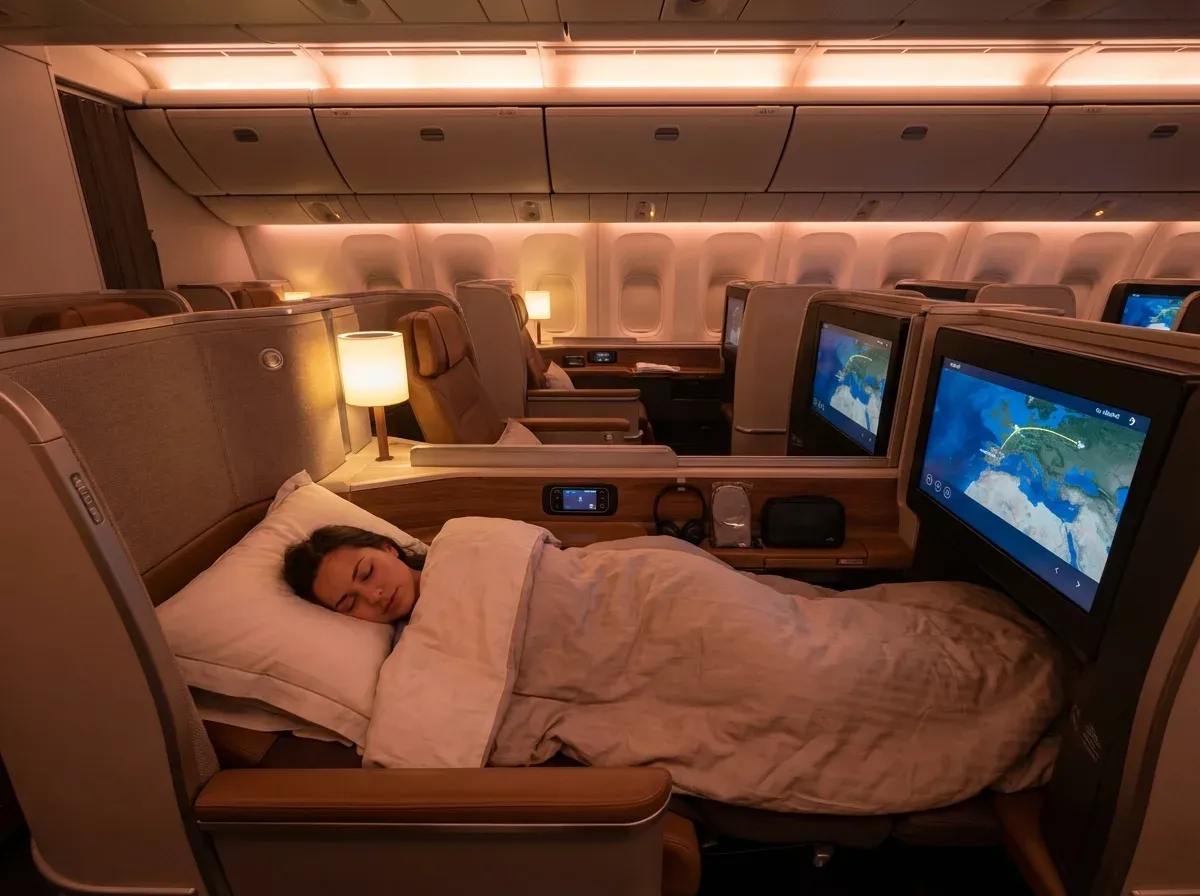
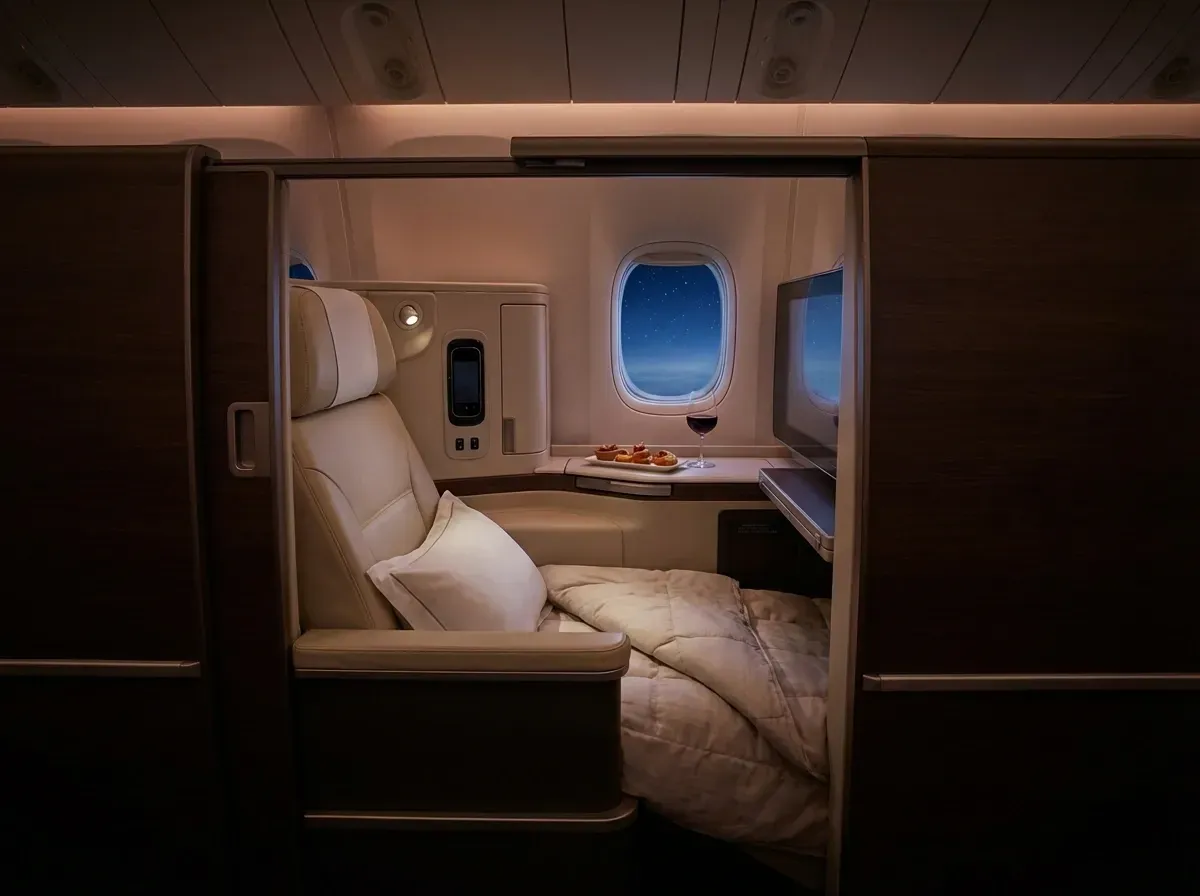
Spain is one of those destinations where Business Class delivers a clear, practical payoff. Many transatlantic flights to Madrid and Barcelona are timed as overnight departures from the US, which is exactly where a lie-flat seat changes the whole trip. You can eat quickly, sleep for a real block of time, and start your day on landing.
From a practical standpoint, Spain also offers flexible routing. If you are starting in a secondary US city, you can often connect through an East Coast gateway or a major European hub without losing the premium feel, as long as the long-haul leg is strong.
If you want a broader framework for evaluating transatlantic options before you narrow into Spain, use this pillar guide on best business class to Europe as your baseline for what “good” looks like in 2026.
Best nonstop routes to Spain (Madrid and Barcelona)
Nonstop is the simplest path to arriving rested. It reduces connection risk, protects your sleep window, and usually makes it easier to keep your luggage and schedule under control.
Best nonstops to Madrid (MAD)
Madrid is Spain’s most reliable long-haul gateway. It is also one of the easiest airports to connect onward from if your final destination is elsewhere in Spain.
What many travelers overlook is timing. A “good” nonstop is not only about being direct, it is about being overnight in the right way. You want enough time after dinner service to sleep, and you want an arrival time that lets you stay awake until local evening.
Best nonstops to Barcelona (BCN)
Barcelona is ideal when your trip is concentrated in Catalonia, the Costa Brava, or you are combining the city with France. Business Class nonstops can be excellent, but you should pay extra attention to the aircraft used on your travel dates. Airlines sometimes swap equipment, and the seat can be meaningfully different even within the same “Business Class” label.
Who should prioritize nonstop
- Business travelers landing for meetings the same day or next morning.
- Families who want fewer moving parts and easier airport logistics.
- Anyone on a short trip where losing half a day to connections hurts.
Best one-stop routes to Spain (when nonstop is not ideal)
Nonstop is not always the best answer. If you are flying from the West Coast, the nonstop options can be limited by schedule or aircraft type. If you are going to southern Spain or an island, a single connection can be more efficient than backtracking from Madrid or Barcelona.
Connecting via major European hubs
A classic approach is to connect through a large European hub where premium facilities are strong and flights to Spain run frequently. In practice, this means you can pick a long-haul Business Class product you like, then take a shorter intra-Europe segment onward to Madrid, Barcelona, or a regional city.
Consider this: the long-haul seat matters most. If your connecting flight within Europe is short, you can tolerate a more “standard” seat there, as long as the schedule is clean and the connection is not rushed.
Connecting through US gateways first
If you are starting in a smaller US market, connecting domestically to an East Coast gateway can unlock better transatlantic choices. The reality is that a smooth domestic connection often beats forcing an awkward international routing with a poor departure time.
When a one-stop is the smarter premium move
- You want a better lie-flat seat or more reliable aircraft.
- You are pairing Spain with Portugal, Morocco, or France on the same trip.
- You are ending your trip in one city and returning from another (an open-jaw itinerary).
If you enjoy comparing transatlantic Business Class products across airlines, this supporting guide can help you benchmark service and seats: best business class flights to Europe.
Choosing your Spanish gateway: MAD vs BCN and beyond
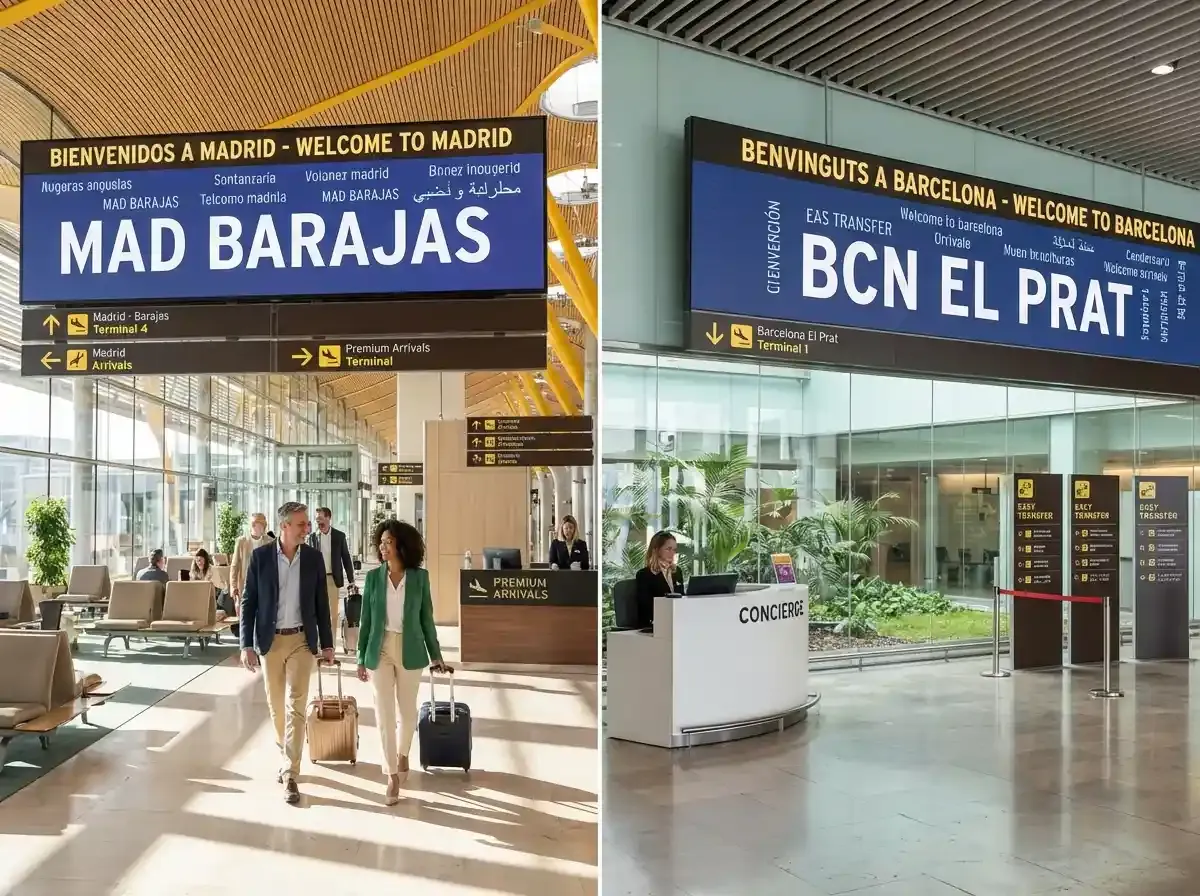
Picking the right Spanish arrival airport is one of the easiest ways to improve your trip without paying “more” in effort. You want to minimize total travel time and maximize sleep and recovery.
Madrid (MAD): best for coverage and onward connections
Madrid is a strong default if you are unsure. It is centrally positioned for Spain, typically has frequent long-haul service, and often offers straightforward connections to other Spanish cities. If your itinerary includes multiple regions, Madrid can keep the logistics tidy.
Barcelona (BCN): best for Catalonia and coastal trips
Barcelona is your best landing point for a Barcelona-focused trip, a cruise departure, or a coastal itinerary in northeastern Spain. It is also great when you are trying to avoid backtracking after landing.
What about Málaga, Valencia, Bilbao, and the islands?
If your end goal is the Costa del Sol, the Basque Country, or the Balearics, you will often do best with one connection. The key is to build the connection around your sleep. You want the long-haul overnight as your main “rest engine,” then a short hop after you land.
What to check before you book (seat, aircraft, timing)
Business Class can look similar in photos, but it does not always feel similar at 2:00 am over the Atlantic. Before you commit, check a few details that directly affect rest and privacy.
Seat type: lie-flat, direct aisle access, and privacy
Think of it this way: the “minimum viable” Business Class for an overnight flight to Spain is a true lie-flat bed. Beyond that, direct aisle access matters if you do not want to step over a neighbor, and a door or privacy shell can make the cabin feel calmer on a busy route.
Aircraft swaps and schedule changes
Aircraft assignments can change, especially seasonally. If you chose a flight because it had the exact seat you wanted, keep an eye on equipment updates. Schedule changes also matter more in premium travel because they can break a carefully planned sleep window.
The departure time that protects your sleep
For most travelers, a later-evening departure supports a smoother routine: lounge, simple meal, sleep. An early-evening departure sometimes means you dine too soon, then struggle to sleep. It is not wrong, but you should plan for it by skipping a heavy meal onboard and going straight to rest.
Booking strategy for 2026: how to get value without stress
If you are shopping for a business class flight to Spain for 2026, aim to decide what you value most before you compare fares. Is it nonstop? A specific seat? The shortest total travel time? A morning arrival that lets you work the same day? Clarity on priorities keeps you from buying the “wrong” premium ticket.
Start with your ideal routing, then add flexibility
Pick the best routing first, then look at nearby departure airports and alternate Spanish gateways. Sometimes a small adjustment, like flying into Madrid and out of Barcelona, gives you better flight times and a more relaxing trip.
Use specialists when the details matter
If you want help comparing options quickly, one approach is using a specialist that monitors premium inventory and knows how different products perform on real routes. For example, Business Class Flight Booking through Flight-Experts includes a personal consultant and options are typically presented quickly after you submit a request, which helps when you are balancing multiple dates and gateways. See: Business Class Flight Booking.
Plan smarter for open-jaw and multi-city Spain trips
Spain is perfect for open-jaw travel: fly into Madrid, train to Barcelona, then fly home from Barcelona. Or combine Spain with Portugal and return from Lisbon. If you are building something like that, Complex Itinerary Planning can help structure the routing so it prices and flows like one coherent trip instead of a patchwork of one-ways. See: Complex Itinerary Planning.
Alliance and hub strategy: how to choose a “good” one-stop to Spain
When you connect, the goal is not just getting to Spain. It is keeping the premium experience intact across the parts that matter: the overnight segment, the lounge time, and a connection that does not feel like a sprint.
What many travelers overlook is that the “best” connection is often the one that keeps your long-haul on a strong widebody Business Class seat, then uses a shorter hop into Spain that is timed sensibly. That is usually a better outcome than taking a mediocre overnight and hoping a prettier lounge fixes it.
How to pressure-test a one-stop itinerary
- Make the long-haul leg the priority: this is where you will sleep, and it is where product differences actually show.
- Favor a connection that gives you breathing room: enough time for a lounge break and a calm gate transfer, not so much time that you lose half a day in transit.
- Watch the “Europe to Spain” segment type: many short-haul European Business Class seats are standard economy-style seating with a blocked middle, so treat this part as a schedule play, not the luxury centerpiece.
- Consider where you are landing in Spain: a connection that gets you closer to Málaga, Valencia, or Bilbao can beat landing in Madrid and adding another long ground transfer.
The reality is that Spain is well-served from multiple European hubs. If your itinerary is flexible, you can often improve the experience just by choosing the hub that gives you the cleanest overnight and a reasonable onward departure.
The return flight matters too: daytime westbound vs overnight eastbound
Most travelers focus on the overnight flight to Spain, because that is where a lie-flat bed feels essential. Now, when it comes to the flight home, the logic changes. Westbound flights to the US are often daytime, and your “rest strategy” becomes comfort, meals, and staying productive without arriving depleted.
What to optimize on the way to Spain
Outbound, protect a real sleep window. That typically means choosing the overnight that lets you transition quickly: a light meal, minimal interruptions, and a long enough block to sleep.
What to optimize on the way back to the US
Return flights are frequently longer in the air, but you may not want to sleep the whole time. Consider this: a daytime flight with a comfortable seat, good workspace, and a calm cabin can be the difference between landing ready for a normal evening and landing feeling like you just “lost” a day. If you know you will sleep, choose a seat that supports it. If you plan to work, favor a layout with a stable table and fewer disruptions from aisle traffic.
Also pay attention to the return airport in Spain. If you are ending in Barcelona but your best return is from Madrid, that extra repositioning can undo the benefits of Business Class. On multi-city itineraries, matching the return flight to where you actually finish can keep the trip feeling cohesive.
Business Class on short-haul flights within Spain and Europe: what to expect

If your Spain plan includes a connection onward after landing, it helps to know what “Business Class” means on shorter flights inside Europe. Here’s the thing: short-haul Business Class is often more about ground services and flexibility than it is about a lie-flat seat.
What you usually get on intra-Europe Business Class
- Priority check-in and boarding, which can be valuable in busy summer travel periods.
- More personal space, often by blocking the middle seat rather than providing a different physical seat.
- Better meal service than economy, but on very short sectors it may be light.
From a practical standpoint, this means you should evaluate that short segment mainly on schedule, connection flow, and baggage allowance, not on the expectation of a second lie-flat experience.
When it still makes sense to include the short-haul Business Class segment
If you are connecting to a regional Spanish city, the premium segment can still be worth it for smoother airport handling, a calmer boarding process, and fewer compromises in the overall itinerary. It can also reduce friction when you are traveling with family, carrying work gear, or trying to protect a tight onward schedule.
Seat selection for couples, solo travelers, and families
Once you have a true lie-flat seat, the next big quality lever is choosing the right seat position for how you travel. Cabin layout matters because it changes how often you are disturbed, how easy it is to talk, and how private the space feels.
Solo travelers
If you are traveling alone and sleep is the priority, a window seat is often the calmest choice. You have less aisle traffic and fewer accidental bumps. If you know you will get up frequently, an aisle seat can be more convenient, but expect more movement around you.
Couples
If you want to talk and share the experience, look for seat pairs designed for conversation. Some layouts place seats closer together in the center, while others angle you away from each other. Think of it this way: some “couple-friendly” seats feel like dining side-by-side, others feel like two private pods that happen to be near each other. Decide which experience you want before you lock it in.
Families
For families, the most important factor is often not a perfect seat, it is having seats that keep you within quick reach and reduce friction during meal times and sleep transitions. If one adult expects to move around more, placing that person on an aisle can keep the cabin calmer for everyone. Also, consider the connection: a well-timed one-stop with a reasonable layover can be easier than a rushed transfer with tired kids, even if the itinerary is technically “shorter.”
Frequently Asked Questions
What is the best Business Class airport to fly into in Spain?
For most travelers, Madrid (MAD) is the best all-around entry point because it usually offers frequent long-haul service and easy onward connections across Spain. Barcelona (BCN) is ideal if your trip is focused in Catalonia, a cruise departure, or you want to avoid backtracking after landing. If you are heading straight to the coast or islands, consider a one-stop itinerary that lands closer to your final destination, as long as the long-haul segment gives you a true lie-flat seat.
Are there nonstop Business Class flights to Spain from the US?
Yes, nonstop routes to Spain are commonly available to Madrid and Barcelona from major US gateways, especially seasonally. The nonstop option is often the easiest way to protect your sleep and reduce disruption from missed connections. Before you book, confirm the aircraft type and seat style on your travel dates because airlines can swap equipment. If you do not see a good nonstop from your home airport, a short domestic connection to an international gateway can still keep the trip comfortable.
What should I look for in a Business Class seat for an overnight flight to Spain?
Prioritize a true lie-flat seat first, since sleep is the main reason Business Class makes sense on a transatlantic overnight. After that, check whether you have direct aisle access, which matters if you prefer not to step over someone to get out. Pay attention to privacy features like a fixed shell, divider, or door, but treat those as a bonus after sleep comfort. Seat maps and aircraft details are worth checking because “Business Class” can vary significantly by plane.
Is it better to connect in Europe or fly nonstop to Spain?
Nonstop is best when you want simplicity, fewer delays, and a clean overnight rest. A European connection can be smarter when it unlocks a better long-haul Business Class product, improves your schedule, or gets you closer to a regional Spanish city without backtracking. The key is making the long-haul segment the star of the itinerary, since that is where the lie-flat seat matters most. Keep connection times reasonable so you are not rushing through an unfamiliar airport.
How do I plan a Business Class trip to Spain if I am starting from a smaller US city?
Start by deciding which Spanish gateway you want, then find the best transatlantic flight from a major US airport you can reach easily. Often, a short domestic connection to an East Coast gateway gives you more schedule and product choices than trying to force an awkward international routing. Build in enough connection time on the outbound to reduce stress, especially in winter weather months. On the return, consider slightly longer connections if you are checking bags or traveling with family.
Can I fly into Madrid and return from Barcelona in Business Class?
Yes, and it is often one of the best ways to do Spain in premium cabins. An open-jaw itinerary can reduce backtracking and preserve vacation time, especially if you plan to use Spain’s fast trains between major cities. When you price options, compare open-jaw against round-trip to a single city because sometimes the value is similar, but the trip feels far more relaxed. It also helps you pick the best flight times in each direction rather than settling for one city’s schedule.
What is the best strategy for balancing comfort and productivity on a Business Class flight to Spain?
If you need to work, do it early in the flight, then protect a solid sleep block. Most travelers do best with a light meal, minimal alcohol, and a quick transition into sleep mode. Choose a seat that supports rest, usually a window if you want fewer interruptions, or an aisle if you know you will get up. Pack a small kit for hydration and comfort, and plan your arrival day with a lighter schedule so you can stay awake until local evening.
How far in advance should I book a Business Class flight to Spain for 2026?
For 2026, start monitoring options early enough that you still have flexibility on dates, airports, and routings. That matters more than chasing a specific “perfect” day. If your trip is tied to a fixed event, like a conference or a milestone celebration, earlier planning also helps with seat selection and schedule control. Keep an eye on aircraft and schedule changes after booking, since those can affect the exact seat or timing that made you choose a flight in the first place.
Where can I compare Spain routes against other top Business Class options to Europe?
A helpful way to sanity-check your Spain options is to compare them against a broader list of strong transatlantic choices, then see which patterns apply to Madrid and Barcelona. You can use this guide on best business class flights to Europe for a route-level benchmark. It gives you context on what “good” looks like across hubs, aircraft, and schedules, so you can evaluate your Spain shortlist more confidently.
Is Business Class within Europe actually lie-flat when I connect to Spain?
Usually not. Many short-haul European Business Class cabins use the same seat as economy, with the middle seat blocked and added service. It can still be worthwhile for priority handling and a smoother connection, but treat the long-haul segment as the part where the lie-flat seat truly matters.
Should I prioritize Madrid or Barcelona for the best one-stop connections to the coast?
If you are ultimately headed to southern Spain, the Basque Country, or the islands, it often makes sense to route in a way that avoids backtracking after you land. That can mean arriving into Madrid or Barcelona, then taking a short onward segment, but the “best” choice depends on flight timing and how well the connection protects your overnight sleep. The cleanest plan is usually the one with a strong long-haul Business Class seat and a short, well-timed hop that does not require an overly tight transfer.
Is a daytime Business Class return flight from Spain still worth it?
For many travelers, yes. On the way back, the value is often comfort and productivity: more space, a better work setup, and a calmer cabin on a long daytime flight. If you are not planning to sleep much, you can still get a meaningful payoff from arriving less fatigued and more functional.
What is the most common mistake travelers make when booking Business Class to Spain?
Buying the label instead of the specifics. A route can be called “Business Class” and still deliver a very different experience depending on seat type, aircraft, and departure time. If the flight is overnight, prioritize true lie-flat first, then confirm that the schedule creates a real sleep window. If there is a connection, keep it reasonable so the itinerary stays premium in practice, not just on paper.
Key Takeaways
- For most trips, prioritize a true lie-flat seat and a schedule that protects a real sleep window.
- Madrid (MAD) is the easiest all-around gateway, while Barcelona (BCN) is ideal for Catalonia and coastal itineraries.
- Nonstop is best for simplicity, but one-stop can win if it improves the long-haul product or gets you closer to your final city.
- Check aircraft assignments and seat type, not just the cabin label, since equipment can change by season.
- Open-jaw routing (into one city, out of another) is often the most time-efficient way to do Spain.
- Short-haul “Business Class” within Europe is often a schedule and priority-services upgrade, not a second lie-flat experience.
Conclusion
A great business class flight to Spain is not only about finding a premium fare. It is about arriving in Madrid or Barcelona with your energy intact, whether you are walking into meetings, starting a honeymoon, or trying to enjoy day one instead of recovering from it.
Focus on the big three: a true lie-flat seat for the overnight, a routing that minimizes friction, and a schedule that sets you up for a normal first day in Spain. Use nonstop when it protects your sleep and reduces risk. Use a smart one-stop when it upgrades the long-haul experience or gets you closer to where you actually want to be.
If you want help comparing premium routing options to Spain, you can request a free, no-obligation quote and review what fits your dates.



