
Business Class Flights to London: Best Airlines

Why London Business Class Requires Careful Selection
London is one of the most competitive premium air markets in the world, which is good news for travelers willing to choose carefully. On routes from the United States, you will typically find a wide range of Business Class products from British Airways, Virgin Atlantic, American Airlines, Delta, United, Lufthansa, Air France, KLM, and Middle Eastern carriers on connecting itineraries. Yet the quality is not uniform.
For most travelers, London means Heathrow. That brings its own considerations, including terminal quality, immigration flow, lounge consistency, and the practical value of arriving rested after a short overnight crossing. A very good Business Class seat to Asia or Australia may feel less impressive on a six to eight hour overnight flight if the bedding, dining pace, or privacy are not well designed.
The strongest options usually combine four essentials: direct aisle access, dependable sleep comfort, a refined lounge experience, and a schedule that supports your plans on arrival. If your wider search includes regional access beyond London, our guide to business class to UK may help you compare Heathrow with other British gateways. Readers exploring route planning and premium booking strategy may also find the Premium Flight Booking & Tips section useful.
Best Airlines for Business Class Flights to London
1. Virgin Atlantic Upper Class
Virgin Atlantic remains one of the most appealing choices for travelers who want a distinctly contemporary premium experience to London. On newer aircraft, particularly where The Suite is offered, privacy and design are noticeably stronger than on many legacy transatlantic products. The Heathrow Clubhouse also continues to be a meaningful advantage, especially for travelers who value pre-flight dining and a more polished ground experience.
Virgin Atlantic often suits travelers who want style without sacrificing practicality. Service typically feels warmer and less formal than some rivals, though consistency may vary by crew and aircraft type.
- Excellent Heathrow lounge experience on eligible departures
- Modern seat design on updated aircraft
- Strong fit for overnight eastbound travel
- Appealing for couples and leisure travelers who value atmosphere
2. British Airways Club Suite
British Airways has long dominated the London market, and the newer Club Suite has materially improved its standing. The addition of a sliding door, direct aisle access, and more coherent privacy makes it a much stronger Business Class product than the carrier’s older Club World seat. For Heathrow-bound travelers, the network breadth is a major strength, with substantial nonstop coverage from major U.S. gateways.
The main caveat is aircraft inconsistency. Some routes still see older cabin versions, so precise flight selection matters. When the Club Suite is confirmed, British Airways becomes one of the most practical choices for direct business class flights to London.
- Extensive nonstop service into London Heathrow
- Strong schedule choice from major U.S. cities
- Improved privacy with Club Suite
- Good fit for travelers wanting direct access to London
3. Delta One
Delta One is often an excellent option for travelers who prioritize consistency, especially from key U.S. hubs. On aircraft equipped with Delta One Suites, the experience is typically calm, private, and well suited to overnight crossings. The airline also tends to perform well in operational reliability, which matters when meetings or connecting arrangements in London are time-sensitive.
Delta may be particularly attractive for corporate travelers who want a refined but understated experience. Lounge access and exact ground benefits can depend on route and airport, so it is worth evaluating the full journey rather than the seat alone.
- Strong sleep-focused cabin on suite-equipped aircraft
- Reliable for business travelers on structured schedules
- Usually polished onboard service
- Competitive from major U.S. hubs
4. United Polaris
United Polaris has become a credible transatlantic contender, particularly where the dedicated Polaris lounge is part of the departure experience. The seat is generally functional and comfortable, with direct aisle access and a layout that supports overnight rest better than many older products still flying to London. Catering and soft product may be less distinctive than some peers, but the overall proposition is often solid.
For travelers based near United hubs, Polaris can be one of the most convenient ways to reach London with a dependable Business Class product and efficient routing.
- Good hard product for overnight flights
- Polaris lounges can significantly improve departure experience
- Useful U.S. hub connectivity
- Often a pragmatic choice for frequent premium travelers
5. Lufthansa Business Class via Germany
Although not the most direct choice for London, Lufthansa can be compelling for travelers combining London with onward European travel or preferring German hub service standards. Depending on aircraft and route, the onboard product may range from acceptable to very strong on newer cabins. The value here is often in network logic, disciplined service flow, and high-quality connection handling through Frankfurt or Munich.
This option will not suit every traveler, especially if a nonstop overnight to Heathrow is the priority. Still, for certain itineraries, Lufthansa can be a refined and strategically sound choice.
- Strong European connectivity beyond London
- Orderly, professional service style
- May suit multi-city itineraries well
- Useful alternative when nonstop options are limited
Business Class to London: Nonstop vs One-Stop Routings
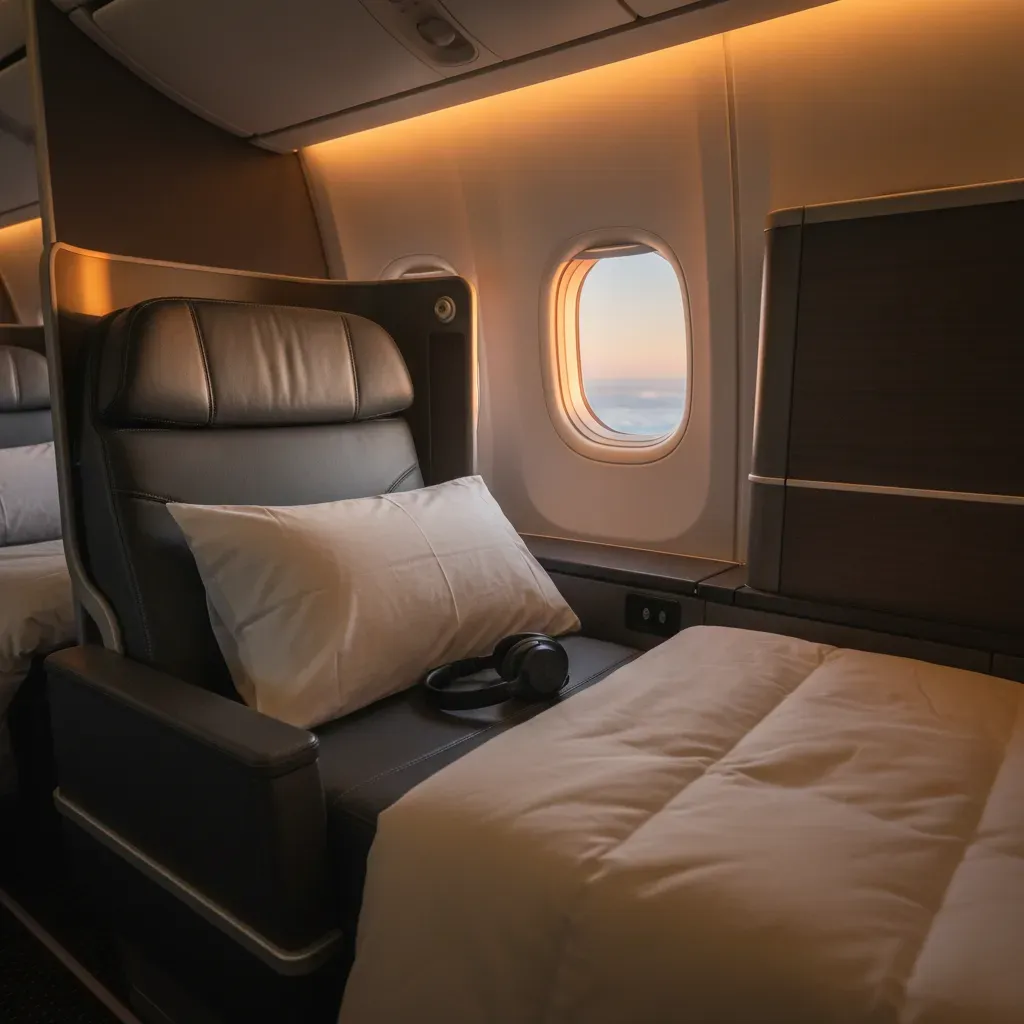
London is one of the few destinations where a nonstop is often the most elegant solution, but not automatically the best one. A short overnight flight can reward simplicity, yet a thoughtfully chosen connection may improve the seat, the ground experience, and even the timing of your arrival, depending on your priorities.
Most nonstop business class flights to London arrive into Heathrow early in the morning. That can be ideal if you can sleep shortly after departure, clear formalities efficiently, and transition straight into your day. Many eastbound transatlantic flights are short enough that meal timing becomes important. If the service flow is prolonged, or if you are sensitive to cabin light and interruptions, the nonstop advantage can be reduced. In those cases, a one-stop itinerary with a departure time that supports a more natural sleep window may feel meaningfully better, even if it is not the shortest routing on paper.
Connections introduce two trade-offs: risk and friction. A connection adds another boarding process, a second set of potential delays, and the possibility of a misconnect if the first sector underperforms. It can also complicate baggage flow and reduce flexibility if your plans change. For travelers arriving for time-sensitive meetings, or those who value a direct overnight sleep opportunity above all else, nonstop remains the more controlled choice in most cases.
A connection can be strategically worthwhile when it delivers a materially stronger product. That may mean securing a preferred seat design, such as a suite-style layout with superior privacy, or choosing an airline whose lounge experience is a genuine part of the journey rather than a functional waiting room. It can also mean selecting a routing with a better departure airport experience, more reliable operations, or a schedule that aligns with how you actually want to travel. For discerning travelers, the decision is rarely about adding a connection for its own sake. It is about improving the parts of the experience that matter most.
London adds another layer, because Heathrow logistics can either support your plans or quietly work against them. Terminal choice may affect the smoothness of your arrival, especially if you have a car service meeting you, a tight first appointment, or onward UK travel the same day. If you land at Heathrow but need to connect onward on a separate ticket, a terminal change and re-check process may be necessary, and timing becomes critical. A one-stop itinerary can be excellent if it delivers you into the right terminal at the right time, and unnecessarily complicated if it creates a fragile sequence of transfers.
A nonstop is typically best when your goal is to preserve sleep, minimize variables, and arrive into London with as few decisions as possible. A one-stop can be the superior choice when the connection is operationally sensible, the product step-up is real, and the end-to-end schedule supports your plans in London rather than merely getting you there.
Airline Comparison at a Glance
| Airline | Best For | Key Strength | Main Watchpoint |
|---|---|---|---|
| Virgin Atlantic | Leisure travelers and couples | Heathrow Clubhouse and stylish onboard experience | Aircraft variation on some routes |
| British Airways | Direct Heathrow access and schedule flexibility | Network breadth and Club Suite on selected aircraft | Older cabins still operate on some flights |
| Delta | Corporate travelers | Operational consistency and suite privacy | Ground experience varies by departure airport |
| United | Hub-based U.S. travelers | Polaris lounge access and practical seat design | Soft product may feel less distinctive |
| Lufthansa | Multi-city Europe itineraries | Connection logic and European network reach | Not ideal if nonstop London service is the priority |
What to Expect on the Ground: Lounges, Chauffeur Services, and Heathrow Arrival
London itineraries are judged as much on the ground as in the air. Business Class can deliver an excellent seat and still feel underwhelming if the lounge access is unclear, the departure airport experience is crowded, or Heathrow arrival logistics are not aligned with your schedule. For premium travelers, validating the end-to-end experience before ticketing is often where the quality difference is found.
Lounge access: what is typically included, and what to verify
In most cases, long-haul Business Class includes lounge access, but the details can vary based on the operating carrier, the marketing carrier, alliance rules, and the specific airport. Codeshare itineraries are where travelers are most often surprised. A ticket can display one airline name, while the flight is operated by another carrier, and lounge direction at the airport follows operating-carrier and alliance policies in most cases.
For London routes, it is also worth confirming which terminal you will depart from, since lounge quality at Heathrow can differ materially by terminal and by the lounge you are actually eligible to use. The best premium lounges may be capacity-controlled at peak periods, and access policies may change. If lounge quality is part of your decision, it should be verified as carefully as the seat map.
Chauffeur services: premium in concept, variable in practice
Some airlines may offer chauffeur-drive services for premium cabin travelers on selected routes, in selected cities, and in selected fare categories, subject to availability and local operating constraints. This benefit is not uniform across carriers, and it may be limited by geography, ticket type, or changes in airline policy. Even when a chauffeur benefit exists, advance coordination requirements may apply, and last-minute schedule changes can affect how smoothly it runs.
For discerning travelers, chauffeur service should be treated as a potential enhancement, not an assumption. If it is important to your trip, it is wise to confirm eligibility, booking steps, service area, and contingency options before the day of travel. Many travelers ultimately prefer arranging a dedicated car service independently to maintain control over timing, vehicle type, and meet-and-greet expectations.
Heathrow arrival considerations: terminal flow, transfers, and timing
Heathrow can be efficient for premium arrivals, but it is not a small airport, and timing affects the experience. Immigration flow can vary by time of day, and even with premium tickets, you may still encounter queues depending on staffing and arrival banks. If you are planning a morning meeting, it is prudent to allow a realistic buffer between scheduled arrival and the first appointment, particularly if you are checking baggage.
Terminal transfers are another important variable. If your itinerary includes an onward flight, or if you have arranged a separate-ticket connection, transferring between terminals may take time and can introduce friction. Some travelers also underestimate how long it can take to meet a driver and clear the airport during peak arrival periods. In most cases, a well-chosen schedule and a clear understanding of terminal logistics matter more than shaving a few minutes off scheduled flight time.
Pros and Cons

Strengths
- Business Class to London typically offers lie-flat seating, which may transform a short overnight crossing into a genuinely restful journey.
- Heathrow-focused premium carriers often provide strong lounge access, priority handling, and smoother airport transitions.
- There is meaningful variety in service style, allowing travelers to match an airline to the purpose of the trip rather than accepting a one-size-fits-all option.
- London routes are usually well served from major U.S. gateways, creating valuable schedule flexibility.
- For complex trips, London can work exceptionally well as a premium gateway for onward Europe, Middle East, or Africa travel.
Considerations
- Not all Business Class cabins to London are equally current, and older aircraft may still appear on premium routes.
- Heathrow can be efficient in premium channels, but congestion, terminal transfers, and arrival timing may still affect the experience.
- Published business class flight to London price ranges can vary substantially by season, departure city, and booking window, so broad fare assumptions are rarely useful.
- Some excellent airlines for business class flights to UK involve connections, which may not suit travelers prioritizing sleep and direct arrival.
Business Class Flight to London Price: What Actually Moves the Number
Business Class pricing to London is dynamic, and it moves for reasons that have little to do with how early you wake up to search. Rather than relying on generalized fare expectations, discerning travelers benefit from understanding what typically drives premium pricing, and how to judge whether a higher fare is purchasing a better experience or simply a different set of rules.
Seasonality is one of the clearest drivers. London demand shifts around summer holidays, major events, and peak corporate travel periods. Departure gateway also matters. Major U.S. markets with extensive service can price differently from smaller airports that require domestic connections to the transatlantic gateway. In practice, two itineraries that look similar may be priced quite differently because one is anchored on a more competitive long-haul market, while the other is built on constrained feeder segments.
Booking window and fare rules also play a large role. Some Business Class fares are priced with more restrictive change or refund conditions, while others allow more flexibility. That difference can be meaningful if your schedule is fluid. It is also common for airlines to open, close, and reprice premium inventory in response to demand signals, which can make the same flights appear materially different from one day to the next.
Nonstop versus connecting is another variable that can move the number. Nonstops to Heathrow often command a premium because they align with the classic overnight arrival pattern and remove connection risk. A connecting itinerary may price differently, but it should be evaluated carefully: in some cases, the connection is a modest inconvenience that delivers a better seat or lounge experience. In other cases, it is simply additional travel time without a commensurate improvement in comfort.
For premium travelers, the most important step is to evaluate fare differences in context. Aircraft type and seat version matter, particularly on airlines with mixed fleets. A Business Class fare is not only a ticket to London. It is the specific seat design you will sleep in, the service cadence you will experience, the lounge you will use, and the arrival flow you will navigate. When those elements differ, a higher fare may be justified. When they do not, it may simply be a pricing artifact of timing and inventory.
Subject to change is not a formality in premium cabins, it is a genuine operational reality. Airlines can make schedule changes, retime departures, or swap aircraft, and those changes may affect the cabin you expected. A seat map display may update, lounge access may be routed differently due to terminal changes, and connection times may tighten or widen. Before ticketing, it is prudent to confirm the operating carrier, the aircraft, and the cabin configuration. For travelers who care about a specific seat or suite-style product, it is also sensible to monitor for aircraft swaps and adjust quickly if the experience changes.
Who This Guide Suits
This evaluation is designed for travelers who see premium air travel as part of the overall London experience, not merely transportation. You may be planning a high-value business trip, a celebratory long weekend, or a longer European itinerary beginning in the British capital. You likely value privacy, sleep quality, dependable service, and the confidence that comes from knowing your chosen carrier genuinely fits your itinerary.
It is also especially relevant if you are comparing business class tickets to London across several airlines and want a more nuanced view than seat maps and fare displays can provide. In most cases, the best choice is not simply the most recognizable airline, but the one that aligns with your schedule, airport preferences, and travel style.
Flight Experts Recommendation
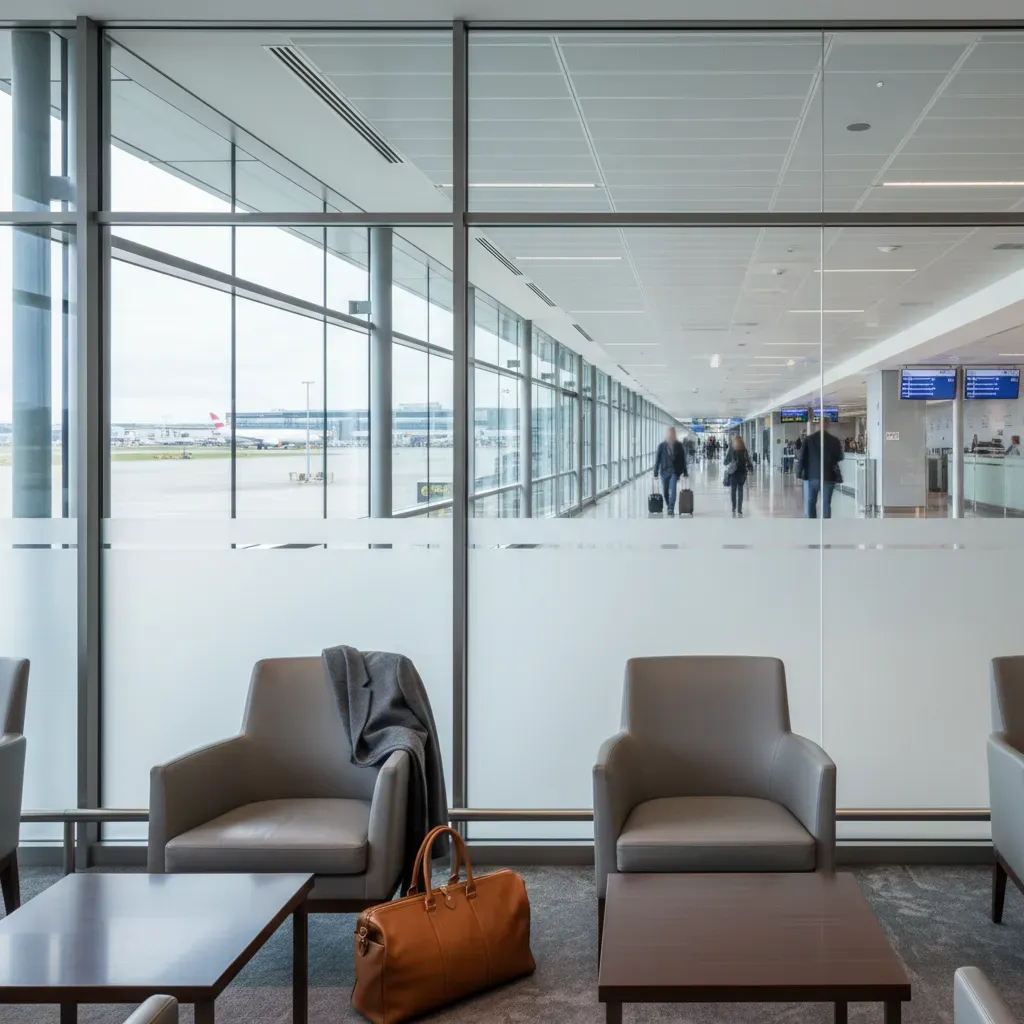
For travelers evaluating business class flights to London, the most valuable approach is usually a tailored one. Flight Experts offers Business Class Flight Booking for routes including the U.S. to Europe, with access to major carriers such as Emirates, Qatar, Singapore, Lufthansa, British Airways, ANA, JAL, Delta One, United Polaris, and American Airlines Flagship. The service includes a personal travel consultant, seat selection support, meal preference coordination, check-in assistance, price monitoring, and cabin upgrade alerts. Flight Experts lists a typical price context of $2,000 to $8,000+ for Business Class, depending on route and airline, with options usually presented within 30 minutes.
If your London trip is part of a broader Europe journey, Complex Itinerary Planning may be particularly useful for multi-city and open-jaw routing. To explore your options in a more personalized way, you may also browse Business Class Flights to Europe or contact Flight Experts to discuss a tailored recommendation based on your preferred departure city, cabin style, and travel priorities.
How to Choose the Right Business Class Flight to London
1. Confirm the exact seat, not only the airline. One of the most common mistakes in premium travel planning is assuming that every aircraft within an airline offers the same Business Class standard. That is rarely the case. British Airways, for example, is far more compelling when the Club Suite is operating than when an older Club World cabin is scheduled. The same principle applies across the market.
2. Evaluate the ground experience at both ends. For London trips, the airport experience matters more than many travelers expect. Lounge quality, terminal layout, priority check-in, and arrival flow at Heathrow can materially affect the overall value of the flight. A strong lounge may be especially useful on evening departures, while an efficient arrival can be critical if you are heading directly to meetings or an event.
3. Match the airline to the purpose of the trip. Honeymooners and anniversary travelers may prefer a carrier with a more private seat and elevated dining atmosphere. Corporate travelers often prioritize schedule protection, direct routes, and a seat that supports quick sleep. Families may place greater weight on service flexibility and connection management. The best business class flight to London is usually contextual rather than universal.
4. Consider whether Heathrow is the ideal arrival point. Heathrow is the natural choice for many itineraries, but not every London or UK trip begins best there. Depending on your final destination, a different UK arrival point may be more practical. This is one reason premium travelers often benefit from specialist input rather than relying solely on booking interfaces.
5. Assess the full itinerary, not just the transatlantic segment. A beautifully marketed overnight flight can lose some appeal if the connection, terminal change, or onward schedule is awkward. This is especially true for travelers combining London with Paris, Edinburgh, the Cotswolds, or onward long-haul sectors. A knowledgeable advisor can help determine whether a nonstop is genuinely better than a carefully structured connecting itinerary.
Frequently Asked Questions
What is usually the best airline for business class flights to London?
The best airline depends on what you value most. Virgin Atlantic often appeals for its Heathrow lounge and stylish onboard atmosphere, while British Airways may be ideal for direct Heathrow access and broad schedule choice. Delta and United are often strong for corporate travelers from major U.S. hubs. The exact aircraft and seat type should always be confirmed before booking.
Are all business class flights to London fully lie-flat?
Most long-haul Business Class flights to London from the United States now feature lie-flat seats, but there may still be variations depending on airline, aircraft, and route. Not every lie-flat seat offers the same privacy or sleep quality. Cabin layout, bedding, and direct aisle access can make a meaningful difference on an overnight crossing.
Is London Heathrow the best airport for premium travelers?
In many cases, yes, especially if your destination is central London and your airline offers strong premium handling there. Heathrow provides extensive premium carrier service and notable lounge options. Still, the best airport may vary depending on your final destination, meeting schedule, or whether you are continuing elsewhere in the UK or Europe.
Which airports in London are best for business class arrivals, Heathrow or Gatwick?
It depends on where you will be in London and how you value nonstop options. Heathrow typically offers the broadest premium long-haul network, stronger lounge variety, and easier alignment with many corporate schedules. Gatwick can be practical for certain parts of South London or onward travel in the south of England, but premium long-haul choice is usually more limited. The best arrival point is typically the one that reduces ground transfer time and avoids unnecessary terminal complexity for your specific itinerary.
How long is the flight to London in business class from the United States?
Flight time depends on departure city, routing, and winds, but nonstop flights from the U.S. to London are typically in the range of roughly six to eight hours eastbound. Because the overnight segment is relatively short, sleep strategy and service timing can matter as much as the raw flight duration when choosing the right Business Class product.
What is the best time to book business class flights to London?
There is no single timing rule that consistently produces the best outcome, because premium inventory and fare rules change based on demand. In most cases, travelers benefit from booking once they find the right combination of aircraft, seat, schedule, and fare conditions for their needs, rather than waiting for an abstract ideal moment. If your dates are fixed around peak travel periods or major London events, earlier planning may provide more choice in both nonstop schedules and preferred seat selection.
Are there direct business class flights to London from major U.S. cities?
Yes. London is one of the best served transatlantic markets, and there are typically direct Business Class flights to London from many major U.S. gateways. Exact city pairs and seasonal frequencies can change, and aircraft type can vary even on the same route. It is wise to confirm the operating aircraft and Business Class cabin version before selecting a specific nonstop.
How much does a business class flight to London typically cost?
Pricing varies widely by departure city, season, airline, and how far in advance you book. Flight Experts lists Business Class booking generally in the $2,000 to $8,000+ range, depending on route and airline. For London specifically, current pricing should always be confirmed directly, as premium cabin inventory and fare conditions may change quickly.
Are nonstop flights always better than connecting itineraries?
Not always. Nonstops are usually preferable for short overnight transatlantic travel, particularly if rest is your priority. Still, a connecting itinerary may be worthwhile if it delivers a materially better seat, stronger service, or more logical onward routing. This is especially relevant for travelers combining London with additional European destinations.
Which airlines are best for business class flights to UK beyond London?
That depends on your arrival city and whether you want a direct transatlantic service or a London connection. Some travelers benefit from flying into regional gateways, while others prefer Heathrow and private transfer onward. If your plans extend beyond the capital, reviewing broader business class flights to UK options may help clarify the best routing.
Is lounge access included with business class tickets to London?
In most cases, a long-haul Business Class ticket includes lounge access, though the specific lounge and guest privileges may vary by airline, alliance rules, and airport. Some premium lounges are significantly better than others, so travelers who care about the ground experience should assess this as part of the airline comparison rather than as an assumed benefit.
Can Flight Experts help with seat selection and premium travel preferences?
Yes. According to current service information, Flight Experts includes seat selection assistance, meal preference coordination, check-in help, and price monitoring as part of its Business Class Flight Booking service. That may be particularly valuable if you care about specific seat positions, overnight sleep comfort, or coordinating a premium journey around a larger itinerary.
Key Takeaways
- The best business class flights to London depend on seat type, Heathrow experience, and the purpose of your trip, not airline name alone.
- Virgin Atlantic, British Airways, Delta, United, and Lufthansa each offer different strengths for premium travelers.
- Aircraft variation remains one of the most important factors when choosing Business Class to London.
- Heathrow lounge quality, arrival practicality, and schedule timing may matter as much as the onboard cabin itself.
- Flight Experts can help match the right carrier and itinerary to your priorities through personalized Business Class booking support.
Conclusion
London remains one of the most important premium air markets in the world, but that does not mean every Business Class option delivers the same experience. The right choice may depend on whether you value the best overnight sleep, Heathrow lounge quality, direct scheduling, or efficient onward connections. For discerning travelers, the difference between a merely comfortable flight and a genuinely well-chosen one is often found in details that are easy to miss during self-service booking.
If you would like a more tailored recommendation, Flight Experts offers personalized support for Business Class travel, including airline selection, seat guidance, and itinerary planning. To begin planning your trip, contact the Flight Experts team or speak with Mike Chirilenco to discuss your preferences and receive a curated recommendation.



