
Business Class Flight to France: Top Airlines (2026 Guide)
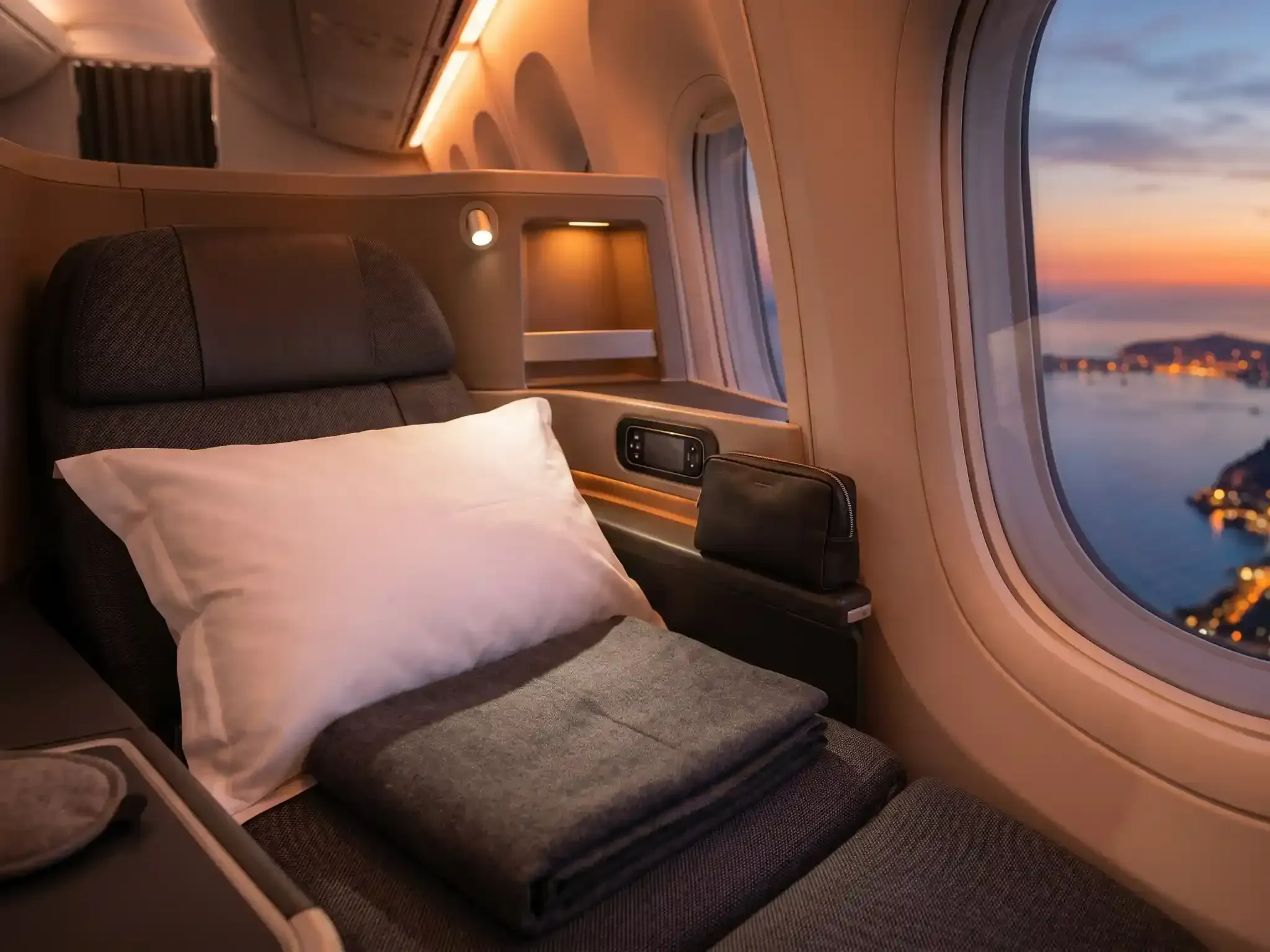
France routes that matter: Paris vs Nice, nonstop vs one stop
From a practical standpoint, most long-haul premium traffic funnels into Paris (CDG) first, then continues to the rest of France. That matters because a “Business Class ticket to France” might be excellent on the long-haul segment, then feel very basic on the short hop to Nice, Lyon, Marseille, or Bordeaux.
If you are still deciding where to fly into, start with the bigger picture in Business Class flights to Europe, then narrow to France based on your city and schedule.
Paris (CDG or ORY): better nonstop odds, more lounge options
Paris is usually the easiest place to justify nonstop Business Class because it has the most frequency and the widest range of airlines. CDG is the main long-haul gateway, while ORY is more short-haul focused. If you are traveling for work, CDG gives you the best shot at a true long-haul Business cabin, plus stronger lounge infrastructure and more rebooking options if something goes sideways.
Nice (NCE): great destination, but connections can dilute the “Business Class” feel
Nice is fantastic for leisure and events, but many itineraries route you via Paris, London, Frankfurt, Amsterdam, Zurich, or Munich. Here’s the thing: intra-Europe “Business Class” is often an economy seat with an empty middle and upgraded service. If your goal is sleep and recovery, focus your spend on the long-haul leg and treat the short hop as a positioning segment, not the main event.
One stop can be smarter than nonstop, if the hub is easy
Nonstop sounds ideal, but one stop can win if it gives you a far better seat, a calmer lounge, or a departure time that aligns with your body clock. Think of it this way: a slightly longer trip that lets you sleep for six hours often beats a shorter trip where you never fully settle.
What a “good” Business Class seat to France looks like
Most travelers compare airlines by brand name first. In practice, the seat is what decides whether you arrive functional. On transatlantic routes to France, look beyond “lie-flat” and focus on the details that change your night.
Seat privacy and access: direct aisle access is the divider
On an overnight to Paris, you will feel the difference between a modern suite-style seat and an older layout where you step over a neighbor. If you are a light sleeper, direct aisle access and a door or high shell can be the difference between sleeping and dozing.
Cabin density: fewer seats often means calmer service
Two airlines can both offer lie-flat seats, but one might pack the cabin tightly. A less dense cabin tends to feel quieter, with more attentive service pacing. It also affects how quickly you can get your meal and settle in for sleep.
Lounges and ground experience: the “hidden half” of Business Class
What many travelers overlook is how much of Business Class happens before you board. A strong lounge network, fast priority lanes, and predictable transfer signage matter most when you are connecting or traveling during peak holiday periods.
Business Class to France: what is typically included (and what is not)
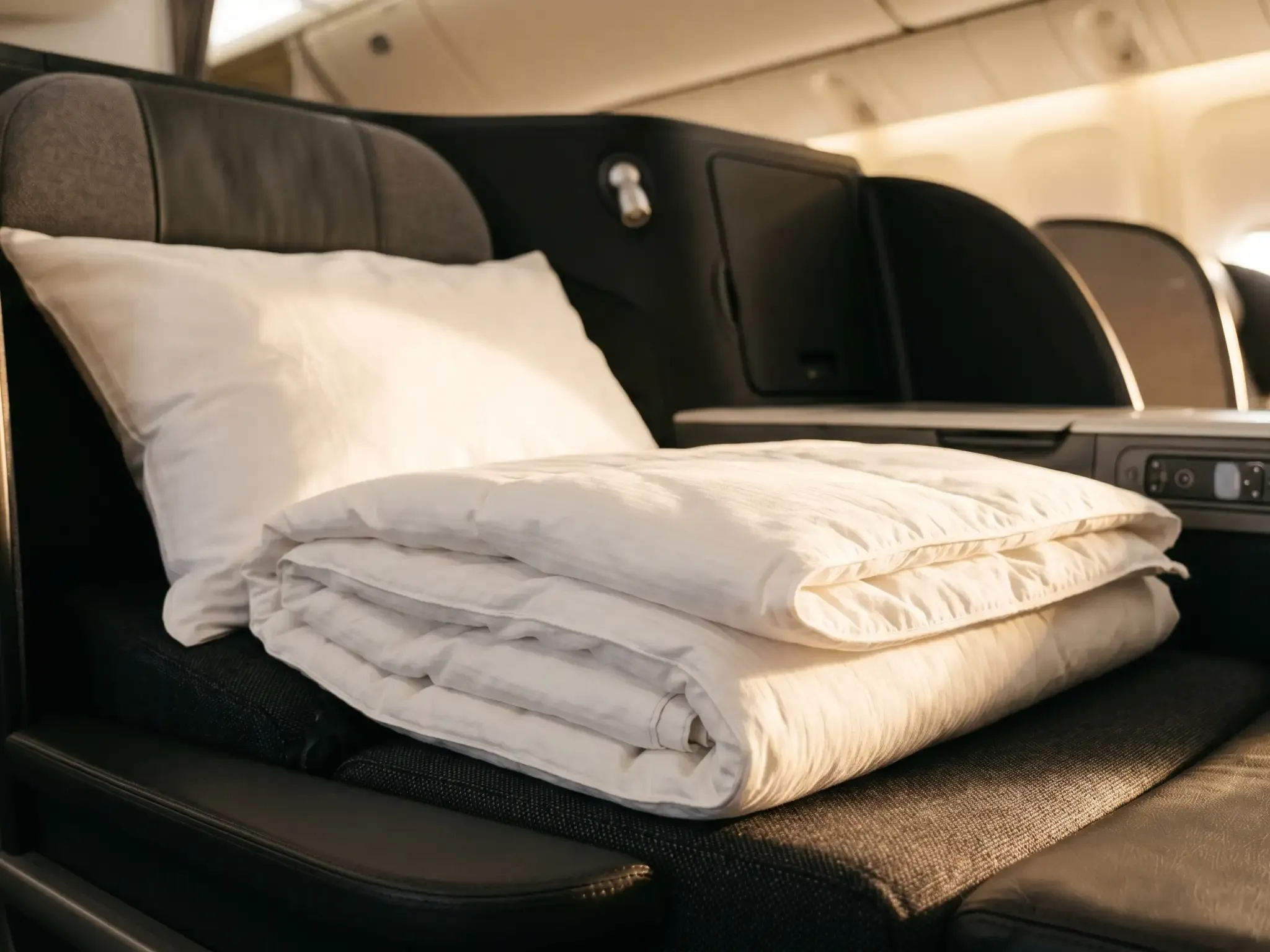
Before you compare airlines, it helps to recognize what “Business Class” usually includes on a long-haul ticket to France, and where travelers get surprised. The goal is not to chase perks, it is to make sure the things you actually rely on are truly part of the fare you are buying.
On long-haul segments, you are usually paying for sleep and time
On the overnight leg into Paris, Business Class is designed around the lie-flat seat and a smoother airport flow. That typically means priority check-in, earlier boarding, and lounge access tied to your long-haul boarding pass. The value shows up the next morning when you land with enough energy to function.
On intra-Europe segments, “Business Class” often looks different
If your ticket includes a short connection to Nice or another French city, the cabin may be marketed as Business but feel closer to Economy Plus: the seat itself is usually the same as economy, with the middle blocked and service upgraded. Consider this when comparing fares. You want the strongest product on the longest flight, not a higher price because the final hop has “Business” on the label.
What to double-check on any Business Class fare
From a practical standpoint, a Business Class ticket is only as good as the rules attached to it. Always confirm the change and cancellation policy, whether seat assignments are included, and whether lounge access is available at your departure airport and during connections. You can have a great seat in the air and still end up stuck landside with no lounge access if the routing or fare type is restrictive.
Top airlines for Business Class flights to France
Now, when it comes to “top airlines,” the best choice depends on your departure city, whether you need nonstop, and what you value most: sleep, service style, lounge quality, or easy connections.
Below are the airlines that tend to be the most relevant for a business class flight to France, especially Paris and the South of France. Availability varies by route and season, so treat this as a shortlist, then match it to your airport and dates.
Air France: the most direct way to Paris, often the simplest
If Paris is your main destination, Air France is frequently the most straightforward option. You minimize connection risk and get a product designed around CDG as a hub. It is also a natural choice if you are continuing onward within France, since the airline has the most connectivity from Paris.
British Airways via London: great network, but connections require planning
British Airways can be a strong option for schedules and route coverage. Consider this if you are trying to reach regional France or if the timing out of your home airport is better via London. The tradeoff is that London connections can be variable depending on terminal moves and security flow, so you want comfortable buffers.
Lufthansa via Frankfurt or Munich: efficient hubs, solid consistency
For many US travelers, Lufthansa becomes the “quietly practical” pick. German hubs can be efficient for connections, and schedules are often business-friendly. If you are going beyond Paris, the network can be useful for one-stop access to multiple French cities.
Swiss via Zurich: a premium-leaning experience and easy transfers
Zurich is a favorite among frequent flyers because it tends to be manageable. Swiss is often chosen when you want a calmer airport experience and polished service. It can be especially appealing for leisure travelers heading to the Riviera who value a smoother connection day.
KLM via Amsterdam: strong connectivity, good for multi-city France trips
Amsterdam works well for tight geography and well-timed connections. If you are combining Paris with another French city, or adding Belgium or the Netherlands, routing through Amsterdam can keep the overall itinerary clean.
Air France Business Class: what to expect on a flight to France
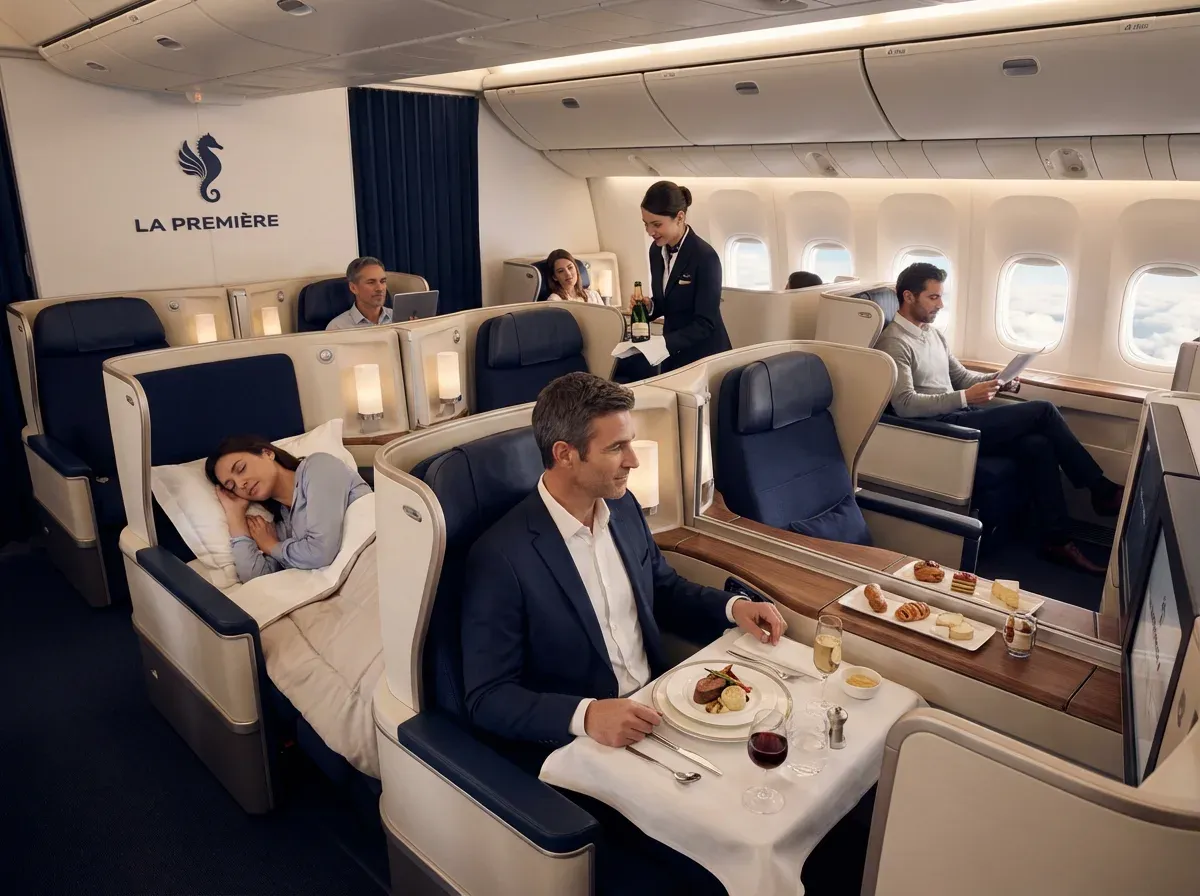
An air france business class flight is often the first comparison point for travelers, and for good reason. It is one of the most direct ways to reach Paris, and it is built around CDG operations.
The onboard feel: French-leaning service and dining pacing
Air France tends to emphasize dining presentation and a more restaurant-style cadence. If you want to maximize sleep on a red-eye, you will do best by choosing a “dine quickly” approach and getting your bed made early. If you prefer the full experience, you can lean into the meal service, but you will trade some rest for it.
Connecting in Paris: great if Paris is your endpoint, mixed if you are continuing
If Paris is your destination, arriving on Air France is simple. If you are connecting onward, the experience depends on terminals and timing. The reality is that even strong hubs can feel chaotic at certain hours, so build time for passport control and potential gate changes.
Who Air France is best for
- Travelers prioritizing nonstop routes to Paris
- Couples and leisure travelers who care about dining and cabin ambiance
- Anyone continuing within France who wants a single-carrier flow
Air France Business Class seats and aircraft: what to check before you book
Air France can be an excellent way to get to Paris, but the onboard experience still depends on the aircraft operating your specific flight. What many travelers overlook is that “Air France Business Class” is a category, not a single seat.
Confirm the aircraft on the long-haul segment, then look at the seat map
The most important step is confirming the plane type on the overnight segment, not just the airline name on the itinerary. Once you have the aircraft, check the seat map to see whether the layout offers direct aisle access for most seats, and how exposed the center pairs are if you are traveling as a couple.
Know what you are optimizing for: privacy, pairs, or easy aisle access
Think of it this way: the “best seat” depends on how you travel. Solo travelers often favor a window seat with more privacy. Couples often like paired seats in the center so you can talk without leaning across a console. If you are getting up to work mid-flight, aisle access can matter more than anything else.
Be realistic about overnight comfort details
On a red-eye into Paris, small comfort factors become big ones: how easy it is to recline and sleep quickly, whether the footwell feels tight, and how much light and movement you will notice in the aisle. If you are a light sleeper, prioritize a layout that reduces pass-through traffic near your seat.
Air France Business Class baggage and check-in: what to confirm on your fare
Business Class usually improves the airport experience, but baggage and priority services can still vary by ticket rules and by route. From a practical standpoint, it is smart to confirm the essentials before you lock in a fare that looks attractive.
Baggage allowance can depend on fare type and your full itinerary
Even within Business Class, airlines can sell different fare families. That can affect your checked baggage allowance, change flexibility, and how seat selection works. If your itinerary includes a partner-operated segment, make sure the baggage policy applies cleanly across all flights, not just the long-haul leg.
Priority check-in and fast-track are valuable when your timing is tight
If you are landing and heading straight to a meeting, time at the airport is part of the cost of travel. Priority lanes can help, but they are not equally consistent at every airport and every time of day. Consider this when you compare nonstop versus connecting options. A slightly higher fare can be worth it if it reduces choke points like long bag drops or unpredictable security waits.
A practical sleep plan for overnight flights to Paris
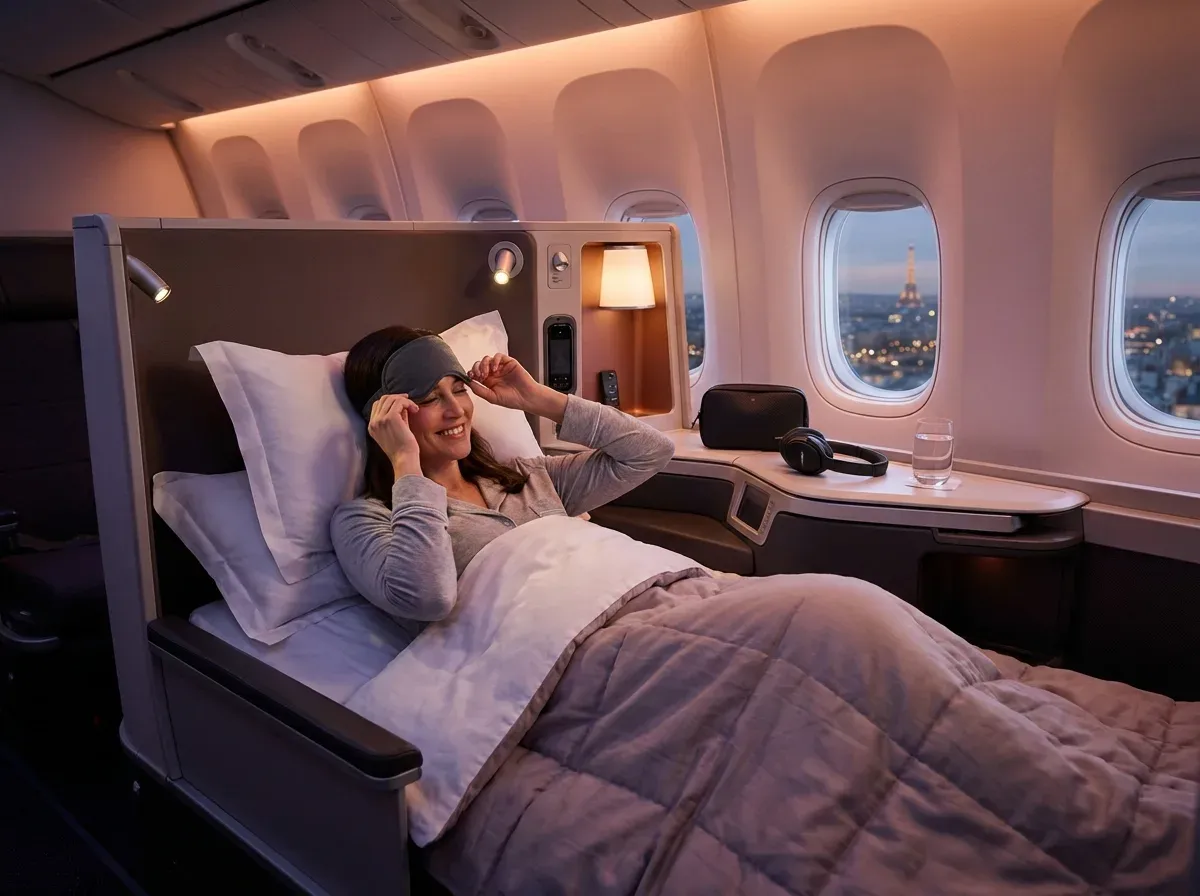
A lie-flat seat is only useful if you actually sleep. The reality is that many premium travelers board an overnight flight to France, eat a full meal, watch a movie, and then wonder why they feel foggy after landing. A simple plan can make your Business Class ticket perform the way you want it to.
Pick your priority: maximum sleep or full dining experience
If you need to be sharp the morning you arrive, treat the flight as a sleep mission. Eat lightly, ask for service to be paced quickly, and get your bed set up early. If you are traveling for leisure and have a softer first day, you can enjoy the longer meal service without paying for it in productivity.
Choose flight times that match your body clock, not just your calendar
Nonstop is not automatically better if it departs at a time that makes it hard for you to fall asleep. One-stop routings can be smarter if they put you on an overnight where you naturally get tired shortly after takeoff. What matters is whether you can get a solid block of rest before descent.
Seat selection matters more on the overnight than the return
If you are only going to optimize one segment, optimize the overnight into France. That is where aisle traffic, galley noise, and cabin layout show up most. On many daytime returns to the US, comfort still matters, but sleep is less of the make-or-break factor.
Booking strategy: how to compare fares and avoid common traps
If you have ever seen dramatically different prices for “Business Class to Paris,” you are not imagining it. Fares vary by season, departure city, airline contracts, and how a ticket is constructed. Your goal is to compare like-for-like so you do not overpay for a weaker seat or an awkward connection.
Compare these four things before you commit
- Aircraft and seat type: confirm the specific plane on each long-haul segment.
- Connection quality: airport, terminal moves, and layover length.
- Schedule fit: departure time and arrival time relative to your sleep plan.
- Rules: changes, cancellations, and how upgrades work on that fare.
Be careful with “too good to be true” Paris pricing
People often search for “cheap business class flights to Paris” or “cheap business class tickets to France.” A low fare can be legitimate, but you want to confirm it is not driven by an undesirable itinerary: very long layovers, mixed cabins, or an older seat on the overnight segment.
If you are specifically planning Paris, it can help to compare your France options against a dedicated Paris lens like business class to Paris, then decide whether a nonstop premium product or a one-stop better seat makes more sense.
When a specialist can be helpful
Some travelers prefer to do all comparisons themselves. Others value speed, especially when schedules are shifting or you are coordinating multiple travelers. One option is using a specialist like Flight-Experts, whose Business Class Flight Booking service focuses on presenting several premium cabin options quickly and monitoring for price drops after you book. You can see how that works here: Business Class Flight Booking.
If you are adding Nice or multiple cities, do not book it like a simple round trip
A Paris and Nice combo is a classic: fly into Paris, train or fly to the Riviera, then return home from Nice or Marseille. Open-jaw tickets can price better than two one-ways, and they remove backtracking. If that sounds like your trip, Complex Itinerary Planning can be a useful framework for comparing open-jaw and multi-city routings: Complex Itinerary Planning.
Pricing realities: why Business Class to France can vary so much
It is normal to see large swings in Business Class pricing to France. Two itineraries can look similar on the surface and deliver a very different experience once you compare the details.
Season and event demand in France can be intense
France has predictable peaks: summer travel, holiday periods, and major events in Paris and the Riviera. When demand spikes, the best nonstop flights and the best seat inventory can price up quickly. If you are traveling during a peak window, you are often choosing between paying more for the routing you want, or taking a connection that improves pricing but adds complexity.
Seat quality is not evenly distributed across routes
Some routes consistently get newer aircraft and more competitive products. Others rotate older planes more often. That is why two “Business Class to Paris” options can feel like different cabin classes in practice. The fix is simple: compare the aircraft and seat type first, then decide whether the price difference is justified.
One-way pricing can be counterintuitive
On many international routes, one-way Business Class pricing can be disproportionately high compared to round trip or open-jaw structures. If you are planning Paris plus another city, it is worth checking whether an open-jaw ticket prices more favorably than building the trip with separate one-ways.
Which airline fits your trip style
Think of this as matching the airline to your priorities, not chasing a single “best” answer.
If you are traveling for business and landing straight into meetings
Favor nonstop to Paris if available, or a connection through a hub known for smooth transfers. Your goal is predictable sleep and minimal friction. Choose the best long-haul seat you can, even if it means one extra hour in the air.
If you are flying for a honeymoon or anniversary
Cabin privacy, service style, and dining become a bigger part of the value. A slightly longer routing can feel worth it if the onboard experience is more relaxing and you arrive in a better mood. If you are heading to Nice, make sure the long-haul leg is the stronger product, since the final European hop will often be more basic.
If you are traveling as a family
Families tend to benefit from schedules that reduce connection stress and from airports where transfers are straightforward. Consider seat layout too. Some configurations make it easier to talk and pass items, while others are more private but less interactive.
Frequently Asked Questions
What is the best airline for a business class flight to France?
The best airline depends on your departure city and whether you want nonstop to Paris or you are comfortable connecting. If you can fly nonstop into Paris, Air France is often the simplest choice. If you are connecting to Nice or another region, airlines via Zurich, Frankfurt, Munich, London, or Amsterdam can be strong, especially if they offer a better long-haul seat or a smoother schedule. Always compare the aircraft and seat on the overnight segment, since that is where the value is.
Is Air France Business Class worth it for Paris?
For many travelers, yes, because it aligns naturally with Paris travel. You reduce connection risk and you get an experience designed around arriving into CDG. The key is to treat the flight like a sleep strategy: eat when it fits your body clock, then maximize rest. If you are connecting onward within France, build enough time for passport control and terminal logistics, since that is where “easy on paper” connections can become stressful.
Do business class tickets to Nice include lie-flat seats?
Sometimes, but not always. If you fly long-haul into Paris, Frankfurt, Zurich, Amsterdam, or London, that long segment is typically lie-flat in Business Class. The final segment to Nice is usually a short-haul European Business cabin, which often means an economy-style seat with an empty middle and upgraded service. If lie-flat is your priority, focus on the transatlantic leg and do not overpay expecting a full long-haul seat on a 60 to 90 minute intra-Europe flight.
What is the difference between flying into Paris (CDG) vs Nice (NCE) in Business Class?
Paris offers more nonstop options, more lounges, and more backup flights if delays happen. Nice is a smaller airport and a fantastic arrival point for the Riviera, but it often requires a connection through a major hub. That means your trip quality depends heavily on your connection airport and timing. If you are traveling with tight schedules, Paris can be easier. If your main destination is the South of France, flying into Nice can save hours on the ground even with a connection.
How far in advance should I book Business Class to France?
For peak summer, major holidays, and big events in Paris or Cannes, booking earlier helps you secure the best seat and the best routing. For shoulder seasons, you may have more flexibility and can sometimes wait for favorable fare patterns. What matters is not just price but also seat selection. If you know you want a specific seat type, like a more private window suite, you will benefit from booking while that inventory is still open.
Are “cheap business class flights to Paris” actually real?
Lower-priced Business Class fares do exist, but you need to validate what is driving the price. Common reasons include a longer connection, less desirable departure times, mixed-cabin segments, or an older seat on the overnight. Before you book, confirm the aircraft on the long-haul leg and review the fare rules. A lower price can be a smart move if the seat and schedule still meet your goals. It is only a problem when the comfort tradeoff shows up at 2 a.m.
Which connecting hubs are easiest when flying Business Class to France?
Ease depends on your passport, time of day, and terminal flow, but many travelers find Zurich and Amsterdam manageable for transfers, with Frankfurt and Munich often efficient as well. London can be excellent for network coverage, but transfers may involve more steps depending on terminals and security requirements. If you are traveling with family or carrying work gear, favor hubs where you can comfortably make the connection without sprinting, and where the lounge is accessible and not overcrowded.
Should I book a nonstop flight to Paris or connect for a better Business Class seat?
If you have an early meeting, a nonstop can be the safer play because it reduces moving parts. If your main goal is sleep and you have a flexible arrival day, connecting can be worth it if it upgrades you into a significantly better seat or a schedule that matches your body clock. Compare total door-to-door time, not just flight time. A nonstop that arrives at an awkward hour can leave you more tired than a one-stop routing that lets you sleep properly.
Is Premium Economy a good alternative to Business Class for France?
Premium Economy can be a strong middle ground on daytime flights or for travelers who do not plan to sleep much onboard. On overnight transatlantic routes, Business Class tends to deliver the biggest quality-of-life jump because a lie-flat seat changes your ability to arrive rested. If you are traveling for leisure and can add a recovery day, Premium Economy may be enough. If you need to perform right after landing, Business Class often pays for itself in energy and productivity.
How can I plan a Paris and Nice trip without wasting time backtracking?
Consider an open-jaw itinerary: fly into Paris, travel within France by train or a short flight, then fly home from Nice (or Marseille). This can reduce ground time and can sometimes price more favorably than forcing a round trip to the same airport. It also aligns with how people actually travel in France, especially for a two-city leisure trip. The key is to ensure your long-haul segments carry the premium seat value, since short intra-Europe legs are usually more limited.
Do Air France Business Class flights have lie-flat seats?
On long-haul routes, Air France Business Class is typically lie-flat, but it is still worth confirming on your exact flight because aircraft and cabin layouts can vary. The easiest way to protect your sleep is to verify the aircraft operating the transatlantic segment and review the seat map before you book, since that is the segment where a true lie-flat seat changes the trip.
How do I check which Air France Business Class seat I am getting?
Start by confirming the aircraft type for the long-haul segment, then look at the seat map for that exact flight. You are looking for direct aisle access, the level of privacy, and whether the layout fits how you travel. If you are flying as a couple, center pairs can be more social. If you are flying solo and want fewer interruptions, a more private window seat is often the better pick.
Does Business Class to France include lounge access on connections?
Often, yes, but it depends on your operating carrier, your itinerary, and the airport you are connecting through. If you connect within Europe on a short segment, the ticket may still grant lounge access, but lounge location and crowd levels can affect how useful it feels. From a practical standpoint, verify access at your departure and connection points, especially if the connection airport requires a terminal change.
Is it better to fly into CDG or ORY in Business Class?
For long-haul international Business Class, CDG is usually the relevant airport because it is the primary gateway for intercontinental flights and has more long-haul infrastructure. ORY is more short-haul focused. If your itinerary shows ORY on an international ticket, it often means you are connecting, or you are using Paris as part of a broader routing. The right choice comes down to which airport aligns with your final destination and how much connection complexity you are willing to accept.
Key Takeaways
- A “business class flight to France” can mean very different seats, especially if your itinerary includes an intra-Europe connection.
- For Paris, nonstop often wins on simplicity. For Nice, focus on maximizing the long-haul leg and keeping connections easy.
- Direct aisle access and the specific aircraft on the overnight segment matter more than airline reputation alone.
- Validate low fares by checking connection length, mixed-cabin segments, and seat type, not just the headline price.
- For Paris plus the Riviera, open-jaw planning can save time and keep the trip feeling premium.
Conclusion
Choosing the right Business Class flight to France is less about chasing a single “top airline” and more about matching the product to your trip. If you are heading to Paris for work, reliability and a sleep-friendly seat usually beat a flashy routing. If you are flying for a celebration, cabin privacy, dining cadence, and a calm connection day can make the journey feel like part of the vacation, not just transportation.
Before you book, confirm the aircraft on the long-haul segment, compare connection logistics, and be realistic about what intra-Europe “Business Class” includes when you continue to Nice or beyond. That small bit of homework is what prevents premium travelers from paying more and getting less.
If you want help comparing a few strong options for your dates, you can request a free, no-obligation quote.



