
ANA Business Class Review (2026 Guide)
Overview
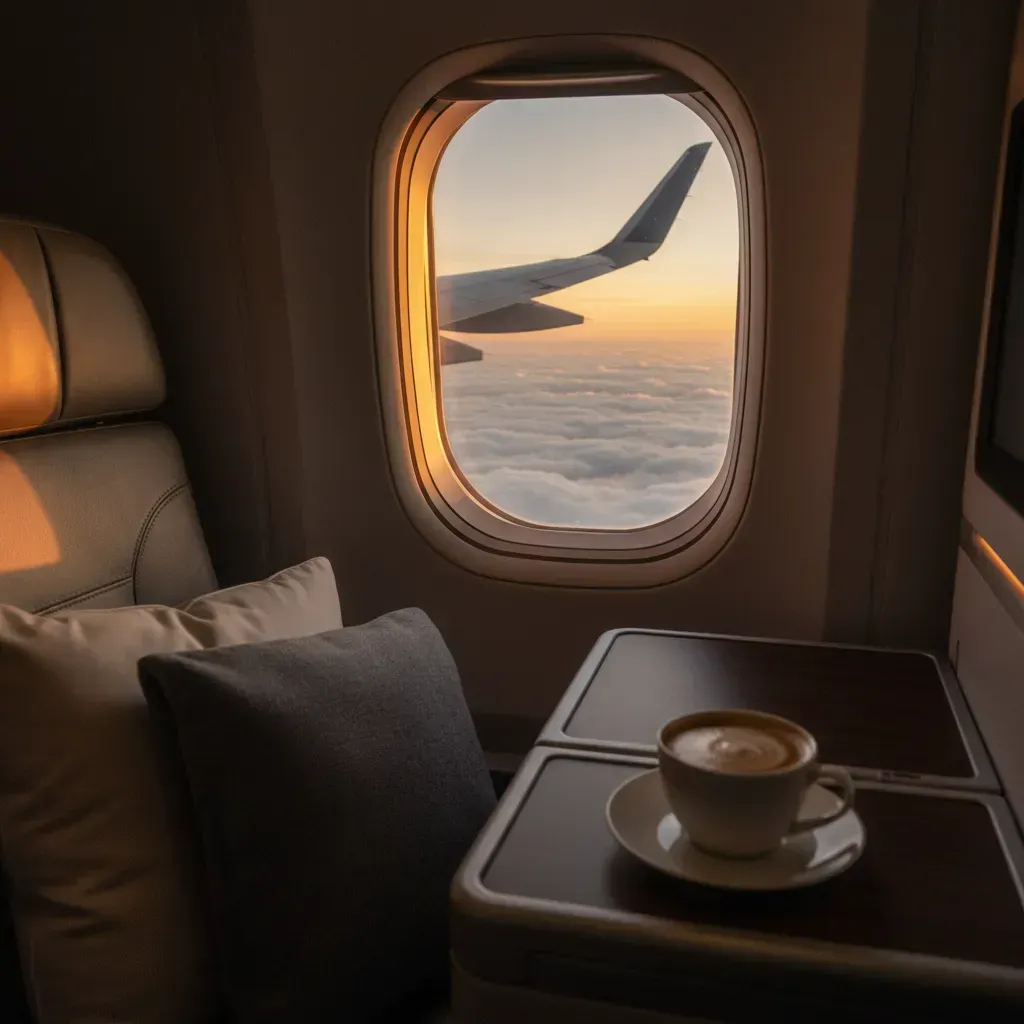
ANA, or All Nippon Airways, has long been regarded as one of the more polished premium carriers in Asia. In Business Class, the airline typically combines Japanese hospitality, thoughtful cabin finishes, strong inflight dining, and a restrained but refined service style. For many travelers, the headline feature is The Room, ANA’s newer Business Class suite introduced on selected Boeing 777-300ER aircraft. It offers a notably wide seat, high privacy walls, direct aisle access, and a design that feels closer to a private workspace than a conventional airline seat.
That said, not every ANA Business Class experience is identical. Aircraft type matters. Route matters. A traveler booking ANA Business Class LAX to Tokyo may encounter a different hard product than someone flying ANA Business Class JFK to Tokyo, depending on schedule and equipment. This is one reason expert review matters. A strong airline brand does not automatically guarantee the same premium experience on every departure.
Within the broader world of Airline Business & First Class Reviews, ANA stands out for travelers who value privacy, understated elegance, and dependable onboard comfort over theatrical service.
Experience Details
The best version of ANA Business Class is, without question, The Room. On routes where it is available, the suite is exceptionally spacious for Business Class and may feel especially appealing to travelers who prefer privacy without moving all the way into First Class. The seat converts into a fully flat bed and is typically paired with quality bedding, a large monitor, useful storage, and doors or partitions that create a more enclosed environment.
For work, dining, and rest, the layout is highly competitive. The seat width is one of its defining strengths. Travelers who find many reverse herringbone seats narrow may appreciate ANA’s more generous proportions. On overnight sectors to Tokyo, that extra width can make a meaningful difference in sleep quality.
Service onboard is usually gracious and measured rather than overly familiar. In most cases, ANA’s cabin crews are attentive, polished, and efficient. Dining often reflects a dual approach, with Japanese and Western menus available. The Japanese meal service is typically the more distinctive choice and may appeal to travelers who want a stronger sense of place during the journey. Beverage selections are usually well considered, with sake and Japanese whisky often contributing to the premium identity of the flight.
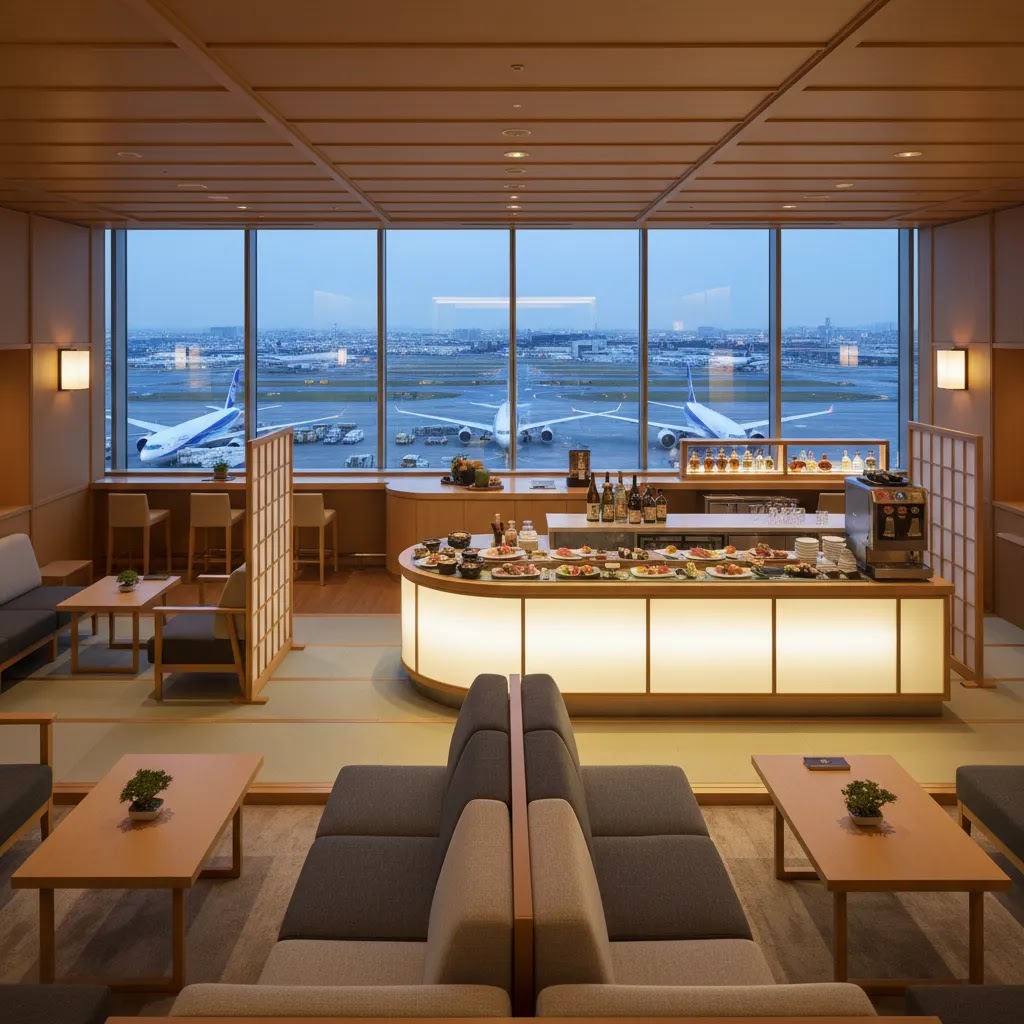
Ground experience is solid, though it may vary by departure airport. Lounge quality depends heavily on whether you are departing from Tokyo or from an overseas station. At Tokyo Haneda or Narita, the experience is generally more cohesive. At U.S. gateways, lounge access may involve a partner lounge rather than an ANA-branded space. Travelers who place significant value on preflight ambience should consider this carefully and review broader premium cabin experience and amenities before choosing an itinerary.
ANA Business Class Seats by Aircraft (What You May Actually Get)
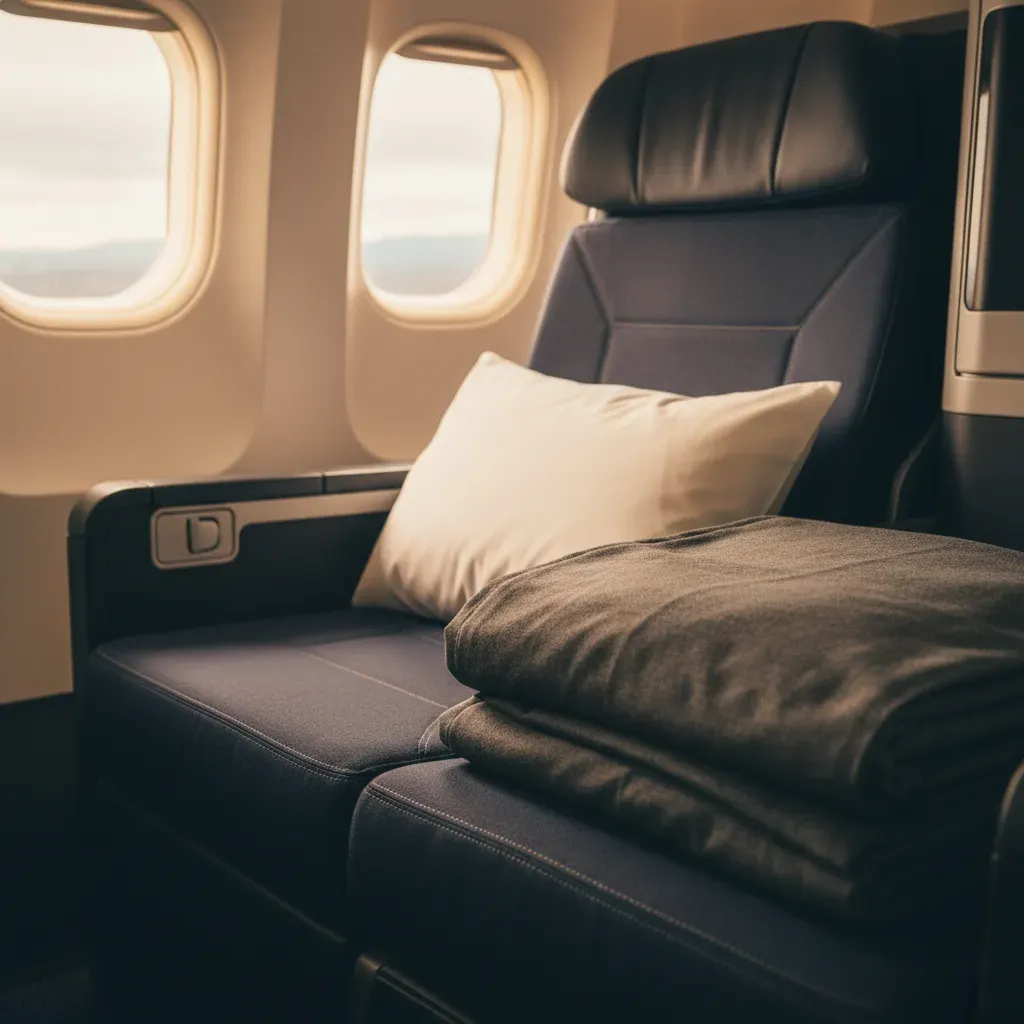
Here is the thing: “ANA Business Class” can describe materially different seats, and the difference is not subtle if sleep, privacy, and personal space are central to your decision. The Room is the headline product, but it is most closely associated with selected Boeing 777-300ER aircraft. On other long-haul widebodies, you may encounter an older generation of ANA Business Class seats, often in staggered or reverse herringbone-style layouts that still offer direct aisle access but typically feel narrower and less suite-like.
From a practical standpoint, this distinction shapes your entire onboard experience. The Room tends to deliver a more enclosed, private feel with generous width that supports side-sleeping and a less constrained bed surface. Older configurations can still be very comfortable, and in many cases they remain a polished Business Class experience, but they usually deliver a more conventional “open” seat environment and may feel more exposed depending on which row and seat position you select.
What many travelers overlook is that verifying the seat version is a process, not a hope. Start with the aircraft type on your proposed itinerary. “777-300ER” is the key identifier most often connected to The Room, though configurations can change and not every 777-300ER necessarily indicates the newest suite on every date. Seat maps can provide additional cues. A layout that shows large, door-style suites, fewer seats per row, and a more rectangular footprint around each passenger may indicate The Room, while a more typical herringbone pattern tends to signal the earlier generation.
The reality is that last-minute aircraft swaps can happen for operational reasons, particularly on long-haul flying. That does not mean you should avoid committing to a flight you otherwise prefer, but it does mean you should treat aircraft assignment as “current information” rather than a permanent guarantee. If your trip is built around the best possible sleep experience, it may be sensible to increase the odds by choosing routes and flight numbers that are regularly scheduled with the preferred configuration, and by selecting an itinerary with more than one viable option in the same travel window.
For travelers focused on ANA Business Class LAX to Tokyo or ANA Business Class JFK to Tokyo, the most effective approach is to identify which daily departures are typically operated by the aircraft most associated with The Room, then align your schedule accordingly. When clients ask for the most reliable path to the preferred hard product, we evaluate the specific flight, date, and aircraft pattern, and we set expectations clearly: you can often improve the probability through careful selection, but aviation operations remain subject to change.
Pricing Context
ANA Business Class fares may vary considerably by route, season, advance purchase window, and aircraft assignment. Flight Experts currently offers Business Class Flight Booking for major international routes, including travel from the U.S. to Asia, with a published pricing context of $2,000 to $8,000+, depending on route and airline. That range is not specific to ANA alone, but it provides a realistic premium-cabin framework for travelers evaluating transpacific options.
For clients seeking a more tailored long-haul journey, Flight Experts also provides Complex Itinerary Planning for multi-city, open-jaw, and alliance-based premium travel. This may be particularly useful if your Tokyo flight is only one part of a wider itinerary through Japan or onward to Southeast Asia.
Because ANA’s best Business Class product is not available on every aircraft, fare value should be judged in relation to the specific seat, schedule, and airport experience you are actually receiving. A lower fare on an older configuration may not represent stronger value if rest and privacy are your priorities.
What You Get in ANA Business Class (Amenities, Dining, and Service Inclusions)
Discerning travelers often ask a simple question: what do you actually receive once you have selected ANA Business Class? In most cases, the experience is designed to be end-to-end premium, starting at the airport. Priority check-in and boarding are typically part of the Business Class flow, and baggage allowances are generally more generous than in the main cabin, though exact allowances can vary by fare basis and route and should be confirmed for your specific ticket.
Lounge access is commonly included for Business Class passengers, but the lounge you receive matters as much as the access itself. In Tokyo, the experience is usually more cohesive and aligned with ANA’s standards. At U.S. gateways, access may be provided through a partner lounge, and quality can vary meaningfully by airport, time of day, and crowding. Think of it this way: the onboard product can be the anchor of the experience, while the ground component may be more variable depending on where your journey begins.
Onboard amenities often include a dedicated amenity kit and bedding intended to support genuine rest on long-haul sectors. The exact contents can change over time and may differ by route or season, but ANA’s positioning in the premium market typically places real emphasis on sleep quality, particularly on overnight flights to Tokyo. If you are selecting between seat versions, consider both the bed surface itself and the overall environment: privacy walls, light control, and how easily you can settle in without feeling exposed to aisle traffic.
Wi-Fi availability is usually offered on many long-haul aircraft, but performance can be route and aircraft dependent. For travelers who need reliable connectivity for work, it is wise to treat onboard internet as a helpful option rather than a guaranteed substitute for ground-based connectivity. A professional advisor can confirm what is currently offered on your specific aircraft type, since service levels and platforms can change.
Dining is one of ANA’s most distinctive strengths, and it is more than a simple “Japanese versus Western” choice. On long-haul flights, the structure is typically multi-course, and timing can be paced to support rest, particularly on overnight departures. If you want the most place-specific experience, the Japanese menu is often the better expression of ANA’s identity, and it can be approached like a curated tasting rather than a single tray service. Many travelers find that selecting lighter courses earlier, then shifting to sleep, creates a more restful crossing without sacrificing the pleasure of the meal. Offerings can vary by season, catering station, and route, so it is best to treat menus as representative rather than fixed.
Set expectations carefully: certain elements are typically consistent, such as the overall tone of service and the airline’s attention to cabin presentation. Other elements may vary, including catering quality ex-overseas stations, partner lounge conditions, and the individual cadence of the crew. This is normal even among top-tier carriers. The goal is to choose the flight and aircraft combination that aligns with your priorities, then let the experience deliver its strengths without assuming every detail will match a single published description.
Pros and Cons
Strengths
- The Room is among the most spacious and private Business Class products currently operating across the Pacific.
- Japanese service culture typically brings a polished, respectful onboard experience that many discerning travelers appreciate.
- Dining is usually a genuine strength, especially for travelers interested in Japanese cuisine and a more place-specific inflight experience.
- Flat-bed comfort is strong on long-haul sectors, particularly for overnight service to or from Tokyo.
- ANA often appeals to travelers who prefer understated luxury over highly theatrical premium branding.
- The carrier’s reputation for operational consistency and cabin cleanliness is generally favorable.
Considerations
- Not all ANA Business Class flights feature The Room, so aircraft selection is critical.
- Ground experience outside Japan may depend on partner lounges, which can feel less cohesive than the onboard product.
- Service style is refined but restrained, which may feel less personalized to travelers who prefer a more proactive or lavish cabin atmosphere.
- Seat, storage, and technology details may differ noticeably across older and newer ANA aircraft.
Who ANA Business Class Suits Best
ANA Business Class is especially well suited to travelers who value privacy, sleep quality, and a calm premium environment on long-haul flights to Japan. It may be an excellent fit for couples beginning a refined Tokyo or Kyoto itinerary, executives who want to arrive rested for meetings, and experienced premium travelers who prefer elegance expressed through restraint rather than spectacle.
It is also a strong option for travelers who already know that cabin architecture matters. If seat width, privacy, and a restful overnight crossing are among your main criteria, ANA could rank very highly. If your priorities center more on highly indulgent ground service or ultra-exclusive airport facilities, you may want to compare the exact departure experience before booking.
Flight Experts Recommendation
From a luxury travel advisory perspective, ANA Business Class is often worth serious consideration for premium travel to Japan, particularly when The Room is confirmed on your selected flight. The airline’s strengths tend to be most compelling for travelers who want a quiet, sophisticated cabin and a sleep-focused transpacific experience rather than a heavily stylized onboard presentation.
Flight Experts recommends evaluating ANA not by airline name alone, but by aircraft type, route timing, lounge arrangement, and the role the flight plays within your wider itinerary. A nonstop may be preferable in some cases, but in others a different departure city or alliance routing could produce a more refined overall journey. If you are planning Japan in Business Class, or combining Tokyo with multiple destinations, you may wish to explore the services available at Flight Experts and speak with Mike Chirilenco for a personalized recommendation tailored to your schedule, cabin preferences, and travel style.
How to Evaluate ANA Business Class
When assessing ANA Business Class, four criteria matter most.
1. Aircraft type and seat version
This is the single most important factor. ANA’s reputation in Business Class is strongly influenced by The Room, but older seats remain in service on some routes. Before booking, confirm the aircraft and cabin layout rather than assuming all ANA Business Class flights are equal.
2. Departure city and lounge quality
ANA Business Class JFK to Tokyo and ANA Business Class LAX to Tokyo may each be attractive, but the preflight experience could differ depending on lounge partner arrangements, check-in flow, and timing. For some travelers, the airport experience is part of the premium purchase, not an afterthought.
3. Sleep versus service priorities
If your priority is arriving well rested, ANA is often very competitive. The wider seat, privacy, and generally calm cabin environment support rest well. Travelers seeking a more socially expressive or highly choreographed premium service style may prefer to compare alternatives.
4. Itinerary complexity
If Tokyo is one stop within a broader Asia journey, the right booking strategy may involve alliance planning, stopovers, or mixed-carrier combinations. This is where a specialist may add meaningful value. Rather than selecting one flight in isolation, a professional advisor can help align departure airport, connection logic, seat consistency, and overall comfort across the trip.
5. Value in context
Luxury travel value is not only about fare level. It is about whether the cabin, timing, airport experience, and support match the significance of the journey. For milestone trips, business travel with little margin for disruption, or multi-city itineraries, a well-matched premium booking is often more important than a superficially attractive fare.
ANA vs Japan Airlines Business Class (How to Choose Between Two Top Japan Options)
For discerning travelers, ANA and Japan Airlines are often the two most serious contenders for premium travel between the U.S. and Japan. The right choice is rarely about which brand is “better” in the abstract. It is about which specific flight, aircraft, and cabin environment best supports the outcome you want, whether that is sleep, privacy, dining, or a certain tone of service.
Now, when it comes to the onboard seat, your decision often starts with privacy and personal space. When ANA’s newest suite is operating, the experience can feel notably more enclosed and width-forward, which tends to appeal to travelers who prioritize a suite-like environment and a stronger sense of separation from the aisle. Japan Airlines can be equally compelling depending on the aircraft and seat generation, and some travelers prefer its overall cabin mood, which may feel slightly different in terms of styling, lighting, and the cadence of service. The reality is that both carriers can deliver an excellent flat-bed experience, but the “feel” of the space can be meaningfully different.
For sleep-focused travelers, it is useful to think in terms of bedding, bed geometry, and interruption risk. A wider, more private seat may support easier rest, especially on overnight sectors to Tokyo. At the same time, schedule and flight timing can be just as decisive as the seat itself. A perfectly timed departure that aligns with your sleep rhythm can outperform a more celebrated seat on a less suitable schedule. In practice, we often advise clients to choose the best combination of aircraft and timing, not the most famous cabin name alone.
Ground experience is another variable that can separate the two. Lounge quality, crowding patterns, and overall preflight calm depend heavily on the departure airport and the operating arrangement in that terminal. In Japan, both carriers tend to present a more integrated brand experience. Outside Japan, the lounge experience can become more dependent on partner facilities and local conditions, which may influence how premium the journey feels before you board.
Consider this decision lens if you are choosing between ANA and Japan Airlines:
If you care most about privacy and a more suite-like environment, it may be worth prioritizing the itinerary that is most likely to operate with ANA’s newest Business Class configuration, while still acknowledging that aircraft assignments are subject to change.
If your priority is overall trip rhythm and arrival condition, focus first on the schedule, then validate which aircraft is operating, and only then weigh the finer points of service style and dining.
If lounge quality is a central part of your premium purchase, evaluate the airport-specific lounge reality rather than assuming a uniform experience across all gateways.
In most cases, the best approach is to decide based on the operating aircraft and the specific flight you will actually take, not a general airline reputation. This is also where a specialist can add clarity quickly: by identifying which departures tend to operate with your preferred seat style, and by matching that to the itinerary logic of your broader Japan journey.
Frequently Asked Questions
Is ANA Business Class good for flights to Tokyo?
Yes, in most cases ANA Business Class is a strong option for Tokyo, especially on flights operated with The Room. Travelers often choose it for privacy, a fully flat bed, and a calm onboard atmosphere. The exact experience may vary by aircraft and departure airport, so it is wise to verify the specific flight before booking.
What is The Room on ANA?
The Room is ANA’s newer long-haul Business Class suite available on selected aircraft, most notably certain Boeing 777-300ER flights. It is known for its unusually wide seat, strong privacy, and contemporary design. It has become one of the airline’s defining premium features, though it is not available across the entire fleet.
Is ANA Business Class LAX to Tokyo worth it?
It may be, particularly if your flight is scheduled on an aircraft featuring The Room. For Los Angeles departures, the value usually depends on seat type, schedule, lounge access, and whether you prioritize rest on the overnight journey. For many travelers heading to Japan, it is one of the more appealing transpacific Business Class options.
Is ANA Business Class JFK to Tokyo different from other routes?
The core ANA service philosophy is generally consistent, but the experience may differ by aircraft assignment, flight timing, and airport ground arrangements. New York travelers should pay close attention to cabin type and operational details. On long sectors such as JFK to Tokyo, seat comfort and sleep quality become especially important.
Does ANA Business Class include lounge access?
Business Class passengers typically receive lounge access, though the specific lounge may vary by airport and operating arrangement. In Tokyo, the experience is often more integrated with the ANA brand. At some overseas airports, access may be through a partner lounge, which could feel less distinctive than the onboard product.
How does ANA compare with other premium Asian carriers?
ANA is often praised for privacy, service polish, and a refined, understated cabin atmosphere. Some travelers may prefer other carriers for more elaborate onboard service or stronger ground indulgence. ANA tends to appeal most to those who value restraint, comfort, and a quietly premium long-haul experience.
Is ANA Business Class a good choice for couples?
It can be an excellent choice for couples, especially on a Japan-focused leisure trip where comfort and rest are priorities. The private suite design offers a more sheltered environment than many Business Class products. Couples who prefer a more openly social cabin layout may want to review seat maps before making a final decision.
Should I book ANA Business Class directly or through a specialist?
For a straightforward itinerary, direct booking may work well. For high-value travel, milestone journeys, or itineraries where aircraft type and routing matter, a specialist may provide important guidance. Professional support can be especially useful when you want help comparing seat versions, managing multi-city plans, or selecting the most suitable premium option.
Does ANA have a good Business Class?
Yes, in most cases ANA has a strong Business Class product, particularly on long-haul routes where the airline’s newest seat is operating. Travelers tend to value its calm cabin atmosphere, service polish, and sleep-focused comfort. Because the hard product can vary by aircraft, it is wise to evaluate the specific flight rather than relying on the airline name alone.
Is ANA Business Class a flat bed?
ANA’s long-haul Business Class seats typically convert into a fully flat bed. The exact bed surface, width, and level of privacy may vary depending on the aircraft and seat generation, so verifying the operating aircraft is an important step if sleep quality is a priority.
What do you get in ANA Business Class?
In most cases, ANA Business Class includes priority airport services, lounge access, a lie-flat seat on long-haul routes, and a premium dining program with Japanese and Western options. Amenities such as bedding, an amenity kit, and Wi-Fi availability can vary by aircraft and route, and the preflight lounge experience may depend on whether you are departing from Japan or an overseas station.
Is ANA or Japan Airlines Business Class better?
Either can be an excellent choice, and the better option usually depends on the specific flight, aircraft, schedule, and airport experience. ANA may be especially compelling for travelers prioritizing privacy and a suite-like seat on flights operating the newest configuration. Japan Airlines can be equally attractive depending on the aircraft and the style of cabin experience you prefer. For most travelers, verifying the operating aircraft and selecting the best schedule for rest tends to produce the best outcome.
Key Takeaways
- ANA Business Class is at its best when The Room is confirmed on your specific flight.
- The airline typically excels in privacy, sleep comfort, and understated premium service.
- Not all ANA aircraft offer the same Business Class product, so cabin verification is essential.
- Lounge and ground experience may vary depending on whether you depart from Japan or an overseas gateway.
- For complex Japan itineraries, expert planning may help align the flight choice with the broader journey.
Conclusion
ANA Business Class remains one of the more refined ways to cross the Pacific, especially for travelers who value privacy, restful design, and polished but understated service. The key is understanding that ANA is not one uniform product. The strongest experience usually comes when The Room is operating on your chosen route and the surrounding airport logistics support the level of comfort you expect. If you are planning a premium trip to Japan and want guidance on aircraft selection, route strategy, or a broader multi-city itinerary, contact Flight Experts to begin a personalized consultation. Mike Chirilenco and the Flight Experts team can help you evaluate the right premium cabin strategy for your schedule, priorities, and travel style.



